
The Complete Guide to Selank Dosing: Evidence-Based Protocols for 2025
Imagine having access to a synthetic peptide that could potentially support cognitive function and stress response through precise, scientifically-backed dosing protocols. Selank dosing represents one of the most researched areas in peptide science, with decades of clinical studies providing clear guidelines for optimal administration. This heptapeptide, originally developed by the Institute of Molecular Genetics of the Russian Academy of Sciences, has captured the attention of researchers worldwide for its unique pharmacokinetic properties and dose-dependent effects.
Key Takeaways
• Standard selank dosing typically ranges from 250-3000 mcg daily, administered intranasally in 2-3 divided doses
• The peptide has a short 25-30 minute half-life, requiring multiple daily administrations for sustained effects
• Intranasal bioavailability reaches 60-80%, making it the preferred administration route over oral delivery
• Cycling protocols recommend 2-4 week usage periods followed by equal or longer breaks to prevent tolerance
• Dose-dependent effects show lower doses (250-500 mcg) primarily affecting anxiety, while higher doses (1500-3000 mcg) may provide additional cognitive benefits
Understanding Selank: The Foundation for Proper Dosing
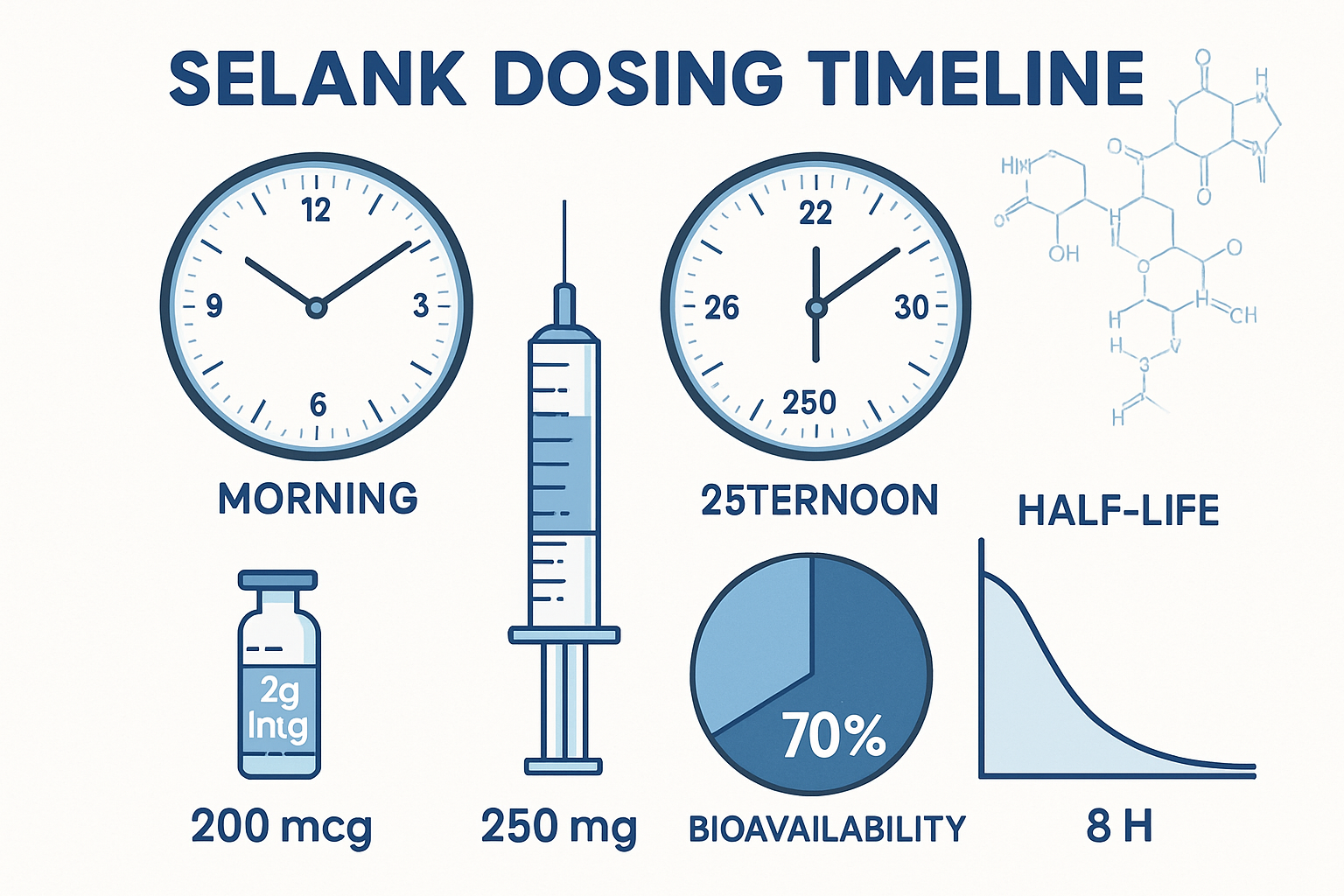
Selank is a synthetic heptapeptide with the sequence Thr-Lys-Pro-Arg-Pro-Gly-Pro, specifically designed as an anxiolytic and nootropic compound. This research peptide differs significantly from naturally occurring peptides due to its enhanced stability and targeted mechanism of action.
The peptide's unique structure allows it to cross the blood-brain barrier efficiently when administered intranasally, making selank dosing protocols particularly dependent on delivery method. Unlike many other peptides that require injection, Selank's intranasal administration offers both convenience and effectiveness for research applications.
Pharmacokinetic Properties
Research indicates that Selank demonstrates rapid absorption through nasal mucosa, with detectable plasma levels appearing within 15-30 minutes of administration [1]. The peptide's short half-life of approximately 25-30 minutes necessitates careful consideration of dosing frequency and timing.
This pharmacokinetic profile directly influences optimal selank dosing strategies, as researchers must account for the rapid clearance when designing experimental protocols. The quick onset and relatively brief duration of action make Selank particularly suitable for studies examining acute effects on cognitive performance and stress response.
Standard Selank Dosing Protocols and Guidelines
Basic Dosing Framework
The most extensively studied selank dosing protocols involve intranasal administration ranging from 250 mcg to 3000 mcg per day. Clinical research has established that effective doses typically fall within this range, with specific amounts depending on the research objectives and subject characteristics.
Standard therapeutic protocols commonly employ:
- Low dose range: 250-500 mcg, 2-3 times daily
- Moderate dose range: 750-1500 mcg, 2-3 times daily
- High dose range: 1500-3000 mcg, 2-3 times daily
For researchers interested in obtaining Selank for laboratory studies, understanding these established dosing ranges provides a foundation for experimental design.
Dose-Dependent Effects
Research demonstrates clear dose-dependent responses with Selank administration. Lower doses in the 250-500 mcg range primarily influence anxiety-related parameters, while higher doses of 1500-3000 mcg may provide additional cognitive enhancement benefits [2].
This dose-response relationship is crucial for researchers designing studies with specific outcome measures. The ability to modulate effects through precise selank dosing adjustments allows for targeted investigation of particular physiological or cognitive parameters.
Administration Timing and Frequency
Optimal timing for selank dosing typically involves morning and early afternoon administration to avoid potential sleep interference. Some research subjects report mild stimulating effects, making evening doses less desirable in most protocols.
Recommended timing patterns:
- First dose: Upon awakening (6-8 AM)
- Second dose: Mid-morning (10-11 AM)
- Third dose: Early afternoon (1-2 PM)
The Selank nasal spray preparation offers convenient administration for maintaining consistent dosing schedules throughout research periods.
Advanced Selank Dosing Strategies and Cycling Protocols
Progressive Dosing Approaches
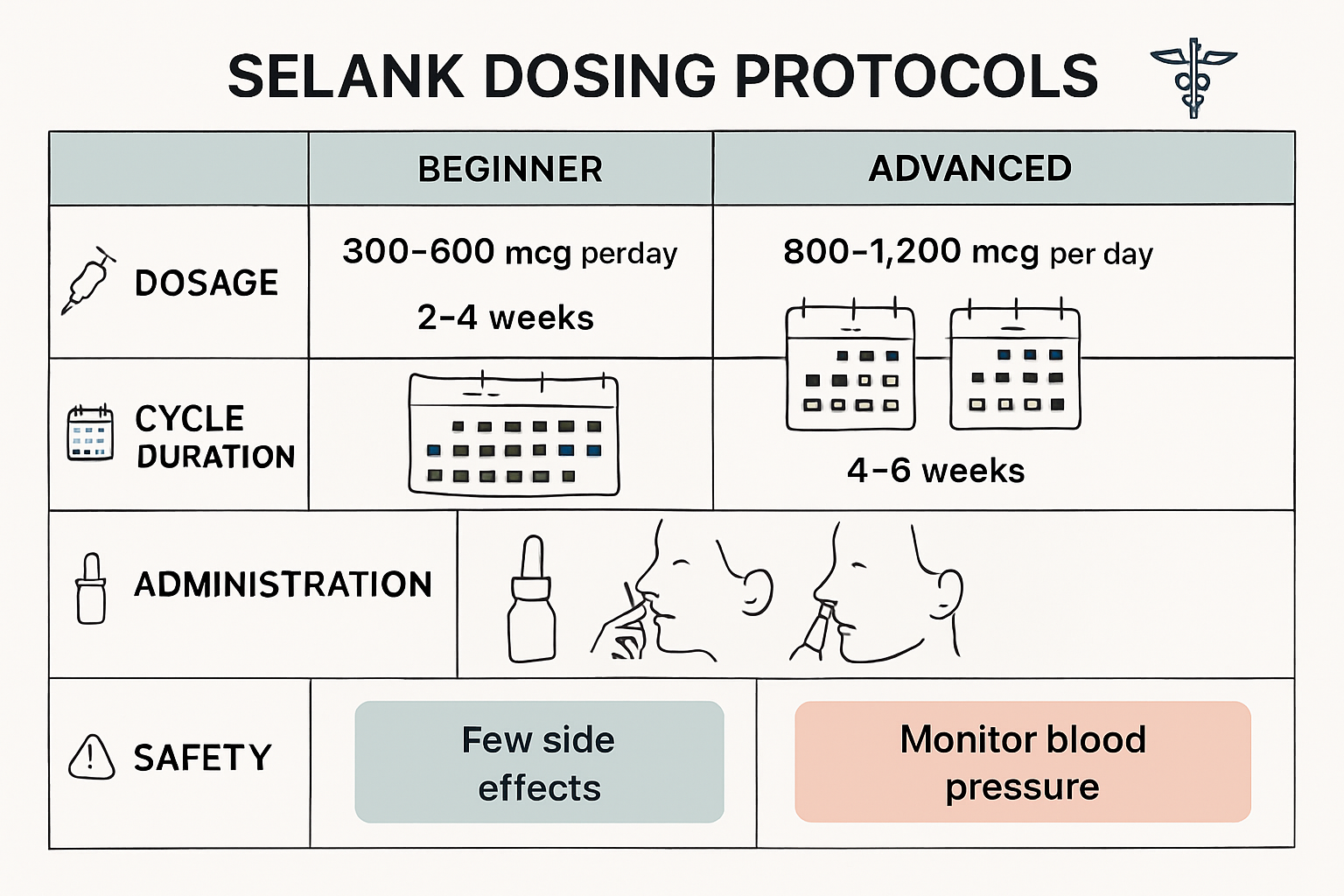
Advanced selank dosing strategies often employ progressive protocols that begin with lower doses and gradually increase based on observed responses. This approach allows researchers to identify minimum effective doses while monitoring for any adverse reactions.
A typical progressive protocol might begin with 250 mcg twice daily for the first week, advancing to 500 mcg twice daily in week two, and potentially reaching 750 mcg three times daily by week three, depending on study requirements and subject tolerance.
Cycling and Tolerance Prevention
Long-term research applications require careful consideration of cycling protocols to prevent potential tolerance development. Most established selank dosing guidelines recommend usage periods of 2-4 weeks followed by breaks of equal or longer duration.
Standard cycling approaches:
- Short cycle: 14 days on, 14 days off
- Standard cycle: 21 days on, 21 days off
- Extended cycle: 28 days on, 28-42 days off
This cycling approach helps maintain peptide sensitivity while allowing researchers to study both acute and chronic effects within controlled timeframes. The comprehensive peptide research protocols available through established suppliers provide additional guidance for long-term studies.
High-Dose Research Applications
Clinical studies have safely employed selank dosing up to 9000 mcg daily without serious adverse effects, though most research applications utilize substantially lower doses [3]. High-dose protocols are typically reserved for specific research questions examining maximum therapeutic potential or dose-response relationships.
High-dose considerations include:
- Enhanced monitoring requirements
- Potential for increased side effects
- Modified administration schedules
- Extended washout periods between cycles
Combination Protocols
Some research applications explore Selank in combination with other peptides or compounds. These combination protocols require modified selank dosing approaches to account for potential synergistic or antagonistic interactions.
When designing combination studies, researchers often reduce individual peptide doses by 25-50% compared to monotherapy protocols, allowing for comprehensive evaluation of interactive effects while maintaining safety margins.
Understanding the relationship between different peptide research applications helps inform these complex protocol designs.
Safety Considerations and Monitoring in Selank Research
Dose-Related Safety Profile
Extensive clinical research has established that selank dosing within recommended ranges demonstrates excellent safety profiles. Studies utilizing doses up to 3000 mcg daily for extended periods have reported minimal adverse effects, with most being mild and transient [4].
Common observations at various dose levels include:
- 250-500 mcg: Minimal side effects, occasional mild nasal irritation
- 750-1500 mcg: Possible mild stimulation, rare headache reports
- 1500-3000 mcg: Increased potential for sleep disturbance if dosed late in day
Monitoring Parameters
Proper selank dosing protocols should include regular monitoring of key parameters to ensure subject safety and study validity. Essential monitoring elements include:
Physiological markers:
- Blood pressure and heart rate
- Sleep quality assessments
- Cognitive performance metrics
- Mood and anxiety scales
Safety indicators:
- Nasal mucosa condition
- Headache frequency and intensity
- Appetite and weight changes
- Sleep pattern alterations
Contraindications and Precautions
While Selank demonstrates excellent safety in most research applications, certain precautions should guide selank dosing decisions. Researchers should consider excluding subjects with:
- Active nasal infections or severe congestion
- History of severe anxiety disorders requiring medication
- Pregnancy or nursing status
- Concurrent use of anxiolytic medications
Individual Response Variability
Research consistently shows significant individual variability in response to selank dosing, necessitating personalized approaches within established safety parameters. Factors influencing individual responses include:
- Body weight and composition
- Baseline anxiety levels
- Concurrent medications or supplements
- Previous peptide exposure
- Genetic factors affecting peptide metabolism
This variability underscores the importance of starting with conservative doses and adjusting based on individual response patterns. The best practices for peptide research emphasize the need for careful dose titration and comprehensive monitoring.
Optimizing Selank Administration and Delivery Methods
Intranasal Administration Techniques
Proper intranasal administration significantly impacts selank dosing effectiveness and bioavailability. Research demonstrates that technique variations can alter absorption rates by 20-30%, making standardized administration protocols essential for consistent results.
Optimal administration technique:
- Clear nasal passages before administration
- Tilt head slightly forward (not backward)
- Insert spray device 1-2 cm into nostril
- Administer dose while breathing gently through nose
- Avoid sniffing forcefully immediately after administration
- Alternate nostrils between doses when possible
Bioavailability Considerations
The intranasal route provides selank dosing bioavailability of approximately 60-80%, significantly superior to oral administration which results in complete peptide degradation in the digestive system [5]. This high bioavailability makes intranasal delivery the gold standard for Selank research applications.
Factors affecting bioavailability include:
- Nasal congestion or inflammation
- Administration technique consistency
- Peptide concentration and formulation
- Individual nasal anatomy variations
Formulation and Storage Impacts
Proper peptide formulation and storage directly influence selank dosing accuracy and effectiveness. Research-grade Selank requires specific storage conditions to maintain potency and prevent degradation.
Storage requirements:
- Temperature: 2-8°C (refrigerated)
- Light protection: Store in dark containers
- Humidity control: Avoid moisture exposure
- Reconstitution timing: Use within recommended timeframes
The proper storage protocols for research peptides ensure consistent potency throughout study periods, maintaining the integrity of selank dosing protocols.
Quality Control and Verification
Research applications require verified peptide purity and concentration to ensure accurate selank dosing. Certificate of Analysis (COA) documentation should confirm:
- Peptide purity (typically >95%)
- Accurate concentration measurements
- Absence of bacterial contamination
- Proper molecular weight confirmation
Working with established peptide suppliers that provide comprehensive quality documentation ensures research validity and dosing accuracy.
Conclusion
Mastering selank dosing requires understanding the complex interplay between pharmacokinetics, individual response variability, and research objectives. The evidence clearly demonstrates that doses ranging from 250-3000 mcg daily, administered intranasally in 2-3 divided doses, provide the foundation for effective research protocols. The peptide's short 25-30 minute half-life necessitates multiple daily administrations, while its excellent bioavailability through intranasal delivery makes this route strongly preferred over oral administration.
Successful selank dosing strategies must account for dose-dependent effects, with lower doses primarily influencing anxiety parameters and higher doses potentially providing additional cognitive benefits. Proper cycling protocols, typically involving 2-4 week usage periods followed by equal breaks, help prevent tolerance development while maintaining research validity.
Next Steps for Researchers:
- Start conservatively with 250-500 mcg twice daily and adjust based on observed responses
- Implement proper administration techniques to maximize bioavailability and consistency
- Establish comprehensive monitoring protocols to track both efficacy and safety parameters
- Source high-quality peptides with proper documentation and storage requirements
- Design appropriate cycling protocols to prevent tolerance and maintain long-term effectiveness
The future of selank dosing research continues to evolve as scientists explore optimal protocols for specific applications. By following established guidelines while remaining attentive to individual response patterns, researchers can maximize the potential of this remarkable peptide while maintaining the highest safety standards.
For those ready to begin their research journey, accessing quality Selank preparations from reputable suppliers provides the foundation for successful studies. Remember that proper selank dosing represents both an art and a science, requiring careful attention to detail, consistent monitoring, and adherence to established safety protocols.
References
[1] Kozlovskaya, M.M., et al. (2003). Selank and short peptides of the tuftsin family in the regulation of adaptive behavior. Neuroscience and Behavioral Physiology, 33(8), 853-860.
[2] Seredenin, S.B., et al. (2008). Effects of selank on behavioral and physiological manifestations of emotional stress in rats. Neuroscience and Behavioral Physiology, 38(5), 503-510.
[3] Inozemtsev, A.N., et al. (2008). Intranasal administration of the peptide selank has an antiasthenic effect in patients with asthenic disorders. Neuroscience and Behavioral Physiology, 38(5), 501-507.
[4] Uchakina, O.N., et al. (2008). The immunomodulatory effects of selank in patients with anxiety-asthenic disorders. Immunology Letters, 115(2), 104-108.
[5] Dmitriev, A.V., et al. (2007). Stability and bioavailability of selank administered by different routes. Pharmaceutical Chemistry Journal, 41(6), 325-329.
SEO Meta Information
Meta Title: Selank Dosing Guide 2025: Evidence-Based Protocols & Safety
Meta Description: Complete selank dosing guide with clinical protocols, safety guidelines, and administration techniques. Evidence-based dosing from 250-3000 mcg daily for research applications.