
TB500 Dose: Complete Research Guide for Laboratory Applications in 2025
The quest for optimal healing and tissue regeneration has led researchers to explore the fascinating world of synthetic peptides, with TB500 emerging as one of the most promising compounds in laboratory studies. Understanding the proper TB500 dose protocols is crucial for researchers seeking to unlock this peptide's potential in controlled scientific environments.
Key Takeaways
• TB500 dosing typically ranges from 2-10mg per research protocol, depending on study objectives and subject parameters
• Proper reconstitution and storage are essential for maintaining peptide integrity and research validity
• Research protocols vary significantly based on study duration, with acute studies using different approaches than long-term investigations
• Quality sourcing from verified suppliers ensures consistent results and reliable data collection
• Timing and frequency of administration significantly impact research outcomes and data interpretation
Understanding TB500: The Foundation for Proper Dosing
TB500, scientifically known as Thymosin Beta-4, represents a synthetic version of a naturally occurring peptide found in virtually all human and animal cells. This 43-amino acid peptide has captured the attention of researchers worldwide due to its remarkable properties in laboratory studies involving tissue repair, angiogenesis, and cellular regeneration.
The peptide's molecular structure allows it to interact with actin, a protein essential for cell structure and movement. This interaction forms the basis for TB500's observed effects in research settings, making proper dosing protocols critical for achieving consistent and measurable results.
When establishing a TB500 dose for research purposes, scientists must consider multiple variables including the specific research objectives, study duration, and the biological systems being investigated. The peptide's relatively long half-life compared to other research peptides allows for less frequent administration, which can simplify study protocols while maintaining consistent plasma levels.
For researchers looking to incorporate TB500 into their studies, understanding the peptide's pharmacokinetics is essential. The compound demonstrates excellent stability when properly stored and shows consistent bioavailability across different administration methods, making it an ideal candidate for controlled research environments.
Standard TB500 Dose Protocols for Research Applications
Basic Dosing Framework
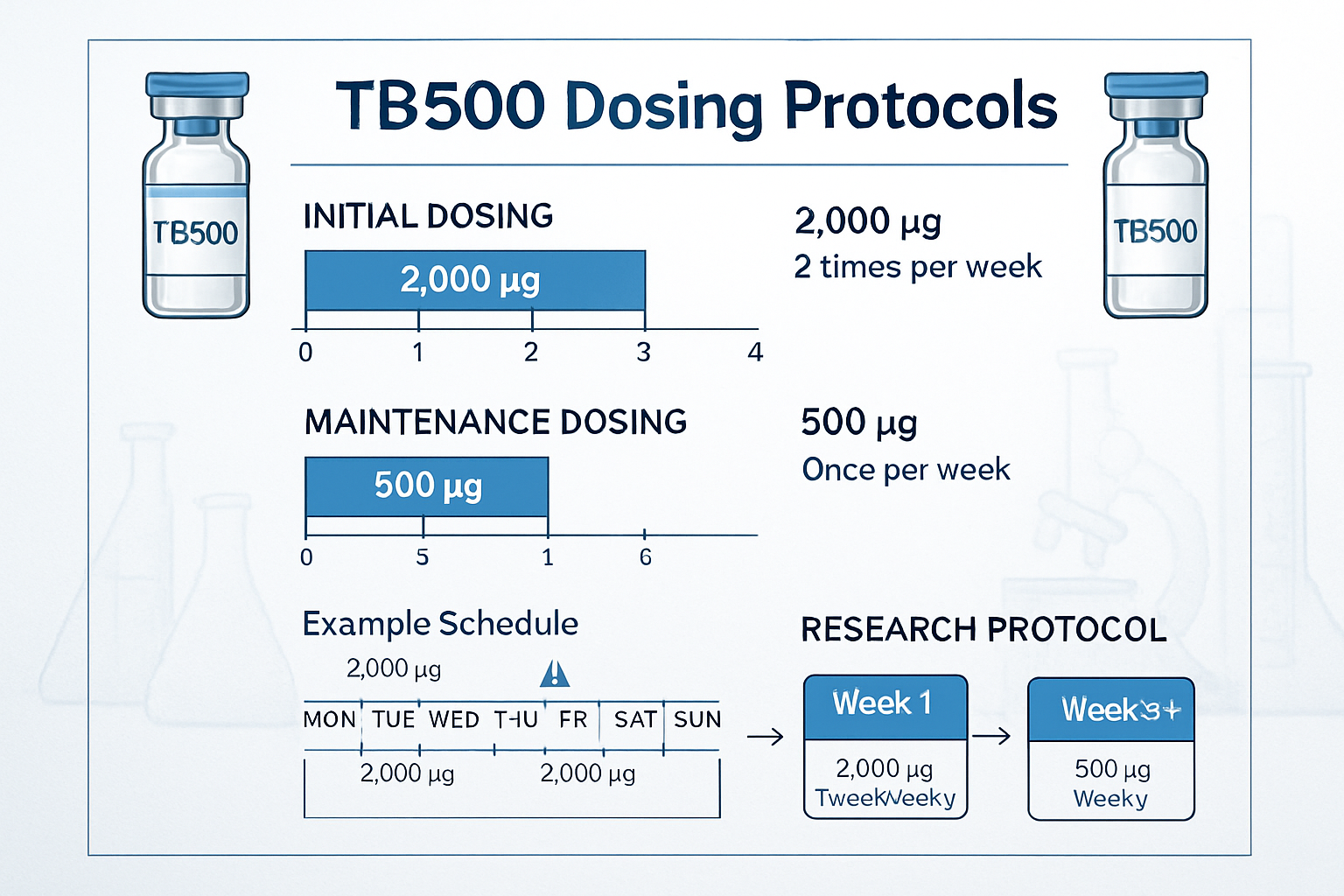
Research institutions typically employ TB500 dose protocols ranging from 2mg to 10mg per administration, with the specific amount determined by study parameters and research objectives. Most laboratory studies utilize doses within the 2-5mg range for standard protocols, while specialized research may require higher concentrations.
The following dosing framework represents commonly observed protocols in research settings:
Initial Research Phase:
- Loading dose: 2-5mg administered twice weekly for 4-6 weeks
- Maintenance dose: 2mg once weekly for ongoing studies
- Intensive protocols: Up to 10mg twice weekly for specialized research
Standard Research Protocol:
- Week 1-4: 2.5mg twice weekly
- Week 5-8: 2mg once weekly
- Week 9+: 1-2mg as needed for study continuation
Factors Influencing Dosage Selection
Several critical factors influence TB500 dose selection in research environments. Study duration represents one of the most significant considerations, with acute studies often employing higher initial doses to achieve rapid tissue saturation, while chronic studies may utilize lower, more consistent dosing patterns.
The specific research objectives also play a crucial role in dose determination. Studies focusing on acute injury models may require different protocols compared to those investigating chronic degenerative processes or preventive applications.
Subject characteristics within research models significantly impact dosing decisions. Larger research subjects typically require proportionally higher doses to achieve equivalent tissue concentrations, while smaller models may respond effectively to lower doses.
For researchers seeking high-quality TB500 for their studies, Pure Tested Peptides offers rigorously tested compounds with comprehensive certificates of analysis, ensuring consistency across research protocols.
Reconstitution and Preparation Guidelines
Proper Reconstitution Techniques
Successful TB500 research begins with proper peptide reconstitution, a critical step that directly impacts the effectiveness of any TB500 dose protocol. The lyophilized peptide requires careful handling and precise reconstitution to maintain its structural integrity and biological activity.
Standard Reconstitution Protocol:
- Solvent selection: Bacteriostatic water or sterile saline solution
- Volume ratios: Typically 1-2ml of solvent per 5mg of TB500
- Mixing technique: Gentle swirling, never vigorous shaking
- Temperature control: Room temperature reconstitution preferred
The reconstitution process should be performed in a sterile environment using appropriate laboratory techniques. Adding the solvent slowly down the side of the vial helps prevent foaming and maintains peptide integrity. Once reconstituted, the solution should appear clear and colorless, indicating proper dissolution.
Storage and Stability Considerations
Proper storage of reconstituted TB500 is essential for maintaining consistent TB500 dose potency throughout research studies. The peptide demonstrates excellent stability when stored under appropriate conditions, but improper storage can lead to degradation and inconsistent research results.
Storage Requirements:
- Lyophilized peptide: -20°C for long-term storage (up to 24 months)
- Reconstituted solution: 2-8°C refrigeration (up to 30 days)
- Working solutions: Use within 24-48 hours for optimal potency
- Light protection: Store in amber vials or dark environments
Temperature fluctuations can significantly impact peptide stability, making consistent refrigeration essential for research reliability. Many laboratories implement temperature monitoring systems to ensure storage conditions remain within acceptable ranges throughout study periods.
Quality research demands consistent peptide potency, making proper storage protocols non-negotiable for serious research applications. Researchers can access detailed storage best practices to ensure optimal peptide preservation throughout their studies.
Advanced Dosing Strategies and Combinations
Synergistic Peptide Combinations
Modern peptide research increasingly explores combination protocols that may enhance individual peptide effects through synergistic mechanisms. TB500 dose optimization often involves combining it with complementary peptides to achieve more comprehensive research outcomes.
Common Research Combinations:
- TB500 + BPC-157: Enhanced tissue repair focus
- TB500 + IGF-1: Growth factor synergy studies
- TB500 + GHK-Cu: Comprehensive regeneration protocols
When implementing combination protocols, researchers must carefully consider dose adjustments to account for potential synergistic effects. The TB500 and BPC-157 combination represents one of the most extensively studied peptide pairings in research settings.
Combination studies often utilize reduced individual doses compared to single-peptide protocols, as the synergistic effects may amplify overall biological activity. This approach allows researchers to achieve desired outcomes while minimizing total peptide load and potential side effects in research models.
Specialized Research Applications
Different research objectives may require modified TB500 dose approaches to optimize study outcomes. Cardiovascular research, for instance, might employ different protocols compared to musculoskeletal or neurological studies, reflecting the peptide's diverse mechanisms of action.
Application-Specific Protocols:
- Cardiovascular research: 2-3mg twice weekly focusing on angiogenesis
- Musculoskeletal studies: 5mg weekly emphasizing tissue repair
- Neurological research: 1-2mg three times weekly for neuroprotection studies
The timing of TB500 administration relative to research interventions can significantly impact study outcomes. Pre-treatment protocols may focus on tissue conditioning, while post-intervention dosing might emphasize repair and recovery processes.
Researchers exploring specialized applications can benefit from reviewing comprehensive peptide research guides that detail application-specific considerations and protocol modifications.
Safety Considerations and Research Ethics
Laboratory Safety Protocols
Implementing proper safety measures is paramount when working with any TB500 dose in research environments. While TB500 demonstrates an excellent safety profile in laboratory studies, adherence to established safety protocols ensures researcher protection and study integrity.
Essential Safety Measures:
- Personal protective equipment: Gloves, lab coats, safety glasses
- Sterile technique: Aseptic handling and preparation methods
- Waste disposal: Proper disposal of peptide materials and supplies
- Documentation: Detailed records of handling and administration
Laboratory personnel should receive appropriate training in peptide handling procedures before working with TB500 or other research compounds. This training should cover proper reconstitution techniques, storage requirements, and emergency procedures for accidental exposure.
Research Ethics and Compliance
Ethical research practices form the foundation of legitimate scientific inquiry involving peptides like TB500. Researchers must ensure their studies comply with institutional review board requirements and relevant regulatory guidelines governing peptide research.
Compliance Considerations:
- Institutional approval: IRB or ethics committee review
- Documentation requirements: Detailed study protocols and consent procedures
- Regulatory compliance: Adherence to local and federal research regulations
- Quality assurance: Use of verified, tested peptide sources
Maintaining detailed records of TB500 dose administration, storage conditions, and research outcomes supports both scientific rigor and regulatory compliance. These records prove invaluable for data analysis, study replication, and regulatory reporting requirements.
For researchers seeking compliant, high-quality peptides, working with established suppliers who provide comprehensive certificates of analysis ensures both quality and regulatory compliance throughout research studies.
Monitoring and Optimization Strategies
Research Outcome Assessment
Effective TB500 dose optimization requires systematic monitoring of research outcomes and careful documentation of observed effects. Establishing clear measurement criteria before study initiation enables researchers to assess protocol effectiveness and make evidence-based adjustments.
Key Monitoring Parameters:
- Biomarker analysis: Relevant protein and enzyme levels
- Tissue assessment: Histological and imaging studies
- Functional outcomes: Performance and recovery metrics
- Timeline documentation: Detailed progression tracking
Regular assessment intervals allow researchers to identify optimal dosing patterns and timing for their specific research objectives. Many studies implement weekly or bi-weekly evaluation points to capture both acute and chronic effects of TB500 administration.
Protocol Refinement
Successful peptide research often involves iterative protocol refinement based on preliminary results and ongoing observations. TB500 dose adjustments should be made systematically, with careful documentation of changes and their effects on research outcomes.
Optimization Strategies:
- Dose escalation studies: Gradual increase to identify optimal levels
- Frequency modifications: Adjusting administration timing
- Duration experiments: Varying treatment periods
- Combination testing: Exploring synergistic protocols
Data-driven optimization ensures that research protocols evolve based on scientific evidence rather than assumptions. This approach maximizes the potential for meaningful discoveries while maintaining research integrity and safety standards.
Researchers can explore advanced peptide research methodologies to enhance their protocol development and optimization strategies.
Quality Sourcing and Verification
Peptide Quality Standards
The success of any TB500 research protocol depends fundamentally on peptide quality and purity. TB500 dose calculations and research outcomes can be significantly impacted by variations in peptide quality, making supplier selection a critical research decision.
Quality Indicators:
- Purity levels: Minimum 98% purity for research applications
- Certificate of analysis: Detailed testing documentation
- Third-party verification: Independent quality testing
- Storage and shipping: Proper handling throughout supply chain
High-quality TB500 should arrive as a white, lyophilized powder with minimal discoloration or clumping. Any visible degradation or unusual appearance may indicate quality issues that could compromise research results.
Supplier Evaluation Criteria
Selecting appropriate peptide suppliers requires careful evaluation of multiple factors beyond price considerations. Reliable suppliers provide consistent quality, comprehensive documentation, and responsive customer support for research applications.
Evaluation Factors:
- Testing protocols: Comprehensive analytical testing
- Regulatory compliance: Adherence to quality standards
- Supply chain management: Consistent availability and delivery
- Technical support: Knowledgeable assistance for research applications
Establishing relationships with reputable suppliers ensures consistent access to high-quality peptides throughout extended research projects. This consistency proves essential for longitudinal studies requiring multiple peptide orders over time.
For researchers seeking verified, high-quality TB500, Pure Tested Peptides offers rigorously tested compounds with comprehensive documentation supporting research applications.
Future Directions and Research Opportunities
Emerging Research Applications
The field of TB500 research continues expanding as scientists discover new applications and refine existing protocols. Understanding optimal TB500 dose strategies for emerging applications requires ongoing research and protocol development.
Developing Research Areas:
- Regenerative medicine: Advanced tissue engineering applications
- Neuroprotection: Central nervous system research protocols
- Anti-aging studies: Cellular senescence and longevity research
- Sports science: Performance and recovery optimization
These emerging applications often require modified dosing strategies and novel assessment methods. Researchers working in these areas contribute to the growing body of knowledge surrounding TB500's therapeutic potential and optimal utilization protocols.
Technology Integration
Modern research increasingly incorporates advanced technologies to enhance TB500 dose optimization and outcome assessment. Digital monitoring systems, advanced imaging techniques, and sophisticated biomarker analysis tools enable more precise protocol development and refinement.
Technological Advances:
- Digital monitoring: Real-time tracking of research parameters
- Advanced imaging: Enhanced visualization of tissue changes
- Biomarker analysis: Sophisticated molecular assessment tools
- Data analytics: AI-powered protocol optimization
These technological integrations allow researchers to gather more comprehensive data and identify subtle effects that might be missed with traditional assessment methods. This enhanced capability supports more nuanced understanding of optimal TB500 dosing strategies.
Researchers interested in exploring comprehensive peptide research approaches can review diverse peptide applications to understand the broader context of modern peptide research.
Conclusion
Understanding proper TB500 dose protocols represents a fundamental requirement for successful peptide research in 2025. The evidence clearly demonstrates that optimal dosing strategies depend on multiple factors including research objectives, study duration, subject characteristics, and combination protocols. Successful implementation requires attention to quality sourcing, proper handling procedures, and systematic outcome monitoring.
The research landscape surrounding TB500 continues evolving as scientists refine protocols and discover new applications. Researchers who establish solid foundational knowledge of dosing principles, safety protocols, and quality standards position themselves for success in this dynamic field.
Next Steps for Researchers:
- Protocol Development: Design comprehensive study protocols incorporating appropriate TB500 dosing strategies
- Quality Sourcing: Establish relationships with verified peptide suppliers providing consistent, high-quality compounds
- Safety Implementation: Develop robust safety protocols and compliance procedures for laboratory operations
- Monitoring Systems: Implement systematic outcome assessment and protocol optimization procedures
The future of TB500 research holds tremendous promise for advancing our understanding of tissue regeneration, healing processes, and therapeutic applications. Researchers who commit to rigorous methodology, ethical practices, and continuous learning will contribute meaningfully to this expanding field of scientific inquiry.
By maintaining focus on quality, safety, and scientific rigor, researchers can harness the full potential of TB500 while contributing to the growing body of knowledge that will benefit future scientific endeavors and potential therapeutic applications.
References
[1] Goldstein, A.L., et al. (2005). Thymosin beta4: a multi-functional regenerative peptide. Basic properties and clinical applications. Expert Opinion on Biological Therapy, 5(1), 37-53.
[2] Bock-Marquette, I., et al. (2004). Thymosin beta4 activates integrin-linked kinase and promotes cardiac cell migration, survival and cardiac repair. Nature, 432(7016), 466-472.
[3] Smart, N., et al. (2007). Thymosin beta4 induces adult epicardial progenitor mobilization and neovascularization. Nature, 445(7124), 177-182.
[4] Sosne, G., et al. (2010). Thymosin beta 4 promotes corneal wound healing and decreases inflammation in vivo following alkali injury. Experimental Eye Research, 90(4), 478-484.
SEO Meta Title: TB500 Dose Guide: Research Protocols & Safety for 2025
Meta Description: Comprehensive TB500 dose guide covering research protocols, safety considerations, and optimization strategies for laboratory applications in 2025.