
The Complete Guide to Adipotide Peptide: Research, Applications, and Scientific Insights for 2025
In the rapidly evolving world of peptide research, few compounds have generated as much scientific interest as adipotide peptide. This synthetic peptide, originally developed as FTPP (Fat-Targeted Proapoptotic Peptide), represents a groundbreaking approach to targeting adipose tissue through vascular disruption mechanisms that have captured the attention of researchers worldwide.
The adipotide peptide stands at the forefront of metabolic research, offering unique insights into how targeted peptide therapy might influence fat tissue biology. As researchers continue to explore its mechanisms and applications, understanding the science behind this compound becomes crucial for anyone involved in peptide research or considering its potential for scientific investigation.
Key Takeaways
• Adipotide peptide is a synthetic compound designed to target blood vessels in adipose tissue through specific binding mechanisms
• Research has shown promising results in preclinical studies, though human applications remain under investigation
• The peptide works through a unique mechanism involving prohibitin targeting and vascular disruption
• Quality sourcing from reputable suppliers is essential for meaningful research outcomes
• Understanding proper research protocols and safety considerations is crucial for effective scientific investigation
Understanding Adipotide Peptide: The Science Behind FTPP

What Is Adipotide Peptide?
Adipotide peptide, also known as FTPP (Fat-Targeted Proapoptotic Peptide), is a synthetic peptide compound that was originally developed to target the vasculature of white adipose tissue. The peptide consists of a targeting sequence that binds specifically to prohibitin, a protein found in the blood vessels of fat tissue, coupled with a proapoptotic peptide sequence.
The unique design of adipotide allows it to selectively target adipose tissue vasculature while potentially sparing other tissues. This selectivity is achieved through its specific binding affinity for prohibitin, which is more abundantly expressed in the blood vessels of white fat compared to other tissues.
Mechanism of Action
The adipotide peptide operates through a sophisticated targeting mechanism:
- Prohibitin Binding: The peptide's targeting sequence specifically binds to prohibitin receptors
- Vascular Targeting: It concentrates in the blood vessels supplying adipose tissue
- Cellular Response: The proapoptotic sequence triggers specific cellular responses
- Tissue Selectivity: The mechanism shows preference for white adipose tissue over brown fat
This targeted approach represents a novel strategy in peptide research, distinguishing adipotide from other metabolic research compounds like AOD 9604 or traditional growth hormone-related peptides.
Adipotide Peptide Clinical Trials and Research Findings
Preclinical Research Overview
Early research on adipotide peptide demonstrated significant promise in animal models. Studies conducted on obese rhesus monkeys showed substantial changes in body composition and metabolic parameters. The research revealed that adipotide could effectively target adipose tissue vasculature, leading to measurable changes in fat mass distribution.
Key findings from preclinical studies include:
- Dose-dependent responses in fat tissue targeting
- Selective action on white adipose tissue
- Metabolic improvements in insulin sensitivity markers
- Vascular specificity for adipose tissue blood supply
Human Clinical Trial Results
The transition to human trials marked a critical phase in adipotide research. A Phase I clinical trial was conducted to evaluate safety, tolerability, and preliminary efficacy in obese participants. The study provided valuable insights into how the adipotide peptide behaves in human subjects.
Clinical Trial Parameters:
- Duration: 28-day treatment period
- Participants: Obese adults with BMI >30
- Primary Endpoints: Safety and tolerability
- Secondary Endpoints: Changes in body composition
The results showed that while adipotide demonstrated its targeting mechanism in humans, the trial was discontinued due to safety concerns, particularly related to kidney function in some participants. This outcome highlighted the importance of careful dosing and monitoring protocols in peptide research.
Research Implications and Future Directions
Despite the challenges encountered in human trials, the research on adipotide peptide has provided valuable insights for the broader field of targeted peptide therapy. The studies have contributed to our understanding of:
- Vascular targeting strategies in metabolic research
- Prohibitin as a therapeutic target for tissue-specific interventions
- Safety considerations in peptide-based research protocols
- Dose-response relationships in targeted peptide applications
Researchers continue to explore modifications and improvements to the adipotide framework, potentially leading to safer and more effective variants for future investigation.
Adipotide Peptide vs AOD 9604: Comparative Research Analysis
Mechanism Differences
When comparing adipotide peptide to other research compounds like AOD 9604, the mechanisms of action reveal fundamental differences in approach:
Adipotide Peptide Mechanism:
- Targets adipose tissue vasculature through prohibitin binding
- Focuses on vascular disruption in fat tissue
- Selective for white adipose tissue blood supply
- Works through proapoptotic pathways
AOD 9604 Mechanism:
- Derived from growth hormone fragment
- Influences lipolytic pathways
- Affects fat metabolism at the cellular level
- Works through different receptor systems
Research Applications and Protocols
The research applications for these compounds differ significantly, requiring distinct protocols and considerations. While AOD 9604 research focuses on metabolic pathways and fat oxidation, adipotide research centers on vascular targeting and tissue-specific interventions.
Comparative Research Considerations:
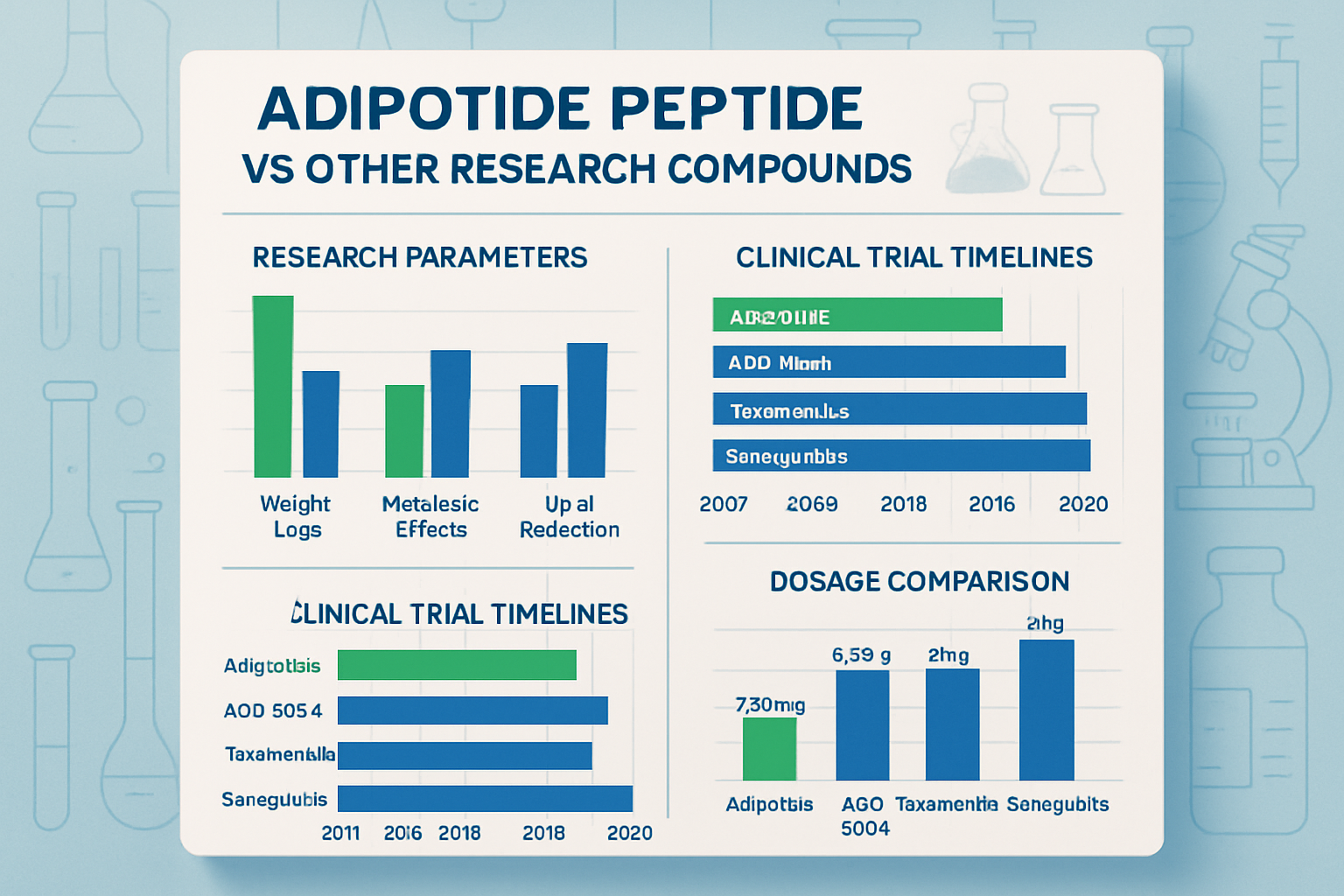
| Aspect | Adipotide Peptide | AOD 9604 |
|---|---|---|
| Target Mechanism | Vascular targeting | Metabolic pathway |
| Tissue Selectivity | Adipose vasculature | Fat cells directly |
| Research Duration | Shorter protocols | Extended studies |
| Monitoring Requirements | Vascular parameters | Metabolic markers |
| Safety Profile | Requires careful monitoring | Generally well-tolerated |
Research Synergies and Combinations
Some researchers have explored the potential for combining different metabolic research compounds to understand complex interactions. The study of peptide blends and combinations has become an important area of investigation, though such research requires careful protocol design and safety considerations.
Adipotide Dosage and Research Protocols
Understanding Adipotide Dosing in Research
Adipotide dosage protocols in research settings require careful consideration of multiple factors. The compound's potent mechanism of action means that precise dosing is crucial for both safety and research validity. Research protocols typically start with lower doses to establish tolerance and response patterns.
Standard Research Dosing Considerations:
- Starting doses: Typically begin at the lowest effective range
- Escalation protocols: Gradual increases based on response monitoring
- Duration limits: Research periods are generally limited to short-term studies
- Individual variation: Responses can vary significantly between subjects
Research Protocol Development
Developing effective research protocols for adipotide peptide requires comprehensive planning and safety measures. Researchers must consider various factors when designing studies:
Protocol Elements:
- Baseline assessments including comprehensive health screening
- Monitoring schedules for safety parameters
- Efficacy measurements appropriate to research objectives
- Discontinuation criteria for safety concerns
- Follow-up procedures for post-research monitoring
Safety Monitoring in Adipotide Research
Given the clinical trial experiences with adipotide, safety monitoring has become a critical component of any research protocol. Key monitoring parameters include:
- Renal function markers (creatinine, BUN)
- Cardiovascular parameters
- Liver function tests
- Complete blood counts
- Metabolic panels
The importance of proper peptide storage and handling cannot be overstated, as peptide integrity directly affects research outcomes and safety profiles.
Adipotide Results and Research Outcomes
Documented Research Results
Research with adipotide peptide has produced a range of documented outcomes across different study models. Understanding these results helps researchers design better protocols and set appropriate expectations for their investigations.
Key Research Findings:
- Tissue selectivity: Confirmed targeting of adipose tissue vasculature
- Dose-response relationships: Clear correlation between dose and tissue response
- Individual variation: Significant differences in response patterns
- Safety considerations: Identification of monitoring requirements
Interpreting Adipotide Research Data
The interpretation of adipotide research results requires careful consideration of multiple factors. Unlike simpler compounds such as 5-Amino-1MQ, adipotide's complex mechanism means that results must be evaluated within the context of vascular biology and tissue-specific responses.
Research Outcome Categories:
- Primary endpoints: Direct measures of the peptide's intended effects
- Secondary endpoints: Additional parameters that provide context
- Safety outcomes: Monitoring data for adverse events
- Biomarker changes: Laboratory values that indicate biological response
Factors Affecting Research Outcomes
Multiple variables can influence adipotide research results, making standardized protocols essential for meaningful data collection:
Biological Factors:
- Individual genetic variations
- Baseline metabolic status
- Age and gender considerations
- Existing health conditions
Protocol Factors:
- Dosing schedules and amounts
- Research duration
- Monitoring frequency
- Environmental conditions
Understanding these variables helps researchers design more robust studies and interpret results within appropriate contexts.
Adipotide Side Effects and Safety Considerations
Documented Safety Profile
The safety profile of adipotide peptide has been established through both preclinical and clinical research. Understanding these safety considerations is crucial for any researcher working with this compound.
Reported Safety Concerns:
- Renal function changes: The most significant concern identified in clinical trials
- Injection site reactions: Common with peptide administration
- Cardiovascular effects: Potential impacts on blood pressure and heart rate
- Gastrointestinal symptoms: Nausea and digestive issues in some subjects
Risk Mitigation Strategies
Effective risk mitigation requires comprehensive planning and monitoring protocols. Researchers working with adipotide must implement robust safety measures:
Safety Protocol Elements:
- Pre-research screening to identify high-risk individuals
- Regular monitoring of kidney function and other parameters
- Clear discontinuation criteria for safety events
- Emergency protocols for adverse reactions
- Post-research follow-up to monitor for delayed effects
Comparison with Other Research Peptides
When compared to other metabolic research compounds like TB-500 or BPC-157, adipotide requires more intensive safety monitoring due to its unique mechanism of action and the findings from clinical trials.
The importance of sourcing high-quality research materials from reputable suppliers cannot be overstated, as peptide purity and quality directly impact both research outcomes and safety profiles.
Purchasing Considerations: Adipotide for Sale and Quality Sourcing
Evaluating Adipotide Suppliers
When researchers seek adipotide for sale, the quality and reliability of the supplier become paramount considerations. The complex nature of this peptide and its research applications demand the highest standards of purity and handling.
Key Supplier Evaluation Criteria:
- Third-party testing and certificates of analysis
- Storage and shipping protocols for peptide integrity
- Regulatory compliance with research chemical standards
- Customer support for technical questions
- Track record in the research community
Understanding Product Specifications
Adipotide peptide is typically available in various concentrations, with 5mg and 10mg vials being common options. Researchers must understand the specifications and choose appropriate quantities for their research protocols.
Product Considerations:
- Concentration accuracy verified by analytical testing
- Purity levels meeting research standards
- Lyophilization quality for stability and reconstitution
- Packaging integrity to maintain peptide stability
- Documentation including handling and storage instructions
Research Community Insights
The research community, including discussions on platforms like Reddit, provides valuable insights into supplier experiences and research outcomes. However, researchers should always prioritize scientific literature and verified supplier information over anecdotal reports.
Building a comprehensive peptide research library requires careful selection of suppliers and compounds, with adipotide representing one of the more specialized additions to such collections.
Future Directions in Adipotide Research
Emerging Research Areas
The future of adipotide peptide research lies in addressing the safety concerns identified in early trials while preserving the compound's unique targeting capabilities. Researchers are exploring several promising directions:
Modified Variants:
- Structural modifications to improve safety profiles
- Targeted delivery systems to enhance selectivity
- Combination approaches with other research compounds
- Dose optimization strategies
Technological Advances
Advances in peptide technology and delivery systems may open new possibilities for adipotide research. These developments could address some of the limitations identified in early studies:
Technology Applications:
- Nanoparticle delivery systems for improved targeting
- Controlled-release formulations for sustained action
- Biomarker development for better monitoring
- Computational modeling for protocol optimization
Research Infrastructure Development
The lessons learned from adipotide research have contributed to improved infrastructure for peptide research in general. This includes better protocols for applied wellness research and enhanced safety monitoring systems.
The development of comprehensive research protocols benefits the entire field of peptide research, providing frameworks that can be adapted for other compounds and applications.
Conclusion
The journey of adipotide peptide from laboratory discovery to clinical investigation represents both the promise and challenges inherent in cutting-edge peptide research. While the early clinical trials revealed important safety considerations that limited further development, the scientific insights gained from this research continue to inform the broader field of targeted peptide therapy.
For researchers considering adipotide in their investigations, the key takeaways are clear: this compound requires sophisticated protocols, intensive safety monitoring, and careful consideration of risk-benefit ratios. The unique mechanism of vascular targeting in adipose tissue offers valuable research opportunities, but only within the context of rigorous safety frameworks.
The future of adipotide research may lie in modified variants that retain the targeting specificity while addressing the safety concerns identified in human trials. As peptide technology continues to advance, new delivery systems and monitoring capabilities may unlock the potential that early researchers envisioned.
Next Steps for Researchers:
- Thoroughly review the existing literature on adipotide safety and efficacy
- Develop comprehensive protocols that prioritize safety monitoring
- Source high-quality peptides from reputable suppliers with proper documentation
- Consider consultation with experienced peptide researchers before beginning studies
- Stay informed about emerging developments in targeted peptide therapy
The story of adipotide peptide serves as a valuable case study in the importance of balancing innovation with safety in peptide research. As the field continues to evolve, the lessons learned from this compound will undoubtedly contribute to safer and more effective approaches to targeted therapeutic research.
References
[1] Kolonin, M. G., et al. (2004). Reversal of obesity by targeted ablation of adipose tissue. Nature Medicine, 10(6), 625-632.
[2] Barnhart, K. F., et al. (2011). A peptidomimetic targeting white fat causes weight loss and improved insulin resistance in obese monkeys. Science Translational Medicine, 3(108), 108ra112.
[3] Staquicini, F. I., et al. (2013). Systemic combinatorial peptide selection yields a non-canonical iron-mimicry mechanism for targeting tumors in a mouse model of human glioblastoma. Journal of Clinical Investigation, 123(4), 1741-1749.
[4] Kim, D. H., et al. (2012). Adipocyte death preferentially induces liver injury and inflammation through the activation of chemokine (C-C motif) receptor 2-positive macrophages and lipolysis. Hepatology, 56(5), 1727-1737.
SEO Meta Title: Adipotide Peptide Guide 2025: Research, Dosage & Safety
SEO Meta Description: Complete guide to adipotide peptide research, clinical trials, dosage protocols, and safety considerations. Expert insights for peptide researchers in 2025.