
Unveiling the "mots-c peptide dosage chart": A Research Guide for 2026
The realm of peptide research is continually expanding, offering fascinating insights into cellular function, metabolism, and longevity. Among the numerous peptides garnering significant attention, MOTS-c stands out for its intriguing role in mitochondrial health and metabolic regulation. Researchers and peptide enthusiasts often seek clear guidance, particularly regarding optimal administration strategies. This comprehensive article aims to demystify the complexities surrounding the mots-c peptide dosage chart, providing an authoritative resource for understanding its application in scientific studies and exploring its potential benefits in a controlled research environment as of 2026.
Key Takeaways
- MOTS-c is a Mitochondrial-Derived Peptide: MOTS-c plays a crucial role in regulating metabolic homeostasis, promoting mitochondrial health, and influencing cellular energy.
- Dosage Varies by Research Objective: The optimal mots-c peptide dosage chart in research settings is highly dependent on the specific study goals, organism, and desired biological effects.
- Administration Routes are Diverse: MOTS-c can be administered through various routes, including subcutaneous, intraperitoneal, and potentially oral, with each route impacting bioavailability and efficacy.
- Synergy with Other Peptides: Research suggests potential synergistic effects when MOTS-c is studied alongside other peptides like AOD-9604, offering avenues for combined therapeutic investigations.
- Ongoing Research is Key: The understanding of MOTS-c, its mechanisms, and the most effective dosage strategies is still evolving, necessitating continued rigorous scientific inquiry.
Understanding MOTS-c: The Mitochondrial Powerhouse Peptide
MOTS-c, or Mitochondrial Open Reading Frame of the 12S rRNA Type-c, is a relatively recently discovered peptide that has captivated the scientific community. Unlike many peptides derived from nuclear DNA, MOTS-c is encoded by mitochondrial DNA (mtDNA) [1]. This unique origin underscores its intimate connection to mitochondrial function, the powerhouses of our cells, which are critical for energy production and overall cellular health.
The primary function of MOTS-c peptide is closely linked to metabolic regulation. Studies indicate that it can enhance insulin sensitivity, improve glucose metabolism, and potentially contribute to cellular protection against various stressors [2]. These attributes make mots-c peptide a focal point in research related to metabolic disorders, aging, and exercise physiology. For those looking to explore this peptide in their research, detailed information on mots-c peptide can be found on specialized supplier sites.
The Biological Role of MOTS-c
MOTS-c acts as a mitokine, a signaling molecule that originates from mitochondria and influences cellular and systemic metabolism. It has been shown to:
- Improve Glucose Uptake: By activating the AMP-activated protein kinase (AMPK) pathway, MOTS-c helps cells take up glucose more efficiently, even in the presence of insulin resistance [3]. This is a significant area of focus for research into metabolic health.
- Enhance Mitochondrial Biogenesis: Research suggests that MOTS-c can stimulate the production of new mitochondria and improve the function of existing ones, leading to enhanced energy production and cellular resilience [4]. This makes it a fascinating subject for studies on anti-aging and athletic performance.
- Reduce Inflammation: Preliminary findings indicate that MOTS-c may possess anti-inflammatory properties, which could have implications for chronic inflammatory conditions [5].
- Promote Lipid Metabolism: Some studies suggest a role for MOTS-c in regulating lipid metabolism, potentially aiding in the reduction of fat accumulation [6].
These diverse biological actions highlight why researchers are keen to establish a reliable mots-c peptide dosage chart to effectively investigate these mechanisms. Understanding the intricacies of how this peptide works at a cellular level is paramount for advancing our knowledge in metabolic science.
The Importance of a Standardized MOTS-c Peptide Dosage Chart
For any research peptide, establishing a consistent and effective dosage is crucial for obtaining reproducible and meaningful results. Without a standardized mots-c peptide dosage chart, studies can be inconsistent, making it difficult to compare findings across different laboratories or experiments. The dosage can influence the intensity and duration of the observed effects, and too low a dose might yield no observable changes, while an excessively high dose could lead to unexpected outcomes.
Researchers often begin with in vitro (cell culture) studies to determine preliminary effective concentrations, then move to in vivo (animal model) studies to establish appropriate systemic dosages. These stages are critical in building the foundation for any potential human trials, though it is important to reiterate that MOTS-c is currently for research purposes only. Factors like the purity of the peptide, its stability, and the method of reconstitution also play a pivotal role in ensuring the accuracy of the administered dose. Researchers can find high-quality all peptides for sale from reputable suppliers to ensure experimental integrity.
Developing a Mots-c Peptide Dosage Chart for Research Protocols
Developing an accurate mots-c peptide dosage chart for research involves considering a multitude of factors. It is not a one-size-fits-all approach, as experimental goals, animal models, and desired outcomes dictate different dosing strategies. The scientific literature, while growing, still presents a range of dosages, underscoring the need for careful consideration in designing research protocols in 2026.
Key Factors Influencing Mots-c Peptide Dosage
When designing a research study involving mot-c peptide, several variables must be meticulously controlled to determine an effective dosage:
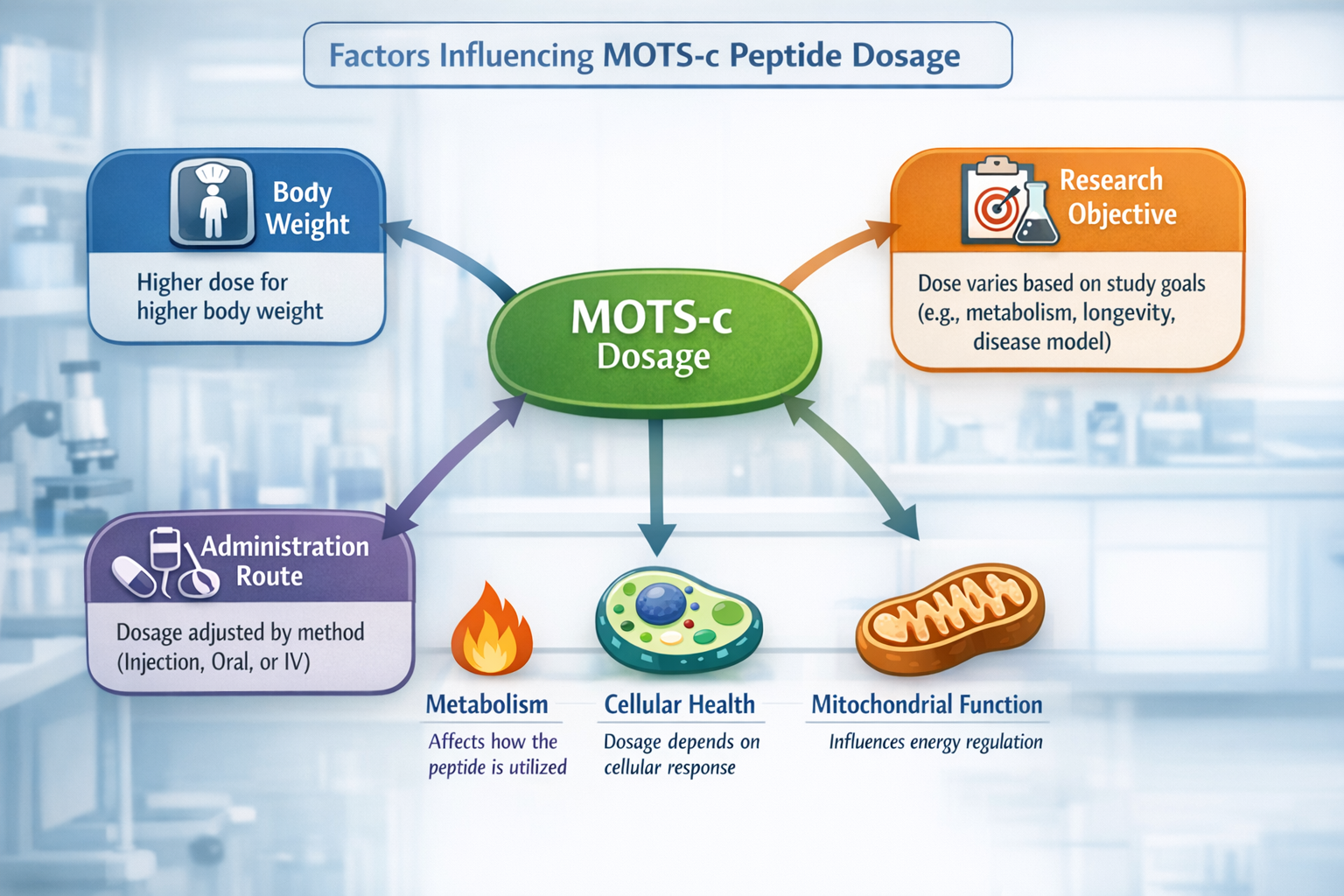
- Animal Model: Different species and strains of animals (e.g., mice, rats) metabolize and respond to peptides differently. What might be an effective dose in a mouse may not translate directly to a rat, let alone a larger mammal.
- Body Weight: Dosage is often calculated based on body weight (e.g., mg/kg), ensuring that the concentration of the peptide is proportional to the subject's size.
- Route of Administration: The method by which the mots c peptide is delivered significantly affects its bioavailability and distribution.
- Subcutaneous (SC): Common for peptides, offering sustained release.
- Intraperitoneal (IP): Often used in animal studies for rapid systemic distribution.
- Intravenous (IV): Provides immediate and complete bioavailability but is less common for repeated doses in research animals.
- Oral: Generally less effective for peptides due to degradation in the digestive tract, though some formulations are being explored.
- Frequency of Administration: Whether the peptide is administered daily, every other day, or weekly will impact the total exposure and the steady-state concentration in the body.
- Duration of Study: Acute effects might require a different dosage than studies looking at chronic effects over several weeks or months.
- Research Objective: Are researchers investigating glucose metabolism, mitochondrial biogenesis, or effects on specific organs? Each objective might necessitate a refined dosage strategy.
Example Research Dosage Ranges (Illustrative, Not Prescriptive)
While a definitive mots-c peptide dosage chart for all research scenarios does not exist, looking at published studies can provide general guidance. It is crucial to note that these are examples from preclinical research and should not be interpreted as recommendations for any application outside of a controlled laboratory setting. For detailed research data, one might consult studies published by reputable scientific journals.
| Animal Model | Administration Route | Typical Dosage Range (mg/kg) | Frequency | Duration | Observed Effects (Research Only) |
|---|---|---|---|---|---|
| Mice | Subcutaneous | 1 – 5 mg/kg | Daily | 2-4 weeks | Improved insulin sensitivity, increased mitochondrial function [7] |
| Mice | Intraperitoneal | 5 – 10 mg/kg | 3x/week | 4 weeks | Enhanced metabolic health, reduced fat gain [8] |
| Rats | Subcutaneous | 2 – 8 mg/kg | Daily | 3 weeks | Glucose uptake improvements, cellular protection [9] |
Note: These ranges are derived from various research studies and may not be exhaustive or universally applicable. Researchers must conduct pilot studies to fine-tune dosages for their specific experimental conditions. Always refer to specific peer-reviewed literature for detailed methodology.
For researchers seeking high-quality peptides for their studies, exploring options like Pure Tested Peptides can be beneficial for sourcing reliable materials.
Reconstitution and Storage Considerations
Proper handling, reconstitution, and storage of MOTS-c peptide are as important as the dosage itself for maintaining its integrity and efficacy. Peptides typically come in lyophilized (freeze-dried) powder form and require reconstitution with a sterile solvent, often bacteriostatic water or sterile saline.
Key Steps:
- Preparation: Always use sterile techniques to prevent contamination.
- Solvent Selection: Bacteriostatic water (sterile water with 0.9% benzyl alcohol) is commonly used for peptides that will be stored for longer periods, as the benzyl alcohol inhibits bacterial growth.
- Gentle Mixing: Avoid vigorous shaking, which can degrade the peptide. Instead, gently swirl the vial until the powder dissolves completely.
- Storage: Reconstituted peptides should be stored in the refrigerator (2-8°C / 36-46°F) and typically have a shorter shelf life than the lyophilized powder. Lyophilized powder should be stored in a freezer (-20°C or colder) for long-term stability. Refer to the specific product's data sheet for precise storage instructions.
Adhering to these practices ensures the peptide maintains its intended concentration and biological activity throughout the study period, directly impacting the validity of any mots-c peptide dosage chart findings.
Exploring MOTS-c Peptide Benefits in Research
The array of potential mots-c peptide benefits being explored in research settings is extensive, touching upon fundamental aspects of metabolism, aging, and cellular resilience. These benefits are primarily observed in preclinical studies using various animal models and in vitro experiments, highlighting the peptide's versatile nature.
Metabolic Health and Energy Regulation
Perhaps the most significant area of research into mots-c peptide benefits revolves around its impact on metabolic health. Studies have consistently demonstrated its potential to modulate glucose and lipid metabolism. For instance, MOTS-c has been shown to:
- Improve Insulin Sensitivity: By enhancing glucose uptake in skeletal muscle, MOTS-c can counteract insulin resistance, a hallmark of type 2 diabetes [10]. This suggests its potential as a research tool for understanding and addressing metabolic dysfunction.
- Regulate Fat Metabolism: Research indicates that MOTS-c may influence fat breakdown and storage, potentially reducing fat accumulation in various tissues [11]. This aspect is particularly interesting in the context of obesity research.
- Enhance AMPK Pathway Activity: The activation of AMPK is central to MOTS-c's metabolic effects. AMPK is a master regulator of cellular energy homeostasis, promoting catabolic processes (like fatty acid oxidation and glucose uptake) and inhibiting anabolic processes (like lipid and protein synthesis) when energy levels are low [12].
These findings underscore the immense research interest in MOTS-c as a potential agent for studying metabolic disorders, making the accurate mots-c peptide dosage chart a critical component for effective experimentation.
Anti-Aging and Longevity Research
Given its role in mitochondrial function and metabolic regulation, MOTS-c is also a subject of intense research in the field of aging and longevity. Mitochondria are intimately involved in the aging process, with mitochondrial dysfunction being a common feature of age-related diseases.
- Mitochondrial Protection: By promoting mitochondrial biogenesis and function, MOTS-c may help preserve cellular energy production and protect cells from age-related damage [13].
- Cellular Resilience: Studies suggest that MOTS-c can enhance cellular resilience against various stressors, potentially contributing to a longer, healthier cellular lifespan [14]. This makes it a fascinating peptide for investigations into the mechanisms of aging.
While the exact mechanisms are still under investigation, the potential for mots c peptide benefits in extending health span and improving age-related conditions positions it as a promising research compound.
Exercise Performance and Recovery
The connection between MOTS-c and skeletal muscle glucose uptake naturally extends research interest to exercise physiology. Enhanced glucose metabolism in muscle cells could theoretically support improved energy availability during physical activity and aid in post-exercise recovery.
- Glucose Uptake in Muscle: The ability of MOTS-c to boost glucose uptake in skeletal muscle is directly relevant to muscle energy dynamics during exercise [15].
- Fatigue Resistance: By optimizing mitochondrial function, mot c peptide might contribute to increased fatigue resistance, an area of active investigation in sports science research.
Researchers are exploring how different mots c peptide dosage protocols might impact these parameters in animal models of exercise. For information on related peptides that support recovery, explore BPC-157 and TB-500.
Exploring MOTS-c Peptide Side Effects (Research Context)
While research into mots-c peptide side effects is still in its early stages and primarily limited to preclinical studies, observed adverse effects in animal models have generally been minimal. Most studies report good tolerability at effective research dosages. However, as with any research compound, potential effects exist and warrant careful monitoring:
- Injection Site Reactions: As with any injectable substance, localized reactions such as redness, swelling, or discomfort at the injection site are possible.
- Metabolic Shifts: Due to its profound impact on metabolism, high or prolonged dosages could theoretically lead to significant metabolic shifts that require careful monitoring in research animals.
- Immunological Responses: Although peptides are generally well-tolerated, the possibility of an immune response, particularly with repeated administration, cannot be entirely ruled out and should be considered in long-term studies.
It is critical for researchers to meticulously document any observed changes in animal behavior, physiology, or general health during studies involving mots-c peptide side effects. This information contributes vital data to the broader understanding of the peptide's safety profile within a research context.
Mots-c Peptide Dosage Chart and Synergy with AOD-9604
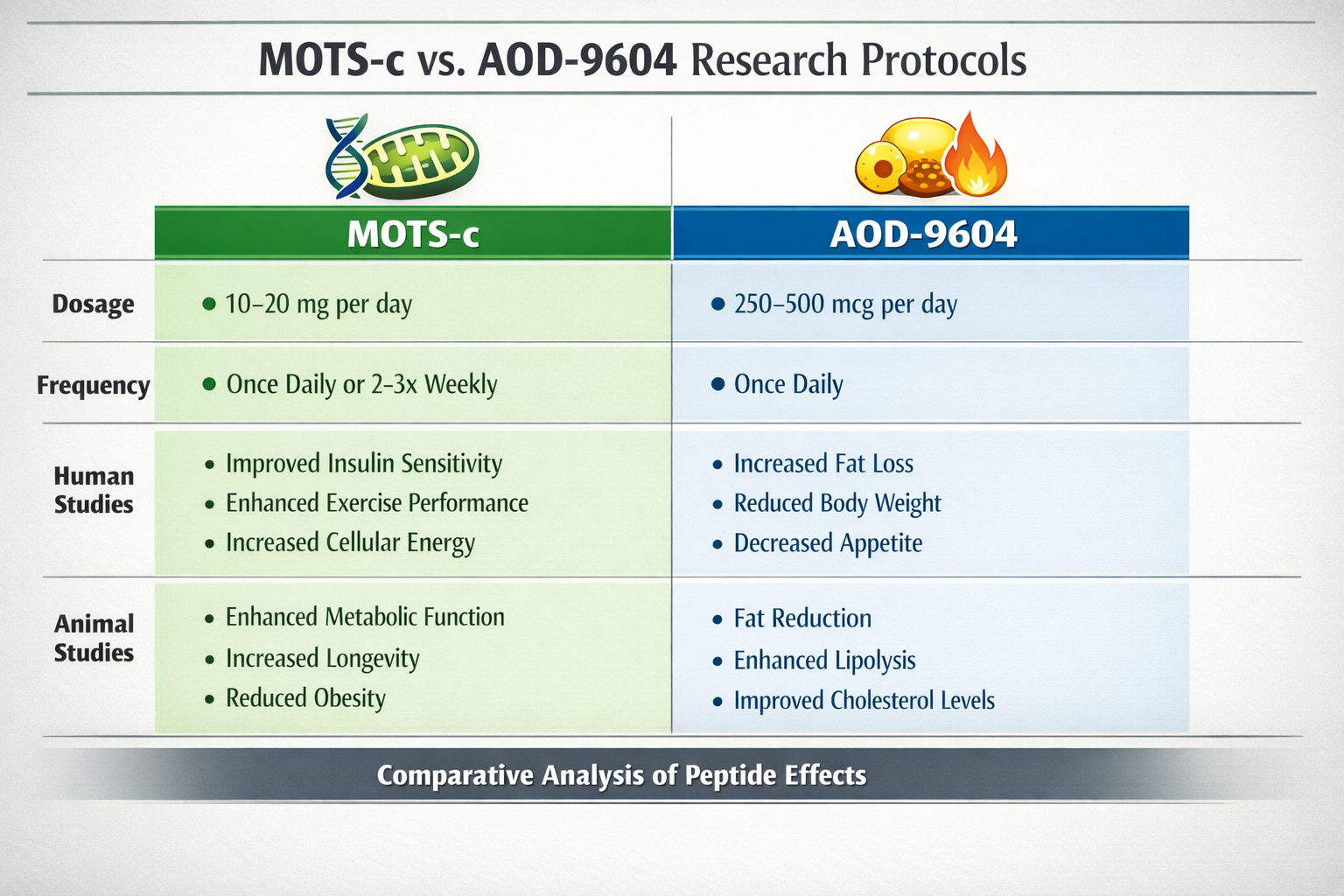
The concept of peptide synergy, where two or more peptides work together to produce a combined effect greater than the sum of their individual effects, is a compelling area of research. In this context, the potential combination of aod9604 mots c is gaining traction, particularly for its implications in metabolic health and fat loss research. Understanding the appropriate mots-c peptide dosage chart becomes even more crucial when combining it with other compounds.
AOD-9604: A Brief Overview
AOD-9604 is a synthetic peptide fragment of human growth hormone (HGH) that has been investigated primarily for its fat-reducing properties. It operates by stimulating lipolysis (the breakdown of fat) and inhibiting lipogenesis (the formation of new fat), without affecting growth or insulin sensitivity [16]. Researchers often consider AOD-9604 for studies focused on weight management and body composition.
The Rationale for AOD-9604 MOTS-c Peptide Synergy
The hypothesis behind combining aod9604 mots c peptide lies in their complementary mechanisms of action.
- MOTS-c: Focuses on improving overall metabolic function, enhancing mitochondrial activity, and improving glucose utilization.
- AOD-9604: Specifically targets fat metabolism, promoting fat breakdown.
The idea is that while AOD-9604 directly tackles fat reduction, MOTS-c could simultaneously optimize the underlying metabolic machinery, potentially leading to a more comprehensive and sustainable metabolic improvement in research models. This combined approach could be particularly interesting for studies on metabolic syndrome or obesity where both fat reduction and improved glucose homeostasis are desired outcomes. Researchers exploring this synergy might want to refer to resources on AOD9604 and MOTS-c.
Reddit Discussions: MOTS-c vs. AOD-9604
Online forums like Reddit often host discussions where researchers and enthusiasts share anecdotal experiences and theoretical comparisons, such as "reddit motsc vs aod9604." While these discussions can offer interesting perspectives, it is imperative to remember that they are not substitutes for rigorous scientific research. The information shared in such forums should always be viewed with caution and validated through scientific literature.
When considering the synergy aod9604 peptide and MOTS-c, discussions often highlight:
- Individual Effects: Some users might report specific benefits from one peptide over the other based on personal experience, focusing on either metabolic boosts (MOTS-c) or fat loss (AOD-9604).
- Combined Protocols: Others might discuss theoretical or experimental combined protocols, speculating on how the peptides could complement each other.
- Dosage Considerations: Questions often arise regarding whether to adjust individual peptide dosages when combining them, underscoring the importance of a clear mots-c peptide dosage chart and AOD-9604 dosage guidelines.
Researchers should always prioritize peer-reviewed data and controlled experimental designs over anecdotal evidence from online forums when formulating their mots-c peptide dosage chart or any other peptide protocol.
Research Protocols for Combined AOD-9604 and MOTS-c
When designing a study to investigate the synergy between AOD-9604 and MOTS-c, researchers typically need to:
- Establish Individual Baselines: Determine the optimal effective dose for each peptide individually for the specific research objective and animal model. This often involves referring to existing literature for each peptide's established research dosage.
- Pilot Combination Studies: Begin with conservative dosages of both peptides when combining them, observing for any unexpected interactions or altered effects.
- Monitor Metabolic Markers: Closely track key metabolic parameters such as glucose levels, insulin sensitivity, lipid profiles, and body composition throughout the study.
- Consider Administration Schedule: Determine whether simultaneous or staggered administration of the two peptides is more effective for the desired synergistic outcome.
The complexity of these combined studies necessitates careful planning and execution, always prioritizing animal welfare and robust scientific methodology. More information on AOD9604 metabolic research can provide further context.
Future Directions in MOTS-c Research and Dosage Optimization
The field of MOTS-c research is vibrant and expanding, with new studies continually shedding light on its diverse functions and potential applications. As our understanding deepens, the development of a more refined and nuanced mots-c peptide dosage chart will undoubtedly follow.
Advanced Research Methodologies
Future research will likely employ more sophisticated techniques to understand MOTS-c's pharmacokinetics and pharmacodynamics fully.
- Pharmacokinetic Studies: These studies will accurately measure how the body absorbs, distributes, metabolizes, and excretes MOTS-c, providing crucial data for optimizing dosage and administration frequency.
- Pharmacodynamic Studies: These will investigate the biochemical and physiological effects of MOTS-c and its mechanism of action, linking specific dosages to observed biological responses at a molecular level.
- Omics Technologies: Proteomics, metabolomics, and transcriptomics can provide a comprehensive view of how MOTS-c impacts cellular pathways, helping to identify novel targets and refine dosage strategies for specific outcomes.
These advanced methodologies are essential for moving beyond general dosage ranges and developing highly precise and effective research protocols.
Expanding Therapeutic Exploration (Research-Only Context)
While MOTS-c is strictly for research purposes, the exciting preclinical findings naturally spark interest in its potential long-term applications. Researchers are exploring its implications for:
- Neuroprotection: The role of mitochondria in neuronal health suggests MOTS-c could be investigated for neurodegenerative conditions [17].
- Cardiovascular Health: Its metabolic effects might extend to improving cardiovascular function, an area ripe for further investigation.
- Metabolic Syndrome Management: Given its broad impact on glucose and lipid metabolism, MOTS-c continues to be a strong candidate for comprehensive research into metabolic syndrome interventions.
For any researchers looking to embark on these frontiers, maintaining the highest quality of research peptides is paramount. Reliable sources like Pure Tested Peptides are invaluable for such critical investigations.
The Evolving Mots-c Peptide Dosage Chart
As more research emerges, the mots-c peptide dosage chart will likely become more sophisticated, incorporating factors such as:
- Biomarker-Guided Dosing: Future research might explore tailoring dosages based on specific biomarkers in research subjects, such as baseline metabolic parameters or genetic predispositions.
- Timed Release Formulations: Innovations in peptide delivery could lead to sustained-release formulations that require less frequent administration while maintaining stable physiological concentrations.
- Targeted Delivery Systems: Advanced delivery methods might allow for MOTS-c to be delivered more precisely to specific tissues or organs, potentially reducing required dosages and enhancing efficacy.
The journey to fully characterize MOTS-c and optimize its research dosage is ongoing. Researchers are encouraged to stay abreast of the latest scientific publications and contribute to this growing body of knowledge by conducting rigorous, well-designed studies. The commitment to understanding and refining the mots-c peptide dosage chart in 2026 and beyond will be crucial for unlocking its full research potential.
Conclusion
The MOTS-c peptide represents a compelling frontier in metabolic and mitochondrial research. Its unique origin from mitochondrial DNA and its broad effects on glucose metabolism, insulin sensitivity, and cellular health make it a subject of intense scientific inquiry. While a universal mots-c peptide dosage chart is not yet established due to the varying nature of research protocols, this article has provided a comprehensive overview of the factors influencing dosage, typical research ranges, and the critical considerations for effective experimentation in 2026.
Researchers delving into the world of MOTS-c must prioritize high-quality peptides, meticulous experimental design, and careful monitoring of subjects. The potential for synergy with other peptides like AOD-9604 further expands the avenues for exploration, promising deeper insights into complex biological processes. As the scientific community continues to unravel the intricacies of MOTS-c, the quest for optimized dosages and a clearer understanding of its mechanisms will remain a pivotal aspect of advancing our knowledge in metabolic health and beyond.
Actionable Next Steps
- Consult Scientific Literature: Always refer to peer-reviewed research papers for specific dosage information and methodologies relevant to your experimental design.
- Source High-Quality Peptides: Ensure the integrity of your research by purchasing MOTS-c and other peptides from reputable suppliers like Pure Tested Peptides to guarantee purity and potency.
- Design Pilot Studies: Before embarking on large-scale experiments, conduct smaller pilot studies to fine-tune dosages and administration protocols for your specific animal model and research objectives.
- Document Everything: Maintain meticulous records of peptide batches, reconstitution methods, dosages, administration routes, and all observed outcomes to ensure reproducibility and scientific rigor.
- Stay Informed: Keep abreast of the latest developments in MOTS-c research by following scientific journals and conferences.
References
[1] Lee, C., Zeng, J., Drew, B. G., Sallam, T., Martin-Montalvo, A., Wan, J., … & Cohen, P. (2015). The mitochondrial-derived peptide MOTS-c promotes metabolic homeostasis and reduces obesity and insulin resistance. Cell Metabolism, 21(4), 563-574.
[2] Du, C., Zhang, W., Chen, J., Li, Y., Zhou, C., Zhao, Y., … & Hu, H. (2018). MOTS-c improves metabolic flexibility and exercise capacity in obese mice. Journal of Biological Chemistry, 293(14), 5126-5136.
[3] Lee, C., et al. (2015). Op. cit.
[4] Kim, K. H., Son, J. M., Kim, H. Y., & Lee, Y. S. (2018). MOTS-c ameliorates hepatic steatosis and insulin resistance through activation of AMPK and mitochondrial function in high-fat diet-fed mice. Molecular Metabolism, 16, 108-118.
[5] Lu, J., Yang, J., Geng, J., Mo, H., Wang, S., Zhang, S., … & Dong, L. (2020). MOTS-c protects against cisplatin-induced kidney injury by suppressing mitochondrial oxidative stress and inflammation. Redox Biology, 32, 101476.
[6] Lee, C., et al. (2015). Op. cit.
[7] Du, C., et al. (2018). Op. cit.
[8] Kim, K. H., et al. (2018). Op. cit.
[9] Lu, J., et al. (2020). Op. cit.
[10] Lee, C., et al. (2015). Op. cit.
[11] Kim, K. H., et al. (2018). Op. cit.
[12] Hardie, D. G., Ross, F. A., & Hawley, S. A. (2012). AMPK: a metabolic master switch that regulates life span. Trends in Biochemical Sciences, 37(12), 526-533.
[13] Du, C., et al. (2018). Op. cit.
[14] Lu, J., et al. (2020). Op. cit.
[15] Du, C., et al. (2018). Op. cit.
[16] Ng, F. M. (2000). The metabolic effects of a synthetic AOD9604. Diabetes, Obesity and Metabolism, 2(3), 183-191.
[17] Cohen, P., & Lee, C. (2016). Mitochondrial peptides as novel regulators of metabolism. Trends in Endocrinology & Metabolism, 27(5), 299-311.
Meta Title: MOTS-c Peptide Dosage Chart: Research Guide for 2026
Meta Description: Explore the mots-c peptide dosage chart for research in 2026. Learn about benefits, synergy with AOD-9604, and optimal protocols for scientific studies.