
Ideal Dose and Dosing for CJC-1295: A Comprehensive 2026 Guide
When it comes to peptide therapy, precision matters. CJC-1295 has emerged as one of the most researched growth hormone-releasing hormones (GHRH) analogs, yet many fitness enthusiasts, peptide shoppers, and medi-spa professionals struggle with determining the ideal dose and dosing for CJC-1295. Understanding proper dosing protocols can mean the difference between optimal results and wasted resources—or worse, unwanted side effects.
This comprehensive guide examines the evidence-based dosing strategies for CJC-1295, exploring both the modified (with DAC) and unmodified versions of this peptide. Whether you're researching peptides for the first time or refining your existing protocols, this article provides the scientific foundation needed to make informed decisions.
Key Takeaways
- Standard CJC-1295 dosing ranges from 200-300 mcg per injection, with frequency varying based on whether you're using the DAC or non-DAC version
- CJC-1295 with DAC requires less frequent administration (1-2 times weekly) compared to CJC-1295 without DAC (2-3 times daily)
- Body weight and individual goals influence optimal dosing, with most protocols falling between 1-2 mcg per kilogram of body weight
- Cycling protocols typically run 8-12 weeks followed by rest periods to maintain receptor sensitivity
- Proper reconstitution and storage are critical for maintaining peptide stability and effectiveness
Understanding CJC-1295: The Foundation for Proper Dosing
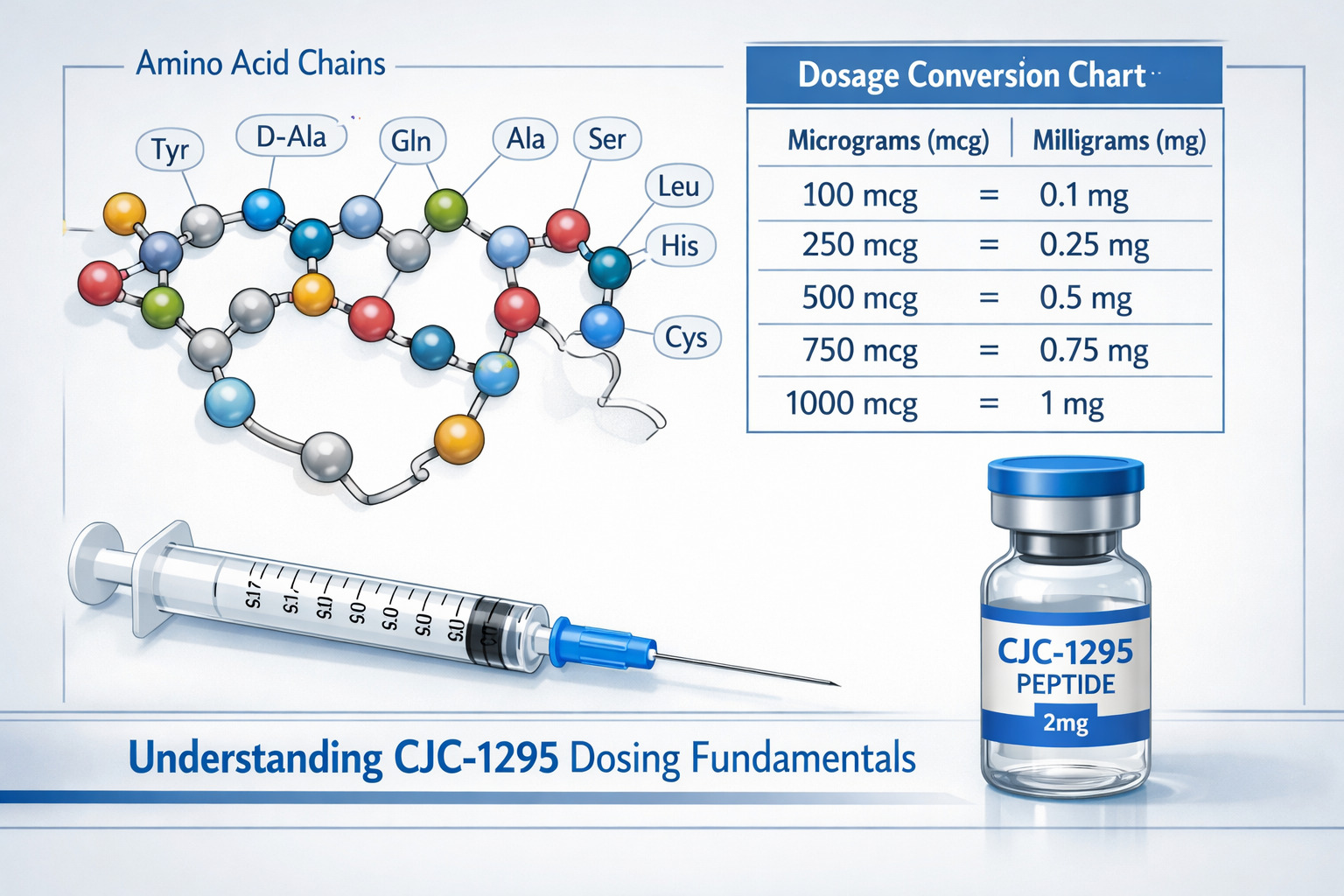
Before diving into the ideal dose and dosing for CJC-1295, it's essential to understand what this peptide is and how it functions within the body.
What Is CJC-1295?
CJC-1295 is a synthetic analog of growth hormone-releasing hormone (GHRH) that stimulates the pituitary gland to release growth hormone. Unlike natural GHRH, which has a very short half-life of only a few minutes, CJC-1295 has been modified to resist enzymatic degradation.
The peptide exists in two primary forms:
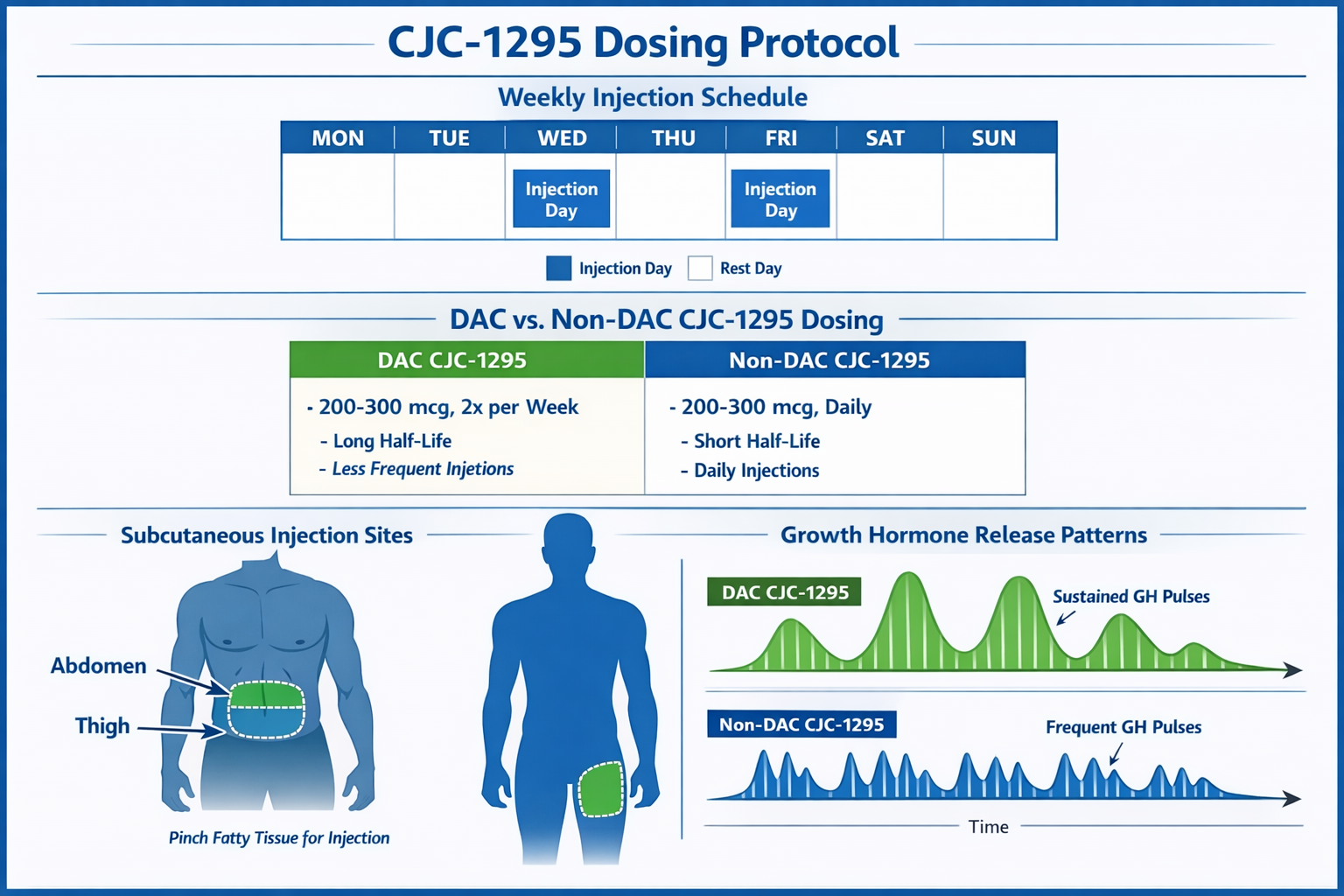
- CJC-1295 with DAC (Drug Affinity Complex) – Extended half-life of approximately 6-8 days
- CJC-1295 without DAC (also called Modified GRF 1-29) – Shorter half-life of approximately 30 minutes
This distinction is crucial for determining appropriate dosing schedules. When exploring peptide research options, understanding these differences helps researchers select the right variant for their protocols.
How CJC-1295 Works in the Body
CJC-1295 binds to GHRH receptors on somatotropic cells in the anterior pituitary gland. This binding triggers a cascade of cellular events that ultimately result in the synthesis and secretion of growth hormone (GH). 📊
The released growth hormone then:
- Stimulates IGF-1 (Insulin-like Growth Factor-1) production in the liver
- Promotes protein synthesis and muscle growth
- Enhances lipolysis (fat breakdown)
- Supports tissue repair and recovery
- Influences metabolic processes
Understanding this mechanism helps explain why dosing timing and frequency matter significantly for optimal results.
Ideal Dose and Dosing for CJC-1295: Evidence-Based Protocols
The ideal dose and dosing for CJC-1295 varies based on several factors, including the specific variant being used, individual body composition, research goals, and tolerance levels.
Standard Dosing Ranges for CJC-1295 with DAC
For CJC-1295 with DAC, research protocols typically employ the following dosing parameters:
| Body Weight | Dose per Injection | Frequency | Weekly Total |
|---|---|---|---|
| 50-70 kg (110-154 lbs) | 200-250 mcg | 1-2x weekly | 200-500 mcg |
| 70-90 kg (154-198 lbs) | 250-300 mcg | 1-2x weekly | 250-600 mcg |
| 90+ kg (198+ lbs) | 300-400 mcg | 1-2x weekly | 300-800 mcg |
Key considerations:
- Most protocols start at the lower end of the range (200 mcg) to assess tolerance
- The extended half-life means less frequent dosing is required
- Injections are typically administered once or twice weekly
- Evening administration may align better with natural GH pulse patterns
When sourcing research peptides, quality matters tremendously. Pure Tested Peptides provides third-party tested options that meet rigorous purity standards.
Standard Dosing Ranges for CJC-1295 without DAC
For CJC-1295 without DAC (Modified GRF 1-29), the dosing approach differs significantly:
Recommended Protocol:
- Dose: 100-200 mcg per injection
- Frequency: 2-3 times daily
- Timing: Pre-workout, post-workout, and before bed
- Daily total: 300-600 mcg
The shorter half-life necessitates more frequent administration to maintain elevated GH levels throughout the day. This variant is often preferred when combined with GHRP peptides like Ipamorelin for synergistic effects.
Body Weight-Based Dosing Calculations
A more precise approach to determining the ideal dose and dosing for CJC-1295 involves calculating based on body weight:
Formula: 1-2 mcg per kilogram of body weight
Example calculations:
- 70 kg person: 70-140 mcg per dose (without DAC) or 140-280 mcg per dose (with DAC)
- 85 kg person: 85-170 mcg per dose (without DAC) or 170-340 mcg per dose (with DAC)
- 100 kg person: 100-200 mcg per dose (without DAC) or 200-400 mcg per dose (with DAC)
This personalized approach accounts for individual metabolic differences and body composition variations. 💪
Dosing Schedules and Timing Strategies
Beyond determining the right amount, understanding when to administer CJC-1295 significantly impacts results.
Optimal Timing for CJC-1295 with DAC
Due to its extended half-life, CJC-1295 with DAC offers flexibility in administration timing:
Weekly Schedule Options:
Option 1: Once Weekly
- Monday evening: 300-400 mcg
- Maintains elevated GH levels throughout the week
- Simplest protocol for compliance
Option 2: Twice Weekly
- Monday evening: 200-300 mcg
- Thursday evening: 200-300 mcg
- More stable GH elevation
- Better mimics natural pulsatile patterns
Evening administration is generally preferred because:
- Aligns with natural nocturnal GH peaks
- May enhance sleep quality
- Reduces potential interference with daytime cortisol rhythms
Optimal Timing for CJC-1295 without DAC
The shorter-acting variant requires strategic timing to maximize benefits:
Daily Schedule:
🌅 Morning dose (6-7 AM): 100-200 mcg
- Supports metabolic processes throughout the day
- May enhance fat oxidation during fasted cardio
🏋️ Pre/Post-workout dose: 100-200 mcg
- Administered 15-30 minutes before training
- Supports muscle protein synthesis and recovery
🌙 Evening dose (before bed): 100-200 mcg
- Capitalizes on natural nocturnal GH surge
- Supports tissue repair during sleep
For those exploring comprehensive peptide protocols, understanding how different peptides work together is valuable. Research on peptide dosing strategies can provide additional insights.
Cycling Protocols: Duration and Rest Periods
Proper cycling prevents receptor desensitization and maintains effectiveness over time.
Standard Cycling Protocol:
Active Phase: 8-12 weeks
- Consistent dosing as outlined above
- Monitor for changes in body composition, recovery, and well-being
- Track any adverse effects
Rest Phase: 4-6 weeks
- Complete cessation of CJC-1295
- Allows receptor sensitivity to reset
- Time for comprehensive blood work assessment
Alternative Approach – 5 Days On, 2 Days Off:
- Some protocols incorporate weekly breaks
- May help maintain sensitivity
- Less research supporting this approach
"Cycling peptides isn't just about maximizing benefits—it's about sustainable, long-term protocols that respect the body's natural regulatory mechanisms." – Peptide Research Guidelines, 2026
Reconstitution and Administration Best Practices
The ideal dose and dosing for CJC-1295 means nothing if the peptide isn't properly prepared and administered.
Reconstitution Guidelines
Supplies needed:
- CJC-1295 lyophilized powder
- Bacteriostatic water (BAC water)
- Sterile syringes (insulin syringes, typically 0.5-1 mL)
- Alcohol swabs
Step-by-step process:
- Sanitize: Clean workspace and wash hands thoroughly
- Prepare vial: Remove plastic cap, swab rubber stopper with alcohol
- Draw BAC water: Use appropriate amount (typically 2-3 mL for 5 mg vial)
- Inject slowly: Aim water down the side of the vial, not directly at powder
- Gentle mixing: Swirl gently—never shake vigorously
- Visual check: Solution should be clear, no particles or cloudiness
- Calculate concentration: Determine mcg per unit for accurate dosing
Example calculation:
- 5 mg (5000 mcg) vial + 2 mL BAC water = 2500 mcg/mL
- For 250 mcg dose: 0.1 mL (10 units on insulin syringe)
Injection Technique and Site Rotation
Subcutaneous injection sites:
- Abdomen (2 inches from navel)
- Thigh (outer, middle portion)
- Upper arm (back portion)
- Buttocks (upper, outer quadrant)
Proper technique:
- Clean injection site with alcohol swab
- Pinch skin to create fold
- Insert needle at 45-90 degree angle
- Inject slowly and steadily
- Withdraw needle and apply gentle pressure
- Dispose of needle in sharps container
Site rotation prevents lipohypertrophy (fatty lumps) and maintains absorption consistency. Use a different site each injection, following a systematic pattern.
Factors Influencing Individual Dosing Requirements
While general guidelines provide a starting point, several factors influence the ideal dose and dosing for CJC-1295 for each individual.
Age and Baseline GH Levels
Younger individuals (20-35 years):
- Typically have higher baseline GH production
- May respond well to lower doses
- Starting dose: 200 mcg (with DAC) or 100 mcg per dose (without DAC)
Middle-aged individuals (35-50 years):
- Natural GH production begins declining
- May benefit from moderate dosing
- Standard dose: 250-300 mcg (with DAC) or 150-200 mcg per dose (without DAC)
Older individuals (50+ years):
- Significant GH decline typically present
- May require higher end of dosing range
- Some protocols use up to 400 mcg (with DAC)
Body Composition and Metabolic Goals
Fat loss focus:
- Higher frequency dosing (CJC-1295 without DAC) may be advantageous
- Combines well with fasted cardio protocols
- Consider 3x daily dosing at 100-150 mcg
Muscle building focus:
- Timing around training sessions becomes critical
- May benefit from twice-weekly higher doses (with DAC)
- Protein intake should be optimized (1.6-2.2 g/kg body weight)
Recovery and longevity focus:
- Evening dosing to support sleep and tissue repair
- Moderate doses: 200-250 mcg weekly (with DAC)
- Emphasis on consistent, long-term protocols
For those interested in metabolic optimization, exploring complementary peptides like 5-amino-1-mq may provide synergistic benefits.
Training Intensity and Recovery Demands
Athletes and individuals with high training volumes may require adjusted dosing:
High-intensity training (6+ sessions weekly):
- Increased recovery demands
- May benefit from upper dosing ranges
- Consider CJC-1295 without DAC for more frequent GH pulses
Moderate training (3-5 sessions weekly):
- Standard dosing protocols typically sufficient
- CJC-1295 with DAC once or twice weekly
Low training volume or sedentary:
- Lower end of dosing range appropriate
- Focus on consistency over higher doses
Combination Protocols and Synergistic Dosing
CJC-1295 is frequently combined with other peptides for enhanced effects, which influences overall dosing strategies.
CJC-1295 + Ipamorelin Stack
This combination is among the most popular peptide stacks for GH optimization:
Rationale:
- CJC-1295 (GHRH analog) stimulates GH release
- Ipamorelin (GHRP) amplifies the GH pulse
- Synergistic effect produces greater GH elevation than either alone
Dosing protocol:
With CJC-1295 with DAC:
- CJC-1295: 200-300 mcg, 1-2x weekly
- Ipamorelin: 200-300 mcg, 2-3x daily
With CJC-1295 without DAC:
- CJC-1295: 100-200 mcg per dose
- Ipamorelin: 200-300 mcg per dose
- Administered together, 2-3x daily
When both peptides are administered simultaneously, they should be drawn into the same syringe and injected together for convenience and to ensure temporal synergy.
CJC-1295 + GHRP-2 or GHRP-6
Alternative GHRP options offer different benefit profiles:
GHRP-2:
- Stronger GH pulse than Ipamorelin
- May increase appetite moderately
- Dose: 100-200 mcg, 2-3x daily with CJC-1295
GHRP-6:
- Strongest GH pulse of common GHRPs
- Significant appetite stimulation
- Dose: 100-200 mcg, 2-3x daily with CJC-1295
- Best for bulking phases
Peptide Blends and Pre-Mixed Formulations
Some researchers prefer pre-mixed peptide blends for convenience. When using blends, understanding individual component dosing remains important for assessing total peptide load.
For those exploring comprehensive wellness protocols, peptide blend research offers insights into synergistic combinations.
Safety Considerations and Contraindications
Understanding the ideal dose and dosing for CJC-1295 includes recognizing safety parameters and potential contraindications.
Common Side Effects and Management
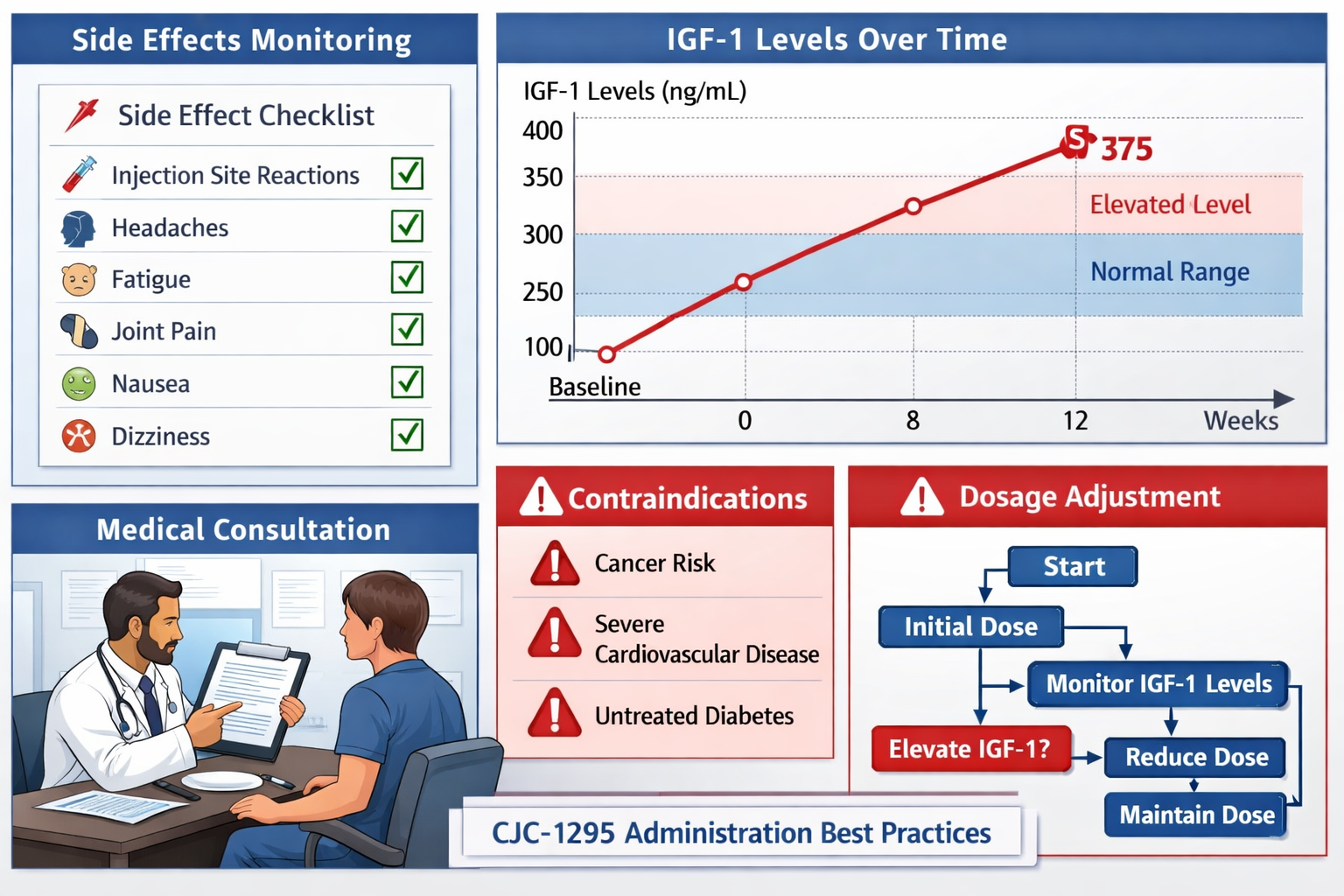
Mild side effects (typically dose-dependent):
💧 Water retention:
- Usually temporary (first 1-2 weeks)
- Reduce sodium intake
- Ensure adequate hydration
- May decrease with dose reduction
😴 Fatigue or lethargy:
- Often related to timing
- Try adjusting administration time
- Ensure adequate sleep (7-9 hours)
🤕 Headaches:
- Typically mild and transient
- Stay well-hydrated
- Consider reducing dose by 25-50 mcg
🔴 Injection site reactions:
- Redness, mild swelling, or itching
- Improve injection technique
- Rotate sites consistently
- Use proper reconstitution method
Managing side effects:
- Start with lower doses and titrate up
- Monitor response over 2-4 weeks
- Keep detailed logs of doses and effects
- Adjust protocol based on individual response
Contraindications and Precautions
CJC-1295 should not be used by individuals with:
❌ Active cancer or history of cancer (GH may promote cell proliferation)
❌ Diabetic retinopathy
❌ Acute critical illness
❌ Pregnancy or breastfeeding
❌ Known hypersensitivity to peptides
Use with caution in:
⚠️ Diabetes (monitor glucose levels closely)
⚠️ Cardiovascular conditions
⚠️ Thyroid disorders
⚠️ Pituitary tumors or abnormalities
Monitoring and Blood Work
Baseline testing (before starting):
- IGF-1 levels
- Complete blood count (CBC)
- Comprehensive metabolic panel
- Fasting glucose and HbA1c
- Thyroid panel (TSH, T3, T4)
Follow-up testing (every 8-12 weeks):
- IGF-1 levels (primary marker)
- Fasting glucose
- Lipid panel
- Liver enzymes
Target IGF-1 ranges:
- Goal is typically upper-normal range for age
- Avoid supraphysiological levels (>300-350 ng/mL)
- Adjust dosing based on results
"Regular monitoring isn't optional—it's essential for safe, effective peptide protocols. IGF-1 levels provide objective feedback on dosing adequacy." – Clinical Peptide Guidelines, 2026
Storage and Shelf Life Considerations
Proper storage directly impacts peptide potency and, consequently, effective dosing.
Lyophilized (Powder) Storage
Before reconstitution:
- Store in refrigerator (2-8°C / 36-46°F)
- Protect from light (keep in box or drawer)
- Shelf life: 2-3 years when properly stored
- Can be stored at room temperature for short periods (up to 2 weeks)
Important: Never freeze lyophilized peptides, as freeze-thaw cycles can damage the protein structure.
Reconstituted Peptide Storage
After mixing with BAC water:
- Store in refrigerator (2-8°C / 36-46°F)
- Keep away from light
- Shelf life: 30-60 days (varies by peptide and storage conditions)
- Do not freeze
- Discard if solution becomes cloudy or develops particles
Travel considerations:
- Use insulated cooler with ice packs
- Minimize temperature fluctuations
- Plan for refrigeration access
Best practices:
✅ Label vials with reconstitution date
✅ Use within 30 days for optimal potency
✅ Store in back of refrigerator (more stable temperature)
✅ Keep away from freezer compartment
Adjusting Dosing Based on Results and Goals
The ideal dose and dosing for CJC-1295 isn't static—it should be adjusted based on observed results and changing goals.
Assessing Response and Making Adjustments
Positive indicators (dosing is appropriate):
- Improved recovery between training sessions
- Enhanced sleep quality
- Gradual improvements in body composition
- Increased energy and well-being
- IGF-1 levels in upper-normal range
Signs dosing may be too high:
- Excessive water retention persisting beyond 2 weeks
- Joint pain or carpal tunnel symptoms
- IGF-1 levels above normal range
- Persistent fatigue
- Blood glucose dysregulation
Signs dosing may be too low:
- No noticeable changes after 4-6 weeks
- IGF-1 levels remain in lower-normal range
- Minimal impact on recovery or body composition
Adjustment strategies:
📈 To increase effectiveness:
- Increase dose by 25-50 mcg increments
- Wait 2-4 weeks before further adjustments
- Monitor IGF-1 response
📉 To reduce side effects:
- Decrease dose by 25-50 mcg
- Consider splitting doses (if using without DAC)
- Ensure proper hydration and electrolyte balance
Plateau Management
After several months, some individuals experience diminished returns:
Strategies to overcome plateaus:
- Cycle off completely (4-6 weeks)
- Switch variants (DAC to non-DAC or vice versa)
- Adjust dosing frequency rather than amount
- Add complementary peptides (GHRP, etc.)
- Optimize lifestyle factors (sleep, nutrition, stress)
For comprehensive approaches to peptide research, exploring best peptide protocols can provide valuable frameworks.
Comparing CJC-1295 Dosing to Other Peptides
Understanding how CJC-1295 dosing compares to similar peptides provides context and helps with protocol design.
CJC-1295 vs. Tesamorelin
Tesamorelin is another GHRH analog, FDA-approved for lipodystrophy:
| Factor | CJC-1295 | Tesamorelin |
|---|---|---|
| Typical dose | 200-300 mcg | 2000 mcg (2 mg) |
| Frequency | 1-2x weekly (DAC) | Daily |
| Half-life | 6-8 days (DAC) | ~26 minutes |
| Primary use | General GH optimization | Visceral fat reduction |
Tesamorelin requires significantly higher doses due to its shorter duration of action and specific clinical indication.
CJC-1295 vs. Sermorelin
Sermorelin is a shorter GHRH analog (1-29 fragment):
| Factor | CJC-1295 | Sermorelin |
|---|---|---|
| Typical dose | 200-300 mcg | 200-500 mcg |
| Frequency | 1-2x weekly (DAC) | Daily |
| Stability | High | Moderate |
| Cost | Moderate | Lower |
Sermorelin is essentially identical to CJC-1295 without DAC (Modified GRF 1-29) but may have slightly different pharmacokinetics depending on manufacturing.
CJC-1295 vs. Growth Hormone Secretagogues
Compared to direct GH secretagogues like MK-677 (Ibutamoren):
MK-677:
- Oral administration
- Dose: 12.5-25 mg daily
- 24-hour GH elevation
- May cause more hunger and water retention
CJC-1295:
- Injectable administration
- Lower dose requirements (mcg vs. mg)
- More pulsatile GH pattern (especially without DAC)
- Generally fewer side effects
Practical Dosing Scenarios and Case Examples
Real-world application of the ideal dose and dosing for CJC-1295 varies based on individual circumstances.
Scenario 1: Fitness Enthusiast, Age 35, 80 kg
Goals: Improved recovery, modest body recomposition, longevity
Protocol:
- CJC-1295 with DAC: 250 mcg
- Frequency: Twice weekly (Monday and Thursday evenings)
- Cycle: 12 weeks on, 4 weeks off
- Monitoring: IGF-1 levels at baseline, week 6, and week 12
Expected outcomes:
- 10-15% increase in IGF-1 levels
- Improved sleep quality within 2-3 weeks
- Enhanced recovery noted by week 4-6
- Modest improvements in body composition over 12 weeks
Scenario 2: Competitive Athlete, Age 28, 95 kg
Goals: Maximum recovery, muscle building, performance optimization
Protocol:
- CJC-1295 without DAC: 150 mcg per dose
- Ipamorelin: 250 mcg per dose
- Frequency: 3x daily (morning, post-workout, bedtime)
- Cycle: 8 weeks on, 4 weeks off
- Timing: Coordinated with training schedule
Expected outcomes:
- Significant recovery enhancement
- Faster adaptation to training stress
- Potential lean mass gains (combined with proper nutrition)
- IGF-1 elevation to upper-normal range
Scenario 3: Medi-Spa Client, Age 52, 70 kg
Goals: Anti-aging, skin quality, general wellness, fat loss
Protocol:
- CJC-1295 with DAC: 200 mcg
- Frequency: Once weekly (Sunday evening)
- Cycle: 12 weeks on, 6 weeks off, repeat
- Complementary: Collagen supplementation, skincare protocol
Expected outcomes:
- Improved skin elasticity and appearance
- Better sleep quality
- Modest fat loss (especially with dietary management)
- Enhanced overall vitality
For medi-spa professionals exploring comprehensive peptide offerings, applied wellness research provides evidence-based frameworks.
Frequently Asked Questions About CJC-1295 Dosing
Can I take CJC-1295 every day?
With DAC: No, daily administration is unnecessary and may lead to excessive GH elevation. The extended half-life means 1-2 times weekly is sufficient.
Without DAC: Yes, multiple daily doses (2-3x) are standard for this shorter-acting variant.
How long until I see results from CJC-1295?
Timeline:
- Week 1-2: Improved sleep quality, slight water retention
- Week 3-4: Enhanced recovery, increased energy
- Week 6-8: Noticeable body composition changes
- Week 8-12: Continued improvements, optimal benefits
Results vary significantly based on diet, training, sleep, and individual response.
Should I take CJC-1295 on an empty stomach?
Best practice: Yes, administering on an empty stomach (2-3 hours after eating) may enhance GH release. This is particularly important for doses timed around training or before bed.
However, with CJC-1295 with DAC, the timing is less critical due to the extended half-life.
Can women use the same dosing as men?
Generally, yes. Dosing is typically based on body weight rather than gender. However, women may want to start at the lower end of the dosing range and adjust based on response.
Considerations for women:
- Monitor for water retention more closely
- May experience enhanced results at lower doses
- Avoid use during pregnancy or breastfeeding
What happens if I miss a dose?
With DAC: Simply take the next scheduled dose. Don't double up. The extended half-life provides some buffer.
Without DAC: Missing a single dose among multiple daily doses is not significant. Resume normal schedule with the next dose.
Consistency is important, but occasional missed doses won't derail progress.
Advanced Dosing Strategies for Experienced Researchers
For those with experience using CJC-1295, advanced protocols may offer additional benefits.
Pulse Optimization Protocol
This approach combines both CJC-1295 variants:
Strategy:
- CJC-1295 with DAC: 200 mcg once weekly (baseline elevation)
- CJC-1295 without DAC: 100 mcg 2x daily on training days only
- Creates stable baseline with additional pulses during high-demand periods
Benefits:
- Cost-effective
- Targeted GH elevation when most needed
- Reduced total peptide load
Seasonal Cycling Approach
Adjusting protocols based on training phases:
Building phase (12-16 weeks):
- Higher doses: 300 mcg CJC-1295 with DAC twice weekly
- Combined with GHRP for maximum anabolic effect
- Caloric surplus, high training volume
Cutting phase (8-12 weeks):
- Moderate doses: 200-250 mcg CJC-1295 with DAC twice weekly
- May add fat-loss peptides
- Caloric deficit, maintained training intensity
Maintenance phase (4-8 weeks):
- Lower doses: 200 mcg once weekly
- Recovery focus
- Caloric maintenance
Biomarker-Driven Dosing
The most sophisticated approach uses regular testing to guide dosing:
Protocol:
- Establish baseline IGF-1, glucose, lipids
- Start conservative dose (200 mcg weekly)
- Test IGF-1 every 4 weeks
- Adjust dose to achieve target IGF-1 (upper-normal for age)
- Monitor other biomarkers quarterly
Target IGF-1 ranges by age:
- 20-30 years: 200-300 ng/mL
- 30-40 years: 180-280 ng/mL
- 40-50 years: 160-260 ng/mL
- 50+ years: 140-240 ng/mL
This approach maximizes safety while optimizing results.
The Role of Lifestyle Factors in Dosing Effectiveness
Even the ideal dose and dosing for CJC-1295 won't deliver optimal results without proper lifestyle support.
Sleep Optimization
Why it matters: GH is primarily secreted during deep sleep. Poor sleep undermines peptide effectiveness.
Recommendations:
- 7-9 hours nightly
- Consistent sleep schedule
- Dark, cool sleeping environment
- Limit blue light 2 hours before bed
- Consider magnesium glycinate (300-400 mg before bed)
Nutrition Considerations
Protein intake:
- Minimum 1.6 g/kg body weight
- Up to 2.2 g/kg for muscle building
- Distribute across 4-5 meals
Carbohydrate timing:
- Avoid high-carb meals immediately before CJC-1295 administration
- Insulin can blunt GH response
- Time carbs around training for performance
Fasting protocols:
- Some researchers use intermittent fasting
- May enhance GH response to peptides
- Dose during fasted state for maximum effect
Training Optimization
Resistance training:
- Heavy compound movements stimulate natural GH
- Synergizes with CJC-1295
- Train 3-6 days weekly
Cardiovascular exercise:
- Moderate intensity supports fat loss
- High-intensity intervals may boost GH
- Don't overtrain—recovery is crucial
Rest and recovery:
- Adequate rest between sessions
- Deload weeks every 4-6 weeks
- Listen to body signals
For those building comprehensive protocols, exploring best peptide combinations can enhance overall effectiveness.
Cost Considerations and Dosing Economics
Understanding the financial aspects of different dosing protocols helps with sustainable planning.
Cost Comparison: DAC vs. Non-DAC
CJC-1295 with DAC:
- Higher per-vial cost
- Lower frequency = less product used
- Typical monthly cost: $80-150 (depending on source and dosing)
CJC-1295 without DAC:
- Lower per-vial cost
- Higher frequency = more product used
- Typical monthly cost: $100-200 (depending on frequency)
Example calculation (12-week cycle):
With DAC (250 mcg, 2x weekly):
- Total needed: 6,000 mcg (6 mg)
- Typical vial: 5 mg
- Vials needed: ~2 vials
- Approximate cost: $160-300
Without DAC (150 mcg, 3x daily):
- Total needed: 37,800 mcg (37.8 mg)
- Typical vial: 5 mg
- Vials needed: ~8 vials
- Approximate cost: $240-400
Maximizing Value
Strategies for cost-effective protocols:
- Start with DAC version for beginners (simpler, less frequent)
- Buy in bulk when possible (check expiration dates)
- Precise reconstitution to avoid waste
- Proper storage to maintain potency
- Cycle appropriately rather than continuous use
Quality should never be compromised for cost savings. Third-party tested peptides from reputable sources ensure you're getting what you pay for.
Regulatory and Legal Considerations
Understanding the legal landscape surrounding CJC-1295 is essential for compliant use.
Current Regulatory Status (2026)
United States:
- CJC-1295 is not FDA-approved for human use
- Available for research purposes only
- Not approved as a dietary supplement
- Prescribing by physicians occurs off-label in some contexts
Athletic competition:
- Banned by WADA (World Anti-Doping Agency)
- Prohibited in NCAA, professional sports
- Can result in competition bans if detected
Legal acquisition:
- Must be purchased for research purposes
- Requires proper documentation in some jurisdictions
- Import regulations vary by country
Compliance Best Practices
For researchers and professionals:
✅ Proper documentation of research purposes
✅ Source from reputable suppliers with testing certificates
✅ Understand local regulations before purchasing
✅ Never make therapeutic claims without proper licensing
✅ Maintain appropriate records of protocols and observations
Medi-spa professionals should work within their scope of practice and local regulations when offering peptide protocols to clients.
Future Directions in CJC-1295 Research and Dosing
The field of peptide research continues to evolve, with implications for future dosing strategies.
Emerging Research Areas
Personalized dosing algorithms:
- Genetic testing to predict GH response
- AI-driven dosing recommendations based on biomarkers
- Real-time monitoring devices
Novel delivery methods:
- Transdermal patches
- Oral formulations with enhanced bioavailability
- Extended-release depot injections
Combination protocols:
- Synergistic peptide stacks with optimized ratios
- Integration with other longevity interventions
- Targeted tissue-specific delivery
Clinical Applications Under Investigation
Areas of active research:
- Age-related muscle loss (sarcopenia)
- Metabolic syndrome and obesity
- Cognitive function and neuroprotection
- Bone density optimization
- Wound healing and tissue repair
As research progresses, dosing guidelines will likely become more refined and individualized.
<!DOCTYPE html>
<html lang="en">
<head>
    <meta charset="UTF-8">
    <meta name="viewport" content="width=device-width, initial-scale=1.0">
    <title>CJC-1295 Dosing Calculator</title>
    <style>
        * {
            margin: 0;
            padding: 0;
            box-sizing: border-box;
        }

        .cg-element-calculator-container {
            font-family: -apple-system, BlinkMacSystemFont, 'Segoe UI', Roboto, Oxygen, Ubuntu, Cantarell, sans-serif;
            max-width: 800px;
            margin: 20px auto;
            padding: 30px;
            background: linear-gradient(135deg, #667eea 0%, #764ba2 100%);
            border-radius: 20px;
            box-shadow: 0 20px 60px rgba(0,0,0,0.3);
        }

        .cg-element-calculator-title {
            color: white;
            text-align: center;
            font-size: 28px;
            font-weight: 700;
            margin-bottom: 10px;
            text-shadow: 2px 2px 4px rgba(0,0,0,0.2);
        }

        .cg-element-calculator-subtitle {
            color: rgba(255,255,255,0.9);
            text-align: center;
            font-size: 14px;
            margin-bottom: 30px;
        }

        .cg-element-calculator-content {
            background: white;
            padding: 30px;
            border-radius: 15px;
            box-shadow: 0 10px 30px rgba(0,0,0,0.2);
        }

        .cg-element-input-group {
            margin-bottom: 25px;
        }

        .cg-element-label {
            display: block;
            font-weight: 600;
            color: #333;
            margin-bottom: 8px;
            font-size: 14px;
        }

        .cg-element-select,
        .cg-element-input {
            width: 100%;
            padding: 12px 15px;
            border: 2px solid #e0e0e0;
            border-radius: 8px;
            font-size: 16px;
            transition: all 0.3s ease;
            background: white;
        }

        .cg-element-select:focus,
        .cg-element-input:focus {
            outline: none;
            border-color: #667eea;
            box-shadow: 0 0 0 3px rgba(102,126,234,0.1);
        }

        .cg-element-input-suffix {
            position: relative;
        }

        .cg-element-input-suffix::after {
            content: attr(data-suffix);
            position: absolute;
            right: 15px;
            top: 50%;
            transform: translateY(-50%);
            color: #999;
            font-size: 14px;
            pointer-events: none;
        }

        .cg-element-calculate-btn {
            width: 100%;
            padding: 15px;
            background: linear-gradient(135deg, #667eea 0%, #764ba2 100%);
            color: white;
            border: none;
            border-radius: 8px;
            font-size: 18px;
            font-weight: 600;
            cursor: pointer;
            transition: all 0.3s ease;
            margin-top: 10px;
        }

        .cg-element-calculate-btn:hover {
            transform: translateY(-2px);
            box-shadow: 0 10px 25px rgba(102,126,234,0.4);
        }

        .cg-element-calculate-btn:active {
            transform: translateY(0);
        }

        .cg-element-results {
            margin-top: 30px;
            padding: 25px;
            background: linear-gradient(135deg, #f5f7fa 0%, #c3cfe2 100%);
            border-radius: 12px;
            display: none;
        }

        .cg-element-results.cg-element-show {
            display: block;
            animation: cg-element-slideIn 0.5s ease;
        }

        @keyframes cg-element-slideIn {
            from {
                opacity: 0;
                transform: translateY(20px);
            }
            to {
                opacity: 1;
                transform: translateY(0);
            }
        }

        .cg-element-result-title {
            font-size: 20px;
            font-weight: 700;
            color: #333;
            margin-bottom: 20px;
            text-align: center;
        }

        .cg-element-result-item {
            background: white;
            padding: 15px;
            border-radius: 8px;
            margin-bottom: 12px;
            border-left: 4px solid #667eea;
        }

        .cg-element-result-label {
            font-size: 13px;
            color: #666;
            margin-bottom: 5px;
        }

        .cg-element-result-value {
            font-size: 20px;
            font-weight: 700;
            color: #333;
        }

        .cg-element-result-value.cg-element-highlight {
            color: #667eea;
        }

        .cg-element-disclaimer {
            margin-top: 20px;
            padding: 15px;
            background: #fff3cd;
            border-left: 4px solid #ffc107;
            border-radius: 8px;
            font-size: 12px;
            color: #856404;
        }

        .cg-element-info-box {
            background: #e3f2fd;
            padding: 15px;
            border-radius: 8px;
            margin-bottom: 20px;
            border-left: 4px solid #2196f3;
        }

        .cg-element-info-box p {
            font-size: 13px;
            color: #1565c0;
            line-height: 1.6;
        }

        @media (max-width: 600px) {
            .cg-element-calculator-container {
                padding: 20px;
                margin: 10px;
            }

            .cg-element-calculator-content {
                padding: 20px;
            }

            .cg-element-calculator-title {
                font-size: 22px;
            }
        }
    </style>
</head>
<body>
    <div class="cg-element-calculator-container">
        <h1 class="cg-element-calculator-title">💉 CJC-1295 Dosing Calculator</h1>
        <p class="cg-element-calculator-subtitle">Calculate your personalized CJC-1295 dosing protocol</p>

        <div class="cg-element-calculator-content">
            <div class="cg-element-info-box">
                <p><strong>Note:</strong> This calculator provides research-based dosing estimates. Always consult with a qualified healthcare professional before starting any peptide protocol.</p>
            </div>

            <div class="cg-element-input-group">
                <label class="cg-element-label" for="cg-element-variant">CJC-1295 Variant</label>
                <select id="cg-element-variant" class="cg-element-select">
                    <option value="dac">CJC-1295 with DAC (Extended Release)</option>
                    <option value="nodac">CJC-1295 without DAC (Modified GRF 1-29)</option>
                </select>
            </div>

            <div class="cg-element-input-group">
                <label class="cg-element-label" for="cg-element-weight">Body Weight</label>
                <div class="cg-element-input-suffix" data-suffix="kg">
                    <input type="number" id="cg-element-weight" class="cg-element-input" placeholder="70" min="40" max="200" value="70">
                </div>
            </div>

            <div class="cg-element-input-group">
                <label class="cg-element-label" for="cg-element-goal">Primary Goal</label>
                <select id="cg-element-goal" class="cg-element-select">
                    <option value="general">General Wellness & Recovery</option>
                    <option value="muscle">Muscle Building & Performance</option>
                    <option value="fat">Fat Loss & Body Recomposition</option>
                    <option value="antiaging">Anti-Aging & Longevity</option>
                </select>
            </div>

            <div class="cg-element-input-group">
                <label class="cg-element-label" for="cg-element-experience">Experience Level</label>
                <select id="cg-element-experience" class="cg-element-select">
                    <option value="beginner">Beginner (First time using peptides)</option>
                    <option value="intermediate">Intermediate (Some peptide experience)</option>
                    <option value="advanced">Advanced (Extensive peptide experience)</option>
                </select>
            </div>

            <button class="cg-element-calculate-btn" onclick="calculateDosing()">Calculate Dosing Protocol</button>

            <div id="cg-element-results" class="cg-element-results">
                <h2 class="cg-element-result-title">Your Personalized Protocol</h2>

                <div class="cg-element-result-item">
                    <div class="cg-element-result-label">Recommended Dose per Injection</div>
                    <div class="cg-element-result-value cg-element-highlight" id="cg-element-dose">-</div>
                </div>

                <div class="cg-element-result-item">
                    <div class="cg-element-result-label">Frequency</div>
                    <div class="cg-element-result-value" id="cg-element-frequency">-</div>
                </div>

                <div class="cg-element-result-item">
                    <div class="cg-element-result-label">Weekly Total</div>
                    <div class="cg-element-result-value" id="cg-element-weekly">-</div>
                </div>

                <div class="cg-element-result-item">
                    <div class="cg-element-result-label">Recommended Cycle Length</div>
                    <div class="cg-element-result-value" id="cg-element-cycle">-</div>
                </div>

                <div class="cg-element-result-item">
                    <div class="cg-element-result-label">Best Timing</div>
                    <div class="cg-element-result-value" id="cg-element-timing">-</div>
                </div>

                <div class="cg-element-disclaimer">
                    <strong>⚠️ Important Disclaimer:</strong> This calculator provides general research-based estimates only. Individual responses vary significantly. Start at the lower end of dosing ranges and adjust based on response and monitoring. Regular blood work (especially IGF-1 levels) is essential for safe and effective protocols. This information is for research purposes only and does not constitute medical advice.
                </div>
            </div>
        </div>
    </div>

    <script>
        function calculateDosing() {
            const variant = document.getElementById('cg-element-variant').value;
            const weight = parseFloat(document.getElementById('cg-element-weight').value);
            const goal = document.getElementById('cg-element-goal').value;
            const experience = document.getElementById('cg-element-experience').value;

            if (!weight || weight < 40 || weight > 200) {
                alert('Please enter a valid body weight between 40-200 kg');
                return;
            }

            let baseDose, frequency, weeklyDoses, timing, cycleLength;

            // Calculate base dose per kg
            let dosePerKg = 1.5; // Base multiplier

            // Adjust for experience
            if (experience === 'beginner') {
                dosePerKg = 1.2;
            } else if (experience === 'advanced') {
                dosePerKg = 2.0;
            }

            // Adjust for goal
            if (goal === 'muscle') {
                dosePerKg *= 1.15;
            } else if (goal === 'antiaging') {
                dosePerKg *= 0.9;
            }

            if (variant === 'dac') {
                // CJC-1295 with DAC
                baseDose = Math.round(weight * dosePerKg * 2); // Double for weekly dosing

                // Clamp to reasonable ranges
                if (baseDose < 200) baseDose = 200;
                if (baseDose > 400) baseDose = 400;

                if (goal === 'muscle' || experience === 'advanced') {
                    frequency = '2x per week';
                    weeklyDoses = 2;
                    timing = 'Monday & Thursday evenings';
                } else {
                    frequency = '1x per week';
                    weeklyDoses = 1;
                    timing = 'Sunday evening';
                }

                cycleLength = '12 weeks on, 4-6 weeks off';

            } else {
                // CJC-1295 without DAC
                baseDose = Math.round(weight * dosePerKg);

                // Clamp to reasonable ranges
                if (baseDose < 100) baseDose = 100;
                if (baseDose > 200) baseDose = 200;

                if (goal === 'muscle') {
                    frequency = '3x per day';
                    weeklyDoses = 21;
                    timing = 'Morning, post-workout, bedtime';
                } else {
                    frequency = '2x per day';
                    weeklyDoses = 14;
                    timing = 'Morning & bedtime';
                }

                cycleLength = '8-10 weeks on, 4 weeks off';
            }

            const weeklyTotal = baseDose * weeklyDoses;

            // Display results
            document.getElementById('cg-element-dose').textContent = baseDose + ' mcg';
            document.getElementById('cg-element-frequency').textContent = frequency;
            document.getElementById('cg-element-weekly').textContent = weeklyTotal + ' mcg';
            document.getElementById('cg-element-cycle').textContent = cycleLength;
            document.getElementById('cg-element-timing').textContent = timing;

            // Show results with animation
            const resultsDiv = document.getElementById('cg-element-results');
            resultsDiv.classList.remove('cg-element-show');
            setTimeout(() => {
                resultsDiv.classList.add('cg-element-show');
            }, 100);

            // Scroll to results on mobile
            if (window.innerWidth < 600) {
                setTimeout(() => {
                    resultsDiv.scrollIntoView({ behavior: 'smooth', block: 'nearest' });
                }, 200);
            }
        }

        // Allow Enter key to calculate
        document.addEventListener('DOMContentLoaded', function() {
            document.getElementById('cg-element-weight').addEventListener('keypress', function(e) {
                if (e.key === 'Enter') {
                    calculateDosing();
                }
            });
        });
    </script>
</body>
</html>
Conclusion: Optimizing Your CJC-1295 Protocol
Understanding the ideal dose and dosing for CJC-1295 requires balancing scientific evidence, individual factors, and practical considerations. This comprehensive guide has explored the multifaceted aspects of CJC-1295 dosing, from basic protocols to advanced strategies.
Key Principles to Remember
Start conservative: Beginning with lower doses (200 mcg for DAC variant, 100 mcg per dose for non-DAC) allows assessment of individual response while minimizing side effects.
Monitor objectively: Regular IGF-1 testing and comprehensive blood work provide objective feedback that should guide dosing adjustments.
Respect cycling: Continuous use without breaks can lead to receptor desensitization. Proper cycling (8-12 weeks on, 4-6 weeks off) maintains long-term effectiveness.
Support with lifestyle: Even optimal dosing cannot overcome poor sleep, inadequate nutrition, or insufficient recovery. Peptide protocols work best as part of a comprehensive approach.
Prioritize quality: Source peptides from reputable suppliers like Pure Tested Peptides that provide third-party testing certificates and proper storage.
Actionable Next Steps
For those ready to implement CJC-1295 protocols:
- Establish baseline measurements – Get comprehensive blood work including IGF-1, glucose, and metabolic panels
- Select appropriate variant – Choose between DAC and non-DAC based on your schedule, goals, and experience level
- Calculate personalized dosing – Use body weight and individual factors to determine starting dose
- Prepare proper supplies – Obtain bacteriostatic water, sterile syringes, and storage containers
- Document your protocol – Keep detailed logs of doses, timing, side effects, and results
- Schedule follow-up testing – Plan IGF-1 testing at 4-6 week intervals during your cycle
- Adjust based on response – Be prepared to modify dosing based on objective markers and subjective experience
The Bigger Picture
CJC-1295 represents just one tool in the expanding field of peptide research. As understanding of growth hormone optimization continues to evolve, dosing protocols will become increasingly personalized and refined.
The ideal dose and dosing for CJC-1295 isn't a one-size-fits-all prescription—it's a framework that must be adapted to individual circumstances, goals, and responses. By combining evidence-based guidelines with careful monitoring and thoughtful adjustment, researchers and practitioners can develop protocols that maximize benefits while maintaining safety.
Whether you're a fitness enthusiast seeking enhanced recovery, a medi-spa professional offering cutting-edge wellness protocols, or a researcher exploring the frontiers of growth hormone optimization, the principles outlined in this guide provide a solid foundation for effective CJC-1295 use.
Remember: peptide research is an evolving field. Stay informed about new findings, maintain rigorous documentation of your protocols, and always prioritize safety over aggressive dosing. The most successful peptide protocols are those that can be sustained long-term while supporting overall health and well-being.
For continued education and access to quality research peptides, explore the comprehensive resources available at Pure Tested Peptides, where evidence-based approaches meet practical application in the world of peptide research.
SEO Meta Information
Meta Title: CJC-1295 Dosing Guide: Ideal Doses & Protocols 2026
Meta Description: Complete guide to ideal CJC-1295 dosing. Learn evidence-based protocols, frequency, cycling, and safety for both DAC and non-DAC variants.
Focus Keyword: Ideal dose and dosing for CJC-1295
Additional Keywords: CJC-1295 dosage, CJC-1295 protocol, CJC-1295 with DAC dosing, peptide dosing guide, growth hormone peptides