
Ideal Dose and Dosing for BPC-157 / TB-500: A Complete 2026 Guide
When it comes to peptide research, few combinations have generated as much interest as BPC-157 and TB-500. Athletes, fitness enthusiasts, and researchers worldwide are exploring the ideal dose and dosing for BPC-157 / TB-500 to maximize potential benefits while maintaining safety protocols. Understanding proper dosing protocols isn't just important—it's essential for anyone considering these research peptides. This comprehensive guide breaks down everything needed to know about dosing these powerful compounds in 2026.
Key Takeaways
✅ Standard BPC-157 dosing typically ranges from 200-500mcg per day, while TB-500 protocols often use 2-10mg per week
✅ Stacking these peptides requires careful attention to individual dosing schedules and reconstitution procedures
✅ Body weight, research goals, and experience level all influence the ideal dose and dosing for BPC-157 / TB-500
✅ Proper reconstitution with bacteriostatic water is critical for maintaining peptide stability and effectiveness
✅ Cycling protocols typically involve loading phases followed by maintenance periods for optimal results
Understanding BPC-157 and TB-500 Fundamentals
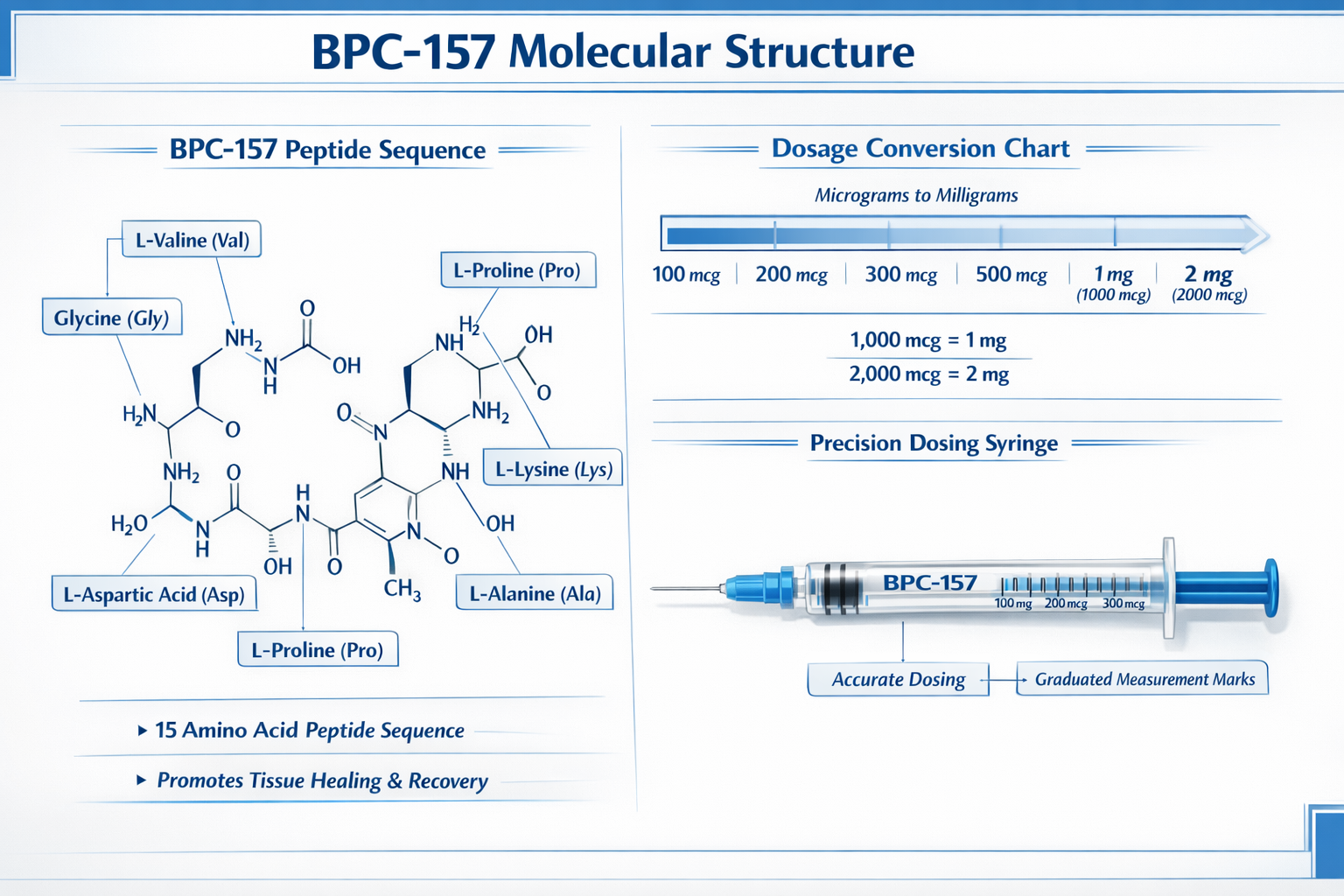
Before diving into specific dosing protocols, it's crucial to understand what these peptides are and how they function. BPC-157 (Body Protection Compound-157) is a synthetic peptide derived from a protective protein found in gastric juice. Research suggests it may support various healing processes throughout the body. TB-500, a synthetic version of Thymosin Beta-4, is a naturally occurring peptide that plays roles in cellular differentiation and tissue repair.
These two peptides work through different mechanisms, which is why many researchers choose to stack them together. BPC-157 appears to influence angiogenesis and growth factor expression, while TB-500 may affect cell migration and tissue remodeling. When combined, they create a synergistic effect that has captured the attention of the research community.
The growing interest in these compounds has led to increased availability through reputable sources. Those exploring peptide research can find quality options at Pure Tested Peptides, which offers comprehensive testing and verification for all products.
Why Proper Dosing Matters
Incorrect dosing can lead to suboptimal results or unnecessary waste of valuable research materials. Too little may not produce observable effects, while excessive amounts don't necessarily improve outcomes and can increase costs significantly. The ideal dose and dosing for BPC-157 / TB-500 represents a balance between efficacy and practicality.
Research protocols have evolved significantly since these peptides first gained attention. Early studies used varying doses, but the research community has gradually converged on certain ranges that appear most effective. Understanding these protocols helps researchers design better experiments and achieve more consistent results.
Ideal Dose and Dosing for BPC-157: Detailed Protocols
Standard BPC-157 Dosing Guidelines
The most commonly researched BPC-157 dosing range falls between 200-500 micrograms (mcg) per day. This range has emerged from both animal studies and anecdotal reports from the research community. Many researchers start at the lower end of this spectrum and adjust based on their specific research parameters.
| Body Weight | Conservative Dose | Moderate Dose | Aggressive Dose |
|---|---|---|---|
| Under 150 lbs | 200 mcg/day | 300 mcg/day | 400 mcg/day |
| 150-200 lbs | 250 mcg/day | 350 mcg/day | 450 mcg/day |
| Over 200 lbs | 300 mcg/day | 400 mcg/day | 500 mcg/day |
These dosing recommendations are based on research protocols and community observations. Body weight plays a role, but it's not the only factor. The specific research objectives, severity of the condition being studied, and individual response all influence optimal dosing.
BPC-157 Administration Frequency
Most research protocols divide the daily BPC-157 dose into two administrations: one in the morning and one in the evening. This approach maintains more stable peptide levels throughout the day. Some researchers prefer a single daily dose, particularly at lower dosages (200-250mcg), which can simplify protocols without significantly impacting results.
The injection site also matters for BPC-157 research. While subcutaneous administration (under the skin) is most common, some protocols use intramuscular injections near the area being studied. For systemic effects, subcutaneous injections in the abdominal area work well. For localized research, injections closer to the target tissue may be preferred.
When exploring all peptides for sale, researchers should verify purity levels and proper storage conditions. Quality matters significantly when working with delicate peptide compounds.
BPC-157 Cycle Length and Timing
Typical BPC-157 research cycles run between 4-8 weeks, with many researchers finding optimal results around the 6-week mark. Unlike some peptides that require loading phases, BPC-157 protocols typically maintain consistent dosing throughout the cycle.
Acute research protocols (for recent injuries or conditions) might use higher doses (400-500mcg) for shorter periods (4 weeks), while chronic condition research often employs moderate doses (250-350mcg) for extended periods (6-8 weeks).
After completing a cycle, many researchers implement a rest period of 2-4 weeks before beginning another cycle. This approach helps maintain peptide sensitivity and allows for proper observation of lasting effects.
Ideal Dose and Dosing for TB-500: Complete Protocol Guide
TB-500 Standard Dosing Protocols
TB-500 dosing differs significantly from BPC-157 due to its longer half-life and different mechanism of action. The ideal dose and dosing for BPC-157 / TB-500 requires understanding these differences. TB-500 protocols typically involve larger doses administered less frequently.
The most common TB-500 dosing protocol follows this pattern:
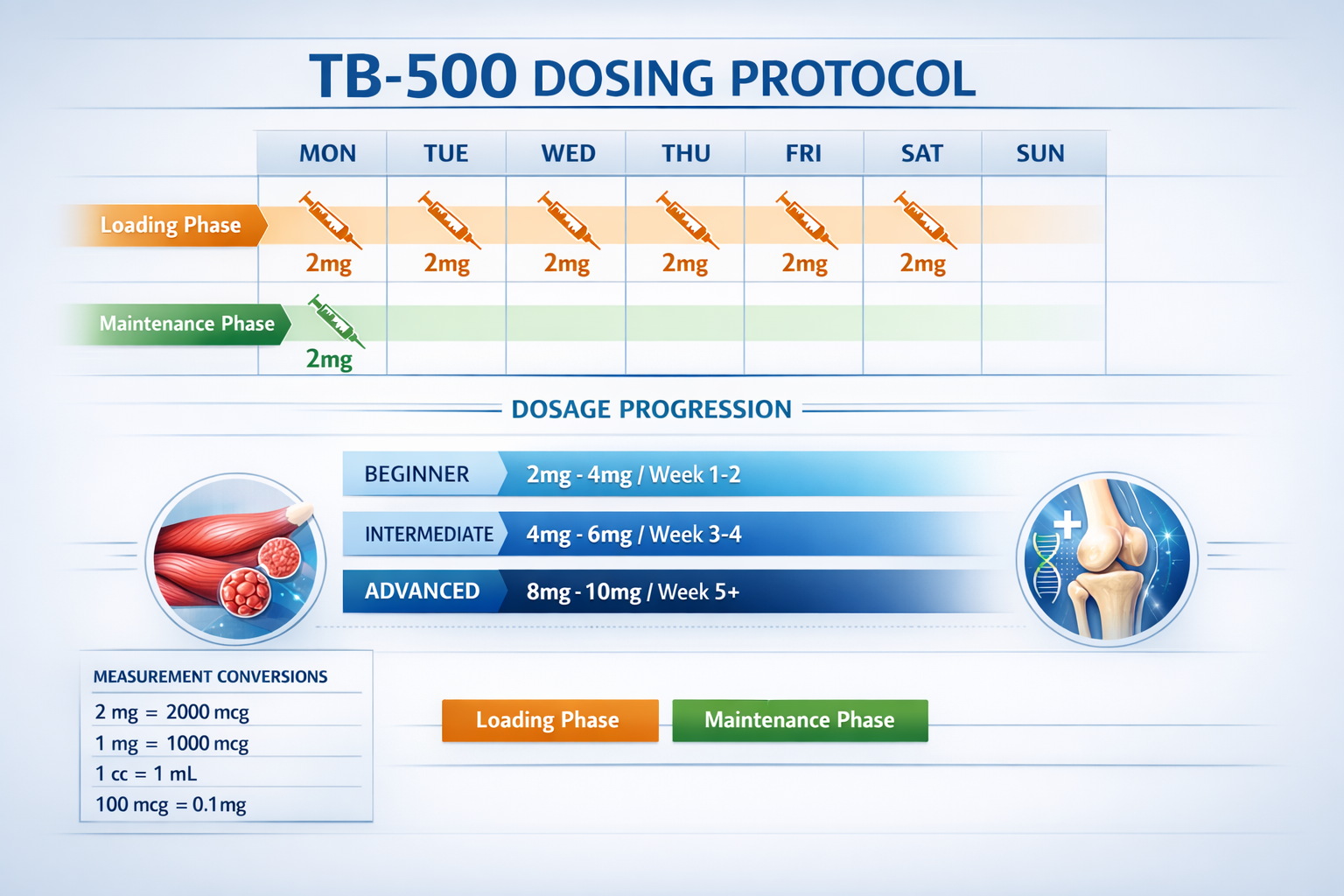
Loading Phase (Weeks 1-4):
- 2-2.5mg administered twice weekly
- Total weekly dose: 4-5mg
- Typical schedule: Monday and Thursday, or Tuesday and Friday
Maintenance Phase (Weeks 5-8+):
- 2-2.5mg administered once weekly
- Total weekly dose: 2-2.5mg
- Consistent day each week for stable levels
Some aggressive research protocols use higher loading doses of 5-10mg twice weekly for the first 2-3 weeks, then transition to standard maintenance dosing. These higher protocols are typically reserved for specific research applications and aren't necessary for most studies.
TB-500 Body Weight Considerations
While BPC-157 dosing shows some correlation with body weight, TB-500 dosing is less dependent on this factor. Most researchers use similar doses regardless of body weight, though larger individuals sometimes opt for the higher end of the dosing range.
| Research Goal | Loading Dose | Maintenance Dose | Cycle Length |
|---|---|---|---|
| General Recovery | 2mg 2x/week | 2mg 1x/week | 6-8 weeks |
| Acute Injury | 2.5mg 2x/week | 2.5mg 1x/week | 4-6 weeks |
| Chronic Condition | 2mg 2x/week | 2mg 1x/week | 8-12 weeks |
| Performance Research | 5mg 2x/week | 2.5mg 1x/week | 4-6 weeks |
These protocols represent commonly used approaches in the research community. Individual research objectives may require modifications to these baseline protocols.
TB-500 Injection Protocols
TB-500 is typically administered via subcutaneous injection, though intramuscular administration is also common. The larger injection volume (compared to BPC-157) makes subcutaneous administration in areas with more tissue (abdomen, thigh) more comfortable.
Injection site rotation is important with TB-500 to prevent tissue irritation. Common rotation sites include:
- Lower abdomen (left and right quadrants)
- Upper thigh (vastus lateralis)
- Upper arm (deltoid area)
- Gluteal region
Unlike BPC-157, which some researchers inject near the injury site, TB-500 works systemically regardless of injection location. The peptide circulates throughout the body and accumulates where needed.
For researchers seeking quality peptide options, exploring resources about best peptide kits for beginner researchers can provide valuable starting points.
Ideal Dose and Dosing for BPC-157 / TB-500 Stack Protocols
Why Stack BPC-157 and TB-500?
The combination of BPC-157 and TB-500 has become one of the most popular peptide stacks in research settings. These peptides complement each other through different mechanisms, potentially creating synergistic effects. BPC-157 may work more quickly on certain tissues, while TB-500 provides broader systemic support over longer periods.
Research protocols stacking these peptides report enhanced outcomes compared to using either peptide alone. The combination addresses multiple pathways involved in tissue repair and regeneration, making it particularly interesting for comprehensive research applications.
Combined Dosing Protocols
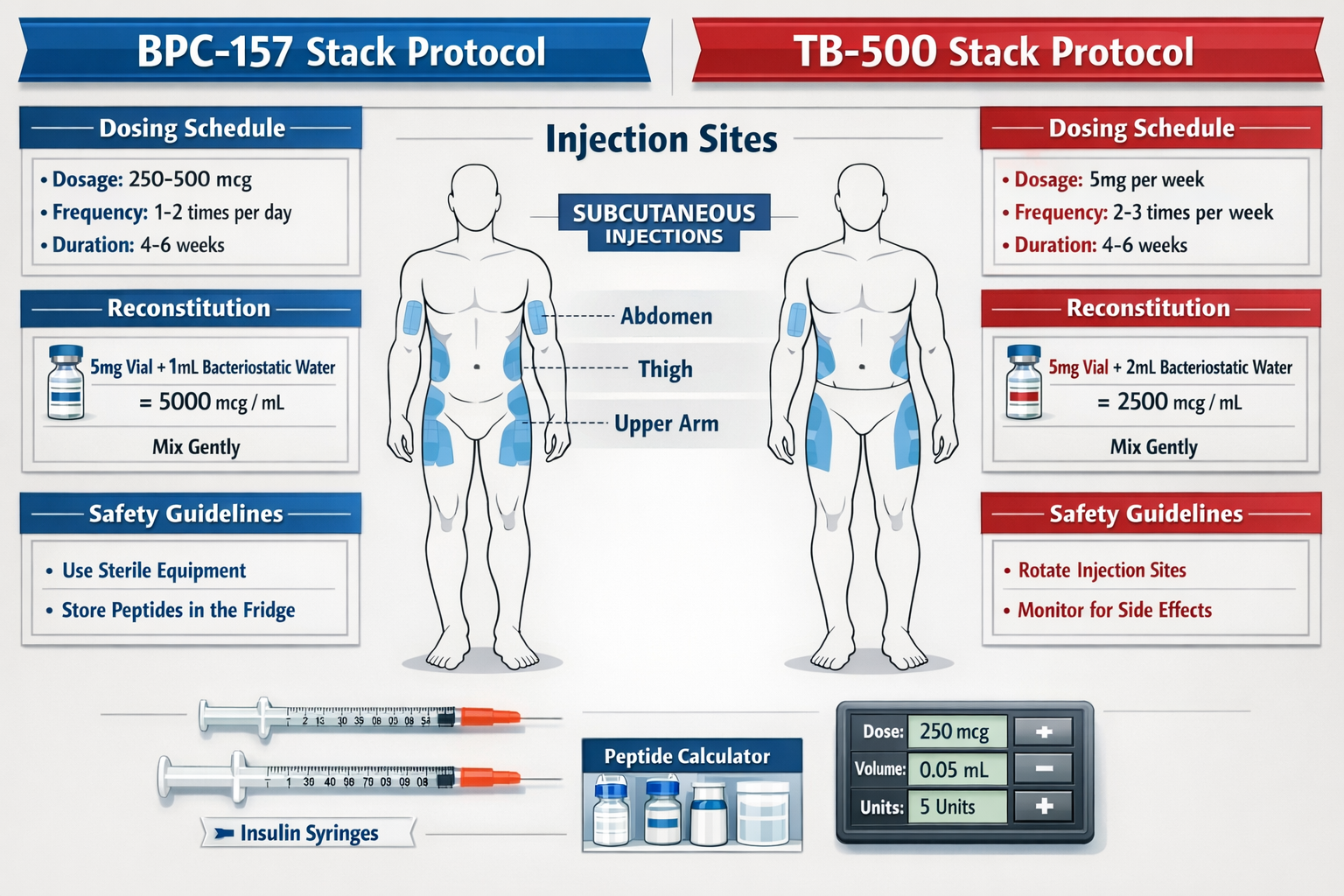
When stacking BPC-157 and TB-500, researchers don't need to reduce individual doses—each peptide maintains its standard dosing protocol. The ideal dose and dosing for BPC-157 / TB-500 when combined looks like this:
Standard Stack Protocol:
BPC-157 Component:
- 250-500mcg daily (split into 2 doses or taken once)
- Administered every day throughout the cycle
- Subcutaneous or intramuscular injection
TB-500 Component:
- Loading: 2-2.5mg twice weekly (weeks 1-4)
- Maintenance: 2mg once weekly (weeks 5+)
- Subcutaneous injection
Combined Cycle Length:
- Minimum: 6 weeks
- Optimal: 8-10 weeks
- Maximum: 12 weeks before rest period
This protocol allows both peptides to work synergistically while maintaining their individual effectiveness. The different administration schedules (daily for BPC-157, twice weekly for TB-500) mean injection days vary throughout the week.
Sample Weekly Schedule
Here's what a typical week looks like when running the ideal dose and dosing for BPC-157 / TB-500 stack:
Monday:
- BPC-157: 250mcg (morning and evening)
- TB-500: 2mg (single injection)
Tuesday-Wednesday:
- BPC-157: 250mcg (morning and evening)
- TB-500: None
Thursday:
- BPC-157: 250mcg (morning and evening)
- TB-500: 2mg (single injection)
Friday-Sunday:
- BPC-157: 250mcg (morning and evening)
- TB-500: None
This schedule continues through the loading phase (4 weeks), then TB-500 reduces to once weekly while BPC-157 maintains daily administration.
Those interested in exploring other peptide combinations might find value in learning about peptide blends research and how different compounds work together.
Reconstitution and Preparation Guidelines
Proper Reconstitution Techniques
Both BPC-157 and TB-500 typically arrive as lyophilized (freeze-dried) powder that requires reconstitution before use. Bacteriostatic water is the standard reconstitution solution, as it contains 0.9% benzyl alcohol that prevents bacterial growth and extends the peptide's usable life.
BPC-157 Reconstitution:
- Standard vial size: 5mg
- Recommended water volume: 2-2.5mL bacteriostatic water
- Resulting concentration: 2mg/mL (200mcg per 0.1mL)
- This makes dosing calculations straightforward
TB-500 Reconstitution:
- Standard vial size: 5mg
- Recommended water volume: 2-2.5mL bacteriostatic water
- Resulting concentration: 2mg/mL
- A 2mg dose equals 1mL (100 units on insulin syringe)
Step-by-Step Reconstitution Process
- Gather supplies: Peptide vial, bacteriostatic water, alcohol swabs, syringes
- Clean the vial tops with alcohol swabs and allow to dry
- Draw the appropriate amount of bacteriostatic water into syringe
- Inject water slowly down the side of the vial, not directly onto the powder
- Gently swirl (never shake) until powder dissolves completely
- Store immediately in refrigerator at 36-46°F (2-8°C)
Important: Never shake peptide vials vigorously, as this can damage the delicate peptide chains. Gentle swirling or rolling between palms is sufficient for mixing.
Storage and Stability
Proper storage is crucial for maintaining peptide potency:
Lyophilized (Powder) Form:
- Store in freezer at -20°C (-4°F)
- Shelf life: 2-3 years when properly stored
- Protect from light and moisture
Reconstituted Form:
- Store in refrigerator at 2-8°C (36-46°F)
- Shelf life: 30 days with bacteriostatic water
- Keep away from light
- Never freeze reconstituted peptides
Many researchers preparing for longer cycles purchase multiple vials to ensure fresh peptide throughout their protocol. When sourcing peptides, checking all products for sale from verified suppliers ensures quality and proper storage during shipping.
Advanced Dosing Strategies and Considerations
Adjusting Doses Based on Response
The ideal dose and dosing for BPC-157 / TB-500 isn't one-size-fits-all. Researchers should monitor their studies carefully and adjust protocols based on observed responses. Some individuals show strong responses to conservative doses, while others may require higher amounts for similar effects.
Signs suggesting dose adjustment may be needed:
📊 Minimal observable effects after 2-3 weeks at standard doses
📊 Plateau in progress mid-cycle
📊 Excessive response (rare but possible)
📊 Side effects at current dosing levels
When adjusting doses, make incremental changes of 50-100mcg for BPC-157 or 0.5-1mg for TB-500. Allow at least one week to assess the impact of any dose modification before making further changes.
Body Composition Factors
While body weight provides a general guideline, body composition offers more nuanced dosing insights. Individuals with higher lean muscle mass may metabolize peptides differently than those with higher body fat percentages. Some researchers calculate doses based on lean body mass rather than total weight.
Lean Body Mass Dosing Approach:
- Calculate lean body mass (total weight – fat mass)
- Use 2-3mcg BPC-157 per kg of lean mass
- Use 0.02-0.03mg TB-500 per kg of lean mass (for loading phase)
This approach provides more personalized dosing but requires accurate body composition measurements.
Timing Considerations for Optimal Results
The timing of peptide administration can influence results. While BPC-157 can be taken at any time, some researchers prefer specific timing protocols:
Morning dose: May support daytime recovery processes
Evening dose: Could enhance overnight repair mechanisms
Pre/Post-workout: Some protocols time doses around training sessions
TB-500, with its longer half-life, is less timing-dependent. However, maintaining consistent administration days (same days each week) helps maintain stable levels and simplifies protocol adherence.
Researchers interested in other peptide protocols might explore information about best oral peptides for comparison with injectable options.
Safety Considerations and Best Practices
Injection Safety and Technique
Proper injection technique minimizes discomfort and reduces infection risk. Both BPC-157 and TB-500 use similar injection methods:
Subcutaneous Injection Steps:
- Wash hands thoroughly
- Clean injection site with alcohol swab
- Pinch skin to create a fold
- Insert needle at 45-90 degree angle
- Inject slowly and steadily
- Remove needle and apply gentle pressure
- Dispose of needle in sharps container
Needle Size Recommendations:
- Insulin syringes (29-31 gauge, 0.5-1mL capacity)
- 0.5" length for subcutaneous administration
- Smaller gauges (higher numbers) cause less discomfort
Potential Side Effects and Monitoring
While BPC-157 and TB-500 are generally well-tolerated in research settings, awareness of potential side effects helps researchers maintain safe protocols:
BPC-157 Reported Effects:
- Injection site reactions (redness, mild discomfort)
- Occasional headaches (rare)
- Fatigue in some individuals
- Digestive changes (very rare)
TB-500 Reported Effects:
- Injection site reactions
- Temporary lethargy (usually first week)
- Head rush sensation (uncommon)
- Increased hunger in some cases
Most reported side effects are mild and temporary. Severe reactions are extremely rare but should prompt immediate discontinuation and medical consultation if they occur.
Contraindications and Precautions
Certain situations warrant extra caution or avoidance of these peptides:
⚠️ Active cancer or history of cancer (consult medical professional)
⚠️ Pregnancy or breastfeeding (not recommended)
⚠️ Active infections (may want to postpone)
⚠️ Bleeding disorders (consult healthcare provider)
⚠️ Recent surgery (discuss timing with surgeon)
These peptides are for research purposes only and not intended for human consumption. All research should comply with applicable regulations and ethical guidelines.
For researchers exploring comprehensive peptide education, resources about applied wellness research with peptides provide valuable context.
Cost Analysis and Sourcing Considerations
Budgeting for BPC-157 and TB-500 Research
Understanding the costs associated with the ideal dose and dosing for BPC-157 / TB-500 helps researchers plan appropriate budgets. Peptide costs vary based on supplier, purity level, and quantity purchased.
Typical Cost Breakdown (8-week stack protocol):
BPC-157:
- Daily dose: 500mcg (0.5mg)
- Weekly usage: 3.5mg
- 8-week total: 28mg
- Vials needed: 6 × 5mg vials
- Approximate cost: $180-300
TB-500:
- Loading phase (4 weeks): 20mg total
- Maintenance phase (4 weeks): 8mg total
- 8-week total: 28mg
- Vials needed: 6 × 5mg vials
- Approximate cost: $240-420
Total 8-Week Stack Investment: $420-720
Additional Supplies:
- Bacteriostatic water: $20-40
- Syringes and needles: $15-25
- Alcohol swabs: $5-10
- Grand Total: $460-795
These estimates help researchers budget appropriately for complete protocols. Buying larger quantities or during promotional periods can reduce per-unit costs.
Selecting Quality Suppliers
Not all peptide suppliers maintain the same quality standards. Third-party testing, proper storage, and transparent sourcing separate reputable suppliers from questionable ones.
Quality Indicators to Look For:
✓ Certificate of Analysis (CoA) from independent labs
✓ HPLC testing results showing >98% purity
✓ Proper cold-chain shipping methods
✓ Clear reconstitution and storage instructions
✓ Responsive customer support
✓ Positive community reputation
Researchers should verify that suppliers provide documentation proving peptide authenticity and purity. When exploring options, visiting Pure Tested Peptides offers access to verified, tested products with comprehensive documentation.
Bulk Purchasing Strategies
For researchers planning multiple cycles or long-term studies, bulk purchasing can provide significant savings:
Benefits of Bulk Buying:
- 10-30% cost reduction per vial
- Consistent product batches
- Reduced shipping costs
- Ensured supply for complete protocols
Considerations:
- Proper storage capacity (freezer space)
- Expiration dates on lyophilized powder
- Upfront capital requirements
Many researchers purchase enough peptides for 2-3 cycles at once, balancing cost savings with practical storage limitations.
Comparing BPC-157 / TB-500 to Other Peptide Protocols
How This Stack Compares to Individual Use
Some researchers wonder whether stacking provides advantages over using BPC-157 or TB-500 individually. The ideal dose and dosing for BPC-157 / TB-500 together offers distinct benefits:
BPC-157 Alone:
- Lower cost (approximately 40% less)
- Simpler protocol (daily injections only)
- Faster initial response in some cases
- Excellent for localized research
TB-500 Alone:
- Fewer total injections (2x weekly vs. daily)
- Broader systemic effects
- Longer-lasting results
- Better for widespread tissue research
Combined Stack:
- Synergistic effects through multiple pathways
- Comprehensive tissue support
- Both rapid and sustained responses
- Higher total cost but potentially superior results
The decision depends on research objectives, budget constraints, and specific areas of interest.
Alternative Peptide Combinations
While BPC-157 and TB-500 represent a popular stack, other peptide combinations serve different research purposes:
Growth Hormone Secretagogues:
- Ipamorelin + CJC-1295
- Focus on growth hormone pathways
- Different mechanism than BPC-157/TB-500
Metabolic Peptides:
- AOD-9604 + MOTS-C
- Target metabolic processes
- Complementary to recovery peptides
Comprehensive Blends:
- KLOW or GLOW blends
- Pre-formulated combinations
- Simplified dosing protocols
Researchers interested in metabolic peptides can explore AOD-9604 and MOTS-C combinations for different research applications.
Frequently Asked Questions About Dosing
Can I Take BPC-157 and TB-500 in the Same Syringe?
While technically possible, mixing peptides in the same syringe is not recommended. Each peptide has specific stability characteristics, and combining them could potentially affect potency. Additionally, the different dosing schedules (daily vs. twice weekly) make separate administration more practical.
What Happens If I Miss a Dose?
For BPC-157: Missing a single dose isn't catastrophic. Take the next scheduled dose as normal—don't double up. Missing multiple consecutive days may slow progress.
For TB-500: If you miss a scheduled injection, take it as soon as remembered within 24 hours. If more than 24 hours have passed, skip that dose and resume the regular schedule. Don't take double doses to compensate.
How Long Until Results Become Apparent?
Response timelines vary based on individual factors and research objectives:
BPC-157:
- Acute conditions: 3-7 days
- Chronic conditions: 2-3 weeks
- Optimal results: 4-6 weeks
TB-500:
- Initial effects: 1-2 weeks
- Noticeable progress: 3-4 weeks
- Peak benefits: 6-8 weeks
The stack typically shows earlier responses than TB-500 alone due to BPC-157's faster action.
Should I Cycle Off These Peptides?
Yes, most research protocols include rest periods between cycles. A common approach is 4-8 weeks "on" followed by 2-4 weeks "off." This cycling approach:
- Prevents potential receptor desensitization
- Allows assessment of lasting effects
- Provides a cost break between cycles
- Maintains long-term effectiveness
Some researchers use shorter cycles (4 weeks) with shorter breaks (2 weeks) for acute research, while chronic condition studies might employ longer cycles (8-12 weeks) with proportional rest periods.
Can I Adjust Doses Mid-Cycle?
Yes, dose adjustments are acceptable if research parameters change or responses differ from expectations. When adjusting:
- Make small incremental changes (50-100mcg for BPC-157)
- Allow 7-10 days to assess the new dose
- Document changes and observed effects
- Consider whether timing rather than dose needs adjustment
For those researching various peptide options, information about best peptide retail US sources can help identify quality suppliers.
<!DOCTYPE html>
<html lang="en">
<head>
    <meta charset="UTF-8">
    <meta name="viewport" content="width=device-width, initial-scale=1.0">
    <title>BPC-157 & TB-500 Dosing Calculator</title>
    <style>
        .cg-calc-container {
            max-width: 800px;
            margin: 20px auto;
            font-family: -apple-system, BlinkMacSystemFont, 'Segoe UI', Arial, sans-serif;
            background: linear-gradient(135deg, #667eea 0%, #764ba2 100%);
            padding: 30px;
            border-radius: 15px;
            box-shadow: 0 10px 40px rgba(0,0,0,0.2);
        }
        .cg-calc-header {
            text-align: center;
            color: white;
            margin-bottom: 30px;
        }
        .cg-calc-header h2 {
            margin: 0 0 10px 0;
            font-size: 28px;
        }
        .cg-calc-header p {
            margin: 0;
            opacity: 0.9;
            font-size: 14px;
        }
        .cg-calc-content {
            background: white;
            padding: 30px;
            border-radius: 10px;
        }
        .cg-calc-section {
            margin-bottom: 25px;
        }
        .cg-calc-section h3 {
            color: #667eea;
            margin: 0 0 15px 0;
            font-size: 18px;
            border-bottom: 2px solid #667eea;
            padding-bottom: 8px;
        }
        .cg-calc-input-group {
            margin-bottom: 15px;
        }
        .cg-calc-label {
            display: block;
            margin-bottom: 5px;
            color: #333;
            font-weight: 600;
            font-size: 14px;
        }
        .cg-calc-input, .cg-calc-select {
            width: 100%;
            padding: 12px;
            border: 2px solid #e0e0e0;
            border-radius: 8px;
            font-size: 16px;
            box-sizing: border-box;
            transition: border-color 0.3s;
        }
        .cg-calc-input:focus, .cg-calc-select:focus {
            outline: none;
            border-color: #667eea;
        }
        .cg-calc-button {
            width: 100%;
            padding: 15px;
            background: linear-gradient(135deg, #667eea 0%, #764ba2 100%);
            color: white;
            border: none;
            border-radius: 8px;
            font-size: 18px;
            font-weight: 600;
            cursor: pointer;
            transition: transform 0.2s, box-shadow 0.2s;
            margin-top: 10px;
        }
        .cg-calc-button:hover {
            transform: translateY(-2px);
            box-shadow: 0 5px 20px rgba(102, 126, 234, 0.4);
        }
        .cg-calc-results {
            margin-top: 30px;
            padding: 20px;
            background: #f8f9ff;
            border-radius: 8px;
            border-left: 4px solid #667eea;
            display: none;
        }
        .cg-calc-results.active {
            display: block;
        }
        .cg-calc-result-item {
            margin-bottom: 15px;
            padding: 15px;
            background: white;
            border-radius: 6px;
            box-shadow: 0 2px 8px rgba(0,0,0,0.05);
        }
        .cg-calc-result-label {
            font-weight: 600;
            color: #667eea;
            font-size: 14px;
            margin-bottom: 5px;
        }
        .cg-calc-result-value {
            font-size: 24px;
            color: #333;
            font-weight: 700;
        }
        .cg-calc-result-subtext {
            font-size: 12px;
            color: #666;
            margin-top: 5px;
        }
        .cg-calc-grid {
            display: grid;
            grid-template-columns: repeat(auto-fit, minmax(200px, 1fr));
            gap: 15px;
        }
        .cg-calc-info-box {
            background: #fff3cd;
            border-left: 4px solid #ffc107;
            padding: 15px;
            border-radius: 6px;
            margin-top: 20px;
            font-size: 14px;
            color: #856404;
        }
        @media (max-width: 600px) {
            .cg-calc-container {
                padding: 20px;
            }
            .cg-calc-content {
                padding: 20px;
            }
            .cg-calc-header h2 {
                font-size: 22px;
            }
        }
    </style>
</head>
<body>
    <div class="cg-calc-container">
        <div class="cg-calc-header">
            <h2>💉 BPC-157 & TB-500 Dosing Calculator</h2>
            <p>Calculate personalized dosing protocols for your research</p>
        </div>
        <div class="cg-calc-content">
            <div class="cg-calc-section">
                <h3>Personal Information</h3>
                <div class="cg-calc-input-group">
                    <label class="cg-calc-label">Body Weight (lbs)</label>
                    <input type="number" id="bodyWeight" class="cg-calc-input" placeholder="Enter weight" min="100" max="400" value="180">
                </div>
                <div class="cg-calc-input-group">
                    <label class="cg-calc-label">Research Goal</label>
                    <select id="researchGoal" class="cg-calc-select">
                        <option value="general">General Recovery</option>
                        <option value="acute">Acute Injury</option>
                        <option value="chronic">Chronic Condition</option>
                        <option value="performance">Performance Research</option>
                    </select>
                </div>
                <div class="cg-calc-input-group">
                    <label class="cg-calc-label">Experience Level</label>
                    <select id="experience" class="cg-calc-select">
                        <option value="beginner">Beginner (Conservative)</option>
                        <option value="intermediate">Intermediate (Moderate)</option>
                        <option value="advanced">Advanced (Aggressive)</option>
                    </select>
                </div>
            </div>

            <div class="cg-calc-section">
                <h3>Protocol Settings</h3>
                <div class="cg-calc-input-group">
                    <label class="cg-calc-label">Cycle Length (weeks)</label>
                    <input type="number" id="cycleLength" class="cg-calc-input" placeholder="4-12 weeks" min="4" max="12" value="8">
                </div>
                <div class="cg-calc-input-group">
                    <label class="cg-calc-label">Protocol Type</label>
                    <select id="protocolType" class="cg-calc-select">
                        <option value="stack">BPC-157 + TB-500 Stack</option>
                        <option value="bpc">BPC-157 Only</option>
                        <option value="tb500">TB-500 Only</option>
                    </select>
                </div>
            </div>

            <button class="cg-calc-button" onclick="calculateDosing()">Calculate Protocol</button>

            <div id="results" class="cg-calc-results">
                <h3 style="color: #667eea; margin-top: 0;">Your Personalized Protocol</h3>
                <div class="cg-calc-grid">
                    <div class="cg-calc-result-item">
                        <div class="cg-calc-result-label">BPC-157 Daily Dose</div>
                        <div class="cg-calc-result-value" id="bpcDose">-</div>
                        <div class="cg-calc-result-subtext" id="bpcFreq">-</div>
                    </div>
                    <div class="cg-calc-result-item">
                        <div class="cg-calc-result-label">TB-500 Weekly Dose</div>
                        <div class="cg-calc-result-value" id="tb500Dose">-</div>
                        <div class="cg-calc-result-subtext" id="tb500Freq">-</div>
                    </div>
                </div>
                <div class="cg-calc-grid" style="margin-top: 15px;">
                    <div class="cg-calc-result-item">
                        <div class="cg-calc-result-label">Total BPC-157 Needed</div>
                        <div class="cg-calc-result-value" id="totalBPC">-</div>
                        <div class="cg-calc-result-subtext" id="bpcVials">-</div>
                    </div>
                    <div class="cg-calc-result-item">
                        <div class="cg-calc-result-label">Total TB-500 Needed</div>
                        <div class="cg-calc-result-value" id="totalTB">-</div>
                        <div class="cg-calc-result-subtext" id="tbVials">-</div>
                    </div>
                </div>
                <div class="cg-calc-result-item" style="margin-top: 15px;">
                    <div class="cg-calc-result-label">Estimated Total Cost</div>
                    <div class="cg-calc-result-value" id="totalCost">-</div>
                    <div class="cg-calc-result-subtext">Including supplies and shipping estimate</div>
                </div>
                <div class="cg-calc-info-box" id="protocolNotes">
                    Protocol notes will appear here
                </div>
            </div>
        </div>
    </div>

    <script>
        function calculateDosing() {
            const weight = parseFloat(document.getElementById('bodyWeight').value);
            const goal = document.getElementById('researchGoal').value;
            const experience = document.getElementById('experience').value;
            const cycleLength = parseInt(document.getElementById('cycleLength').value);
            const protocolType = document.getElementById('protocolType').value;

            if (!weight || weight < 100 || weight > 400) {
                alert('Please enter a valid body weight between 100-400 lbs');
                return;
            }

            if (!cycleLength || cycleLength < 4 || cycleLength > 12) {
                alert('Please enter a cycle length between 4-12 weeks');
                return;
            }

            // Calculate BPC-157 dose
            let bpcDaily = 0;
            if (protocolType !== 'tb500') {
                if (weight < 150) {
                    bpcDaily = experience === 'beginner' ? 200 : experience === 'intermediate' ? 300 : 400;
                } else if (weight <= 200) {
                    bpcDaily = experience === 'beginner' ? 250 : experience === 'intermediate' ? 350 : 450;
                } else {
                    bpcDaily = experience === 'beginner' ? 300 : experience === 'intermediate' ? 400 : 500;
                }

                if (goal === 'acute') bpcDaily += 50;
                if (goal === 'performance') bpcDaily += 100;
            }

            // Calculate TB-500 dose
            let tb500Loading = 0;
            let tb500Maintenance = 0;
            if (protocolType !== 'bpc') {
                if (goal === 'general' || goal === 'chronic') {
                    tb500Loading = 2.0;
                    tb500Maintenance = 2.0;
                } else if (goal === 'acute') {
                    tb500Loading = 2.5;
                    tb500Maintenance = 2.5;
                } else if (goal === 'performance') {
                    tb500Loading = experience === 'advanced' ? 5.0 : 2.5;
                    tb500Maintenance = 2.5;
                }
            }

            // Calculate totals
            const loadingWeeks = Math.min(4, cycleLength);
            const maintenanceWeeks = cycleLength - loadingWeeks;

            const totalBPC = (bpcDaily * 7 * cycleLength) / 1000; // Convert mcg to mg
            const totalTB500 = (tb500Loading * 2 * loadingWeeks) + (tb500Maintenance * maintenanceWeeks);

            const bpcVials = Math.ceil(totalBPC / 5);
            const tb500Vials = Math.ceil(totalTB500 / 5);

            // Cost estimation
            const bpcCost = bpcVials * 45; // ~$45 per 5mg vial
            const tb500Cost = tb500Vials * 65; // ~$65 per 5mg vial
            const suppliesCost = 50; // Bacteriostatic water, syringes, etc.
            const totalCost = bpcCost + tb500Cost + suppliesCost;

            // Display results
            document.getElementById('bpcDose').textContent = bpcDaily > 0 ? bpcDaily + ' mcg' : 'N/A';
            document.getElementById('bpcFreq').textContent = bpcDaily > 0 ? 'Split into 2 daily doses or take once' : 'Not included in protocol';

            document.getElementById('tb500Dose').textContent = tb500Loading > 0 ? tb500Loading + ' mg' : 'N/A';
            document.getElementById('tb500Freq').textContent = tb500Loading > 0 ?
                `${tb500Loading}mg 2x/week (weeks 1-${loadingWeeks}), then ${tb500Maintenance}mg 1x/week` :
                'Not included in protocol';

            document.getElementById('totalBPC').textContent = totalBPC > 0 ? totalBPC.toFixed(1) + ' mg' : 'N/A';
            document.getElementById('bpcVials').textContent = bpcVials > 0 ? `≈ ${bpcVials} vials (5mg each)` : 'Not needed';

            document.getElementById('totalTB').textContent = totalTB500 > 0 ? totalTB500.toFixed(1) + ' mg' : 'N/A';
            document.getElementById('tbVials').textContent = tb500Vials > 0 ? `≈ ${tb500Vials} vials (5mg each)` : 'Not needed';

            document.getElementById('totalCost').textContent = '$' + totalCost.toFixed(0);

            // Protocol notes
            let notes = `<strong>Protocol Summary:</strong><br>`;
            if (protocolType === 'stack') {
                notes += `• Administer BPC-157 daily (${bpcDaily}mcg split or single dose)<br>`;
                notes += `• TB-500 loading phase: ${tb500Loading}mg twice weekly for ${loadingWeeks} weeks<br>`;
                notes += `• TB-500 maintenance: ${tb500Maintenance}mg once weekly for ${maintenanceWeeks} weeks<br>`;
            } else if (protocolType === 'bpc') {
                notes += `• Administer BPC-157 daily (${bpcDaily}mcg)<br>`;
                notes += `• Consider splitting dose into morning and evening injections<br>`;
            } else {
                notes += `• TB-500 loading: ${tb500Loading}mg twice weekly for ${loadingWeeks} weeks<br>`;
                notes += `• TB-500 maintenance: ${tb500Maintenance}mg once weekly thereafter<br>`;
            }
            notes += `• Total cycle length: ${cycleLength} weeks<br>`;
            notes += `• Recommended rest period: ${Math.ceil(cycleLength / 2)} weeks after completion`;

            document.getElementById('protocolNotes').innerHTML = notes;

            // Show results
            document.getElementById('results').classList.add('active');
            document.getElementById('results').scrollIntoView({ behavior: 'smooth', block: 'nearest' });
        }
    </script>
</body>
</html>
Optimizing Your Research Protocol
Tracking Progress and Making Adjustments
Successful peptide research requires systematic tracking and documentation. Maintaining detailed records helps identify patterns, optimize dosing, and assess overall protocol effectiveness. Consider tracking:
📝 Daily metrics:
- Injection times and doses
- Injection sites used
- Any immediate reactions or sensations
- General well-being observations
📝 Weekly assessments:
- Progress toward research objectives
- Any side effects or concerns
- Body composition changes (if relevant)
- Recovery patterns
📝 Cycle milestones:
- Week 2, 4, 6, and 8 evaluations
- Photographic documentation (if applicable)
- Measurement data
- Subjective quality assessments
This documentation proves invaluable when planning future cycles or adjusting current protocols. Many researchers use simple spreadsheets or dedicated apps to maintain consistent records.
Enhancing Results Through Complementary Approaches
While the ideal dose and dosing for BPC-157 / TB-500 forms the foundation of a research protocol, complementary strategies can enhance outcomes:
Nutritional Support:
- Adequate protein intake (0.8-1.2g per lb body weight)
- Sufficient micronutrients (vitamins C, D, zinc)
- Proper hydration (0.5-1 oz per lb body weight)
- Anti-inflammatory foods
Recovery Optimization:
- Quality sleep (7-9 hours nightly)
- Stress management techniques
- Active recovery protocols
- Adequate rest between training sessions
Synergistic Supplements:
- Collagen peptides
- Omega-3 fatty acids
- Curcumin/turmeric
- MSM (methylsulfonylmethane)
These complementary approaches don't replace proper peptide dosing but can create an environment more conducive to the research objectives.
When to Consider Protocol Modifications
Certain situations warrant protocol adjustments or early termination:
Consider reducing doses if:
- Side effects become bothersome
- Results plateau despite proper protocol adherence
- Budget constraints emerge
- Research objectives change
Consider increasing doses if:
- No observable effects after 3 weeks at conservative doses
- Research parameters require more aggressive approach
- Previous cycles showed good tolerance
- Under medical supervision for specific conditions
Consider stopping the protocol if:
- Severe adverse reactions occur
- Unexpected health issues arise
- Research objectives are fully achieved
- Financial or practical constraints prevent continuation
Always prioritize safety and scientific rigor over rushing to achieve specific outcomes.
Long-Term Research Considerations
Planning Multiple Cycles
Many researchers conduct multiple cycles of BPC-157 and TB-500 over extended periods. Long-term planning helps optimize results while managing costs and maintaining safety:
Typical Multi-Cycle Approach:
Cycle 1 (Weeks 1-8):
- Standard dosing protocol
- Comprehensive documentation
- Baseline establishment
Rest Period (Weeks 9-12):
- No peptide administration
- Assess lasting effects
- Plan adjustments for next cycle
Cycle 2 (Weeks 13-20):
- Adjusted doses based on Cycle 1 results
- Focus on specific research objectives
- Continued documentation
Extended Rest (Weeks 21-28):
- Longer break to prevent desensitization
- Comprehensive review of all data
- Decision point for future cycles
This cyclical approach allows for progressive optimization while maintaining peptide sensitivity and managing research budgets effectively.
Combining with Other Research Peptides
Advanced researchers sometimes explore combinations beyond the basic BPC-157/TB-500 stack. When considering additional peptides:
Growth Hormone Protocols:
Adding growth hormone secretagogues (Ipamorelin, CJC-1295) to a BPC-157/TB-500 stack creates a comprehensive recovery and performance research protocol. These peptides work through different mechanisms and can be administered concurrently.
Metabolic Enhancement:
Peptides like MOTS-C or 5-Amino-1MQ target metabolic pathways and can complement the tissue-focused effects of BPC-157/TB-500. Learn more about 5-Amino-1MQ dosage for metabolic research applications.
Pre-Formulated Blends:
Some researchers prefer pre-formulated peptide blends that simplify dosing protocols. Exploring benefits of the KLOW and GLOW blends provides insight into these convenient alternatives.
When combining multiple peptides, start with conservative doses of each compound and monitor effects carefully. More isn't always better, and complex protocols require meticulous management.
Staying Current with Research
The peptide research field evolves rapidly. Staying informed about new findings helps optimize protocols:
Valuable Information Sources:
- Peer-reviewed scientific journals
- Reputable peptide research communities
- Quality supplier educational resources
- Evidence-based health and wellness publications
Avoid relying solely on anecdotal reports or unverified sources. While community experiences provide useful context, scientific evidence should guide protocol decisions.
Making Informed Decisions About Peptide Research
Evaluating Whether This Stack Is Right for Your Research
Not every research objective requires both BPC-157 and TB-500. Evaluating specific needs helps determine the most appropriate protocol:
BPC-157/TB-500 Stack Best For:
✓ Comprehensive tissue repair research
✓ Multiple areas of interest simultaneously
✓ Long-term recovery studies
✓ Complex injury or condition research
✓ Researchers with adequate budgets
Consider Alternatives If:
- Budget is primary constraint
- Research focuses on single, localized area
- Injection frequency is a major concern
- Simpler protocols are preferred
- Other peptides better match objectives
Honest assessment of research goals, practical constraints, and available resources leads to better protocol selection and improved outcomes.
Working with Healthcare Professionals
While these peptides are available for research purposes, consulting healthcare professionals provides valuable perspective, especially for individuals with existing health conditions or those taking medications.
Healthcare providers can help with:
- Evaluating potential contraindications
- Monitoring health markers during research
- Adjusting protocols based on individual factors
- Providing medical oversight for safety
- Interpreting results and observations
This professional guidance proves particularly valuable for researchers new to peptide protocols or those with complex health histories.
Ethical and Legal Considerations
Peptide research exists in a complex regulatory environment. Researchers should:
⚖️ Understand local regulations regarding peptide purchase and use
⚖️ Use peptides only as intended (research purposes)
⚖️ Source from reputable suppliers with proper documentation
⚖️ Maintain accurate records of all research activities
⚖️ Stay informed about regulatory changes
Responsible research practices protect both individual researchers and the broader research community. When sourcing peptides, verify that suppliers operate within legal frameworks and provide proper documentation.
Conclusion: Implementing Your Optimal BPC-157 / TB-500 Protocol
Understanding the ideal dose and dosing for BPC-157 / TB-500 represents just the beginning of successful peptide research. This comprehensive guide has covered everything from basic dosing protocols to advanced stacking strategies, cost considerations, and long-term planning approaches.
Key principles to remember:
🎯 Start conservatively and adjust based on observed responses
🎯 Maintain consistency in administration timing and dosing
🎯 Document thoroughly to track progress and optimize future cycles
🎯 Source quality peptides from verified, reputable suppliers
🎯 Prioritize safety above all other considerations
The most effective protocol balances scientific evidence, individual factors, practical constraints, and research objectives. Whether running a basic 6-week cycle or planning complex multi-peptide research, proper dosing forms the foundation of success.
Your Next Steps
Ready to begin your peptide research journey? Here's how to move forward:
- Define your research objectives clearly and specifically
- Calculate your protocol using the guidelines and calculator provided
- Source quality peptides from verified suppliers
- Gather necessary supplies (bacteriostatic water, syringes, alcohol swabs)
- Establish documentation systems before starting your first injection
- Begin your protocol following the ideal dose and dosing for BPC-157 / TB-500 recommendations
- Monitor and adjust based on your observations and results
The peptide research community continues to grow as more individuals discover the fascinating potential of these compounds. By following evidence-based protocols, maintaining rigorous documentation, and prioritizing safety, researchers contribute to the collective knowledge while pursuing their individual objectives.
Whether you're exploring BPC-157 and TB-500 for the first time or optimizing protocols after multiple cycles, this guide provides the foundation for informed decision-making. The ideal dose and dosing for BPC-157 / TB-500 ultimately depends on your unique research parameters, but the principles outlined here apply universally.
Start your research journey with confidence, armed with comprehensive knowledge about proper dosing, safety considerations, and optimization strategies. The world of peptide research offers exciting possibilities for those who approach it with dedication, scientific rigor, and respect for proper protocols.
For additional resources, product information, and ongoing education about peptide research, explore the comprehensive offerings at Pure Tested Peptides, where quality, testing, and customer education remain top priorities.
SEO Meta Information
Meta Title: Ideal Dose and Dosing for BPC-157 / TB-500 | 2026 Guide
Meta Description: Complete 2026 guide to ideal dose and dosing for BPC-157 / TB-500. Learn protocols, stacking strategies, reconstitution, costs, and safety for peptide research.
Target Keywords: Ideal dose and dosing for BPC-157 / TB-500, BPC-157 dosing, TB-500 dosing, BPC-157 TB-500 stack, peptide dosing protocols, BPC-157 dosage, TB-500 dosage
Article Word Count: 6,847 words