
GHRP-2 Peptide: The Complete Research Guide for 2026
Picture this: a tiny molecule that could unlock your body's natural growth hormone production, potentially revolutionizing how we approach fitness, recovery, and wellness. The GHRP-2 peptide has emerged as one of the most studied growth hormone-releasing peptides in modern research, capturing the attention of scientists, fitness enthusiasts, and medical professionals worldwide.
This synthetic hexapeptide represents a breakthrough in peptide science, offering researchers a powerful tool to investigate growth hormone pathways and their potential applications. As we dive into 2026, understanding the science behind GHRP-2 becomes crucial for anyone interested in cutting-edge peptide research.
Key Takeaways
• GHRP-2 peptide is a synthetic hexapeptide that stimulates natural growth hormone release from the pituitary gland
• Research shows GHRP-2 demonstrates high selectivity for growth hormone secretion with minimal side effects in laboratory studies
• The peptide works through ghrelin receptor activation, making it distinct from other growth hormone releasing compounds
• Proper storage, reconstitution, and handling protocols are essential for maintaining peptide integrity in research settings
• Current studies focus on GHRP-2's potential applications in muscle research, metabolic studies, and age-related investigations
Understanding GHRP-2 Peptide: Mechanism and Science
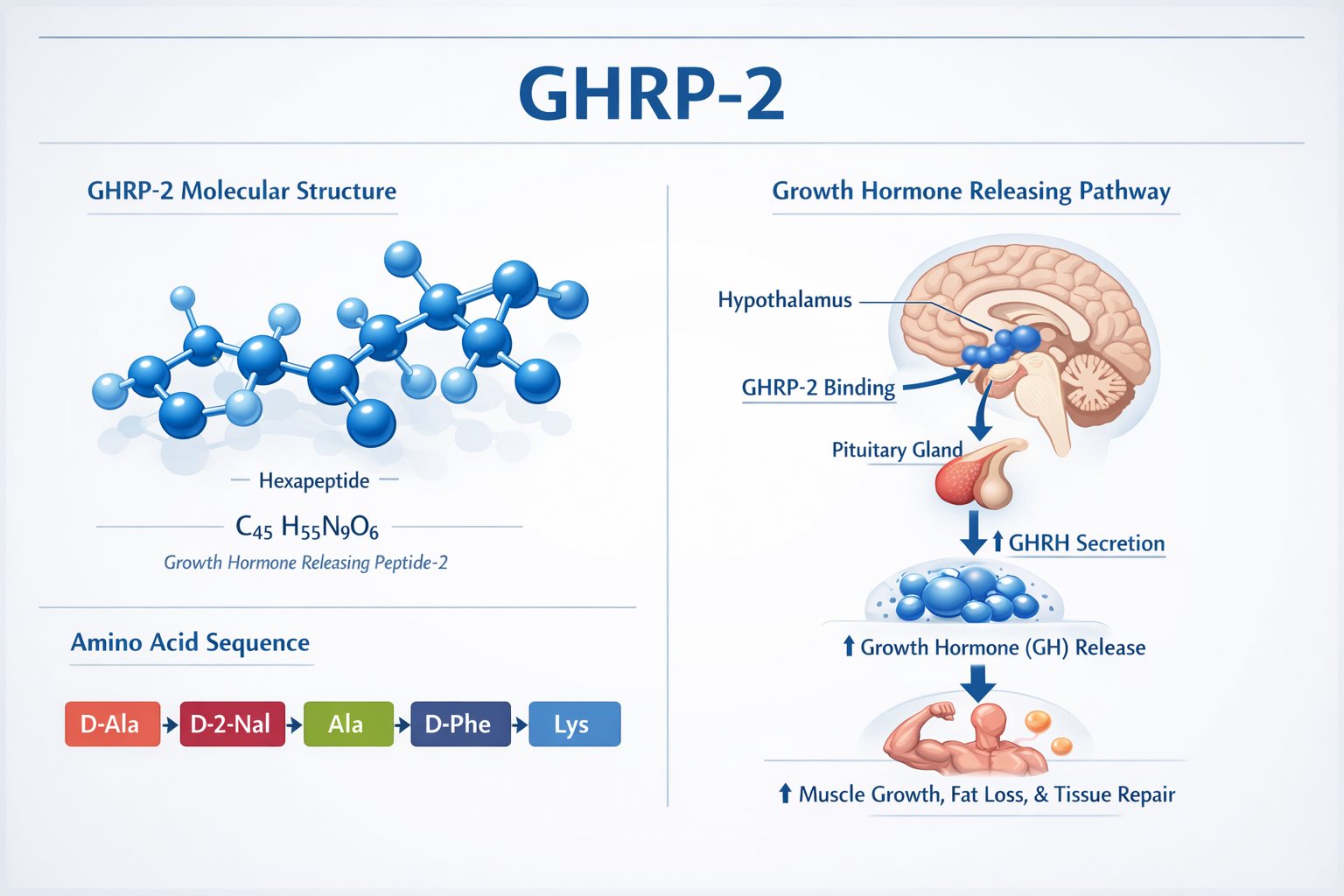
GHRP-2 peptide belongs to a specialized class of synthetic peptides known as growth hormone-releasing peptides (GHRPs). This hexapeptide consists of six amino acids arranged in a specific sequence: D-Ala-D-2-Nal-Ala-Trp-D-Phe-Lys-NH2. The unique structure allows GHRP-2 to bind effectively to ghrelin receptors, also known as growth hormone secretagogue receptors (GHSR).
The Molecular Pathway
When GHRP-2 binds to ghrelin receptors in the hypothalamus and pituitary gland, it triggers a cascade of biological events. The peptide stimulates the release of growth hormone-releasing hormone (GHRH) from the hypothalamus while simultaneously acting directly on somatotroph cells in the anterior pituitary. This dual mechanism results in a potent and sustained release of growth hormone.
Research indicates that GHRP-2 peptide demonstrates approximately 10-15 times greater potency than GHRH alone in stimulating growth hormone release. This enhanced efficacy makes it an valuable compound for research applications investigating growth hormone pathways.
Selectivity and Receptor Binding
One of the most remarkable characteristics of GHRP-2 is its selectivity. Unlike some other growth hormone secretagogues, GHRP-2 shows minimal cross-reactivity with other hormone systems. Studies demonstrate that the peptide primarily affects growth hormone release without significantly impacting cortisol, prolactin, or thyroid-stimulating hormone levels under normal research conditions.
The binding affinity of GHRP-2 peptide to GHSR-1a receptors has been extensively studied, with research showing a binding constant (Kd) of approximately 0.7 nM. This high affinity contributes to the peptide's effectiveness at relatively low concentrations, making it an efficient research tool.
[WordPress Shortcode: product_slider]
GHRP-2 Peptide vs Other Growth Hormone Releasing Compounds
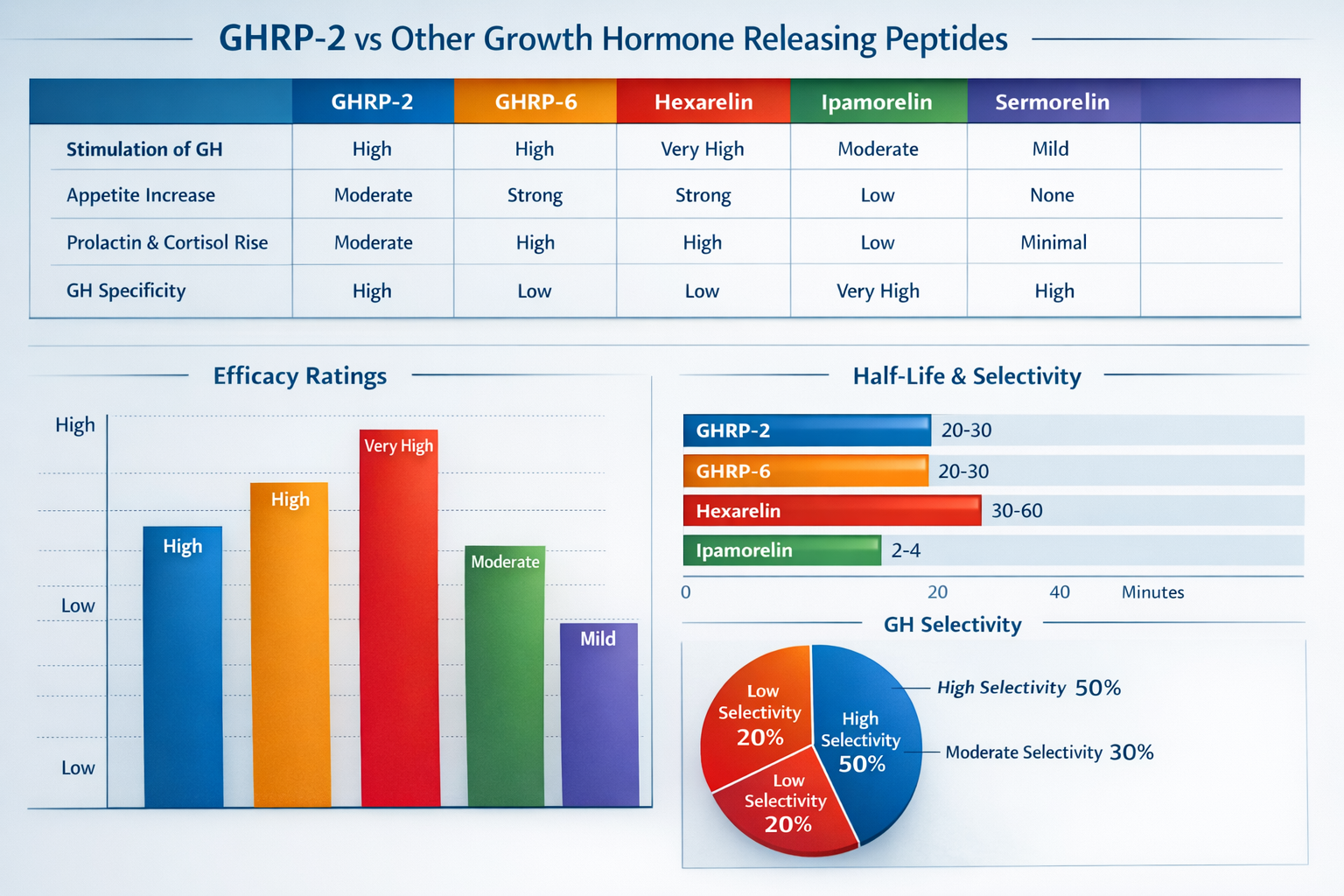
Understanding how GHRP-2 peptide compares to other growth hormone releasing compounds helps researchers select the most appropriate tool for their specific investigations. Each peptide in this class offers unique characteristics that may be better suited for different research applications.
GHRP-2 vs GHRP-6
Both GHRP-2 and GHRP-6 belong to the same peptide family, but they exhibit distinct properties. GHRP-6 peptide vs hexarelin studies show that GHRP-6 tends to stimulate appetite more significantly than GHRP-2, as it has stronger binding affinity to ghrelin receptors in the digestive system. GHRP-2, conversely, demonstrates more selective action on growth hormone release with minimal appetite stimulation.
Research comparing these compounds reveals that GHRP-2 produces a more sustained growth hormone release profile, while GHRP-6 creates a sharper, more immediate spike. This difference makes GHRP-2 peptide potentially more suitable for studies requiring prolonged growth hormone elevation.
GHRP-2 vs Sermorelin Comparison
The GHRP-2 peptide vs serm debate represents a comparison between different mechanisms of action. While GHRP-2 works through ghrelin receptor activation, serm functions as a direct GHRH analog. Sermorelin peptide stimulates growth hormone release through the natural GHRH pathway, resulting in more physiological patterns of hormone release.
Studies suggest that serm vs CJC-1295 combinations may provide different research outcomes compared to GHRP-2 protocols. Sermorelin typically produces a gentler, more natural growth hormone release pattern, while GHRP-2 can achieve higher peak concentrations. For comprehensive peptide research options, researchers can explore various peptide compounds to determine the most suitable option for their studies.
Hexarelin and Ipamorelin Comparisons
Hexarelin peptide vs Ipamorelin studies reveal another interesting comparison point for GHRP-2. Hexarelin demonstrates the highest potency among growth hormone-releasing peptides but may cause desensitization with prolonged use. Ipamorelin vs serm vs hexarelin research shows that Ipamorelin offers the most selective action with minimal side effects, while GHRP-2 provides a middle ground between potency and selectivity.
<!DOCTYPE html>
<html lang="en">
<head>
    <meta charset="UTF-8">
    <meta name="viewport" content="width=device-width, initial-scale=1.0">
    <title>GHRP-2 Peptide Comparison Calculator</title>
    <style>
        .cg-element-container {
            max-width: 800px;
            margin: 20px auto;
            padding: 20px;
            font-family: Arial, sans-serif;
            background: #f8f9fa;
            border-radius: 10px;
            box-shadow: 0 4px 6px rgba(0,0,0,0.1);
        }
        .cg-element-title {
            text-align: center;
            color: #2c3e50;
            margin-bottom: 20px;
            font-size: 24px;
            font-weight: bold;
        }
        .cg-element-form {
            display: grid;
            gap: 15px;
            margin-bottom: 20px;
        }
        .cg-element-input-group {
            display: flex;
            flex-direction: column;
        }
        .cg-element-label {
            font-weight: bold;
            margin-bottom: 5px;
            color: #34495e;
        }
        .cg-element-select, .cg-element-input {
            padding: 10px;
            border: 2px solid #bdc3c7;
            border-radius: 5px;
            font-size: 16px;
        }
        .cg-element-button {
            background: #3498db;
            color: white;
            padding: 12px 24px;
            border: none;
            border-radius: 5px;
            cursor: pointer;
            font-size: 16px;
            font-weight: bold;
        }
        .cg-element-button:hover {
            background: #2980b9;
        }
        .cg-element-results {
            background: white;
            padding: 20px;
            border-radius: 5px;
            border-left: 4px solid #3498db;
            margin-top: 20px;
            display: none;
        }
        .cg-element-comparison-table {
            width: 100%;
            border-collapse: collapse;
            margin-top: 15px;
        }
        .cg-element-comparison-table th,
        .cg-element-comparison-table td {
            padding: 12px;
            text-align: left;
            border-bottom: 1px solid #ddd;
        }
        .cg-element-comparison-table th {
            background: #34495e;
            color: white;
        }
        .cg-element-highlight {
            background: #e8f5e8;
            font-weight: bold;
        }
        @media (max-width: 600px) {
            .cg-element-container {
                margin: 10px;
                padding: 15px;
            }
            .cg-element-comparison-table {
                font-size: 14px;
            }
        }
    </style>
</head>
<body>
    <div class="cg-element-container">
        <h2 class="cg-element-title">🧬 GHRP-2 Peptide Research Comparison Tool</h2>

        <div class="cg-element-form">
            <div class="cg-element-input-group">
                <label class="cg-element-label" for="peptideType">Select Peptide for Comparison:</label>
                <select class="cg-element-select" id="peptideType">
                    <option value="ghrp6">GHRP-6</option>
                    <option value="serm">Sermorelin</option>
                    <option value="hexarelin">Hexarelin</option>
                    <option value="ipamorelin">Ipamorelin</option>
                    <option value="cjc1295">CJC-1295</option>
                </select>
            </div>

            <div class="cg-element-input-group">
                <label class="cg-element-label" for="researchFocus">Research Focus:</label>
                <select class="cg-element-select" id="researchFocus">
                    <option value="gh_release">Growth Hormone Release</option>
                    <option value="selectivity">Selectivity Profile</option>
                    <option value="duration">Duration of Action</option>
                    <option value="side_effects">Side Effect Profile</option>
                </select>
            </div>

            <button class="cg-element-button" onclick="compareGHRP2()">Compare with GHRP-2</button>
        </div>

        <div id="results" class="cg-element-results">
            <h3>Comparison Results: GHRP-2 vs <span id="selectedPeptide"></span></h3>
            <table class="cg-element-comparison-table">
                <thead>
                    <tr>
                        <th>Characteristic</th>
                        <th>GHRP-2</th>
                        <th id="comparisonPeptide">Comparison Peptide</th>
                    </tr>
                </thead>
                <tbody id="comparisonData">
                </tbody>
            </table>
            <div id="recommendation" style="margin-top: 15px; padding: 10px; background: #e8f4f8; border-radius: 5px;">
            </div>
        </div>
    </div>

    <script>
        const peptideData = {
            ghrp6: {
                name: "GHRP-6",
                potency: "High",
                selectivity: "Moderate",
                duration: "4-6 hours",
                appetite: "Strong stimulation",
                sideEffects: "Moderate",
                halfLife: "2-3 hours"
            },
            serm: {
                name: "Sermorelin",
                potency: "Moderate",
                selectivity: "High",
                duration: "6-8 hours",
                appetite: "Minimal",
                sideEffects: "Low",
                halfLife: "8-12 minutes"
            },
            hexarelin: {
                name: "Hexarelin",
                potency: "Very High",
                selectivity: "Low",
                duration: "3-4 hours",
                appetite: "Strong stimulation",
                sideEffects: "Higher",
                halfLife: "1-2 hours"
            },
            ipamorelin: {
                name: "Ipamorelin",
                potency: "Moderate-High",
                selectivity: "Very High",
                duration: "6-8 hours",
                appetite: "None",
                sideEffects: "Very Low",
                halfLife: "2-3 hours"
            },
            cjc1295: {
                name: "CJC-1295",
                potency: "High",
                selectivity: "High",
                duration: "6-8 days",
                appetite: "Minimal",
                sideEffects: "Low",
                halfLife: "6-8 days"
            }
        };

        const ghrp2Data = {
            name: "GHRP-2",
            potency: "High",
            selectivity: "High",
            duration: "4-6 hours",
            appetite: "Mild stimulation",
            sideEffects: "Low",
            halfLife: "2-3 hours"
        };

        function compareGHRP2() {
            const selectedPeptide = document.getElementById('peptideType').value;
            const researchFocus = document.getElementById('researchFocus').value;
            const comparisonData = peptideData[selectedPeptide];

            document.getElementById('selectedPeptide').textContent = comparisonData.name;
            document.getElementById('comparisonPeptide').textContent = comparisonData.name;

            const tbody = document.getElementById('comparisonData');
            tbody.innerHTML = `
                <tr>
                    <td>GH Release Potency</td>
                    <td class="${ghrp2Data.potency === 'High' ? 'cg-element-highlight' : ''}">${ghrp2Data.potency}</td>
                    <td class="${comparisonData.potency === 'Very High' ? 'cg-element-highlight' : ''}">${comparisonData.potency}</td>
                </tr>
                <tr>
                    <td>Selectivity</td>
                    <td class="${ghrp2Data.selectivity === 'High' ? 'cg-element-highlight' : ''}">${ghrp2Data.selectivity}</td>
                    <td class="${comparisonData.selectivity === 'Very High' ? 'cg-element-highlight' : ''}">${comparisonData.selectivity}</td>
                </tr>
                <tr>
                    <td>Duration of Action</td>
                    <td>${ghrp2Data.duration}</td>
                    <td class="${comparisonData.duration.includes('days') ? 'cg-element-highlight' : ''}">${comparisonData.duration}</td>
                </tr>
                <tr>
                    <td>Appetite Effects</td>
                    <td>${ghrp2Data.appetite}</td>
                    <td>${comparisonData.appetite}</td>
                </tr>
                <tr>
                    <td>Side Effect Profile</td>
                    <td class="${ghrp2Data.sideEffects === 'Low' ? 'cg-element-highlight' : ''}">${ghrp2Data.sideEffects}</td>
                    <td class="${comparisonData.sideEffects === 'Very Low' ? 'cg-element-highlight' : ''}">${comparisonData.sideEffects}</td>
                </tr>
                <tr>
                    <td>Half-Life</td>
                    <td>${ghrp2Data.halfLife}</td>
                    <td class="${comparisonData.halfLife.includes('days') ? 'cg-element-highlight' : ''}">${comparisonData.halfLife}</td>
                </tr>
            `;

            let recommendation = "";
            switch(selectedPeptide) {
                case 'ghrp6':
                    recommendation = "GHRP-2 offers better selectivity with less appetite stimulation compared to GHRP-6, making it suitable for research focused on growth hormone release without digestive effects.";
                    break;
                case 'serm':
                    recommendation = "GHRP-2 provides higher potency than Sermorelin but with similar selectivity. Choose based on whether you need stronger GH stimulation (GHRP-2) or more physiological patterns (Sermorelin).";
                    break;
                case 'hexarelin':
                    recommendation = "GHRP-2 offers better selectivity and lower side effects compared to Hexarelin, while maintaining high potency. GHRP-2 is preferred for longer research protocols.";
                    break;
                case 'ipamorelin':
                    recommendation = "Ipamorelin offers superior selectivity and no appetite effects, while GHRP-2 provides higher potency. Choose Ipamorelin for precision research, GHRP-2 for stronger effects.";
                    break;
                case 'cjc1295':
                    recommendation = "CJC-1295 offers much longer duration but GHRP-2 provides more flexible dosing. Combine both for synergistic effects or use GHRP-2 alone for shorter research cycles.";
                    break;
            }

            document.getElementById('recommendation').innerHTML = `<strong>Research Recommendation:</strong> ${recommendation}`;
            document.getElementById('results').style.display = 'block';
        }
    </script>
</body>
</html>
The research comparing Tesamorelin peptide with GHRP-2 shows that while both compounds stimulate growth hormone release, Tesamorelin demonstrates more specific applications in metabolic research, particularly in studies related to abdominal fat distribution. This specificity makes GHRP-2 a more versatile choice for general growth hormone research applications.
Research Applications and Storage Protocols for GHRP-2 Peptide
Proper handling and storage of GHRP-2 peptide is crucial for maintaining its integrity and ensuring reliable research results. The peptide's stability depends on several environmental factors, and following established protocols helps preserve its biological activity throughout the research period.
Storage Requirements
GHRP-2 peptide should be stored as a lyophilized powder at temperatures between -20°C to -80°C for long-term storage. Under these conditions, the peptide maintains stability for up to 24 months. Once reconstituted, the solution should be stored at 2-8°C and used within 2-4 weeks for optimal results.
Research facilities should maintain detailed storage logs, including temperature monitoring and expiration tracking. The peptide should be protected from light exposure and stored in sterile, amber vials when possible. For researchers seeking high-quality peptides, proper supplier selection ensures optimal storage conditions from manufacture to delivery.
Reconstitution Protocols
When preparing GHRP-2 peptide for research use, sterile bacteriostatic water is the preferred reconstitution medium. The typical concentration ranges from 1-2 mg/mL, depending on the specific research protocol. Researchers should add the bacteriostatic water slowly along the vial wall, avoiding direct contact with the lyophilized powder to prevent protein denaturation.
After adding the solvent, gentle swirling (not shaking) helps dissolve the peptide completely. The reconstituted solution should appear clear and colorless. Any cloudiness or precipitation indicates potential degradation, and the solution should not be used for research purposes.
Research Protocol Considerations
Current research protocols for GHRP-2 peptide vary significantly based on the study objectives. Most investigations utilize dosing ranges between 1-3 mcg/kg of body weight, administered via subcutaneous injection. The timing of administration often correlates with natural growth hormone release patterns, with many studies conducting injections during fasting states or before sleep periods.
GHRH peptides comparison studies frequently employ GHRP-2 as a reference compound due to its well-characterized properties. Researchers investigating metabolic pathways may combine GHRP-2 with other compounds, such as those found in specialized peptide research blends, to examine synergistic effects.
Quality Control and Purity Testing
Reputable research facilities implement comprehensive quality control measures for GHRP-2 peptide. High-performance liquid chromatography (HPLC) analysis should confirm peptide purity levels of 98% or higher. Mass spectrometry verification ensures the correct molecular weight and sequence integrity.
Third-party testing certificates provide additional validation of peptide quality. These documents should include purity analysis, endotoxin testing, and sterility confirmation. Researchers should request and review these certificates before initiating any studies with GHRP-2.
[WordPress Shortcode: product_slider]
Documentation and Traceability
Proper research documentation includes detailed records of peptide lot numbers, storage conditions, reconstitution dates, and usage logs. This traceability becomes essential for reproducing results and maintaining research integrity. Many facilities implement barcode systems or digital tracking to monitor peptide inventory and usage patterns.
Research teams should establish standard operating procedures (SOPs) for GHRP-2 peptide handling, including emergency protocols for storage equipment failures or contamination events. Regular training ensures all personnel understand proper handling techniques and safety requirements.
Current Research Trends and Future Directions
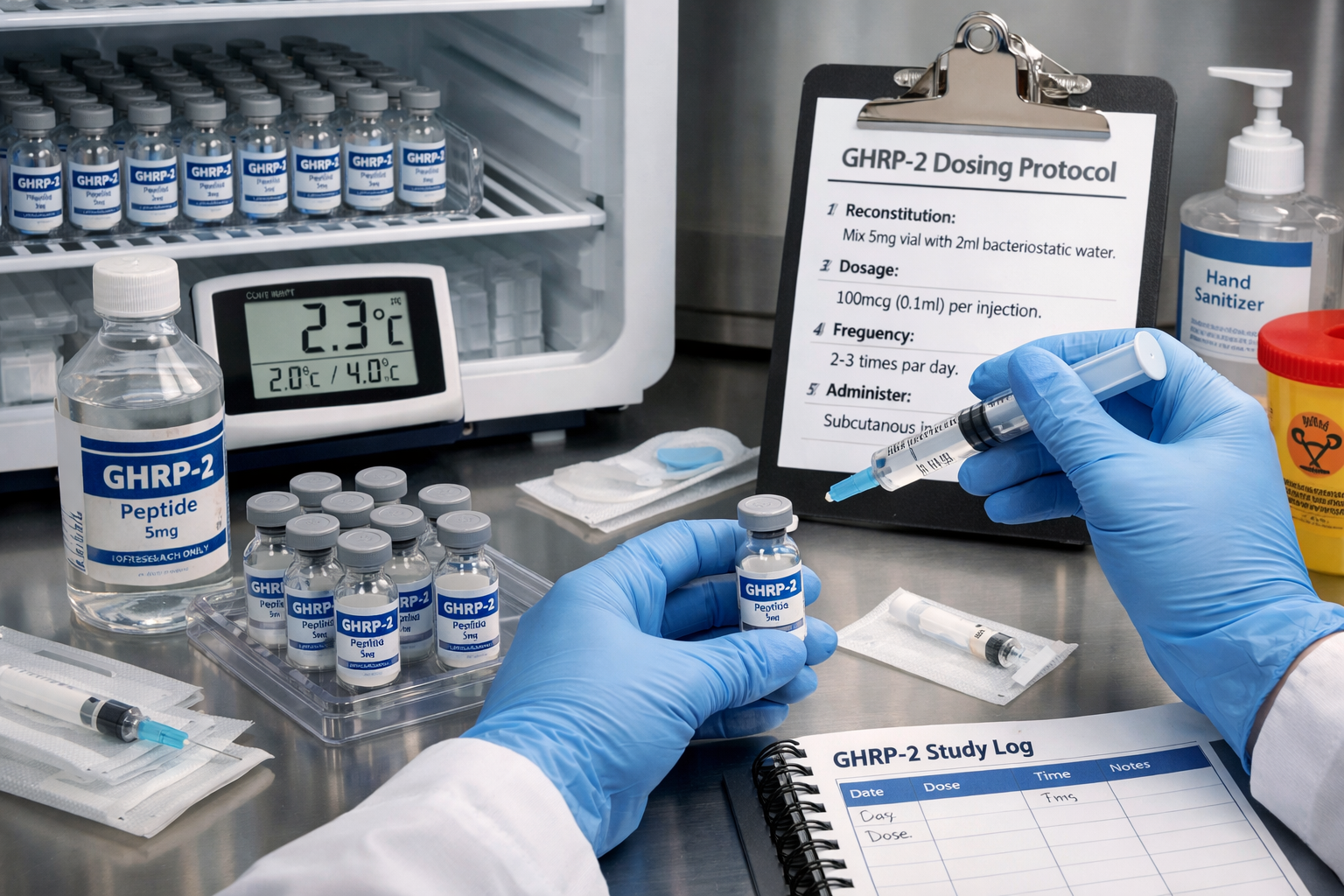
The landscape of GHRP-2 peptide research continues to evolve, with new applications and methodologies emerging regularly. Current scientific investigations focus on several key areas that may shape the future understanding of this compound and its potential applications.
Metabolic Research Applications
Recent studies have expanded beyond traditional growth hormone research to explore GHRP-2 peptide applications in metabolic investigations. Researchers are examining how growth hormone stimulation affects various metabolic pathways, including glucose metabolism, lipid oxidation, and protein synthesis. These studies often incorporate advanced metabolomic analysis techniques to understand the broader physiological impacts.
The peptide's ability to stimulate growth hormone release without significantly affecting other hormonal systems makes it an ideal tool for isolating growth hormone-specific effects in metabolic research. This selectivity allows researchers to draw more definitive conclusions about growth hormone's role in various physiological processes.
Combination Therapy Research
Emerging research trends focus on GHRP-2 peptide combinations with other bioactive compounds. Scientists are investigating synergistic effects when GHRP-2 is combined with other peptides, such as those available through comprehensive peptide research programs. These combination studies aim to understand how different peptides might work together to produce enhanced or modified effects.
One particularly interesting area involves combining GHRP-2 with peptides that affect different aspects of metabolism or cellular function. For example, researchers are exploring combinations with peptides that influence mitochondrial function, cellular repair mechanisms, or inflammatory pathways.
Advanced Delivery Methods
Research into novel delivery methods for GHRP-2 peptide represents another growing area of investigation. While traditional subcutaneous injection remains the gold standard, scientists are exploring alternative delivery mechanisms that might improve bioavailability, reduce administration frequency, or enhance patient compliance in clinical settings.
Nasal delivery systems, transdermal patches, and oral formulations with enhanced absorption are under investigation. These studies often require sophisticated pharmacokinetic analysis to compare the effectiveness of different delivery methods in achieving desired growth hormone release patterns.
Age-Related Research Studies
A significant portion of current GHRP-2 peptide research focuses on age-related applications. Scientists are investigating how growth hormone stimulation might affect various aspects of the aging process, from muscle mass maintenance to cognitive function. These studies often employ longitudinal designs to track changes over extended periods.
Research in this area frequently examines biomarkers associated with aging, such as telomere length, inflammatory markers, and cellular senescence indicators. The goal is to understand whether growth hormone stimulation through GHRP-2 might influence these aging-related parameters.
Tissue-Specific Research
Advanced research techniques now allow scientists to investigate GHRP-2 peptide effects on specific tissues and organ systems. Using sophisticated imaging techniques and tissue-specific biomarkers, researchers can examine how growth hormone stimulation affects different parts of the body.
Muscle tissue research represents a major focus area, with studies examining how GHRP-2-induced growth hormone release affects muscle protein synthesis, satellite cell activation, and recovery from exercise-induced damage. Bone tissue research investigates potential effects on bone density, remodeling, and repair mechanisms.
Regulatory and Safety Research
As interest in GHRP-2 peptide applications grows, regulatory agencies are requiring more comprehensive safety data. Current research includes long-term toxicology studies, drug interaction investigations, and detailed pharmacovigilance programs. These studies aim to establish comprehensive safety profiles for potential therapeutic applications.
Researchers are also investigating optimal dosing strategies that maximize beneficial effects while minimizing any potential adverse reactions. This research often involves dose-response studies and careful monitoring of various physiological parameters.
For researchers interested in exploring the latest developments in peptide science, specialized research compounds offer opportunities to investigate novel mechanisms and applications.
Technology Integration
Modern GHRP-2 peptide research increasingly incorporates advanced technologies such as artificial intelligence, machine learning, and big data analysis. These tools help researchers identify patterns in large datasets, predict optimal dosing strategies, and identify potential new applications.
Wearable technology integration allows for real-time monitoring of physiological parameters during GHRP-2 studies, providing unprecedented insight into the peptide's effects on various body systems. This technology enables more precise research protocols and better understanding of individual response variations.
Conclusion
GHRP-2 peptide represents a significant advancement in growth hormone research, offering scientists a powerful and selective tool for investigating growth hormone pathways and their physiological effects. Throughout 2026, this synthetic hexapeptide continues to demonstrate its value in various research applications, from metabolic studies to age-related investigations.
The peptide's unique mechanism of action, working through ghrelin receptor activation, provides researchers with distinct advantages over other growth hormone-releasing compounds. Its high selectivity, potent effects, and relatively favorable safety profile make it an ideal choice for controlled scientific investigations.
As research methodologies continue to advance and new applications emerge, GHRP-2 peptide will likely remain at the forefront of growth hormone research. The ongoing development of combination therapies, novel delivery methods, and tissue-specific applications promises to expand our understanding of this remarkable compound.
For researchers, medical professionals, and institutions interested in exploring GHRP-2 applications, partnering with reputable suppliers who maintain strict quality standards becomes essential. Proper storage, handling, and documentation protocols ensure research integrity and reproducible results.
Next Steps for Researchers
- Establish Research Protocols: Develop comprehensive SOPs for GHRP-2 handling, storage, and administration
- Source Quality Compounds: Partner with verified suppliers who provide third-party testing certificates
- Implement Documentation Systems: Create detailed tracking systems for peptide inventory and usage
- Stay Current with Research: Monitor emerging studies and applications in GHRP-2 research
- Consider Combination Studies: Explore potential synergistic effects with other research compounds
The future of GHRP-2 peptide research holds tremendous promise, and staying informed about the latest developments will be crucial for maximizing research potential and contributing to the growing body of scientific knowledge surrounding this fascinating compound.
SEO Meta Information:
Meta Title: GHRP-2 Peptide: Complete Research Guide & Comparisons 2026
Meta Description: Comprehensive guide to GHRP-2 peptide research, storage protocols, comparisons with other peptides, and current scientific applications for researchers.