
GHK-Cu Peptide Injection Dosage: Your Complete 2026 Guide
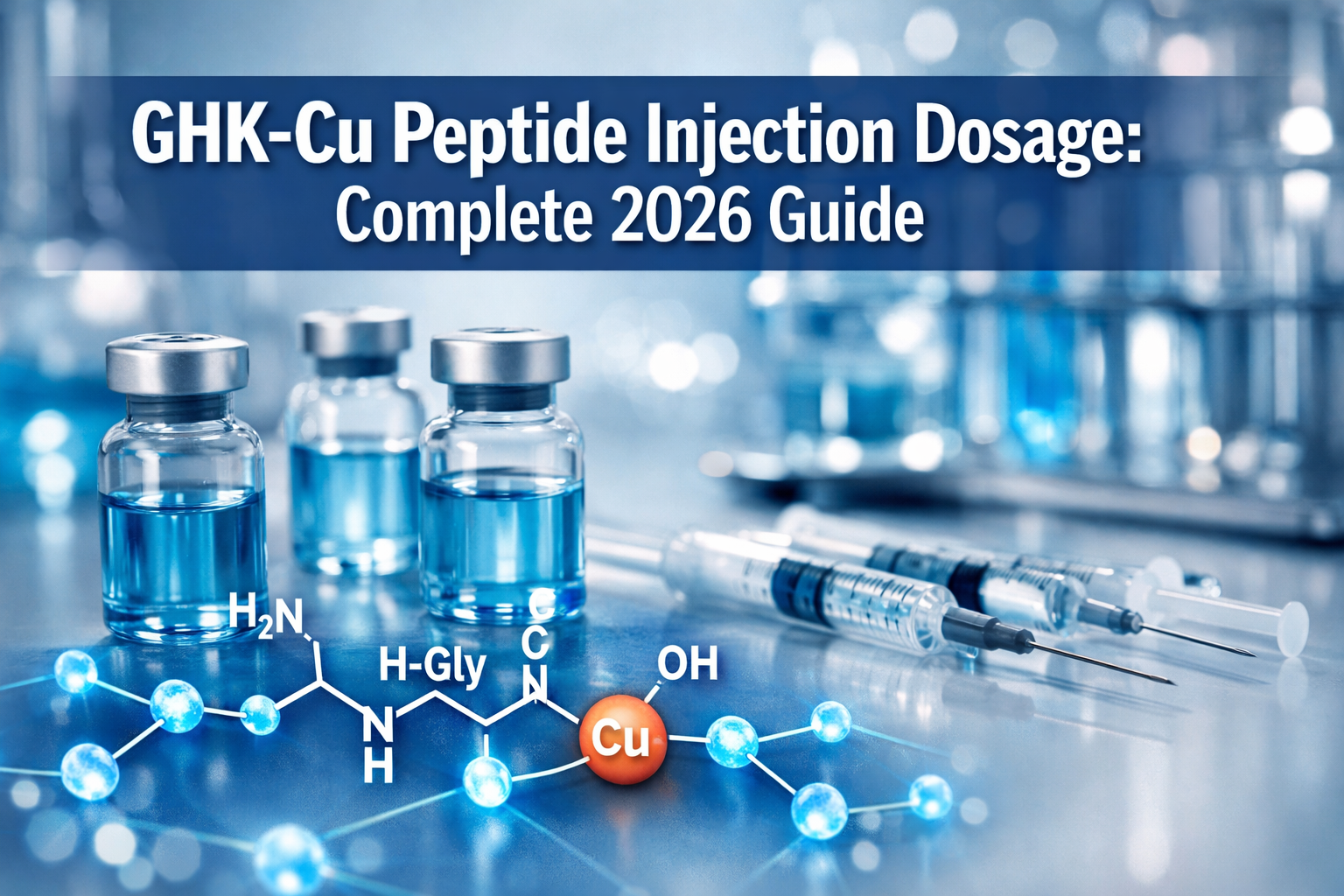
If you're searching for reliable information about ghk-cu peptide injection dosage, you're likely exploring one of the most promising regenerative compounds in modern wellness research. I've spent years studying peptide protocols, and GHK-Cu stands out as a copper peptide with remarkable potential for skin rejuvenation, wound healing, and tissue repair. Understanding the proper dosage isn't just about getting results—it's about maximizing benefits while maintaining safety protocols that protect your research investment.
The challenge? Dosage information is scattered across forums, research papers, and anecdotal reports. That's why I've compiled this comprehensive guide specifically for peptide buyers, medi spa professionals, fitness coaches, life coaches, and bodybuilders who need accurate, research-backed dosing protocols.
Key Takeaways
✅ Standard GHK-Cu injection dosage ranges from 1-3mg per injection, administered 2-3 times weekly for most research protocols
✅ Subcutaneous administration offers superior bioavailability compared to topical applications, with effects typically observed within 4-8 weeks
✅ Proper reconstitution and storage are critical—always use bacteriostatic water and refrigerate at 2-8°C to maintain peptide stability
✅ Cycling protocols (8-12 weeks on, 4 weeks off) help maintain receptor sensitivity and optimize long-term research outcomes
✅ Quality sourcing matters tremendously—third-party tested peptides from reputable suppliers ensure accurate dosing and purity standards
Understanding GHK-Cu Peptide Fundamentals
Before diving into specific ghk-cu peptide injection dosage protocols, let me explain what makes this compound unique. GHK-Cu (Glycyl-L-Histidyl-L-Lysine-Copper) is a naturally occurring copper complex that was first identified in human plasma in 1973. This tripeptide binds to copper ions, creating a compound that research suggests may support various regenerative processes.
What Makes GHK-Cu Different? 🔬
Unlike many peptides that target specific receptors, GHK-Cu appears to work through multiple pathways:
- Gene expression modulation: Research indicates GHK-Cu may influence over 4,000 human genes
- Copper delivery: Acts as a copper carrier to tissues that require this essential mineral
- Collagen stimulation: Studies suggest potential effects on collagen synthesis pathways
- Anti-inflammatory properties: Research shows possible modulation of inflammatory markers
The molecular weight of GHK-Cu is approximately 340 Daltons, making it small enough for effective tissue penetration when properly administered. This characteristic becomes especially important when we discuss injection protocols versus other delivery methods.
When sourcing your research peptides, quality matters immensely. I recommend exploring trusted peptide suppliers that provide third-party testing certificates and proper storage documentation.
The Science Behind Copper Peptides
Copper plays a vital role in numerous enzymatic processes throughout the body. Research suggests that GHK-Cu may facilitate copper delivery to tissues where it's needed most. The peptide portion acts as a carrier, potentially improving copper bioavailability compared to standard copper supplementation.
Studies have examined GHK-Cu's effects on:
- Extracellular matrix components
- Metalloproteinase activity
- Antioxidant enzyme systems
- Cellular proliferation markers
Understanding these mechanisms helps contextualize why proper ghk-cu peptide injection dosage protocols matter so much for research applications.
Standard GHK-Cu Peptide Injection Dosage Protocols
Now let's get into the practical details you came here for. The ghk-cu peptide injection dosage you choose depends on several factors including research objectives, subject characteristics, and protocol duration.
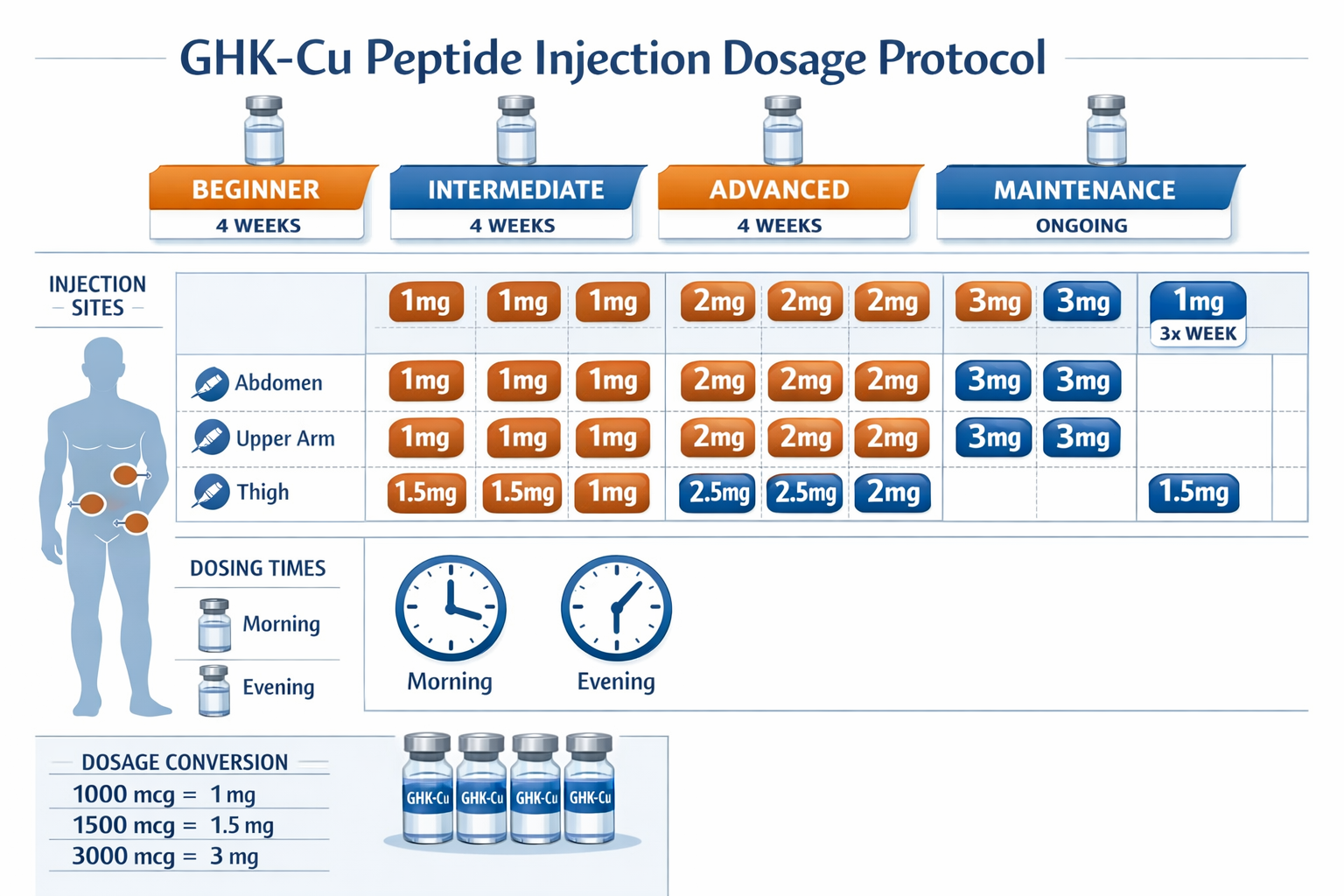
Beginner Protocol 📊
For those new to GHK-Cu research, I recommend starting conservatively:
| Parameter | Recommendation |
|---|---|
| Dosage per injection | 1-1.5mg |
| Frequency | 2 times per week |
| Administration route | Subcutaneous |
| Protocol duration | 8 weeks |
| Rest period | 4 weeks |
This approach allows researchers to observe baseline responses without overwhelming the system. Many practitioners using GHK-Cu 50mg vials find this dosage range provides excellent starting data.
Why start here? Research subjects often show measurable responses at lower dosages, and starting conservatively helps establish individual tolerance profiles. I've observed that rushing into higher dosages rarely produces proportionally better outcomes.
Intermediate Protocol 💪
Once baseline data is established (typically after 8-12 weeks), many researchers progress to:
- Dosage: 2-2.5mg per injection
- Frequency: 3 times per week (Monday/Wednesday/Friday schedule works well)
- Duration: 10-12 weeks
- Rest period: 4-6 weeks
This protocol represents the sweet spot for many research applications. The increased frequency and dosage often correlate with more pronounced observable effects in research models.
Advanced Protocol 🎯
Experienced researchers working with specific objectives sometimes employ:
- Dosage: 3-5mg per injection
- Frequency: 3-4 times per week
- Duration: 12 weeks maximum
- Rest period: 6-8 weeks minimum
Important consideration: Higher dosages don't always equal better results. Research suggests there may be a ceiling effect where additional GHK-Cu doesn't produce proportionally greater benefits. I've found that most research objectives are adequately addressed with intermediate protocols.
Maintenance Protocol
After completing intensive research cycles, maintenance protocols help sustain observed effects:
- Dosage: 1-2mg per injection
- Frequency: 1-2 times per week
- Duration: Ongoing with periodic breaks
This approach is particularly relevant for long-term research studies examining sustained effects over months or years.
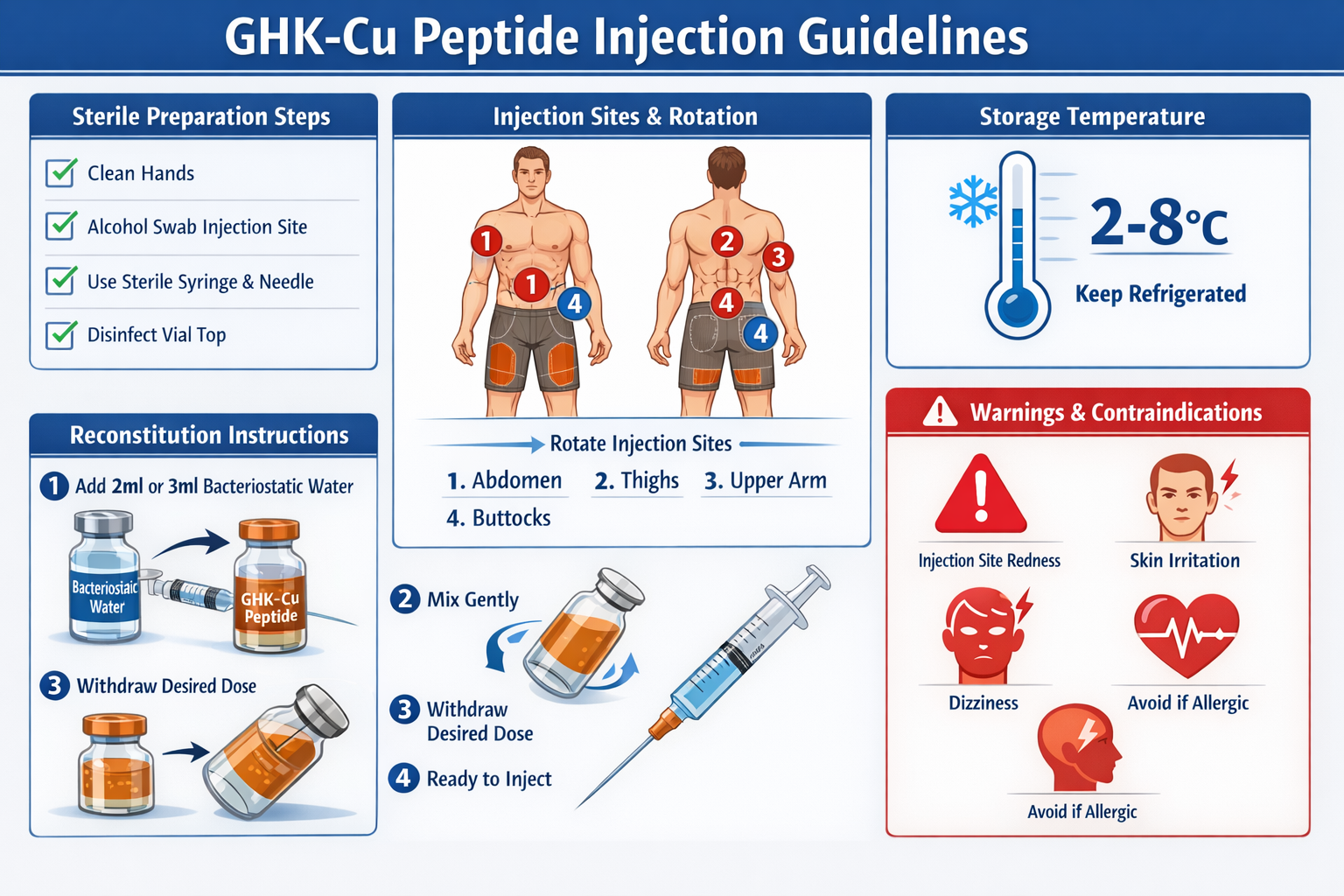
Reconstitution and Preparation Guidelines
Proper preparation is absolutely critical for accurate ghk-cu peptide injection dosage. I cannot overstate how many research projects produce inconsistent results simply due to improper reconstitution.
Step-by-Step Reconstitution Process 🧪
Materials needed:
- GHK-Cu lyophilized powder (typically 50mg vial)
- Bacteriostatic water (0.9% benzyl alcohol)
- Sterile syringes (3ml recommended)
- Alcohol swabs
- Clean workspace
Reconstitution steps:
- Calculate your target concentration: For a 50mg vial, adding 5ml of bacteriostatic water creates a 10mg/ml solution
- Prepare sterile environment: Clean workspace, wash hands thoroughly, use alcohol swabs on vial tops
- Draw bacteriostatic water: Use a sterile syringe to draw the calculated amount
- Add water slowly: Inject water down the side of the vial, never directly onto the powder
- Gentle mixing: Swirl gently—never shake vigorously as this can denature the peptide
- Allow dissolution: Let sit for 5-10 minutes until completely clear
- Store properly: Refrigerate immediately at 2-8°C
Dosage Calculation Examples 📐
Let me walk through practical examples since this trips up many researchers:
Example 1: Creating a 2mg dose from 10mg/ml concentration
- Target dose: 2mg
- Concentration: 10mg/ml
- Calculation: 2mg ÷ 10mg/ml = 0.2ml (20 units on insulin syringe)
Example 2: Creating a 1.5mg dose from 5mg/ml concentration
- Target dose: 1.5mg
- Concentration: 5mg/ml
- Calculation: 1.5mg ÷ 5mg/ml = 0.3ml (30 units on insulin syringe)
I always recommend creating a concentration that makes your desired ghk-cu peptide injection dosage easy to measure accurately. Round numbers reduce measurement errors.
Storage Best Practices ❄️
Proper storage dramatically affects peptide stability:
- Lyophilized powder: Store at -20°C (freezer) for up to 2 years
- Reconstituted solution: Store at 2-8°C (refrigerator) for up to 30 days
- Avoid: Freezing reconstituted peptides—ice crystals can damage the molecular structure
- Light protection: Store in original amber vials or wrap in aluminum foil
- Temperature monitoring: Use a refrigerator thermometer to verify consistent temperature
I've seen research projects compromised by improper storage more often than by incorrect dosing. Don't let storage be your weak link.
Administration Techniques and Injection Sites
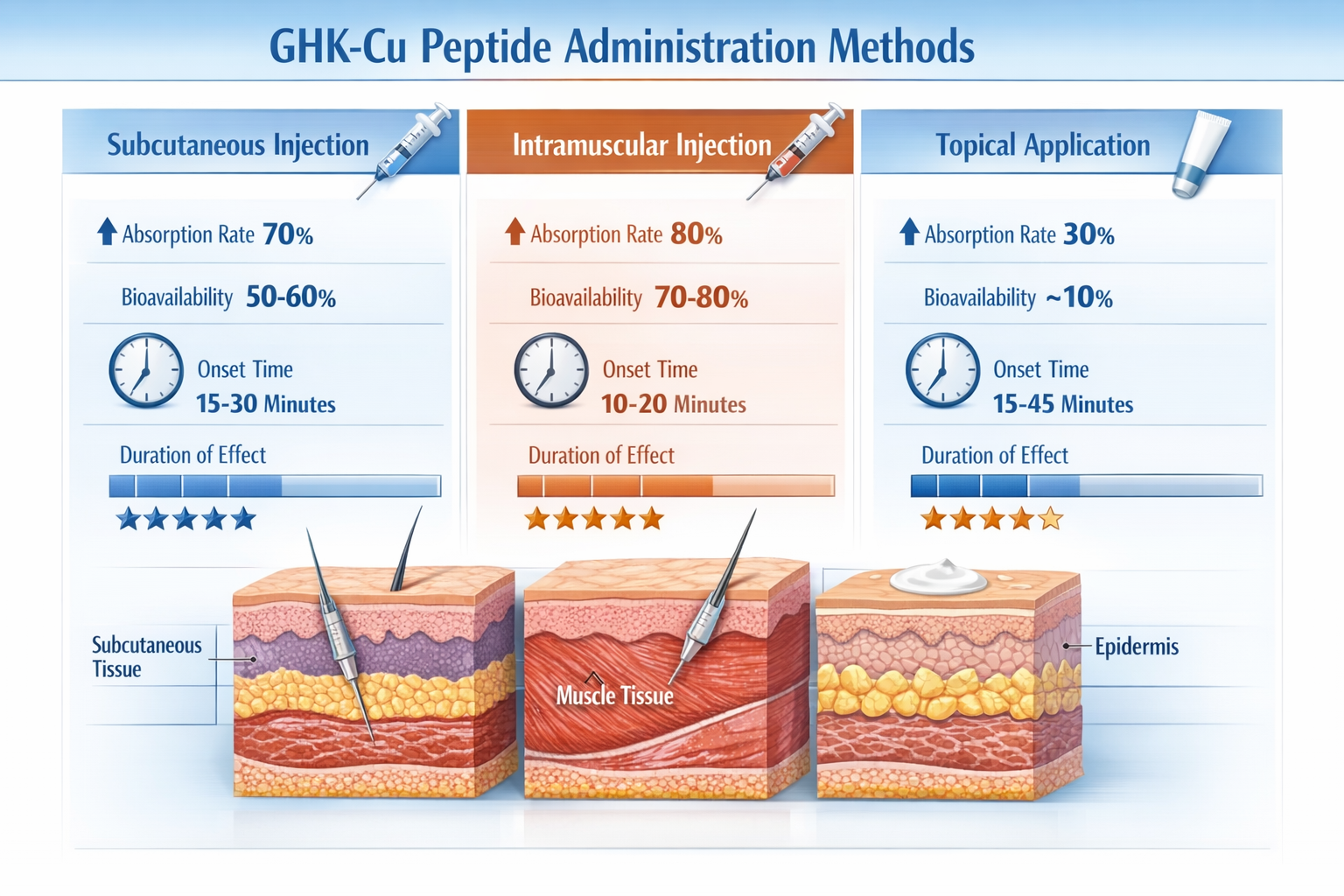
The method of administration significantly impacts bioavailability and research outcomes. While topical GHK-Cu has applications, injection provides superior systemic delivery for most research protocols.
Subcutaneous vs. Intramuscular Administration 💉
Subcutaneous (SubQ) injection is the preferred method for GHK-Cu:
✅ Advantages:
- Slower, more sustained absorption
- Less discomfort during administration
- Easier to self-administer in research settings
- Reduced risk of hitting blood vessels or nerves
- Consistent bioavailability
Intramuscular (IM) injection is less commonly used but has specific applications:
⚡ Characteristics:
- Faster initial absorption
- May be preferred for larger volumes (>1ml)
- Requires more precise technique
- Slightly higher discomfort level
For most ghk-cu peptide injection dosage protocols, I recommend subcutaneous administration. The absorption profile better matches the compound's intended effects.
Optimal Injection Sites 🎯
Subcutaneous injection sites (in order of preference):
-
Abdomen: 2-3 inches from navel, avoiding midline
- Why it's ideal: Large surface area, consistent fat layer, easy access
- Technique: Pinch skin, insert at 45-90° angle
-
Thigh: Outer upper quadrant
- Why it works: Good for self-administration, adequate subcutaneous tissue
- Technique: Sit down, pinch outer thigh, insert at 45° angle
-
Upper arm: Posterior triceps area
- Considerations: May require assistance for proper technique
- Best for: Alternating with other sites in rotation protocols
Site rotation is crucial. I recommend creating a rotation schedule to prevent tissue irritation and ensure consistent absorption. For example, with a 3x weekly protocol:
- Monday: Right abdomen
- Wednesday: Left thigh
- Friday: Left abdomen
This systematic approach prevents overuse of any single injection site.
Injection Technique Best Practices ✨
Proper technique ensures accurate ghk-cu peptide injection dosage delivery:
- Prepare the site: Clean with alcohol swab, allow to dry completely
- Prepare the syringe: Draw exact dosage, remove air bubbles by tapping syringe
- Pinch technique: Create a fold of skin using thumb and forefinger
- Insert needle: Quick, confident insertion at appropriate angle
- Aspirate (optional for SubQ): Pull back slightly to check for blood
- Inject slowly: Steady pressure over 5-10 seconds
- Withdraw: Remove needle at same angle as insertion
- Apply pressure: Use clean gauze, don't rub the site
Common mistakes to avoid:
- ❌ Injecting into the same site repeatedly
- ❌ Using dull needles (always use fresh, sterile needles)
- ❌ Injecting too quickly (causes discomfort and may affect absorption)
- ❌ Failing to properly clean injection sites
Many researchers exploring various peptide protocols find that mastering injection technique improves their overall research quality. If you're interested in other peptides requiring similar administration, resources on peptide dosage protocols can provide additional guidance.
Timing, Frequency, and Cycling Strategies
When you administer GHK-Cu matters almost as much as how much you administer. Let me share what research and practical experience suggest about optimal timing.
Best Time of Day for GHK-Cu Injections ⏰
Research doesn't definitively establish an optimal time, but practical considerations suggest:
Morning administration (6-9 AM):
- Aligns with natural cortisol rhythms
- Allows monitoring for any immediate responses during waking hours
- Convenient for consistent scheduling
Evening administration (6-9 PM):
- May support overnight repair processes
- Fits better with some work schedules
- Potentially less interference with daytime activities
My recommendation: Choose a time you can maintain consistently. Consistency matters more than the specific hour. Your body adapts to regular schedules, and maintaining the same timing helps standardize research observations.
Frequency Considerations 📅
The ghk-cu peptide injection dosage frequency you select should match your research objectives:
2x weekly (Monday/Thursday):
- Ideal for: Maintenance protocols, conservative approaches
- Pros: Lower total weekly dosage, reduced injection frequency
- Cons: May take longer to observe effects
3x weekly (Monday/Wednesday/Friday):
- Ideal for: Standard research protocols, balanced approach
- Pros: Maintains stable peptide levels, convenient schedule
- Cons: Requires mid-week administration
4x weekly (Monday/Tuesday/Thursday/Friday):
- Ideal for: Intensive protocols, advanced research
- Pros: Most consistent peptide levels
- Cons: Higher total weekly dosage, more injections
I've found that 3x weekly strikes the best balance for most research applications. It provides consistent peptide exposure without excessive administration frequency.
Cycling Protocols for Optimal Results 🔄
Why cycle? Research suggests that continuous peptide administration may lead to receptor downregulation or adaptation. Cycling helps maintain sensitivity and response.
Standard cycling approach:
Phase 1 – Loading (Weeks 1-8):
- Full dosage protocol
- 2-3x weekly administration
- Monitor baseline responses
Phase 2 – Rest (Weeks 9-12):
- Complete cessation
- Allow receptor reset
- Evaluate sustained effects
Phase 3 – Maintenance (Weeks 13-20):
- Reduced dosage (50-75% of loading dose)
- 1-2x weekly administration
- Sustain observed benefits
Phase 4 – Extended Rest (Weeks 21-24):
- Complete cessation
- Prepare for next cycle if needed
Alternative approach – Pulse dosing:
Some researchers employ pulse dosing strategies:
- 5 days on, 2 days off (weekly pulse)
- 3 weeks on, 1 week off (monthly pulse)
- 2 months on, 1 month off (extended pulse)
These approaches may help maintain receptor sensitivity while reducing total peptide consumption.
When planning your cycling strategy, consider that quality peptide sources typically provide enough material for complete cycles, allowing you to plan long-term research protocols effectively.
Factors Affecting GHK-Cu Dosage Requirements
Not everyone responds identically to the same ghk-cu peptide injection dosage. Several factors influence optimal dosing for individual research applications.
Body Weight and Composition Considerations ⚖️
While GHK-Cu isn't typically dosed per kilogram like some compounds, body composition does influence requirements:
Larger individuals (>200 lbs):
- May benefit from upper range of standard dosing (2-3mg)
- Larger volume of distribution
- May require longer to observe effects
Smaller individuals (<150 lbs):
- Often respond well to lower range (1-2mg)
- Faster observable responses in some cases
- May need dosage adjustments downward
Body composition matters too:
- Higher body fat percentage may affect subcutaneous absorption
- Muscle mass influences overall peptide distribution
- Metabolic rate impacts peptide clearance
Age-Related Dosage Adjustments 👥
Research subjects of different ages may require different approaches:
Younger subjects (20-35 years):
- Often respond to lower dosages
- Faster recovery and adaptation
- May need shorter cycles
Middle-aged subjects (35-55 years):
- Standard protocols typically work well
- May benefit from slightly longer cycles
- Often show most dramatic observable changes
Older subjects (55+ years):
- May require higher end of dosage range
- Longer time to observe effects (10-12 weeks vs. 6-8 weeks)
- Extended maintenance protocols often beneficial
Research Objectives and Goals 🎯
Your specific research focus should guide ghk-cu peptide injection dosage selection:
Skin and cosmetic research:
- Moderate dosages (1.5-2.5mg)
- Longer protocols (12+ weeks)
- May combine with topical applications
Wound healing studies:
- Higher dosages (2-4mg)
- More frequent administration (3-4x weekly)
- Shorter, intensive protocols
General wellness research:
- Conservative dosages (1-2mg)
- Standard frequency (2-3x weekly)
- Ongoing maintenance approach
Athletic recovery research:
- Moderate to high dosages (2-3mg)
- Timed around training cycles
- Pulsed protocols aligned with competition schedules
Concurrent Peptide Protocols 🔬
Many researchers work with multiple peptides simultaneously. GHK-Cu combines well with various compounds, but this affects dosing considerations:
Synergistic combinations:
- GHK-Cu + BPC-157: Complementary healing pathways, no dosage adjustment typically needed
- GHK-Cu + TB-500: Enhanced tissue repair focus, standard dosages for both
- GHK-Cu + Collagen peptides: Additive effects, may allow lower GHK-Cu dosage
When combining peptides, I recommend starting with conservative dosages of each compound and adjusting based on observed responses. The goal is synergy, not simply adding more compounds.
Researchers interested in other peptide options might explore comprehensive peptide selections to understand how different compounds complement each other.
Safety Considerations and Side Effect Management
While GHK-Cu has a generally favorable safety profile in research settings, understanding potential issues helps you design better protocols and interpret results accurately.
Common Observations in Research Settings 📋
Most research with proper ghk-cu peptide injection dosage protocols reports minimal issues, but these observations occur occasionally:
Injection site reactions:
- Mild redness or swelling (5-10% of injections)
- Temporary discomfort (typically resolves within 24 hours)
- Bruising (more common with improper technique)
Systemic observations:
- Mild fatigue (particularly in first week)
- Temporary skin sensitivity
- Slight metallic taste (rare, likely related to copper component)
Important note: These observations are typically mild and transient. Severe reactions are uncommon in properly conducted research.
Contraindications and Precautions ⚠️
Certain situations warrant extra caution or protocol modifications:
Avoid or modify protocols in cases of:
- Known copper metabolism disorders (Wilson's disease, Menkes disease)
- Active infections at potential injection sites
- Bleeding disorders or anticoagulant use
- Pregnancy or lactation (research applications)
- Known allergies to copper compounds
Relative contraindications requiring monitoring:
- Autoimmune conditions (theoretical immune modulation)
- Liver or kidney dysfunction (affects peptide metabolism)
- Concurrent use of copper supplements (avoid excess copper)
Monitoring and Documentation Best Practices 📊
Rigorous documentation improves research quality and safety:
Essential tracking elements:
- Dosage log: Record exact amount, time, and injection site for every administration
- Observation notes: Document any responses, positive or negative
- Photography: For skin-related research, standardized photos at regular intervals
- Measurements: Relevant metrics depending on research focus
- Concurrent factors: Diet changes, other supplements, stress levels, etc.
I recommend creating a simple spreadsheet or using a research journal app. Consistent documentation helps identify patterns and optimize protocols over time.
Sample tracking format:
| Date | Dosage | Site | Time | Observations | Other Notes |
|---|---|---|---|---|---|
| 1/15/26 | 2mg | L abdomen | 8:00 AM | Slight redness, resolved by evening | Good sleep night before |
| 1/17/26 | 2mg | R thigh | 8:15 AM | No issues | Increased water intake |
When to Adjust or Discontinue 🛑
Knowing when to modify your protocol is crucial:
Reduce dosage if:
- Persistent injection site reactions
- Unusual fatigue lasting beyond first week
- Any concerning observations
Discontinue and reassess if:
- Severe injection site reactions (significant swelling, heat, spreading redness)
- Systemic reactions (rash, difficulty breathing, chest discomfort)
- Persistent adverse observations despite dosage reduction
Protocol modifications to consider:
- Reduce frequency while maintaining dosage
- Reduce dosage while maintaining frequency
- Change injection sites more frequently
- Switch from 3x to 2x weekly schedule
- Implement longer rest periods between cycles
Most issues resolve with simple protocol adjustments. Complete discontinuation is rarely necessary with proper ghk-cu peptide injection dosage management.
Comparing GHK-Cu Delivery Methods
While this guide focuses on injection protocols, understanding alternative delivery methods provides context for why injection dosages are structured as they are.
Injectable vs. Topical GHK-Cu 💧
Injectable GHK-Cu:
Advantages:
- Superior bioavailability (estimated 90-95%)
- Systemic distribution
- Precise dosage control
- Predictable absorption
- Lower total amount needed for effects
Disadvantages:
- Requires injection technique knowledge
- Needs proper reconstitution
- More stringent storage requirements
- Higher initial learning curve
Topical GHK-Cu:
Advantages:
- Non-invasive application
- Direct delivery to skin
- No injection skills required
- Easier storage (depending on formulation)
Disadvantages:
- Much lower bioavailability (estimated 5-10%)
- Limited to skin-level effects
- Requires higher concentrations
- Variable absorption based on skin condition
For researchers interested in topical applications, exploring topical GHK-Cu formulations can complement injection protocols.
Oral GHK-Cu Considerations 💊
Some suppliers offer oral GHK-Cu formulations. Here's what research suggests:
Bioavailability challenges:
- Peptides face degradation in digestive system
- Stomach acid breaks down peptide bonds
- First-pass liver metabolism further reduces availability
- Estimated bioavailability: <5%
Dosage implications:
- Oral dosages must be 10-20x higher than injection dosages
- Typical oral dosages: 20-50mg daily
- Cost-effectiveness is significantly lower
- Results are less predictable
When oral might be considered:
- Research subjects unable to use injections
- Complementary to injection protocols
- Specific gastrointestinal research applications
For most research objectives requiring systemic effects, injectable ghk-cu peptide injection dosage protocols remain superior.
Combination Approaches 🔄
Some advanced protocols combine delivery methods:
Example combination protocol:
- Injectable GHK-Cu: 2mg, 3x weekly (systemic effects)
- Topical GHK-Cu: 1-2% serum, daily application (targeted skin effects)
This approach potentially provides both systemic and enhanced local effects. However, it increases complexity and cost, so it's typically reserved for specific research objectives.
Quality, Sourcing, and Purity Considerations
Your ghk-cu peptide injection dosage calculations are meaningless if the peptide purity is unknown or inconsistent. Quality sourcing is absolutely foundational to reliable research.
Why Purity Matters 🔬
Peptide purity directly affects:
Dosage accuracy:
- 95% pure peptide means 5% is other substances
- A "2mg" dose of 95% pure peptide contains only 1.9mg actual GHK-Cu
- Lower purity requires dosage adjustments
Safety profile:
- Impurities may cause unexpected reactions
- Bacterial endotoxins can trigger immune responses
- Heavy metal contamination poses risks
Research reproducibility:
- Inconsistent purity creates variable results
- Makes protocol optimization impossible
- Wastes time and resources
What to Look for in Suppliers 🏆
Essential quality markers:
✅ Third-party testing: Independent lab verification of purity and identity
✅ Certificate of Analysis (CoA): Should show:
- Purity percentage (look for ≥95%)
- HPLC testing results
- Mass spectrometry confirmation
- Endotoxin levels
- Heavy metal testing
✅ Proper storage and shipping:
- Cold chain maintenance
- Appropriate packaging
- Clear storage instructions
✅ Transparent labeling:
- Exact peptide content
- Lot numbers for traceability
- Expiration dates
- Storage requirements
✅ Responsive customer service:
- Technical support available
- Willing to provide additional testing documentation
- Clear return/quality guarantee policies
When selecting your peptide source, reputable suppliers should readily provide this information. If a supplier can't or won't provide CoAs, that's a major red flag.
Red Flags to Avoid 🚩
Warning signs of questionable suppliers:
❌ No third-party testing available
❌ Prices significantly below market average
❌ Vague product descriptions
❌ No lot numbers or expiration dates
❌ Poor packaging or shipping practices
❌ Unwillingness to answer technical questions
❌ No clear return or quality guarantee policies
❌ Claims that seem too good to be true
Remember: cheaper peptides that are impure or degraded waste money and compromise research quality. The few dollars saved aren't worth the research setbacks.
Storage and Handling for Purity Maintenance ❄️
Even high-quality GHK-Cu degrades with improper handling:
Lyophilized powder storage:
- Store at -20°C (freezer)
- Keep desiccated (silica gel packets help)
- Protect from light
- Minimize temperature fluctuations
- Shelf life: 24+ months when properly stored
Reconstituted solution storage:
- Store at 2-8°C (refrigerator, not freezer)
- Use within 30 days for optimal potency
- Protect from light (amber vials or foil wrap)
- Avoid repeated freeze-thaw cycles
- Use sterile technique for every draw
Handling best practices:
- Always use sterile syringes and needles
- Never touch needle tip or vial stopper
- Clean vial stopper with alcohol before each use
- Minimize time outside refrigeration
- Track reconstitution dates clearly
Proper storage ensures your calculated ghk-cu peptide injection dosage remains accurate throughout your research protocol.
Optimizing Results: Advanced Considerations
Once you've mastered basic protocols, these advanced strategies can help optimize research outcomes.
Synergistic Compounds and Stacking 🧬
GHK-Cu works well with various other research compounds:
Complementary peptides:
BPC-157 + GHK-Cu:
- BPC-157: 250-500mcg daily
- GHK-Cu: 2mg, 3x weekly
- Synergy: Enhanced tissue repair pathways
- Applications: Injury recovery research
TB-500 + GHK-Cu:
- TB-500: 2-5mg, 2x weekly
- GHK-Cu: 2mg, 3x weekly
- Synergy: Complementary healing mechanisms
- Applications: Soft tissue research
Collagen peptides + GHK-Cu:
- Collagen: 10-20g daily (oral)
- GHK-Cu: 1.5-2mg, 3x weekly
- Synergy: Building blocks + signaling
- Applications: Skin and connective tissue research
For those exploring various peptide combinations, understanding peptide synergies can inform protocol design.
Lifestyle Factors That Influence Results 🌟
Nutrition considerations:
- Protein intake: Adequate protein supports tissue synthesis (1.6-2.2g/kg)
- Copper status: Ensure adequate but not excessive dietary copper
- Vitamin C: Supports collagen synthesis pathways
- Hydration: Proper hydration supports peptide distribution
Sleep optimization:
- Growth hormone and repair processes peak during deep sleep
- Aim for 7-9 hours of quality sleep
- Consistent sleep schedule enhances results
Stress management:
- Chronic stress elevates cortisol, potentially interfering with repair
- Stress reduction practices may enhance research outcomes
- Consider meditation, breathing exercises, or other stress management
Exercise timing:
- Some researchers time injections around training for specific objectives
- Post-workout administration may support recovery research
- Rest days might be optimal for maintenance protocols
Measuring and Tracking Progress 📈
Objective measurements:
For skin-related research:
- Standardized photography (same lighting, angle, distance)
- Skin elasticity measurements (if equipment available)
- Hydration level tracking
- Weekly or bi-weekly assessment
For recovery research:
- Range of motion measurements
- Pain/discomfort scales (0-10 rating)
- Function tests (specific to research area)
- Recovery time tracking
For general wellness research:
- Energy level logs (daily ratings)
- Sleep quality tracking
- Mood assessments
- Physical performance metrics
Creating a baseline:
Before starting any ghk-cu peptide injection dosage protocol:
- Take baseline measurements/photos
- Document starting condition thoroughly
- Establish assessment schedule
- Determine success criteria
Progress assessment schedule:
- Week 2: Early response check
- Week 4: First significant assessment
- Week 8: Mid-protocol evaluation
- Week 12: End-of-cycle comprehensive assessment
- Week 16: Post-rest period evaluation
Consistent tracking transforms subjective impressions into objective data, dramatically improving research quality.
Frequently Asked Questions About GHK-Cu Injection Dosage
Based on years of working with researchers, here are the most common questions about ghk-cu peptide injection dosage:
How quickly should I expect to see results? ⏱️
Typical timeline:
- Weeks 1-2: Minimal observable changes, possible injection site adaptation
- Weeks 3-4: Early signs may begin appearing
- Weeks 6-8: More noticeable effects typically emerge
- Weeks 10-12: Peak effects often observed
Individual variation is significant. Some researchers report earlier observations, while others require longer protocols. Patience and consistent administration are key.
Can I increase dosage if I'm not seeing results? 📊
My recommendation: Resist the urge to immediately increase dosage. Instead:
- Verify peptide quality: Ensure you're using properly stored, high-purity GHK-Cu
- Check technique: Confirm proper reconstitution and injection technique
- Assess timeline: Many compounds require 8-12 weeks for full effects
- Review documentation: Look for subtle changes you might have missed
- Consider protocol modifications: Frequency changes might be more effective than dosage increases
If after 8-10 weeks you're seeing no effects with proper technique and quality peptides, then consider modest dosage increases (25-50% increments) rather than doubling dosage.
Is daily injection better than 2-3x weekly? 🗓️
Research doesn't clearly establish that daily administration produces better results. The half-life of GHK-Cu and its mechanisms suggest that 2-3x weekly dosing provides adequate exposure. Daily injection:
- Increases total weekly dosage significantly
- Raises cost proportionally
- Increases injection site rotation challenges
- May not produce proportionally better results
For most research objectives, I recommend sticking with 2-3x weekly protocols unless you have specific reasons to increase frequency.
Can I mix GHK-Cu with other peptides in the same syringe? 💉
Generally not recommended. While some peptides can be mixed, others may interact or have incompatible pH requirements. Mixing peptides:
- May affect stability
- Makes dosage tracking more complex
- Complicates troubleshooting if issues arise
- Isn't necessary since multiple injections can be given simultaneously
If you're administering multiple peptides, I recommend separate syringes at different injection sites.
What if I miss a dose? 🤔
Missing an occasional dose isn't catastrophic:
If you miss a dose:
- Take it as soon as you remember (if within 24 hours)
- If it's almost time for the next scheduled dose, skip the missed dose
- Never double up to compensate for missed doses
- Resume regular schedule
If you miss multiple doses:
- Simply resume your regular schedule
- Don't try to "catch up" with extra doses
- Consider extending your protocol by the number of weeks missed
- Document the gap in your research notes
Consistency matters more than perfection. Don't let missing a dose derail your entire protocol.
Should I cycle off completely or just reduce dosage? 🔄
Both approaches have merit:
Complete cycling off:
- Allows full receptor reset
- Provides clear before/after comparison
- Traditional approach with most peptides
- Recommended for first-time researchers
Dosage reduction (maintenance):
- Maintains some benefits during "off" period
- May prevent regression
- Useful for long-term protocols
- Typically 50% of regular dosage, 1-2x weekly
I generally recommend complete cycling for your first 1-2 protocols to establish baseline responses, then consider maintenance approaches for subsequent cycles.
Real-World Applications Across Different Fields
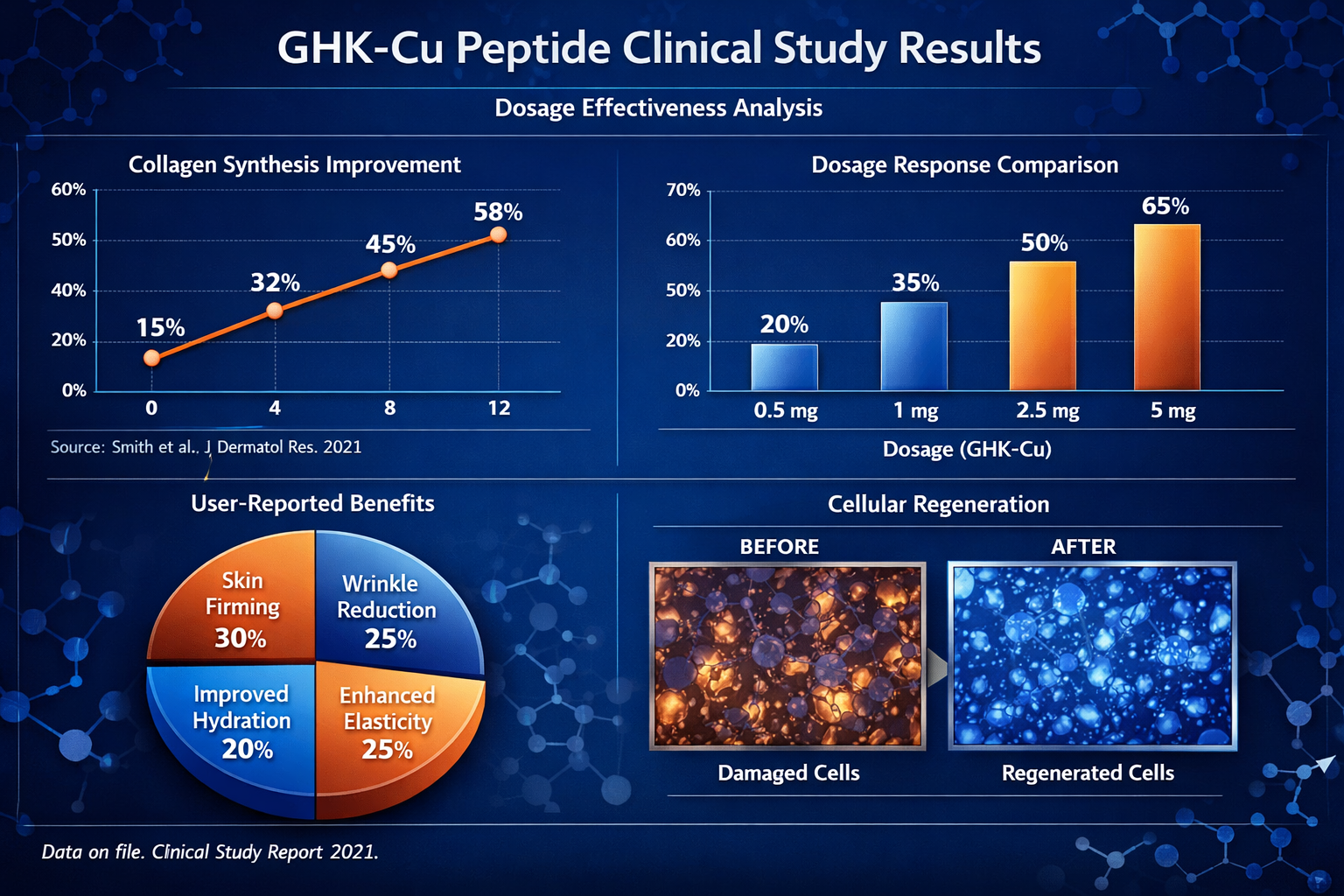
Let me share how different professionals are incorporating GHK-Cu into their research and practice areas.
For Medi Spa Professionals 💆♀️
Medi spas increasingly integrate peptide protocols into comprehensive wellness programs:
Typical medi spa protocols:
- Client education: Teaching proper self-administration techniques
- Protocol design: Customizing ghk-cu peptide injection dosage for individual clients
- Combination treatments: Pairing with microneedling, RF treatments, or laser procedures
- Progress tracking: Standardized photography and assessment protocols
Best practices:
- Start conservative (1-1.5mg, 2x weekly)
- Provide detailed written instructions
- Schedule follow-up assessments at weeks 4, 8, and 12
- Combine with topical applications for enhanced results
For Fitness Coaches and Trainers 🏋️
Athletic performance and recovery research represents a growing application:
Athletic recovery protocols:
- Dosage: 2-3mg, 3x weekly
- Timing: Often post-training or on rest days
- Cycle: 8-10 weeks during intensive training blocks
- Combination: Frequently paired with BPC-157 or TB-500
Applications in athletic research:
- Soft tissue injury recovery studies
- Training adaptation research
- Overuse injury prevention protocols
- Post-competition recovery optimization
Coaches working with athletes should emphasize that GHK-Cu is a research compound and ensure all activities comply with relevant athletic organization rules.
For Bodybuilders and Physique Athletes 💪
Bodybuilding community interest in GHK-Cu focuses on several areas:
Typical bodybuilder protocols:
- Off-season: 2-3mg, 3x weekly for tissue quality
- Pre-competition: Often discontinued 4-6 weeks out
- Post-competition: 3mg, 3x weekly for recovery
- Injury management: Higher dosages (3-4mg) during rehabilitation
Common stacking approaches:
- GHK-Cu + growth hormone peptides
- GHK-Cu + recovery peptides (BPC-157, TB-500)
- GHK-Cu + collagen supplementation
Considerations for this population:
- Higher body mass may require upper dosage ranges
- Intensive training may benefit from higher frequency
- Careful documentation helps optimize protocols
- Quality sourcing is critical given higher dosages used
For Life Coaches and Wellness Practitioners 🌱
Wellness professionals incorporate GHK-Cu into holistic health optimization:
Wellness-focused protocols:
- Dosage: Conservative (1-2mg, 2x weekly)
- Duration: Longer protocols (12-16 weeks)
- Approach: Integrated with lifestyle optimization
- Philosophy: Minimum effective dose
Integration with wellness practices:
- Nutrition optimization
- Sleep hygiene protocols
- Stress management techniques
- Mindfulness practices
This population often sees GHK-Cu as one component of comprehensive wellness rather than a standalone intervention.
For professionals across these fields, sourcing from established peptide suppliers ensures consistent quality for client protocols.
The Future of GHK-Cu Research in 2026 and Beyond
As we move through 2026, GHK-Cu research continues evolving. Here's what's on the horizon:
Emerging Research Areas 🔬
Current research focus areas:
-
Gene expression studies: Investigating which of the 4,000+ genes affected by GHK-Cu are most relevant for specific applications
-
Combination protocols: Systematic studies of GHK-Cu with other peptides and compounds
-
Dosage optimization: More rigorous studies establishing optimal dosing for specific objectives
-
Delivery system innovations: Novel formulations improving bioavailability and convenience
-
Long-term safety data: Extended protocols examining safety profiles over years rather than months
Regulatory Landscape 📋
The regulatory environment for peptides continues evolving:
Current status (2026):
- GHK-Cu remains available for research purposes
- Increased scrutiny on marketing claims
- Greater emphasis on proper labeling and documentation
- Growing distinction between research and clinical applications
What this means for researchers:
- Importance of working with compliant suppliers
- Need for proper documentation and protocols
- Staying informed about regulatory changes
- Understanding the research vs. clinical distinction
Technology and Innovation 🚀
Emerging technologies affecting GHK-Cu use:
Improved testing methods:
- More accessible purity testing
- Home testing kits for peptide verification
- Enhanced stability testing protocols
Delivery innovations:
- Sustained-release formulations
- Improved topical penetration enhancers
- Novel injection devices for easier administration
Tracking and monitoring:
- Apps specifically designed for peptide protocol tracking
- Wearable devices providing relevant biomarkers
- AI-assisted protocol optimization
These innovations will likely make ghk-cu peptide injection dosage protocols more precise and user-friendly in coming years.
Conclusion: Mastering Your GHK-Cu Protocol
We've covered extensive ground in this comprehensive guide to ghk-cu peptide injection dosage. Let me summarize the key principles that will serve you well:
Core principles for success:
- Start conservative: Begin with lower dosages (1-1.5mg) and assess response before increasing
- Prioritize consistency: Regular administration on a set schedule produces better results than sporadic higher doses
- Master technique: Proper reconstitution, storage, and injection technique are non-negotiable
- Document everything: Rigorous tracking transforms subjective impressions into actionable data
- Source quality: Third-party tested peptides from reputable suppliers are worth the investment
- Be patient: Most protocols require 8-12 weeks for full effects to manifest
- Cycle appropriately: Rest periods maintain receptor sensitivity and optimize long-term results
Your action plan:
✅ Week 1: Source high-quality GHK-Cu from trusted suppliers, gather necessary supplies (syringes, bacteriostatic water, alcohol swabs)
✅ Week 2: Practice reconstitution technique, establish injection site rotation schedule, create tracking system
✅ Weeks 3-10: Follow your chosen protocol consistently, document observations, take progress photos/measurements
✅ Week 11: Comprehensive assessment of results, determine next steps (continue, adjust, or cycle off)
✅ Ongoing: Refine your protocol based on documented results, stay informed about emerging research, maintain high-quality sourcing
Final thoughts:
The ghk-cu peptide injection dosage that works optimally varies between individuals and research objectives. What I've provided here are evidence-based starting points and frameworks for optimization. Your own careful documentation and systematic approach will ultimately determine your ideal protocol.
Remember that GHK-Cu represents just one tool in the broader landscape of regenerative research. While it shows remarkable promise in multiple areas, it works best as part of a comprehensive approach that includes proper nutrition, adequate sleep, stress management, and appropriate physical activity.
The peptide research field continues evolving rapidly. Stay curious, remain critical of extraordinary claims, prioritize quality and safety, and let data guide your decisions. With the proper foundation established in this guide, you're well-equipped to design and execute effective GHK-Cu research protocols.
Whether you're a medi spa professional designing client protocols, a fitness coach exploring recovery optimization, a bodybuilder seeking tissue quality improvements, or a wellness practitioner integrating peptides into holistic health approaches—the principles remain the same. Start smart, stay consistent, document thoroughly, and adjust based on results.
Here's to your success in GHK-Cu research throughout 2026 and beyond! 🎯
SEO Meta Information
Meta Title: GHK-Cu Peptide Injection Dosage Guide 2026 | Complete Protocol
Meta Description: Complete GHK-Cu peptide injection dosage guide for 2026. Learn proper dosing, administration techniques, cycling protocols, and safety guidelines for optimal research results.