
The Complete Guide to GHK-Cu Peptide Dosing for Optimal Results in 2026
Picture this: You've just received your first vial of GHK-Cu peptide, and you're holding it up to the light, wondering exactly how much you should use. You're not alone. GHK-Cu peptide dosing is one of the most frequently asked questions I encounter from peptide buyers, medi spa professionals, fitness coaches, and bodybuilders alike. Getting the dosage right can make the difference between remarkable research outcomes and disappointing results.
In 2026, the peptide research landscape has evolved significantly, and understanding proper GHK-Cu peptide dosing protocols is more critical than ever. Whether you're a seasoned researcher or just starting your peptide journey, this comprehensive guide will walk you through everything you need to know about dosing this remarkable copper peptide safely and effectively.
Key Takeaways
- GHK-Cu peptide dosing typically ranges from 0.5mg to 3mg per administration, depending on the application method and research goals
- Subcutaneous injection, topical application, and oral administration each require different dosing protocols for optimal results
- Proper reconstitution and calculation are essential for accurate GHK-Cu peptide dosing
- Cycling protocols (8-12 weeks on, 4-6 weeks off) help maintain peptide effectiveness
- Starting with lower doses and gradually increasing allows for better tolerance assessment and safety monitoring
Understanding GHK-Cu Peptide Basics
Before we dive into specific GHK-Cu peptide dosing protocols, let's establish a solid foundation. GHK-Cu (Glycyl-L-Histidyl-L-Lysine-Copper) is a naturally occurring copper complex that has gained significant attention in research communities for its potential applications in tissue repair, collagen synthesis, and cellular regeneration studies.
What Makes GHK-Cu Unique?
GHK-Cu stands out among peptides because of its copper-binding properties. This tripeptide naturally occurs in human plasma, saliva, and urine, with concentrations that decrease as we age. The copper component is crucial for the peptide's biological activity, making proper dosing even more important.
The molecular weight of GHK-Cu is approximately 340 Daltons, which influences how it's absorbed and utilized in research applications. This relatively small size allows for various administration methods, each requiring specific dosing considerations.
When sourcing your research materials, quality matters tremendously. I always recommend working with verified peptide suppliers who provide third-party testing certificates to ensure purity and accurate concentration.
Forms and Concentrations Available
GHK-Cu peptides typically come in lyophilized (freeze-dried) powder form, requiring reconstitution before use. Common concentrations include:
- 10mg vials – Ideal for beginners and short-term research
- 50mg vials – Popular for extended research protocols
- 100mg vials – Cost-effective for long-term studies
Each concentration requires different reconstitution volumes to achieve your desired dosing strength. For instance, a GHK-Cu 50mg vial provides excellent value for researchers planning comprehensive study protocols.
GHK-Cu Peptide Dosing Protocols by Administration Method
The method you choose for administering GHK-Cu significantly impacts the appropriate dosage. Let's break down each approach with specific protocols.
Subcutaneous Injection Dosing 💉
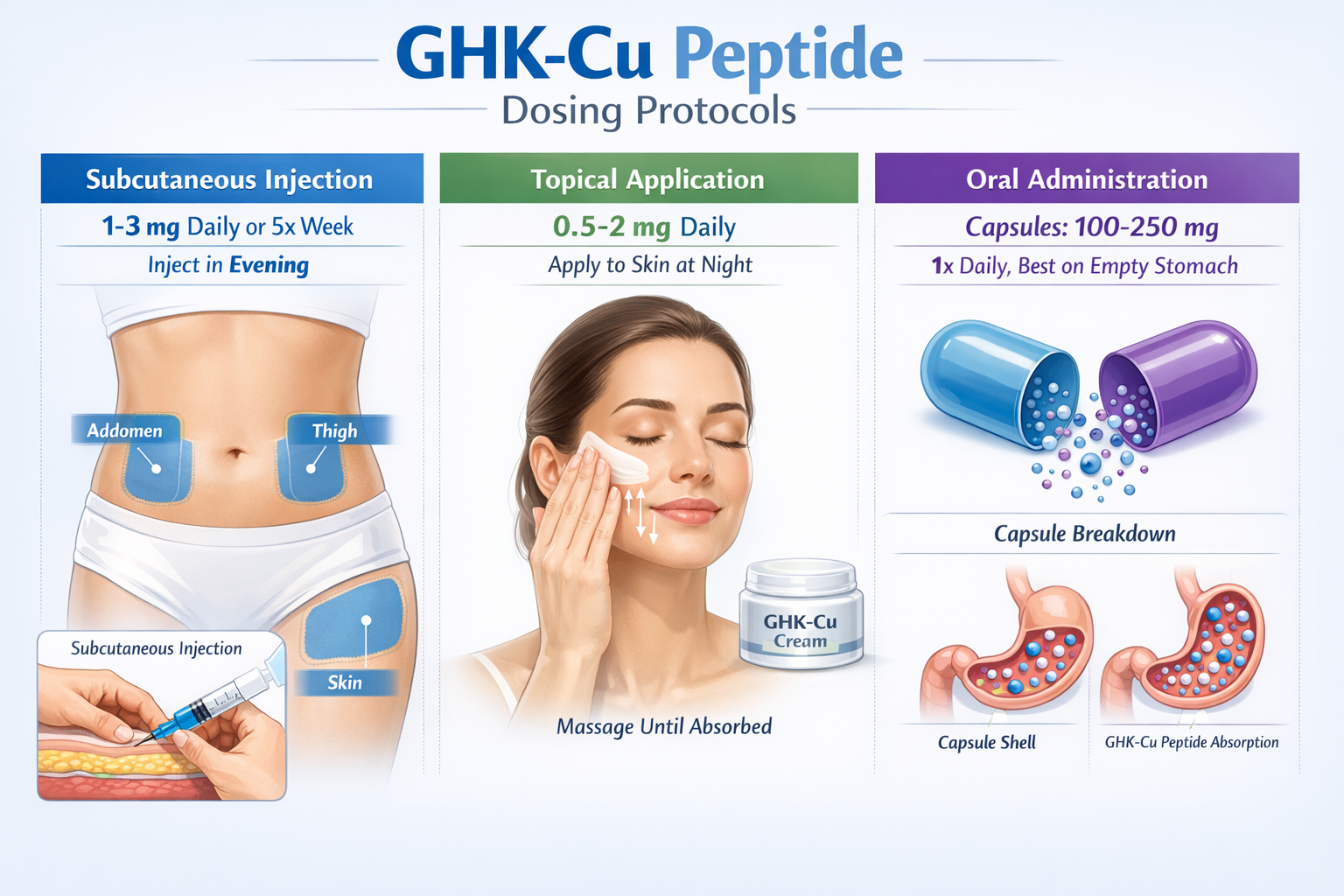
Subcutaneous (SubQ) injection is the most common and bioavailable method for GHK-Cu administration. This method involves injecting the reconstituted peptide into the fatty tissue layer beneath the skin.
Standard SubQ Dosing Protocol:
| Experience Level | Dose Range | Frequency | Duration |
|---|---|---|---|
| Beginner | 0.5-1mg | 3-5x per week | 8 weeks |
| Intermediate | 1-2mg | 5-7x per week | 10 weeks |
| Advanced | 2-3mg | Daily | 12 weeks |
For SubQ administration, I recommend starting at the lower end of the dosage spectrum (0.5mg) to assess tolerance. Many researchers find that 1-2mg per day provides optimal results without unnecessary excess.
Injection sites typically include the abdomen, thighs, or upper arms. Rotating injection sites helps prevent tissue irritation and maintains consistent absorption rates.
Topical Application Dosing
Topical GHK-Cu has gained popularity, particularly in cosmetic research applications. The dosing differs significantly from injectable forms because of absorption limitations through the skin barrier.
Topical Dosing Guidelines:
- Concentration: 0.5-2% GHK-Cu in carrier solution
- Application amount: 0.5-1ml per application area
- Frequency: 1-2 times daily
- Duration: Continuous use for 12+ weeks
For topical applications, the peptide is often mixed with penetration enhancers or incorporated into serums and creams. A 1% solution means 10mg of GHK-Cu per 1ml of carrier solution.
Research suggests that topical peptide formulations require higher concentrations than injectable forms due to reduced bioavailability through dermal absorption.
Oral Administration Dosing
While less common than injection, oral GHK-Cu administration is being explored in research settings. The digestive process affects bioavailability, requiring higher doses compared to SubQ injection.
Oral Dosing Recommendations:
- Dose range: 3-10mg per administration
- Frequency: 1-2 times daily
- Timing: On empty stomach (30 minutes before meals)
- Duration: 8-12 week cycles
Oral bioavailability is estimated at 20-30% compared to injection, which explains the need for higher doses. Some researchers combine oral administration with sublingual (under the tongue) holding for 60-90 seconds to improve absorption.
Calculating Your GHK-Cu Peptide Dosing
Proper calculation is crucial for accurate GHK-Cu peptide dosing. Many newcomers to peptide research feel overwhelmed by the math, but I'll break it down into simple steps.
Reconstitution Basics
Reconstitution means adding bacteriostatic water to your lyophilized peptide powder to create an injectable solution. The volume you add determines the concentration of your final solution.
Basic Formula:
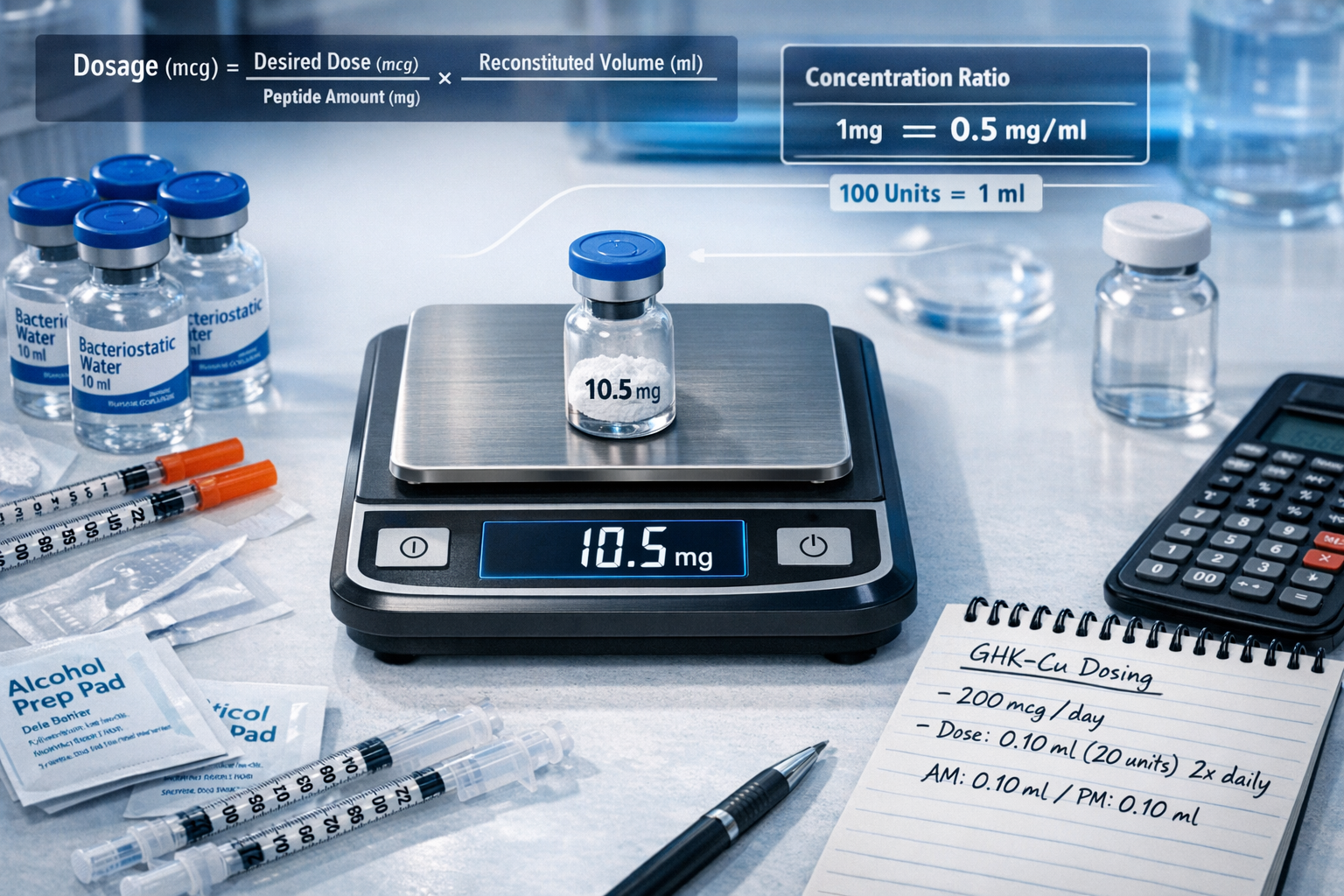
Concentration (mg/ml) = Total Peptide Amount (mg) ÷ Reconstitution Volume (ml)
Example Calculation:
- You have a 50mg vial of GHK-Cu
- You add 5ml of bacteriostatic water
- Concentration = 50mg ÷ 5ml = 10mg/ml
This means each 1ml of your solution contains 10mg of GHK-Cu peptide.
Determining Injection Volume
Once you know your concentration, calculating the injection volume for your desired dose is straightforward.
Dosing Formula:
Injection Volume (ml) = Desired Dose (mg) ÷ Concentration (mg/ml)
Example:
- You want to inject 2mg of GHK-Cu
- Your concentration is 10mg/ml
- Injection volume = 2mg ÷ 10mg/ml = 0.2ml (or 20 units on an insulin syringe)
Using Insulin Syringes for Measurement
Most peptide researchers use insulin syringes marked in units (typically 100 units = 1ml). Understanding this conversion is essential:
- 10 units = 0.1ml
- 20 units = 0.2ml
- 50 units = 0.5ml
- 100 units = 1ml
Using our previous example, a 2mg dose at 10mg/ml concentration would require drawing to the 20-unit mark on your insulin syringe.
For those new to peptide research, starting with beginner-friendly peptide protocols can help build confidence in dosing calculations.
Optimizing Your GHK-Cu Peptide Dosing Schedule
Timing and frequency play crucial roles in maximizing the effectiveness of your GHK-Cu peptide dosing protocol. Let's explore evidence-based scheduling strategies.
Daily vs. Alternate Day Dosing
The half-life of GHK-Cu in the body is relatively short (approximately 1-2 hours), but its effects on cellular processes can last much longer. This creates flexibility in dosing schedules.
Daily Dosing Benefits:
- ✅ Maintains consistent peptide levels
- ✅ May produce faster observable results
- ✅ Simpler to track and maintain
- ✅ Better for intensive research protocols
Alternate Day Dosing Benefits:
- ✅ Reduces total peptide consumption
- ✅ May decrease tolerance development
- ✅ More economical for long-term research
- ✅ Allows for receptor sensitivity maintenance
Many experienced researchers find that 5-6 days per week provides an optimal balance, allowing for one or two rest days while maintaining consistent research conditions.
Time of Day Considerations
While GHK-Cu can be administered at any time, research suggests certain timing strategies may optimize results:
Morning Administration (6-10 AM):
- Aligns with natural cortisol rhythms
- May support daytime cellular repair processes
- Convenient for consistent scheduling
- Good for research focused on metabolic parameters
Evening Administration (6-10 PM):
- Coincides with natural growth hormone peaks
- May enhance overnight tissue repair research
- Suitable for studies examining sleep-related parameters
- Popular among bodybuilders and fitness professionals
Some researchers split their daily dose, administering half in the morning and half in the evening for sustained levels throughout the day.
Cycling Protocols for Long-Term Use
Cycling refers to alternating periods of peptide use with rest periods. This strategy helps prevent tolerance and maintains peptide effectiveness over extended research periods.
Recommended Cycling Protocol:
| Phase | Duration | Dosing | Purpose |
|---|---|---|---|
| Loading | 2 weeks | Standard dose daily | Establish baseline levels |
| Maintenance | 6-10 weeks | Standard dose 5-6x/week | Sustained research period |
| Rest | 4-6 weeks | No dosing | Receptor sensitivity reset |
| Resume | As needed | Return to loading phase | Begin new cycle |
This cycling approach is particularly important for researchers conducting long-term studies spanning multiple months or years. The rest period allows your research subjects' receptors to regain full sensitivity to the peptide.
For those exploring multiple peptide protocols, understanding how different compounds work together is valuable. Research on peptide synergies can provide insights into combination strategies.
Advanced GHK-Cu Peptide Dosing Strategies
Once you've mastered basic GHK-Cu peptide dosing, you might consider more sophisticated approaches to optimize your research outcomes.
Dose Escalation Protocols
Dose escalation involves gradually increasing the dose over time to find the optimal amount for your specific research parameters.
Sample Escalation Schedule:
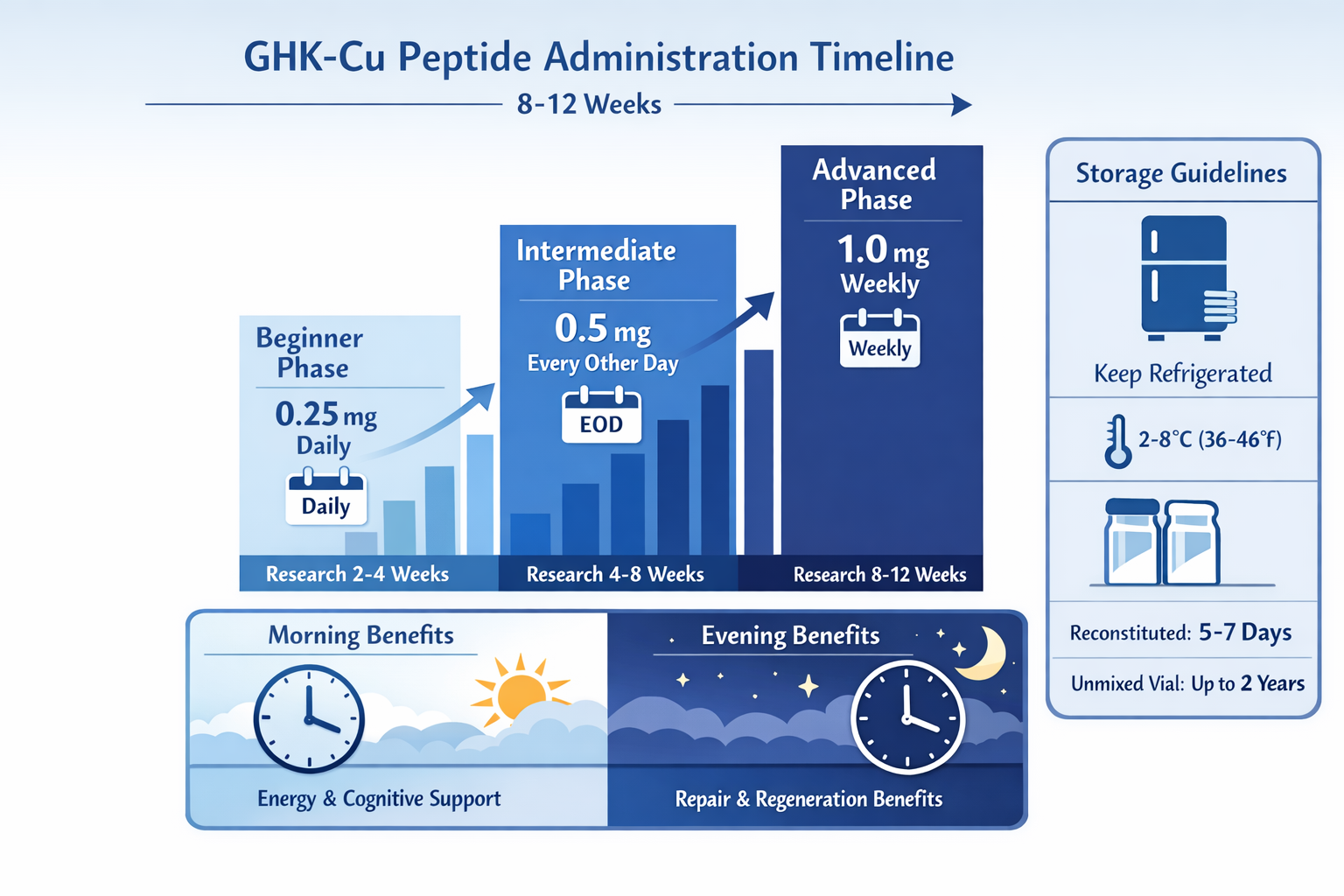
Week 1-2: 0.5mg per dose
Week 3-4: 1mg per dose
Week 5-6: 1.5mg per dose
Week 7-8: 2mg per dose
Week 9+: Maintain optimal dose identified
This gradual approach allows you to identify the minimum effective dose for your research goals while monitoring for any adverse reactions. Many researchers find their sweet spot between 1-2mg and maintain that dose for the remainder of their cycle.
Stacking GHK-Cu with Other Peptides
Peptide stacking refers to combining multiple peptides in a research protocol. GHK-Cu is often paired with complementary compounds for synergistic effects.
Popular GHK-Cu Combinations:
-
GHK-Cu + BPC-157
- Dosing: 1-2mg GHK-Cu + 250-500mcg BPC-157
- Focus: Tissue repair and recovery research
- Timing: Can be administered together
-
GHK-Cu + TB-500
- Dosing: 1-2mg GHK-Cu + 2-5mg TB-500
- Focus: Comprehensive regeneration studies
- Timing: GHK-Cu daily, TB-500 twice weekly
-
GHK-Cu + Epithalon
- Dosing: 1-2mg GHK-Cu + 5-10mg Epithalon
- Focus: Longevity and cellular health research
- Timing: Both administered in evening
When stacking peptides, it's crucial to understand each compound's mechanisms and potential interactions. Starting with lower doses of each peptide and gradually increasing is the safest approach.
Site-Specific Injection Strategies
Some researchers employ site-specific injection techniques, administering GHK-Cu near the target tissue area. This approach is based on the theory of localized peptide concentration.
Site-Specific Applications:
- Joint research: Inject near affected joint (not intra-articular)
- Skin studies: Subcutaneous injection in treatment area
- Scar tissue: Surrounding tissue injection (not directly into scar)
- Hair research: Scalp subcutaneous administration
While systemic circulation will distribute the peptide throughout the body regardless of injection site, some research suggests modest benefits to localized administration for specific applications.
Safety Considerations and Dosing Adjustments
Responsible research practices require careful attention to safety parameters and appropriate dosing adjustments based on observations.
Starting Conservatively
I cannot stress enough the importance of starting with lower doses. Even if you're an experienced researcher, each peptide batch and research subject may respond differently.
Conservative Starting Protocol:
- Begin at 0.5mg per administration
- Maintain this dose for 7-10 days
- Monitor carefully for any reactions
- Increase by 0.5mg increments if well-tolerated
- Allow 5-7 days between dose increases
This methodical approach minimizes risks and helps you identify the optimal dose for your specific research parameters.
Recognizing When to Adjust Dosing
Several factors may indicate the need for dosing adjustments:
Signs You May Need to Increase Dose:
- ⚠️ No observable changes after 3-4 weeks at current dose
- ⚠️ Initial effects have plateaued
- ⚠️ Research literature suggests higher doses for your application
- ⚠️ Body weight significantly exceeds average (for weight-dependent dosing)
Signs You Should Decrease Dose:
- 🛑 Unexpected reactions or side effects
- 🛑 Excessive response to current dose
- 🛑 Financial constraints requiring dose optimization
- 🛑 Research protocol calls for minimum effective dose
Contraindications and Precautions
While GHK-Cu is generally well-tolerated in research settings, certain situations warrant extra caution with GHK-Cu peptide dosing:
Exercise Caution With:
- Active cancer research (peptides may affect cell proliferation)
- Pregnancy or lactation studies
- Subjects with copper metabolism disorders
- Concurrent use of copper supplements
- Severe kidney or liver impairment models
Always consult relevant research literature and follow institutional review board guidelines when designing your peptide protocols.
Quality sourcing becomes even more critical when working with sensitive research models. Ensuring your peptides come from reputable suppliers with rigorous testing helps minimize variables in your research.
Storage and Handling Impact on Dosing Accuracy
Proper storage and handling directly affect the potency of your GHK-Cu peptide, which in turn impacts your actual GHK-Cu peptide dosing.
Lyophilized Powder Storage
Unopened vials of lyophilized GHK-Cu should be stored:
- Temperature: -20°C to -80°C (freezer) for long-term storage
- Alternative: 2-8°C (refrigerator) for up to 6 months
- Protection: Keep away from light and moisture
- Shelf life: Typically 2-3 years when properly stored
Before reconstitution, allow the vial to reach room temperature naturally. Never heat the vial to speed this process, as temperature fluctuations can degrade the peptide.
Reconstituted Solution Storage
Once you've added bacteriostatic water, storage requirements change:
Reconstituted GHK-Cu Storage:
- Temperature: 2-8°C (refrigerator) – mandatory
- Duration: Use within 30 days for optimal potency
- Protection: Store in original vial, protect from light
- Handling: Use sterile technique for each withdrawal
After 30 days, reconstituted peptide may begin to degrade, effectively reducing your actual dose even if you're measuring the same volume. For this reason, many researchers prefer to reconstitute smaller amounts more frequently rather than large batches.
Degradation and Potency Loss
Factors that reduce GHK-Cu potency:
- Temperature fluctuations – Each freeze-thaw cycle can reduce potency by 5-10%
- Light exposure – UV light degrades peptide bonds over time
- pH changes – Improper reconstitution solution affects stability
- Bacterial contamination – Always use bacteriostatic water and sterile technique
- Time – Even properly stored peptides slowly degrade
If you suspect your peptide has degraded, you may need to adjust your GHK-Cu peptide dosing upward or, preferably, obtain fresh peptide for accurate research results.
Documentation and Tracking Your Dosing Protocol
Meticulous record-keeping is essential for any serious peptide research program. Tracking your GHK-Cu peptide dosing allows you to identify patterns, optimize protocols, and maintain research integrity.
Essential Data Points to Record
Create a comprehensive research log that includes:
Pre-Research Baseline:
- Initial measurements and observations
- Starting date
- Batch number and supplier information
- Reconstitution details (volume, date, concentration)
Daily Dosing Records:
- Date and time of administration
- Exact dose administered (in mg)
- Injection site (if applicable)
- Any concurrent compounds or supplements
- Notable observations or reactions
Weekly Assessments:
- Measurement updates
- Photographic documentation (if applicable)
- Subjective assessment notes
- Any protocol adjustments made
End-of-Cycle Summary:
- Total duration
- Average dose
- Overall observations
- Conclusions and next steps
Digital Tools and Apps
Several tools can simplify tracking your peptide research:
Spreadsheet Templates:
- Excel or Google Sheets with custom formulas
- Automatic dose calculation based on concentration
- Graphing capabilities for trend visualization
Research Apps:
- Laboratory notebook apps with photo integration
- Reminder systems for dosing schedules
- Cloud backup for data security
Simple Notebook:
- Don't underestimate the value of a dedicated paper notebook
- Permanent record that can't be accidentally deleted
- Easy to reference during administration
Consistent documentation helps you refine your GHK-Cu peptide dosing over multiple research cycles and contributes to the broader understanding of optimal protocols.
Common GHK-Cu Peptide Dosing Mistakes to Avoid
Learning from common errors can save you time, money, and research setbacks. Here are the most frequent GHK-Cu peptide dosing mistakes I've observed.
Mistake #1: Skipping the Calculation Step
The Error: Eyeballing doses or using inconsistent measurement methods.
Why It's Problematic: Even small variations in dosing can significantly impact research outcomes and make it impossible to replicate successful protocols.
The Solution: Always calculate your exact dose using the formulas provided earlier. Double-check your math, especially when changing vials or reconstitution volumes.
Mistake #2: Starting with Maximum Doses
The Error: Beginning research at 3mg or higher doses without tolerance assessment.
Why It's Problematic: Higher doses aren't necessarily better and may increase the likelihood of unexpected reactions. You also can't identify your minimum effective dose.
The Solution: Start at 0.5-1mg and gradually escalate. This approach is safer and more scientifically sound.
Mistake #3: Inconsistent Dosing Schedules
The Error: Administering doses at random times or skipping days without a planned protocol.
Why It's Problematic: Inconsistency introduces variables that make it impossible to draw meaningful conclusions from your research.
The Solution: Establish a specific schedule (e.g., every morning at 8 AM, Monday through Friday) and stick to it. If you miss a dose, don't double up—simply resume your normal schedule.
Mistake #4: Improper Reconstitution
The Error: Using tap water, saline, or incorrect volumes for reconstitution.
Why It's Problematic: Improper reconstitution affects peptide stability, sterility, and your actual dose concentration.
The Solution: Always use bacteriostatic water at the correct volume. Calculate your desired final concentration before adding water to the vial. For a 50mg GHK-Cu vial, common reconstitution volumes are 2.5ml (20mg/ml) or 5ml (10mg/ml).
Mistake #5: Ignoring Storage Requirements
The Error: Leaving reconstituted peptide at room temperature or in direct light.
Why It's Problematic: Degraded peptide means you're not actually receiving your intended dose, invalidating your research data.
The Solution: Refrigerate reconstituted peptides immediately and protect from light. Use within 30 days for optimal potency.
Mistake #6: Neglecting Cycle Breaks
The Error: Continuous use for months without rest periods.
Why It's Problematic: Extended use without breaks may lead to receptor downregulation and diminishing returns.
The Solution: Implement proper cycling protocols (8-12 weeks on, 4-6 weeks off) to maintain peptide effectiveness.
Frequently Asked Questions About GHK-Cu Peptide Dosing
Let me address the most common questions I receive about GHK-Cu peptide dosing.
What is the optimal GHK-Cu dose for beginners?
For those new to GHK-Cu research, I recommend starting with 0.5-1mg per administration, 3-5 times per week. This conservative approach allows you to assess tolerance while still providing meaningful research data. After 2-3 weeks, you can increase to 1-2mg if well-tolerated.
Can you take too much GHK-Cu?
While GHK-Cu is generally well-tolerated, excessive dosing offers no additional benefits and wastes valuable research materials. Doses above 5mg per administration are rarely used in research settings. The principle of "more is better" doesn't apply to peptide research—optimal dosing is about finding the minimum effective dose for your specific parameters.
How long does it take to see results from GHK-Cu?
Research timelines vary based on the specific parameters being studied. Some observations may be noted within 2-3 weeks, while comprehensive tissue remodeling studies may require 8-12 weeks of consistent dosing. Patience and consistent administration are key to meaningful research outcomes.
Should GHK-Cu dosing be adjusted for body weight?
Unlike some peptides that use strict weight-based dosing (mcg per kg), GHK-Cu is typically dosed in absolute amounts (mg per administration). However, significantly larger or smaller subjects may benefit from modest adjustments. A 250-pound bodybuilder might use 2-3mg, while a 120-pound individual might find 1-1.5mg optimal.
Can GHK-Cu be mixed with other peptides in the same syringe?
Generally, no. While some peptides can be safely mixed, it's best practice to administer each peptide separately unless you have specific research data supporting their compatibility. Mixing peptides can affect pH, stability, and potentially create unwanted interactions. If using multiple peptides, simply administer them in separate injections.
What's the difference between GHK and GHK-Cu dosing?
GHK (without copper) and GHK-Cu (copper complex) are different compounds with different potencies. GHK-Cu is generally considered more bioactive due to the copper component. If you see research referencing "GHK" dosing, verify whether they mean the copper complex or the peptide alone, as doses may differ.
Real-World Dosing Protocols from Research Communities
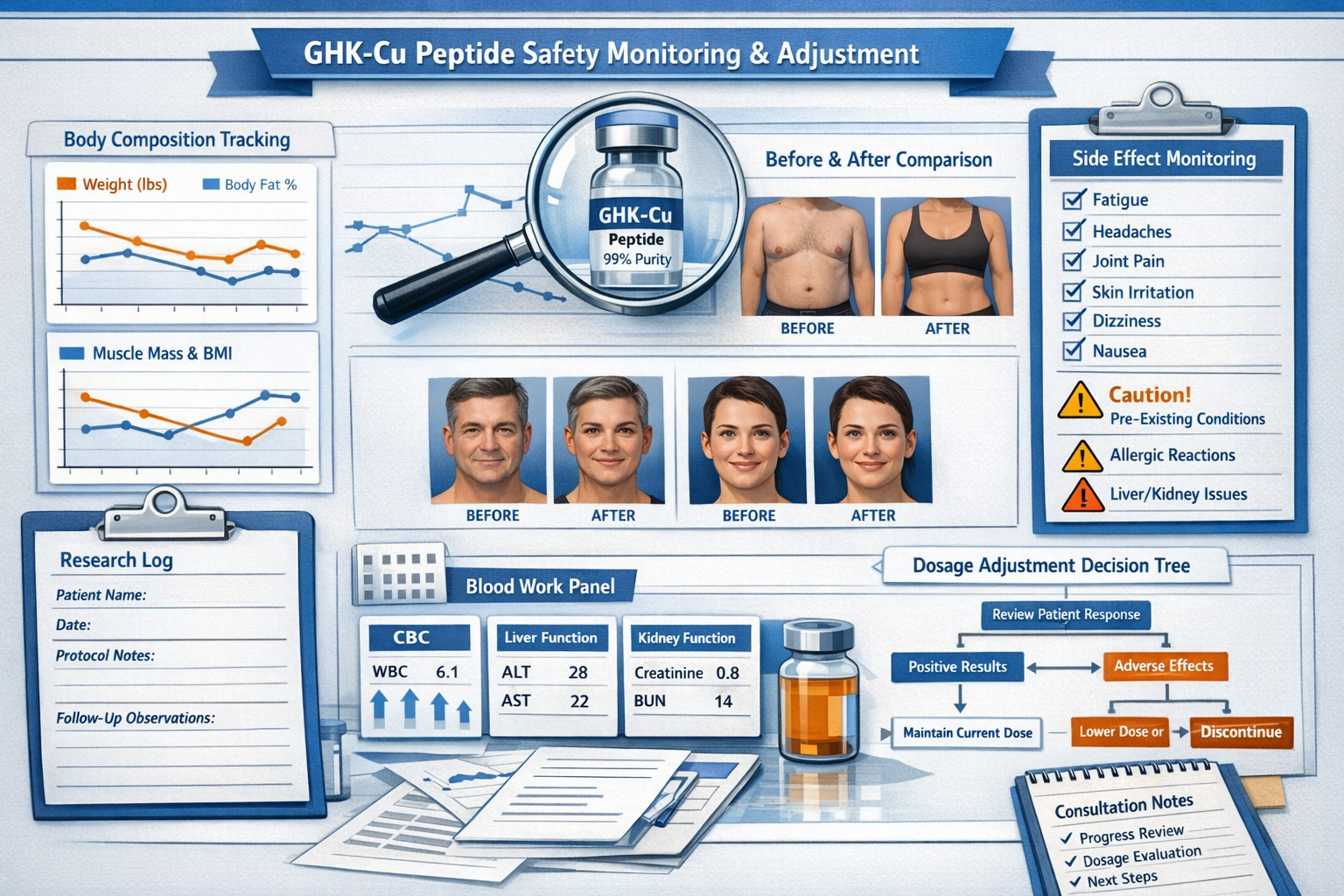
While individual research needs vary, examining common GHK-Cu peptide dosing protocols used in various research communities provides valuable context.
Medi Spa and Aesthetic Research Protocols
Typical Protocol:
- Dose: 1-2mg per administration
- Frequency: 5-7 days per week
- Method: Subcutaneous injection or topical application
- Duration: 12-16 week cycles
- Focus: Skin quality, collagen synthesis, and tissue remodeling research
Medi spa professionals often combine injectable GHK-Cu with topical applications for comprehensive skin research protocols. They may use 1mg subcutaneously 3x weekly while applying topical formulations daily.
Bodybuilding and Fitness Research
Typical Protocol:
- Dose: 2-3mg per administration
- Frequency: Daily during intensive training periods
- Method: Subcutaneous injection
- Duration: 8-12 weeks, timed with training cycles
- Focus: Recovery, tissue repair, and performance research
Bodybuilders and fitness coaches often stack GHK-Cu with other recovery peptides. A common approach is 2mg GHK-Cu daily combined with BPC-157 and TB-500 during periods of intensive training or injury recovery research.
Longevity and Anti-Aging Research
Typical Protocol:
- Dose: 1-2mg per administration
- Frequency: 5 days per week (weekday dosing)
- Method: Subcutaneous injection
- Duration: Continuous with cycling (3 months on, 1 month off)
- Focus: Cellular health, tissue maintenance, and aging research
Longevity researchers often take a long-term view, using moderate doses consistently over extended periods with regular cycling breaks. They may combine GHK-Cu with other longevity-focused compounds like Epithalon or MOTS-c.
Hair Research Applications
Typical Protocol:
- Dose: 1-2mg per administration (subcutaneous) OR 0.5-1% topical solution
- Frequency: Daily application
- Method: Scalp subcutaneous injection or topical application
- Duration: Minimum 6 months for meaningful observations
- Focus: Hair follicle health and growth cycle research
Hair research protocols often require extended timeframes due to the natural hair growth cycle. Researchers may use topical GHK-Cu solutions applied directly to the scalp daily, sometimes combined with microneedling techniques for enhanced penetration.
The Future of GHK-Cu Peptide Dosing Research
As we move through 2026, the landscape of peptide research continues to evolve. Several emerging trends are shaping how we approach GHK-Cu peptide dosing.
Personalized Dosing Protocols
The concept of personalized peptide dosing based on individual biomarkers is gaining traction. Rather than one-size-fits-all protocols, researchers are exploring how factors like age, metabolic rate, genetic markers, and specific research goals should influence dosing strategies.
Future protocols may include:
- Baseline biomarker testing before establishing doses
- Regular monitoring and dose adjustments based on objective measurements
- AI-assisted dose optimization algorithms
- Genetic testing to predict peptide response
Novel Delivery Systems
Research into alternative delivery methods continues to advance, potentially changing how we think about GHK-Cu peptide dosing:
Emerging Delivery Methods:
- Transdermal patches – Sustained release over 24-48 hours
- Liposomal formulations – Enhanced absorption and bioavailability
- Nasal sprays – Rapid absorption with potential CNS access
- Sustained-release injectable depots – Weekly or bi-weekly dosing
These innovations may require completely different dosing paradigms compared to traditional subcutaneous injection protocols.
Combination Formulations
Pre-mixed peptide combinations are becoming more common, simplifying dosing protocols for researchers using multiple compounds. Rather than calculating and administering 3-4 separate peptides, researchers may use formulations that combine complementary peptides in optimal ratios.
Understanding peptide blend research can help you stay current with these developments and potentially streamline your research protocols.
Conclusion: Mastering GHK-Cu Peptide Dosing for Research Success
Getting GHK-Cu peptide dosing right is both an art and a science. Throughout this comprehensive guide, we've covered everything from basic calculations to advanced stacking protocols, all designed to help you conduct safe, effective, and scientifically sound peptide research.
Let's recap the essential principles:
Core Dosing Guidelines:
- Start conservatively at 0.5-1mg and gradually increase based on tolerance and research goals
- Use precise calculations and consistent measurement techniques
- Implement proper cycling protocols (8-12 weeks on, 4-6 weeks off)
- Store peptides correctly to maintain potency and dosing accuracy
- Document everything meticulously for reproducible results
Remember the Golden Rules:
- Quality matters – Source from reputable suppliers with third-party testing
- Consistency is key – Maintain regular dosing schedules
- Start low, go slow – Conservative dose escalation is always safer
- Monitor and adjust – Be responsive to your research observations
- Cycle appropriately – Rest periods maintain long-term effectiveness
Whether you're a medi spa professional researching aesthetic applications, a fitness coach exploring recovery protocols, or a longevity researcher investigating cellular health, proper GHK-Cu peptide dosing forms the foundation of meaningful research outcomes.
Your Next Steps
Ready to begin or optimize your GHK-Cu research protocol? Here's what to do next:
- Assess your research goals – Define what you're studying and your desired outcomes
- Calculate your starting dose – Use the formulas and guidelines in this article
- Source quality peptides – Obtain GHK-Cu from verified suppliers like Pure Tested Peptides
- Create your protocol – Establish dosing schedule, duration, and cycling plan
- Set up documentation – Prepare your research log and tracking system
- Begin conservatively – Start at lower doses and monitor carefully
- Stay informed – Continue learning about peptide research developments
The world of peptide research is dynamic and constantly evolving. By mastering the fundamentals of GHK-Cu peptide dosing and staying current with emerging research, you'll be well-equipped to conduct valuable studies and contribute to our collective understanding of this remarkable compound.
Remember, responsible research practices, attention to detail, and scientific rigor will always yield the most meaningful results. Here's to your research success in 2026 and beyond! 🔬
SEO Meta Title and Description
Meta Title: GHK-Cu Peptide Dosing Guide 2026 | Complete Protocol
Meta Description: Complete GHK-Cu peptide dosing guide for 2026. Learn proper dosing protocols, calculations, cycling strategies, and safety guidelines for optimal research results.