Where Do You Get Peptides: A Complete Guide to Safe and Legal Sources in 2026

The peptide therapy market has exploded in recent years, with athletes, fitness enthusiasts, and longevity seekers all asking the same critical question: where do you get peptides that are both safe and effective? With the FDA cracking down on unregulated vendors and new regulations reshaping the landscape, finding legitimate peptide sources has become more complex than ever. This comprehensive guide will navigate you through the maze of peptide procurement, helping you understand the legal pathways, quality considerations, and safety protocols essential for anyone serious about peptide research or therapy.
Key Takeaways
• Licensed compounding pharmacies remain the most reliable source for prescription peptides, requiring valid medical supervision and offering pharmaceutical-grade quality
• FDA-approved peptide medications through traditional pharmacies provide the highest safety standards but are limited to specific approved indications
• Online research vendors operate in regulatory gray areas with significant quality and legal risks that serious researchers should carefully evaluate
• Quality varies dramatically between sources, with pharmaceutical-grade peptides typically exceeding 98% purity compared to unregulated alternatives
• Medical consultation is essential for safe peptide use, whether for therapeutic applications or research purposes
Understanding the Peptide Landscape: What You Need to Know
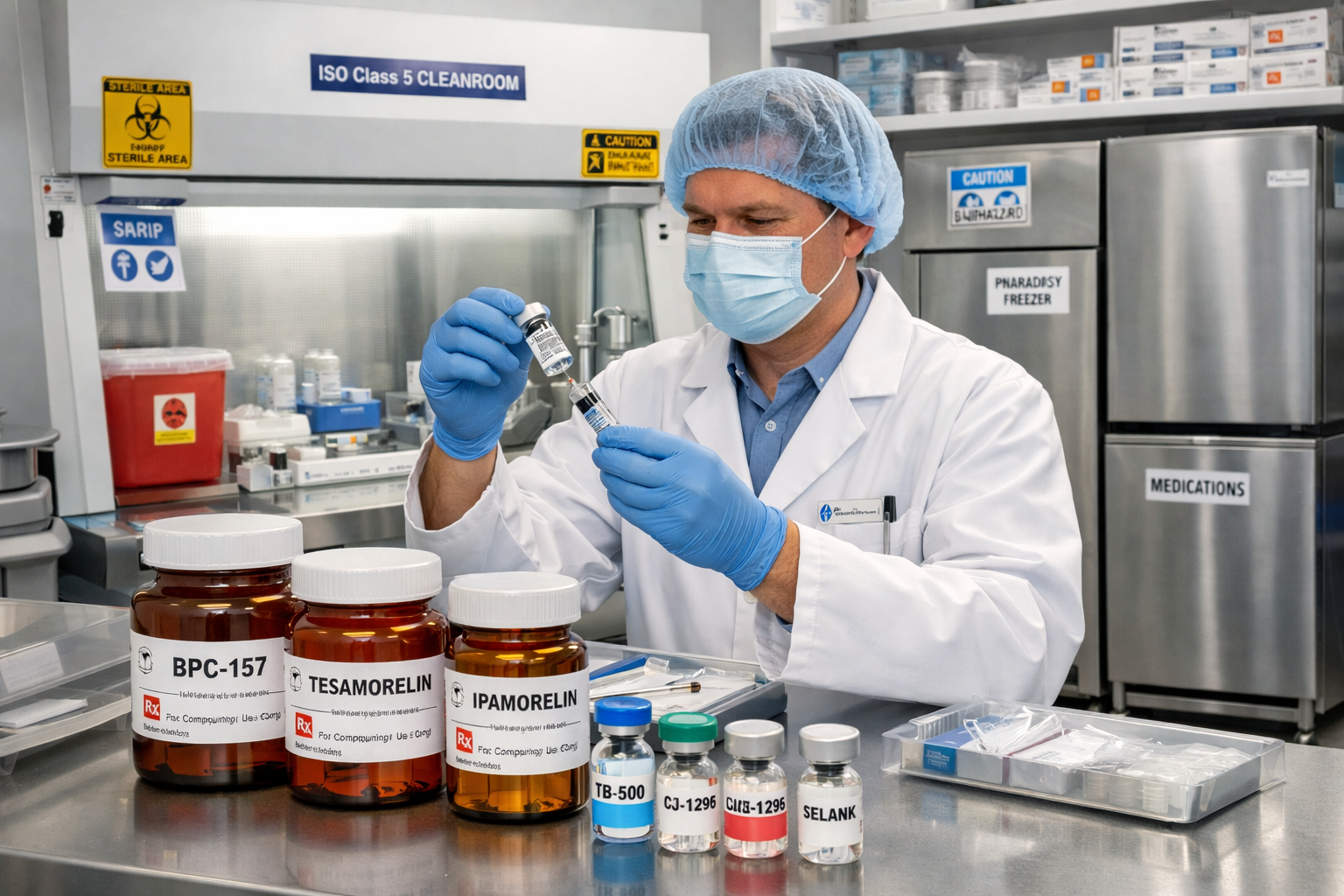
Peptides have revolutionized approaches to fitness, recovery, and longevity research. These short chains of amino acids serve as signaling molecules in the body, influencing everything from growth hormone release to cellular repair mechanisms. For MMA fighters, jiu-jitsu practitioners, and serious athletes, peptides offer potential benefits for recovery, injury healing, and performance optimization.
However, the question of where do you get peptides isn’t just about finding a supplier—it’s about understanding the complex regulatory environment that governs these powerful compounds. The landscape includes everything from FDA-approved medications to research chemicals, each with distinct legal statuses, quality standards, and appropriate use cases.
The Regulatory Framework
The FDA classifies peptides differently based on their intended use and approval status. Some peptides, like semaglutide (Ozempic) and tirzepatide (Mounjaro), have full FDA approval for specific medical conditions. Others exist in regulatory gray areas, particularly those sold as “research chemicals” or through compounding pharmacies.
Key regulatory considerations include:
- FDA approval status and intended use
- Prescription requirements and medical supervision
- Quality standards and manufacturing protocols
- Legal implications of possession and use
- Interstate commerce regulations
Understanding these factors is crucial when determining where do you get peptides safely and legally.
Evaluating Research Vendors
When considering research chemical sources, several factors can help identify more reliable vendors:
Quality indicators:
- Third-party testing certificates
- Detailed product specifications
- Proper storage and shipping protocols
- Responsive customer service
- Transparent business practices
Red flags:
- Health claims or therapeutic marketing
- Lack of testing documentation
- Suspicious pricing or “too good to be true” offers
- Poor website quality or unprofessional presentation
- Negative reviews or community warnings
Pure Tested Peptides stands out as a leader in research peptide supply with established COAs and transparent testing
For those seeking quality research peptides, established vendors with comprehensive testing protocols offer better reliability than unknown sources.
Quality Standards and Testing: What to Look For
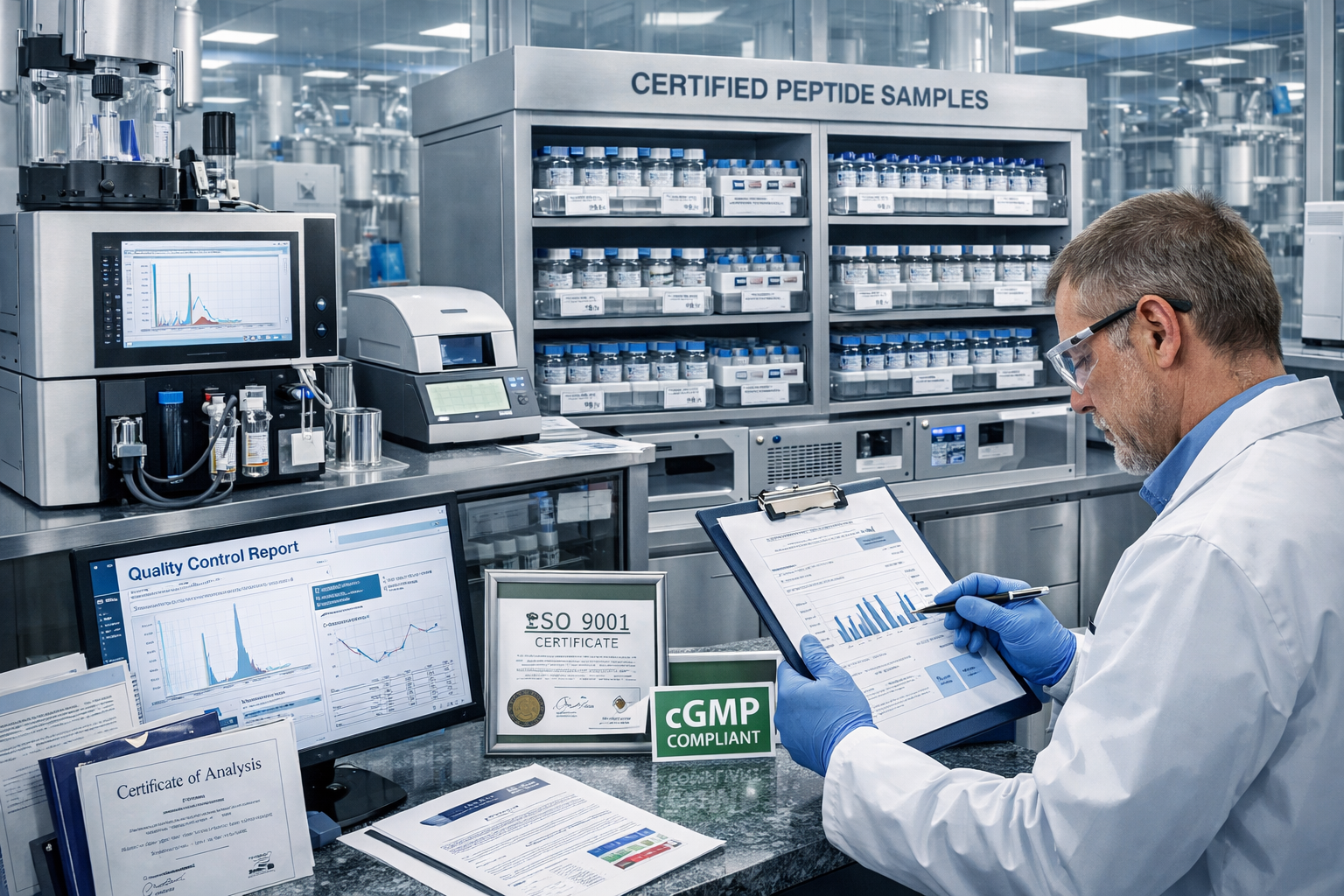
Regardless of where do you get peptides, understanding quality standards helps ensure safety and effectiveness. Quality varies dramatically between sources, making informed evaluation essential.
Pharmaceutical vs. Research Grade
The distinction between pharmaceutical and research-grade peptides significantly impacts quality, safety, and appropriate use:
Pharmaceutical-grade peptides:
- Manufactured under Good Manufacturing Practices (GMP)
- Sterile preparation in controlled environments
- Batch testing for purity, potency, and contaminants
- Documented chain of custody and storage protocols
- Regulatory oversight and quality assurance
Research-grade peptides:
- Variable manufacturing standards
- Limited quality documentation
- Potential for impurities or degradation
- Inconsistent storage and shipping conditions
- Minimal regulatory oversight
Testing and Certification
Legitimate peptide sources provide comprehensive testing documentation, including:
Purity testing:
- High-Performance Liquid Chromatography (HPLC) analysis
- Mass spectrometry confirmation
- Amino acid sequence verification
- Impurity identification and quantification
Safety testing:
- Bacterial endotoxin testing
- Heavy metal analysis
- Residual solvent testing
- Microbiological contamination screening
Stability testing:
- Storage condition validation
- Degradation product analysis
- Shelf-life determination
- Temperature sensitivity evaluation
For researchers interested in specific compounds like 5-amino-1MQ peptides, comprehensive testing documentation becomes particularly important for research validity.
Storage and Handling Requirements
Proper storage and handling significantly impact peptide quality and effectiveness. Legitimate sources provide detailed storage instructions and use appropriate shipping methods:
Storage requirements:
- Temperature control (typically -20°C to 4°C)
- Protection from light and moisture
- Proper container materials
- Contamination prevention protocols
Shipping considerations:
- Cold chain maintenance
- Insulated packaging systems
- Temperature monitoring devices
- Expedited delivery options
Red Flags in Quality Claims
When evaluating peptide sources, certain claims should raise immediate concerns:
- Guarantees of specific therapeutic outcomes
- Claims of “pharmaceutical grade” without proper documentation
- Extremely low prices compared to established sources
- Lack of testing certificates or quality documentation
- Vague or missing storage and handling instructions
Conclusion
The question of where do you get peptides has no simple answer in 2026’s complex regulatory environment. The safest and most reliable approach involves working with licensed healthcare providers and accredited compounding pharmacies, despite higher costs and additional requirements. While research chemical vendors may offer convenience and lower prices, they carry significant quality, safety, and legal risks that serious researchers and practitioners should carefully consider.
For fitness enthusiasts, MMA fighters, jiu-jitsu practitioners, and longevity coaches, the investment in legitimate peptide sources pays dividends in safety, quality, and peace of mind. The potential benefits of peptide therapy and research are too valuable to compromise with questionable sources that could undermine both health and research goals.
Your next steps should include:
- Consulting with qualified healthcare providers experienced in peptide therapy
- Researching accredited compounding pharmacies in your area or through telehealth platforms
- Understanding the legal requirements for peptide use in your jurisdiction
- Evaluating your specific needs and matching them with appropriate sources
- Building ongoing relationships with trusted medical and research professionals
Remember that the peptide field continues evolving rapidly. What works today may change tomorrow as regulations shift and new research emerges. Staying connected with legitimate sources and medical professionals ensures you’ll navigate these changes safely and effectively.
The investment in proper peptide sourcing isn’t just about getting the best products—it’s about protecting your health, ensuring legal compliance, and maximizing the potential benefits that peptides can offer when used responsibly and safely.