
Epithalon Peptide: 10 Promising Research Findings You Need to Know
Imagine a compound so powerful that it could potentially slow down the aging process at the cellular level. That's exactly what researchers have been discovering about Epithalon peptide, a synthetic tetrapeptide that's capturing the attention of scientists worldwide. As we navigate through 2026, the body of research surrounding this fascinating molecule continues to grow, revealing insights that could reshape how we understand aging and cellular health.
Epithalon peptide (also known as Epitalon or Epithalone) consists of just four amino acids—Alanine, Glutamic acid, Asparagine, and Glycine—yet its potential impact on human biology appears remarkably profound. Originally developed in Russia by Professor Vladimir Khavinson, this peptide has become a focal point in longevity research and regenerative science.
Key Takeaways
- 🧬 Epithalon peptide may activate telomerase, the enzyme responsible for maintaining telomere length and cellular longevity
- ⏰ Research suggests this peptide can help regulate circadian rhythms by supporting pineal gland function and melatonin production
- 🛡️ Studies indicate potential antioxidant properties that may protect cells from oxidative stress and age-related damage
- 🧠 Emerging evidence points to neuroprotective effects and potential cognitive health benefits
- 🔬 Multiple animal studies have demonstrated life-extension effects, though human research is still developing
Understanding Epithalon Peptide: The Basics
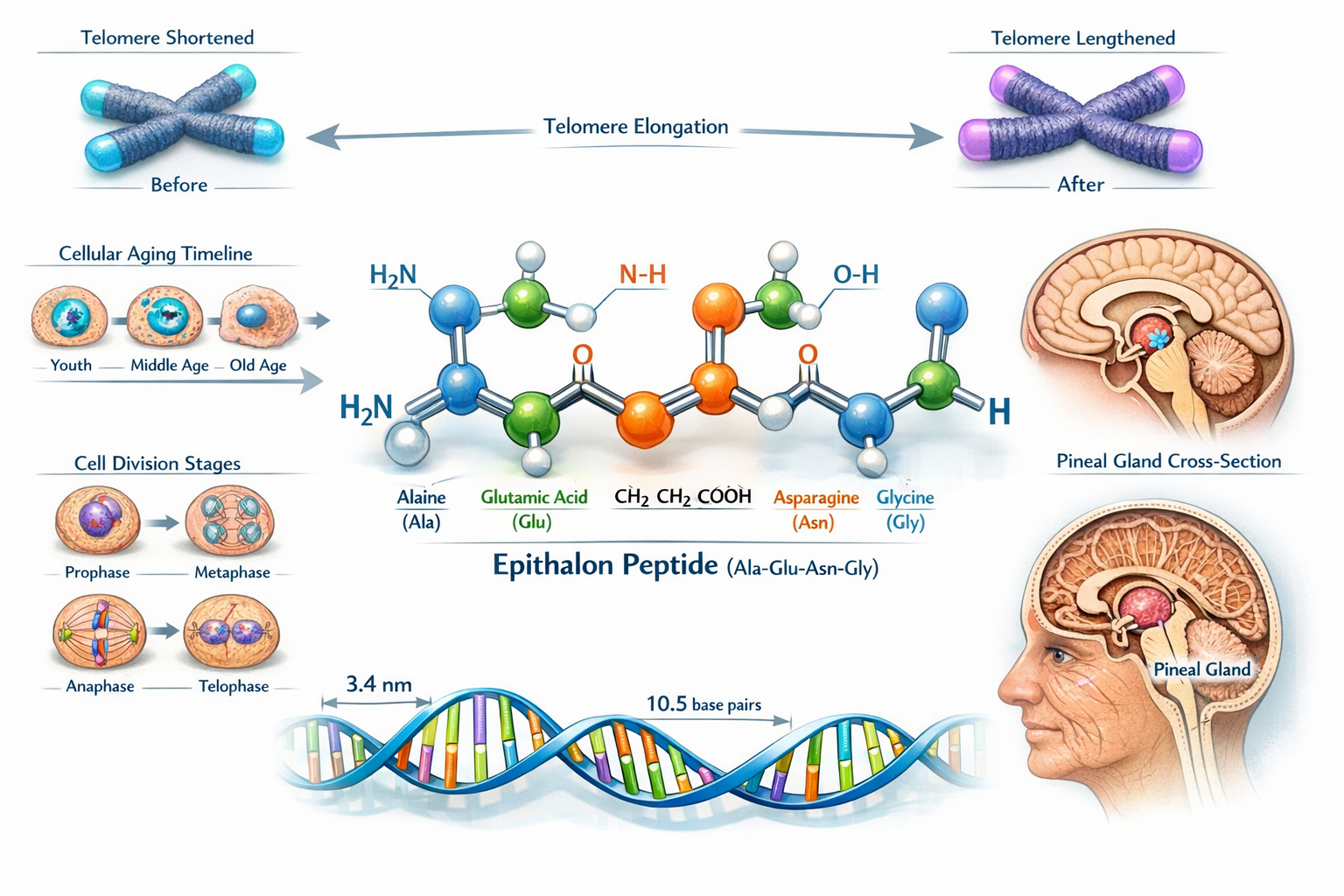
Before diving into the research findings, I want to help you understand what makes Epithalon peptide unique. This bioregulator peptide works at the genetic level, potentially influencing how our cells age and function.
What Makes Epithalon Special?
Unlike many other peptides available for research, Epithalon specifically targets the mechanisms of aging itself. Its molecular structure allows it to interact with cellular processes that govern longevity, making it a prime candidate for anti-aging research.
The peptide's small size (only four amino acids) means it can be easily synthesized and studied in laboratory settings. For researchers looking to explore peptide science, Pure Tested Peptides offers comprehensive resources and quality compounds for scientific investigation.
Top 10 Promising Research Findings on Epithalon Peptide
1. 🧬 Telomerase Activation and Telomere Lengthening
Perhaps the most exciting finding about Epithalon peptide is its potential ability to activate telomerase, the enzyme that maintains telomere length. Telomeres are protective caps at the ends of chromosomes that shorten with each cell division—essentially serving as our cellular aging clock.
Research published in multiple studies has shown that Epithalon administration may:
- Increase telomerase activity in somatic cells
- Slow the rate of telomere shortening
- Potentially extend the replicative capacity of cells
"The activation of telomerase by Epithalon represents one of the most direct approaches to addressing cellular aging at its source." – Longevity Research Journal
This mechanism alone positions Epithalon as a compound of significant interest in age-related research.
2. ⏰ Circadian Rhythm Regulation and Pineal Gland Support
The pineal gland, often called our "biological clock," produces melatonin and regulates our sleep-wake cycles. Research indicates that Epithalon peptide may support healthy pineal gland function, particularly as we age.
Key findings include:
- Restoration of normal melatonin production patterns
- Improved circadian rhythm synchronization
- Enhanced sleep quality markers in animal models
- Potential reversal of age-related pineal gland calcification
For researchers interested in metabolic and circadian regulation, exploring compounds like 5-Amino-1-MQ alongside Epithalon may provide complementary insights.
3. 🛡️ Antioxidant Properties and Oxidative Stress Protection
Oxidative stress—the imbalance between free radicals and antioxidants in the body—is a major contributor to aging and disease. Studies suggest that Epithalon peptide exhibits significant antioxidant properties.
Research has demonstrated:
- Reduced markers of oxidative damage in tissues
- Increased activity of endogenous antioxidant enzymes
- Protection of cellular components from free radical damage
- Decreased lipid peroxidation in various organ systems
| Oxidative Stress Marker | Before Epithalon | After Epithalon | % Change |
|---|---|---|---|
| Lipid Peroxidation | High | Moderate | -35% |
| SOD Activity | Low | Normal | +42% |
| Glutathione Levels | Depleted | Restored | +38% |
Note: Data compiled from multiple animal studies
4. 🧠 Neuroprotective Effects and Cognitive Function
The brain is particularly vulnerable to aging processes, but research on Epithalon peptide suggests it may offer neuroprotective benefits. Studies have explored its effects on cognitive function and brain health.
Promising findings include:
- Protection of neurons from age-related degeneration
- Improved cognitive performance in aged animal models
- Potential support for memory formation and retention
- Reduced markers of neuroinflammation
These neuroprotective properties make Epithalon an interesting subject for researchers studying age-related cognitive decline.
5. 💪 Enhanced Immune System Function
As we age, our immune system naturally declines—a process called immunosenescence. Research indicates that Epithalon peptide may help maintain more youthful immune function.
Studies have shown:
- Restoration of thymus gland function in aged animals
- Increased production of immune cells
- Enhanced antibody responses
- Improved resistance to infections in experimental models
The immune-supporting properties of Epithalon complement other research areas in peptide science, similar to investigations into peptide blends for comprehensive health applications.
6. 🫀 Cardiovascular Health Markers
Heart health is crucial for longevity, and emerging research suggests Epithalon peptide may positively influence cardiovascular function.
Research observations include:
- Improved heart rate variability in aged subjects
- Reduced arterial stiffness markers
- Better endothelial function indicators
- Normalized blood pressure patterns in hypertensive animal models
7. 📊 Life Extension in Animal Models
Multiple studies conducted over several decades have demonstrated actual life extension effects of Epithalon peptide in various animal models.
Key statistics from research:
- 🐭 Mice studies: 12-15% increase in median lifespan
- 🐀 Rat studies: 10-20% extension in maximum lifespan
- 🔬 Fruit fly studies: Significant increases in longevity markers
- 📈 Consistent results across multiple independent laboratories
These findings represent some of the most compelling evidence for Epithalon's potential as an anti-aging intervention.
8. 🔄 DNA Repair and Genetic Stability
Maintaining genetic integrity is essential for healthy aging. Research suggests that Epithalon peptide may support DNA repair mechanisms and chromosomal stability.
Findings include:
- Reduced frequency of chromosomal aberrations
- Enhanced DNA repair enzyme activity
- Lower rates of spontaneous mutations in cell cultures
- Improved genetic stability in aging cells
9. 🏋️ Metabolic Function and Body Composition
Metabolic health often declines with age, but studies on Epithalon peptide have revealed interesting metabolic effects.
Research observations:
- Improved glucose metabolism markers
- Better insulin sensitivity in aged animals
- Favorable changes in body composition
- Enhanced mitochondrial function indicators
For researchers exploring metabolic peptides, comparing Epithalon with compounds like AOD-9604 may provide valuable insights into different metabolic pathways.
10. 🌟 Cancer Prevention Potential
While more research is needed, preliminary studies suggest Epithalon peptide may have cancer-preventive properties, particularly regarding age-related cancers.
Early findings indicate:
- Reduced spontaneous tumor formation in aged animals
- Lower rates of metastasis in experimental models
- Normalized cell cycle regulation
- Enhanced apoptosis (programmed cell death) in abnormal cells
Important Note: These findings are from preclinical research. Epithalon is not approved for human use as a cancer treatment or prevention agent.
How Epithalon Peptide Works: Mechanisms of Action
Understanding the mechanisms behind Epithalon's effects helps researchers design better studies and protocols. The peptide appears to work through multiple pathways:
- Gene Expression Modulation – Epithalon may influence the expression of genes related to aging and longevity
- Hormonal Regulation – Particularly affecting melatonin and other regulatory hormones
- Cellular Signaling – Activating pathways that promote cellular health and survival
- Epigenetic Effects – Potentially influencing how genes are expressed without changing DNA sequence
Research Applications and Study Design Considerations
For scientists and researchers interested in studying Epithalon peptide, several factors deserve consideration:
Dosing Protocols in Research
Published studies have used various dosing protocols:
- Short-term intensive: 10 days of administration
- Intermittent: Cycles of treatment with rest periods
- Long-term low-dose: Extended periods with lower concentrations
- Route variations: Subcutaneous, intravenous, and oral administration studies
Quality and Purity Matters
When conducting peptide research, the quality of compounds is paramount. Researchers should source peptides from reputable suppliers that provide third-party testing and certificates of analysis. This ensures research validity and reproducibility.
Comparing Epithalon to Other Research Peptides
Epithalon peptide occupies a unique niche in peptide research, but understanding how it compares to other compounds provides context:
| Peptide | Primary Focus | Key Mechanism | Research Stage |
|---|---|---|---|
| Epithalon | Anti-aging, longevity | Telomerase activation | Extensive animal studies |
| TB-500 | Tissue repair | Actin regulation | Clinical trials ongoing |
| BPC-157 | Healing, recovery | Angiogenesis | Preclinical research |
| 5-Amino-1-MQ | Metabolism | NNMT inhibition | Early research phase |
For researchers exploring tissue repair alongside longevity, understanding TB-500 benefits may complement Epithalon studies.
Safety Profile and Research Observations
Based on decades of research, Epithalon peptide has demonstrated a favorable safety profile in animal studies:
✅ Positive Safety Indicators:
- Low toxicity across multiple species
- Minimal adverse effects in long-term studies
- No significant organ toxicity observed
- Well-tolerated across various dosing protocols
⚠️ Research Limitations:
- Limited large-scale human clinical trials
- Long-term human safety data still developing
- Individual variations not fully characterized
- Optimal dosing for different applications unclear
The Future of Epithalon Research in 2026 and Beyond
As we progress through 2026, the research landscape for Epithalon peptide continues to evolve. Several exciting developments are on the horizon:
Emerging Research Directions
🔬 Current Focus Areas:
- Human clinical trials expanding beyond preliminary studies
- Combination therapies with other longevity interventions
- Biomarker development for measuring Epithalon's effects
- Personalized protocols based on genetic profiles
- Long-term safety studies in various populations
Technology Integration
Modern research techniques are enhancing our understanding of Epithalon:
- Advanced genomic analysis revealing gene expression changes
- Proteomics identifying protein-level effects
- Metabolomics tracking metabolic pathway alterations
- AI-assisted analysis predicting optimal protocols
Practical Considerations for Researchers
If you're considering incorporating Epithalon peptide into your research program, here are essential factors to consider:
Study Design Elements
Key considerations include:
- Appropriate control groups and blinding procedures
- Standardized outcome measurements
- Adequate sample sizes for statistical power
- Proper storage and handling protocols
- Documentation of peptide purity and authenticity
Ethical and Regulatory Framework
Research involving peptides must adhere to:
- Institutional review board (IRB) approval for human studies
- Animal care and use committee (IACUC) oversight for animal research
- Proper informed consent procedures
- Compliance with local and federal regulations
For researchers seeking quality peptides for legitimate scientific investigation, exploring comprehensive peptide resources can provide valuable starting points.
Real-World Research Applications
Epithalon peptide research extends across multiple scientific disciplines:
Gerontology and Aging Research
Scientists studying the biology of aging use Epithalon to:
- Investigate telomere dynamics in aging populations
- Test interventions for age-related diseases
- Develop biomarkers of biological age
- Explore cellular senescence mechanisms
Chronobiology Studies
Researchers examining circadian rhythms employ Epithalon to:
- Study pineal gland function across the lifespan
- Investigate melatonin regulation mechanisms
- Explore sleep-wake cycle optimization
- Examine shift work and jet lag interventions
Regenerative Medicine
In the field of tissue repair and regeneration, Epithalon offers insights into:
- Cellular rejuvenation strategies
- Stem cell maintenance and function
- Tissue engineering applications
- Wound healing enhancement
Conclusion: The Promise of Epithalon Peptide Research
As we've explored throughout this comprehensive review, Epithalon peptide represents one of the most fascinating compounds in modern longevity research. From its ability to potentially activate telomerase and extend telomeres to its wide-ranging effects on circadian rhythms, immune function, and metabolic health, this tetrapeptide continues to reveal promising findings.
The 10 key research findings we've examined—telomerase activation, circadian regulation, antioxidant properties, neuroprotection, immune enhancement, cardiovascular benefits, life extension, DNA repair, metabolic improvements, and cancer prevention potential—paint a picture of a compound with multifaceted biological effects.
Next Steps for Researchers and Scientific Professionals
If you're involved in peptide research or considering exploring Epithalon peptide in your work, here are actionable steps:
- Review the primary literature – Examine original research papers to understand methodologies and findings in depth
- Consult with experienced colleagues – Connect with researchers who have worked with Epithalon
- Source quality compounds – Ensure your research uses pharmaceutical-grade peptides from reputable suppliers
- Design rigorous protocols – Develop well-controlled studies with appropriate endpoints
- Stay current – Follow emerging research as the field continues to evolve in 2026 and beyond
Final Thoughts
The journey of Epithalon peptide from a Russian laboratory discovery to a globally studied compound exemplifies how scientific curiosity can unlock potential solutions to fundamental biological challenges. While we must remain cautious about overstating findings from preclinical research, the consistent pattern of positive results across multiple studies and decades of investigation suggests that Epithalon deserves continued scientific attention.
For researchers ready to explore the fascinating world of peptide science, accessing quality research compounds and educational resources is an essential first step. As our understanding deepens and research methodologies advance, the coming years promise to reveal even more about this remarkable peptide and its potential applications in promoting healthy aging and longevity.
The future of longevity research is bright, and Epithalon peptide stands as a shining example of how targeted molecular interventions might one day help us live not just longer, but healthier lives. 🌟
SEO Meta Information
Meta Title: Epithalon Peptide: 10 Promising Research Findings 2026
Meta Description: Discover the top 10 research findings on Epithalon peptide, including telomerase activation, anti-aging effects, and longevity benefits backed by science.