
Peptides for Research Use Only: The Complete 2026 Compliance and Safety Guide
The peptide industry stands at a critical crossroads in 2026. With the FDA issuing over 50 warning letters in September 2025 targeting companies marketing peptides for research use only with misleading claims, the regulatory landscape has fundamentally shifted.[1] For fitness enthusiasts, martial artists, and weightlifters exploring peptide research, understanding the legal boundaries, quality standards, and safety considerations has never been more important. This comprehensive guide breaks down everything you need to know about navigating the complex world of research peptides in today's heightened enforcement environment.
Key Takeaways
- FDA enforcement escalated dramatically in September 2025 with 50+ warning letters targeting peptide companies using "research use only" labels while marketing products for human consumption[1]
- Quality and contamination risks remain significant concerns with peptides sold outside FDA-approved channels, making third-party testing essential for research applications
- GLP-1 peptides represent the most researched class with decades of clinical trials, while most other peptides lack randomized human trial evidence[2][3]
- Retatrutide cannot be legally compounded as it remains an investigational drug, making any compounded versions non-compliant with current regulations[1]
- Proper sourcing and documentation are critical for researchers to ensure compliance and safety when working with research-grade peptide compounds
Understanding Peptides for Research Use Only in 2026
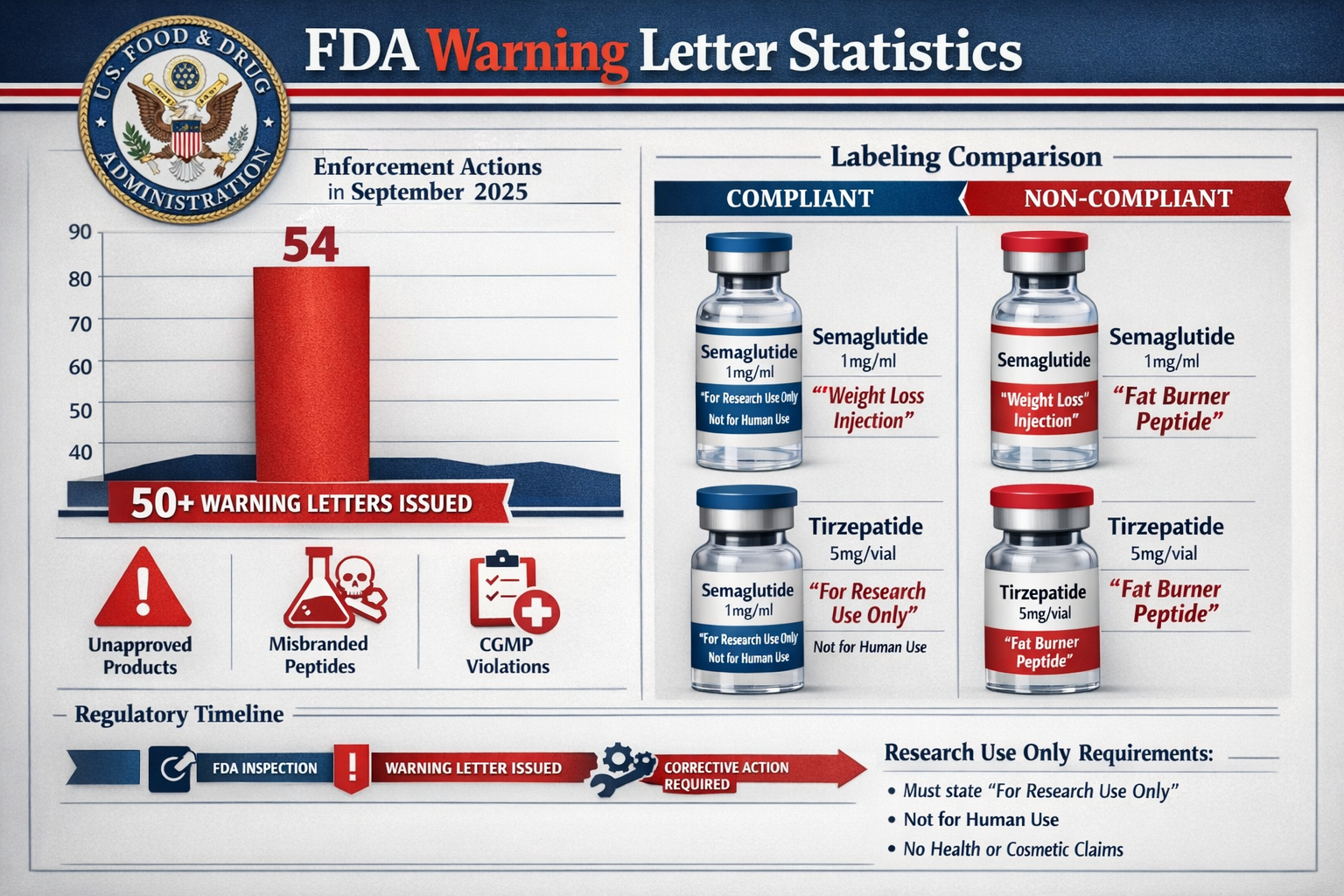
The designation "research use only" (RUO) has historically served as a regulatory workaround for peptide suppliers. However, the FDA's September 2025 enforcement actions revealed that peptides for research use only cannot simply carry this label while being marketed for human consumption.[1] The agency specifically targeted products including semaglutide, tirzepatide, retatrutide, BPC-157, and various SARMs that used RUO labeling as a shield against regulatory oversight.
What Makes a Peptide "Research Use Only"?
Legitimate research peptides are intended exclusively for laboratory investigation, scientific study, and controlled experimental protocols. These compounds should never be marketed with:
- Health benefit claims for human use
- Dosing instructions for personal consumption
- Comparative efficacy claims against FDA-approved medications
- Marketing materials suggesting therapeutic applications
The latest developments in peptide research highlight the distinction between genuine scientific investigation and commercial marketing disguised as research.
The Regulatory Gray Zone Narrows
Peptides continue to operate in what experts call a "gray zone" of compounding pharmacies and research disclaimers, though this space is shrinking rapidly in 2026.[7] The FDA's new Green List Import Alert (66-80) established in September 2025 now prevents GLP-1 active pharmaceutical ingredients with potential quality concerns from entering the U.S. supply chain.[1]
Key regulatory developments include:
- Increased unannounced inspections of foreign API manufacturers
- Enhanced remote inspections via FDA Form 4003
- Stricter enforcement against misleading advertising
- Greater scrutiny of compounding pharmacy practices
For those exploring where to buy peptides online in the USA, understanding these regulatory changes is essential for making informed decisions.
The FDA's 2025 Enforcement Escalation Against Research Peptides
September 2025 marked a watershed moment for the peptide industry. The FDA issued more than 50 warning letters representing the most significant enforcement action in the sector's history.[1] This crackdown specifically targeted companies exploiting the "research use only" designation while clearly marketing products for human consumption.
Targeted Peptide Compounds
The enforcement actions focused on several specific compounds that had become popular in fitness and wellness communities:
| Peptide Compound | Regulatory Status | Enforcement Issue |
|---|---|---|
| Semaglutide | FDA-approved (Ozempic, Wegovy) | Compounded versions marketed as "generic" |
| Tirzepatide | FDA-approved (Mounjaro, Zepbound) | Comparative claims to approved versions |
| Retatrutide | Investigational drug | Cannot be compounded at all |
| BPC-157 | No FDA approval | RUO label with human use marketing |
| Various SARMs | No FDA approval | Research label circumventing review |
Understanding BPC-157 research documentation requires acknowledging its current regulatory status and the limitations on legitimate research applications.
Why the Crackdown Happened Now
Several factors converged to trigger this enforcement escalation:
🔍 Silicon Valley adoption trends: Tech community members began openly discussing "Chinese peptides" labeled for research use, bringing mainstream attention to the practice.[3]
⚖️ Patient safety concerns: Case studies of contamination and adverse events accumulated, demanding regulatory response.[3]
💊 Pharmaceutical industry pressure: FDA-approved GLP-1 manufacturers raised concerns about compounded alternatives undermining their investments in clinical trials.
📈 Market growth: The peptide market expanded rapidly, making regulatory oversight more urgent.
The all peptides for sale landscape has fundamentally changed as a result of these enforcement actions.
Quality and Safety Concerns with Research Peptides
The most critical issue facing anyone considering peptides for research use only is quality assurance. Unlike FDA-approved medications that undergo rigorous manufacturing standards and quality controls, research peptides exist in a largely unregulated space with significant variability in purity, composition, and safety.
Contamination Risks and Case Studies
Documented case studies reveal contamination issues in peptide products that circumvent FDA review through RUO labeling.[3] These contamination risks include:
- Heavy metal contamination from substandard manufacturing facilities
- Bacterial endotoxins from inadequate sterilization processes
- Incorrect peptide sequences due to synthesis errors
- Inconsistent concentrations affecting research reproducibility
- Degradation products from improper storage and handling
The importance of quality testing protocols cannot be overstated when working with research-grade peptide compounds.
Unknown Long-Term Safety Profiles
Most peptides sold with RUO labels have been tested primarily in animal models, particularly rats, leaving critical unknowns about:[3]
✋ Long-term effects beyond short-duration animal studies
⚠️ Drug interactions with common medications and supplements
👥 Age-specific responses across different life stages
🏥 Health condition interactions in individuals with pre-existing conditions
💉 Actual side effect profiles in diverse human populations
For researchers exploring TB-500 muscle recovery research themes, understanding these limitations is essential for designing appropriate study protocols.
The Evidence Gap for Most Peptides
A critical distinction exists between different classes of peptides. No evidence from randomized human trials exists for most peptides being marketed, with the notable exception of GLP-1s.[2] This evidence gap means:
- Efficacy claims rest on animal studies or anecdotal reports
- Optimal dosing remains largely speculative
- Safety parameters lack rigorous human validation
- Mechanism of action may differ between species
GLP-1s represent the most rigorously studied class of peptides ever, with large placebo-controlled randomized trials conducted over twenty years since exenatide's FDA approval in 2005.[2][3] This makes GLP-1 peptide research concepts fundamentally different from other peptide categories.
Popular Research Peptides: Evidence and Applications
While the regulatory landscape tightens, certain peptides for research use only continue to generate significant interest in the fitness, martial arts, and weightlifting communities. Understanding what the actual research shows—and doesn't show—is crucial for informed decision-making.
GLP-1 Receptor Agonists: The Most Researched Class
GLP-1 peptides stand apart from all other peptide categories due to their extensive clinical validation. These compounds have undergone decades of rigorous testing, making them the gold standard for peptide research.[2][3]
Key GLP-1 research areas:
- Metabolic regulation and glucose homeostasis
- Body composition changes in controlled trials
- Cardiovascular outcomes in long-term studies
- Neurological effects on appetite and satiety
Researchers interested in dual receptor agonism research can find substantial peer-reviewed literature supporting various mechanisms of action.
BPC-157: Popular but Evidence-Limited
Body Protection Compound-157 has gained enormous popularity in recovery-focused communities, yet its evidence base remains limited to animal models and in vitro studies. The compound cannot legally be marketed for human consumption, making the RUO designation particularly important.[1]
Research themes include:
- Tissue repair mechanisms in animal models
- Angiogenesis promotion in controlled studies
- Gut-protective effects in rodent research
- Tendon and ligament healing observations
TB-500 and Thymosin Beta-4
TB-500 represents a synthetic version of Thymosin Beta-4, a naturally occurring peptide. Research applications focus on:
- Cellular migration and tissue organization
- Inflammation modulation in experimental models
- Wound healing acceleration in animal studies
- Muscle fiber repair mechanisms
The all peptides for sale category includes various recovery-focused compounds, each with distinct research profiles and regulatory considerations.
Mitochondrial Peptides: MOTS-c and SS-31
Mitochondrial-targeted peptides represent an emerging research frontier with particular interest in longevity and metabolic optimization.
MOTS-c research themes:
- Metabolic flexibility enhancement
- Exercise mimetic effects
- Age-related metabolic decline
- Insulin sensitivity modulation
Detailed MOTS-c mitochondrial research themes explore the compound's potential mechanisms in cellular energy production.
SS-31 (Elamipretide) research areas:
- Mitochondrial membrane stabilization
- Cardioprotective mechanisms
- Kidney health applications
- Neuroprotective potential
The SS-31 research peptide considerations highlight both the promising research and the current limitations in human clinical data.
Copper Peptides: GHK-Cu
GHK-Cu has attracted attention for its multiple proposed mechanisms, though most evidence comes from in vitro and animal studies:
- Collagen synthesis stimulation
- Anti-inflammatory signaling
- Antioxidant enzyme activation
- Tissue remodeling effects
Researchers can explore GHK-Cu longevity research themes for a comprehensive overview of current scientific understanding.
Sourcing Peptides for Research: Quality Indicators and Red Flags
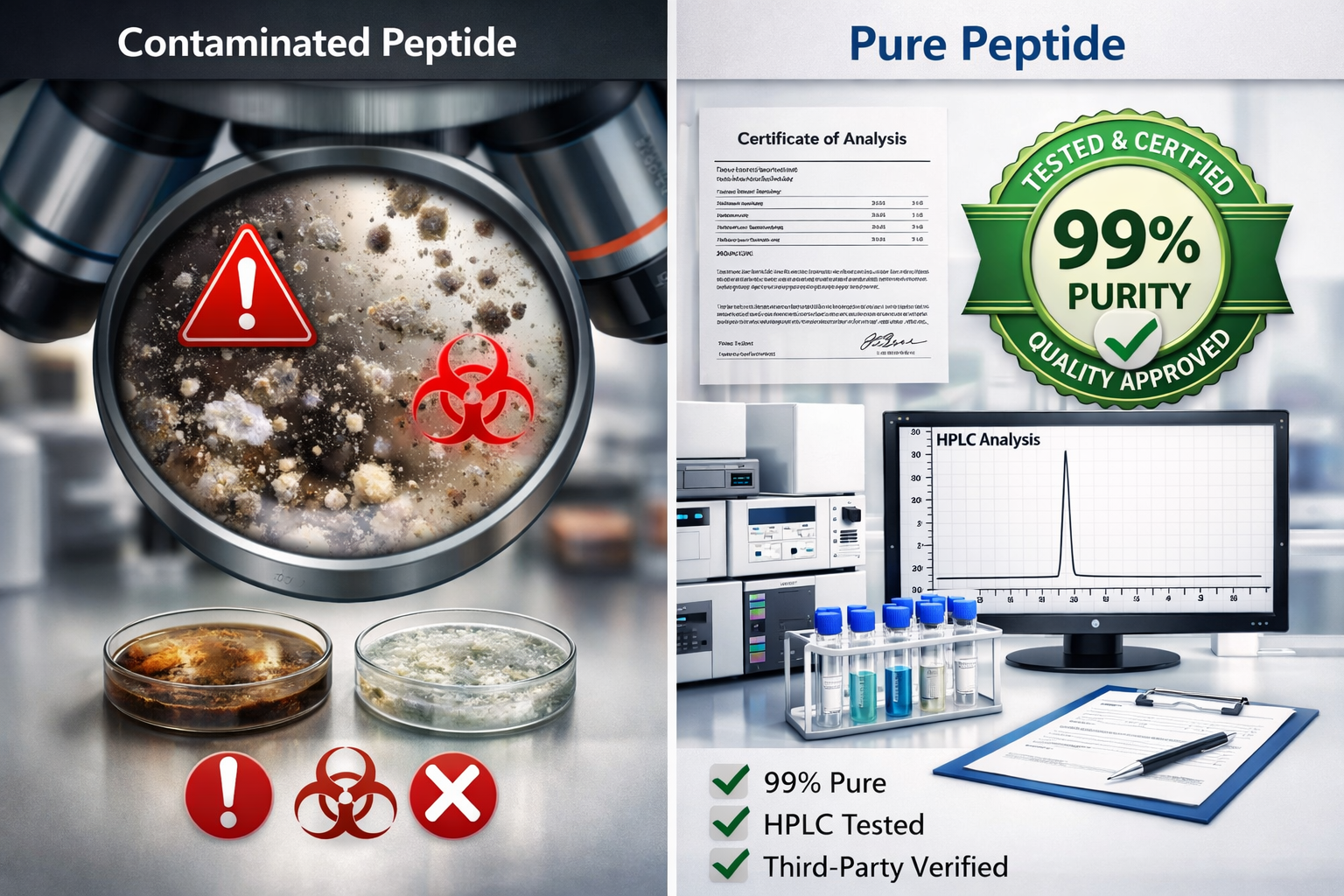
Finding reliable sources for peptides for research use only requires careful evaluation of multiple quality indicators. The 2025 FDA enforcement actions demonstrated that many suppliers operate in legally questionable territory, making due diligence essential.
Critical Quality Indicators
When evaluating peptide suppliers, researchers should look for:
✅ Third-party testing documentation: Certificates of Analysis (CoA) from independent laboratories using HPLC, mass spectrometry, and purity testing
✅ Transparent sourcing information: Clear disclosure of manufacturing locations and API sources
✅ Proper RUO labeling: Explicit research-only designations without human use claims
✅ Batch-specific documentation: Individual testing results for each production batch
✅ Appropriate storage and handling: Temperature-controlled shipping and storage protocols
The peptide blend research category requires particularly careful quality assessment due to the complexity of multi-compound formulations.
Red Flags to Avoid
Certain warning signs indicate suppliers operating outside regulatory compliance:
🚩 Health benefit claims for human consumption
🚩 Dosing recommendations suggesting personal use
🚩 Comparative efficacy claims against FDA-approved drugs
🚩 Lack of testing documentation or vague quality assurances
🚩 Extremely low pricing suggesting quality compromises
🚩 Marketing to consumers rather than research institutions
🚩 Generic or "bioidentical" claims for compounded versions
The Importance of Certificates of Analysis
A legitimate Certificate of Analysis should include:
- Peptide identity confirmation via mass spectrometry
- Purity percentage from HPLC analysis
- Bacterial endotoxin testing results
- Heavy metal screening data
- Batch number and date of manufacture
- Independent laboratory contact information
Researchers working with specialized compounds like those in longevity peptide research should demand comprehensive documentation for each batch received.
International Sourcing Considerations
The FDA's increased focus on foreign API manufacturers affects international peptide sourcing:[1]
- Unannounced inspections of overseas facilities have increased
- Green List Import Alert 66-80 targets questionable GLP-1 APIs
- Remote inspection protocols via FDA Form 4003 expanded
- Supply chain transparency requirements strengthened
Understanding NAD+ research overview and sourcing requires awareness of both domestic and international regulatory frameworks.
Legal and Compliance Considerations for Research Peptides
The legal landscape surrounding peptides for research use only has become increasingly complex in 2026. Understanding the boundaries of compliant research use versus illegal marketing is essential for both suppliers and researchers.
What Makes Peptide Use Legally Compliant?
Legitimate research use of peptides must meet specific criteria:
For Suppliers:
- Products labeled exclusively for research purposes
- No marketing materials suggesting human consumption
- No dosing instructions for personal use
- No health benefit claims or testimonials
- Proper documentation of research-grade status
For Researchers:
- Use limited to controlled laboratory settings
- Proper institutional oversight and protocols
- Documentation of research objectives
- No personal consumption or distribution
- Compliance with institutional review requirements
The all peptides for sale marketplace requires careful navigation of these legal boundaries.
The Compounding Pharmacy Exception
Compounding pharmacies operate under specific legal frameworks that allow creation of customized medications, but with important limitations:
📋 Valid prescription requirement: Patient-specific prescriptions from licensed practitioners
⚖️ FDA shortage list: Some peptides can only be compounded during drug shortages
🚫 Investigational drug prohibition: Retatrutide and similar compounds cannot be compounded at all[1]
🏥 State licensing: Compliance with state pharmacy board regulations
❌ No large-scale manufacturing: Compounding must be patient-specific, not bulk production
Investigational Drug Status: The Retatrutide Example
Retatrutide serves as a critical case study in peptide compliance. As an investigational drug, it cannot be legally compounded under any circumstances.[1] This classification means:
- No compounding pharmacy can legally produce it
- All compounded versions violate FDA regulations
- Marketing it as "research use only" doesn't create legal protection
- Suppliers offering it face enforcement risk
Researchers interested in metabolic modulation research lines must understand these investigational drug limitations.
State-Level Regulations
Beyond federal FDA oversight, state regulations add another compliance layer:
- State pharmacy boards regulate compounding practices
- Medical board oversight governs prescribing practices
- Consumer protection laws may restrict certain claims
- Professional licensing requirements for practitioners
Enforcement Trends and Future Outlook
The September 2025 enforcement actions signal a new regulatory era:[1]
Current trends:
- Increased scrutiny of online peptide marketing
- Greater focus on "research use only" label misuse
- Enhanced international supply chain oversight
- Stricter compounding pharmacy regulations
Future predictions:
- Continued enforcement escalation likely
- Possible new regulatory frameworks for research peptides
- Greater emphasis on third-party testing requirements
- Potential expansion of import restrictions
Understanding innovative peptide delivery systems requires awareness of how regulatory changes may affect research methodologies.
Peptide Research Applications in Fitness and Performance
While peptides for research use only cannot legally be marketed for human performance enhancement, understanding the research landscape helps contextualize the scientific interest from fitness, martial arts, and weightlifting communities.
Growth Hormone Pathway Research
Peptides affecting growth hormone pathways represent one of the most researched areas in performance science:
CJC-1295 research themes:
- Growth hormone releasing hormone analog mechanisms
- Pulsatile versus sustained GH elevation
- Body composition effects in animal models
- Recovery and adaptation signaling
The CJC-1295 with DAC research findings explore the distinctions between different formulation approaches.
Ipamorelin research applications:
- Selective ghrelin receptor activation
- Growth hormone pulse generation
- Minimal cortisol and prolactin effects
- Synergistic combinations with other peptides
Researchers examining IPA muscle and fat research themes can find detailed mechanistic information about these pathways.
Recovery and Tissue Repair Research
Recovery-focused peptides generate significant interest in athletic populations:
Research areas include:
- Collagen synthesis upregulation
- Angiogenesis and blood flow enhancement
- Inflammation modulation pathways
- Satellite cell activation mechanisms
The recovery tissue biology overview provides comprehensive context for understanding these research directions.
Metabolic Optimization Studies
Metabolic peptides represent a rapidly growing research category:
Key compounds and themes:
- AOD-9604: Fragment of growth hormone with proposed fat metabolism effects
- 5-Amino-1-MQ: NNMT inhibitor affecting cellular metabolism
- Tesofensine: Triple monoamine reuptake inhibitor research
Understanding 5-Amino-1-MQ research and data requires careful evaluation of the limited human evidence available.
Peptide Blends and Synergistic Research
Some researchers explore combinations of peptides for potential synergistic effects:
Popular research combinations:
- Growth hormone pathway peptides (CJC-1295 + Ipamorelin)
- Recovery blends (BPC-157 + TB-500)
- Longevity stacks (MOTS-c + NAD+ precursors)
- Metabolic combinations (GLP-1 analogs + metabolic modulators)
The GLOW peptide blend benefits and KLOW blend multipathway research explore these multi-compound approaches.
Neurological and Cognitive Research
Certain peptides show research potential in neurological applications:
Selank research themes:
- Anxiolytic mechanisms in animal models
- Cognitive enhancement observations
- Neuroprotective signaling pathways
The Selank peptide benefits research overview highlights both promising findings and current limitations.
PT-141 (Bremelanotide) applications:
- Melanocortin receptor activation
- Neural pathway modulation
- Metabolic signaling effects
Researchers can explore PT-141 neural metabolic research themes for detailed mechanistic information.
Best Practices for Working with Research Peptides
For researchers legitimately working with peptides for research use only, following best practices ensures both safety and scientific validity.
Storage and Handling Protocols
Proper peptide storage is critical for maintaining stability and preventing degradation:
Lyophilized (freeze-dried) peptides:
- Store at -20°C to -80°C in freezer
- Protect from light and moisture
- Use desiccant packets in storage containers
- Minimize freeze-thaw cycles
- Record storage dates and conditions
Reconstituted peptides:
- Store at 2°C to 8°C (refrigerated)
- Use within recommended timeframe (typically 30 days)
- Protect from light with amber vials
- Avoid contamination with sterile handling
- Document reconstitution date and concentration
The all peptides for sale category includes specific storage recommendations for different peptide classes.
Reconstitution Best Practices
Proper reconstitution maintains peptide integrity:
- Use appropriate diluent: Bacteriostatic water or sterile water for injection
- Calculate concentration carefully: Ensure accurate dosing for research protocols
- Add liquid slowly: Down the side of the vial to minimize foaming
- Gentle mixing: Swirl rather than shake to prevent denaturation
- Sterile technique: Use alcohol swabs and clean workspace
- Proper labeling: Mark concentration, date, and peptide identity
Documentation and Record-Keeping
Comprehensive documentation supports research validity:
📝 Maintain detailed records of:
- Batch numbers and supplier information
- Certificate of Analysis for each batch
- Storage conditions and dates
- Reconstitution procedures and dates
- Research protocol details
- Observations and results
- Any deviations from protocols
Quality Verification Steps
Researchers should implement quality verification procedures:
✓ Visual inspection: Check for discoloration, particles, or unusual appearance
✓ Certificate review: Verify CoA matches received product
✓ Purity confirmation: Ensure HPLC results meet standards (typically >98%)
✓ Batch tracking: Maintain chain of custody documentation
✓ Third-party testing: Consider independent verification for critical research
Safety Considerations
Even in controlled research settings, safety protocols are essential:
🔬 Laboratory safety:
- Use appropriate personal protective equipment
- Follow institutional biosafety guidelines
- Proper disposal of biological materials
- Emergency response procedures
- Spill containment protocols
⚠️ Research integrity:
- Institutional review board approval when required
- Compliance with animal research ethics
- Transparent reporting of methods and results
- Disclosure of funding sources and conflicts
Understanding peptide therapy benefits and expectations provides context for responsible research approaches.
The Future of Peptide Research and Regulation
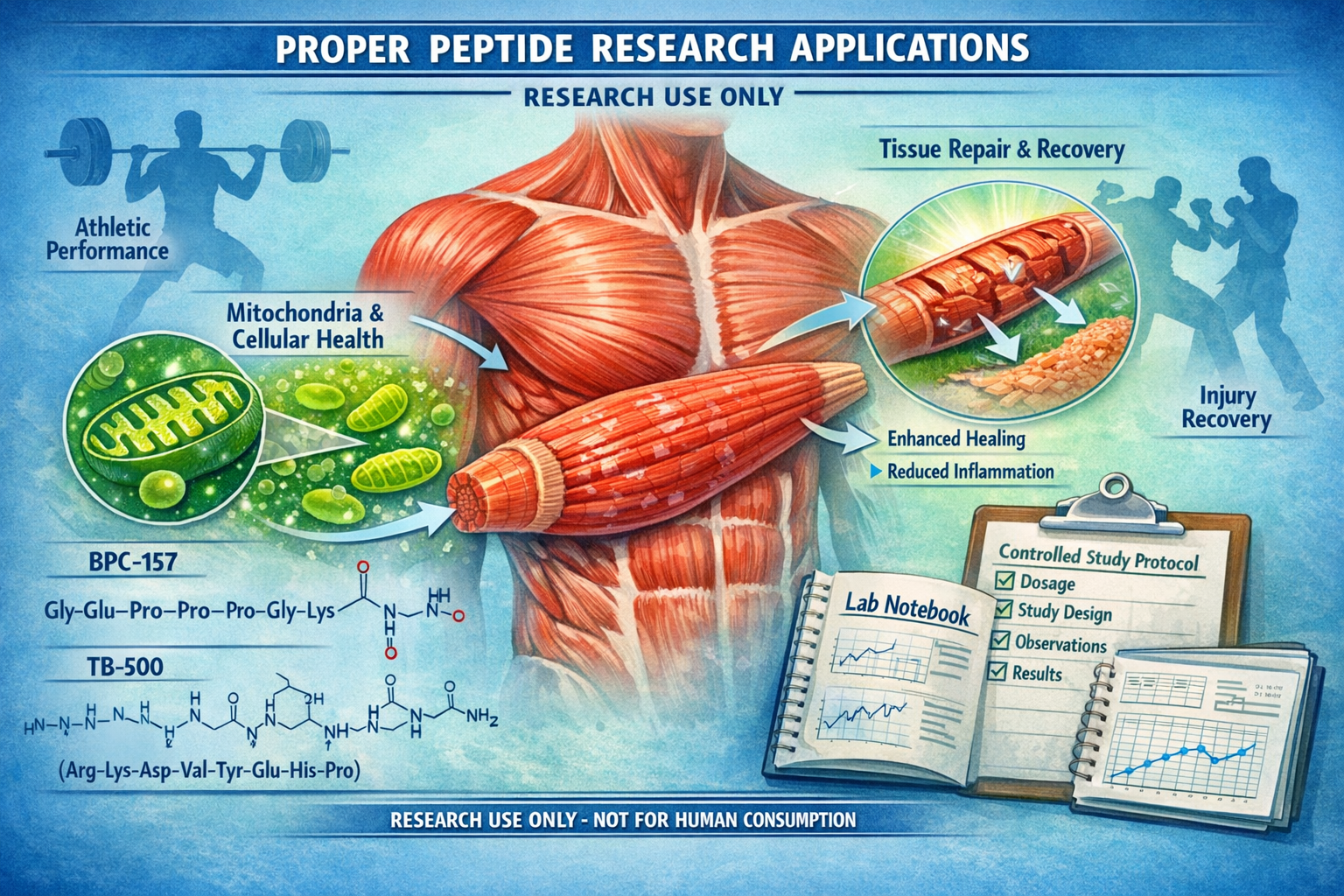
As 2026 progresses, the landscape for peptides for research use only continues to evolve rapidly. Understanding emerging trends helps researchers anticipate regulatory changes and scientific developments.
Regulatory Evolution Predictions
Based on the September 2025 enforcement escalation, several regulatory trends appear likely:[1][7]
Near-term expectations (2026-2027):
- Continued increase in FDA warning letters
- Expansion of Green List Import Alert to additional peptides
- Greater scrutiny of compounding pharmacy practices
- Possible new guidance documents on RUO labeling
- Enhanced international cooperation on peptide regulation
Long-term possibilities (2028+):
- Potential new regulatory category for research peptides
- Mandatory third-party testing requirements
- Supplier registration or licensing systems
- Clearer legal frameworks for legitimate research use
- Possible reclassification of certain peptides
Emerging Research Directions
Scientific interest in peptides continues to expand across multiple domains:
Longevity research:
- Mitochondrial function optimization
- Cellular senescence modulation
- NAD+ pathway enhancement
- Epigenetic aging markers
The longevity peptide research series explores these cutting-edge scientific directions.
Metabolic health:
- Multi-receptor agonist development
- Insulin sensitivity enhancement
- Adipose tissue remodeling
- Energy expenditure modulation
Researchers can explore metabolic modulation research lines for comprehensive overviews of this rapidly developing field.
Tissue engineering:
- Scaffold integration enhancement
- Vascularization promotion
- Stem cell differentiation guidance
- Biomaterial functionalization
Technology Integration
Advances in peptide technology are reshaping research possibilities:
Delivery system innovations:
- Oral bioavailability enhancement
- Targeted delivery mechanisms
- Sustained-release formulations
- Transdermal delivery systems
The innovative peptide delivery systems article explores these technological frontiers.
Manufacturing advances:
- Improved synthesis methods
- Enhanced purity standards
- Scalable production techniques
- Cost reduction strategies
The GLP-1 Paradigm Shift
GLP-1 peptides have fundamentally changed the peptide research landscape:[2][3]
Impact on the field:
- Demonstrated the potential for rigorous peptide research
- Established safety and efficacy standards
- Created pharmaceutical industry investment
- Raised public awareness of peptide therapeutics
- Set precedent for regulatory pathways
Next-generation developments:
- Triple agonist research (GLP-1/GIP/Glucagon)
- Oral formulation advances
- Extended duration analogs
- Tissue-selective targeting
Understanding GLP-3 incretin research themes provides insight into the evolution beyond first-generation GLP-1 agonists.
Market and Access Trends
The peptide market continues to evolve in response to regulatory and scientific developments:
Current trends:
- Consolidation among suppliers
- Increased emphasis on quality documentation
- Higher prices reflecting compliance costs
- Greater transparency in sourcing
- Shift toward institutional research focus
Access considerations:
- Tightening supply chains for certain compounds
- Increased barriers to consumer access
- Greater emphasis on legitimate research credentials
- Potential expansion of prescription pathways
- International regulatory harmonization efforts
The all peptides for sale marketplace reflects these evolving dynamics in real-time.
Conclusion: Navigating the Peptide Research Landscape Responsibly
The world of peptides for research use only has entered a new era of regulatory scrutiny and scientific maturation in 2026. The FDA's unprecedented enforcement actions in September 2025, targeting over 50 companies for misusing the "research use only" designation, signal a fundamental shift in how these compounds must be sourced, marketed, and utilized.[1]
For fitness enthusiasts, martial artists, and weightlifters interested in peptide research, several critical principles emerge:
Quality is paramount. The documented contamination risks and variable purity of research peptides demand rigorous third-party testing, comprehensive Certificates of Analysis, and transparent sourcing information. Never compromise on quality documentation when selecting peptide suppliers.
Evidence varies dramatically. While GLP-1 peptides benefit from decades of rigorous clinical trials, most other peptides lack randomized human evidence.[2][3] Understanding this evidence gap is essential for setting appropriate expectations and designing valid research protocols.
Regulatory compliance is non-negotiable. The narrowing gray zone around peptide regulations means that both suppliers and researchers must operate within clearly defined legal boundaries. Investigational drugs like retatrutide cannot be compounded, and "research use only" labels don't provide legal protection when marketing suggests human consumption.[1]
The future remains dynamic. As regulatory frameworks continue to evolve and scientific understanding deepens, the peptide research landscape will transform further. Staying informed about emerging regulations, quality standards, and scientific developments is essential for anyone working in this field.
Actionable Next Steps
For researchers and institutions working with peptides:
- Audit current suppliers against the quality indicators outlined in this guide
- Review documentation to ensure comprehensive Certificates of Analysis for all batches
- Verify compliance with current FDA guidance and state regulations
- Implement proper storage and handling protocols to maintain peptide integrity
- Maintain detailed records of sourcing, testing, and research protocols
- Stay informed about regulatory developments and enforcement trends
- Prioritize compounds with stronger evidence bases for research applications
The peptide research field offers tremendous scientific potential, from understanding mitochondrial function to exploring tissue repair mechanisms to investigating metabolic optimization pathways. However, realizing this potential requires commitment to quality, compliance, and scientific rigor.
As we progress through 2026 and beyond, the distinction between legitimate research applications and consumer marketing disguised as research will only sharpen. Those who embrace transparency, prioritize quality, and operate within regulatory boundaries will be best positioned to contribute meaningfully to peptide science while avoiding the enforcement actions that have reshaped the industry.
The future of peptide research depends on responsible practices, rigorous science, and respect for the regulatory frameworks designed to protect public health. By following the principles and practices outlined in this guide, researchers can navigate this complex landscape effectively while advancing our understanding of these fascinating biomolecules.
References
[1] Fda Targets Glp 1 And Peptide Compounding Advertising And Research Use Only Labeling – https://www.healthlawalliance.com/blog/fda-targets-glp-1-and-peptide-compounding-advertising-and-research-use-only-labeling
[2] The Peptide Craze – https://erictopol.substack.com/p/the-peptide-craze
[3] Watch – https://www.youtube.com/watch?v=dGqwM9G_MIM
[5] Peptide Legal Frequently Asked Questions – https://djholtlaw.com/peptide-legal-frequently-asked-questions/
[7] Peptide Therapy Trends To Watch In 2025 What Clinics Need To Know – https://www.optimantra.com/blog/peptide-therapy-trends-to-watch-in-2025-what-clinics-need-to-know
[8] polypeptide – https://www.polypeptide.com
SEO Meta Title and Description
Meta Title: Peptides for Research Use Only: 2026 Compliance Guide
Meta Description: Complete guide to peptides for research use only in 2026. FDA enforcement, quality standards, safety considerations, and compliance for fitness research applications.