
Is GLP-3 Similar to GLP-1? The Complete Guide to Triple Agonist Peptides for 2026
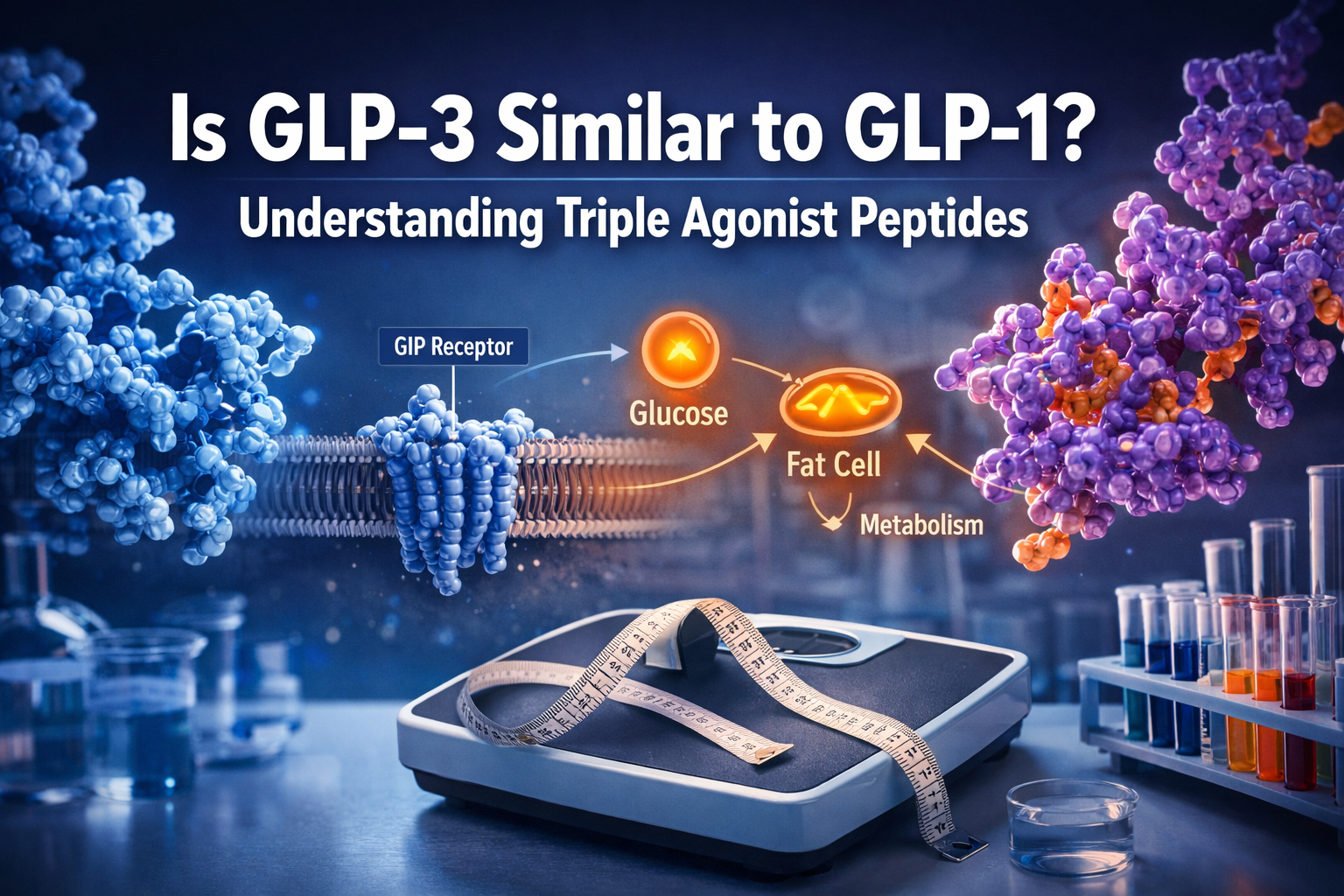
The world of metabolic peptides has exploded in 2026, with fitness enthusiasts and researchers asking a critical question: is GLP-3 similar to GLP-1, or does this next-generation compound represent something entirely different? While GLP-1 medications like Ozempic and Wegovy have dominated headlines for their weight loss effects, the emergence of triple agonist peptides—often referred to as GLP-3—has created significant buzz in the research community. Understanding whether GLP-3 is similar to GLP-1 requires diving deep into receptor mechanisms, metabolic pathways, and the latest research findings that distinguish these compounds.
Key Takeaways
- GLP-3 is NOT simply GLP-1 version 3.0 – it's a marketing term for triple agonist peptides that target three different receptors (GLP-1, GIP, and glucagon) simultaneously
- Triple agonist peptides show enhanced efficacy compared to single GLP-1 agonists, with research indicating up to 24% body weight reduction versus 15% for traditional GLP-1 medications[1]
- Mechanism differences are significant – while GLP-1 agonists work through one receptor pathway, triple agonists engage multiple metabolic systems for broader effects
- Research applications differ – GLP-3 compounds like retatrutide are being studied for advanced metabolic research beyond standard GLP-1 applications
- Both peptide classes require proper sourcing – quality testing and certificates of analysis remain essential for research-grade peptides in 2026
What Is GLP-1 and How Does It Work?
The GLP-1 Receptor Pathway Explained
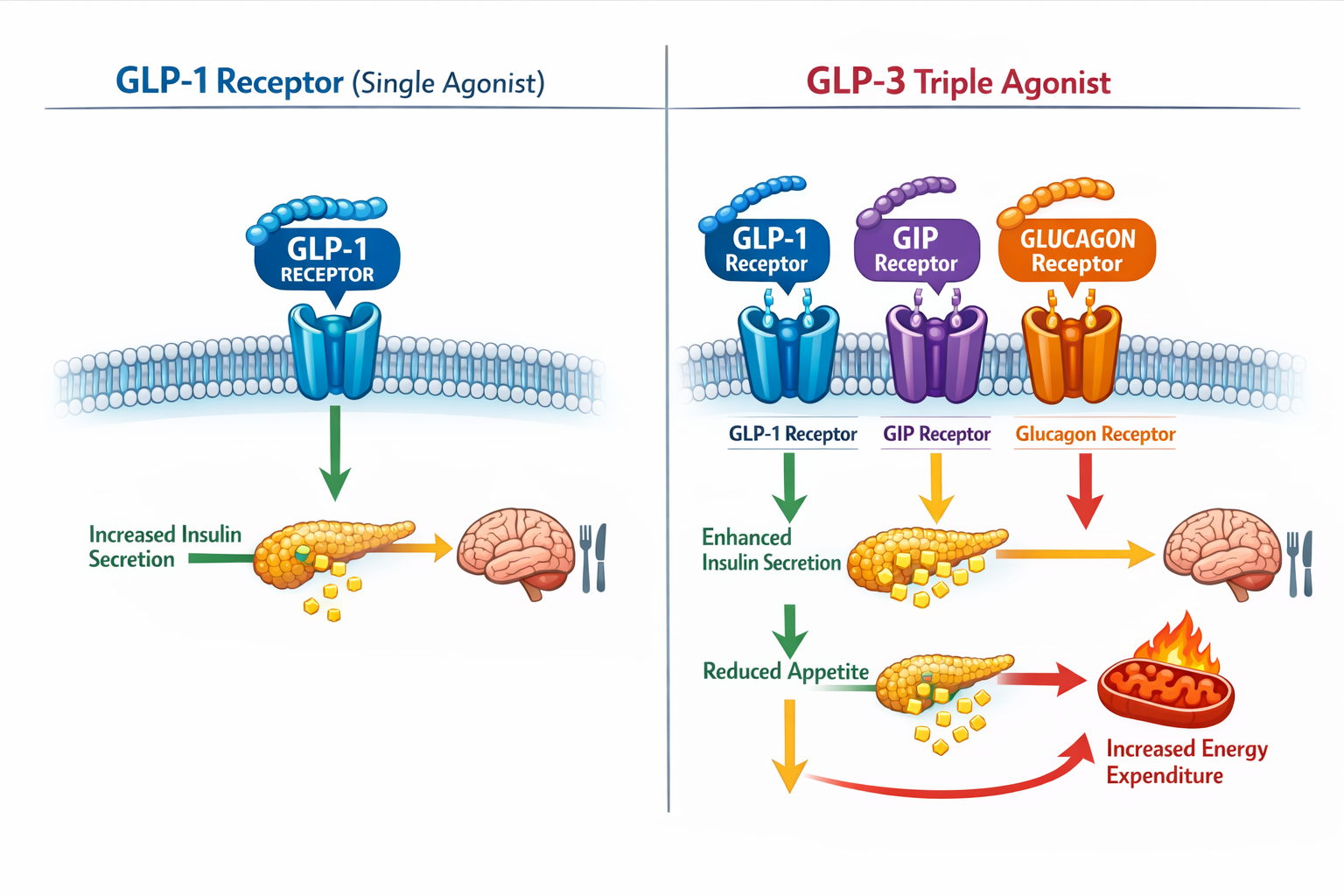
GLP-1 (Glucagon-Like Peptide-1) is a naturally occurring incretin hormone that plays a crucial role in glucose metabolism and appetite regulation. When discussing whether is GLP-3 similar to GLP-1, understanding the foundation of GLP-1 function becomes essential.
GLP-1 works through a single receptor mechanism that triggers several metabolic responses:
- 🎯 Glucose-dependent insulin secretion from pancreatic beta cells
- 🛑 Appetite suppression through central nervous system pathways
- ⏱️ Delayed gastric emptying to promote satiety
- 📉 Reduced glucagon secretion when blood glucose is elevated
The GLP-1 receptor agonist class includes medications that have become household names in 2026, including semaglutide (Ozempic, Wegovy) and liraglutide (Victoza, Saxenda)[3]. These compounds mimic natural GLP-1 but with extended half-lives that allow for weekly or even less frequent dosing.
Clinical Research on GLP-1 Peptides
Research on GLP-1 peptides has demonstrated consistent metabolic effects across multiple studies. According to comprehensive comparisons of GLP-1 drugs, these peptides typically produce:
- Weight loss ranging from 10-15% of baseline body weight over 68 weeks[3]
- Improved glycemic control in metabolic research models
- Cardiovascular benefits in long-term observational studies
- Appetite reduction through hypothalamic signaling pathways
The single-receptor mechanism of GLP-1 agonists provides targeted metabolic support, but this focused approach also represents a limitation when compared to multi-receptor strategies. This is where the question "is GLP-3 similar to GLP-1" becomes particularly relevant.
For researchers exploring peptide options, understanding where to source quality GLP-1 compounds remains critical for experimental integrity.
Understanding GLP-3: The Triple Agonist Revolution
What Does "GLP-3" Actually Mean?
Here's where clarification becomes crucial: "GLP-3" is not an official scientific designation. The term has emerged in popular discourse as shorthand for triple agonist peptides that simultaneously activate three distinct receptor pathways. When people ask is GLP-3 similar to GLP-1, they're typically referring to compounds like retatrutide (also known as GGG or LY3437943).
The "triple" in triple agonist refers to activation of:
- GLP-1 receptors (like traditional GLP-1 agonists)
- GIP receptors (Glucose-dependent Insulinotropic Polypeptide)
- Glucagon receptors (which increase energy expenditure)
This multi-receptor approach represents a fundamental departure from single-agonist GLP-1 medications, making the comparison between GLP-3 and GLP-1 more complex than simply comparing versions of the same compound.
The Science Behind Triple Agonist Peptides
Triple agonist peptides like retatrutide work through synergistic metabolic pathways that extend beyond traditional GLP-1 mechanisms[1]. The addition of GIP and glucagon receptor activation creates distinct metabolic effects:
GIP Receptor Activation:
- Enhances insulin secretion in a glucose-dependent manner
- May improve fat metabolism and nutrient partitioning
- Potentially reduces inflammation in metabolic tissues
- Works synergistically with GLP-1 for enhanced satiety
Glucagon Receptor Activation:
- Increases energy expenditure through thermogenesis
- Promotes fat oxidation and lipolysis
- May improve hepatic glucose output regulation
- Counterbalances potential metabolic slowdown
The GIP receptor's importance in metabolic regulation has become increasingly recognized in 2026, with research suggesting that dual GLP-1/GIP agonism (as seen in tirzepatide/Mounjaro) already outperforms single GLP-1 agonists[4]. Adding glucagon receptor activation to this combination creates the triple agonist profile.
When examining whether is GLP-3 similar to GLP-1, the answer becomes clear: while they share one receptor target, the mechanisms are substantially different.
Is GLP-3 Similar to GLP-1? A Direct Comparison
Receptor Mechanisms: Single vs. Triple Agonism
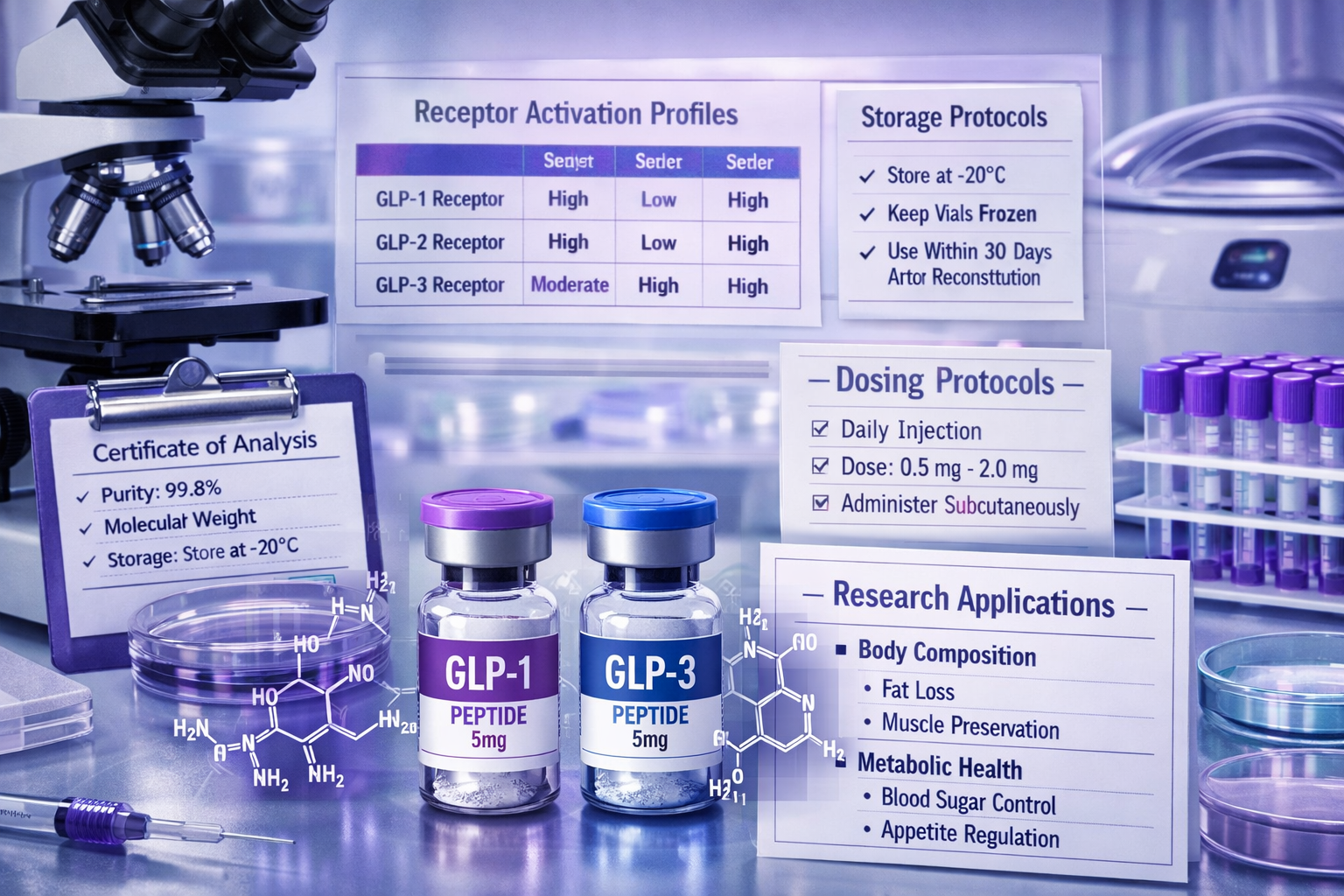
The fundamental question—is GLP-3 similar to GLP-1—requires examining receptor activation profiles side by side:
| Feature | GLP-1 Agonists | GLP-3 (Triple Agonists) |
|---|---|---|
| Receptor Targets | GLP-1 only | GLP-1 + GIP + Glucagon |
| Metabolic Pathways | Single pathway | Three synergistic pathways |
| Weight Loss Potential | 10-15% body weight[3] | Up to 24% body weight[1] |
| Insulin Secretion | Glucose-dependent | Enhanced glucose-dependent |
| Energy Expenditure | Minimal direct effect | Increased via glucagon |
| Fat Oxidation | Indirect through weight loss | Direct glucagon-mediated |
| Appetite Suppression | Strong | Very strong (dual mechanism) |
This comparison reveals that while GLP-3 compounds share similarities with GLP-1, they represent an evolution rather than a simple variation. The triple agonist approach addresses multiple metabolic pathways simultaneously, potentially offering enhanced efficacy for research applications.
Efficacy Differences in Research Studies
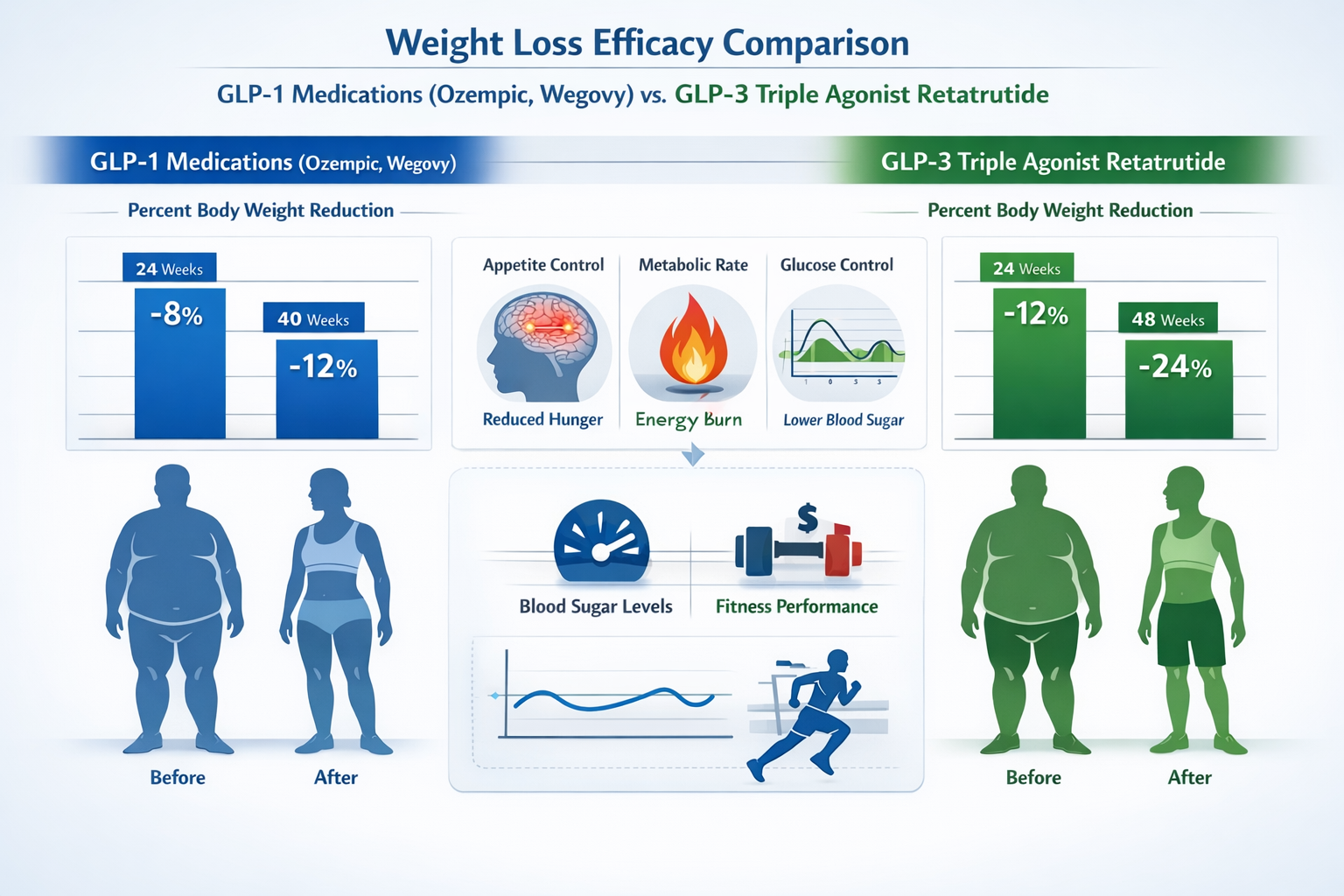
Research data from 2026 demonstrates substantial differences in metabolic outcomes between single GLP-1 agonists and triple agonist peptides. According to recent analyses, retatrutide (the leading triple agonist) showed 24% body weight reduction in 48-week studies, compared to approximately 15% for semaglutide over similar timeframes[1].
Key Research Findings:
- 📊 Greater weight loss magnitude with triple agonists versus single GLP-1 agonists
- ⚡ Faster onset of metabolic effects in early research phases
- 💪 Better preservation of lean mass in some comparative studies
- 🔬 Enhanced metabolic flexibility markers in triple agonist groups
These differences suggest that when asking is GLP-3 similar to GLP-1, the answer depends on the specific outcome being measured. For basic appetite suppression and insulin secretion, the compounds share similarities. For comprehensive metabolic effects including energy expenditure and fat oxidation, the triple agonist profile offers distinct advantages.
Researchers interested in exploring these compounds should consider quality-tested peptide sources with proper documentation and certificates of analysis.
Safety and Tolerability Profiles
When comparing whether is GLP-3 similar to GLP-1 from a safety perspective, both peptide classes share common gastrointestinal effects:
Shared Side Effects:
- Nausea (most common, typically transient)
- Vomiting (dose-dependent)
- Diarrhea or constipation
- Decreased appetite (intended effect)
- Potential injection site reactions
Potential Differences:
- Triple agonists may show dose-dependent tolerability challenges due to multi-receptor activation
- Glucagon receptor activation could theoretically affect heart rate and blood pressure differently
- Long-term safety profiles for triple agonists remain under investigation as of 2026
Research protocols typically employ gradual dose escalation strategies for both GLP-1 and triple agonist peptides to minimize gastrointestinal effects. The similarity in side effect profiles suggests that the GLP-1 component remains a primary driver of tolerability concerns across both peptide classes.
Retatrutide: The Leading GLP-3 Triple Agonist
What Makes Retatrutide Different?
Retatrutide represents the most advanced triple agonist peptide approaching regulatory consideration in 2026[1]. When examining whether is GLP-3 similar to GLP-1, retatrutide provides the clearest case study of how triple agonism differs from traditional GLP-1 therapy.
Key characteristics of retatrutide include:
- 🔬 Balanced receptor activation across all three targets (GLP-1, GIP, glucagon)
- 💉 Weekly subcutaneous administration similar to semaglutide
- 📈 Dose-dependent efficacy ranging from 5mg to 12mg in research protocols
- ⏱️ Extended half-life enabling once-weekly dosing convenience
The compound's development represents years of research into optimizing receptor activation ratios. Unlike simply combining three separate agonists, retatrutide is a single molecule engineered to activate all three receptors with specific potency profiles.
Retatrutide vs. GLP-1 Medications: Research Outcomes
Direct comparisons between retatrutide and established GLP-1 medications reveal substantial differences in metabolic outcomes. Research published in major medical journals has documented these distinctions[4]:
48-Week Research Findings:
- Retatrutide 12mg: approximately 24% body weight reduction
- Semaglutide 2.4mg: approximately 15% body weight reduction
- Tirzepatide 15mg (dual agonist): approximately 21% body weight reduction
These results suggest a progression of efficacy correlating with receptor targets: single agonist < dual agonist < triple agonist. However, researchers must consider that efficacy exists on a spectrum, and individual response variability remains significant across all peptide classes.
For those researching triple agonist options versus traditional GLP-1 peptides, understanding these efficacy differences helps inform experimental design and outcome expectations.
Research Applications for Triple Agonists
The question "is GLP-3 similar to GLP-1" extends beyond mechanism to practical research applications. Triple agonist peptides like retatrutide may offer advantages in specific research contexts:
Metabolic Research:
- Advanced obesity models requiring maximum metabolic intervention
- Studies examining multi-pathway metabolic regulation
- Research into energy expenditure and thermogenesis
- Investigations of nutrient partitioning and body composition
Comparative Studies:
- Head-to-head efficacy comparisons with single or dual agonists
- Mechanism-of-action research distinguishing receptor contributions
- Dose-response relationship studies across receptor pathways
Combination Research:
- Potential synergies with other metabolic compounds
- Studies examining peptide combinations for enhanced outcomes
Researchers must ensure proper sourcing of research-grade peptides, with quality testing protocols and documentation supporting experimental validity.
Other Multi-Agonist Peptides in the Landscape
Tirzepatide: The Dual Agonist Bridge
While examining whether is GLP-3 similar to GLP-1, it's essential to understand tirzepatide (Mounjaro, Zepbound)—the dual GLP-1/GIP agonist that bridges single and triple agonist approaches.
Tirzepatide activates:
- ✅ GLP-1 receptors (like traditional GLP-1 agonists)
- ✅ GIP receptors (adding metabolic benefits)
- ❌ NOT glucagon receptors (distinguishing it from triple agonists)
Research has shown tirzepatide produces superior weight loss compared to single GLP-1 agonists, with approximately 21% body weight reduction at the highest doses[4]. This intermediate efficacy between single and triple agonists demonstrates the value of multi-receptor approaches.
The dual agonist profile helps answer the question of whether GLP-3 is similar to GLP-1 by showing a spectrum of similarity: single agonists share one receptor target with triple agonists, dual agonists share two, creating a continuum rather than a binary comparison.
Cagrilintide and Amylin Agonism
Another approach to multi-pathway metabolic intervention involves amylin agonists like cagrilintide. While not technically part of the GLP-1 or GLP-3 family, cagrilintide's synergy with GLP-1 compounds demonstrates the broader trend toward multi-mechanism approaches in metabolic research.
Amylin agonists work through distinct pathways:
- Slowed gastric emptying (similar to GLP-1)
- Central appetite suppression (complementary to GLP-1)
- Reduced glucagon secretion (overlapping with GLP-1 effects)
When combined with GLP-1 agonists, cagrilintide has shown additive effects that approach triple agonist efficacy levels. This combination strategy represents an alternative to single-molecule triple agonists, though with increased complexity in dosing and administration.
The Future of Multi-Agonist Peptides
As of 2026, the metabolic peptide landscape continues evolving beyond the simple question of is GLP-3 similar to GLP-1. Emerging research directions include:
Next-Generation Compounds:
- Quadruple agonists adding additional receptor targets
- Tissue-selective agonists minimizing side effects
- Oral formulations improving convenience and compliance
- Extended-release formulations enabling monthly dosing
Novel Combinations:
- Triple agonists with mitochondrial peptides like MOTS-C
- GLP-1 compounds with growth hormone secretagogues
- Multi-pathway approaches addressing multiple aspects of metabolic health
The trajectory suggests that while GLP-1 laid the foundation, the future involves increasingly sophisticated multi-receptor strategies that make the comparison between GLP-3 and GLP-1 less about similarity and more about evolutionary advancement.
Practical Considerations for Peptide Researchers
Sourcing Quality GLP-1 and Triple Agonist Peptides
For researchers asking is GLP-3 similar to GLP-1 with intent to conduct comparative studies, sourcing becomes paramount. Both peptide classes require:
Quality Assurance Standards:
- 📋 Certificates of Analysis (COA) documenting purity and composition
- 🔬 Third-party testing via HPLC, mass spectrometry, and other analytical methods
- ❄️ Proper storage protocols (typically -20°C or colder for lyophilized peptides)
- 📦 Appropriate packaging protecting from light, moisture, and temperature fluctuations
Researchers should verify quality testing protocols and request documentation before initiating studies. The complexity of triple agonist molecules makes quality verification even more critical than with simpler single-agonist peptides.
Dosing and Reconstitution Protocols
Understanding whether is GLP-3 similar to GLP-1 extends to practical handling and dosing considerations:
GLP-1 Agonist Protocols:
- Typical research doses: 0.25mg – 2.4mg weekly (semaglutide equivalent)
- Reconstitution: bacteriostatic water at appropriate concentrations
- Administration: subcutaneous injection, typically abdomen or thigh
- Escalation: gradual dose increases over 4-8 weeks
Triple Agonist Protocols:
- Research doses: 4mg – 12mg weekly (retatrutide reference)
- Similar reconstitution procedures to GLP-1 compounds
- Comparable administration routes and techniques
- May require more conservative escalation due to multi-receptor effects
Both peptide classes benefit from consistent administration timing and careful dose escalation to minimize gastrointestinal effects. Researchers should maintain detailed protocols documenting reconstitution dates, concentrations, and storage conditions.
For comprehensive research planning, exploring peptide catalog navigation helps identify appropriate compounds and specifications.
Combination Research Strategies
Advanced researchers may explore whether GLP-3 compounds can be combined with other peptides for synergistic effects. Potential research combinations include:
Metabolic Combinations:
- Triple agonists + mitochondrial peptides (MOTS-C) for enhanced energy metabolism
- GLP-1 agonists + growth hormone secretagogues for body composition research
- Multi-agonists + metabolic modulators like SLU-PP-332 for comprehensive metabolic studies
Recovery and Performance:
- Metabolic peptides with tissue repair compounds like BPC-157
- GLP-1 or triple agonists with longevity peptides for aging research
Important Considerations:
- ⚠️ Combination research requires careful protocol design
- 📊 Appropriate controls isolating individual compound effects
- 🔬 Enhanced monitoring for unexpected interactions
- 📝 Detailed documentation of all variables
When designing combination studies examining whether GLP-3 is similar to GLP-1 in various contexts, researchers should start with well-established single-compound protocols before advancing to multi-peptide approaches.
Research Findings: GLP-3 vs. GLP-1 Outcomes
Weight Loss and Body Composition Research
The most frequently cited difference when asking is GLP-3 similar to GLP-1 involves weight loss magnitude. Research data from 2026 provides clear distinctions:
Single GLP-1 Agonist Outcomes:
- Average weight loss: 10-15% of baseline body weight[3]
- Timeline: Typically assessed at 68 weeks
- Body composition: Predominantly fat mass reduction with some lean mass loss
- Plateau effect: Weight loss typically plateaus between 60-68 weeks
Triple Agonist Outcomes:
- Average weight loss: Up to 24% of baseline body weight[1]
- Timeline: Significant effects observed by 48 weeks
- Body composition: Enhanced fat mass reduction with potentially better lean mass preservation
- Sustained effects: Research continuing to evaluate long-term trajectories
These differences translate to meaningful distinctions in research applications. A study requiring maximum metabolic intervention might favor triple agonist compounds, while research examining more moderate metabolic changes might appropriately use traditional GLP-1 agonists.
Metabolic Marker Improvements
Beyond weight loss, the question of whether is GLP-3 similar to GLP-1 extends to comprehensive metabolic markers:
Glycemic Control:
- Both classes show substantial improvements in glucose regulation
- Triple agonists may demonstrate slightly enhanced insulin sensitivity
- HbA1c reductions comparable between classes (approximately 1.5-2.0% reduction)
Lipid Profiles:
- GLP-1 agonists: Modest improvements in triglycerides and LDL cholesterol
- Triple agonists: Potentially enhanced lipid improvements due to glucagon-mediated fat oxidation
- Both classes show favorable HDL cholesterol trends
Inflammatory Markers:
- Reductions in C-reactive protein (CRP) observed with both classes
- Triple agonists may show enhanced anti-inflammatory effects
- Weight loss magnitude correlates with inflammatory marker improvements
Cardiovascular Markers:
- Blood pressure reductions observed with both peptide classes
- Heart rate effects may differ due to glucagon receptor activation in triple agonists
- Long-term cardiovascular outcomes research ongoing for triple agonists
For researchers designing comprehensive metabolic studies, understanding these nuanced differences helps determine whether GLP-1 or triple agonist peptides better suit specific research objectives.
Appetite and Satiety Mechanisms
The mechanisms underlying appetite suppression reveal both similarities and differences when examining is GLP-3 similar to GLP-1:
Shared Mechanisms:
- Central nervous system GLP-1 receptor activation in hypothalamic regions
- Delayed gastric emptying promoting mechanical satiety
- Reduction in food reward signaling in brain reward centers
- Decreased hunger hormone (ghrelin) levels
Triple Agonist Enhancements:
- Dual satiety signaling through both GLP-1 and GIP receptor pathways
- Potentially enhanced satiety through improved nutrient sensing
- Glucagon-mediated metabolic effects may contribute to reduced appetite
- Synergistic effects creating more robust appetite suppression
Research suggests that the magnitude of appetite suppression correlates with weight loss outcomes, with triple agonists producing more substantial effects. This enhanced appetite control represents a key distinction when comparing GLP-3 to GLP-1 compounds in research settings focused on feeding behavior and energy intake.
Cost, Availability, and Accessibility in 2026
Research Peptide Pricing Landscape
For researchers evaluating whether is GLP-3 similar to GLP-1 from a practical standpoint, cost considerations become relevant:
GLP-1 Agonist Pricing:
- Established compounds with multiple manufacturers
- Competitive pricing due to market maturity
- Bulk research quantities often available at reduced rates
- Well-established supply chains ensuring consistent availability
Triple Agonist Pricing:
- Newer compounds with limited manufacturing sources
- Typically higher per-milligram costs due to synthesis complexity
- Limited bulk availability as of 2026
- Potential price reductions as manufacturing scales and competition increases
Researchers should factor cost-effectiveness into experimental design. Studies requiring large sample sizes or extended durations may face budget constraints with triple agonist compounds, making traditional GLP-1 peptides more feasible for certain research applications.
Regulatory Status and Research Compliance
Understanding the regulatory landscape helps researchers navigate whether is GLP-3 similar to GLP-1 from a compliance perspective:
GLP-1 Agonists:
- Multiple FDA-approved medications available (semaglutide, liraglutide, dulaglutide)
- Well-established research frameworks and precedents
- Extensive safety databases informing research protocols
- Clear regulatory pathways for various research applications
Triple Agonists:
- Retatrutide approaching potential FDA approval as of early 2026[1]
- Research-grade compounds available for laboratory investigation
- Evolving regulatory frameworks as compounds advance through development
- Researchers must ensure compliance with current research regulations
All research involving these peptides should adhere to appropriate institutional review protocols, proper documentation, and ethical research standards. Researchers should verify the regulatory status of specific compounds and ensure proper sourcing from reputable suppliers with appropriate documentation.
Finding Reliable Peptide Sources
When researching whether is GLP-3 similar to GLP-1, sourcing becomes critical for experimental validity:
Quality Indicators:
- ✅ Third-party testing with publicly available COAs
- ✅ Transparent sourcing and manufacturing information
- ✅ Proper storage and shipping protocols maintaining peptide integrity
- ✅ Responsive customer support addressing technical questions
- ✅ Clear product specifications including purity percentages and testing methods
Red Flags to Avoid:
- ❌ Lack of testing documentation or COAs
- ❌ Unrealistic pricing significantly below market rates
- ❌ Vague product descriptions without specific purity data
- ❌ Poor storage or shipping practices
- ❌ Inability to answer technical questions about products
Researchers should establish relationships with reputable peptide suppliers who prioritize quality, transparency, and customer education. The complexity of triple agonist molecules makes quality verification even more essential than with simpler peptide compounds.
Frequently Asked Questions About GLP-3 and GLP-1
Is GLP-3 Just a Newer Version of GLP-1?
No, GLP-3 is not simply a newer version of GLP-1. The term "GLP-3" is a colloquial designation for triple agonist peptides that activate three different receptors (GLP-1, GIP, and glucagon), whereas GLP-1 agonists activate only the GLP-1 receptor. When asking is GLP-3 similar to GLP-1, the answer involves recognizing both shared characteristics (GLP-1 receptor activation) and fundamental differences (multi-receptor approach).
Can GLP-3 and GLP-1 Be Used Together?
Research combining triple agonists with additional GLP-1 agonists would be redundant since triple agonists already activate GLP-1 receptors. However, researchers might explore combinations of GLP-1 or triple agonists with other peptide classes that work through distinct mechanisms, such as mitochondrial peptides, growth hormone secretagogues, or tissue repair compounds.
Which Is Better for Metabolic Research: GLP-1 or GLP-3?
The answer depends on research objectives. GLP-1 agonists offer:
- Well-established research precedents
- Lower costs and wider availability
- Extensive safety databases
- Appropriate for moderate metabolic intervention studies
Triple agonists (GLP-3) offer:
- Enhanced efficacy for maximum metabolic effects
- Multi-pathway mechanism insights
- Cutting-edge research opportunities
- Suitable for advanced metabolic research models
Neither is universally "better"—the choice should align with specific research questions, budget constraints, and desired outcomes.
How Long Until Triple Agonists Become Widely Available?
As of 2026, retatrutide is approaching potential regulatory approval[1], which would significantly expand availability. Research-grade triple agonist peptides are currently available through specialized suppliers, though with more limited availability than established GLP-1 compounds. The next 1-2 years will likely see substantial expansion in triple agonist availability as manufacturing scales and additional compounds enter development pipelines.
Do GLP-3 and GLP-1 Have the Same Side Effects?
Both peptide classes share common gastrointestinal side effects (nausea, vomiting, diarrhea) primarily driven by GLP-1 receptor activation. However, triple agonists may present unique effects related to glucagon receptor activation, such as potential differences in heart rate or blood pressure responses. The overall safety profiles appear similar, with dose-dependent tolerability challenges common to both classes.
<!DOCTYPE html>
<html lang="en">
<head>
<meta charset="UTF-8">
<meta name="viewport" content="width=device-width, initial-scale=1.0">
<title>GLP-1 vs GLP-3 Interactive Comparison Tool</title>
<style>
* {
margin: 0;
padding: 0;
box-sizing: border-box;
}
.cg-element-container {
font-family: -apple-system, BlinkMacSystemFont, 'Segoe UI', Roboto, Oxygen, Ubuntu, Cantarell, sans-serif;
max-width: 1000px;
margin: 30px auto;
padding: 20px;
background: linear-gradient(135deg, #667eea 0%, #764ba2 100%);
border-radius: 20px;
box-shadow: 0 20px 60px rgba(0,0,0,0.3);
}
.cg-element-header {
text-align: center;
color: white;
margin-bottom: 30px;
}
.cg-element-header h1 {
font-size: 28px;
margin-bottom: 10px;
font-weight: 700;
}
.cg-element-header p {
font-size: 16px;
opacity: 0.9;
}
.cg-element-selector {
display: flex;
justify-content: center;
gap: 15px;
margin-bottom: 30px;
flex-wrap: wrap;
}
.cg-element-btn {
padding: 15px 30px;
font-size: 16px;
font-weight: 600;
border: 3px solid white;
background: rgba(255,255,255,0.2);
color: white;
border-radius: 50px;
cursor: pointer;
transition: all 0.3s ease;
backdrop-filter: blur(10px);
}
.cg-element-btn:hover {
background: rgba(255,255,255,0.3);
transform: translateY(-2px);
box-shadow: 0 5px 15px rgba(0,0,0,0.2);
}
.cg-element-btn.cg-active {
background: white;
color: #667eea;
box-shadow: 0 5px 20px rgba(255,255,255,0.4);
}
.cg-element-comparison {
background: white;
border-radius: 15px;
padding: 30px;
box-shadow: 0 10px 30px rgba(0,0,0,0.2);
}
.cg-element-grid {
display: grid;
grid-template-columns: repeat(auto-fit, minmax(280px, 1fr));
gap: 20px;
margin-bottom: 30px;
}
.cg-element-card {
background: linear-gradient(135deg, #f5f7fa 0%, #c3cfe2 100%);
padding: 25px;
border-radius: 12px;
border-left: 5px solid #667eea;
transition: transform 0.3s ease;
}
.cg-element-card:hover {
transform: translateX(5px);
}
.cg-element-card h3 {
color: #667eea;
font-size: 18px;
margin-bottom: 10px;
display: flex;
align-items: center;
gap: 10px;
}
.cg-element-card p {
color: #4a5568;
line-height: 1.6;
font-size: 15px;
}
.cg-element-icon {
font-size: 24px;
}
.cg-element-table {
width: 100%;
border-collapse: collapse;
margin-top: 20px;
background: white;
border-radius: 10px;
overflow: hidden;
box-shadow: 0 4px 6px rgba(0,0,0,0.1);
}
.cg-element-table th {
background: linear-gradient(135deg, #667eea 0%, #764ba2 100%);
color: white;
padding: 15px;
text-align: left;
font-weight: 600;
font-size: 14px;
}
.cg-element-table td {
padding: 15px;
border-bottom: 1px solid #e2e8f0;
color: #4a5568;
font-size: 14px;
}
.cg-element-table tr:last-child td {
border-bottom: none;
}
.cg-element-table tr:hover {
background: #f7fafc;
}
.cg-element-highlight {
background: #fef5e7;
padding: 3px 8px;
border-radius: 4px;
font-weight: 600;
color: #d68910;
}
.cg-element-badge {
display: inline-block;
padding: 5px 12px;
border-radius: 20px;
font-size: 12px;
font-weight: 600;
margin-top: 8px;
}
.cg-badge-high {
background: #d4edda;
color: #155724;
}
.cg-badge-medium {
background: #fff3cd;
color: #856404;
}
.cg-badge-low {
background: #f8d7da;
color: #721c24;
}
@media (max-width: 768px) {
.cg-element-container {
padding: 15px;
margin: 15px;
}
.cg-element-header h1 {
font-size: 22px;
}
.cg-element-btn {
padding: 12px 20px;
font-size: 14px;
}
.cg-element-grid {
grid-template-columns: 1fr;
}
.cg-element-table {
font-size: 13px;
}
.cg-element-table th,
.cg-element-table td {
padding: 10px;
}
}
</style>
</head>
<body>
<div class="cg-element-container">
<div class="cg-element-header">
<h1>🔬 GLP-1 vs GLP-3 Interactive Comparison</h1>
<p>Select a category to compare mechanisms, efficacy, and research applications</p>
</div>
<div class="cg-element-selector">
<button class="cg-element-btn cg-active" onclick="cgShowCategory('mechanism')">Mechanism</button>
<button class="cg-element-btn" onclick="cgShowCategory('efficacy')">Efficacy</button>
<button class="cg-element-btn" onclick="cgShowCategory('research')">Research Use</button>
<button class="cg-element-btn" onclick="cgShowCategory('practical')">Practical Factors</button>
</div>
<div class="cg-element-comparison">
<div id="cg-mechanism" class="cg-category-content">
<div class="cg-element-grid">
<div class="cg-element-card">
<h3><span class="cg-element-icon">🎯</span> GLP-1 Agonists</h3>
<p><strong>Single Receptor Target:</strong> Activates only GLP-1 receptors for glucose-dependent insulin secretion and appetite suppression.</p>
<span class="cg-element-badge cg-badge-medium">Single Pathway</span>
</div>
<div class="cg-element-card">
<h3><span class="cg-element-icon">⚡</span> GLP-3 (Triple Agonist)</h3>
<p><strong>Three Receptor Targets:</strong> Activates GLP-1, GIP, and glucagon receptors simultaneously for comprehensive metabolic effects.</p>
<span class="cg-element-badge cg-badge-high">Multi-Pathway</span>
</div>
</div>
<table class="cg-element-table">
<thead>
<tr>
<th>Receptor</th>
<th>GLP-1 Agonist</th>
<th>GLP-3 (Triple Agonist)</th>
</tr>
</thead>
<tbody>
<tr>
<td><strong>GLP-1 Receptor</strong></td>
<td>✅ Activated</td>
<td>✅ Activated</td>
</tr>
<tr>
<td><strong>GIP Receptor</strong></td>
<td>❌ Not Activated</td>
<td>✅ Activated</td>
</tr>
<tr>
<td><strong>Glucagon Receptor</strong></td>
<td>❌ Not Activated</td>
<td>✅ Activated</td>
</tr>
<tr>
<td><strong>Primary Effect</strong></td>
<td>Insulin secretion, appetite suppression</td>
<td>Insulin + energy expenditure + enhanced satiety</td>
</tr>
</tbody>
</table>
</div>
<div id="cg-efficacy" class="cg-category-content" style="display:none;">
<div class="cg-element-grid">
<div class="cg-element-card">
<h3><span class="cg-element-icon">📊</span> GLP-1 Weight Loss</h3>
<p>Research shows <span class="cg-element-highlight">10-15%</span> body weight reduction over 68 weeks with established GLP-1 agonists like semaglutide.</p>
<span class="cg-element-badge cg-badge-medium">Moderate Efficacy</span>
</div>
<div class="cg-element-card">
<h3><span class="cg-element-icon">🚀</span> GLP-3 Weight Loss</h3>
<p>Research demonstrates up to <span class="cg-element-highlight">24%</span> body weight reduction over 48 weeks with triple agonist retatrutide.</p>
<span class="cg-element-badge cg-badge-high">High Efficacy</span>
</div>
</div>
<table class="cg-element-table">
<thead>
<tr>
<th>Outcome Measure</th>
<th>GLP-1 Agonist</th>
<th>GLP-3 (Triple Agonist)</th>
</tr>
</thead>
<tbody>
<tr>
<td><strong>Weight Loss Magnitude</strong></td>
<td>10-15% body weight</td>
<td>Up to 24% body weight</td>
</tr>
<tr>
<td><strong>Appetite Suppression</strong></td>
<td>Strong (single pathway)</td>
<td>Very strong (dual pathway)</td>
</tr>
<tr>
<td><strong>Energy Expenditure</strong></td>
<td>Minimal direct effect</td>
<td>Increased via glucagon</td>
</tr>
<tr>
<td><strong>Fat Oxidation</strong></td>
<td>Indirect through weight loss</td>
<td>Direct glucagon-mediated</td>
</tr>
<tr>
<td><strong>Glycemic Control</strong></td>
<td>Excellent (1.5-2% HbA1c reduction)</td>
<td>Excellent (similar or enhanced)</td>
</tr>
</tbody>
</table>
</div>
<div id="cg-research" class="cg-category-content" style="display:none;">
<div class="cg-element-grid">
<div class="cg-element-card">
<h3><span class="cg-element-icon">🔬</span> GLP-1 Research Applications</h3>
<p>Ideal for studies examining single-pathway metabolic regulation, moderate intervention models, and established protocol replication.</p>
<span class="cg-element-badge cg-badge-high">Well-Established</span>
</div>
<div class="cg-element-card">
<h3><span class="cg-element-icon">🧪</span> GLP-3 Research Applications</h3>
<p>Suited for advanced obesity models, multi-pathway mechanism studies, and cutting-edge metabolic research requiring maximum intervention.</p>
<span class="cg-element-badge cg-badge-medium">Emerging Field</span>
</div>
</div>
<table class="cg-element-table">
<thead>
<tr>
<th>Research Context</th>
<th>GLP-1 Agonist</th>
<th>GLP-3 (Triple Agonist)</th>
</tr>
</thead>
<tbody>
<tr>
<td><strong>Basic Metabolic Studies</strong></td>
<td>✅ Excellent choice</td>
<td>⚠️ May be excessive</td>
</tr>
<tr>
<td><strong>Advanced Obesity Models</strong></td>
<td>✅ Effective</td>
<td>✅ Superior efficacy</td>
</tr>
<tr>
<td><strong>Mechanism Research</strong></td>
<td>✅ Single pathway clarity</td>
<td>✅ Multi-pathway insights</td>
</tr>
<tr>
<td><strong>Comparative Studies</strong></td>
<td>✅ Established baseline</td>
<td>✅ Novel comparator</td>
</tr>
<tr>
<td><strong>Budget-Conscious Research</strong></td>
<td>✅ Lower cost</td>
<td>⚠️ Higher cost</td>
</tr>
</tbody>
</table>
</div>
<div id="cg-practical" class="cg-category-content" style="display:none;">
<div class="cg-element-grid">
<div class="cg-element-card">
<h3><span class="cg-element-icon">💰</span> GLP-1 Practical Factors</h3>
<p>Lower cost, wide availability, established supply chains, extensive safety databases, and well-documented protocols.</p>
<span class="cg-element-badge cg-badge-high">Readily Available</span>
</div>
<div class="cg-element-card">
<h3><span class="cg-element-icon">⚗️</span> GLP-3 Practical Factors</h3>
<p>Higher cost, limited availability, emerging supply chains, evolving safety data, and developing research protocols.</p>
<span class="cg-element-badge cg-badge-medium">Limited Availability</span>
</div>
</div>
<table class="cg-element-table">
<thead>
<tr>
<th>Practical Factor</th>
<th>GLP-1 Agonist</th>
<th>GLP-3 (Triple Agonist)</th>
</tr>
</thead>
<tbody>
<tr>
<td><strong>Relative Cost</strong></td>
<td>Lower (established market)</td>
<td>Higher (novel compound)</td>
</tr>
<tr>
<td><strong>Availability</strong></td>
<td>Wide (multiple suppliers)</td>
<td>Limited (specialized sources)</td>
</tr>
<tr>
<td><strong>Dosing Protocol</strong></td>
<td>Weekly (0.25-2.4mg typical)</td>
<td>Weekly (4-12mg typical)</td>
</tr>
<tr>
<td><strong>Safety Database</strong></td>
<td>Extensive (years of data)</td>
<td>Developing (ongoing research)</td>
</tr>
<tr>
<td><strong>Regulatory Status</strong></td>
<td>FDA-approved medications exist</td>
<td>Approaching approval (2026)</td>
</tr>
<tr>
<td><strong>Side Effect Profile</strong></td>
<td>Well-characterized GI effects</td>
<td>Similar with potential variations</td>
</tr>
</tbody>
</table>
</div>
</div>
</div>
<script>
function cgShowCategory(category) {
// Hide all category contents
const contents = document.querySelectorAll('.cg-category-content');
contents.forEach(content => {
content.style.display = 'none';
});
// Remove active class from all buttons
const buttons = document.querySelectorAll('.cg-element-btn');
buttons.forEach(btn => {
btn.classList.remove('cg-active');
});
// Show selected category
document.getElementById('cg-' + category).style.display = 'block';
// Add active class to clicked button
event.target.classList.add('cg-active');
}
</script>
</body>
</html>
Making the Right Choice: GLP-1 vs. GLP-3 for Your Research
Evaluating Research Objectives
When determining whether is GLP-3 similar to GLP-1 matters for specific research applications, consider these decision factors:
Choose GLP-1 Agonists When:
- Research requires established protocols with extensive precedent
- Budget constraints favor lower-cost compounds
- Study design focuses on single-pathway metabolic regulation
- Moderate metabolic intervention aligns with research goals
- Replication of existing studies requires comparable compounds
Choose Triple Agonists (GLP-3) When:
- Research demands maximum metabolic intervention
- Study explores multi-pathway receptor interactions
- Cutting-edge compound investigation aligns with objectives
- Budget accommodates higher compound costs
- Novel mechanism research represents primary goals
Consider Dual Agonists (Middle Ground) When:
- Enhanced efficacy needed beyond single GLP-1 agonists
- Budget constraints prohibit triple agonist use
- Research explores incremental multi-receptor effects
- Tirzepatide-specific research questions drive investigation
The question of whether GLP-3 is similar to GLP-1 ultimately depends on which aspects matter most for specific research contexts—mechanism, efficacy, cost, or availability.
Quality Assurance and Testing Protocols
Regardless of whether research employs GLP-1 or triple agonist peptides, quality assurance remains paramount:
Essential Quality Checks:
- 📋 Request and review Certificates of Analysis (COA) for every batch
- 🔬 Verify purity percentages (typically ≥98% for research-grade peptides)
- 🧪 Confirm testing methodology (HPLC, mass spectrometry, etc.)
- 📊 Review amino acid sequence verification for complex peptides
- ❄️ Ensure proper storage and handling throughout supply chain
For triple agonist compounds specifically, the complexity of the molecule makes quality verification even more critical. Researchers should prioritize suppliers offering comprehensive quality testing protocols and transparent documentation.
Building Effective Research Protocols
Successful research comparing or utilizing GLP-1 and triple agonist peptides requires thoughtful protocol design:
Protocol Development Steps:
- Define clear research questions distinguishing what aspects of "is GLP-3 similar to GLP-1" matter for your study
- Establish appropriate controls including vehicle-treated groups and potentially both peptide classes
- Design dose-response studies exploring optimal dosing for each compound class
- Plan adequate timelines accounting for dose escalation and metabolic adaptation periods
- Include comprehensive outcome measures beyond simple weight or glucose metrics
- Document all procedures meticulously for reproducibility and publication
Researchers exploring peptide research applications should consult existing literature while recognizing that triple agonist research represents an evolving field with developing best practices.
Conclusion: Understanding the GLP-3 and GLP-1 Relationship
The question "is GLP-3 similar to GLP-1?" reveals a nuanced answer that depends on perspective. From a mechanistic standpoint, these peptide classes share the common element of GLP-1 receptor activation, creating fundamental similarities in glucose regulation and appetite suppression. However, the addition of GIP and glucagon receptor activation in triple agonist compounds creates substantial differences in metabolic breadth, efficacy magnitude, and research applications.
Key Distinctions to Remember:
✅ GLP-1 agonists work through a single, well-characterized receptor pathway with established efficacy, lower costs, and extensive safety databases
✅ Triple agonists (GLP-3) engage three synergistic receptor pathways, demonstrating enhanced efficacy (up to 24% weight loss vs. 10-15%), but with higher costs and evolving research protocols
✅ Both peptide classes share common side effect profiles, primarily gastrointestinal effects from GLP-1 receptor activation
✅ Research applications differ based on objectives—GLP-1 for established protocols and moderate intervention, triple agonists for maximum efficacy and multi-pathway studies
Actionable Next Steps for Researchers
For those ready to advance their metabolic peptide research in 2026:
- Define your research objectives clearly – determine whether single or multi-pathway intervention aligns with your goals
- Evaluate budget and timeline constraints – factor in cost differences and availability considerations
- Identify reputable peptide suppliers – prioritize quality-tested sources with transparent documentation
- Review current literature – stay updated on emerging triple agonist research and comparative studies
- Design comprehensive protocols – include appropriate controls, dose-response elements, and diverse outcome measures
- Consider combination approaches – explore synergies between metabolic peptides and other research compounds
- Maintain detailed documentation – ensure reproducibility and compliance with research standards
The evolution from single GLP-1 agonists to dual and triple agonist peptides represents a significant advancement in metabolic research tools. While GLP-3 shares some characteristics with GLP-1, the multi-receptor approach offers distinct advantages for researchers seeking maximum metabolic intervention and novel mechanistic insights.
As the peptide research landscape continues evolving in 2026 and beyond, understanding these distinctions empowers researchers to make informed decisions aligned with their specific scientific objectives. Whether choosing established GLP-1 agonists or exploring cutting-edge triple agonist compounds, prioritizing quality, proper sourcing, and rigorous methodology ensures research integrity and meaningful contributions to metabolic science.
For researchers ready to explore these compounds further, connecting with reputable peptide suppliers offering comprehensive testing, transparent documentation, and expert support represents the critical first step toward successful metabolic peptide research.
References
[1] Watch – https://www.youtube.com/watch?v=K7v6DNHB3y8
[3] Glp 1 Drugs Comparison – https://www.goodrx.com/classes/glp-1-agonists/glp-1-drugs-comparison
[4] jamanetwork – https://jamanetwork.com/journals/jama/fullarticle/2844678
SEO Meta Title and Description
Meta Title (58 characters):
Is GLP-3 Similar to GLP-1? Triple Agonist Guide 2026
Meta Description (158 characters):
Discover if GLP-3 is similar to GLP-1. Compare mechanisms, efficacy, and research applications of single vs. triple agonist peptides for 2026.
{“@context”:”https://schema.org”,”@type”:”Article”,”headline”:”is glp-3 similar to glp-1″,”description”:”(158 characters):”,”image”:”https://zsxkvszxbhpwnvzxdydv.supabase.co/storage/v1/object/public/generated-images/kie/e5859491-9bc5-42d7-a22d-d0e7e7cc4cd4/slot-0-1770077618072.png”,”datePublished”:”2026-02-03T00:08:29.857492+00:00″,”dateModified”:”2026-02-03T00:14:55.697Z”,”author”:{“@type”:”Organization”,”name”:”PTP UPDATED 2.1.26″},”publisher”:{“@type”:”Organization”,”name”:”PTP UPDATED 2.1.26″}}