

Third-Party Tested MOTS-C: Essential Quality Standards for Research Applications
In the rapidly evolving world of peptide research, the difference between breakthrough discoveries and compromised results often comes down to one critical factor: product quality. For researchers and biohackers investigating the mitochondrial peptide MOTS-C, ensuring access to third-party tested MOTS-C has become the gold standard for reliable, reproducible research outcomes. 🧬
As the peptide research community continues to expand in 2026, the importance of rigorous testing protocols cannot be overstated. With MOTS-C showing promising results in metabolic research, mitochondrial function studies, and longevity investigations, researchers need confidence that their peptide samples meet the highest purity and quality standards.
Key Takeaways
• Third-party tested MOTS-C must demonstrate ≥99% purity through HPLC analysis and mass spectrometry verification
• Comprehensive testing includes endotoxin screening (<1.0 EU/mg), heavy metals analysis (<10 ppm), and amino acid sequence verification
• Reputable suppliers provide detailed Certificates of Analysis (CoA) for every batch with complete chain of custody documentation
• MOTS-C remains experimental and is not FDA-approved for human use, making quality testing even more critical for research applications
• Proper storage and handling protocols are essential to maintain peptide integrity and research validity
Understanding Third-Party Testing Standards for MOTS-C
What Makes Testing "Third-Party"?
Third-party testing represents an independent verification process where an unaffiliated laboratory analyzes peptide samples to confirm their quality, purity, and composition. For MOTS-C peptides, this independent analysis provides crucial validation that goes beyond manufacturer self-testing.
The 16 amino acid mitochondrial peptide MOTS-C requires specific analytical methods to verify its complex structure and bioactivity[4]. Third-party laboratories employ sophisticated equipment and standardized protocols to ensure accurate results that researchers can trust.
Core Testing Parameters
HPLC Purity Analysis 📊
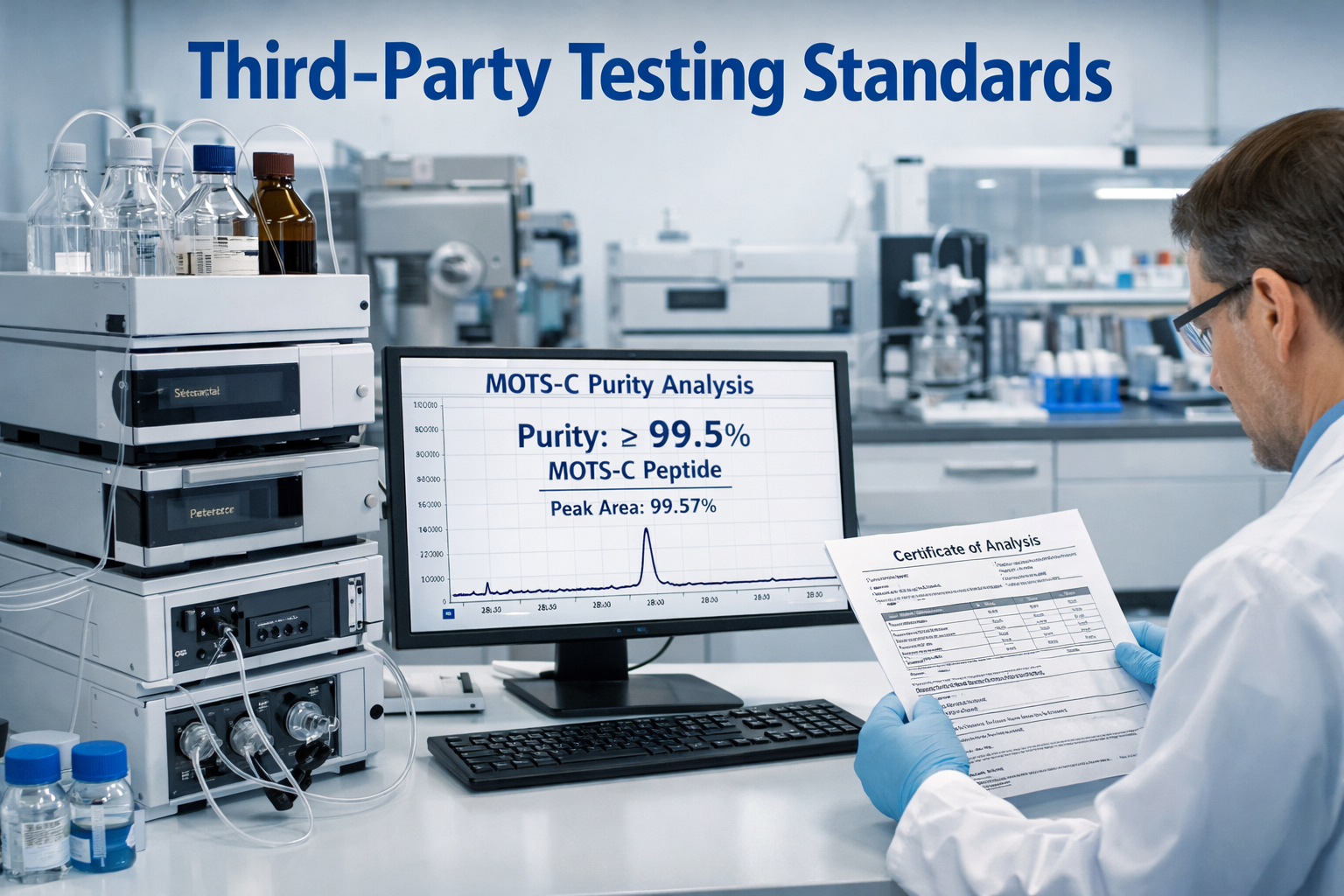
High-Performance Liquid Chromatography (HPLC) serves as the primary method for determining peptide purity. For research-grade third-party tested MOTS-C, the verification standard requires ≥99% purity[1]. This stringent requirement ensures that researchers work with peptide samples containing minimal impurities that could affect experimental outcomes.
Mass Spectrometry Confirmation
Mass spectrometry provides molecular weight verification with a tolerance of ±0.1% theoretical molecular weight[1]. This precise measurement confirms the correct peptide sequence and detects any structural modifications that might compromise research results.
For those seeking lab-tested peptides, understanding these analytical standards helps distinguish between legitimate research-grade products and inferior alternatives. The combination of HPLC and mass spectrometry creates a comprehensive analytical profile that validates both purity and identity.
Contamination Screening Protocols
Endotoxin Testing
Bacterial endotoxins represent a significant concern in peptide research, particularly for studies involving cellular or animal models. Third-party tested MOTS-C must demonstrate endotoxin levels <1.0 EU/mg[1] to ensure research validity and safety.
Heavy Metals Analysis
Heavy metals contamination can interfere with mitochondrial function studies, making this screening particularly relevant for MOTS-C research applications. The acceptable threshold for heavy metals screening is <10 ppm[1].
Amino Acid Sequence Verification
Complete amino acid analysis confirms the correct sequence of the 16-amino acid MOTS-C peptide. This verification step ensures that researchers receive the intended peptide rather than a structurally similar but functionally different compound.
Quality Assurance: Identifying Legitimate Third-Party Tested MOTS-C
Documentation Requirements
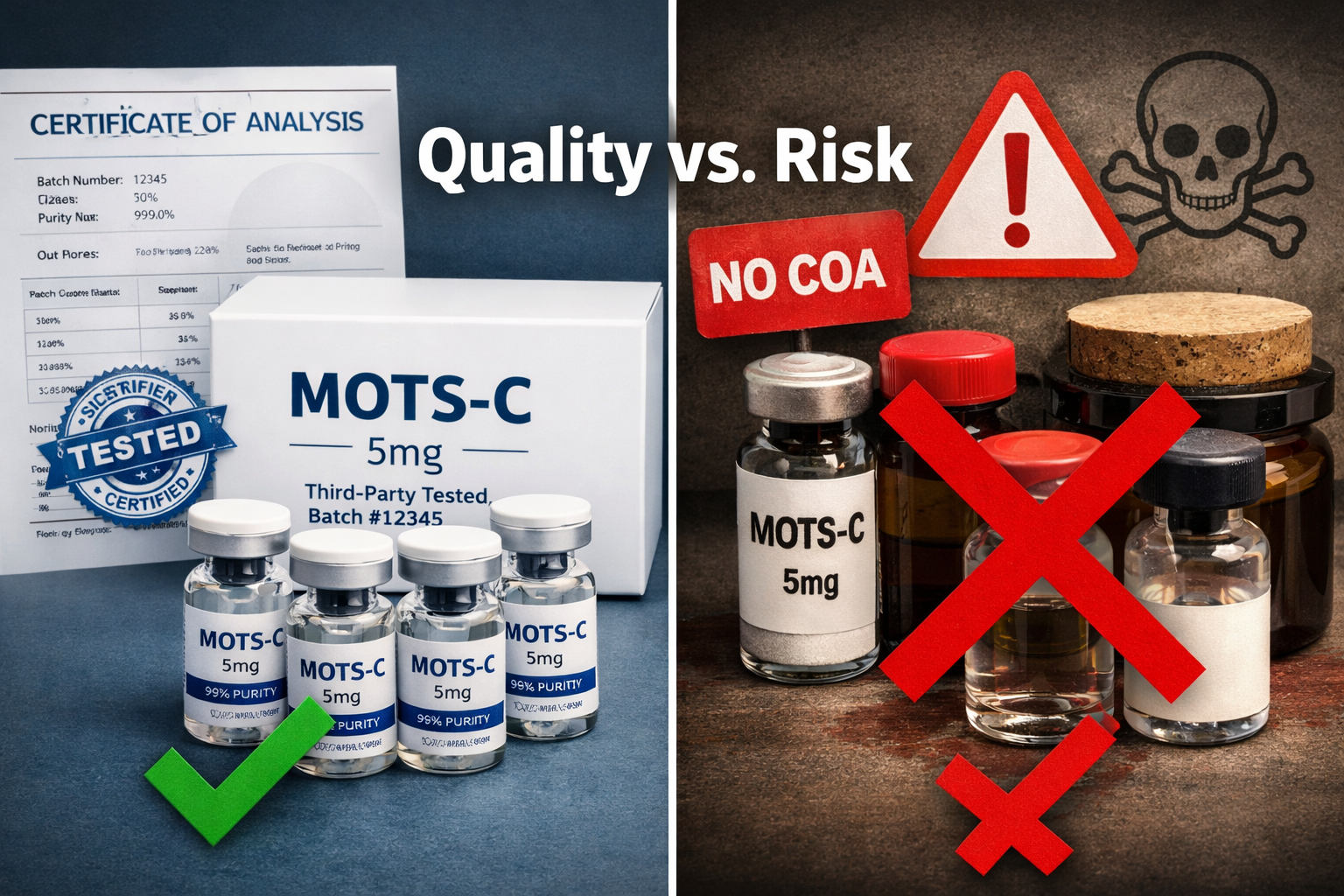
Reputable suppliers of third-party tested MOTS-C provide comprehensive documentation that demonstrates their commitment to quality assurance. This documentation serves as the foundation for research integrity and regulatory compliance.
Certificates of Analysis (CoA)
Every batch of research-grade MOTS-C should include a detailed CoA containing:
- Batch-specific test results for purity, identity, and contamination screening
- Testing methodology descriptions and equipment specifications
- Laboratory accreditation information and analyst signatures
- Storage recommendations and stability data
- Expiration dating based on stability testing programs
Chain of Custody Documentation
Proper chain of custody tracking ensures peptide integrity from synthesis through delivery. This documentation includes temperature monitoring during shipping, handling protocols, and storage condition verification.
Supplier Credentials and Certifications
Regulatory Compliance 🏛️
Leading suppliers maintain multiple certifications that demonstrate their commitment to quality:
- FDA registration for research chemical manufacturing
- GMP certification for good manufacturing practices
- ISO quality management systems for consistent processes
These certifications provide assurance that MOTS-C suppliers follow standardized protocols and maintain appropriate quality control measures.
Laboratory Partnerships
Reputable suppliers work with accredited third-party laboratories that specialize in peptide analysis. These partnerships ensure access to state-of-the-art analytical equipment and experienced analytical chemists who understand the unique challenges of peptide testing.
Red Flags in MOTS-C Sourcing
Missing Documentation ⚠️
Suppliers who cannot provide comprehensive CoAs, batch records, or testing documentation should be avoided. Legitimate research requires verifiable quality data that supports experimental validity.
Unrealistic Pricing
Extremely low prices often indicate compromised quality, inadequate testing, or questionable sourcing practices. High-quality third-party tested MOTS-C requires significant investment in synthesis, purification, and analytical testing.
Vague Testing Claims
Suppliers who make general claims about "high purity" without specific analytical data or testing methodologies lack the transparency required for serious research applications.
Research Applications and Safety Considerations
Current Research Landscape
MOTS-C research continues to expand across multiple domains, with studies investigating its effects on metabolic flexibility, mitochondrial function, and aging processes. The quality of peptide samples directly impacts the reliability and reproducibility of these investigations.
Metabolic Research Applications
Studies examining MOTS-C's role in glucose metabolism, insulin sensitivity, and energy homeostasis require consistent, high-purity peptide samples. Contaminated or degraded samples can produce misleading results that compromise research conclusions.
Mitochondrial Function Studies ⚡
Research investigating MOTS-C's effects on mitochondrial dynamics, oxidative stress, and cellular energy production depends heavily on peptide quality. Third-party testing ensures that observed effects result from the intended peptide rather than impurities or degradation products.
Regulatory Status and Compliance
FDA Position on MOTS-C
MOTS-C remains an experimental peptide not approved by the FDA for human use[4]. The FDA has clarified that MOTS-C is unlawful for use in compounded medications, meaning compounding pharmacies cannot legally manufacture it[4]. This regulatory status makes third-party testing even more critical for researchers working with this compound.
Sports and Competition Restrictions
MOTS-C is prohibited in competitive sports under WADA Section 4[4], highlighting the importance of understanding regulatory restrictions when conducting research that might involve athletic populations.
For researchers exploring innovative peptide delivery systems, understanding these regulatory considerations helps ensure compliance with applicable guidelines and restrictions.
Storage and Handling Protocols
Temperature Control 🌡️
Proper storage conditions are essential for maintaining peptide integrity. Third-party tested MOTS-C typically requires storage at -20°C or lower, with specific recommendations provided in the CoA documentation.
Reconstitution Guidelines
Following proper reconstitution protocols helps preserve peptide stability and bioactivity. Suppliers should provide detailed instructions for reconstitution, including appropriate solvents and concentration recommendations.
Stability Monitoring
Legitimate suppliers conduct stability testing programs that determine appropriate expiration dating and storage conditions. This data helps researchers plan experiments and maintain sample integrity throughout their studies.
Conclusion

The pursuit of reliable research outcomes in MOTS-C studies depends fundamentally on access to high-quality, third-party tested peptides. As the research community continues to investigate this promising mitochondrial peptide, maintaining rigorous quality standards becomes increasingly important for advancing scientific understanding.
Researchers should prioritize suppliers who demonstrate comprehensive testing protocols, provide detailed documentation, and maintain appropriate certifications. The investment in quality-verified MOTS-C pays dividends in research reliability, reproducibility, and scientific integrity.
Next Steps for Researchers
- Evaluate current suppliers against the quality standards outlined in this guide
- Request comprehensive CoAs for all peptide purchases and verify testing methodologies
- Implement proper storage protocols to maintain peptide integrity throughout research projects
- Stay informed about regulatory developments affecting MOTS-C research applications
- Consider collaborating with other researchers to share quality testing costs and improve access to verified peptides
The future of MOTS-C research depends on the collective commitment of the scientific community to maintain the highest quality standards. By prioritizing third-party tested products and supporting suppliers who invest in comprehensive quality assurance, researchers contribute to the advancement of peptide science and the potential therapeutic applications that may emerge from this exciting field of study.
References
[1] The Best Place To Buy Mots C – https://www.puretestedpeptides.com/the-best-place-to-buy-mots-c/
[2] Mots C Peptide – https://www.innerbody.com/mots-c-peptide
[3] Mots C The Mitochondrial Peptide – https://substack.daveasprey.com/p/mots-c-the-mitochondrial-peptide
[4] What Is Mots C Peptide – https://www.usada.org/spirit-of-sport/what-is-mots-c-peptide/
[5] How Does Mots C Improve Metabolism Endurance And Bone Strength – https://www.peptidesciences.com/peptide-research/how-does-mots-c-improve-metabolism-endurance-and-bone-strength
[6] Mots C – https://cosmicpeptides.com/products/mots-c
[7] Mots C – https://limitlesslifenootropics.com/product/mots-c/
Meta Title: Third-Party Tested MOTS-C: Quality Standards Guide 2026
Meta Description: Discover essential quality standards for third-party tested MOTS-C. Learn about purity testing, documentation requirements, and safety protocols for research applications.
{“@context”:”https://schema.org”,”@type”:”Article”,”headline”:”- “third-party tested mots-c””,”description”:”Discover essential quality standards for third-party tested MOTS-C. Learn about purity testing, documentation requirements, and safety protocols for research ap”,”image”:”https://zsxkvszxbhpwnvzxdydv.supabase.co/storage/v1/object/public/generated-images/kie/29b530da-5254-48d7-a2e4-5b928eada767/slot-0-1770266867068.png”,”datePublished”:”2026-02-05T04:45:40.386426+00:00″,”dateModified”:”2026-02-05T04:47:56.971Z”,”author”:{“@type”:”Organization”,”name”:”PTP UPDATED 2.1.26″},”publisher”:{“@type”:”Organization”,”name”:”PTP UPDATED 2.1.26″}}