

MOTS-C Peptide Dosage Calculator: Precision Dosing for Optimal Research Results 🧬
Calculating the precise dosage for MOTS-C peptide research can make the difference between breakthrough results and wasted research opportunities. With the growing interest in mitochondrial peptides among fitness enthusiasts and biohackers in 2026, having access to an accurate MOTS-C peptide dosage calculator has become essential for researchers seeking to optimize their experimental protocols. Understanding proper dosing calculations ensures both safety and efficacy in research applications.
Key Takeaways
- Dosing ranges typically fall between 2-10 mcg per pound of body weight daily for most research protocols[1]
- Starting doses of 5-10 mg are recommended to assess tolerance before increasing[3]
- Body weight, research goals, and tolerance levels are critical factors in dosage calculations
- Professional consultation is essential before implementing any peptide research protocol
- Proper reconstitution and storage directly impact dosing accuracy and peptide stability
Understanding MOTS-C Peptide Fundamentals
MOTS-C (Mitochondrial-derived peptide) represents a cutting-edge area of longevity peptide research that has captured the attention of the biohacking community. This 16-amino acid peptide, encoded by mitochondrial DNA, plays a crucial role in cellular metabolism and energy production.
What Makes MOTS-C Unique
Unlike traditional peptides, MOTS-C originates directly from mitochondrial genetic material, making it particularly relevant for mitochondrial research applications. Research suggests this peptide may influence:
- Metabolic flexibility and glucose regulation
- Cellular energy production efficiency
- Exercise performance and recovery
- Age-related metabolic decline
The growing body of research around MOTS-C has led to increased demand for precise dosing protocols. However, determining the optimal dose requires careful calculation based on multiple variables, which is where a reliable MOTS-C peptide dosage calculator becomes invaluable.
Research Applications and Protocols
Current research protocols for MOTS-C typically involve subcutaneous administration, with dosing frequencies ranging from daily to several times per week. The metabolic flexibility research surrounding this peptide has established preliminary dosing guidelines, though individual responses can vary significantly.
For researchers interested in exploring peptide combinations, MOTS-C is often studied alongside other mitochondrial peptides for potential synergistic effects.
MOTS-C Peptide Dosage Calculator: Essential Components
A comprehensive MOTS-C peptide dosage calculator must account for several critical variables to provide accurate dosing recommendations. Understanding these components helps researchers make informed decisions about their experimental protocols.
Primary Calculation Variables
Body Weight Considerations
The most fundamental factor in any MOTS-C peptide dosage calculator is body weight. Research protocols typically recommend 2-10 mcg per pound of body weight per day[1], though this range can vary based on research objectives and individual tolerance.
Concentration and Reconstitution
Proper peptide reconstitution directly impacts dosing accuracy. Most research-grade MOTS-C peptides come in lyophilized form requiring reconstitution with bacteriostatic water. The concentration achieved after reconstitution determines the injection volume needed for the desired dose.
Frequency and Timing
Research protocols vary in administration frequency:
- Daily dosing: Most common approach for metabolic research
- Every other day: Alternative protocol for extended studies
- Cycling protocols: Periodic administration with rest periods
Advanced Calculator Features
Modern MOTS-C peptide dosage calculators incorporate sophisticated algorithms that account for:
- Peptide purity percentages from quality testing protocols
- Injection volume preferences (typically 0.1-0.5 mL)
- Vial size optimization to minimize waste
- Storage duration calculations for reconstituted peptides
Digital Tools and Applications
Several digital platforms now offer MOTS-C peptide dosage calculator functionality[6]. These tools typically feature:
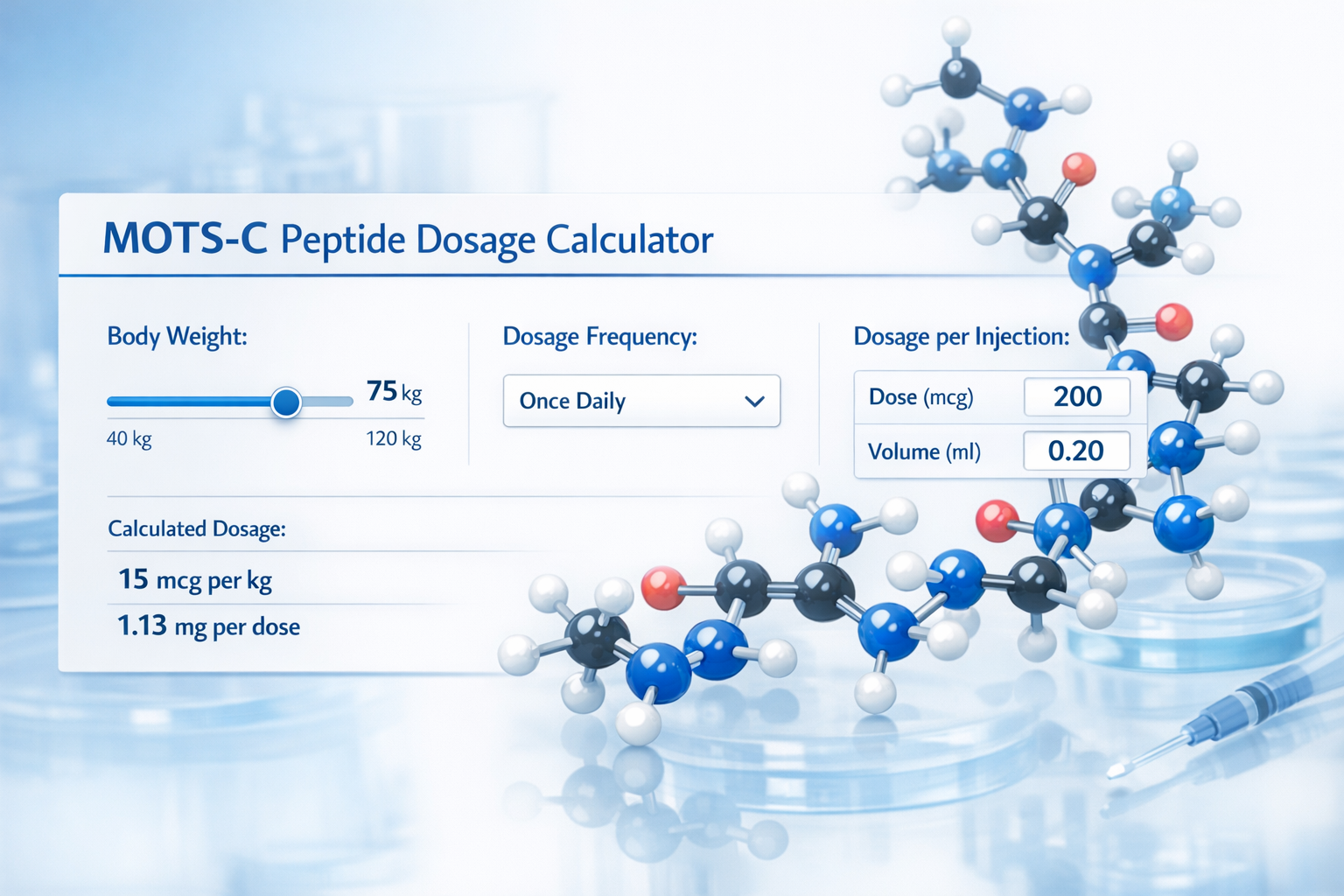
- User-friendly interfaces with dropdown menus and sliders
- Real-time calculations as parameters change
- Safety warnings for doses outside recommended ranges
- Protocol suggestions based on research goals
The availability of mobile applications has made dosage calculations more accessible to researchers, though verification of calculations remains important for research integrity.
Dosage Calculation Methods and Safety Protocols
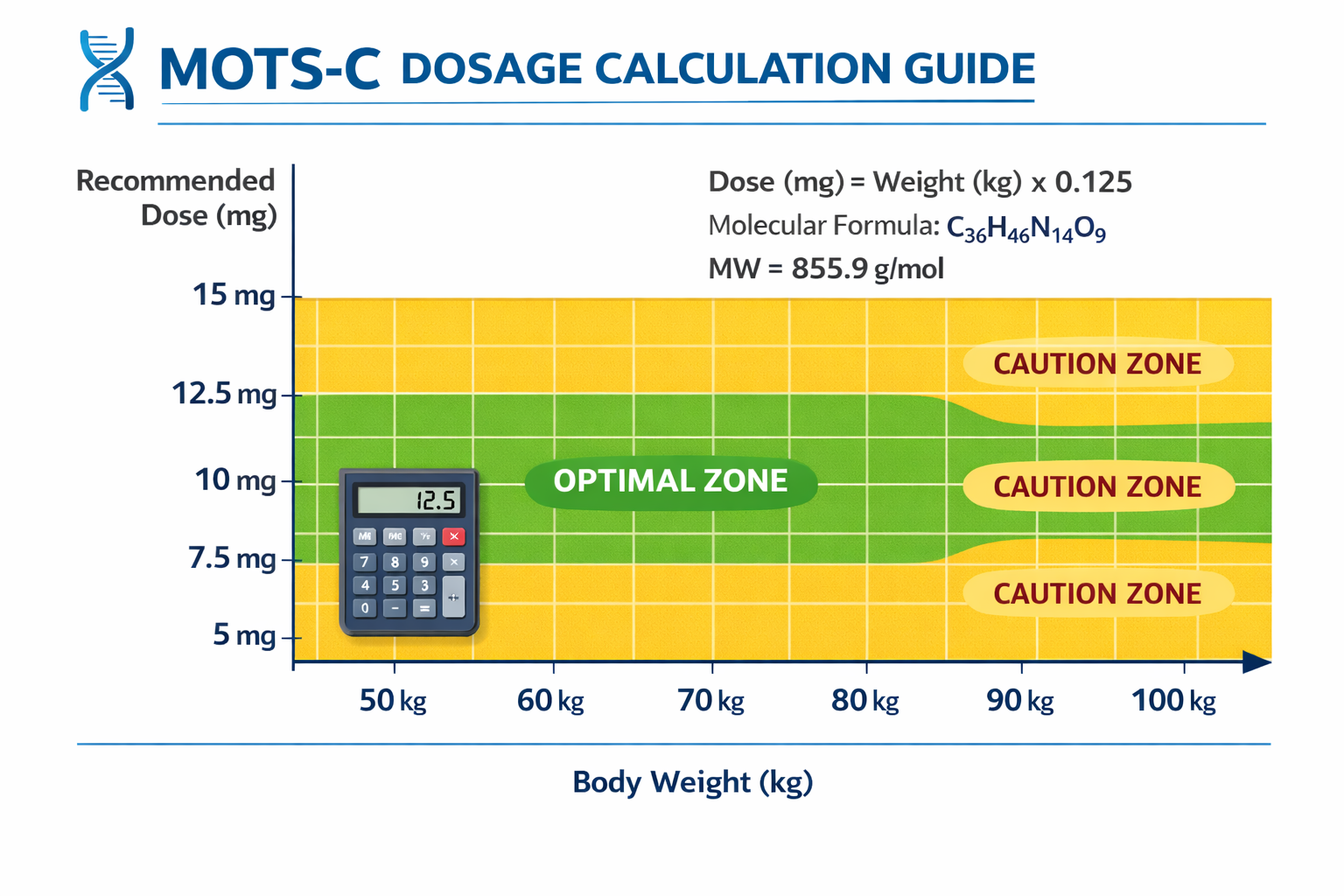
Implementing proper dosage calculation methods requires understanding both the mathematical principles and safety considerations involved in MOTS-C peptide research. Accurate calculations ensure reproducible results while maintaining appropriate safety margins.
Step-by-Step Calculation Process
Basic Dosage Formula
The fundamental calculation for MOTS-C dosing follows this structure:
Desired Dose (mg) = Body Weight (lbs) × Dosing Factor (mcg/lb) ÷ 1000
For example, a 180-pound individual using a conservative 5 mcg/lb dosing factor would calculate:
180 lbs × 5 mcg/lb ÷ 1000 = 0.9 mg (or 900 mcg)
Injection Volume Calculation
Once the desired dose is determined, calculating injection volume requires knowing the reconstituted concentration:
Injection Volume (mL) = Desired Dose (mg) ÷ Concentration (mg/mL)
Reconstitution Calculations
Most research protocols use standard reconstitution ratios. For a 5mg vial reconstituted with 1mL of bacteriostatic water:
- Concentration: 5mg/mL
- Per 0.1mL: 0.5mg (500 mcg)
- Per 0.2mL: 1mg (1000 mcg)
Safety Considerations and Protocols
Starting Dose Recommendations
Research protocols consistently recommend beginning with lower doses to assess tolerance. Most studies suggest starting with 5-10 mg per injection[3], regardless of calculated optimal doses. This conservative approach allows researchers to:
- Monitor for adverse reactions
- Assess individual response patterns
- Gradually optimize dosing based on results
- Establish baseline measurements
Dose Escalation Guidelines
When increasing doses, research protocols typically recommend:
- 25-50% increases at weekly intervals
- Maximum single dose limits of 15-20 mg
- Regular monitoring of relevant biomarkers
- Documentation of all dosing changes and responses
For researchers exploring peptide combinations, additional safety considerations apply when calculating cumulative peptide loads.
Quality Assurance in Dosing
Peptide Purity Impact
The purity of research peptides directly affects dosing calculations. High-purity peptides require different calculations than lower-purity alternatives. A peptide with 98% purity delivers more active compound per milligram than one with 85% purity.
Storage and Stability Considerations
Proper storage maintains peptide integrity and dosing accuracy:
- Lyophilized peptides: Store at -20°C or below
- Reconstituted solutions: Refrigerate and use within 30 days
- Avoid freeze-thaw cycles which can degrade peptide structure
- Use appropriate diluents as specified in protocols
Documentation and Tracking
Maintaining detailed records of dosing calculations and administration helps ensure:
- Reproducible results across research sessions
- Safety monitoring through dose tracking
- Protocol optimization based on documented outcomes
- Compliance with research standards and regulations
Research involving synergistic peptide combinations requires additional documentation to track multiple compounds and their interactions.
Advanced Dosing Strategies and Considerations
As MOTS-C research evolves, advanced dosing strategies have emerged that go beyond basic weight-based calculations. These sophisticated approaches consider individual metabolic factors, research objectives, and optimization protocols that experienced researchers employ for enhanced results.
Personalized Dosing Approaches
Metabolic Status Considerations
Individual metabolic profiles significantly impact optimal MOTS-C dosing. Researchers studying metabolic flexibility have identified several factors that influence dosing requirements:
- Baseline insulin sensitivity affects peptide uptake
- Mitochondrial density influences response magnitude
- Age-related metabolic changes may require dose adjustments
- Exercise status impacts optimal timing and frequency
Research Goal-Specific Protocols
Different research objectives require tailored dosing approaches:
Performance Research: Higher doses (10-15 mg) administered pre-exercise
Longevity Studies: Lower, consistent doses (5-8 mg) for extended periods
Metabolic Research: Moderate doses (8-12 mg) with careful biomarker monitoring
Timing and Frequency Optimization
Circadian Considerations
Recent research suggests MOTS-C effectiveness may vary with circadian rhythms. Optimal administration timing appears to be:
- Morning doses: May enhance daytime metabolic flexibility
- Pre-exercise: Potential performance and recovery benefits
- Fasted states: May amplify metabolic effects
Cycling Protocols
Advanced researchers often employ cycling strategies to prevent tolerance and optimize long-term benefits:
- 5 days on, 2 days off: Weekly cycling approach
- 3 weeks on, 1 week off: Monthly cycling protocol
- Seasonal cycles: Longer-term protocols aligned with training phases
Integration with Other Compounds
Synergistic Combinations
Research into peptide synergies has revealed potential benefits of combining MOTS-C with complementary compounds. Popular research combinations include:
- MOTS-C + Humanin: Enhanced mitochondrial protection
- MOTS-C + SS-31: Improved cellular energy production
- MOTS-C + Growth hormone peptides: Potential metabolic synergies
When calculating doses for combination protocols, researchers must consider:
- Cumulative peptide load on injection sites
- Potential interactions affecting individual compound effectiveness
- Timing considerations for optimal absorption and activity
- Safety margins for combined protocols
For researchers interested in exploring these combinations, comprehensive peptide blends offer standardized ratios and dosing guidelines.
Technology and Tools for Accurate Calculations
The landscape of peptide dosing calculations has been revolutionized by technological advances, making precise MOTS-C peptide dosage calculator tools more accessible and accurate than ever before. These digital solutions address the complexity of multi-variable calculations while reducing human error.
Digital Calculator Platforms
Web-Based Solutions
Several platforms now offer sophisticated MOTS-C peptide dosage calculator functionality[2][3]. These tools typically feature:
- Interactive interfaces with real-time calculation updates
- Multiple dosing protocol options for different research goals
- Safety warnings for doses outside established ranges
- Conversion utilities for different measurement units
Mobile Applications
Dedicated peptide calculator apps[6] have gained popularity among researchers for their convenience and offline functionality. Key features include:
- Dose tracking capabilities for protocol adherence
- Reminder systems for administration timing
- Data export options for research documentation
- Multi-peptide support for combination protocols
Advanced Calculation Features
Purity Adjustment Algorithms
Modern calculators incorporate peptide purity data to provide more accurate dosing recommendations. When working with tested peptides, these tools automatically adjust calculations based on:
- Certificate of analysis data from third-party testing
- Batch-specific purity percentages
- Moisture content considerations
- Salt form corrections for different peptide preparations
Reconstitution Optimization
Advanced tools help optimize reconstitution protocols by calculating:
- Optimal diluent volumes for desired concentrations
- Injection volume minimization for comfort and accuracy
- Vial utilization efficiency to reduce waste
- Storage timeline calculations for reconstituted solutions
Integration with Research Protocols
Protocol Template Libraries
Many calculator platforms now include pre-configured templates based on published research protocols. These templates incorporate:
- Established dosing ranges from peer-reviewed studies
- Safety guidelines from research institutions
- Timing recommendations for optimal administration
- Monitoring suggestions for tracking research outcomes
Data Management Capabilities
Advanced platforms offer comprehensive data management features:
- Calculation history for protocol consistency
- Results tracking across research periods
- Export capabilities for analysis software
- Backup and synchronization across devices
For researchers managing multiple compounds, platforms supporting diverse peptide portfolios provide centralized calculation and tracking capabilities.
Future Developments in MOTS-C Dosing

The field of MOTS-C research continues to evolve rapidly, with emerging developments promising to refine dosing strategies and improve research outcomes. Understanding these trends helps researchers prepare for next-generation protocols and technologies.
Personalized Medicine Integration
Genetic Factors
Emerging research suggests genetic variations may influence optimal MOTS-C dosing. Future MOTS-C peptide dosage calculator tools may incorporate:
- Mitochondrial DNA polymorphisms affecting peptide sensitivity
- Metabolic enzyme variants influencing peptide metabolism
- Receptor expression profiles determining response magnitude
- Age-related genetic changes requiring dose modifications
Biomarker-Guided Dosing
Advanced protocols are beginning to incorporate real-time biomarker feedback for dose optimization:
- Metabolic markers for immediate response assessment
- Inflammatory indicators for safety monitoring
- Performance metrics for efficacy evaluation
- Longevity biomarkers for long-term protocol adjustment
Technology Advancements
AI-Powered Calculations
Machine learning algorithms are being developed to enhance dosing accuracy by:
- Analyzing response patterns across diverse populations
- Predicting optimal doses based on individual characteristics
- Identifying safety signals before adverse events occur
- Optimizing timing protocols for maximum effectiveness
Wearable Device Integration
Future calculator systems may integrate with wearable technology to provide:
- Real-time metabolic monitoring for dose timing
- Activity-based adjustments for exercise protocols
- Sleep quality considerations for administration timing
- Stress level factors affecting peptide effectiveness
Regulatory Considerations
Standardization Efforts
As MOTS-C research matures, standardization initiatives may establish:
- Universal dosing guidelines based on accumulated research
- Quality standards for research-grade peptides
- Safety protocols for various research applications
- Documentation requirements for research compliance
Research Framework Evolution
The regulatory landscape for peptide research continues to develop, potentially affecting:
- Dosing calculation requirements for research protocols
- Safety monitoring standards for peptide administration
- Quality assurance protocols for research-grade compounds
- Documentation standards for research activities
Researchers should stay informed about regulatory developments while focusing on current best practices for high-quality peptide research.
Conclusion
Accurate MOTS-C peptide dosage calculation represents a critical foundation for successful research outcomes in 2026. The evolution from simple weight-based formulas to sophisticated, multi-variable calculators reflects the growing sophistication of peptide research protocols. Whether using basic mathematical calculations or advanced digital tools, researchers must prioritize accuracy, safety, and documentation in their dosing strategies.
The key to effective MOTS-C research lies in understanding that dosage calculation extends far beyond simple arithmetic. Factors including peptide purity, individual metabolic status, research objectives, and safety considerations all contribute to optimal dosing decisions. Modern MOTS-C peptide dosage calculator tools address these complexities while maintaining the flexibility needed for diverse research applications.
Actionable Next Steps
- Evaluate your current calculation methods and consider upgrading to digital tools for improved accuracy
- Establish baseline measurements before implementing any new dosing protocol
- Start with conservative doses and gradually optimize based on documented results
- Implement comprehensive documentation systems for tracking doses and outcomes
- Stay informed about emerging research and regulatory developments in peptide dosing
For researchers ready to begin their MOTS-C investigations, selecting high-quality, tested peptides provides the foundation for reliable, reproducible research outcomes. Remember that proper dosing calculation is just one component of successful peptide research – quality compounds, appropriate protocols, and careful monitoring all contribute to meaningful results.
The future of MOTS-C research holds tremendous promise, with advancing calculation tools and deeper understanding of optimal dosing strategies continuing to enhance research capabilities. By mastering current dosing calculation methods while staying prepared for emerging developments, researchers can maximize their potential for breakthrough discoveries in mitochondrial peptide research.