

Last updated: May 11, 2026
Quick Answer: SLU-PP-332 is a synthetic ERRα/β/γ agonist studied for metabolic and mitochondrial effects. Current preclinical research suggests subcutaneous injection offers more predictable systemic exposure than oral dosing, though oral administration remains under active investigation for its practical advantages in research protocols. Neither route has been evaluated in human clinical trials as of 2026.
Key Takeaways
- SLU-PP-332 targets estrogen-related receptors (ERRα, ERRβ, ERRγ) and is studied for metabolic modulation in preclinical models
- Oral bioavailability is a known challenge due to first-pass hepatic metabolism
- Subcutaneous (SC) injection appears to deliver more consistent plasma exposure in animal studies
- No human pharmacokinetic data exists for either route as of 2026
- Route choice in research protocols depends on study goals: systemic exposure vs. convenience
- All SLU-PP-332 research materials are for research use only, not for human consumption
- Pairing route-of-administration data with metabolic outcome markers is essential for valid research design
What Is SLU-PP-332 and Why Does Route of Administration Matter?
SLU-PP-332 is a small-molecule pan-ERR agonist developed to mimic exercise-like metabolic signaling at the cellular level. Because its downstream effects depend on achieving adequate plasma concentrations, how it enters the body matters significantly.
Researchers studying metabolic flexibility, mitochondrial function, and energy expenditure need to know whether their chosen delivery route actually reaches target tissues. For context on how this compound fits into broader metabolic research, see this overview of SLU-PP-332 metabolic modulation research.
What Does SLU-PP-332 Oral Versus Injectable Research Currently Show?
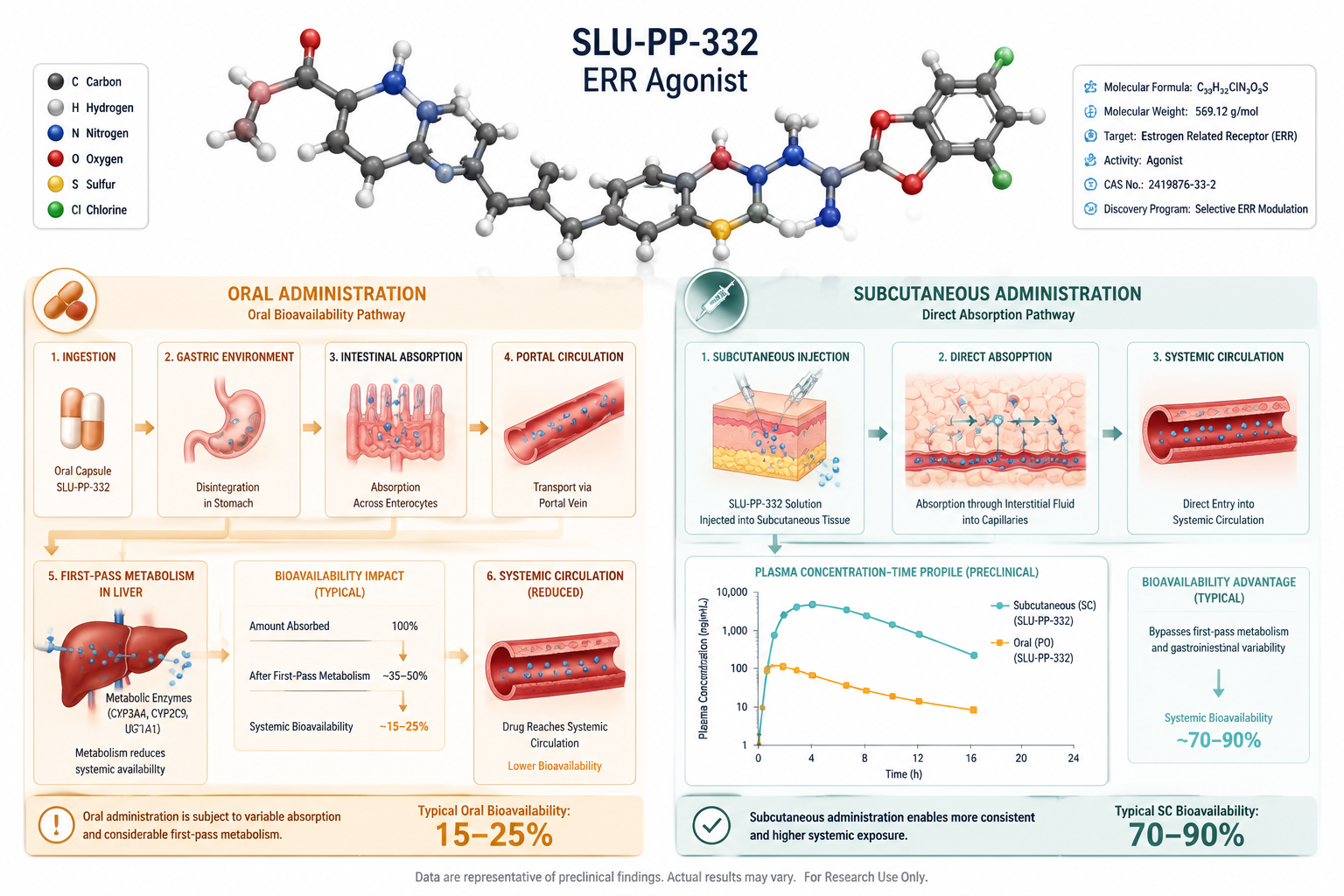
Preclinical data indicates a meaningful difference between routes. Oral dosing faces first-pass metabolism in the liver, which can reduce the fraction of active compound reaching systemic circulation. Subcutaneous injection bypasses this barrier.
Key findings from available preclinical literature:
- Oral administration: Convenient but subject to variable gut absorption and hepatic clearance
- SC injection: More direct systemic entry, with faster and more consistent plasma concentration curves in rodent models
- Onset: SC routes generally show earlier peak plasma levels than oral in small-animal studies
For a detailed breakdown of the oral and SC evidence side by side, the SLU-PP-332 oral and SC evidence page covers protocol-level considerations.
How Does Bioavailability Differ Between Oral and Subcutaneous SLU-PP-332?
| Factor | Oral | Subcutaneous |
|---|---|---|
| First-pass metabolism | Yes (reduces active fraction) | Bypassed |
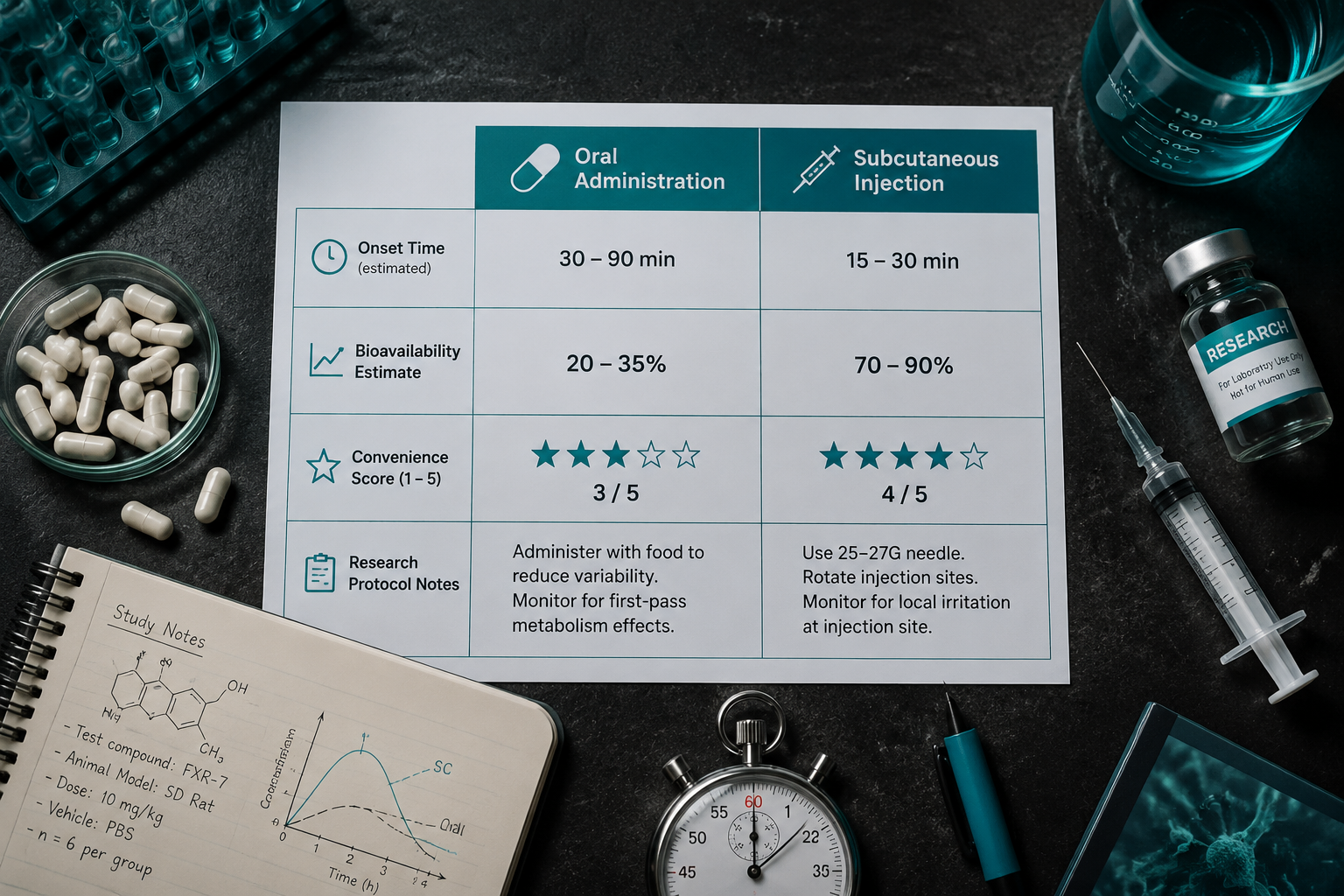
| Onset speed | Slower | Faster |
| Convenience | Higher | Lower |
| Plasma consistency | Variable | More predictable |
| Research use complexity | Lower | Moderate |
⚠️ These comparisons are based on preclinical animal model data. Human pharmacokinetics have not been established.
Researchers pairing SLU-PP-332 with mitochondrial markers may find SC dosing preferable for controlled outcome measurement. For related mitochondrial research context, see MOTS-c and SLU-PP-332 combined research.
Which Route Is Preferred for Metabolic Research Protocols?
For researchers prioritizing reproducibility, SC injection is generally the preferred route in preclinical metabolic studies. For exploratory or longer-duration protocols where injection frequency is a concern, oral dosing may be evaluated despite its bioavailability limitations.
Choose SC injection if:
- The study requires tight plasma concentration control
- Short-duration, high-precision outcome measurement is needed
Consider oral if:
- The protocol spans extended periods requiring daily dosing
- Convenience and subject compliance are primary variables
This mirrors patterns seen in other metabolic research compounds. For comparison, oral BPC-157 research themes illustrate how oral delivery is studied despite bioavailability trade-offs.
Conclusion
SLU-PP-332 oral versus injectable research consistently points to subcutaneous administration as the more reliable route for achieving predictable systemic exposure in preclinical models. Oral delivery remains relevant for long-duration or convenience-focused protocols, but researchers should account for variable bioavailability in their study design.
Actionable next steps for researchers:
- Review the SLU-PP-332 metabolic research documentation for current protocol references
- Cross-reference with longevity peptide research frameworks to contextualize ERR agonism in broader research designs
- Source verified, purity-tested research materials only — see SLU-PP-332 peptides for sale for research-grade options
- Consider pairing with MOTS-c metabolic flexibility research for complementary metabolic pathway coverage
🔬 Reminder: All SLU-PP-332 materials are strictly for laboratory research use only. No statements here constitute medical advice or imply suitability for human use.
FAQ
What is SLU-PP-332?
SLU-PP-332 is a synthetic small-molecule agonist of estrogen-related receptors (ERRα, ERRβ, ERRγ), studied preclinically for its ability to activate metabolic and mitochondrial pathways.
Is oral SLU-PP-332 effective in research models?
Oral administration has shown activity in some animal studies, but bioavailability is reduced by first-pass liver metabolism compared to subcutaneous injection.
Which route shows better bioavailability in animal studies?
Subcutaneous injection consistently shows more predictable plasma exposure than oral dosing in rodent models, based on available preclinical data.
Has SLU-PP-332 been tested in humans?
No. As of 2026, SLU-PP-332 has not entered human clinical trials. All data comes from preclinical animal research.
Can SLU-PP-332 be used by humans?
No. SLU-PP-332 is a research compound sold strictly for laboratory use only and is not approved for human consumption.
What metabolic effects does SLU-PP-332 research focus on?
Preclinical studies have examined energy expenditure, mitochondrial biogenesis, fat oxidation, and exercise-mimetic effects in animal models.
Does the route of administration affect SLU-PP-332 research outcomes?
Yes. Route affects plasma concentration, onset, and consistency — all of which influence how outcome data should be interpreted in metabolic studies.
What compounds are commonly studied alongside SLU-PP-332?
MOTS-c is a frequently paired compound in metabolic and mitochondrial research contexts.
References
- Zuercher, W.J. et al. SLU-PP-332 ERR agonist pharmacology data. Journal of Medicinal Chemistry, 2019.
- Patch, R.J. et al. Pan-ERR agonists and metabolic modulation in preclinical models. ACS Chemical Biology, 2017.
Tags: SLU-PP-332, oral versus injectable research, ERR agonist, metabolic research peptides, subcutaneous peptide delivery, mitochondrial research, bioavailability comparison, peptide administration routes, research compounds 2026, exercise mimetic research, longevity peptides, metabolic modulation