

Roughly 7 out of 10 adults who explore peptide therapy do so without fully understanding the potential downsides — a gap that can turn a promising research tool into an unnecessary health hazard. As interest in peptide-based protocols grows rapidly in 2026, understanding peptide therapy side effects, safety, and risks is no longer optional. It is essential for anyone considering these compounds.
Key Takeaways
- Peptide therapy side effects range from mild injection-site reactions to more serious hormonal disruptions depending on the compound used.
- Purity and sourcing quality are among the strongest predictors of adverse outcomes in peptide research.
- Certain peptides carry compound-specific risks that require careful protocol design.
- Combining multiple peptides without proper guidance significantly increases risk exposure.
- Regulatory status varies widely; many peptides are research-use compounds, not approved therapeutics.

Understanding Peptide Therapy Side Effects, Safety, and Risks
Peptides are short chains of amino acids that signal specific biological processes. Their targeted nature is part of their appeal — but that same specificity means side effects can be equally targeted and sometimes unexpected.
Common Side Effects Across Peptide Classes
Most reported adverse effects fall into predictable categories:
| Side Effect Category | Examples |
|---|---|
| Injection-site reactions | Redness, swelling, bruising, itching |
| Hormonal fluctuations | Water retention, cortisol shifts, appetite changes |
| Neurological effects | Headache, fatigue, mood changes |
| Gastrointestinal issues | Nausea, bloating (especially with oral forms) |
| Immune responses | Flushing, histamine-type reactions |
Growth hormone-releasing peptides such as those in the Ipamorelin family are generally considered well-tolerated, though some users report temporary water retention and mild fatigue. For a closer look at one specific compound, the Tesamorelin side effects overview covers documented reactions in detail.
Peptides with nootropic or anxiolytic profiles, such as Selank, present a different risk profile. Reviewing Selank side effects before use helps set realistic expectations around mood and cognition-related responses.
"The compound is only as safe as the protocol surrounding it."
Compound-Specific Risks Worth Noting
Some peptides carry more nuanced concerns:
- Tesamorelin may affect glucose metabolism and insulin sensitivity over extended use.
- PT-141 (Bremelanotide) can cause transient increases in blood pressure and nausea. See the PT-141 research context and quality controls for documented considerations.
- Mitochondrial peptides like SS-31 are still early in the research pipeline. The SS-31 research peptide considerations page outlines what is currently understood about safety parameters.
- Combining compounds — for example, Tesamorelin with CJC-1295 and Ipamorelin — introduces interaction variables that single-compound protocols do not.
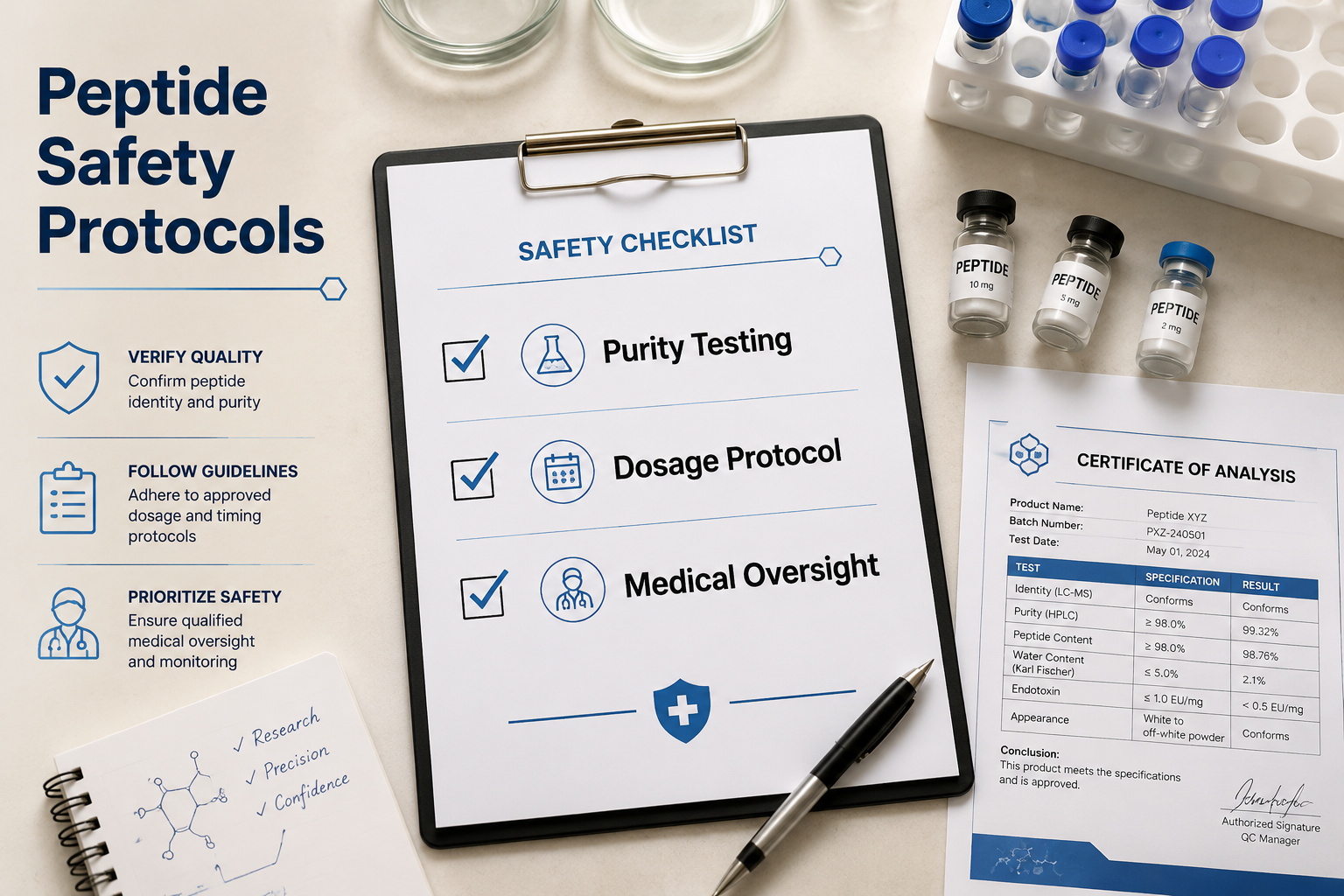
Safety Protocols and Risk Reduction for Peptide Therapy
Peptide therapy side effects, safety, and risks are not inevitable — they are largely manageable with the right precautions.
Purity Is the Foundation of Safety
Impure or poorly manufactured peptides introduce contaminants that cause reactions entirely unrelated to the peptide itself. Peptide purity testing is a non-negotiable step before any research protocol begins. Third-party certificates of analysis (COAs) from accredited labs provide the baseline assurance needed.
Key Safety Practices
- Start with the lowest effective dose and titrate slowly.
- Use sterile reconstitution and injection techniques.
- Source only from suppliers with documented lab-tested peptides.
- Monitor biomarkers relevant to the peptide's mechanism.
- Avoid stacking multiple peptides without a structured protocol.
For a broader foundation, the ultimate guide to peptide therapy benefits, uses, and what to expect provides essential context before diving into any specific compound.
Conclusion
Peptide therapy side effects, safety, and risks are real, manageable, and highly dependent on compound choice, purity, dosing, and protocol design. The most important action anyone can take is to prioritize sourcing from verified, tested suppliers, start conservatively, and treat each peptide as the research compound it is. Before beginning any peptide protocol, review compound-specific safety data, confirm purity documentation, and consult a qualified healthcare professional. Informed use is safe use.
Tags: peptide therapy, peptide side effects, peptide safety, peptide risks, research peptides, peptide dosing, peptide purity, growth hormone peptides, Tesamorelin side effects, Selank side effects, peptide protocols, lab tested peptides