

A naturally occurring tripeptide found in human plasma, GHK-Cu (glycyl-L-histidyl-L-lysine copper complex) drops significantly with age — levels fall from roughly 200 ng/mL at age 20 to under 80 ng/mL by age 60. That steep decline tracks closely with the loss of skin firmness, wound-healing capacity, and hair density that many people experience as they get older. Researchers studying GHK-Cu for skin rejuvenation and hair growth have spent decades trying to understand why this peptide matters so much — and what happens when it is reintroduced.
Key Takeaways
- GHK-Cu is a copper-binding tripeptide that declines sharply with age, correlating with reduced skin and hair health.
- Research suggests GHK-Cu supports collagen and elastin synthesis, antioxidant defense, and extracellular matrix remodeling.
- Hair follicle studies indicate GHK-Cu may stimulate follicle size and prolong the anagen (growth) phase.
- GHK-Cu is studied both as a topical ingredient and as a research peptide in injectable formats.
- Purity and sourcing quality are critical factors when evaluating GHK-Cu for research purposes.
How GHK-Cu Supports Skin Rejuvenation
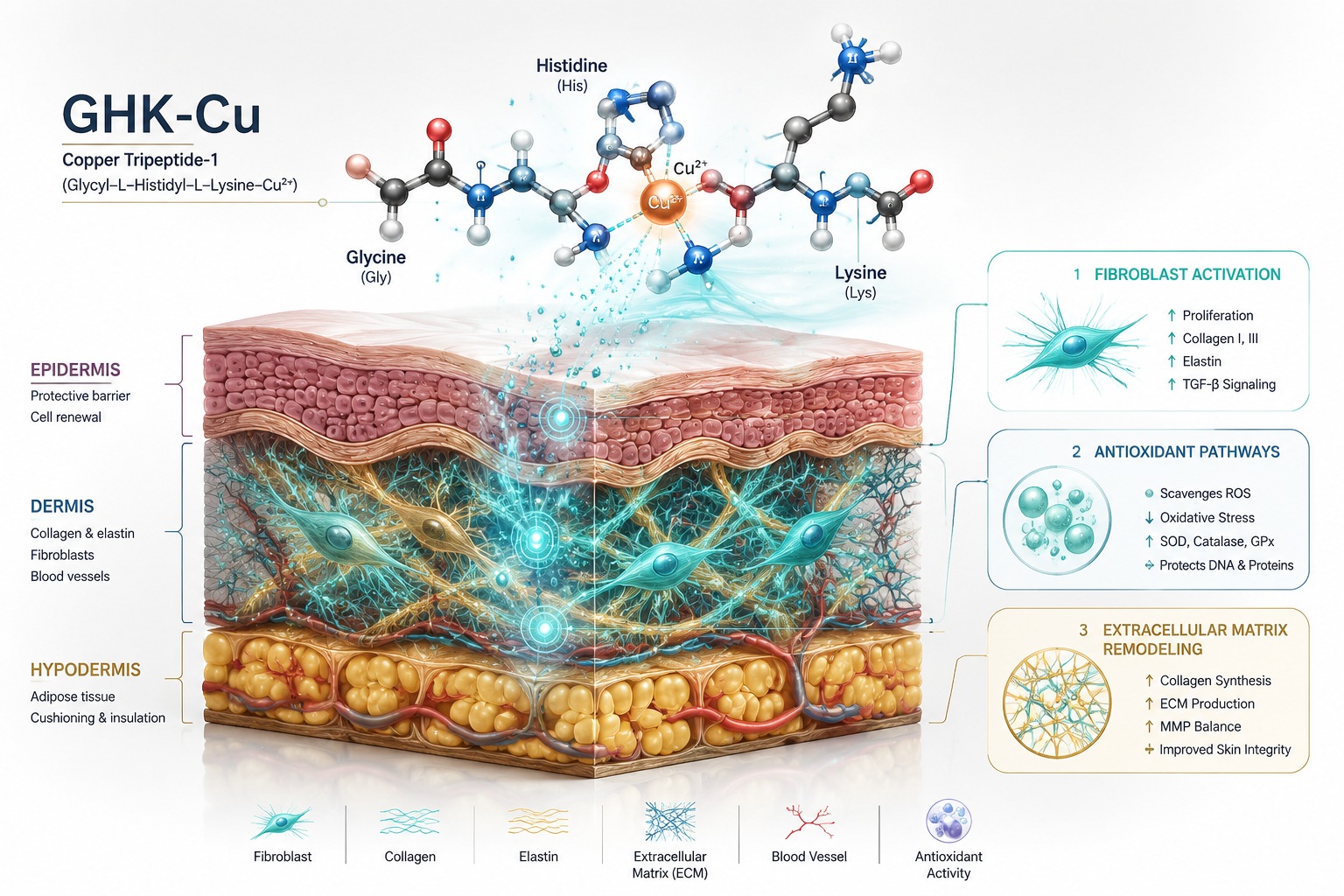
Understanding skin matrix biology is essential context for appreciating what GHK-Cu does at the cellular level. The peptide works through several interconnected pathways:
Collagen and Elastin Stimulation
GHK-Cu activates fibroblasts — the cells responsible for producing structural proteins. Research models show increased synthesis of collagen types I and III, as well as elastin, leading to improved skin architecture.
Antioxidant Defense
The copper component of GHK-Cu supports superoxide dismutase activity, helping neutralize free radicals that accelerate tissue aging.
Extracellular Matrix Remodeling
GHK-Cu influences matrix metalloproteinases (MMPs), enzymes that break down damaged proteins while simultaneously promoting the production of new, healthy matrix components. For a deeper look at this process, the GHK-Cu extracellular matrix research overview provides detailed mechanistic context.
| Biological Action | Observed Effect in Research Models |
|---|---|
| Fibroblast activation | Increased collagen I and III output |
| MMP modulation | Removal of damaged matrix proteins |
| Antioxidant support | Reduced oxidative stress markers |
| Anti-inflammatory signaling | Decreased pro-inflammatory cytokines |
"GHK-Cu does not act through a single pathway — it appears to reset multiple aging-related gene expression patterns simultaneously."
This broad activity profile is part of why GHK-Cu for skin rejuvenation and hair growth has attracted sustained scientific interest. For broader context on how peptides interact with skin biology, the guide on peptides in skincare science is a useful companion resource.
GHK-Cu for Hair Growth: Follicle-Level Mechanisms
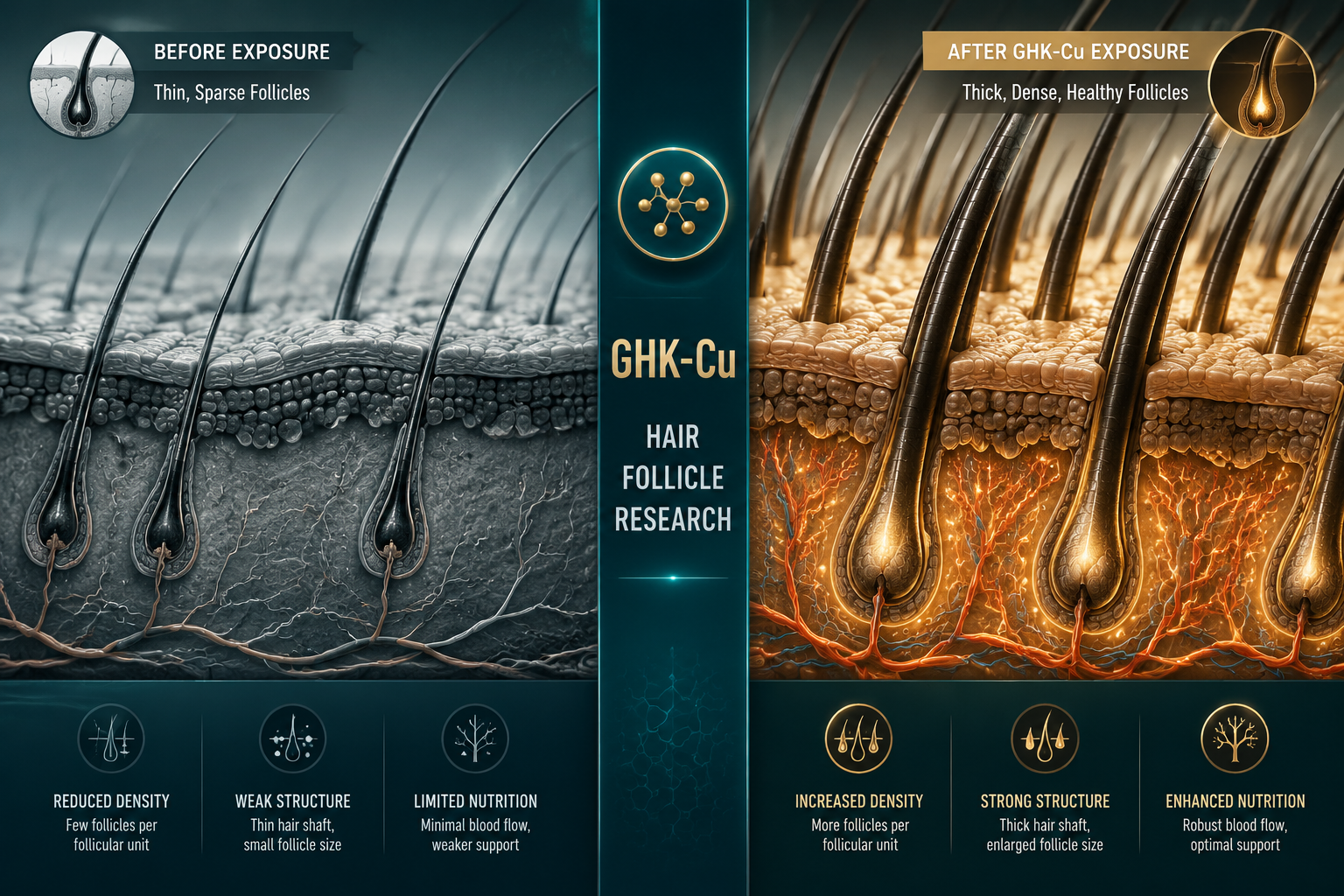
The same regenerative properties that benefit skin tissue also appear relevant to scalp and follicle health. Research on GHK-Cu for skin rejuvenation and hair growth has identified several follicle-specific actions:
- Follicle enlargement: Preclinical studies report measurable increases in follicle size following GHK-Cu exposure.
- Anagen phase extension: GHK-Cu may prolong the active growth phase of the hair cycle, reducing premature entry into the resting (telogen) phase.
- Vascular support: By promoting angiogenesis, GHK-Cu may improve nutrient delivery to the follicle base.
- Scalp inflammation reduction: Chronic low-grade scalp inflammation is a recognized contributor to follicle miniaturization; GHK-Cu's anti-inflammatory properties may address this factor.
Those exploring peptide-based approaches to aging and tissue health may also find value in reviewing longevity-focused peptide research and the aging support product category for additional research context.
For researchers interested in GHK-Cu specifically, GHK-Cu peptides for research purposes are available with documented purity standards.
Conclusion
GHK-Cu represents one of the most well-researched peptides in the context of tissue regeneration. Its dual relevance to both skin and hair biology — operating through collagen synthesis, antioxidant defense, MMP modulation, and follicle stimulation — makes it a compelling subject for ongoing research in 2026.
Actionable next steps for researchers:
- Review peer-reviewed mechanistic studies on GHK-Cu before designing protocols.
- Prioritize sourcing from suppliers with verifiable purity documentation and third-party testing.
- Explore how GHK-Cu may complement other research peptides by consulting a comprehensive peptide catalog overview.
- Consider the broader glow peptide blend research for formulation context.
Tags: GHK-Cu, copper peptides, skin rejuvenation, hair growth peptides, collagen synthesis, peptide research, extracellular matrix, anti-aging peptides, fibroblast activation, hair follicle research, longevity peptides, GHK-Cu benefits