

By age 45, most adults report measurable declines in memory recall and mental processing speed. This biological reality has pushed researchers to explore peptides for cognitive enhancement and brain health as a promising frontier in neuroscience. Unlike broad-spectrum supplements, peptides are precise short-chain amino acids that interact with specific biological pathways — making them a compelling subject for brain-focused research.
Key Takeaways
- Peptides are short amino acid chains that may support brain function through targeted biological mechanisms.
- Several peptides, including Selank and BPC-157, are actively studied for their potential neuroprotective and anxiolytic properties.
- Purity and sourcing quality are critical factors when evaluating peptides for research purposes.
- Delivery method — nasal spray, injectable, or oral — significantly affects how peptides interact with brain tissue.
- Research in this area is ongoing; no peptide is currently approved as a cognitive drug by major regulatory bodies.
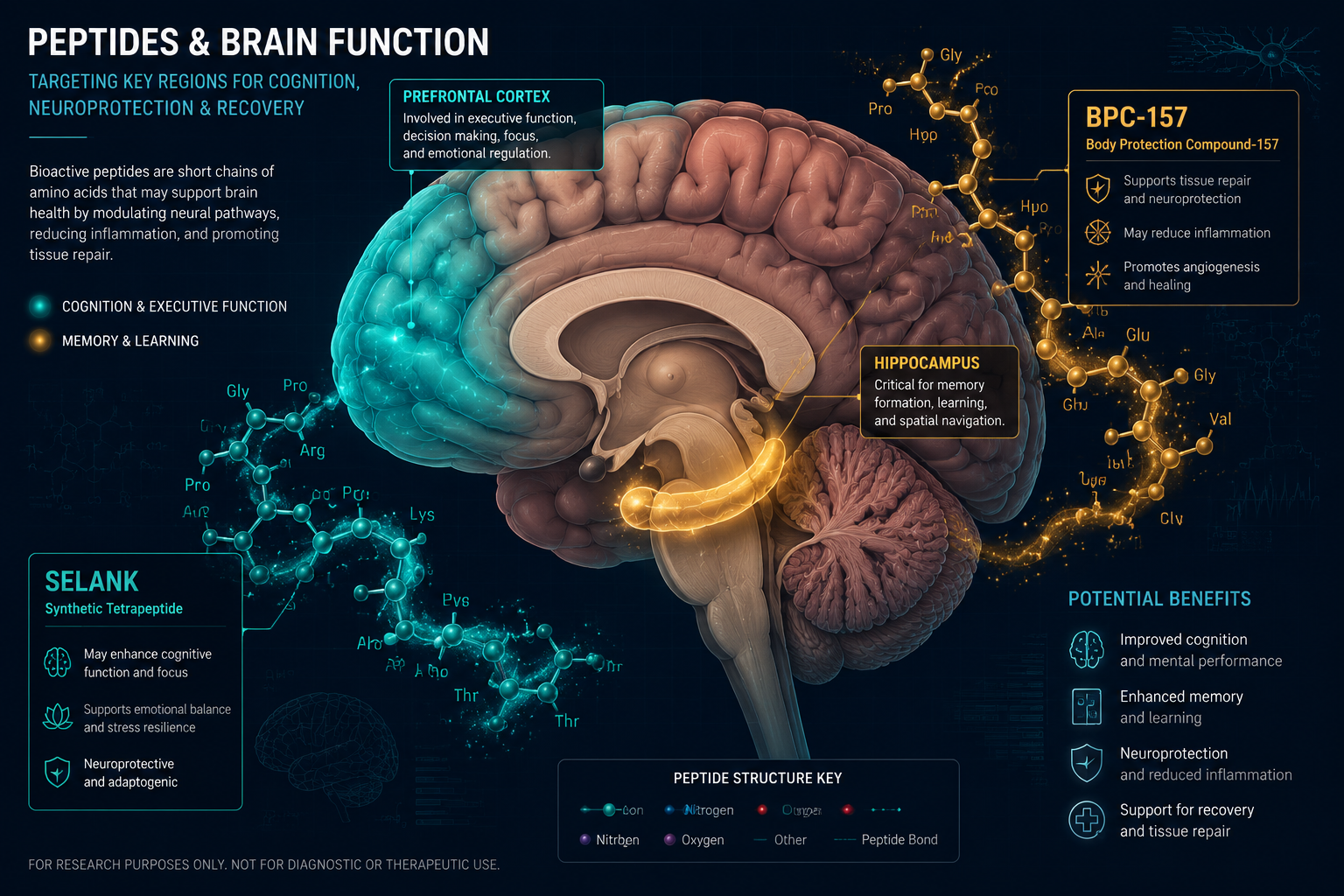
How Peptides Interact With the Brain
The brain is highly selective about what it allows through the blood-brain barrier (BBB). Peptides that support cognitive function typically work by crossing or influencing this barrier, then binding to receptors that regulate neuroplasticity, inflammation, or neurotransmitter activity.
Key mechanisms under investigation include:
| Mechanism | Potential Cognitive Effect |
|---|---|
| BDNF (Brain-Derived Neurotrophic Factor) upregulation | Supports memory formation and learning |
| Anti-inflammatory pathways | May reduce neuroinflammation linked to cognitive decline |
| Anxiolytic activity | Reduces stress signals that impair focus |
| Mitochondrial support | Sustains neuronal energy production |
Selank is one of the most studied peptides in this category. Originally developed in Russia, Selank is a synthetic analog of the immune peptide tuftsin and has been researched for its potential to modulate anxiety and improve cognitive clarity without sedation.
"Peptides offer a level of biological specificity that broad nootropics simply cannot match — their targeted action on receptor pathways makes them uniquely valuable in brain health research."
Another area of active interest involves nasal spray peptide delivery systems, which allow compounds to bypass the digestive system and reach brain tissue more directly through the olfactory pathway.
Peptides for Cognitive Enhancement and Brain Health: Key Compounds Researchers Are Studying
Several peptides have emerged as leading candidates in cognitive research. Understanding what each one does — and what it does not yet prove — is essential for responsible evaluation.

BPC-157 has attracted significant attention beyond its well-known gut-healing associations. Researchers are examining its potential role in dopamine and serotonin system modulation, which directly affects mood, motivation, and focus. Oral and nasal delivery formats are both being explored, as detailed in research on BPC-157 nasal spray and capsule evidence.
MOTS-c, a mitochondrial-derived peptide, is being studied for its role in cellular energy regulation. Since neurons are among the most energy-demanding cells in the body, MOTS-c research has natural implications for brain endurance and age-related cognitive decline.
For those tracking the broader landscape, the latest peptide research updates offer a regularly refreshed view of emerging findings across multiple peptide classes.
Quality and purity cannot be overstated. Contaminated or improperly synthesized peptides produce unreliable results and potential harm. Reviewing peptide purity testing standards is a foundational step before any research application.
For researchers exploring longevity-adjacent brain health topics, the longevity peptide research overview provides useful context on how cognitive and systemic aging intersect.
Conclusion
Peptides for cognitive enhancement and brain health represent one of the most scientifically active areas of peptide research in 2026. Compounds like Selank, BPC-157, and MOTS-c each offer distinct mechanisms worth studying — from anxiety modulation to mitochondrial energy support. The next steps for any serious researcher are clear: prioritize verified purity, understand delivery method differences, and stay current with emerging literature. Begin by reviewing available research-grade peptides and cross-referencing purity documentation before designing any experimental protocol.
Tags: peptides for cognitive enhancement, brain health peptides, Selank peptide, BPC-157 brain research, MOTS-c peptide, nootropic peptides, neuroprotective peptides, peptide purity, nasal spray peptides, cognitive decline research, peptide delivery systems, longevity peptides