

Roughly 70% of the immune system is housed in the gut — yet most immune-support conversations focus on vitamins and minerals, overlooking a rapidly growing class of biological compounds. Peptides for immune system support have moved from niche research interest to a central topic in immunology and longevity science, with preclinical data pointing to targeted mechanisms that broader supplements simply cannot replicate.
Key Takeaways
- Peptides are short chains of amino acids that can interact directly with immune signaling pathways.
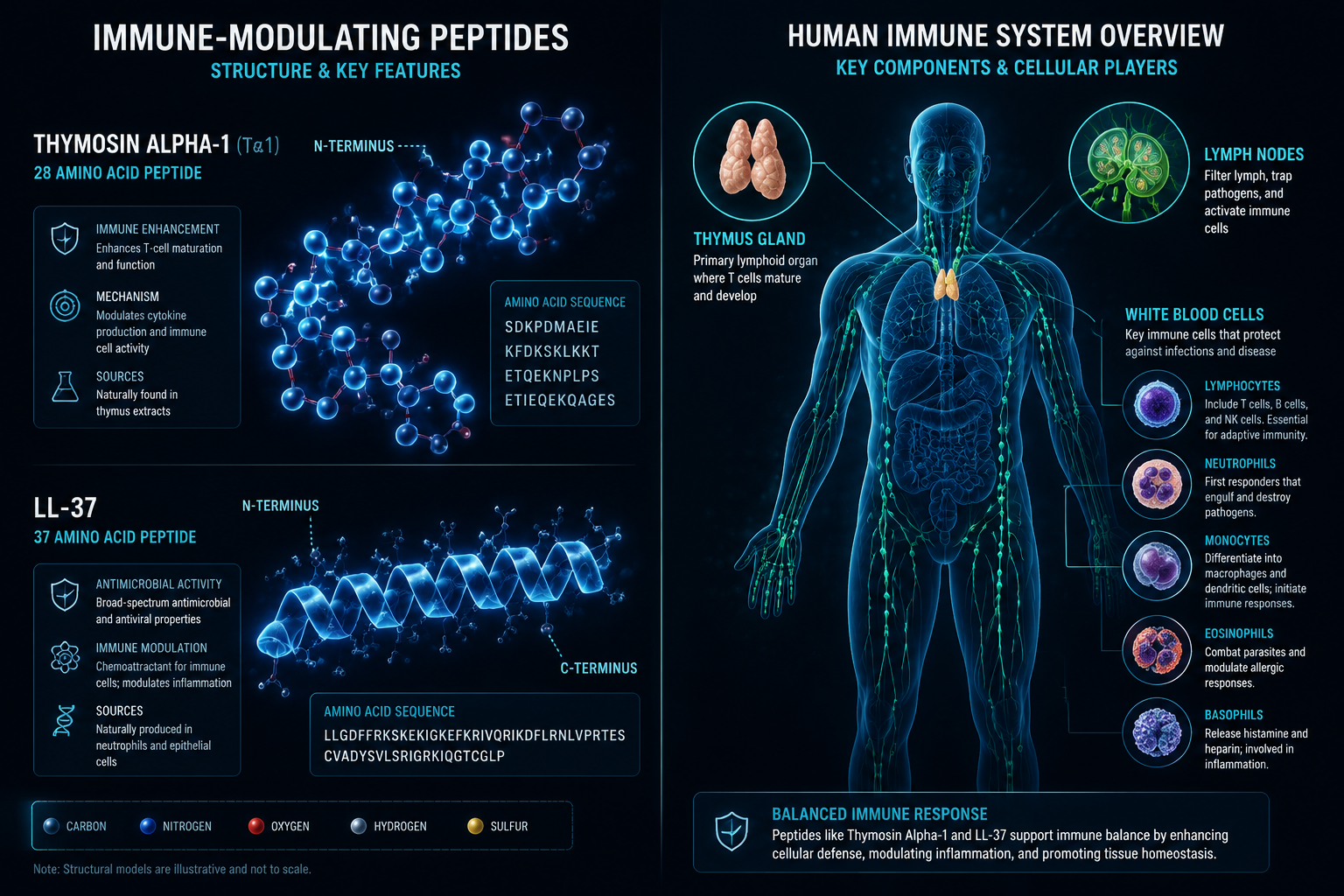
- Specific peptides such as Thymosin Alpha-1 and LL-37 have been studied for their roles in immune modulation and antimicrobial defense.
- Peptide purity and sourcing quality are critical factors that influence research outcomes.
- Delivery method affects how effectively peptides reach their biological targets.
- Research into immune-supporting peptides is ongoing, and findings should be interpreted within a research context.
How Peptides Interact With the Immune System
Peptides are short chains of amino acids — the same building blocks that make up proteins. Because of their small size and structural specificity, they can interact with receptors, enzymes, and signaling molecules in ways that larger proteins cannot. This precision is what makes peptides for immune system support such a compelling area of study.
The immune system operates through two primary arms: innate immunity (the rapid, non-specific response) and adaptive immunity (the slower, targeted response). Certain peptides appear to influence both arms, either by stimulating immune cell activity, regulating inflammatory pathways, or supporting the production of immune-related proteins.
Thymosin Alpha-1
One of the most studied immune-related peptides is Thymosin Alpha-1, a naturally occurring peptide derived from the thymus gland. Research suggests it may play a role in T-cell maturation and immune regulation. For a detailed breakdown, see this overview on Thymosin Alpha-1 mechanism and research context.
LL-37 and Antimicrobial Defense
LL-37 is a cathelicidin-derived peptide that has attracted attention for its antimicrobial properties and its potential role in modulating inflammatory signaling. Research exploring the synergy of LL-37 and MOTS-C highlights how combining peptides may produce complementary effects on cellular defense mechanisms.
Thymogen and Immune Regulation
Thymogen is a dipeptide fragment also linked to thymic function. Ongoing research continues to examine its potential in immune modulation. Researchers can explore current findings through resources on Thymogen immune research.
"The specificity of peptide-receptor interactions makes them uniquely suited for targeted immune research compared to broader immunostimulatory compounds."
Sourcing and Quality Considerations for Peptides for Immune System Support
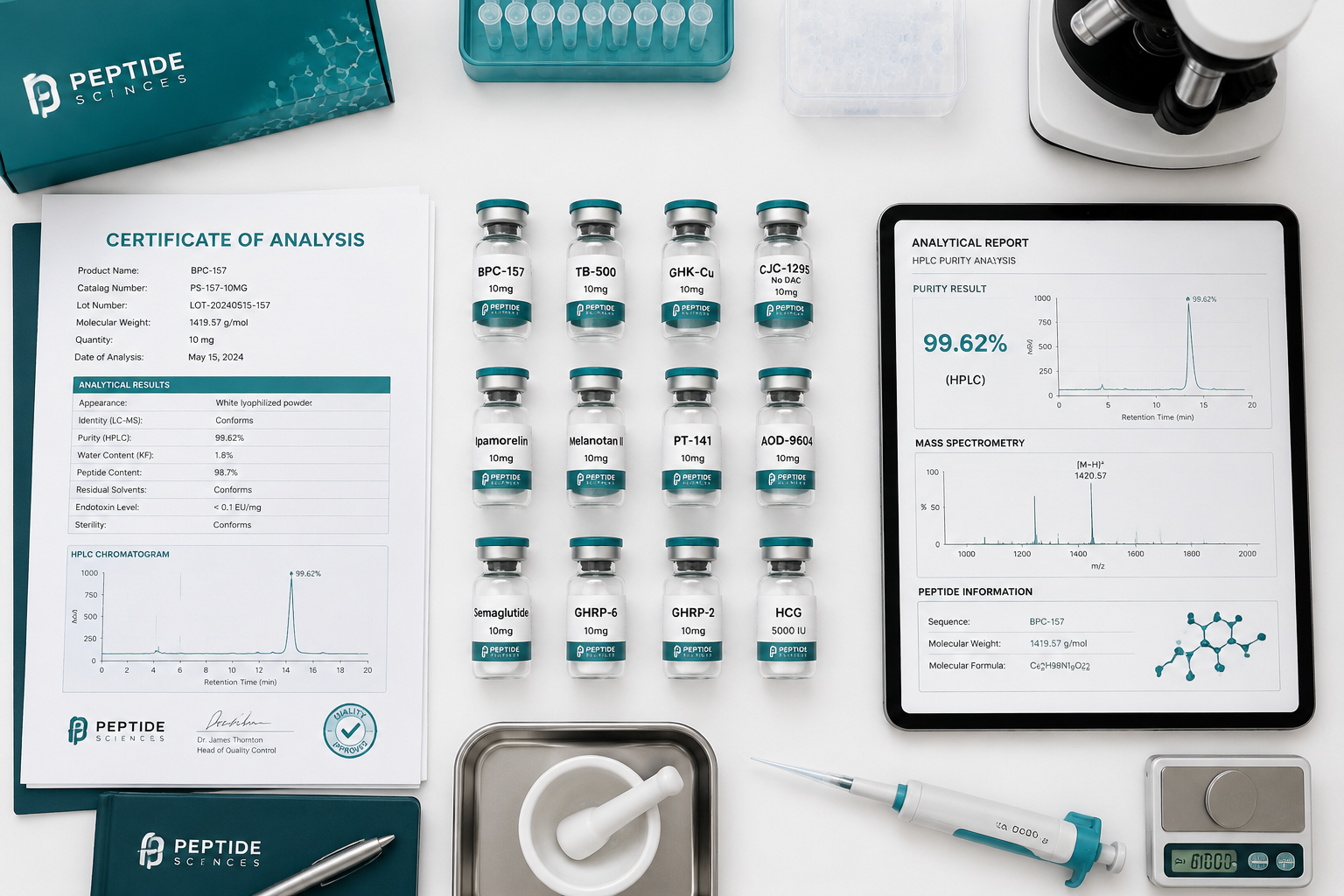
The integrity of any peptide research depends heavily on the quality of the compounds used. Impure or degraded peptides can produce misleading results, making purity verification a non-negotiable step.
Why Purity Matters
| Factor | Impact on Research |
|---|---|
| Peptide purity (%) | Directly affects biological activity and reproducibility |
| Storage conditions | Degradation alters molecular structure and function |
| Third-party testing | Confirms identity and rules out contaminants |
Researchers should always request a Certificate of Analysis before using any peptide compound. Understanding how to interpret these documents is covered in this guide on peptide purity testing made simple.
Delivery Systems
How a peptide is administered influences its bioavailability. Nasal, injectable, and topical delivery methods each have distinct absorption profiles. Advances in this area are outlined in resources covering innovative peptide delivery systems.
For researchers sourcing compounds, working with lab-tested peptides from verified suppliers reduces variability and supports more reliable outcomes.
Conclusion
Peptides for immune system support represent one of the most targeted and scientifically nuanced areas in current biomedical research. Compounds like Thymosin Alpha-1, LL-37, and Thymogen each interact with distinct immune pathways, offering researchers precise tools for studying immune function at the molecular level.
Actionable next steps for researchers:
- Verify peptide purity through third-party Certificates of Analysis before beginning any protocol.
- Review the latest mechanistic research on specific immune peptides before selecting compounds.
- Consider delivery method as a variable that can significantly affect experimental outcomes.
- Source only from suppliers who provide full transparency on testing and manufacturing standards.
As 2026 research continues to expand the understanding of immune biology, peptides remain at the forefront of this scientific conversation.
Tags: peptides for immune system support, immune modulating peptides, Thymosin Alpha-1, LL-37 peptide, Thymogen research, peptide purity, immune system research, peptide delivery systems, lab tested peptides, antimicrobial peptides, longevity peptides, immune biology