
Obesity affects more than one billion people worldwide — yet conventional interventions often fall short for those seeking targeted metabolic support. That gap has driven growing scientific interest in peptide-based compounds, and AOD-9604 for fat loss has emerged as one of the most researched candidates in this space.
Key Takeaways
- AOD-9604 is a synthetic fragment of human growth hormone (hGH) designed to stimulate fat metabolism without the anabolic effects of full hGH.
- Preclinical research suggests it promotes lipolysis (fat breakdown) and inhibits lipogenesis (fat storage).
- It does not appear to significantly affect blood glucose or IGF-1 levels, distinguishing it from full hGH.
- AOD-9604 is often studied in combination with other peptides to explore synergistic metabolic effects.
- As of 2026, AOD-9604 remains a research compound and is not approved for human therapeutic use.
What Is AOD-9604?
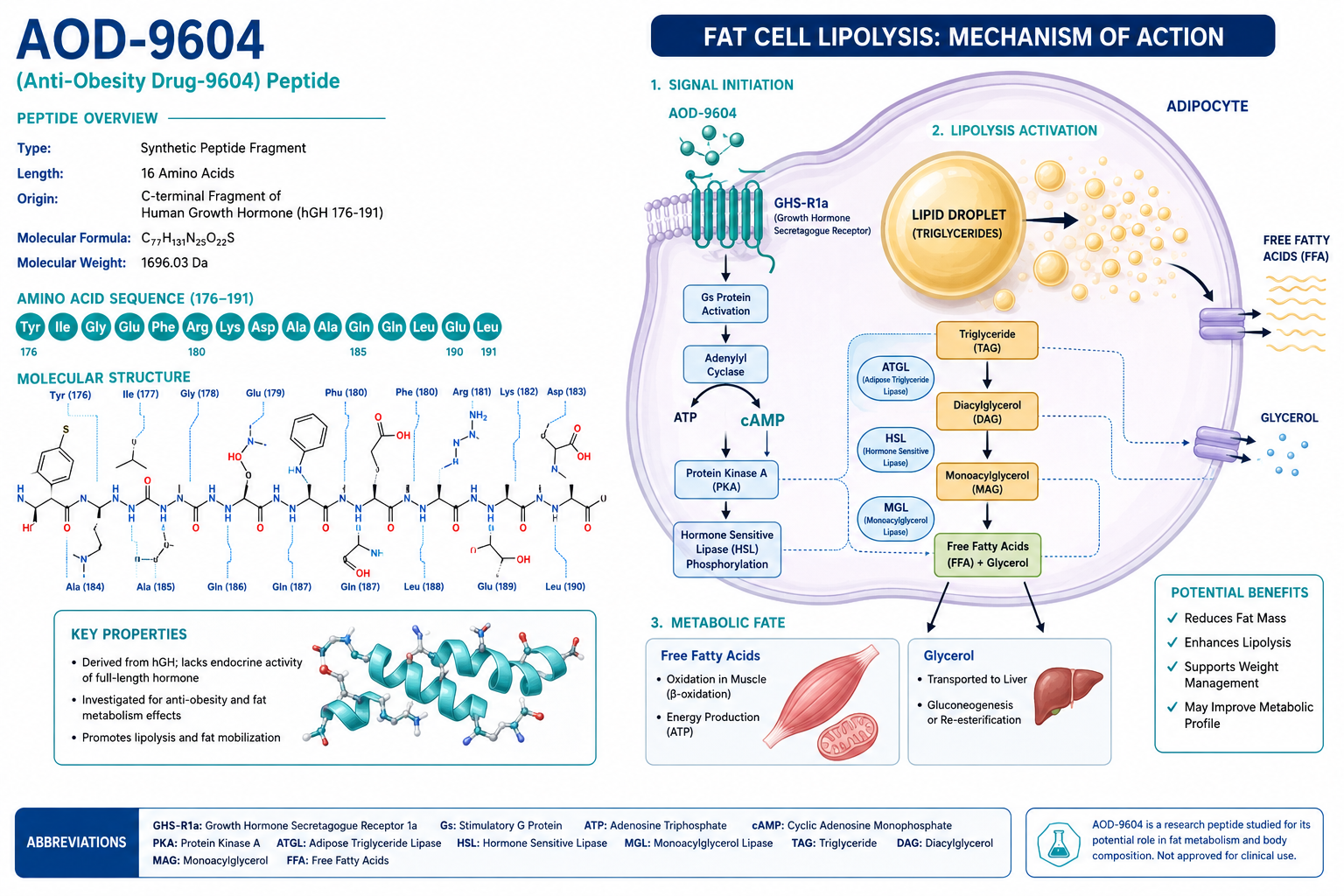
AOD-9604 is a stabilized synthetic analogue of the C-terminal fragment of human growth hormone, specifically amino acids 176–191. Researchers at Monash University originally developed it to isolate the fat-metabolizing properties of hGH while eliminating unwanted growth-promoting and diabetogenic effects.
The compound works through two primary mechanisms:
- Lipolysis stimulation: Activates fat-burning pathways in adipose tissue
- Lipogenesis inhibition: Reduces the conversion of non-fat foods into body fat
For a deeper look at how AOD-9604 compares structurally to full somatotropin, see this AOD-9604 vs. somatotropin comparison.
How AOD-9604 for Fat Loss Works at the Cellular Level
Unlike full human growth hormone, AOD-9604 appears to act on beta-3 adrenergic receptors in fat tissue. This receptor pathway plays a direct role in regulating energy expenditure and fat oxidation.
"AOD-9604 targets fat metabolism specifically, making it a subject of interest for researchers who want to study body composition without the complexity of full hGH signaling."
Key distinctions from standard hGH include:
| Feature | Full hGH | AOD-9604 |
|---|---|---|
| Promotes muscle growth | Yes | Minimal |
| Raises IGF-1 levels | Yes | No |
| Affects blood glucose | Yes | Minimal |
| Targets fat metabolism | Yes | Targeted focus |
Researchers exploring AOD-9604 metabolic research have noted this selectivity as a key reason the compound continues to attract study interest.
AOD-9604 for Fat Loss: Research Findings
Preclinical animal studies have demonstrated measurable reductions in body fat percentage with AOD-9604 administration, particularly in diet-induced obese models. Human clinical trials conducted in the early 2000s showed modest but notable reductions in body weight over 12-week periods at specific dosage ranges.
Notable findings from preclinical and early clinical research:
- Reduced visceral fat accumulation
- Improved lipid oxidation rates
- No significant change in fasting blood glucose
- No suppression of natural growth hormone production
Those interested in how related peptides support similar goals may find value in reviewing tesa dosage for fat loss as a comparative reference.
AOD-9604 in Peptide Blends
AOD-9604 is frequently studied alongside other growth hormone-releasing peptides. Combination research protocols often include tesa, CJC-1295, and ipamorelin to assess whether multi-pathway stimulation produces additive metabolic outcomes.
Researchers can explore structured blend formulations such as the Tesamorelin AOD-9604 CJC-1295 Ipamorelin 12mg blend for reference on how these compounds are combined in research settings.
For those comparing standalone peptide options, the AOD-9604 research compound page provides detailed product specifications and purity documentation.
Conclusion
AOD-9604 for fat loss represents a focused area of peptide research with a growing body of preclinical evidence supporting its role in lipid metabolism. Its selective mechanism — targeting fat breakdown without disrupting glucose regulation or IGF-1 signaling — makes it a compelling subject for ongoing metabolic studies.
Actionable next steps for researchers:
- Review available purity documentation before sourcing any peptide compound.
- Study AOD-9604 alongside related peptides to understand synergistic metabolic pathways.
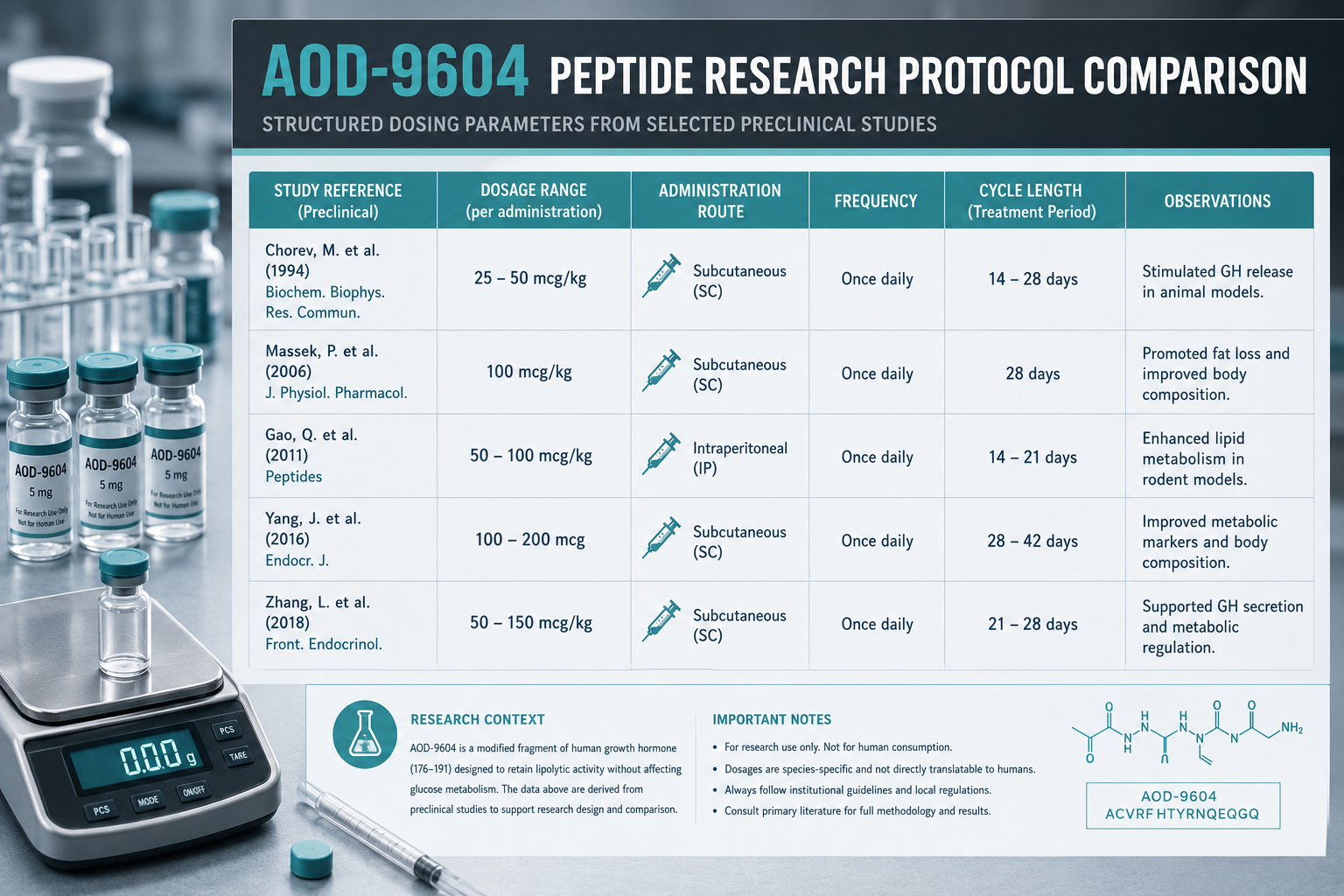
- Consult current literature on dosing protocols and cycle lengths for research design.
- Explore quality testing protocols to ensure compound integrity in any research setting.
Tags: AOD-9604, AOD-9604 for fat loss, peptide research, fat loss peptides, lipolysis, metabolic peptides, growth hormone fragment, body composition, peptide blends, tesa, CJC-1295, research compounds