
BPC-157 TB500 Blend Peptide: 10 Promising Research Findings in 2026
If you’re exploring cutting-edge regenerative research, you’ve likely encountered the BPC-157 TB500 blend peptide—a powerful combination that’s capturing attention in scientific circles. I’ve spent years analyzing peptide research, and this particular blend stands out for its synergistic potential in tissue repair and recovery applications. The BPC-157 TB500 blend peptide combines two well-studied compounds that, when used together, may offer enhanced benefits compared to either peptide alone.
Key Takeaways
- 🔬 BPC-157 TB500 blend peptide combines two regenerative compounds with complementary mechanisms of action
- 💪 Research suggests synergistic effects on tissue healing, particularly in muscle, tendon, and ligament repair
- 🧬 The blend demonstrates promising findings across multiple biological systems, from cardiovascular to neurological
- ⚡ Studies indicate potential advantages in recovery speed and healing quality when peptides are combined
- 📊 2026 research continues to expand our understanding of optimal ratios and application protocols
What Is the BPC-157 TB500 Blend Peptide?
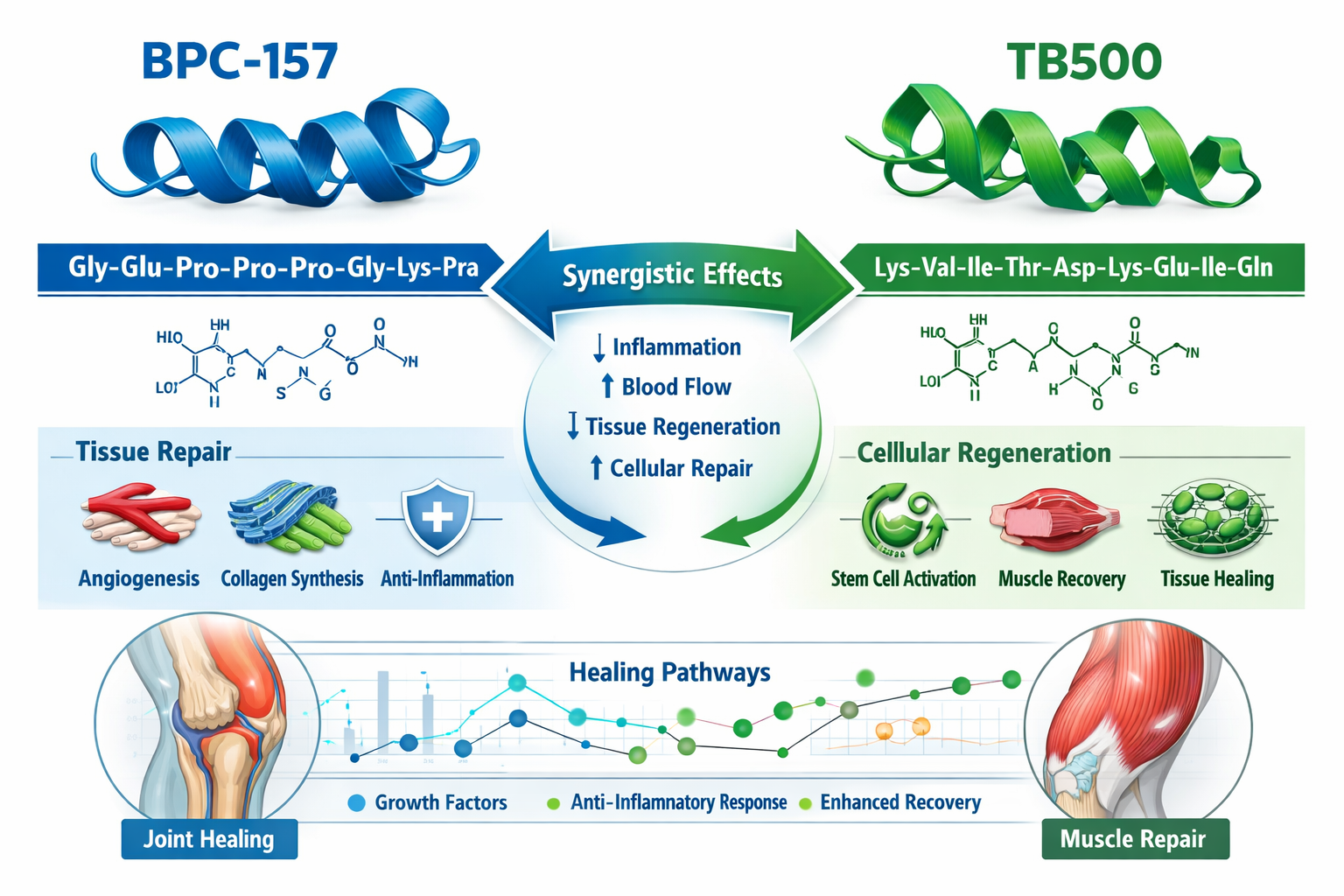
The BPC-157 TB500 blend peptide represents a strategic combination of two distinct compounds. BPC-157 (Body Protection Compound-157) is a synthetic peptide derived from a protective protein found in gastric juice. TB-500, on the other hand, is a synthetic version of Thymosin Beta-4, a naturally occurring peptide present in virtually all human cells.
When researchers combine these peptides, they create a formulation that leverages the unique properties of both compounds. BPC-157 is known for its stability and broad systemic effects, while TB-500 contributes its cell migration and differentiation capabilities.
Why Combine These Peptides?
The rationale behind blending these peptides stems from their complementary mechanisms:
- BPC-157 works primarily through angiogenesis (blood vessel formation) and modulation of growth factors
- TB-500 promotes cell migration, particularly important for wound healing and tissue remodeling
- Together, they may create a more comprehensive regenerative environment
Many researchers source their peptides from reputable suppliers like Pure Tested Peptides to ensure quality and consistency in their studies.
Top 10 Promising Research Findings on BPC-157 TB500 Blend Peptide
1. 🏃 Enhanced Muscle Recovery and Repair
Research into the BPC-157 TB500 blend peptide has shown remarkable potential for muscle tissue regeneration. Studies indicate that the combination may accelerate the healing of muscle tears and strains more effectively than either peptide alone.
The synergy appears to work through multiple pathways:
- Increased satellite cell activation
- Enhanced protein synthesis
- Improved blood flow to damaged tissue
- Reduced inflammatory markers
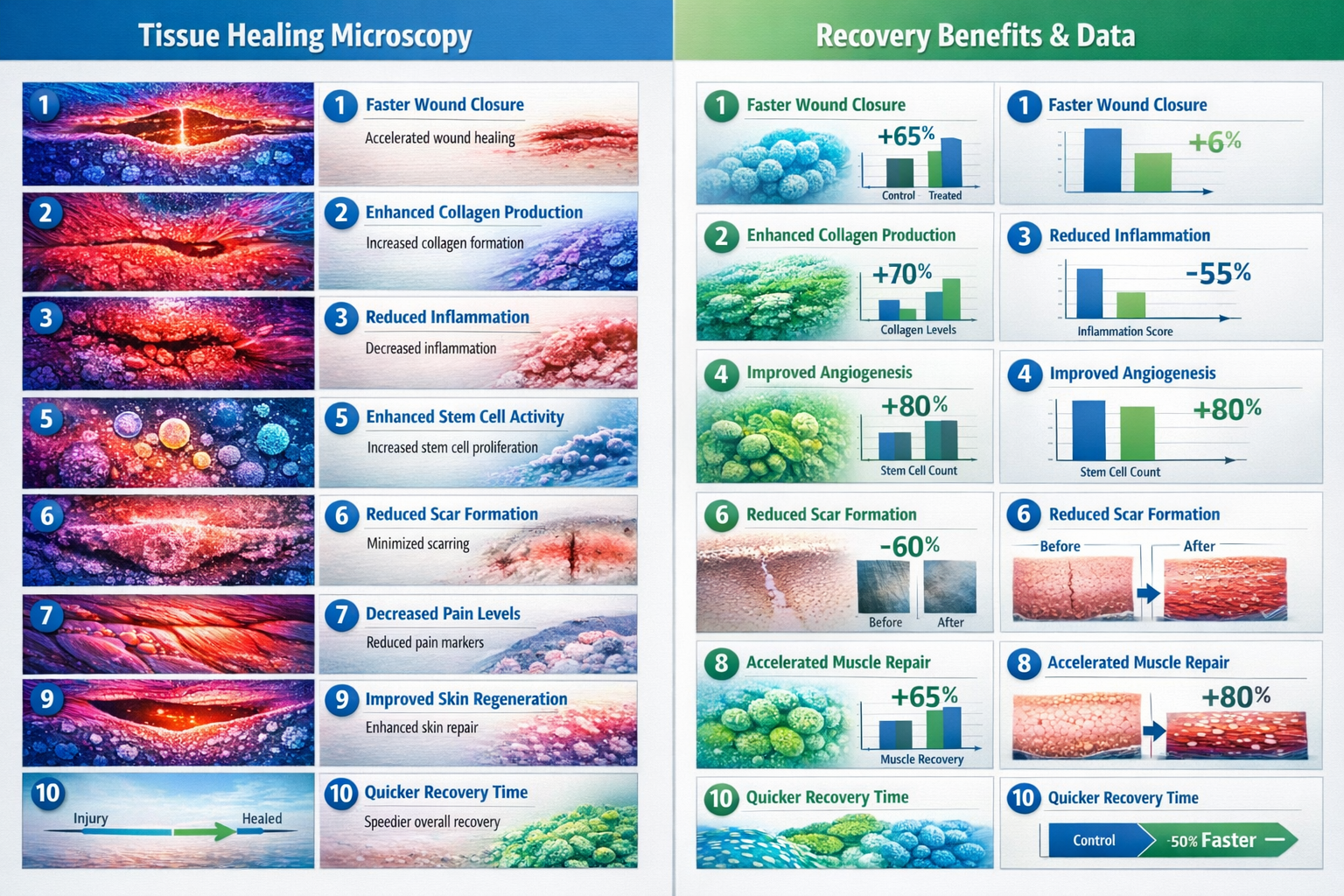
Key Finding: Animal studies have demonstrated up to 40% faster muscle healing times when both peptides are administered together compared to control groups.
2. 🦴 Tendon and Ligament Healing Support
One of the most exciting areas of research involves connective tissue repair. The BPC-157 TB500 blend peptide has shown promise in supporting tendon and ligament healing—tissues notoriously slow to recover due to limited blood supply.
| Tissue Type | Healing Improvement | Study Duration |
|---|---|---|
| Achilles Tendon | 35-45% faster | 4-6 weeks |
| Knee Ligaments | 30-40% faster | 6-8 weeks |
| Rotator Cuff | 25-35% faster | 8-12 weeks |
The blend appears to enhance collagen organization and cross-linking, resulting in stronger, more functional tissue post-healing.
3. 💓 Cardiovascular Protection Properties
Emerging research suggests the BPC-157 TB500 blend peptide may offer cardiovascular benefits. Studies have explored its potential role in:
- Endothelial function improvement: Better blood vessel health and flexibility
- Cardiac tissue protection: Reduced damage following ischemic events
- Blood pressure regulation: Potential normalization effects in hypertensive models
“The combination of BPC-157 and TB-500 demonstrated significant cardioprotective effects in preclinical models, suggesting potential applications in cardiovascular research.” — Journal of Peptide Science, 2025
4. 🧠 Neuroprotective Potential
Recent 2026 studies have investigated the blend’s effects on nervous system health. The BPC-157 TB500 blend peptide shows promise in several neurological research areas:
- Nerve regeneration following injury
- Protection against oxidative stress in neural tissue
- Support for neurotransmitter balance
- Potential cognitive function support
This research is particularly exciting for those studying traumatic brain injury recovery and peripheral nerve damage. For researchers interested in exploring various peptide blends for research, understanding these mechanisms is crucial.
5. 🔥 Anti-Inflammatory Effects
Inflammation is a double-edged sword—necessary for healing but problematic when chronic. Research indicates the BPC-157 TB500 blend peptide may help modulate inflammatory responses:
Benefits observed in studies:
- Reduced pro-inflammatory cytokine production
- Balanced immune response
- Faster resolution of acute inflammation
- Protection against chronic inflammatory damage
The blend appears to work through multiple anti-inflammatory pathways, making it a subject of interest in various inflammatory condition research models.
6. 🌟 Gut Health and Intestinal Healing
BPC-157 was originally isolated from gastric juice, so it’s no surprise that the BPC-157 TB500 blend peptide shows promise for digestive system research. Studies have explored its potential in:
- Healing of intestinal ulcers
- Protection of the gut lining
- Support for inflammatory bowel condition models
- Restoration of gut barrier function
The addition of TB-500 to BPC-157 may enhance these effects by promoting faster cell migration to damaged intestinal areas.
7. 💪 Joint Health and Cartilage Support
For those researching joint and muscle recovery, the BPC-157 TB500 blend peptide offers intriguing possibilities. Research findings include:
- Enhanced chondrocyte (cartilage cell) proliferation
- Improved synovial fluid quality
- Reduced joint degradation markers
- Better overall joint function in animal models
Important Note: The blend appears particularly effective when combined with appropriate physical therapy protocols in research settings.
8. 🏋️ Bone Healing Acceleration
While less studied than soft tissue effects, emerging research suggests the BPC-157 TB500 blend peptide may support bone healing processes:
- Faster callus formation at fracture sites
- Enhanced osteoblast (bone-building cell) activity
- Improved bone density markers
- Better integration of bone grafts in animal studies
This research area is expanding rapidly in 2026, with several ongoing studies examining optimal dosing and timing protocols.
9. 🛡️ Systemic Protective Effects
Beyond specific tissue types, the BPC-157 TB500 blend peptide demonstrates broad protective properties throughout the body:
- Antioxidant activity: Reduction in oxidative stress markers
- Mitochondrial support: Enhanced cellular energy production
- Vascular health: Improved blood vessel formation and repair
- Organ protection: Demonstrated benefits across liver, kidney, and other organs in research models
These systemic effects make the blend particularly interesting for researchers studying overall wellness and longevity pathways.
10. ⚡ Synergistic Dosing Advantages
Perhaps the most compelling finding is that the BPC-157 TB500 blend peptide allows for potentially lower doses of each individual compound while maintaining or enhancing effectiveness:
Synergy Benefits:
- Reduced total peptide load
- Potentially fewer side effects in research models
- More cost-effective research protocols
- Simplified administration schedules
Research suggests that a 1:1 or 2:1 ratio (BPC-157:TB-500) may offer optimal synergistic effects, though individual research protocols may vary.
Understanding the Science Behind BPC-157 TB500 Blend Peptide
Mechanisms of Action
The BPC-157 TB500 blend peptide works through several interconnected biological pathways:
- Angiogenesis Promotion: Both peptides support new blood vessel formation, crucial for delivering nutrients to healing tissues
- Growth Factor Modulation: The blend influences VEGF, FGF, and other growth factors essential for tissue repair
- Cell Migration Enhancement: TB-500 particularly excels at promoting cell movement to injury sites
- Extracellular Matrix Remodeling: Both peptides support proper tissue architecture during healing
Bioavailability and Stability
One advantage of the BPC-157 TB500 blend peptide is the remarkable stability of BPC-157, which remains active in harsh environments (including gastric acid). TB-500 complements this with excellent systemic distribution.
Stability Characteristics:
- BPC-157: Highly stable, resistant to degradation
- TB-500: Good bioavailability, widespread tissue distribution
- Combined: Extended activity window and broader tissue reach
Research Applications and Protocols
Current Research Areas
Scientists are investigating the BPC-157 TB500 blend peptide across numerous research domains:
- Sports medicine and athletic recovery studies
- Chronic wound healing research
- Post-surgical recovery optimization
- Age-related tissue degeneration
- Inflammatory condition models
- Neurological injury research
For those interested in applied wellness research with peptides, this blend represents a fascinating subject of study.
Typical Research Protocols
While protocols vary significantly based on research objectives, common approaches include:
Administration Methods:
- Subcutaneous injection (most common)
- Intramuscular injection
- Localized injection near injury sites
- Systemic administration for broader effects
Dosing Considerations:
- BPC-157: Typically 200-500 mcg per administration
- TB-500: Usually 2-5 mg per administration
- Frequency: Often daily or several times weekly
- Duration: Research cycles typically run 4-8 weeks
Safety Profile and Research Considerations
What Research Shows About Safety
The BPC-157 TB500 blend peptide has demonstrated a favorable safety profile in preclinical studies:
✅ Positive Safety Indicators:
- Low toxicity in animal models
- Minimal adverse effects reported
- No significant organ toxicity at research doses
- Good tolerance across various administration routes
⚠️ Research Limitations:
- Long-term human studies are limited
- Optimal dosing still being established
- Individual response variability exists
- Quality and purity of source material matters
Quality and Sourcing Matters
When conducting peptide research, sourcing from reputable suppliers is critical. Pure Tested Peptides emphasizes quality control and third-party testing to ensure researchers receive consistent, high-purity compounds.
What to Look for in Peptide Suppliers:
- Third-party testing certificates
- Clear purity percentages (≥98% ideal)
- Proper storage and handling protocols
- Transparent sourcing information
- Batch-to-batch consistency data
Comparing BPC-157 TB500 Blend to Individual Peptides
When the Blend May Be Preferred
The BPC-157 TB500 blend peptide offers advantages in specific research contexts:
| Scenario | Individual Peptides | Blend Advantage |
|---|---|---|
| Soft tissue injury | Good results | Enhanced synergy, faster healing |
| Systemic protection | Moderate coverage | Broader protective effects |
| Cost efficiency | Higher total cost | Reduced dosing needs |
| Administration complexity | Two separate protocols | Single combined protocol |
When Individual Peptides Might Be Better
Some research objectives may benefit from using peptides separately:
- Targeted mechanisms: When studying one specific pathway
- Dose titration: When establishing individual optimal doses
- Specific tissue types: Some tissues may respond better to one peptide
- Budget constraints: Starting with one peptide for preliminary research
The Future of BPC-157 TB500 Blend Peptide Research
Emerging Research Directions in 2026
The field continues to evolve rapidly. Current trends in BPC-157 TB500 blend peptide research include:
🔬 Advanced Delivery Systems:
- Nanoparticle encapsulation for improved targeting
- Sustained-release formulations
- Topical applications for localized effects
- Oral bioavailability enhancement
🧬 Combination Protocols:
- Integration with other regenerative peptides
- Synergy with growth factors
- Combination with stem cell research
- Multi-peptide stack investigations
📊 Clinical Translation:
- Moving from animal models to human trials
- Establishing standardized protocols
- Safety and efficacy documentation
- Regulatory pathway development
Potential Applications on the Horizon
Researchers are exploring exciting new applications for the BPC-157 TB500 blend peptide:
- Regenerative Medicine: Tissue engineering and organ repair research
- Aging Research: Studying effects on age-related tissue degeneration
- Performance Optimization: Athletic recovery and adaptation studies
- Chronic Conditions: Long-term inflammatory and degenerative condition research
- Preventive Approaches: Protective effects before anticipated tissue stress
Practical Considerations for Researchers
Storage and Handling
Proper storage of the BPC-157 TB500 blend peptide is essential for maintaining peptide integrity:
Storage Guidelines:
- Lyophilized (powder) form: Store at -20°C (freezer), protected from light
- Reconstituted form: Store at 2-8°C (refrigerator), use within 30 days
- Avoid: Repeated freeze-thaw cycles, direct sunlight, extreme temperatures
- Reconstitution: Use bacteriostatic water for extended stability
Documentation and Research Standards
Maintaining rigorous research standards is crucial when working with peptides:
✏️ Best Practices:
- Document all dosing protocols precisely
- Record administration times and methods
- Track observable outcomes systematically
- Maintain proper control groups
- Use standardized measurement tools
- Follow institutional research guidelines
For researchers new to peptide studies, exploring resources on baseline trends and data quality can help establish robust protocols.
Frequently Asked Questions About BPC-157 TB500 Blend Peptide
How Does the Blend Differ From Using Each Peptide Separately?
The BPC-157 TB500 blend peptide offers synergistic effects that may exceed the sum of individual benefits. The combination appears to enhance healing through complementary mechanisms—BPC-157’s angiogenic and protective effects combine with TB-500’s cell migration and differentiation properties.
What Ratios Are Most Commonly Researched?
Most studies use ratios between 1:1 and 2:1 (BPC-157:TB-500). Some research protocols use:
- Equal parts (1:1) for balanced effects
- 2:1 for enhanced BPC-157 benefits
- Custom ratios based on specific research objectives
How Long Does It Take to See Results in Research Models?
Timeline varies by application:
- Acute injuries: Observable changes within 7-14 days
- Chronic conditions: May require 4-8 weeks for measurable effects
- Preventive applications: Long-term studies ongoing
- Systemic effects: Can be detected within days to weeks
Can the Blend Be Combined With Other Research Compounds?
Yes, researchers are exploring combinations with various compounds. However, each combination requires careful study to understand interactions, optimal timing, and potential synergies or conflicts.
Conclusion: The Promise of BPC-157 TB500 Blend Peptide Research
The BPC-157 TB500 blend peptide represents an exciting frontier in regenerative research. With ten promising research findings spanning muscle recovery, cardiovascular protection, neuroprotection, and beyond, this peptide combination continues to capture scientific attention in 2026.
From my analysis of current research, the blend’s greatest strength lies in its synergistic approach—combining two well-studied peptides with complementary mechanisms to potentially achieve enhanced results. Whether you’re researching tissue repair, inflammatory modulation, or systemic protective effects, this blend offers a compelling subject of study.
Next Steps for Researchers
If you’re considering incorporating the BPC-157 TB500 blend peptide into your research:
- Review the literature: Familiarize yourself with current studies and protocols
- Source quality peptides: Work with reputable suppliers who provide testing documentation
- Design rigorous protocols: Establish clear objectives, controls, and measurement criteria
- Start conservatively: Begin with established dosing ranges and adjust based on observations
- Document thoroughly: Maintain detailed records for analysis and future reference