CJC 1295 with DAC: How to Best Combine for Peak Efficacy in 2025
Unlocking the full potential of growth hormone-releasing peptides (GHRPs) and growth hormone-releasing hormone (GHRH) analogues represents a significant frontier in advanced wellness research. Among these, CJC 1295 with DAC stands out as a powerful compound due to its prolonged half-life and sustained stimulatory effect on growth hormone (GH) secretion. For researchers and enthusiasts alike in 2025, understanding how to best combine CJC 1295 with DAC with other synergistic peptides is crucial for maximizing its efficacy, particularly in elevating IGF-1 levels. This comprehensive article delves into the science, best practices, and optimal peptide pairings to achieve unparalleled research outcomes.
Key Takeaways
- CJC 1295 with DAC provides a sustained release of GHRH, leading to prolonged growth hormone secretion and elevated IGF-1 levels.
- Combining CJC 1295 with DAC with GHRPs like Ipamorelin, GHRP-2, or GHRP-6 creates a synergistic effect, enhancing GH pulse amplitude and frequency.
- Optimal dosing and timing are critical for maximizing the benefits of peptide combinations, aligning with the body's natural pulsatile GH release.
- Adjunctive peptides such as BPC-157 or TB-500 can support overall well-being, tissue repair, and recovery, complementing the primary GH-axis modulation.
- Careful consideration of research protocols, ethical guidelines, and sourcing from reputable suppliers like Pure Tested Peptides is paramount for successful and reliable studies in 2025.
Understanding CJC 1295 with DAC: The Foundation of Enhanced IGF-1
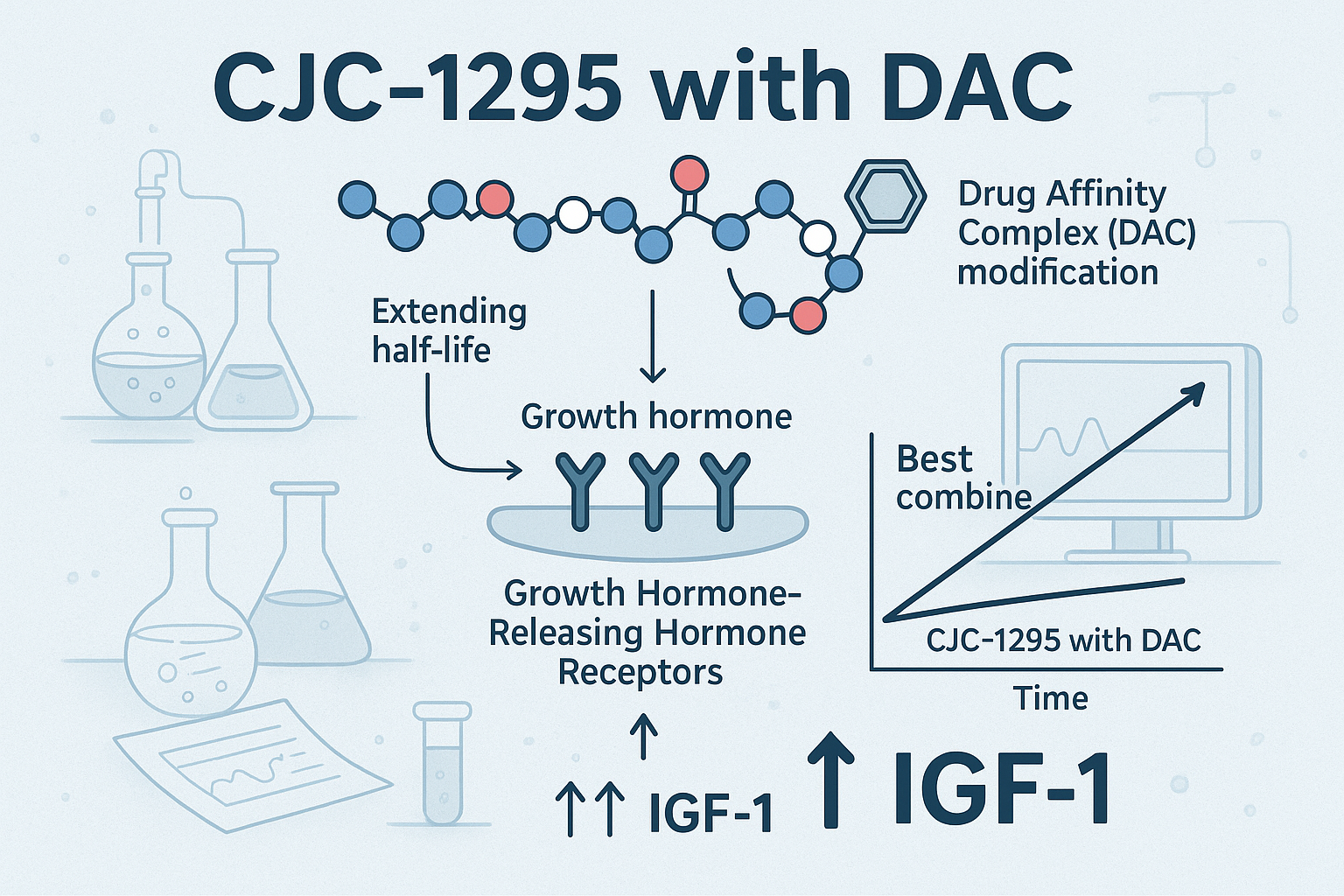
CJC 1295 with DAC (Drug Affinity Complex) is a modified analogue of growth hormone-releasing hormone (GHRH). Its primary function is to stimulate the pituitary gland to release growth hormone. What sets the DAC variant apart from CJC 1295 without DAC is the addition of a specialized complex that binds to albumin in the blood. This binding significantly extends its half-life, allowing for less frequent administration while maintaining stable and prolonged stimulation of GH release.
“CJC 1295 with DAC offers a distinct advantage in research due to its extended activity, promoting a more consistent elevation of growth hormone and subsequent IGF-1 levels compared to its shorter-acting counterparts.”
The Mechanism of Action
When administered, CJC 1295 with DAC mimics the natural GHRH, binding to GHRH receptors on somatotroph cells in the anterior pituitary gland. This binding triggers a cascade of events, leading to the synthesis and pulsatile release of GH. The extended presence of CJC 1295 with DAC in the system ensures these pulses are more frequent and robust over a longer period. The subsequent increase in circulating GH then signals the liver and other tissues to produce Insulin-like Growth Factor-1 (IGF-1), a powerful anabolic hormone responsible for many of the beneficial effects associated with GH, including:
- Muscle growth and repair 💪
- Bone density improvement
- Fat metabolism regulation
- Skin elasticity and collagen production
- Enhanced cellular regeneration
Research into these mechanisms continues to evolve, with ongoing studies exploring its full range of applications. For deeper insights into its direct applications, you can explore resources like CJC-1295 with DAC Research Findings or a more detailed exploration on Cjc1295 with DAC Deeper Dive.
Why Choose CJC 1295 with DAC over CJC 1295 (No DAC)?
The key differentiator is half-life. CJC 1295 (without DAC) has a very short half-life, typically around 30 minutes, requiring multiple daily administrations to maintain elevated GH levels. In contrast, CJC 1295 with DAC boasts a half-life of approximately 6-8 days, making weekly or bi-weekly dosing effective. This convenience is a significant factor in research protocols, ensuring more consistent exposure and reducing variability. For a comparative analysis, refer to Comparing CJC-1295 with and without DAC.
| Feature | CJC 1295 (No DAC) | CJC 1295 with DAC |
|---|---|---|
| Half-life | ~30 minutes | ~6-8 days |
| Administration | Multiple times daily | Once or twice weekly |
| GH Release Pattern | Pulsatile, short bursts | Sustained, prolonged |
| Convenience | Lower | Higher |
| Albumin Binding | No | Yes (Drug Affinity Complex) |
Best Synergistic Peptides to Combine with CJC-1295 w DAC
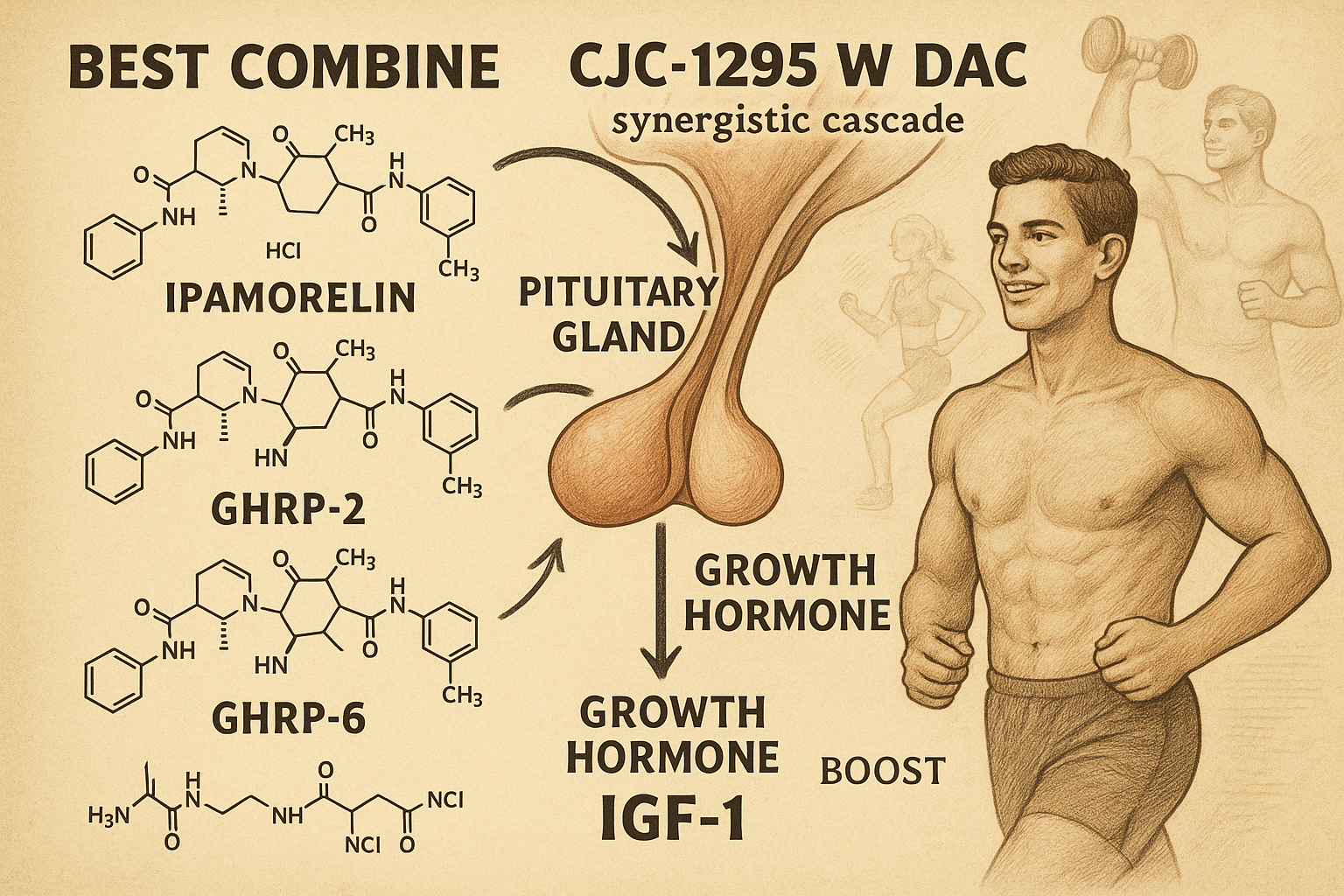
To truly maximize the efficacy of CJC-1295 w DAC in increasing IGF-1 levels, strategic combination with other peptides is essential. This approach leverages the concept of synergy, where the combined effect of multiple peptides is greater than the sum of their individual effects. The most impactful pairings involve other growth hormone-releasing peptides (GHRPs).
The Power of Pairing: CJC-1295 w DAC and GHRPs
While CJC 1295 with DAC stimulates the pituitary via GHRH receptors, GHRPs act through a different pathway, primarily by binding to ghrelin receptors (GHS-R1a) to directly stimulate GH release and suppress somatostatin (a GH-inhibiting hormone). When used together, GHRH analogues like CJC-1295 w DAC and GHRPs create a "double-stimulation" effect, leading to significantly larger and more frequent GH pulses, which in turn drive higher IGF-1 production. This combination is often referred to as a "GH Secretagogue Stack."
“Combining CJC-1295 w DAC with a GHRP is akin to pressing both the accelerator and the turbo boost on a powerful engine – it optimizes the body’s natural mechanisms for growth hormone release to an extraordinary degree.”
Here are the top synergistic GHRPs to consider:
1. Ipamorelin
Ipamorelin is considered one of the safest and most selective GHRPs. It stimulates GH release without significantly affecting cortisol, prolactin, or ACTH levels, which can be a concern with other GHRPs. This makes it an excellent choice for research subjects where minimizing side effects is a priority.
- Mechanism: Ipamorelin acts as a selective ghrelin mimetic, specifically targeting the ghrelin receptor to promote GH release.
- Synergy with CJC-1295 w DAC: When combined, CJC-1295 w DAC provides the baseline, sustained GHRH signal, while Ipamorelin amplifies the amplitude of the GH pulses without the associated increase in unwanted hormones. This results in a cleaner, more robust GH secretion profile.
- Dosing and Timing (Research Protocol Example):
- CJC-1295 w DAC: Typically 1-2mg subcutaneous (SC) once or twice weekly.
- Ipamorelin: 200-300mcg SC, 1-3 times daily (e.g., before bed, upon waking, post-workout).
- Timing: Administering Ipamorelin 30-60 minutes before meals or workouts, and especially before sleep, aligns with the body's natural GH release patterns. The sustained action of CJC-1295 w DAC supports these pulses throughout the week.
- Benefits: Enhanced muscle growth, fat loss, improved sleep quality, faster recovery, and significant IGF-1 elevation.
- Further Reading: Explore the CJC-1295 Plus Ipamorelin synergy for more detailed insights.
2. GHRP-2
GHRP-2 is a more potent GHRP than Ipamorelin, known for its significant GH-releasing capabilities. However, it can slightly elevate cortisol and prolactin levels in some individuals, though usually not to clinically significant levels within standard research dosages.
- Mechanism: Similar to Ipamorelin, GHRP-2 binds to the ghrelin receptor but with a stronger affinity, leading to a more pronounced GH release.
- Synergy with CJC-1295 w DAC: The combination provides a powerful surge in GH, making it suitable for studies focused on aggressive muscle hypertrophy and fat loss. The sustained GHRH signal from CJC-1295 w DAC primes the pituitary, allowing GHRP-2 to elicit maximal GH secretion.
- Dosing and Timing (Research Protocol Example):
- CJC-1295 w DAC: 1-2mg SC once or twice weekly.
- GHRP-2: 100-200mcg SC, 2-3 times daily.
- Timing: Same as Ipamorelin, prioritizing pre-sleep and fasting states for administration.
- Benefits: Strong anabolic effects, increased appetite (a common side effect), enhanced recovery, and substantial IGF-1 boosts.
3. GHRP-6
GHRP-6 is another potent GHRP, similar to GHRP-2 but often associated with a more pronounced increase in appetite due to its direct interaction with ghrelin receptors, which also play a role in hunger signaling.
- Mechanism: Functions by binding to ghrelin receptors, promoting GH release and increasing appetite.
- Synergy with CJC-1295 w DAC: This combination is particularly useful in research aiming for significant weight gain or when subjects struggle with appetite. The sustained GHRH from CJC-1295 w DAC sets the stage for GHRP-6 to maximize GH pulsatility.
- Dosing and Timing (Research Protocol Example):
- CJC-1295 w DAC: 1-2mg SC once or twice weekly.
- GHRP-6: 100-200mcg SC, 2-3 times daily.
- Timing: Before meals to leverage its appetite-stimulating effects, and before sleep.
- Benefits: Promotes muscle growth, helps with appetite stimulation, potentially faster recovery.
Important Note on GHRP Selection: The choice between Ipamorelin, GHRP-2, and GHRP-6 depends on the specific research goals and desired side effect profile. Ipamorelin is generally preferred for its selectivity and minimal impact on other hormones.
Beyond GHRPs: Complementary Peptides for Comprehensive Wellness
While GHRPs are the primary synergistic partners for CJC-1295 w DAC in directly boosting IGF-1, other peptides can be incorporated into research protocols in 2025 to support overall health, recovery, and enhance the benefits indirectly. These are not direct GH secretagogues but offer complementary advantages.
1. BPC-157: The Healing Peptide
BPC-157 (Body Protection Compound-157) is a peptide known for its remarkable regenerative and protective properties across various tissues.
- Mechanism: BPC-157 is thought to promote angiogenesis (formation of new blood vessels), modulate growth factors, and exert anti-inflammatory effects. It has demonstrated benefits in gut health, wound healing, and musculoskeletal repair.
- Synergy with CJC-1295 w DAC: While CJC-1295 w DAC and its GHRP partners focus on systemic growth and regeneration through IGF-1, BPC-157 provides localized and accelerated healing. This means subjects undergoing studies involving physical stress or injury could experience faster recovery.
- Dosing and Timing (Research Protocol Example):
- BPC-157: 250-500mcg SC, 1-2 times daily. Can be administered locally to an injured area or systemically.
- Benefits: Accelerated healing of muscles, tendons, ligaments, and bones; gut protection; anti-inflammatory effects.
- Further Reading: Dive deeper into the research on BPC-157 and its diverse applications.
2. TB-500: The Tissue Repair Peptide
TB-500 is a synthetic version of Thymosin Beta-4, a naturally occurring peptide involved in cell migration, differentiation, and tissue repair.
- Mechanism: TB-500 promotes cell migration, angiogenesis, and anti-inflammatory responses. It is particularly effective in healing soft tissue injuries and improving flexibility.
- Synergy with CJC-1295 w DAC: Similar to BPC-157, TB-500 complements the systemic anabolic effects of the GH-releasing peptides by specifically targeting tissue repair and regeneration. This can lead to a more robust recovery phase for subjects involved in strenuous physical activities.
- Dosing and Timing (Research Protocol Example):
- TB-500: 2-5mg SC, once or twice weekly for an initial loading phase, followed by maintenance.
- Benefits: Enhanced wound healing, improved flexibility, reduced inflammation, and faster recovery from injuries.
- Combined Benefits: For comprehensive healing and growth, researchers often combine BPC-157 and TB-500 with GHRH/GHRP stacks. Learn more about this powerful combination at BPC-157 TB-500 Combination Research Overview.
3. Epithalon: The Longevity Peptide
Epithalon is a synthetic tetrapeptide derived from the pineal gland. It is widely researched for its potential anti-aging and longevity-promoting properties.
- Mechanism: Epithalon is thought to regulate the production of melatonin, normalize circadian rhythms, and increase telomerase activity, an enzyme that protects telomeres (the ends of chromosomes) from shortening, thus potentially extending cellular lifespan.
- Synergy with CJC-1295 w DAC: While CJC-1295 w DAC focuses on acute growth and repair via GH/IGF-1, Epithalon supports long-term cellular health and potentially enhances the overall 'wellness' aspect of a research protocol. Improved sleep and cellular regeneration can indirectly support the body's anabolic environment.
- Dosing and Timing (Research Protocol Example):
- Epithalon: 5-10mg SC, daily for a cycle of 10-20 days, typically repeated a few times a year.
- Benefits: Potential for increased lifespan, improved sleep, antioxidant effects, and regulation of circadian rhythms.
- Further Reading: Explore the Epithalon Longevity Signals for more detailed information.
Optimal Dosing Strategies and Administration Protocols for CJC-1295 w DAC Combinations
Achieving maximum efficacy with CJC-1295 w DAC and its synergistic partners hinges on meticulous dosing and timing protocols. Researchers must adhere to established guidelines and monitor subjects closely.
General Dosing Principles
- Start Low, Go Slow: Especially when initiating a new peptide combination, beginning with lower dosages allows for assessment of individual response and tolerance.
- Consistency is Key: Regular administration according to the protocol is crucial for sustained effects.
- Individual Variability: Responses to peptides can vary significantly between individuals due to factors like age, genetics, lifestyle, and existing health conditions.
CJC-1295 w DAC Dosing
- Standard Research Dose: Typically 1-2mg per administration.
- Frequency: Once or twice weekly due to its long half-life. Some protocols may involve a higher initial dose (loading dose) followed by maintenance.
- Administration: Subcutaneous (SC) injection is the most common and effective method.
- Reconstitution: Always reconstitute with bacteriostatic water. Refer to best practices for storing research peptides.
GHRP Dosing (Ipamorelin, GHRP-2, GHRP-6)
- Standard Research Dose: 100-300mcg per administration.
- Frequency: 1-3 times daily, depending on the desired intensity and the specific GHRP.
- Timing:
- Before Bed: This is perhaps the most critical time, as it synchronizes with the body's largest natural GH pulse during deep sleep. Administer on an empty stomach (at least 2-3 hours after the last meal, especially one containing carbohydrates or fats, as these can blunt GH release).
- Upon Waking: Administer on an empty stomach before breakfast.
- Post-Workout: Administer after strenuous exercise to aid in recovery and muscle repair, again, ideally on an empty stomach.
- Administration: Subcutaneous (SC) injection.
Example Combination Protocol (CJC-1295 w DAC + Ipamorelin)
Here’s a typical research-oriented protocol for a subject aiming for enhanced IGF-1 and overall anabolic benefits:
| Peptide | Dose | Frequency | Timing | Notes |
|---|---|---|---|---|
| CJC-1295 w DAC | 1mg | Twice weekly | Monday morning, Thursday evening | Consistent GHRH signal, independent of food intake. |
| Ipamorelin | 200mcg | 3 times daily | 30-60 mins pre-breakfast, pre-workout, pre-sleep | On empty stomach for optimal GH release. |
- Cycle Length: Research protocols typically run for 8-12 weeks, followed by a break to allow the pituitary to reset its natural sensitivity.
- Monitoring: Regular blood tests for IGF-1, GH levels, and other relevant biomarkers are essential to assess efficacy and safety throughout the research period.
Safety Considerations and Side Effects in 2025
While peptides like CJC-1295 w DAC and its synergistic partners are generally well-tolerated in research settings, it is crucial to be aware of potential side effects and safety considerations.
Common Side Effects (Often Mild and Transient)
- Injection Site Reactions: Redness, itching, or minor discomfort at the injection site. This is common with SC injections.
- Headaches: Mild headaches can occur, particularly in the initial phases.
- Flushing/Warmth: A transient sensation of warmth or flushing.
- Tingling/Numbness: Mild tingling in extremities, especially with higher GH levels, often due to water retention.
- Water Retention: Some individuals may experience mild temporary water retention.
- Increased Appetite: Especially with GHRP-6 and, to a lesser extent, GHRP-2.
- Fatigue/Lethargy: Occasionally reported, particularly after initial doses.
Less Common or Dose-Dependent Side Effects
- Elevated Cortisol/Prolactin: More common with GHRP-2 and GHRP-6 at higher doses, less so with Ipamorelin. Researchers should monitor these hormone levels if using non-selective GHRPs.
- Acromegaly-like Symptoms: Extremely rare with therapeutic peptide dosages, but theoretically possible with excessive, long-term supra-physiological GH levels. This highlights the importance of controlled dosing and cycle breaks.
- Insulin Sensitivity: Long-term, very high GH/IGF-1 levels could potentially impact insulin sensitivity. This underscores the need for careful monitoring and adherence to responsible research practices.
Crucial Safety Practices
- Source Purity: Always procure research peptides from reputable suppliers who provide third-party Certificates of Analysis (CoAs) to verify purity and authenticity. Companies like Pure Tested Peptides are committed to transparency and quality.
- Sterile Administration: Use sterile needles, syringes, and aseptic techniques for all injections to prevent infection.
- Proper Storage: Store peptides correctly (usually refrigerated or frozen, away from light) to maintain potency. Refer to guidelines for best practices for storing research peptides.
- No Human Consumption: These peptides are sold strictly for research purposes and are not approved for human consumption.
- Professional Guidance: For any specific research design or administration questions, consult with experienced researchers or professionals in the field.
Expected Research Outcomes and Benefits of Combining CJC-1295 w DAC
The strategic combination of CJC-1295 w DAC with synergistic peptides offers a cascade of potential benefits, primarily driven by the sustained elevation of growth hormone and IGF-1 levels. Researchers in 2025 are exploring these compounds for a variety of outcomes:
1. Enhanced Muscle Growth and Repair (Anabolism)
- Mechanism: Increased IGF-1 promotes protein synthesis, nitrogen retention, and the proliferation of satellite cells (muscle stem cells), leading to hypertrophy (muscle cell growth) and hyperplasia (formation of new muscle cells).
- Research Focus: Studies on sarcopenia, muscle wasting conditions, and optimizing athletic performance often leverage this benefit.
2. Significant FL (Lipolysis)
- Mechanism: GH directly stimulates lipolysis, the breakdown of triglycerides in fat cells, and can also inhibit lipoprotein lipase, an enzyme involved in fat storage.
- Research Focus: Investigations into metabolic health, obesity management, and body composition improvement frequently utilize these peptides.
3. Improved Recovery from Injury and Exercise
- Mechanism: Higher GH and IGF-1 levels accelerate tissue repair, reduce inflammation, and improve collagen synthesis, which is vital for tendons, ligaments, and cartilage. The addition of peptides like BPC-157 and TB-500 further amplifies these healing properties.
- Research Focus: Sports medicine, regenerative medicine, and post-operative recovery studies are key areas.
4. Enhanced Bone Density
- Mechanism: GH and IGF-1 play crucial roles in bone metabolism, promoting osteoblast activity (bone-building cells) and increasing calcium retention.
- Research Focus: Potential applications in osteoporosis prevention and treatment are under investigation.
5. Better Sleep Quality
- Mechanism: GH release is naturally highest during deep sleep stages. By amplifying GH pulses, particularly at night with GHRPs, many subjects report improved sleep architecture and deeper, more restorative sleep.
- Research Focus: Studies on sleep disorders, cognitive function, and overall well-being.
6. Anti-Aging and Skin Health
- Mechanism: Collagen production, skin elasticity, and cellular regeneration are all positively influenced by GH and IGF-1.
- Research Focus: Cosmetic dermatology research and studies on cellular aging.
7. Cognitive Function and Mood
- Mechanism: While less direct, improved sleep, reduced inflammation, and better overall physiological function can contribute to enhanced cognitive clarity and mood stability. Some research also suggests direct effects of GH on brain function.
- Research Focus: Neuroprotection and cognitive enhancement are emerging areas of interest.
The combined effect of CJC 1295 with DAC and carefully selected GHRPs creates a powerful internal environment conducive to growth, repair, and revitalization, making these combinations a cornerstone of advanced peptide research in 2025.
Conclusion
The strategic combination of CJC 1295 with DAC with synergistic peptides, particularly GHRPs like Ipamorelin, GHRP-2, or GHRP-6, represents a pinnacle in optimizing growth hormone and IGF-1 levels for profound research outcomes in 2025. By leveraging the sustained GHRH signal of CJC-1295 with DAC and the amplified GH pulsatility of GHRPs, researchers can achieve significantly enhanced muscle growth, fat loss, accelerated recovery, and an array of other beneficial physiological effects.
Beyond the direct GH-axis modulation, integrating complementary peptides such as BPC-157 and TB-500 can further augment tissue repair and overall well-being, creating a comprehensive research protocol. Epithalon, while not a direct GH secretagogue, adds a dimension of cellular longevity and sleep optimization, making it an interesting addition for holistic studies.
For any research involving these potent compounds, paramount importance must be placed on sourcing high-purity, laboratory-tested peptides from reputable suppliers like Pure Tested Peptides. Adherence to sterile administration techniques, precise dosing protocols, and continuous monitoring of research subjects are non-negotiable for ensuring reliable data and ethical conduct.
As research continues to evolve in 2025, the intelligent application of these peptide combinations promises to unlock new frontiers in understanding human physiology, regeneration, and performance optimization.
Actionable Next Steps
- Deepen Your Knowledge: Continue to research the specific mechanisms and latest studies on each peptide discussed.
- Choose Your Peptides Wisely: Based on your specific research goals, select the optimal CJC-1295 w DAC combination. Consider Ipamorelin for a cleaner GH release or GHRP-2/GHRP-6 for more potent effects, balanced against potential side effects.
- Plan Your Protocol: Design a detailed research protocol, including dosages, administration frequency, timing, and monitoring parameters.
- Source from Reputable Vendors: Always prioritize quality and purity. Verify third-party testing (CoAs) for all peptides.
- Start Responsibly: Begin with conservative dosages and closely observe responses. Adjust as needed based on data collected.
SEO Meta Title: CJC 1295 with DAC: Best Combinations for IGF-1 in 2025
SEO Meta Description: Master CJC-1295 w DAC combinations for max IGF-1 in 2025. Explore synergistic peptides, optimal dosing, & research benefits.
Leave a Reply
Want to join the discussion?Feel free to contribute!