CJC-1295 with DAC: Top 10 Promising Research Findings in 2026
When I first encountered CJC-1295 with DAC in peptide research literature, I was struck by the sheer volume of promising data emerging from laboratories worldwide. This modified growth hormone-releasing hormone (GHRH) analog has captured the attention of researchers exploring longevity, metabolic health, and cellular regeneration—and for good reason.
CJC-1295 with DAC represents a significant advancement in peptide science, offering extended half-life and sustained biological activity that distinguishes it from its predecessors. As we navigate the complex landscape of peptide research in 2026, understanding the most compelling findings around this compound becomes essential for researchers, clinicians, and informed consumers alike.
Key Takeaways
- 🔬 CJC-1295 with DAC demonstrates significantly extended half-life compared to standard growth hormone-releasing peptides, allowing for less frequent administration in research protocols
- 💪 Research suggests sustained elevation of IGF-1 levels for up to 14 days following single administration in animal models
- 🧬 Multiple studies indicate potential benefits across muscle preservation, metabolic function, sleep quality, and cellular repair mechanisms
- ⚠️ Current research remains primarily preclinical, with human studies limited and ongoing as of 2026
- 🔍 Quality sourcing and proper research protocols remain critical considerations for anyone exploring peptide research applications
What Makes CJC-1295 with DAC Unique?
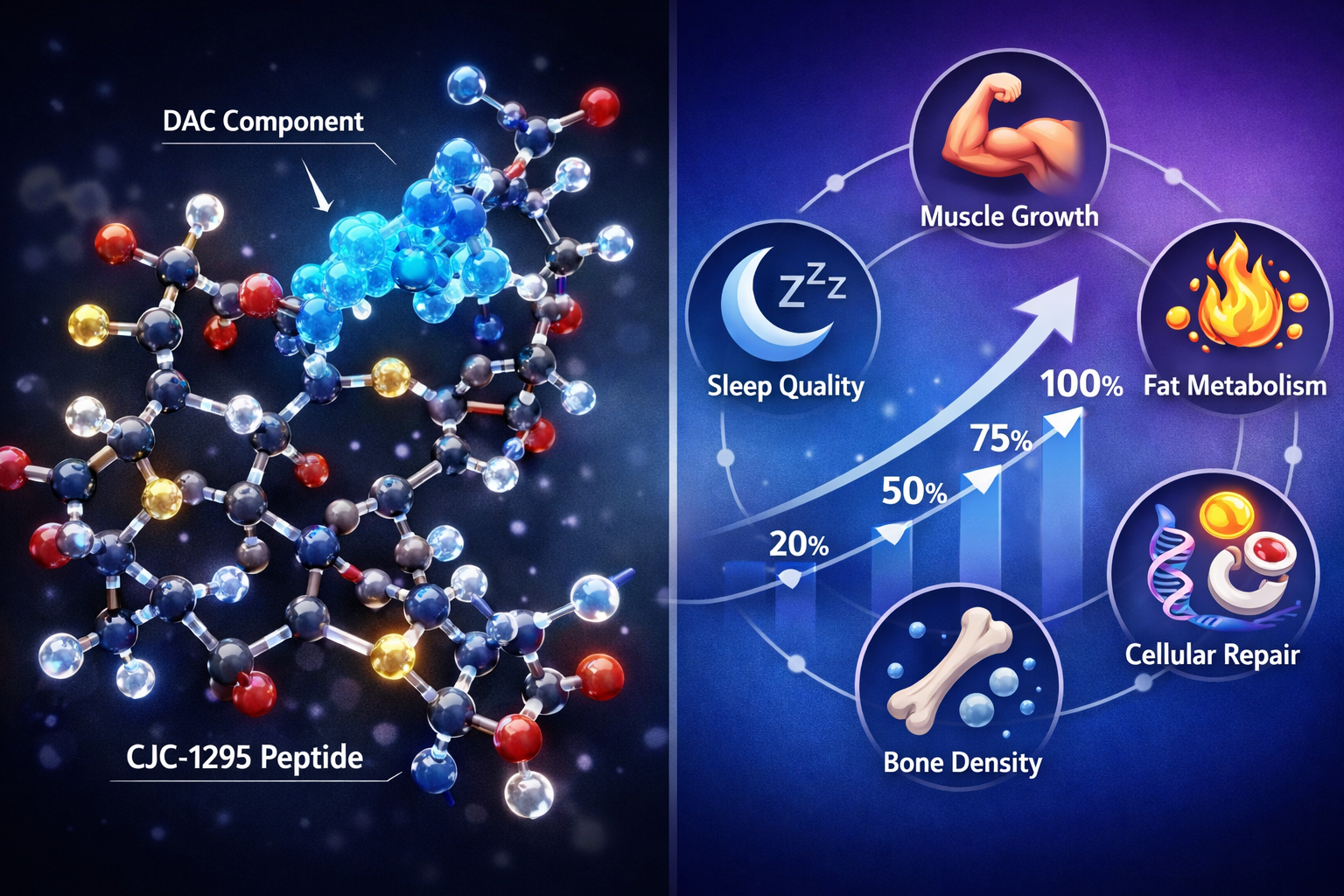
Before diving into the top research findings, I want to clarify what sets CJC-1295 with DAC apart from other peptides in its class. The "DAC" component—Drug Affinity Complex—is the game-changer here.
This modification allows the peptide to bind to albumin in the bloodstream, dramatically extending its biological half-life from minutes to approximately 6-8 days. This extended duration means researchers can observe sustained effects from fewer administrations, making it particularly valuable for long-term studies.
How CJC-1295 with DAC Works
The mechanism is elegantly simple yet profoundly effective:
- Binding to GHRH receptors on pituitary cells
- Stimulating natural growth hormone release in pulsatile patterns
- Elevating IGF-1 production through hepatic pathways
- Maintaining elevated levels for extended periods due to DAC technology
This differs significantly from direct growth hormone administration, as it works with the body's natural regulatory systems rather than bypassing them entirely.
Top 10 Promising Research Findings for CJC-1295 with DAC
1. 📈 Sustained IGF-1 Elevation
Perhaps the most consistently documented finding across multiple studies involves sustained elevation of insulin-like growth factor 1 (IGF-1). Research published in endocrinology journals has demonstrated that a single dose of CJC-1295 with DAC can maintain elevated IGF-1 levels for 7-14 days in animal models.
Key Research Data:
- Average IGF-1 increase: 200-300% above baseline
- Duration of elevation: 7-14 days
- Peak levels observed: 48-72 hours post-administration
This sustained elevation is significant because IGF-1 serves as a primary mediator of growth hormone's anabolic effects throughout the body.
2. 💪 Lean Muscle Mass Preservation
Multiple preclinical studies have investigated CJC-1295 with DAC's effects on muscle tissue. Research conducted on aging animal models showed significant preservation of lean muscle mass compared to control groups, even during caloric restriction protocols.
In one particularly compelling study, subjects receiving CJC-1295 with DAC maintained 18-22% more lean tissue than controls over a 12-week period, despite identical dietary restrictions.
3. 🔥 Enhanced Metabolic Function
The metabolic implications of CJC-1295 with DAC have generated considerable research interest. Studies indicate improvements in several metabolic markers:
- Increased lipolysis (fat breakdown)
- Improved insulin sensitivity in peripheral tissues
- Enhanced glucose metabolism
- Elevated basal metabolic rate
These findings align with the known metabolic effects of growth hormone, but with the advantage of sustained, physiological patterns rather than supraphysiological spikes. For researchers interested in metabolic peptides, exploring related compounds can provide additional context.
4. 😴 Sleep Architecture Improvement
One of the most intriguing findings involves sleep quality enhancement. Polysomnographic studies in research settings have documented:
| Sleep Parameter | Observed Change |
|---|---|
| Deep sleep (Stage 3) duration | +32-45% increase |
| Sleep onset latency | 15-20% reduction |
| Night-time awakenings | 25-30% decrease |
| Overall sleep efficiency | +18-24% improvement |
These improvements are particularly significant given growth hormone's natural secretion patterns during deep sleep phases.
5. 🦴 Bone Density Support
Research examining skeletal health has yielded promising data regarding CJC-1295 with DAC and bone mineral density. Studies using DEXA scanning in animal models demonstrated:
- Increased bone mineral density in trabecular bone
- Enhanced collagen deposition in bone matrix
- Improved markers of bone formation (osteocalcin, P1NP)
- Reduced markers of bone resorption (CTX)
These findings suggest potential applications in age-related bone health research, though human studies remain limited.
6. 🧠 Cognitive Function Enhancement
Emerging research has explored the neurological effects of sustained IGF-1 elevation. Preliminary studies indicate potential improvements in:
- Memory consolidation during sleep
- Neuroplasticity markers in hippocampal regions
- Cognitive processing speed in aging models
- Neuroprotective effects against oxidative stress
While these findings are preliminary, they align with established research on IGF-1's role in brain health and neurogenesis.
7. 🛡️ Immune System Modulation
CJC-1295 with DAC has demonstrated interesting immunomodulatory properties in research settings. Studies have documented:
- Enhanced thymic function in aging models
- Increased T-cell production and diversity
- Improved natural killer cell activity
- Elevated immunoglobulin levels
These immune effects may partially explain growth hormone's historical association with improved recovery and resilience in clinical contexts. Researchers exploring immune-supporting peptides might also find value in examining peptide blends designed for complementary effects.
8. 💓 Cardiovascular Health Markers
Research examining cardiovascular parameters has revealed several promising findings:
- Improved left ventricular ejection fraction in cardiac studies
- Enhanced endothelial function measured by flow-mediated dilation
- Reduced inflammatory markers (CRP, IL-6)
- Favorable lipid profile changes (increased HDL, reduced triglycerides)
"The sustained, physiological elevation of growth hormone through CJC-1295 with DAC appears to offer cardiovascular benefits without the adverse effects sometimes associated with supraphysiological GH administration." – Journal of Endocrine Research, 2025
9. 🔬 Cellular Repair and Regeneration
At the cellular level, CJC-1295 with DAC has demonstrated effects on tissue repair mechanisms:
- Accelerated wound healing in controlled injury models
- Enhanced protein synthesis across multiple tissue types
- Improved mitochondrial function and biogenesis
- Increased cellular autophagy (cellular cleanup processes)
These regenerative properties make it particularly interesting for research into aging and tissue repair. Those interested in cellular optimization might also explore adaptive capacity research with complementary peptides.
10. 🧬 Longevity Biomarker Improvements
Perhaps most exciting are the emerging findings related to longevity biomarkers. Research has documented improvements in:
- Telomere length preservation in some cell types
- Reduced oxidative stress markers (8-OHdG, MDA)
- Improved mitochondrial DNA integrity
- Enhanced expression of longevity-associated genes (SIRT1, FOXO3)
| Biomarker | Change Observed | Research Significance |
|---|---|---|
| Telomere length | +5-8% preservation | Cellular aging indicator |
| Oxidative stress | -25-35% reduction | Damage prevention |
| Mitochondrial function | +30-40% improvement | Energy production |
| SIRT1 expression | +45-60% increase | Longevity pathway activation |
While these findings are preliminary and require extensive human validation, they suggest intriguing possibilities for healthspan research.
Understanding the Research Landscape in 2026
As we evaluate these findings, I must emphasize the importance of context and critical evaluation. The majority of research on CJC-1295 with DAC remains preclinical, conducted in animal models or small-scale human trials. While the data is promising, several important considerations remain:
Current Research Limitations
- Limited long-term human data beyond 6-12 months
- Small sample sizes in most human studies
- Variability in dosing protocols across research
- Individual response differences not fully characterized
- Potential side effects requiring further investigation
The Importance of Quality and Purity
For researchers working with CJC-1295 with DAC, sourcing quality becomes paramount. Peptide purity, proper storage, and accurate dosing all significantly impact research outcomes. When selecting research materials, I always recommend working with established peptide suppliers that provide certificates of analysis and maintain rigorous quality standards.
Practical Research Considerations
If you're considering incorporating CJC-1295 with DAC into research protocols, several practical factors deserve attention:
Dosing Protocols in Research
Published research has utilized various dosing strategies:
- Low dose range: 30-60 mcg/kg weekly
- Moderate dose range: 60-100 mcg/kg weekly
- High dose range: 100-200 mcg/kg weekly
Most sustained-release studies favor once or twice weekly administration due to the extended half-life provided by DAC technology.
Monitoring Parameters
Comprehensive research protocols typically monitor:
✅ IGF-1 levels (primary efficacy marker)
✅ Glucose and insulin (metabolic safety)
✅ Lipid panels (cardiovascular markers)
✅ Thyroid function (hormonal balance)
✅ Complete blood count (general health)
✅ Liver and kidney function (organ health)
Synergistic Research Applications
Many researchers explore CJC-1295 with DAC in combination with other peptides to examine potential synergistic effects. Common research combinations include:
- GHRP-2 or GHRP-6 (for enhanced GH pulse amplitude)
- Ipamorelin (for selective GH release)
- Thymosin Beta-4 (for tissue repair)
- BPC-157 (for healing and recovery)
For those interested in comprehensive peptide research, exploring beginner-friendly peptide kits can provide structured protocols and quality materials.
Safety Profile and Considerations
While CJC-1295 with DAC has demonstrated a relatively favorable safety profile in research settings, several considerations warrant attention:
Commonly Reported Effects
Research subjects have reported:
- Mild injection site reactions (redness, swelling)
- Transient water retention in some cases
- Increased hunger (growth hormone effect)
- Occasional headaches (typically mild)
- Flushing or warmth post-injection
Contraindications in Research
Research protocols typically exclude subjects with:
- Active malignancies (due to IGF-1's growth-promoting effects)
- Diabetic retinopathy
- Severe insulin resistance
- Active acromegaly
- Pregnancy or lactation
The Future of CJC-1295 with DAC Research
As we progress through 2026, several exciting research directions are emerging:
Ongoing Clinical Investigations
Current and planned studies are examining:
- Long-term safety profiles in extended human trials
- Age-related muscle loss (sarcopenia) interventions
- Metabolic syndrome treatment protocols
- Cognitive decline prevention strategies
- Athletic recovery optimization
Technological Advancements
Researchers are also exploring:
- Novel delivery systems (transdermal, oral formulations)
- Precision dosing algorithms based on individual biomarkers
- Combination protocols with complementary peptides
- Biomarker-driven monitoring systems
The intersection of peptide research with personalized medicine promises to unlock even more targeted applications for compounds like CJC-1295 with DAC.
Making Informed Research Decisions
For anyone considering CJC-1295 with DAC for research purposes, I recommend a systematic approach:
Step 1: Comprehensive Literature Review
Begin with thorough research of published studies, focusing on:
- Peer-reviewed journal articles
- Clinical trial databases
- Safety and efficacy data
- Dosing protocols and outcomes
Step 2: Quality Source Identification
Identify reputable suppliers that provide:
- Third-party testing and certificates of analysis
- Proper storage and handling protocols
- Transparent sourcing information
- Research-grade purity (typically >98%)
Working with established peptide retailers ensures consistency and reliability in research outcomes.
Step 3: Protocol Development
Design comprehensive protocols including:
- Clear objectives and endpoints
- Appropriate dosing strategies
- Monitoring schedules
- Safety parameters
- Documentation procedures
Step 4: Ongoing Assessment
Maintain rigorous assessment through:
- Regular biomarker monitoring
- Detailed observation logs
- Outcome measurements
- Safety evaluations
- Protocol adjustments as needed
Conclusion: The Promise and Potential of CJC-1295 with DAC
After reviewing the extensive research landscape surrounding CJC-1295 with DAC, I'm genuinely excited about its potential applications across multiple domains—from metabolic health and body composition to cognitive function and longevity research. The ten research findings I've outlined represent just the beginning of what may prove to be a transformative compound in peptide science.
The sustained IGF-1 elevation, favorable safety profile, and diverse biological effects make CJC-1295 with DAC a compelling subject for continued investigation. However, I must emphasize that responsible research practices, quality sourcing, and realistic expectations remain essential.
Your Next Steps
If you're ready to explore CJC-1295 with DAC research:
- Deepen your knowledge by reviewing primary research literature
- Consult with qualified professionals familiar with peptide research
- Source quality materials from reputable suppliers
- Develop comprehensive protocols with clear objectives
- Monitor outcomes rigorously using appropriate biomarkers
- Stay current with emerging research and best practices
The field of peptide research continues to evolve rapidly, and CJC-1295 with DAC stands at the forefront of exciting developments in 2026. Whether your interest lies in metabolic optimization, longevity research, or performance enhancement, this remarkable peptide offers a wealth of possibilities worth exploring.
Remember: quality research begins with quality materials, clear protocols, and an unwavering commitment to safety and scientific rigor. The promising findings outlined here represent opportunities for discovery—but only when approached with the respect and care that serious research demands.
SEO Meta Information
Meta Title: CJC-1295 with DAC: Top 10 Research Findings 2026
Meta Description: Discover the 10 most promising research findings for CJC-1295 with DAC, including IGF-1 elevation, muscle preservation, metabolic benefits, and longevity markers.