
Core Peptides: Promising Research in Peptide Science for IBS-C and IBS-D in 2025
Irritable Bowel Syndrome (IBS) affects millions worldwide, manifesting as a debilitating disorder characterized by abdominal pain, bloating, and altered bowel habits, often categorized as IBS with constipation (IBS-C) or IBS with diarrhea (IBS-D). For years, managing IBS has been a complex challenge, with many existing treatments offering only symptomatic relief. However, a new frontier in therapeutic development is emerging: the investigation of core peptides as potential game-changers. This exciting area of research peptides science is revealing how these small chains of amino acids can intricately modulate gut function, offering novel approaches to alleviate the discomfort and improve the quality of life for individuals suffering from IBS. The peptide science IBS connection is deepening, with specific IBS core peptides showing remarkable promise in clinical and preclinical studies. This article delves into the most promising peptide IBS candidates, exploring their mechanisms and potential, while also touching upon crucial aspects like peptides for constipation and a general overview of peptides side effects. As we navigate 2025, the advancements in this field are rapidly reshaping our understanding of gut health and therapeutic innovation.
Key Takeaways:
- Peptides Offer Targeted Relief: Core peptides interact with specific receptors and pathways in the gut, offering more precise mechanisms to address IBS symptoms compared to broader, systemic drugs.
- Diverse Mechanisms of Action: Different peptides are being researched for IBS-C and IBS-D, with some promoting fluid secretion and gut motility for constipation, and others reducing inflammation and hypersensitivity for diarrhea.
- Emerging Clinical Evidence: While still in various stages of research, several peptides have already gained FDA approval for IBS-C, demonstrating the clinical viability and efficacy of peptide-based therapies.
- Importance of Responsible Research: Due to the complexity and emerging nature of peptide science, it is crucial for researchers and individuals to source high-quality, pure research peptides from reputable suppliers for accurate study.
- Potential for Fewer Systemic Side Effects: Peptides often act locally within the gut, potentially leading to fewer systemic peptides side effects compared to other medications that affect the entire body.
Understanding the Landscape of IBS and the Rise of Core Peptides
IBS is not merely a digestive issue; it's a complex disorder involving the gut-brain axis, visceral hypersensitivity, motility disturbances, and sometimes low-grade inflammation. This multifaceted nature makes it particularly challenging to treat effectively. Traditional treatments often focus on symptom management, such as laxatives for constipation, anti-diarrheals for diarrhea, and antispasmodics for pain. While these can offer some relief, they frequently come with limitations and side effects, and do not address the underlying pathology for many patients.
This is where the burgeoning field of peptide science offers a beacon of hope. Peptides are naturally occurring biological molecules that play crucial roles in countless physiological processes, including digestion, immunity, and pain modulation. Their specificity – meaning they bind to particular receptors or enzymes – makes them attractive candidates for highly targeted therapies with potentially fewer off-target effects. When it comes to IBS core peptides, researchers are exploring how these molecules can specifically influence gut motility, fluid secretion, pain perception, and inflammatory responses within the digestive tract.
The human body naturally produces a vast array of peptides, many of which are involved in regulating gastrointestinal (GI) function. For instance, hormones like cholecystokinin (CCK) and secretin are peptides that control digestive enzyme release and bile flow. By understanding and mimicking these natural processes, scientists can design synthetic research peptides that can precisely target the dysfunctions seen in IBS. The year 2025 sees an intensified focus on unlocking these mechanisms.
What are Core Peptides in the Context of IBS?
In the realm of IBS treatment, "core peptides" refer to specific peptide sequences that have demonstrated significant potential in modulating the physiological pathways implicated in IBS-C and IBS-D. These are not merely general peptides but rather those identified through rigorous research peptides science as having a direct and impactful role in alleviating IBS symptoms. They often mimic or enhance the action of naturally occurring gut peptides or target specific receptors to restore normal gut function.
For example, some peptides work by stimulating chloride and bicarbonate secretion into the intestinal lumen, increasing fluid content and softening stool – a beneficial mechanism for peptides for constipation (IBS-C). Others might regulate inflammation in the gut, reduce visceral pain signaling, or normalize gut motility, which would be highly valuable for both IBS-C and IBS-D, depending on the specific mechanism. The ongoing work in peptide science IBS is continuously expanding the library of these core peptides. To ensure the integrity of such vital research, it is paramount to procure peptides from reliable sources, such as those found at Pure Tested Peptides.
Core Peptides Showing Promise for IBS-C (Constipation)
IBS-C is characterized by infrequent bowel movements, hard stools, straining, and a feeling of incomplete evacuation. The primary goal of treatment is to increase stool frequency and improve consistency while reducing abdominal pain and bloating. Several IBS core peptides have emerged as leading candidates in this area.
1. Guanylate Cyclase-C (GC-C) Agonists
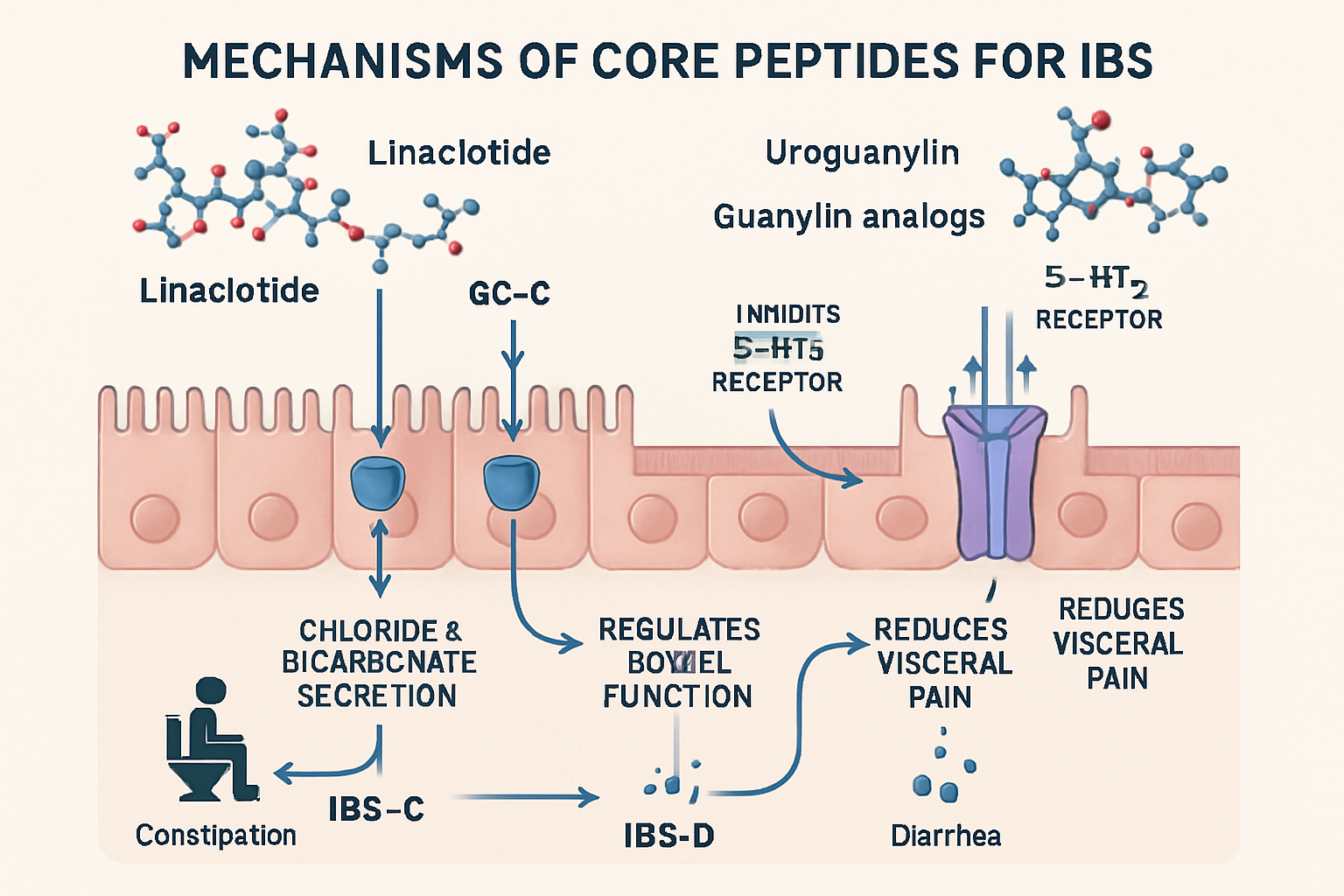
This class of peptides represents some of the most successful applications of peptide science in treating IBS-C to date. They work by binding to and activating the guanylate cyclase-C (GC-C) receptor, which is found on the surface of intestinal cells. Activation of this receptor leads to an increase in intracellular cyclic guanosine monophosphate (cGMP). This cascade then triggers two key events:
- Increased Fluid Secretion: cGMP activates the cystic fibrosis transmembrane conductance regulator (CFTR) ion channel, which secretes chloride and bicarbonate into the intestinal lumen. Water follows, softening the stool and increasing its volume.
- Accelerated Transit: The increased fluid and volume help to stimulate bowel movements, thereby relieving constipation.
- Pain Reduction: Interestingly, increased cGMP also has an analgesic effect, reducing visceral pain associated with IBS-C.
Key Peptides in this Class:
- Linaclotide: This 14-amino acid peptide for constipation was one of the first in its class to gain FDA approval for treating IBS-C and chronic idiopathic constipation (CIC). Research in 2025 continues to explore its long-term efficacy and safety profiles.
- Plecanatide: Another GC-C agonist, plecanatide, is also approved for IBS-C and CIC. It functions similarly to linaclotide but may have a different side effect profile, particularly regarding diarrhea. Its effect is more localized, potentially leading to fewer systemic peptides side effects.
- Tenapanor: While technically not a GC-C agonist, tenapanor (an NHE3 inhibitor) has a similar effect on fluid secretion and transit by inhibiting sodium absorption. It often gets grouped with these agents due to its functional outcome for IBS-C.
These peptides represent a significant advancement in peptide IBS treatment, providing targeted relief for chronic constipation and associated symptoms. The development of such precise therapeutics underscores the potential of research peptides science to transform patient care.
2. Motilin Agonists
Motilin is a naturally occurring peptide hormone that stimulates gut motility, particularly in the stomach and small intestine, playing a role in the migrating motor complex (MMC). Agonists of the motilin receptor could potentially enhance gut transit, making them attractive IBS core peptides for constipation. While still largely in earlier stages of research for IBS-C compared to GC-C agonists, the concept holds promise for addressing impaired motility.
Core Peptides Showing Promise for IBS-D (Diarrhea)
IBS-D is characterized by frequent loose or watery stools, often accompanied by urgency and abdominal pain. Treatment strategies aim to reduce stool frequency, improve consistency, and alleviate pain. The landscape of peptide science IBS for IBS-D is also rapidly evolving.
1. Opioid Receptor Agonists (Peripheral Acting)
While traditional opioids are typically avoided due to central nervous system side effects and addiction potential, peripherally acting opioid receptor agonists offer a solution. These peptides selectively target opioid receptors in the gut, reducing gut motility and fluid secretion without crossing the blood-brain barrier. This localized action minimizes systemic peptides side effects.
Key Peptides in this Class:
- Eluxadoline: This orally active peptide is a mixed μ-opioid receptor agonist and δ-opioid receptor antagonist, with a κ-opioid receptor agonist effect. It acts locally in the gut to reduce abdominal pain and improve stool consistency in patients with IBS-D. Its peripheral action means it provides effective relief while largely avoiding the central nervous system effects associated with conventional opioids. This selective action exemplifies the precision achievable through research peptides science.
2. Somatostatin Analogs
Somatostatin is a natural peptide hormone that inhibits the secretion of various gut hormones and reduces gastrointestinal motility and fluid secretion. Synthetic analogs of somatostatin are being investigated for their potential to manage IBS-D symptoms by slowing intestinal transit and decreasing fluid output.
Key Peptides in this Class:
- Octreotide: While primarily used for neuroendocrine tumors and severe diarrhea associated with specific conditions, octreotide, a somatostatin analog, has been explored off-label for severe, refractory IBS-D. Its efficacy in reducing stool frequency and improving consistency highlights the potential of similar IBS core peptides with a better safety profile for broader IBS-D use. Continued peptide science investigations aim to develop more targeted somatostatin analogs with fewer overall side effects.
3. Anti-inflammatory and Gut Barrier Repair Peptides
Low-grade inflammation and compromised gut barrier function are increasingly recognized contributors to IBS symptoms, particularly in IBS-D. Research peptides science is exploring peptides that can reduce gut inflammation, enhance the integrity of the intestinal lining, and modulate immune responses.
Key Peptides in this Class:
- BPC-157: Although not specifically an FDA-approved treatment for IBS, BPC-157 is a synthetically produced peptide derived from a stomach protein that has garnered significant interest in research peptides science for its broad regenerative and protective properties. In preclinical studies, BPC-157 has shown remarkable abilities to protect and heal various tissues, including the gastrointestinal tract. It demonstrates anti-inflammatory effects, promotes angiogenesis (formation of new blood vessels), and accelerates wound healing. For individuals experiencing gut damage, leaky gut syndrome, or inflammation often associated with IBS-D, BPC-157 could represent a promising area for further research. While more human trials are needed, its potential to heal mucosal damage and modulate inflammatory pathways makes it a compelling candidate among IBS core peptides. Researchers interested in exploring its properties can find high-quality BPC-157 here.
- LL-37 and SS-31 (Mots-c and SS-31 Synergy): These peptides, often studied in synergy, are also gaining attention. LL-37 is an antimicrobial peptide with immunomodulatory functions, and SS-31 is a mitochondrial-targeting peptide with antioxidant properties. Their combined potential to modulate the immune system and protect cellular health could be beneficial for IBS patients with an inflammatory component. Further details on their synergistic effects can be explored at Synergy of LL37 and SS31. Similarly, the synergy between LL-37 and MOTS-c, which has roles in metabolic regulation and mitochondrial health, offers another fascinating avenue for research into gut inflammation and energy metabolism, relevant to the systemic symptoms often accompanying IBS. More information on this can be found at Synergy of LL37 and MOTS-c.
These types of peptides move beyond simply managing symptoms to potentially addressing some of the underlying causes of IBS, highlighting the innovative trajectory of peptide science IBS.
Potential Peptides Side Effects and Considerations in Research
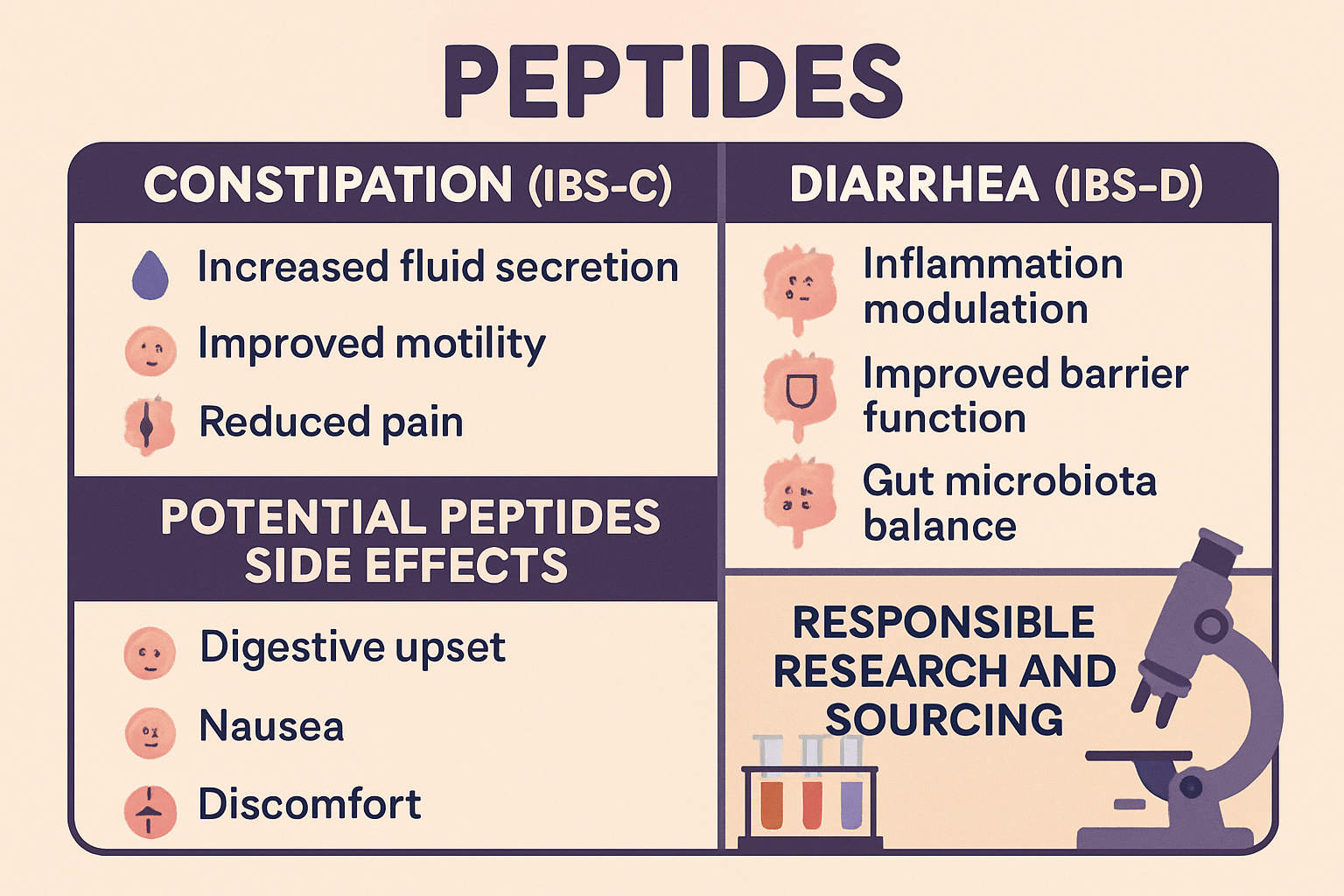
While core peptides offer targeted action and often have a better safety profile than conventional drugs, it's crucial to acknowledge that they are not without potential peptides side effects. The nature and severity of side effects can vary greatly depending on the specific peptide, its dosage, the individual's sensitivity, and the route of administration.
Common side effects observed with approved peptides for constipation like linaclotide and plecanatide include diarrhea (especially at higher doses), abdominal pain, and flatulence. For peripherally acting opioid agonists like eluxadoline, potential side effects can include nausea, abdominal pain, and constipation. There is also a rare but serious risk of pancreatitis with eluxadoline, especially in patients without a gallbladder.
For research peptides science involving unapproved or novel peptides, the full spectrum of potential peptides side effects is still being investigated. This underscores the importance of:
- Controlled Research Environments: All studies involving research peptides should be conducted under strict ethical guidelines and scientific protocols to monitor efficacy and safety.
- Quality and Purity of Peptides: Sourcing peptides from reputable suppliers is paramount. Impure products or mislabeled peptides can lead to unreliable research results and unforeseen side effects. For researchers, understanding the importance of high-quality peptide sources is key, which is why resources like Pure Tested Peptides are invaluable.
- Dosage and Administration: Appropriate dosing and administration routes are critical to maximize therapeutic benefit and minimize adverse effects.
- Individual Variability: Responses to peptides can vary between individuals, requiring careful monitoring and personalized approaches in clinical settings.
Researchers must also be aware of the regulatory landscape, as many promising IBS core peptides are still in experimental stages and not approved for human use outside of clinical trials. The information provided in this article is for informational and educational purposes, pertaining to research, and should not be interpreted as medical advice or as an endorsement for self-medication.
The Future of Peptide Science for IBS in 2025 and Beyond
The year 2025 marks a period of significant growth and discovery in peptide science IBS. The understanding of the gut microbiome, gut-brain axis, and specific molecular pathways involved in IBS is expanding, opening new avenues for peptide-based therapies.
Future research directions for core peptides in IBS include:
- Novel Receptor Targets: Identifying new receptors or enzymes in the gut that can be modulated by peptides to address diverse IBS symptoms.
- Combination Therapies: Exploring the synergistic effects of combining different peptides or peptides with existing therapies to achieve more comprehensive relief.
- Oral Bioavailability: Developing orally bioavailable peptides that are resistant to degradation in the digestive tract, which would significantly improve convenience and patient adherence. This remains a significant challenge, as many peptides are broken down before they can exert their effects.
- Precision Medicine: Tailoring peptide therapies based on an individual's specific IBS subtype, genetic profile, and microbiome composition.
- Peptides for Visceral Pain: A dedicated focus on developing peptides that specifically target and alleviate the chronic abdominal pain that is a hallmark of IBS, potentially without the addictive properties of opioids.
- Long-term Safety Data: As more peptides advance through clinical trials, gathering robust long-term safety and efficacy data will be crucial for broader acceptance and use.
The exciting potential of research peptides science to transform the lives of IBS sufferers is undeniable. By harnessing the body's own communication molecules, scientists are paving the way for more effective, targeted, and potentially safer treatments for this challenging condition. This continuous innovation highlights the dynamic nature of health research and the enduring quest for better therapeutic solutions. Understanding the complexities of these compounds, from their potential benefits to their associated peptides side effects, is crucial for responsible scientific inquiry. For those engaged in research, continuously updating their knowledge on the latest advancements and best practices in the field is essential.
Conclusion
Irritable Bowel Syndrome remains a formidable challenge for patients and healthcare providers alike, yet the landscape of treatment options is undergoing a revolutionary transformation thanks to advancements in peptide science. The targeted action, diverse mechanisms, and emerging clinical successes of core peptides for both IBS-C and IBS-D offer a compelling vision for the future. From GC-C agonists like linaclotide and plecanatide providing relief for constipation, to peripherally acting opioid agonists like eluxadoline addressing diarrhea and pain, the precision of IBS core peptides is proving invaluable. Furthermore, the exploratory research into peptides such as BPC-157 and the synergistic blends of LL-37 with SS-31 or MOTS-c illustrates a move towards therapies that not only manage symptoms but potentially heal the underlying gut pathology.
As we progress through 2025, the commitment to rigorous research peptides science will continue to expand our understanding of these potent molecules, refining their applications and minimizing potential peptides side effects. For shoppers, it's vital to recognize that while the research is highly promising, many peptides are still strictly for research purposes and not approved for human consumption. Always consult with a healthcare professional for diagnosis and treatment of IBS. For those involved in scientific inquiry, ensuring the acquisition of high-purity, well-characterized research peptides is fundamental to achieving valid and reproducible results. The journey of peptide science IBS is a testament to scientific ingenuity, promising a future where IBS patients can experience more profound and lasting relief.
Actionable Next Steps:
- Stay Informed: Keep abreast of the latest developments in peptide science and IBS research by following reputable scientific journals and organizations.
- Consult Healthcare Professionals: If you or someone you know suffers from IBS, discuss emerging treatment options, including approved peptide therapies, with a qualified medical doctor. Do not self-medicate with research peptides.
- Support Ethical Research: For researchers, ensure all studies involving research peptides adhere to strict ethical guidelines and regulatory standards.
- Prioritize Quality Sourcing: If engaged in peptide research, always source your materials from trusted suppliers known for their purity and quality, such as Pure Tested Peptides.
- Understand Limitations: Be aware that while core peptides hold immense promise, they are not a universal cure, and individual responses can vary.
SEO Meta Title: Core Peptides for IBS-C & IBS-D Research in 2025
SEO Meta Description: Explore promising core peptides, research peptides science for IBS-C and IBS-D in 2025. Discover peptide science for IBS, mechanisms, and side effects.