
The Complete Epithalon Dosage Protocol: Your 2025 Research Guide
Imagine unlocking the potential to support cellular longevity and optimize biological processes through precise peptide administration. The epithalon dosage protocol has emerged as one of the most researched approaches in peptide science, offering researchers a structured framework for studying this fascinating tetrapeptide's effects on cellular function and aging mechanisms.
Key Takeaways
• Standard epithalon dosage typically ranges from 5-10mg administered over 10-20 day cycles with rest periods
• Timing and frequency matter significantly – most protocols recommend daily injections during active research phases
• Quality sourcing is critical for reliable research outcomes and safety considerations
• Cycle structure involves active periods followed by rest phases to optimize peptide effectiveness
• Individual variation requires careful monitoring and potential protocol adjustments based on research objectives
Understanding Epithalon: The Foundation of Effective Dosage Protocols
Epithalon, also known as epitalon, represents a synthetic version of the naturally occurring tetrapeptide epithalamin. This remarkable compound consists of four amino acids (Ala-Glu-Asp-Gly) and has garnered significant attention in longevity research circles. The epithalon peptide works primarily by supporting telomerase activity, which plays a crucial role in cellular aging processes.
Research indicates that epithalon may influence circadian rhythms, support immune function, and contribute to overall cellular health. Understanding these mechanisms becomes essential when developing an effective epithalon dosage protocol that maximizes research potential while maintaining safety standards.
The peptide's unique properties require careful consideration of dosing parameters. Unlike some peptides that show immediate effects, epithalon typically requires consistent administration over specific time periods to demonstrate its full research potential. This characteristic makes protocol adherence particularly important for researchers seeking reliable data.
When sourcing epithalon for research purposes, quality becomes paramount. Pure Tested Peptides provides thoroughly tested compounds that meet research-grade standards, ensuring consistency across study protocols.
Standard Epithalon Dosage Protocol Framework
Basic Dosing Parameters
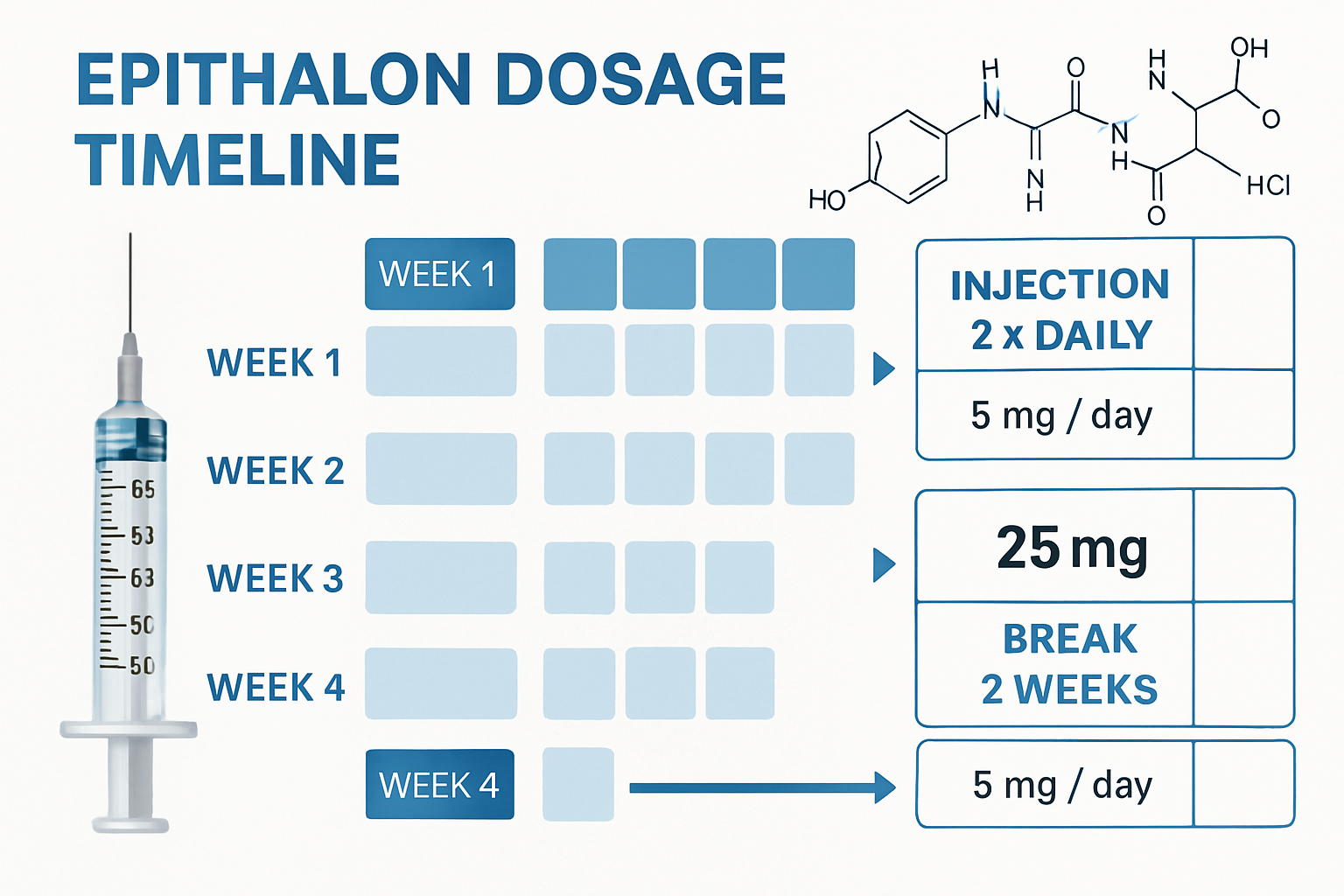
The most commonly referenced epithalon dosage in research literature ranges from 5-10mg per cycle, typically administered as daily subcutaneous injections. Most protocols divide this total amount across 10-20 consecutive days, creating what researchers term an "active cycle."
Common Dosage Breakdown:
- Conservative approach: 5mg total (0.25-0.5mg daily for 10-20 days)
- Standard protocol: 10mg total (0.5-1mg daily for 10-20 days)
- Intensive research: Up to 20mg total (1mg daily for 20 days)
The epithalon 10mg vial represents the most popular research quantity, providing sufficient material for one complete standard cycle. This amount allows researchers to maintain consistent daily dosing while monitoring effects throughout the active period.
Injection Timing and Frequency
Research suggests that epithalon administration timing can influence outcomes. Most protocols recommend evening injections, typically 1-2 hours before intended sleep time. This timing aligns with the peptide's potential effects on circadian rhythm regulation and natural melatonin production.
Daily Administration Schedule:
- Morning option: 30-60 minutes after waking (on empty stomach)
- Evening option: 1-2 hours before bed (preferred by most researchers)
- Consistent timing: Same time daily throughout the active cycle
The subcutaneous injection method proves most common, with rotation between injection sites recommended to prevent tissue irritation. Common sites include the abdomen, thigh, or upper arm areas.
For researchers interested in exploring epithalon peptides further, the Epithalon 50mg option provides extended research capabilities across multiple cycles.
Advanced Epithalon Dosage Protocol Variations
Cycle Length Modifications
While standard protocols typically employ 10-20 day active periods, some research approaches explore alternative cycle lengths based on specific study objectives. Extended protocols may run 30-60 days with reduced daily dosing, while intensive short-term approaches might concentrate higher doses over 5-10 days.
Extended Protocol Example:
- Duration: 30 days
- Daily dose: 0.3-0.5mg
- Total cycle dose: 9-15mg
- Rest period: 60-90 days
Intensive Protocol Example:
- Duration: 10 days
- Daily dose: 1-2mg
- Total cycle dose: 10-20mg
- Rest period: 30-45 days
Combination Protocols
Advanced researchers often explore epithalon and thymalin combinations, leveraging the synergistic potential of multiple peptides. Thymalin, another peptide with immune-supporting properties, may complement epithalon's cellular effects when administered in coordinated protocols.
Combination Considerations:
- Separate injection sites for different peptides
- Staggered timing (morning/evening split)
- Coordinated cycle schedules
- Enhanced monitoring requirements
The epithalon and thymalin bulk sale options provide cost-effective solutions for researchers planning extended combination studies.
Dosage Adjustment Factors
Several factors may influence optimal epithalon dosing for individual research subjects:
Age-Related Considerations:
- Younger subjects: Lower starting doses (5mg cycles)
- Middle-aged subjects: Standard protocols (10mg cycles)
- Older subjects: Potentially higher doses with careful monitoring
Research Objectives:
- Longevity studies: Standard long-term cycling
- Circadian research: Evening-focused protocols
- Cellular studies: Intensive short-term approaches
Epithalon Dosage Protocol Implementation Guidelines
Pre-Protocol Preparation
Successful epithalon dosage protocol implementation requires thorough preparation. Researchers should establish baseline measurements, prepare injection supplies, and create detailed monitoring schedules before beginning active administration.
Essential Preparation Steps:
- Baseline documentation: Record starting parameters
- Supply inventory: Ensure adequate peptide quantity
- Injection materials: Syringes, alcohol swabs, sharps disposal
- Monitoring schedule: Daily tracking system
- Emergency protocols: Adverse reaction procedures
Quality sourcing remains critical during preparation phases. Research-grade epithalon peptide benefits can only be properly evaluated when using verified, pure compounds from reputable suppliers.
Daily Protocol Execution
Consistent daily execution determines protocol success. Researchers should maintain detailed logs documenting injection timing, dosage amounts, injection sites, and any observed effects or reactions.
Daily Execution Checklist:
- ✅ Verify dosage calculation
- ✅ Prepare injection materials
- ✅ Select and clean injection site
- ✅ Administer injection at consistent time
- ✅ Document administration details
- ✅ Monitor for immediate reactions
- ✅ Dispose of materials safely
Monitoring and Documentation
Comprehensive monitoring throughout the active protocol period enables researchers to track progress and identify any concerning developments. Documentation should include both objective measurements and subjective observations.
Key Monitoring Parameters:
- Sleep quality and duration
- Energy levels throughout day
- Injection site reactions
- Any unusual symptoms
- Adherence to timing schedule
For researchers seeking comprehensive peptide research resources, exploring best peptide kits for beginner researchers can provide valuable foundational knowledge.
Safety Considerations and Protocol Modifications
Common Side Effects and Management
While epithalon generally demonstrates excellent tolerability in research settings, some subjects may experience mild effects during protocol implementation. Understanding these potential responses helps researchers maintain safe, effective protocols.
Reported Mild Effects:
- Temporary injection site redness
- Slight drowsiness (when dosed in evening)
- Vivid dreams or altered sleep patterns
- Mild headaches during initial days
Management Strategies:
- Rotate injection sites regularly
- Reduce dosage if effects seem excessive
- Maintain hydration throughout protocol
- Consider timing adjustments for sleep-related effects
When to Modify or Discontinue
Certain situations warrant protocol modifications or discontinuation. Researchers should establish clear criteria for these decisions before beginning active administration.
Modification Triggers:
- Persistent injection site reactions
- Significant sleep disruption
- Unusual fatigue or energy changes
- Any concerning physical symptoms
Discontinuation Criteria:
- Severe allergic reactions
- Persistent adverse effects despite modifications
- Research objectives completed
- Subject withdrawal from study
Rest Period Importance
The rest period between active cycles represents a crucial component of effective epithalon dosage protocols. These breaks allow the body to reset and prevent potential tolerance development while maintaining long-term research viability.
Standard Rest Periods:
- After 10-day cycle: 20-30 days rest
- After 20-day cycle: 40-60 days rest
- After extended cycles: 90+ days rest
During rest periods, researchers can analyze collected data, plan protocol modifications, and prepare for subsequent cycles. This cyclical approach supports sustainable long-term research programs.
Optimizing Your Epithalon Research Protocol
Quality Control and Sourcing
The foundation of any successful epithalon dosage protocol begins with high-quality peptide sourcing. Research outcomes depend heavily on peptide purity, potency, and proper storage conditions from manufacturer to administration.
Quality Indicators:
- Third-party testing certificates
- Proper packaging and labeling
- Clear concentration specifications
- Appropriate storage requirements
- Reputable supplier credentials
When evaluating epithalon for sale options, researchers should prioritize suppliers who provide comprehensive testing documentation and maintain strict quality control standards. The investment in premium peptides typically yields more reliable and reproducible research results.
Storage and Handling Protocols
Proper peptide storage significantly impacts protocol effectiveness. Epithalon requires specific storage conditions to maintain stability and potency throughout the research period.
Storage Requirements:
- Lyophilized peptide: -20°C freezer storage
- Reconstituted solution: 2-8°C refrigeration
- Light protection: Amber vials or dark storage
- Contamination prevention: Sterile handling techniques
- Expiration tracking: Clear labeling and rotation
Understanding best practices for storing research peptides ensures optimal peptide integrity throughout extended research programs.
Protocol Documentation and Analysis
Systematic documentation enables researchers to refine protocols and build upon previous findings. Detailed records support protocol optimization and contribute to the broader research community's understanding of epithalon applications.
Documentation Elements:
- Pre-protocol baselines: Comprehensive initial measurements
- Daily administration logs: Timing, dosage, observations
- Weekly assessments: Structured evaluation periods
- Cycle completion analysis: Comprehensive outcome review
- Long-term tracking: Multi-cycle progression monitoring
Research Protocol Variations by Objective
Different research objectives may require modified epithalon dosage approaches. Tailoring protocols to specific study goals enhances research relevance and outcome quality.
Longevity Research Focus:
- Extended cycles with moderate dosing
- Long-term multi-cycle programs
- Comprehensive biomarker tracking
- Lifestyle factor integration
Circadian Rhythm Studies:
- Evening administration emphasis
- Sleep quality monitoring
- Melatonin level assessments
- Light exposure coordination
Cellular Research Applications:
- Intensive short-term protocols
- Biomarker-focused monitoring
- Combination peptide approaches
- Laboratory parameter tracking
For researchers interested in exploring complementary approaches, investigating applied wellness research with peptides can provide valuable insights into comprehensive research methodologies.
Advanced Protocol Considerations and Future Directions
Personalization Strategies
As epithalon research evolves, personalized protocol approaches show increasing promise. Individual variation in response patterns suggests that customized epithalon dosing strategies may optimize research outcomes.
Personalization Factors:
- Genetic considerations: Telomerase activity variations
- Age-related adjustments: Life stage-appropriate dosing
- Health status factors: Baseline condition considerations
- Response patterns: Individual tolerance and effectiveness
- Lifestyle integration: Schedule and preference accommodation
Emerging Research Applications
Current research explores novel applications for epithalon beyond traditional longevity studies. These emerging areas may require specialized epithalon dosage protocol modifications.
Innovative Research Areas:
- Cognitive function studies: Memory and learning assessments
- Athletic performance research: Recovery and adaptation protocols
- Stress response evaluation: Cortisol and adaptation markers
- Immune function analysis: Comprehensive immune panel tracking
- Metabolic research: Energy production and utilization studies
Technology Integration
Modern research increasingly incorporates technological tools to enhance protocol monitoring and data collection. These innovations support more precise epithalon peptide research methodologies.
Technology Applications:
- Wearable devices: Continuous sleep and activity monitoring
- Mobile apps: Protocol tracking and reminder systems
- Laboratory automation: Biomarker analysis efficiency
- Data analytics: Pattern recognition and outcome prediction
- Telemedicine: Remote monitoring and consultation
The integration of technology with traditional research methods creates opportunities for more comprehensive and accurate protocol evaluation.
Regulatory and Ethical Considerations
Responsible epithalon research requires attention to regulatory guidelines and ethical standards. Researchers must navigate these requirements while maintaining scientific rigor and participant safety.
Key Considerations:
- Institutional review: Proper approval processes
- Informed consent: Comprehensive participant education
- Safety monitoring: Ongoing risk assessment
- Data protection: Privacy and confidentiality measures
- Reporting standards: Transparent outcome documentation
Understanding these requirements ensures research programs meet professional standards while contributing meaningfully to scientific knowledge.
For researchers seeking comprehensive peptide research resources, exploring the comprehensive catalog tour provides valuable insights into available research tools and methodologies.
Building Long-Term Epithalon Research Programs
Multi-Cycle Planning
Successful long-term epithalon research requires strategic planning across multiple cycles. This approach enables researchers to track cumulative effects and optimize protocols based on progressive findings.
Long-Term Planning Elements:
- Cycle scheduling: Optimal timing between active periods
- Progressive adjustments: Protocol refinement based on results
- Biomarker evolution: Long-term trend analysis
- Supply management: Consistent peptide sourcing strategies
- Documentation systems: Comprehensive record maintenance
Sample 12-Month Research Timeline:
- Months 1-2: Baseline establishment and first cycle
- Months 3-4: Rest period and data analysis
- Months 5-6: Second cycle with protocol adjustments
- Months 7-8: Extended rest and comprehensive evaluation
- Months 9-10: Third cycle optimization
- Months 11-12: Final analysis and future planning
Cost-Effectiveness Strategies
Long-term epithalon research programs require careful budget management. Strategic purchasing and protocol optimization can significantly impact research sustainability.
Cost Management Approaches:
- Bulk purchasing: Volume discounts for extended research
- Protocol efficiency: Optimal dosing for maximum benefit
- Waste minimization: Proper storage and handling procedures
- Supplier relationships: Long-term partnership development
- Research collaboration: Shared costs and resources
Researchers planning extensive programs should consider epithalon and thymalin bulk sale options to optimize research budgets while maintaining quality standards.
Data Integration and Analysis
Comprehensive data integration across multiple cycles provides valuable insights into epithalon's long-term effects and optimal protocol parameters.
Data Analysis Components:
- Trend identification: Long-term pattern recognition
- Dose-response relationships: Optimal dosing determination
- Individual variation: Personalization factor identification
- Protocol effectiveness: Comparative analysis across cycles
- Safety profile: Long-term tolerability assessment
Advanced analytical approaches enable researchers to extract maximum value from collected data while informing future protocol improvements.
Conclusion
The epithalon dosage protocol represents a sophisticated approach to peptide research that requires careful planning, consistent execution, and thorough monitoring. Success depends on understanding the fundamental principles of epithalon administration while adapting protocols to specific research objectives and individual factors.
Key protocol elements include proper dosage calculation (typically 5-10mg per cycle), consistent daily administration timing, appropriate cycle length (10-20 days), and adequate rest periods between cycles. Quality sourcing, proper storage, and comprehensive documentation form the foundation of reliable research outcomes.
Actionable Next Steps:
- Establish research objectives and select appropriate protocol parameters
- Source high-quality epithalon from reputable suppliers with proper testing documentation
- Prepare comprehensive monitoring systems before beginning active administration
- Implement protocols consistently with detailed daily documentation
- Analyze results thoroughly and plan future cycle modifications based on findings
- Build long-term research programs incorporating lessons learned from initial cycles
For researchers ready to begin their epithalon research journey, Pure Tested Peptides offers comprehensive resources, quality compounds, and expert support to ensure successful protocol implementation.
The future of epithalon research continues evolving as new applications emerge and protocols become increasingly sophisticated. By following established guidelines while remaining open to innovation, researchers can contribute meaningfully to our understanding of this remarkable peptide's potential in supporting human health and longevity.
Remember that epithalon research requires patience, precision, and commitment to scientific rigor. The most valuable insights often emerge through careful long-term study rather than rushed short-term approaches. Invest in quality materials, maintain detailed records, and prioritize safety throughout every aspect of your research program.
SEO Meta Title: Epithalon Dosage Protocol Guide 2025 | Research & Safety Tips
SEO Meta Description: Complete epithalon dosage protocol guide covering dosing, timing, cycles, and safety. Expert research insights for optimal peptide administration in 2025.