

GLP-3 Appetite Suppression: The Triple-Hormone Revolution Transforming Weight Management in 2026
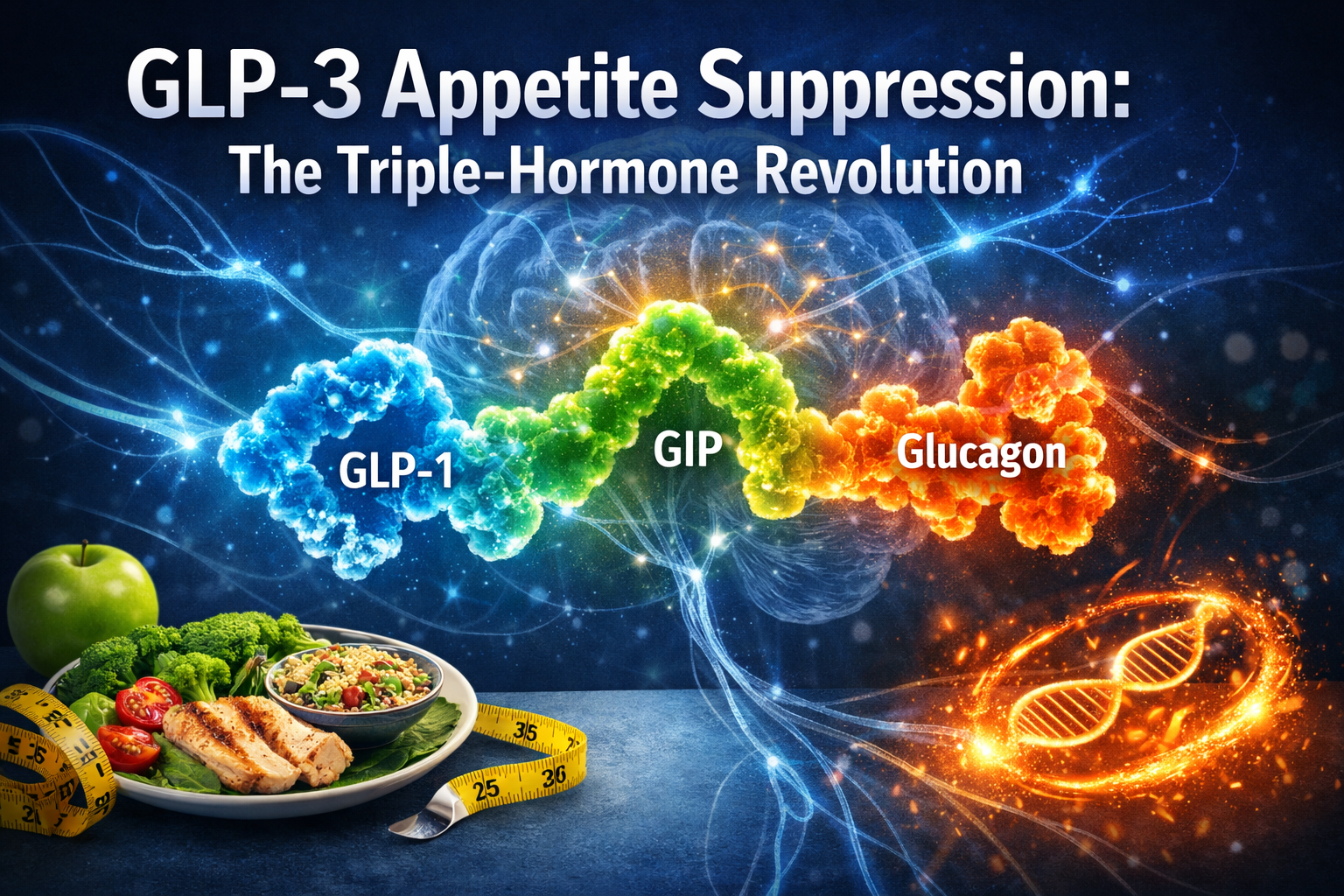
Imagine losing nearly 72 pounds in just over a year without feeling constantly hungry or deprived. For decades, weight loss medications promised results but often fell short of expectations. Now, a new generation of GLP-3 appetite suppression compounds is rewriting the rules of metabolic health, delivering outcomes that approach surgical interventions without going under the knife. Unlike earlier single-hormone medications, GLP-3 appetite suppression leverages a powerful triple-hormone mechanism that targets hunger, metabolism, and fat breakdown simultaneously—creating a comprehensive approach to weight management that fitness enthusiasts and peptide shoppers are watching closely in 2026.
Key Takeaways
- Triple-hormone power: GLP-3 appetite suppression compounds like retatrutide activate three distinct hunger-regulating hormones (GLP-1, GIP, and glucagon) compared to older medications that target only one or two pathways[1][3]
- Clinical results exceed expectations: Phase 3 trials demonstrate average weight loss of 71.8 pounds (28.7% body weight reduction) after 68 weeks, with participants continuing to lose weight beyond trial periods[1][3]
- Appetite control mechanism: The combination of slower digestion, enhanced fullness signals, and reduced food cravings makes smaller portions feel more satisfying while speeding metabolism[1][4]
- Beyond weight loss: Additional benefits include significant pain reduction (76% decrease in knee pain) and improved metabolic markers, suggesting broader health applications[3]
- Availability timeline: Seven additional phase 3 trials are expected to complete in 2026, with potential FDA approval anticipated for 2027[1][3]
Understanding GLP-3 Appetite Suppression: The Science Behind Triple-Hormone Action
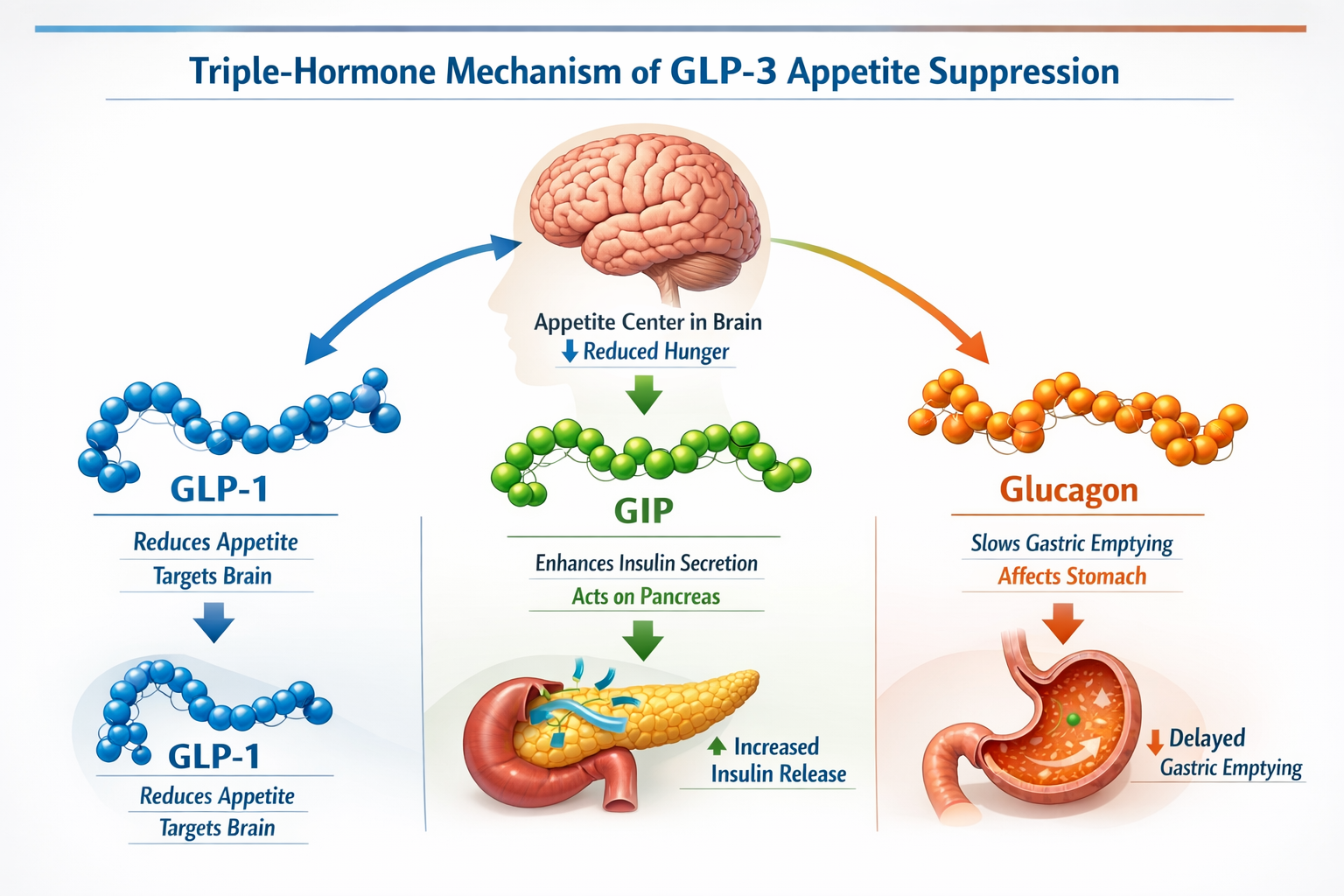
The term "GLP-3 appetite suppression" refers to a revolutionary class of weight management compounds that work through three complementary hormone pathways rather than relying on a single mechanism. This multi-targeted approach represents a significant evolution in peptide-based metabolic interventions.
The Three Hormones Driving Appetite Control
GLP-1 (Glucagon-Like Peptide-1) acts as the first pillar of GLP-3 appetite suppression by targeting brain regions that regulate hunger signals. When activated, GLP-1 receptors send powerful satiety messages that reduce food cravings and help individuals feel satisfied with smaller portions. This hormone also signals the pancreas to release insulin at appropriate times and slows the movement of food through the digestive system[1].
GIP (Glucose-Dependent Insulinotropic Polypeptide) serves as the second component of GLP-3 appetite suppression, working alongside GLP-1 to enhance appetite control and influence how the body processes nutrients. GIP receptors in the brain contribute to reduced food intake while also affecting insulin sensitivity and fat storage patterns[1].
Glucagon completes the triple-hormone mechanism by addressing the metabolic side of weight management. While GLP-1 and GIP focus primarily on appetite suppression and glucose control, glucagon accelerates metabolism and promotes the breakdown of stored fat cells for energy. This metabolic boost helps the body actively reduce fat stores rather than simply preventing new fat accumulation[1].
How GLP-3 Appetite Suppression Differs from Earlier Medications
Traditional weight loss medications like Ozempic and Wegovy rely solely on GLP-1 receptor activation. While effective, these single-hormone approaches have limitations in both efficacy and metabolic impact. Mounjaro expanded the concept by combining GLP-1 and GIP (dual-hormone action), showing improved results over GLP-1-only medications[3].
GLP-3 appetite suppression compounds like retatrutide take this evolution one step further by adding glucagon to the formula. This triple-agonist approach creates synergistic effects that address appetite, satiety, insulin response, and fat metabolism simultaneously—a comprehensive strategy that clinical trials suggest produces superior weight loss outcomes[1][3].
The addition of glucagon is particularly significant for fitness enthusiasts and those concerned about maintaining muscle mass during weight loss. By promoting fat breakdown specifically rather than general caloric restriction, the GLP-3 appetite suppression mechanism may help preserve lean body mass while reducing fat stores.
Clinical Evidence: What Phase 2 and Phase 3 Trials Reveal About GLP-3 Appetite Suppression
The scientific foundation for GLP-3 appetite suppression comes from rigorous clinical trials that have tracked thousands of participants over extended periods. These studies provide concrete data on efficacy, safety, and real-world outcomes.
Phase 2 Trial Results: Early Proof of Concept
In 2023, researchers published phase 2 trial results in The New England Journal of Medicine showing that participants using retatrutide achieved a 24.2% weight reduction after 48 weeks of treatment. Importantly, participants continued losing weight beyond the trial period, suggesting sustained appetite suppression effects rather than temporary results[1].
This early-stage research established the safety profile and optimal dosing ranges for GLP-3 appetite suppression compounds, paving the way for larger phase 3 investigations.
TRIUMPH-4 Trial: Groundbreaking Phase 3 Results
The TRIUMPH-4 trial conducted by Eli Lilly represents the most comprehensive evaluation of GLP-3 appetite suppression to date. This phase 3 study focused on participants with obesity and knee osteoarthritis, tracking outcomes over 68 weeks (approximately 16 months)[1][3].
Key findings from TRIUMPH-4:
- Participants taking the 12-mg dose achieved an average weight loss of 71.8 pounds
- This represented a 28.7% reduction in total body weight
- Weight loss continued throughout the trial period without plateauing
- 76% reduction in knee pain was reported alongside weight loss
- The magnitude of weight loss approached outcomes typically seen with bariatric surgery[1][3]
Dr. Philip Rabito, an endocrinology specialist, noted that this new class of GLP-3 appetite suppression medications is positioned to "approach bariatric surgery level outcomes," though he emphasized that risks and side effects still require careful consideration[1].
Comparing GLP-3 Appetite Suppression to Existing Medications
| Medication Type | Hormone Targets | Average Weight Loss | Trial Duration |
|---|---|---|---|
| GLP-1 only (Ozempic, Wegovy) | GLP-1 | 15-20% body weight | 68 weeks |
| Dual agonist (Mounjaro) | GLP-1 + GIP | 20-25% body weight | 72 weeks |
| Triple agonist (Retatrutide) | GLP-1 + GIP + Glucagon | 28.7% body weight | 68 weeks |
It's important to note that retatrutide has not yet been directly compared to medications like Mounjaro or Ozempic in head-to-head clinical trials using identical variables and participant populations. The comparisons above come from separate studies with different protocols[3].
Additional Clinical Trials Underway
Seven additional phase 3 trials for GLP-3 appetite suppression compounds are expected to complete in 2026. These studies are examining various populations, dosing protocols, and health outcomes beyond weight loss. If results remain consistent with TRIUMPH-4, FDA approval could come as early as 2027[1][3].
For peptide shoppers and fitness enthusiasts tracking this research, the expanding clinical evidence suggests that GLP-3 appetite suppression represents a genuine advancement rather than incremental improvement over existing options.
How GLP-3 Appetite Suppression Changes Real-World Eating Patterns
Understanding the clinical trial numbers is important, but what does GLP-3 appetite suppression actually feel like in daily life? Trial data and real-world reports provide insights into how this triple-hormone mechanism affects hunger, fullness, and food choices.
Reduced Hunger and Food Cravings
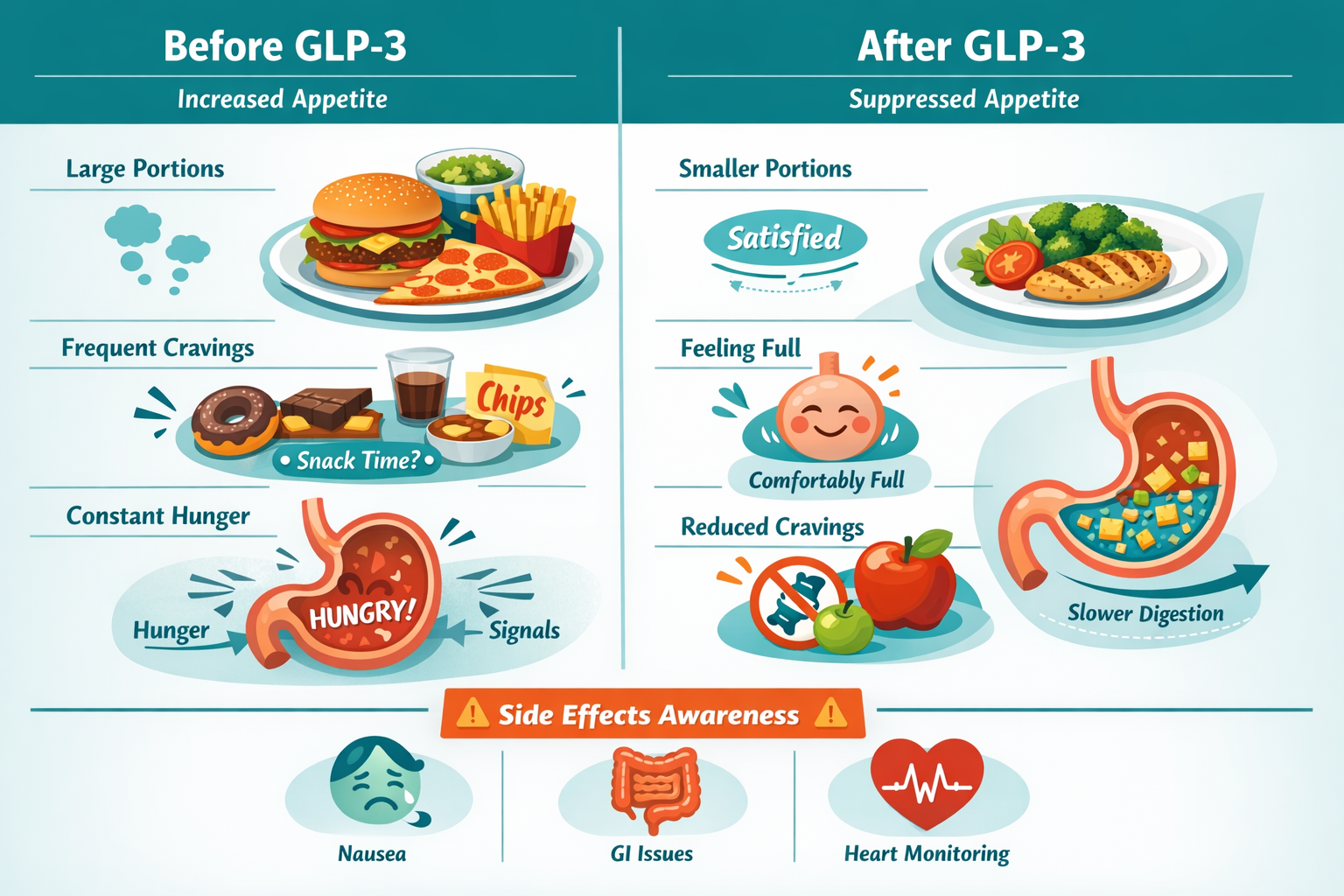
The GLP-1 and GIP components of GLP-3 appetite suppression work together to significantly reduce baseline hunger levels. Many participants in clinical trials report feeling satisfied with substantially smaller portions than they previously consumed[4][6].
Unlike simple calorie restriction (which often triggers intense hunger and cravings), GLP-3 appetite suppression changes the fundamental hunger signals sent from the gut to the brain. This makes eating less feel more natural rather than requiring constant willpower.
Enhanced Satiety and Fullness Signals
The slowed gastric emptying caused by GLP-3 appetite suppression means food stays in the stomach longer, creating extended feelings of fullness after meals. Participants frequently describe feeling "comfortably full" after eating portions that would have left them unsatisfied before treatment[4].
This enhanced satiety makes overeating physically uncomfortable rather than simply inadvisable. The body's natural feedback mechanisms actively discourage excessive food intake, creating a built-in portion control system.
Changes to Food Preferences and Portion Sizes
Real-world reports from trial participants indicate that GLP-3 appetite suppression may influence food preferences beyond simple quantity reduction. Some users report decreased interest in high-fat or highly processed foods, though this effect varies considerably between individuals[6].
Typical eating pattern changes reported:
- 🍽️ Smaller portions feel satisfying and complete
- ⏰ Longer periods between meals without discomfort
- 🥗 Reduced cravings for snacks and sweets
- 🚫 Physical discomfort when attempting to overeat
- 💧 Increased awareness of fullness cues
For fitness enthusiasts using GLP-3 appetite suppression, these changes can complement structured nutrition plans by making adherence significantly easier. The reduced hunger and enhanced satiety remove many of the psychological challenges associated with caloric deficits.
Metabolic Effects Beyond Appetite Control
While appetite suppression drives the behavioral changes that lead to weight loss, the glucagon component of GLP-3 compounds provides metabolic benefits that extend beyond simple hunger reduction. By accelerating fat breakdown and increasing metabolic rate, glucagon helps the body actively mobilize stored energy[1].
This metabolic enhancement means weight loss can continue even when appetite suppression effects plateau, creating a more comprehensive approach to body composition changes. For those combining GLP-3 appetite suppression with exercise and resistance training, the enhanced fat metabolism may support better body recomposition outcomes.
GLP-3 Appetite Suppression Side Effects: What Fitness Enthusiasts Need to Know
Like all powerful metabolic interventions, GLP-3 appetite suppression compounds come with potential side effects that require careful consideration. Understanding these effects helps peptide shoppers make informed decisions about whether this approach aligns with their health goals and risk tolerance.
Common Gastrointestinal Side Effects
The most frequently reported side effects of GLP-3 appetite suppression involve the digestive system. These effects stem directly from the mechanism of action—slowed gastric emptying and altered gut hormone signaling[1].
Common GI side effects include:
- Nausea: Often most pronounced during initial weeks or after dose increases
- Vomiting: Typically occurs when eating too much or too quickly
- Diarrhea: Can be intermittent or persistent depending on individual response
- Constipation: Some users experience slowed bowel movements
- Abdominal discomfort: Bloating or cramping may occur, especially after meals
Most gastrointestinal side effects diminish over time as the body adapts to GLP-3 appetite suppression. Starting with lower doses and gradually increasing can help minimize these effects. Eating smaller, more frequent meals and avoiding high-fat foods may also reduce GI discomfort[4].
Cardiovascular Considerations
Clinical trials have documented heart rate increases in some participants using GLP-3 appetite suppression compounds, with the magnitude depending on dosage levels[1]. For fitness enthusiasts who monitor heart rate during training, this effect requires awareness and potential adjustment of training intensity zones.
While serious cardiovascular events remain rare in clinical trials, individuals with pre-existing heart conditions should approach GLP-3 appetite suppression with particular caution and close medical supervision.
Rare but Serious Side Effects
Less common but more serious side effects have been documented in clinical trials of GLP-3 appetite suppression compounds[1]:
- Pancreatitis: Inflammation of the pancreas (rare but potentially serious)
- Gallstones: Rapid weight loss can increase gallstone formation risk
- Heart arrhythmia: Irregular heartbeat patterns in susceptible individuals
These serious side effects occur in a small percentage of users but require immediate medical attention if symptoms develop. The long-term safety profile of GLP-3 appetite suppression continues to be evaluated as more data accumulates from ongoing trials.
Managing Side Effects for Optimal Results
Peptide shoppers interested in GLP-3 appetite suppression can take several steps to minimize side effects while maximizing benefits:
- Start low, go slow: Begin with the lowest effective dose and increase gradually
- Adjust meal timing: Eat smaller, more frequent meals rather than large portions
- Monitor hydration: Adequate water intake helps manage GI effects
- Track symptoms: Keep detailed notes on side effects and their triggers
- Coordinate with training: Plan dosing around workout schedules to manage energy levels
For those combining GLP-3 appetite suppression with other peptides or supplements, potential interactions should be carefully considered. Compounds like BPC-157 or TB-500 may be used concurrently for recovery support, but comprehensive planning ensures optimal outcomes.
Beyond Weight Loss: Additional Benefits of GLP-3 Appetite Suppression

While GLP-3 appetite suppression is primarily studied for weight management, emerging evidence suggests broader health applications that extend beyond the number on the scale.
Pain Reduction and Joint Health
The TRIUMPH-4 trial revealed an unexpected benefit: participants experienced a 76% reduction in knee pain after 16 months of treatment[3]. This dramatic improvement likely results from multiple factors:
- Direct weight reduction decreasing mechanical stress on joints
- Potential anti-inflammatory effects of the hormone pathways
- Improved metabolic health reducing systemic inflammation
For fitness enthusiasts dealing with joint discomfort that limits training, the combination of weight loss and pain reduction from GLP-3 appetite suppression could enable more consistent exercise participation and better long-term results.
Metabolic Health Markers
Clinical trials consistently show improvements in metabolic health markers beyond weight loss alone. Participants using GLP-3 appetite suppression compounds typically experience:
- Improved insulin sensitivity and glucose control
- Better lipid profiles (cholesterol and triglycerides)
- Reduced markers of systemic inflammation
- Enhanced cardiovascular risk factors
These metabolic improvements suggest that GLP-3 appetite suppression may offer benefits for individuals focused on longevity and healthspan optimization, not just weight reduction.
Potential Applications in Body Recomposition
While clinical trials have focused on obese populations, peptide shoppers and fitness enthusiasts are exploring whether GLP-3 appetite suppression might support body recomposition goals in leaner individuals. The combination of appetite control and enhanced fat metabolism theoretically could help maintain muscle mass while reducing body fat percentage.
However, no clinical data currently exists for GLP-3 appetite suppression use in athletic or already-lean populations. The appetite-suppressing effects could potentially interfere with the caloric intake necessary for muscle growth, making careful planning essential for those pursuing both fat loss and muscle gain simultaneously.
Some fitness enthusiasts are exploring combinations of GLP-3 appetite suppression with growth hormone secretagogues like ipamorelin or CJC-1295 to potentially preserve muscle mass during fat loss phases, though research in this area remains preliminary.
Comparing GLP-3 Appetite Suppression to Other Peptide Approaches for Fat Loss
The peptide landscape for weight management extends beyond GLP-3 appetite suppression. Understanding how this triple-hormone approach compares to other options helps peptide shoppers select the most appropriate compounds for their specific goals.
GLP-1 Single Agonists
Medications like semaglutide (Ozempic, Wegovy) work exclusively through GLP-1 receptor activation. While effective for appetite suppression, they lack the metabolic boost provided by glucagon and the additional satiety enhancement from GIP[1].
Advantages of GLP-1 only:
- Well-established safety profile with extensive clinical data
- Lower cost compared to newer triple-agonist options
- Effective for many users seeking moderate weight loss
Limitations compared to GLP-3 appetite suppression:
- Less total weight loss in clinical trials
- No direct metabolic acceleration from glucagon
- May plateau earlier in treatment course
Dual Agonist Approaches (GLP-1/GIP)
Tirzepatide (Mounjaro) combines GLP-1 and GIP activation, showing superior results to GLP-1-only medications. This dual approach bridges the gap between single-hormone and GLP-3 appetite suppression compounds[3].
For peptide shoppers weighing options, dual agonists may offer a middle ground with strong efficacy and a developing safety profile, though they still lack the metabolic enhancement from glucagon activation.
Growth Hormone Pathway Peptides
Compounds like tesa work through entirely different mechanisms, stimulating growth hormone release to promote fat loss (particularly visceral fat) while potentially preserving or building muscle mass. Unlike GLP-3 appetite suppression, these peptides don't directly reduce appetite.
Key differences:
- Growth hormone peptides may better preserve muscle during fat loss
- No direct appetite suppression effects
- Different side effect profiles
- May be combined with GLP-3 compounds for comprehensive approaches
Some advanced peptide users explore combinations like tesa with ipamorelin alongside GLP-3 appetite suppression for multi-pathway body recomposition strategies.
Metabolic Peptides
Compounds like MOTS-C and 5-Amino-1MQ target metabolic pathways without directly suppressing appetite. These mitochondrial-focused peptides may complement GLP-3 appetite suppression by enhancing cellular energy production and metabolic efficiency.
Targeted Fat Loss Peptides
Research peptides like adipotide and AOD-9604 approach fat loss through mechanisms distinct from GLP-3 appetite suppression. These compounds target fat tissue directly rather than working through appetite and metabolic hormone pathways.
For peptide shoppers building comprehensive protocols, understanding these different mechanisms allows for strategic combinations that address multiple aspects of body composition simultaneously.
Sourcing and Quality Considerations for GLP-3 Appetite Suppression Compounds
As interest in GLP-3 appetite suppression grows among fitness enthusiasts and peptide shoppers, questions about sourcing, quality, and authenticity become increasingly important.
Research-Grade vs. Pharmaceutical-Grade Compounds
Currently, retatrutide and other GLP-3 appetite suppression compounds remain in clinical trials and are not yet FDA-approved for general use. This creates a distinction between pharmaceutical-grade medications (not yet available) and research-grade compounds available through specialized suppliers.
Research-grade peptides are intended for laboratory and research purposes. Peptide shoppers should understand that GLP-3 appetite suppression compounds obtained outside clinical trials exist in a regulatory gray area and require informed decision-making about quality and purity.
Quality Markers to Evaluate
When sourcing GLP-3 appetite suppression compounds, several quality indicators help distinguish reputable suppliers from questionable sources:
Certificate of Analysis (COA):
- Third-party testing verification
- Purity percentages (typically 98%+ for quality peptides)
- Identification of contaminants or impurities
- Batch-specific documentation
Manufacturing Standards:
- GMP (Good Manufacturing Practice) compliance
- Sterile production environments
- Proper storage and handling protocols
- Transparent sourcing information
Supplier Reputation:
- Established track record in peptide community
- Responsive customer support
- Clear product information and specifications
- Appropriate disclaimers about research use
Reputable suppliers like those offering wholesale peptides for sale through verified channels typically provide comprehensive documentation and quality assurance measures.
Storage and Handling
GLP-3 appetite suppression compounds require proper storage to maintain stability and effectiveness:
- Lyophilized (powder) form: Store in freezer (-20°C or colder) until reconstitution
- Reconstituted solution: Refrigerate (2-8°C) and use within recommended timeframe
- Protect from light: Keep vials in original packaging or dark storage
- Avoid contamination: Use sterile technique for all handling
Proper storage significantly impacts peptide quality and effectiveness. Even high-quality GLP-3 appetite suppression compounds will degrade rapidly if stored improperly.
Dosing and Reconstitution Considerations
Unlike pharmaceutical medications with pre-filled pens, research-grade GLP-3 appetite suppression compounds typically require reconstitution and precise dosing. This process demands:
- Bacteriostatic water for reconstitution
- Accurate calculation of concentration
- Insulin syringes for precise measurement
- Understanding of dosing protocols from clinical trials
Fitness enthusiasts new to peptide use may benefit from starting with simpler compounds before progressing to GLP-3 appetite suppression protocols that require more sophisticated handling.
Timeline and Future Outlook for GLP-3 Appetite Suppression
Understanding where GLP-3 appetite suppression stands in the development pipeline helps peptide shoppers and fitness enthusiasts set realistic expectations about availability and future applications.
Current Clinical Trial Status (2026)
Seven additional phase 3 trials for retatrutide are expected to complete throughout 2026. These studies are examining:
- Different dosing protocols and titration schedules
- Various patient populations (diabetes, obesity, metabolic syndrome)
- Long-term safety and efficacy beyond 68 weeks
- Cardiovascular outcomes and mortality effects
- Quality of life and functional capacity improvements[1][3]
The completion of these trials will provide comprehensive data on GLP-3 appetite suppression across diverse populations and use cases, helping establish optimal protocols and identify which patients benefit most.
Anticipated FDA Approval Timeline
If phase 3 trial results remain consistent with TRIUMPH-4 outcomes, FDA approval for retatrutide could come as early as 2027. However, several factors could accelerate or delay this timeline:
Potential accelerators:
- Breakthrough therapy designation for exceptional efficacy
- Priority review status for unmet medical needs
- Consistent safety profile across all trials
Potential delays:
- Unexpected safety signals in ongoing trials
- Manufacturing or supply chain challenges
- Regulatory questions requiring additional data
For peptide shoppers tracking GLP-3 appetite suppression development, 2027 represents the earliest realistic timeline for pharmaceutical-grade availability through standard medical channels.
Competitive Landscape and Alternative Compounds
Retatrutide isn't the only triple-agonist GLP-3 appetite suppression compound in development. Several pharmaceutical companies are pursuing similar multi-hormone approaches, creating a competitive landscape that may drive innovation and potentially lower costs over time.
Additionally, researchers are exploring:
- Oral formulations of GLP-3 appetite suppression compounds
- Extended-release versions requiring less frequent dosing
- Combinations with other metabolic interventions
- Tissue-selective agonists with reduced side effects
The peptide research landscape continues evolving rapidly, with innovations in delivery systems and mechanism refinement potentially offering improved options beyond current GLP-3 appetite suppression compounds.
Integration with Broader Peptide Protocols
As GLP-3 appetite suppression becomes more established, fitness enthusiasts and peptide shoppers are exploring integration with comprehensive protocols addressing multiple health goals:
- Longevity stacks: Combining GLP-3 with epithalon and MOTS-C for metabolic health and cellular optimization
- Body recomposition protocols: Pairing appetite suppression with growth hormone secretagogues and recovery peptides
- Performance enhancement: Using GLP-3 during cutting phases while maintaining training intensity with supportive compounds
The comprehensive catalog of available peptides allows for sophisticated protocol design targeting multiple pathways simultaneously.
Practical Implementation: Using GLP-3 Appetite Suppression Effectively
For fitness enthusiasts and peptide shoppers considering GLP-3 appetite suppression, understanding practical implementation strategies maximizes results while minimizing side effects.
Starting Protocols and Dose Titration
Clinical trials of GLP-3 appetite suppression compounds use gradual dose escalation to improve tolerability and reduce side effects[1]. A typical research protocol might follow this pattern:
Week 1-4: Low starting dose (2-4 mg weekly)
Week 5-8: Moderate dose increase (6-8 mg weekly)
Week 9-12: Therapeutic dose (10-12 mg weekly)
Week 13+: Maintenance at optimal individual dose
This gradual approach allows the body to adapt to GLP-3 appetite suppression effects, reducing the severity of gastrointestinal side effects that often occur with rapid dose increases.
Timing and Administration Considerations
Most clinical trials administer GLP-3 appetite suppression compounds once weekly via subcutaneous injection. Strategic timing can optimize results:
- Consistent day and time: Maintains stable blood levels
- Before rest days: Allows adjustment to any side effects without impacting training
- Evening administration: May reduce nausea impact on daily activities
- Rotation of injection sites: Prevents tissue irritation and maintains absorption
For those combining GLP-3 appetite suppression with other peptides, spacing injections appropriately prevents site competition and maintains optimal absorption of all compounds.
Nutrition Strategies While Using GLP-3 Appetite Suppression
The powerful appetite suppression effects require thoughtful nutrition planning to ensure adequate nutrient intake:
Protein prioritization:
- Consume protein first at each meal to preserve muscle mass
- Aim for 1.6-2.2g per kg body weight despite reduced appetite
- Consider protein supplementation if whole food intake becomes difficult
Micronutrient attention:
- Smaller food volumes may reduce micronutrient intake
- Consider comprehensive multivitamin supplementation
- Focus on nutrient-dense foods over empty calories
Hydration emphasis:
- Reduced food intake may decrease incidental water consumption
- Set specific hydration targets independent of thirst cues
- Monitor urine color and hydration markers
The GLP-3 appetite suppression mechanism makes eating feel less urgent, requiring conscious effort to maintain adequate nutrition for health and performance.
Training Adaptations
Fitness enthusiasts using GLP-3 appetite suppression may need to adjust training approaches:
Energy management:
- Monitor training intensity and recovery capacity
- Adjust volume if energy levels decrease significantly
- Time workouts relative to meals for optimal fuel availability
Strength preservation:
- Prioritize resistance training to maintain muscle mass
- Consider reducing cardio volume if recovery becomes challenging
- Track strength metrics to ensure muscle preservation
Recovery support:
- Consider recovery peptides like BPC-157 or TB-500
- Ensure adequate sleep despite potential appetite changes
- Monitor overtraining symptoms more carefully during caloric deficit
Monitoring Progress Beyond the Scale
While weight loss is the primary outcome in clinical trials, comprehensive progress tracking provides better insights:
Body composition metrics:
- Regular body fat percentage measurements
- Circumference measurements at multiple sites
- Progress photos for visual comparison
- Strength and performance benchmarks
Health markers:
- Blood glucose and insulin sensitivity
- Lipid panels (cholesterol, triglycerides)
- Blood pressure and resting heart rate
- Subjective energy and well-being assessments
Appetite and satiety tracking:
- Hunger levels throughout the day
- Portion sizes and meal frequency
- Food cravings and their intensity
- Digestive comfort and function
This comprehensive approach to monitoring GLP-3 appetite suppression effects provides early warning of potential issues and confirms that weight loss is occurring through healthy fat reduction rather than muscle loss or dehydration.
Conclusion: The Future of Appetite Control and Metabolic Optimization
GLP-3 appetite suppression represents a significant evolution in peptide-based approaches to weight management and metabolic health. By targeting three complementary hormone pathways simultaneously, compounds like retatrutide deliver clinical outcomes that approach surgical interventions without the risks and recovery time of invasive procedures.
The TRIUMPH-4 trial's demonstration of 71.8-pound average weight loss over 68 weeks establishes GLP-3 appetite suppression as potentially the most effective pharmaceutical approach to obesity currently in development. Beyond the impressive weight loss numbers, the additional benefits—including dramatic pain reduction and improved metabolic markers—suggest broader health applications that extend well beyond cosmetic weight management.
For fitness enthusiasts and peptide shoppers in 2026, several key considerations should guide decisions about GLP-3 appetite suppression:
Current availability: With FDA approval not expected until 2027 at earliest, current access is limited to research-grade compounds that require informed decision-making about quality, sourcing, and appropriate use.
Side effect management: The gastrointestinal effects and other potential complications require careful monitoring and gradual dose titration to maximize tolerability while achieving desired outcomes.
Comprehensive approach: GLP-3 appetite suppression works best as part of a complete strategy including appropriate nutrition, consistent training, and potentially complementary peptides addressing recovery, muscle preservation, and metabolic optimization.
Quality sourcing: Working with reputable suppliers offering high-quality peptides with proper testing and documentation ensures safety and effectiveness.
Next Steps for Peptide Shoppers
If you're considering GLP-3 appetite suppression as part of your body composition or metabolic health strategy:
- Research thoroughly: Review clinical trial data and understand both benefits and risks
- Evaluate alternatives: Compare GLP-3 to other peptide approaches for your specific goals
- Source quality compounds: Work with established suppliers offering proper documentation and testing
- Plan comprehensively: Develop complete protocols addressing nutrition, training, and recovery alongside peptide use
- Monitor carefully: Track multiple metrics beyond weight to ensure healthy, sustainable progress
- Stay informed: Follow ongoing clinical trials and emerging research as the field evolves
The peptide landscape continues evolving rapidly, with GLP-3 appetite suppression representing just one of many innovative approaches to metabolic optimization. By staying informed, sourcing quality compounds, and implementing thoughtful protocols, fitness enthusiasts can leverage these powerful tools to achieve body composition and health goals that were previously difficult or impossible to reach.
As seven additional phase 3 trials complete throughout 2026 and pharmaceutical approval approaches in 2027, the evidence base for GLP-3 appetite suppression will continue expanding, providing clearer guidance on optimal use, long-term safety, and which populations benefit most from this revolutionary triple-hormone approach to appetite control and metabolic health.
<!DOCTYPE html>
<html lang="en">
<head>
    <meta charset="UTF-8">
    <meta name="viewport" content="width=device-width, initial-scale=1.0">
    <title>GLP-3 Appetite Suppression Dosing Calculator</title>
    <style>
        * {
            margin: 0;
            padding: 0;
            box-sizing: border-box;
        }

        .cg-element-calculator-container {
            max-width: 800px;
            margin: 20px auto;
            padding: 30px;
            background: linear-gradient(135deg, #667eea 0%, #764ba2 100%);
            border-radius: 15px;
            box-shadow: 0 10px 30px rgba(0,0,0,0.3);
            font-family: 'Segoe UI', Tahoma, Geneva, Verdana, sans-serif;
        }

        .cg-element-calculator-title {
            color: white;
            text-align: center;
            font-size: 28px;
            margin-bottom: 10px;
            font-weight: 700;
        }

        .cg-element-calculator-subtitle {
            color: rgba(255,255,255,0.9);
            text-align: center;
            font-size: 14px;
            margin-bottom: 25px;
        }

        .cg-element-calculator-content {
            background: white;
            padding: 30px;
            border-radius: 10px;
        }

        .cg-element-input-group {
            margin-bottom: 25px;
        }

        .cg-element-label {
            display: block;
            margin-bottom: 8px;
            color: #333;
            font-weight: 600;
            font-size: 15px;
        }

        .cg-element-input {
            width: 100%;
            padding: 12px;
            border: 2px solid #e0e0e0;
            border-radius: 8px;
            font-size: 16px;
            transition: border-color 0.3s;
        }

        .cg-element-input:focus {
            outline: none;
            border-color: #667eea;
        }

        .cg-element-select {
            width: 100%;
            padding: 12px;
            border: 2px solid #e0e0e0;
            border-radius: 8px;
            font-size: 16px;
            background: white;
            cursor: pointer;
            transition: border-color 0.3s;
        }

        .cg-element-select:focus {
            outline: none;
            border-color: #667eea;
        }

        .cg-element-button {
            width: 100%;
            padding: 15px;
            background: linear-gradient(135deg, #667eea 0%, #764ba2 100%);
            color: white;
            border: none;
            border-radius: 8px;
            font-size: 18px;
            font-weight: 700;
            cursor: pointer;
            transition: transform 0.2s, box-shadow 0.2s;
            margin-top: 10px;
        }

        .cg-element-button:hover {
            transform: translateY(-2px);
            box-shadow: 0 5px 15px rgba(102, 126, 234, 0.4);
        }

        .cg-element-button:active {
            transform: translateY(0);
        }

        .cg-element-results {
            margin-top: 30px;
            padding: 25px;
            background: linear-gradient(135deg, #f5f7fa 0%, #c3cfe2 100%);
            border-radius: 10px;
            display: none;
        }

        .cg-element-results.active {
            display: block;
        }

        .cg-element-result-title {
            color: #333;
            font-size: 20px;
            font-weight: 700;
            margin-bottom: 20px;
            text-align: center;
        }

        .cg-element-result-item {
            background: white;
            padding: 15px;
            margin-bottom: 15px;
            border-radius: 8px;
            border-left: 4px solid #667eea;
        }

        .cg-element-result-label {
            color: #666;
            font-size: 13px;
            font-weight: 600;
            text-transform: uppercase;
            letter-spacing: 0.5px;
            margin-bottom: 5px;
        }

        .cg-element-result-value {
            color: #333;
            font-size: 22px;
            font-weight: 700;
        }

        .cg-element-week-schedule {
            margin-top: 20px;
        }

        .cg-element-week-item {
            background: white;
            padding: 12px 15px;
            margin-bottom: 10px;
            border-radius: 8px;
            display: flex;
            justify-content: space-between;
            align-items: center;
        }

        .cg-element-week-number {
            color: #667eea;
            font-weight: 700;
            font-size: 16px;
        }

        .cg-element-week-dose {
            color: #333;
            font-weight: 600;
            font-size: 16px;
        }

        .cg-element-disclaimer {
            margin-top: 20px;
            padding: 15px;
            background: #fff3cd;
            border-left: 4px solid #ffc107;
            border-radius: 5px;
            font-size: 13px;
            color: #856404;
        }

        @media (max-width: 600px) {
            .cg-element-calculator-container {
                padding: 20px;
                margin: 10px;
            }

            .cg-element-calculator-content {
                padding: 20px;
            }

            .cg-element-calculator-title {
                font-size: 22px;
            }
        }
    </style>
</head>
<body>
    <div class="cg-element-calculator-container">
        <h1 class="cg-element-calculator-title">💊 GLP-3 Appetite Suppression Dosing Calculator</h1>
        <p class="cg-element-calculator-subtitle">Calculate your personalized dose escalation schedule based on clinical trial protocols</p>

        <div class="cg-element-calculator-content">
            <div class="cg-element-input-group">
                <label class="cg-element-label" for="bodyWeight">Current Body Weight (lbs)</label>
                <input type="number" id="bodyWeight" class="cg-element-input" placeholder="Enter weight in pounds" min="100" max="500">
            </div>

            <div class="cg-element-input-group">
                <label class="cg-element-label" for="vialConcentration">Vial Concentration (mg)</label>
                <select id="vialConcentration" class="cg-element-select">
                    <option value="">Select concentration</option>
                    <option value="10">10 mg per vial</option>
                    <option value="15">15 mg per vial</option>
                    <option value="20">20 mg per vial</option>
                </select>
            </div>

            <div class="cg-element-input-group">
                <label class="cg-element-label" for="reconVolume">Reconstitution Volume (mL)</label>
                <select id="reconVolume" class="cg-element-select">
                    <option value="">Select volume</option>
                    <option value="1">1 mL</option>
                    <option value="2">2 mL</option>
                    <option value="3">3 mL</option>
                </select>
            </div>

            <div class="cg-element-input-group">
                <label class="cg-element-label" for="targetDose">Target Therapeutic Dose (mg/week)</label>
                <select id="targetDose" class="cg-element-select">
                    <option value="">Select target dose</option>
                    <option value="4">4 mg (Low dose)</option>
                    <option value="8">8 mg (Moderate dose)</option>
                    <option value="12">12 mg (Clinical trial dose)</option>
                </select>
            </div>

            <button class="cg-element-button" onclick="calculateDosing()">Calculate Dosing Schedule</button>

            <div class="cg-element-results" id="results">
                <h2 class="cg-element-result-title">Your Personalized Dosing Schedule</h2>

                <div class="cg-element-result-item">
                    <div class="cg-element-result-label">Concentration After Reconstitution</div>
                    <div class="cg-element-result-value" id="concentration">--</div>
                </div>

                <div class="cg-element-result-item">
                    <div class="cg-element-result-label">Final Weekly Injection Volume</div>
                    <div class="cg-element-result-value" id="finalVolume">--</div>
                </div>

                <div class="cg-element-result-item">
                    <div class="cg-element-result-label">Projected Weight Loss (68 weeks at target dose)</div>
                    <div class="cg-element-result-value" id="projectedLoss">--</div>
                </div>

                <div class="cg-element-week-schedule">
                    <h3 style="color: #333; margin-bottom: 15px; font-weight: 700;">12-Week Titration Schedule:</h3>
                    <div id="scheduleContainer"></div>
                </div>

                <div class="cg-element-disclaimer">
                    <strong>⚠️ Research Use Only:</strong> This calculator is for educational and research planning purposes. GLP-3 compounds are not FDA-approved. All calculations are based on clinical trial protocols. Consult qualified professionals before use.
                </div>
            </div>
        </div>
    </div>

    <script>
        function calculateDosing() {
            const bodyWeight = parseFloat(document.getElementById('bodyWeight').value);
            const vialConc = parseFloat(document.getElementById('vialConcentration').value);
            const reconVolume = parseFloat(document.getElementById('reconVolume').value);
            const targetDose = parseFloat(document.getElementById('targetDose').value);

            if (!bodyWeight || !vialConc || !reconVolume || !targetDose) {
                alert('Please fill in all fields to calculate your dosing schedule.');
                return;
            }

            if (bodyWeight < 100 || bodyWeight > 500) {
                alert('Please enter a valid body weight between 100 and 500 lbs.');
                return;
            }

            // Calculate concentration (mg/mL)
            const concentration = vialConc / reconVolume;

            // Calculate final injection volume for target dose
            const finalVolume = targetDose / concentration;

            // Calculate projected weight loss (28.7% based on TRIUMPH-4 trial at 12mg dose)
            // Scale proportionally for different doses
            const lossPercentage = (targetDose / 12) * 28.7;
            const projectedLossLbs = bodyWeight * (lossPercentage / 100);
            const finalWeight = bodyWeight - projectedLossLbs;

            // Update results
            document.getElementById('concentration').textContent = concentration.toFixed(2) + ' mg/mL';
            document.getElementById('finalVolume').textContent = finalVolume.toFixed(2) + ' mL';
            document.getElementById('projectedLoss').textContent =
                projectedLossLbs.toFixed(1) + ' lbs (' + lossPercentage.toFixed(1) + '% reduction to ' + finalWeight.toFixed(1) + ' lbs)';

            // Generate 12-week titration schedule
            const scheduleContainer = document.getElementById('scheduleContainer');
            scheduleContainer.innerHTML = '';

            const titrationSchedule = [
                { weeks: '1-4', dose: targetDose * 0.25, label: 'Initial Phase' },
                { weeks: '5-8', dose: targetDose * 0.5, label: 'Escalation Phase' },
                { weeks: '9-12', dose: targetDose * 0.75, label: 'Pre-Maintenance' },
                { weeks: '13+', dose: targetDose, label: 'Maintenance Phase' }
            ];

            titrationSchedule.forEach(phase => {
                const volume = phase.dose / concentration;
                const weekItem = document.createElement('div');
                weekItem.className = 'cg-element-week-item';
                weekItem.innerHTML = `
                    <span class="cg-element-week-number">Weeks ${phase.weeks} (${phase.label})</span>
                    <span class="cg-element-week-dose">${phase.dose.toFixed(1)} mg (${volume.toFixed(2)} mL)</span>
                `;
                scheduleContainer.appendChild(weekItem);
            });

            // Show results
            document.getElementById('results').classList.add('active');

            // Scroll to results
            document.getElementById('results').scrollIntoView({ behavior: 'smooth', block: 'nearest' });
        }

        // Allow Enter key to trigger calculation
        document.addEventListener('DOMContentLoaded', function() {
            const inputs = document.querySelectorAll('.cg-element-input, .cg-element-select');
            inputs.forEach(input => {
                input.addEventListener('keypress', function(e) {
                    if (e.key === 'Enter') {
                        calculateDosing();
                    }
                });
            });
        });
    </script>
</body>
</html>
References
[1] What Glp 3s Meet New Generation Weight Loss Drugs Three Key Ingredients – https://www.foxnews.com/health/what-glp-3s-meet-new-generation-weight-loss-drugs-three-key-ingredients
[2] Qa How Can New Drugs Help Weight Loss Resolutions Stick – https://news.virginia.edu/content/qa-how-can-new-drugs-help-weight-loss-resolutions-stick
[3] Story – https://abcnews.go.com/GMA/Wellness/new-weight-loss-drug-dubbed-triple-shows-promise/story?id=128308027
[5] Outlook For Obesity In 2026 – https://www.iqvia.com/locations/emea/blogs/2026/01/outlook-for-obesity-in-2026
SEO Meta Title and Description
Meta Title: GLP-3 Appetite Suppression: Triple-Hormone Weight Loss 2026
Meta Description: Discover how GLP-3 appetite suppression uses three hormones for 28.7% weight loss. Clinical trials, dosing protocols, and real results for peptide shoppers.
{“@context”:”https://schema.org”,”@type”:”Article”,”headline”:”glp-3 appetite suppression”,”description”:”Discover how GLP-3 appetite suppression uses three hormones for 28.7% weight loss. Clinical trials, dosing protocols, and real results for peptide shoppers.”,”image”:”https://zsxkvszxbhpwnvzxdydv.supabase.co/storage/v1/object/public/generated-images/kie/9243e6e2-f4aa-4aa4-9ff7-c877a87615b9/slot-0-1770073566131.png”,”datePublished”:”2026-02-02T23:01:03.874999+00:00″,”dateModified”:”2026-02-02T23:07:06.208Z”,”author”:{“@type”:”Organization”,”name”:”PTP UPDATED 2.1.26″},”publisher”:{“@type”:”Organization”,”name”:”PTP UPDATED 2.1.26″}}