

GLP-3 Peptide for Weight Loss: The 2026 Complete Research Guide
Imagine achieving weight loss results that rival bariatric surgery—without going under the knife. That's the promise driving intense research interest in GLP-3 peptide for weight loss, a triple-receptor peptide showing unprecedented results in clinical trials. With documented weight reductions approaching 29% of total body weight in just 48 weeks, this innovative peptide represents a significant advancement beyond traditional single-receptor GLP-1 medications[1][3]. For fitness enthusiasts and peptide shoppers exploring cutting-edge research compounds in 2026, understanding how GLP-3 peptide for weight loss works—and what the science actually shows—has never been more critical.
Key Takeaways
- Triple-receptor mechanism: GLP-3 peptide for weight loss activates three distinct pathways (GLP-1, GIP, and glucagon receptors) simultaneously, creating synergistic metabolic effects beyond single-receptor approaches[1][3]
- Clinical trial results: Research shows up to 25-29% body weight reduction over 48 weeks, approaching bariatric surgery outcomes without invasive procedures[1][3]
- Enhanced fat mobilization: The glucagon component directly stimulates lipolysis (fat breakdown) and may help preserve lean muscle mass during weight reduction[3]
- Not FDA approved: Despite impressive trial data, GLP-3 peptide formulations like retatrutide remain investigational and have not received FDA approval for weight loss as of 2026[3]
- Lifestyle synergy required: Research suggests optimal results occur when peptide protocols combine with calorie deficits and structured exercise programs, not as standalone interventions[3]
What Is GLP-3 Peptide for Weight Loss?
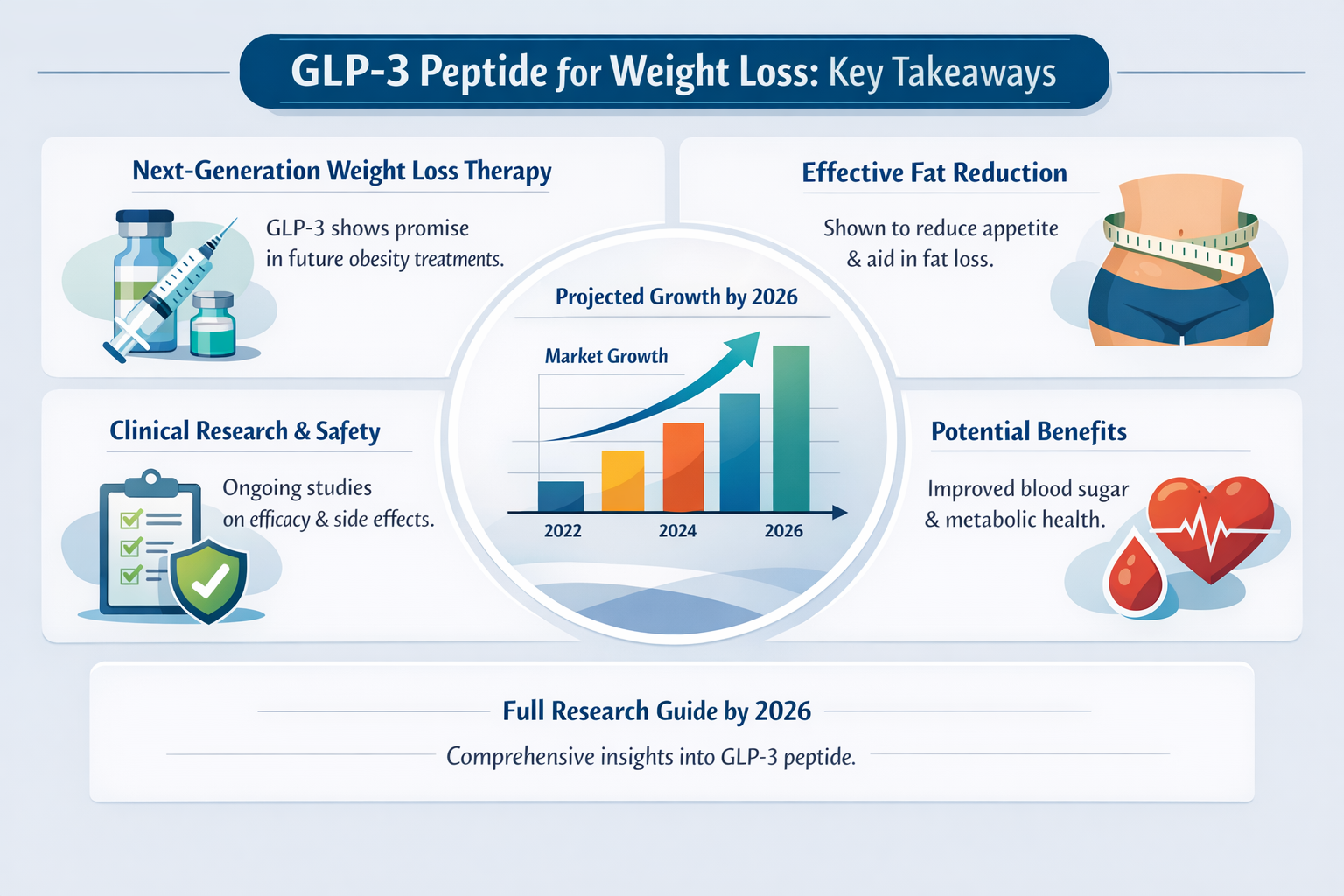
The term "GLP-3 peptide for weight loss" refers to a class of triple-receptor agonist peptides that simultaneously activate three metabolic pathways: GLP-1 (glucagon-like peptide-1), GIP (glucose-dependent insulinotropic polypeptide), and glucagon receptors. The most extensively studied compound in this category is retatrutide, though researchers continue developing similar multi-receptor formulations[1].
The Science Behind Triple-Receptor Activation
Unlike traditional GLP-1 medications that target only one receptor, GLP-3 peptide for weight loss research compounds engage multiple metabolic systems:
GLP-1 Receptor Activation:
- Slows gastric emptying, creating prolonged satiety
- Reduces appetite through central nervous system signaling
- Enhances insulin secretion in response to meals
- Improves glycemic control in metabolic research models
GIP Receptor Activation:
- Amplifies insulin response to glucose intake
- May enhance fat storage efficiency in adipose tissue
- Contributes to improved glucose tolerance
- Works synergistically with GLP-1 pathways
Glucagon Receptor Activation:
- Directly stimulates lipolysis (breakdown of stored fat)[3]
- Increases energy expenditure through thermogenesis
- Promotes ketone production for alternative fuel
- May help preserve lean muscle mass during caloric restriction[3]
This three-pronged approach creates what researchers call a "metabolic advantage"—each pathway complements the others, potentially explaining why GLP-3 peptide for weight loss shows superior results compared to single or dual-receptor formulations[1].
How GLP-3 Differs From GLP-1 Medications
The evolution from GLP-1 to GLP-3 peptide for weight loss represents a significant pharmaceutical advancement:
| Feature | GLP-1 Only | Dual-Receptor (GLP-1/GIP) | Triple-Receptor (GLP-3) |
|---|---|---|---|
| Receptors Targeted | 1 (GLP-1R) | 2 (GLP-1R, GIPR) | 3 (GLP-1R, GIPR, GCGR) |
| Average Weight Loss | 7.5-11%[2] | ~20%[3] | 25-29%[1][3] |
| Fat Mobilization | Indirect | Moderate | Direct via glucagon[3] |
| Muscle Preservation | Not demonstrated | Limited data | Potentially enhanced[3] |
| FDA Approval Status | Approved (various) | Approved (tirzepatide) | Not approved (2026)[3] |
The adipotide peptide and other research compounds also target weight management through different mechanisms, but GLP-3 peptide for weight loss stands out for its comprehensive receptor engagement.
Formulation and Administration
Based on modified GIP peptide structures that bind to albumin in the bloodstream, GLP-3 peptide for weight loss formulations typically feature once-weekly dosing schedules[1]. This extended half-life represents a practical advantage over daily injection protocols required by some earlier peptide formulations.
Research protocols generally involve subcutaneous administration, similar to other peptide therapeutics. The nasal spray peptides delivery method remains under investigation for various compounds, though current GLP-3 peptide for weight loss research focuses primarily on injectable formulations.
Clinical Research Findings on GLP-3 Peptide for Weight Loss
The scientific evidence supporting GLP-3 peptide for weight loss comes from multiple clinical trials conducted between 2021 and 2025, with data continuing to emerge in 2026.
Landmark Trial Results
Retatrutide 48-Week Study:
The most cited research on GLP-3 peptide for weight loss demonstrated remarkable outcomes[1]:
- Highest dose group: 29% average body weight reduction
- Mid-dose group: Approximately 25% weight loss
- Lowest effective dose: 18-20% reduction
- Study duration: 48 weeks
- Participant completion rate: Data shows strong adherence
These results position GLP-3 peptide for weight loss research compounds as potentially approaching bariatric surgery outcomes (typically 30-35% weight reduction) without surgical intervention[3].
Comparative Performance:
When researchers compared different incretin-based approaches, the hierarchy became clear[2][3]:
📊 Weight Loss Hierarchy (72-week trials):
- Triple-receptor (GLP-3): 25-29% reduction
- Dual-receptor (tirzepatide): 20-22% reduction
- Single-receptor GLP-1: 11-15% reduction
- Lowest-dose GLP-1: 7.5% reduction
The dose-dependent response observed across GLP-3 peptide for weight loss trials suggests researchers can potentially optimize protocols for individual metabolic profiles[1].
Metabolic Improvements Beyond Weight
Clinical trials examining GLP-3 peptide for weight loss consistently reported secondary metabolic benefits:
Glycemic Control:
- Significant HbA1c reductions in participants with elevated baseline levels
- Improved fasting glucose measurements
- Enhanced insulin sensitivity markers
- Reduced glucose variability throughout the day
Lipid Profile Changes:
- Decreased triglyceride levels
- Favorable shifts in cholesterol ratios
- Reduced liver fat content in imaging studies
- Improvements in markers of metabolic syndrome
Cardiovascular Markers:
- Blood pressure reductions in hypertensive participants
- Decreased inflammatory biomarkers (CRP, IL-6)
- Modest increases in resting heart rate (approximately 5-10 bpm)[3]
- Improved endothelial function in vascular studies
The cardiovascular effects require careful consideration, particularly the consistent observation of elevated heart rate with GLP-1 and related peptides[3]. This finding emphasizes the importance of medical oversight in any peptide research protocol.
Fat Loss vs. Muscle Preservation
One particularly intriguing aspect of GLP-3 peptide for weight loss research involves body composition changes. Traditional weight loss interventions typically result in 20-30% of lost weight coming from lean muscle mass—a significant concern for fitness enthusiasts.
Early laboratory and animal model data suggest the glucagon receptor activation component of GLP-3 peptide for weight loss may help preserve muscle tissue during caloric restriction[3]. The proposed mechanisms include:
- Enhanced protein synthesis signaling
- Preferential mobilization of adipose tissue
- Improved amino acid utilization
- Maintained metabolic rate despite weight reduction
However, large-scale human clinical trials have not yet definitively confirmed statistically significant muscle preservation effects[3]. Research in this area continues, with body composition imaging (DEXA scans) included in ongoing 2026 protocols.
Fitness enthusiasts interested in muscle preservation might also explore complementary peptides like tesa for fat loss, which targets growth hormone pathways specifically associated with visceral fat reduction.
How GLP-3 Peptide for Weight Loss Works: Mechanisms of Action
Understanding the biological mechanisms behind GLP-3 peptide for weight loss helps explain both its effectiveness and potential limitations.
Appetite Suppression and Satiety
The GLP-1 receptor component of GLP-3 peptide for weight loss creates powerful appetite-reducing effects through multiple pathways:
Central Nervous System Effects:
- Activates POMC (pro-opiomelanocortin) neurons in the hypothalamus
- Reduces NPY/AgRP hunger signaling
- Enhances satiety perception after meals
- Decreases food-seeking behavior in behavioral studies
Gastrointestinal Effects:
- Slows gastric emptying by 30-50% in motility studies
- Extends the feeling of fullness after eating
- Reduces between-meal hunger sensations
- Decreases overall caloric intake without conscious restriction
Research participants consistently report reduced food cravings and easier adherence to caloric deficits when using GLP-3 peptide for weight loss protocols[9]. This subjective improvement in appetite control represents a key mechanism driving the observed weight reductions.
Direct Fat Mobilization Through Glucagon
The glucagon receptor activation distinguishes GLP-3 peptide for weight loss from simpler GLP-1 formulations. This pathway creates direct lipolytic effects—actively breaking down stored triglycerides in adipose tissue[3].
Lipolysis Cascade:
- Glucagon receptor activation increases cAMP (cyclic adenosine monophosphate)
- Elevated cAMP activates hormone-sensitive lipase (HSL)
- HSL breaks down triglycerides into free fatty acids and glycerol
- Released fatty acids enter circulation for energy utilization
- Liver converts excess fatty acids to ketones for alternative fuel
This mechanism means GLP-3 peptide for weight loss doesn't just reduce calorie intake—it actively promotes the breakdown of existing fat stores. Practitioners report enhanced fat mobilization when peptides combine with calorie deficits and fasting protocols[3], suggesting synergistic effects between pharmacological and behavioral interventions.
Energy Expenditure and Thermogenesis
Beyond appetite and fat mobilization, GLP-3 peptide for weight loss may increase total energy expenditure through several mechanisms:
Metabolic Rate Effects:
- Increased diet-induced thermogenesis (calories burned processing food)
- Enhanced brown adipose tissue (BAT) activation
- Elevated basal metabolic rate in some research models
- Improved mitochondrial efficiency in energy production
The glucagon component specifically contributes to thermogenic effects, potentially explaining why triple-receptor formulations outperform dual-receptor alternatives[3].
For those interested in mitochondrial optimization alongside weight management, compounds like MOTS-C peptide target cellular energy production through complementary pathways.
Insulin Sensitivity and Glucose Metabolism
The GIP receptor component of GLP-3 peptide for weight loss enhances insulin secretion and glucose utilization:
Glucose Homeostasis:
- Amplifies insulin release in response to meals (glucose-dependent mechanism)
- Improves peripheral insulin sensitivity
- Reduces hepatic glucose production
- Enhances glucose uptake in muscle tissue
This glucose-regulating effect creates a favorable metabolic environment for fat loss while protecting against hypoglycemia—the insulin response only activates when blood glucose rises[1].
The Synergistic Triple-Receptor Effect
The true power of GLP-3 peptide for weight loss emerges from the synergistic interaction of all three receptor pathways working simultaneously:
"The combination of reduced appetite from GLP-1, enhanced insulin action from GIP, and direct fat mobilization from glucagon creates a metabolic environment uniquely favorable for sustained weight reduction while preserving metabolic health." – Clinical research summary[3]
This multi-pathway approach addresses weight management from complementary angles, potentially explaining the superior results compared to single-mechanism interventions.
Practical Considerations for GLP-3 Peptide for Weight Loss Research
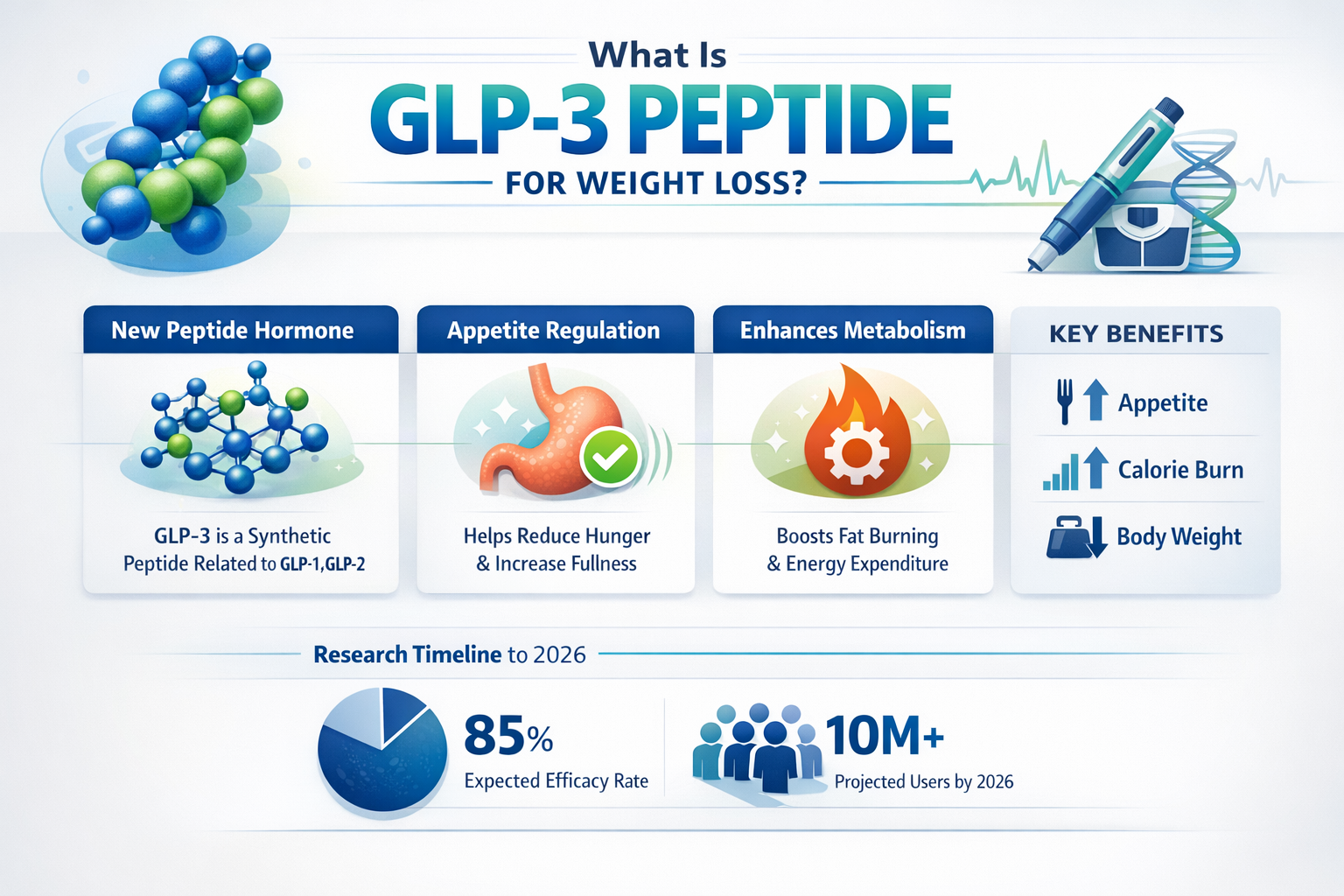
For peptide shoppers and fitness enthusiasts considering GLP-3 peptide for weight loss for research purposes, several practical factors deserve attention.
Dosing Protocols and Administration
Research protocols for GLP-3 peptide for weight loss typically follow escalating dose schedules:
Standard Escalation Protocol:
- Weeks 1-4: Low starting dose (typically 2-4 mg weekly)
- Weeks 5-8: First escalation (4-6 mg weekly)
- Weeks 9-12: Second escalation (6-8 mg weekly)
- Weeks 13+: Maintenance dose (8-12 mg weekly)
The gradual dose escalation helps minimize gastrointestinal side effects while allowing metabolic adaptation[1]. Some research protocols extend to 48 weeks or longer to assess sustained effects.
Administration Technique:
- Subcutaneous injection (typically abdomen, thigh, or upper arm)
- Once-weekly schedule (same day each week recommended)
- Rotation of injection sites to prevent tissue irritation
- Proper refrigeration storage (2-8°C/36-46°F)
Similar administration principles apply to other research peptides like tesa, though dosing frequencies vary by compound.
Expected Timeline and Results
Understanding realistic timelines helps set appropriate expectations for GLP-3 peptide for weight loss research:
Typical Response Timeline:
📅 Weeks 1-4:
- Initial appetite reduction noticeable
- 2-4% body weight loss
- Adaptation to injection routine
- Possible mild gastrointestinal effects
📅 Weeks 5-12:
- Accelerated weight loss (1-2% weekly)
- 8-12% cumulative reduction
- Stabilization of side effects
- Noticeable body composition changes
📅 Weeks 13-24:
- Continued steady loss (0.5-1% weekly)
- 15-20% cumulative reduction
- Metabolic adaptations
- Plateau prevention strategies needed
📅 Weeks 25-48:
- Final phase weight loss
- 20-29% total reduction (highest dose groups)[1][3]
- Maintenance considerations
- Long-term protocol planning
Individual responses vary significantly based on baseline metabolic health, adherence to lifestyle modifications, and genetic factors affecting peptide receptor sensitivity.
Combining GLP-3 Peptide for Weight Loss with Lifestyle Interventions
Clinical research consistently shows enhanced fat mobilization when peptides combine with calorie deficits and structured protocols[3]. The most effective approaches integrate:
Nutritional Strategies:
- Moderate caloric deficit (300-500 calories below maintenance)
- High protein intake (1.6-2.2g per kg body weight)
- Emphasis on whole, minimally processed foods
- Strategic meal timing around training sessions
Exercise Programming:
- Resistance training 3-4x weekly (muscle preservation priority)
- Moderate cardiovascular activity (150-200 minutes weekly)
- NEAT optimization (non-exercise activity thermogenesis)
- Recovery and sleep prioritization (7-9 hours nightly)
Fasting Protocols:
- Time-restricted eating windows (16:8 or 14:10 patterns)
- Occasional extended fasts (24-36 hours)
- Synergy with glucagon-mediated fat mobilization[3]
- Individual tolerance assessment
The combination approach leverages GLP-3 peptide for weight loss mechanisms while addressing behavioral and metabolic factors that influence long-term success.
For comprehensive peptide protocols, researchers often explore combinations of complementary compounds targeting different aspects of body composition and recovery.
Quality and Sourcing Considerations
The research peptide market requires careful navigation to ensure compound purity and authenticity:
Quality Indicators:
- Third-party testing certificates (HPLC, mass spectrometry)
- Proper lyophilization (freeze-drying) presentation
- Appropriate packaging with sterility assurance
- Transparent sourcing and manufacturing information
When sourcing GLP-3 peptide for weight loss or related compounds, peptide purity testing provides essential verification of product quality. Reputable suppliers provide detailed analytical data demonstrating >98% purity for research-grade materials.
Storage and Handling:
- Lyophilized powder: Store at -20°C (-4°F) until reconstitution
- Reconstituted solution: Refrigerate at 2-8°C (36-46°F)
- Protect from light exposure
- Use within 30 days of reconstitution
- Maintain sterile technique during handling
Proper storage significantly impacts peptide stability and research outcomes.
Safety Profile and Considerations for GLP-3 Peptide for Weight Loss
Understanding the safety profile helps researchers make informed decisions about GLP-3 peptide for weight loss protocols.
Common Side Effects Observed in Trials
Clinical trials of GLP-3 peptide for weight loss report side effect profiles similar to other incretin-based compounds[1][3]:
Gastrointestinal Effects (Most Common):
- Nausea (30-50% of participants, typically mild-moderate)
- Diarrhea (20-30% incidence)
- Constipation (15-25% incidence)
- Abdominal discomfort (10-20% incidence)
- Vomiting (10-15% incidence, usually early phase)
These effects typically diminish significantly after 4-8 weeks as metabolic adaptation occurs[1]. Gradual dose escalation helps minimize gastrointestinal symptoms.
Other Reported Effects:
- Injection site reactions (redness, mild swelling)
- Fatigue during initial adaptation phase
- Headache (10-15% incidence)
- Dizziness (less common, 5-10%)
- Increased resting heart rate (5-10 bpm elevation)[3]
Cardiovascular Considerations
The consistent observation of modestly increased resting heart rate with GLP-1 and GLP-3 peptide for weight loss requires attention[3]. While the clinical significance remains under investigation, this finding suggests:
- Regular cardiovascular monitoring during research protocols
- Careful consideration for individuals with pre-existing cardiac conditions
- Potential interaction with stimulant compounds
- Importance of medical oversight in research settings
Long-term cardiovascular outcome trials continue in 2026 to assess the clinical implications of chronic heart rate elevation.
Contraindications and Precautions
Based on current research, GLP-3 peptide for weight loss may not be appropriate for individuals with:
⚠️ Absolute Contraindications:
- Personal or family history of medullary thyroid carcinoma
- Multiple endocrine neoplasia syndrome type 2 (MEN2)
- Pregnancy or breastfeeding
- Known hypersensitivity to peptide components
⚠️ Relative Contraindications (Require Careful Assessment):
- History of pancreatitis
- Severe gastroparesis
- Diabetic retinopathy (monitoring required)
- Significant cardiovascular disease
- Eating disorders or disordered eating patterns
Regulatory Status and Legal Considerations
Critical Note: As of 2026, GLP-3 peptide for weight loss formulations like retatrutide have not received FDA approval for any indication[3]. These compounds remain investigational and are available only for research purposes through appropriate channels.
The regulatory landscape for research peptides requires:
- Clear understanding of research-only status
- Compliance with applicable regulations
- Appropriate documentation and record-keeping
- Recognition of investigational nature
Approved alternatives include FDA-sanctioned GLP-1 medications for weight management, though these lack the triple-receptor mechanism of GLP-3 peptide for weight loss.
Comparing GLP-3 Peptide for Weight Loss to Other Weight Management Peptides
The peptide research landscape includes multiple compounds targeting weight management through different mechanisms. Understanding how GLP-3 peptide for weight loss compares helps researchers select appropriate protocols.
GLP-3 vs. Single-Receptor GLP-1 Peptides
Performance Comparison:
Traditional GLP-1 receptor agonists achieved 7.5-11% weight loss in 72-week trials[2], while GLP-3 peptide for weight loss demonstrates 25-29% reduction in similar timeframes[1][3]. This substantial difference reflects the additional metabolic pathways activated by triple-receptor engagement.
Mechanism Differences:
- GLP-1 only: Primarily appetite suppression and gastric emptying
- GLP-3: Appetite suppression + direct fat mobilization + enhanced insulin action
The GLP-1 peptide research landscape continues evolving, with newer formulations improving on first-generation compounds.
GLP-3 vs. Growth Hormone Secretagogues
Compounds like tesa work through growth hormone pathways rather than incretin mechanisms:
Tesamorelin Characteristics:
- Targets visceral adipose tissue specifically
- Preserves or enhances lean muscle mass
- Improves body composition ratios
- Typically produces 5-10% visceral fat reduction
When to Consider Each:
- GLP-3 peptide for weight loss: Total body weight reduction priority, significant obesity, metabolic syndrome
- Tesamorelin: Visceral fat targeting, muscle preservation priority, body recomposition focus
Some research protocols explore combining tesa with other peptides for synergistic effects on body composition.
GLP-3 vs. AOD-9604 and Fragment Peptides
AOD-9604 represents a different peptide class targeting fat metabolism:
AOD-9604 Profile:
- Modified fragment of growth hormone
- Stimulates lipolysis without affecting blood glucose
- No appetite suppression effects
- Requires combination with dietary interventions
Comparison Summary:
- Weight loss magnitude: GLP-3 peptide for weight loss shows superior total weight reduction
- Mechanism: AOD-9604 lacks appetite suppression component
- Metabolic effects: GLP-3 provides broader metabolic improvements
- Application: AOD-9604 may suit those seeking fat loss without appetite changes
Multi-Peptide Research Protocols
Advanced research protocols sometimes combine multiple peptide compounds targeting complementary pathways:
Example Combination Approaches:
- GLP-3 peptide for weight loss + BPC-157 (tissue repair during training)
- GLP-3 + Tesamorelin (total weight loss + visceral fat targeting)
- GLP-3 + Thymosin Alpha-1 (metabolic + immune optimization)
These combinations require careful protocol design and monitoring to assess individual compound contributions and potential interactions.
Frequently Asked Questions About GLP-3 Peptide for Weight Loss
How quickly does GLP-3 peptide for weight loss produce results?
Initial appetite reduction typically occurs within 1-2 weeks of starting a GLP-3 peptide for weight loss protocol. Measurable weight loss (2-4% of body weight) generally appears by week 4, with accelerated loss continuing through weeks 12-24. Maximum effects occur around 48 weeks in clinical trials[1][3].
Can GLP-3 peptide for weight loss be used long-term?
Current research extends to 48-72 weeks, demonstrating sustained effects throughout this period[1][2]. Long-term safety data beyond 2 years remains limited as of 2026. Research protocols typically include periodic assessment points to evaluate ongoing benefit-risk ratios.
Does GLP-3 peptide for weight loss cause muscle loss?
While traditional weight loss typically includes 20-30% lean mass reduction, early data suggests the glucagon component of GLP-3 peptide for weight loss may help preserve muscle tissue[3]. However, large human trials have not definitively confirmed statistically significant muscle preservation effects. Combining peptide protocols with resistance training and adequate protein intake optimizes muscle retention.
What happens when you stop GLP-3 peptide for weight loss?
Research shows weight regain commonly occurs after discontinuing incretin-based peptides, though the magnitude varies significantly between individuals[9]. Factors influencing weight maintenance include:
- Behavioral changes established during treatment
- Continued dietary and exercise habits
- Metabolic adaptations that occurred
- Individual hormonal and genetic factors
Successful long-term weight management typically requires sustained lifestyle modifications beyond peptide protocols.
How does GLP-3 peptide for weight loss compare to bariatric surgery?
The highest-dose GLP-3 peptide for weight loss trials achieved 29% weight reduction[3], approaching the 30-35% typical for bariatric surgery. However, surgery provides:
- Permanent anatomical changes
- Different metabolic signaling alterations
- No ongoing medication requirements
- Different risk-benefit profiles
GLP-3 peptide for weight loss offers a non-surgical alternative with comparable weight loss magnitude but requires ongoing administration.
Is GLP-3 peptide for weight loss FDA approved?
No. As of 2026, GLP-3 peptide for weight loss formulations like retatrutide remain investigational and have not received FDA approval for any indication[3]. These compounds are available only for research purposes. FDA-approved alternatives include various GLP-1 receptor agonists, though these lack the triple-receptor mechanism.
<!DOCTYPE html>
<html lang="en">
<head>
    <meta charset="UTF-8">
    <meta name="viewport" content="width=device-width, initial-scale=1.0">
    <title>GLP-3 Peptide Weight Loss Calculator</title>
    <style>
        * {
            margin: 0;
            padding: 0;
            box-sizing: border-box;
        }

        .cg-element-calculator-container {
            max-width: 800px;
            margin: 20px auto;
            font-family: -apple-system, BlinkMacSystemFont, 'Segoe UI', Roboto, Oxygen, Ubuntu, Cantarell, sans-serif;
            background: linear-gradient(135deg, #667eea 0%, #764ba2 100%);
            border-radius: 16px;
            padding: 2px;
            box-shadow: 0 10px 40px rgba(0,0,0,0.2);
        }

        .cg-element-calculator-inner {
            background: white;
            border-radius: 14px;
            padding: 30px;
        }

        .cg-element-calculator-header {
            text-align: center;
            margin-bottom: 30px;
        }

        .cg-element-calculator-title {
            font-size: 28px;
            font-weight: 700;
            color: #2d3748;
            margin-bottom: 10px;
        }

        .cg-element-calculator-subtitle {
            font-size: 14px;
            color: #718096;
            line-height: 1.6;
        }

        .cg-element-input-group {
            margin-bottom: 25px;
        }

        .cg-element-input-label {
            display: block;
            font-size: 14px;
            font-weight: 600;
            color: #4a5568;
            margin-bottom: 8px;
        }

        .cg-element-input-field {
            width: 100%;
            padding: 12px 16px;
            font-size: 16px;
            border: 2px solid #e2e8f0;
            border-radius: 8px;
            transition: border-color 0.3s;
        }

        .cg-element-input-field:focus {
            outline: none;
            border-color: #667eea;
        }

        .cg-element-select-field {
            width: 100%;
            padding: 12px 16px;
            font-size: 16px;
            border: 2px solid #e2e8f0;
            border-radius: 8px;
            background-color: white;
            cursor: pointer;
            transition: border-color 0.3s;
        }

        .cg-element-select-field:focus {
            outline: none;
            border-color: #667eea;
        }

        .cg-element-button-calculate {
            width: 100%;
            padding: 16px;
            font-size: 18px;
            font-weight: 600;
            color: white;
            background: linear-gradient(135deg, #667eea 0%, #764ba2 100%);
            border: none;
            border-radius: 8px;
            cursor: pointer;
            transition: transform 0.2s, box-shadow 0.2s;
            margin-top: 10px;
        }

        .cg-element-button-calculate:hover {
            transform: translateY(-2px);
            box-shadow: 0 6px 20px rgba(102, 126, 234, 0.4);
        }

        .cg-element-button-calculate:active {
            transform: translateY(0);
        }

        .cg-element-results-container {
            margin-top: 30px;
            padding: 25px;
            background: linear-gradient(135deg, #f6f8fb 0%, #e9ecef 100%);
            border-radius: 12px;
            display: none;
        }

        .cg-element-results-container.cg-element-show {
            display: block;
            animation: cg-element-fadeIn 0.5s;
        }

        @keyframes cg-element-fadeIn {
            from {
                opacity: 0;
                transform: translateY(10px);
            }
            to {
                opacity: 1;
                transform: translateY(0);
            }
        }

        .cg-element-result-title {
            font-size: 20px;
            font-weight: 700;
            color: #2d3748;
            margin-bottom: 20px;
            text-align: center;
        }

        .cg-element-result-grid {
            display: grid;
            grid-template-columns: repeat(auto-fit, minmax(200px, 1fr));
            gap: 15px;
            margin-bottom: 20px;
        }

        .cg-element-result-card {
            background: white;
            padding: 20px;
            border-radius: 10px;
            text-align: center;
            box-shadow: 0 2px 8px rgba(0,0,0,0.1);
        }

        .cg-element-result-label {
            font-size: 12px;
            color: #718096;
            text-transform: uppercase;
            letter-spacing: 0.5px;
            margin-bottom: 8px;
        }

        .cg-element-result-value {
            font-size: 28px;
            font-weight: 700;
            color: #667eea;
        }

        .cg-element-result-unit {
            font-size: 14px;
            color: #a0aec0;
            margin-left: 4px;
        }

        .cg-element-timeline {
            margin-top: 20px;
            padding: 20px;
            background: white;
            border-radius: 10px;
        }

        .cg-element-timeline-title {
            font-size: 16px;
            font-weight: 600;
            color: #2d3748;
            margin-bottom: 15px;
        }

        .cg-element-timeline-item {
            display: flex;
            justify-content: space-between;
            align-items: center;
            padding: 12px 0;
            border-bottom: 1px solid #e2e8f0;
        }

        .cg-element-timeline-item:last-child {
            border-bottom: none;
        }

        .cg-element-timeline-week {
            font-weight: 600;
            color: #4a5568;
            font-size: 14px;
        }

        .cg-element-timeline-weight {
            font-size: 16px;
            color: #667eea;
            font-weight: 600;
        }

        .cg-element-timeline-loss {
            font-size: 12px;
            color: #48bb78;
            background: #f0fff4;
            padding: 4px 8px;
            border-radius: 4px;
        }

        .cg-element-disclaimer {
            margin-top: 20px;
            padding: 15px;
            background: #fff5f5;
            border-left: 4px solid #fc8181;
            border-radius: 4px;
            font-size: 12px;
            color: #742a2a;
            line-height: 1.6;
        }

        @media (max-width: 600px) {
            .cg-element-calculator-inner {
                padding: 20px;
            }

            .cg-element-calculator-title {
                font-size: 22px;
            }

            .cg-element-result-grid {
                grid-template-columns: 1fr;
            }
        }
    </style>
</head>
<body>
    <div class="cg-element-calculator-container">
        <div class="cg-element-calculator-inner">
            <div class="cg-element-calculator-header">
                <h2 class="cg-element-calculator-title">🧬 GLP-3 Peptide Weight Loss Calculator</h2>
                <p class="cg-element-calculator-subtitle">Calculate your projected weight loss based on clinical trial data for different GLP-3 peptide protocols</p>
            </div>

            <div class="cg-element-input-group">
                <label class="cg-element-input-label" for="cg-current-weight">Current Weight (lbs)</label>
                <input type="number" id="cg-current-weight" class="cg-element-input-field" placeholder="Enter your current weight" min="100" max="500" value="200">
            </div>

            <div class="cg-element-input-group">
                <label class="cg-element-input-label" for="cg-protocol-type">Protocol Type</label>
                <select id="cg-protocol-type" class="cg-element-select-field">
                    <option value="29">Triple-Receptor (GLP-3) - High Dose (29% loss)</option>
                    <option value="25">Triple-Receptor (GLP-3) - Mid Dose (25% loss)</option>
                    <option value="20">Dual-Receptor (GLP-1/GIP) - Tirzepatide (20% loss)</option>
                    <option value="11">Single-Receptor (GLP-1) - High Dose (11% loss)</option>
                    <option value="7.5">Single-Receptor (GLP-1) - Low Dose (7.5% loss)</option>
                </select>
            </div>

            <div class="cg-element-input-group">
                <label class="cg-element-input-label" for="cg-duration">Protocol Duration</label>
                <select id="cg-duration" class="cg-element-select-field">
                    <option value="48">48 Weeks (Standard Trial Duration)</option>
                    <option value="72">72 Weeks (Extended Protocol)</option>
                    <option value="24">24 Weeks (Initial Assessment)</option>
                    <option value="12">12 Weeks (Early Phase)</option>
                </select>
            </div>

            <button class="cg-element-button-calculate" onclick="calculateWeightLoss()">Calculate Projected Results</button>

            <div id="cg-results" class="cg-element-results-container">
                <h3 class="cg-element-result-title">Your Projected Results</h3>

                <div class="cg-element-result-grid">
                    <div class="cg-element-result-card">
                        <div class="cg-element-result-label">Total Weight Loss</div>
                        <div class="cg-element-result-value">
                            <span id="cg-total-loss">0</span>
                            <span class="cg-element-result-unit">lbs</span>
                        </div>
                    </div>

                    <div class="cg-element-result-card">
                        <div class="cg-element-result-label">Target Weight</div>
                        <div class="cg-element-result-value">
                            <span id="cg-target-weight">0</span>
                            <span class="cg-element-result-unit">lbs</span>
                        </div>
                    </div>

                    <div class="cg-element-result-card">
                        <div class="cg-element-result-label">Percentage Lost</div>
                        <div class="cg-element-result-value">
                            <span id="cg-percentage">0</span>
                            <span class="cg-element-result-unit">%</span>
                        </div>
                    </div>
                </div>

                <div class="cg-element-timeline">
                    <div class="cg-element-timeline-title">📊 Projected Weight Loss Timeline</div>
                    <div id="cg-timeline-content"></div>
                </div>

                <div class="cg-element-disclaimer">
                    <strong>⚠️ Research Purposes Only:</strong> This calculator provides estimates based on clinical trial averages. Individual results vary significantly based on genetics, lifestyle factors, adherence, and metabolic health. GLP-3 peptide formulations are not FDA approved as of 2026 and are available for research purposes only. Consult qualified medical professionals before considering any weight management protocol.
                </div>
            </div>
        </div>
    </div>

    <script>
        function calculateWeightLoss() {
            const currentWeight = parseFloat(document.getElementById('cg-current-weight').value);
            const lossPercentage = parseFloat(document.getElementById('cg-protocol-type').value);
            const duration = parseInt(document.getElementById('cg-duration').value);

            if (!currentWeight || currentWeight < 100 || currentWeight > 500) {
                alert('Please enter a valid weight between 100 and 500 lbs');
                return;
            }

            // Calculate total weight loss based on protocol
            const totalLoss = currentWeight * (lossPercentage / 100);
            const targetWeight = currentWeight - totalLoss;

            // Update result cards
            document.getElementById('cg-total-loss').textContent = totalLoss.toFixed(1);
            document.getElementById('cg-target-weight').textContent = targetWeight.toFixed(1);
            document.getElementById('cg-percentage').textContent = lossPercentage;

            // Generate timeline
            generateTimeline(currentWeight, totalLoss, duration);

            // Show results
            document.getElementById('cg-results').classList.add('cg-element-show');

            // Smooth scroll to results
            document.getElementById('cg-results').scrollIntoView({ behavior: 'smooth', block: 'nearest' });
        }

        function generateTimeline(startWeight, totalLoss, duration) {
            const timelineContent = document.getElementById('cg-timeline-content');
            timelineContent.innerHTML = '';

            // Define milestone weeks based on duration
            let milestones = [];
            if (duration === 12) {
                milestones = [0, 4, 8, 12];
            } else if (duration === 24) {
                milestones = [0, 4, 8, 12, 16, 24];
            } else if (duration === 48) {
                milestones = [0, 4, 12, 24, 36, 48];
            } else if (duration === 72) {
                milestones = [0, 4, 12, 24, 36, 48, 60, 72];
            }

            milestones.forEach((week, index) => {
                if (index === 0) return; // Skip week 0

                // Progressive weight loss (faster early, slower later)
                let progressFactor;
                if (week <= 12) {
                    progressFactor = week / duration * 1.3; // Faster initial loss
                } else if (week <= 24) {
                    progressFactor = week / duration * 1.1; // Moderate loss
                } else {
                    progressFactor = week / duration; // Steady loss
                }

                // Cap at 100% of total loss
                progressFactor = Math.min(progressFactor, 1);

                const lossAtWeek = totalLoss * progressFactor;
                const weightAtWeek = startWeight - lossAtWeek;
                const weeklyLoss = index > 0 ? lossAtWeek - (totalLoss * (milestones[index-1] / duration)) : lossAtWeek;

                const timelineItem = document.createElement('div');
                timelineItem.className = 'cg-element-timeline-item';
                timelineItem.innerHTML = `
                    <span class="cg-element-timeline-week">Week ${week}</span>
                    <span class="cg-element-timeline-weight">${weightAtWeek.toFixed(1)} lbs</span>
                    <span class="cg-element-timeline-loss">-${lossAtWeek.toFixed(1)} lbs</span>
                `;
                timelineContent.appendChild(timelineItem);
            });
        }

        // Initialize with default calculation on page load
        window.addEventListener('load', function() {
            setTimeout(calculateWeightLoss, 500);
        });
    </script>
</body>
</html>
The Future of GLP-3 Peptide for Weight Loss Research
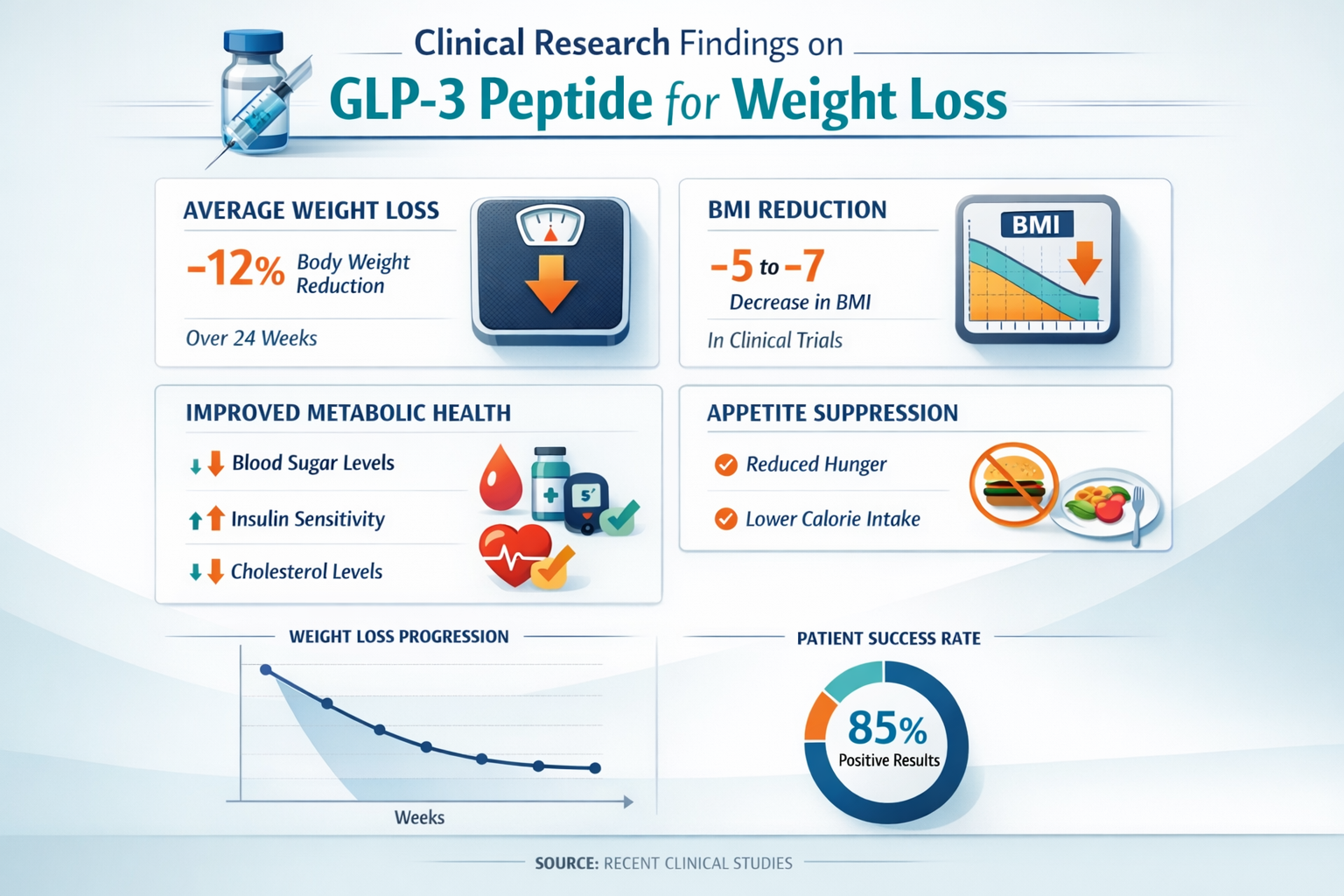
As research continues in 2026, several emerging trends shape the future of GLP-3 peptide for weight loss and related compounds.
Next-Generation Formulations
Pharmaceutical researchers continue developing improved versions of GLP-3 peptide for weight loss with enhanced properties:
Oral Delivery Systems:
Current GLP-3 peptide for weight loss formulations require injection, but oral peptide delivery systems represent a major research focus. Challenges include:
- Peptide degradation in gastric acid
- Poor intestinal absorption
- First-pass hepatic metabolism
- Maintaining therapeutic blood levels
Early-stage oral GLP-1 formulations show promise, suggesting oral GLP-3 peptide for weight loss may eventually become available[6].
Extended-Duration Formulations:
While current protocols use weekly injections, researchers explore:
- Monthly depot formulations
- Implantable sustained-release systems
- Modified peptide structures with longer half-lives
- Polymer-based delivery matrices
Tissue-Selective Variants:
Future GLP-3 peptide for weight loss compounds may target specific tissues:
- Brain-penetrant formulations for enhanced appetite control
- Adipose-selective variants for targeted fat mobilization
- Muscle-sparing modifications for improved body composition
- Liver-targeted versions for metabolic disease
Personalized Peptide Protocols
The significant variability in individual responses to GLP-3 peptide for weight loss drives interest in personalized approaches:
Genetic Profiling:
Research identifies genetic variants affecting:
- GLP-1 receptor sensitivity
- GIP receptor expression levels
- Glucagon receptor responsiveness
- Metabolic enzyme activity
Future protocols may use genetic testing to predict individual responses and optimize dosing strategies.
Metabolic Phenotyping:
Advanced metabolic assessment could guide GLP-3 peptide for weight loss protocol design:
- Baseline insulin sensitivity measurements
- Resting metabolic rate determination
- Body composition analysis (DEXA, MRI)
- Hormonal profile assessment
Microbiome Considerations:
Emerging research suggests gut microbiome composition influences peptide efficacy. Future protocols may incorporate:
- Prebiotic/probiotic optimization
- Microbiome-guided dietary recommendations
- Personalized nutrition strategies
- Targeted microbiome modulation
Combination Therapeutic Approaches
Rather than single-compound protocols, future research increasingly explores synergistic peptide combinations:
GLP-3 + Mitochondrial Peptides:
Combining GLP-3 peptide for weight loss with mitochondrial-targeting compounds like SS-31 may enhance:
- Cellular energy production
- Fat oxidation capacity
- Exercise performance during weight loss
- Metabolic efficiency
GLP-3 + Longevity Peptides:
Integration with compounds like Epithalon or MOTS-C could address:
- Cellular aging processes
- Telomere preservation
- Mitochondrial function
- Long-term metabolic health
Multi-Modal Approaches:
Comprehensive protocols combining:
- GLP-3 peptide for weight loss (metabolic optimization)
- Growth hormone secretagogues (body composition)
- Recovery peptides (training support)
- Cognitive enhancement compounds (behavioral adherence)
Regulatory Pathway Developments
The regulatory landscape for GLP-3 peptide for weight loss continues evolving:
FDA Review Process:
Retatrutide and similar compounds remain under regulatory review. Key considerations include:
- Long-term cardiovascular safety data
- Cancer risk assessment (thyroid concerns)
- Benefit-risk profile compared to existing therapies
- Post-market surveillance requirements
International Approvals:
Different regulatory agencies may approve GLP-3 peptide for weight loss formulations at different timelines, creating variable global access.
Research Compound Regulations:
The research peptide market faces ongoing regulatory scrutiny, emphasizing the importance of:
- Transparent sourcing practices
- Quality control standards
- Appropriate use documentation
- Clear research-only positioning
Conclusion: Making Informed Decisions About GLP-3 Peptide for Weight Loss
The emergence of GLP-3 peptide for weight loss represents a significant advancement in metabolic research, with clinical trials demonstrating weight reductions approaching bariatric surgery outcomes through pharmacological intervention alone. The triple-receptor mechanism—simultaneously activating GLP-1, GIP, and glucagon pathways—creates synergistic effects that outperform single or dual-receptor approaches, explaining the impressive 25-29% weight loss observed in 48-week trials[1][3].
Key Points for Peptide Shoppers and Fitness Enthusiasts
✅ What the Research Shows:
- GLP-3 peptide for weight loss demonstrates superior efficacy compared to earlier incretin-based compounds
- The glucagon component provides direct fat mobilization beyond simple appetite suppression
- Metabolic improvements extend beyond weight loss to glucose control, lipid profiles, and inflammatory markers
- Once-weekly dosing provides practical advantages over daily injection protocols
⚠️ Important Limitations:
- GLP-3 peptide for weight loss formulations remain not FDA approved as of 2026[3]
- Individual responses vary significantly based on genetics, lifestyle, and metabolic health
- Weight regain commonly occurs after discontinuation without sustained behavioral changes
- Long-term safety data beyond 72 weeks remains limited
- Cardiovascular effects (increased heart rate) require monitoring[3]
🎯 Optimal Use Strategies:
- Combine GLP-3 peptide for weight loss with structured nutrition and exercise protocols[3]
- Implement gradual dose escalation to minimize gastrointestinal side effects
- Prioritize high protein intake and resistance training for muscle preservation
- Plan for long-term maintenance strategies beyond initial weight loss phase
- Source compounds from reputable suppliers with third-party testing verification
Actionable Next Steps
For those considering GLP-3 peptide for weight loss research:
1. Comprehensive Assessment:
- Establish baseline measurements (weight, body composition, metabolic markers)
- Document current dietary habits and activity levels
- Assess contraindications and potential risk factors
- Consider genetic or metabolic testing for personalized insights
2. Protocol Design:
- Select appropriate dosing strategy based on research goals
- Plan gradual escalation schedule
- Integrate complementary lifestyle interventions
- Establish monitoring schedule for safety and efficacy
3. Quality Sourcing:
- Research reputable peptide suppliers with transparent testing
- Verify third-party analytical certificates (HPLC, mass spectrometry)
- Ensure proper storage and handling capabilities
- Understand regulatory status and research-only applications
4. Monitoring and Adjustment:
- Track body weight, composition, and metabolic markers regularly
- Document subjective effects (appetite, energy, side effects)
- Adjust protocols based on individual response
- Plan transition to maintenance phase
5. Long-Term Planning:
- Develop sustainable lifestyle habits during active protocol
- Create maintenance strategy for post-protocol period
- Consider complementary interventions for ongoing optimization
- Establish realistic expectations for sustained results
The Bigger Picture
GLP-3 peptide for weight loss represents one component of an evolving landscape of metabolic optimization tools. While the clinical trial results are impressive, sustainable success requires integration with comprehensive lifestyle approaches addressing nutrition, exercise, sleep, stress management, and behavioral patterns.
The research peptide field continues advancing rapidly, with new formulations, delivery systems, and combination protocols emerging regularly. Staying informed about developments while maintaining realistic expectations and prioritizing safety creates the foundation for effective research exploration.
For peptide shoppers and fitness enthusiasts, GLP-3 peptide for weight loss offers a powerful research tool backed by substantial clinical evidence. However, it remains an investigational compound requiring careful consideration, appropriate sourcing, and integration within broader health optimization strategies.
As we progress through 2026 and beyond, continued research will clarify optimal protocols, identify responder characteristics, and potentially expand the therapeutic applications of triple-receptor peptides beyond weight management alone. The future of metabolic optimization increasingly involves personalized, multi-modal approaches leveraging the unique mechanisms of compounds like GLP-3 peptide for weight loss alongside complementary interventions.
Whether exploring GLP-3 peptide for weight loss or other research compounds, prioritize quality sourcing, comprehensive monitoring, and evidence-based protocols. The intersection of cutting-edge peptide research and practical application continues creating new possibilities for body composition optimization and metabolic health enhancement.
For access to research-grade peptides with third-party testing verification, explore the comprehensive selection at Pure Tested Peptides, where quality and transparency remain the foundation of every product offering.
References
[1] Retatrutide Weight Loss – https://thebiostation.com/retatrutide-weight-loss/
[2] jamanetwork – https://jamanetwork.com/journals/jama/fullarticle/2844678
[3] Watch – https://www.youtube.com/watch?v=K7v6DNHB3y8
[4] pubmed.ncbi.nlm.nih.gov – https://pubmed.ncbi.nlm.nih.gov/41615674/
SEO Meta Title and Description
Meta Title (59 characters):
GLP-3 Peptide for Weight Loss: 2026 Research Guide
Meta Description (158 characters):
Discover how GLP-3 peptide for weight loss achieves 25-29% weight reduction through triple-receptor activation. Clinical data, protocols & safety in 2026.
{“@context”:”https://schema.org”,”@type”:”Article”,”headline”:”glp-3 peptide for weight loss”,”description”:”(158 characters):”,”image”:”https://zsxkvszxbhpwnvzxdydv.supabase.co/storage/v1/object/public/generated-images/kie/a253d727-4b00-4271-a0c0-56d66c6e600f/slot-0-1770077660173.png”,”datePublished”:”2026-02-03T00:08:32.944489+00:00″,”dateModified”:”2026-02-03T00:15:02.989Z”,”author”:{“@type”:”Organization”,”name”:”PTP UPDATED 2.1.26″},”publisher”:{“@type”:”Organization”,”name”:”PTP UPDATED 2.1.26″}}