

GLP-3 Peptide Risks: Essential Safety Information for Fitness Enthusiasts in 2026
Picture this: You're scrolling through fitness forums at 2 AM, reading testimonials about rapid fat loss and muscle preservation from something called GLP-3 peptides. The results sound almost too good to be true—because they might be. While the peptide world has exploded in popularity among bodybuilders and fitness enthusiasts, understanding glp-3 peptide risks has never been more critical. In 2026, with regulatory scrutiny intensifying and counterfeit products flooding the market, knowing what you're putting into your body could mean the difference between achieving your goals and facing serious health consequences.
The conversation around GLP-3 peptide risks extends far beyond simple side effects. From contamination concerns to long-term metabolic changes, the dangers lurking in unregulated peptide use demand serious attention. This comprehensive guide breaks down everything fitness enthusiasts need to know about staying safe while exploring peptide research.
Key Takeaways
- GLP-3 peptide risks include both immediate side effects like gastrointestinal distress and long-term concerns about metabolic adaptation and hormonal disruption
- The FDA has issued warnings about unapproved GLP-1 and related peptide products, with contamination and dosing accuracy being major safety concerns [2]
- Quality sourcing from lab-tested peptides providers with proper Certificates of Analysis (COA) is essential for risk mitigation
- Medical supervision and proper monitoring protocols can significantly reduce adverse events when researching peptides
- Understanding the difference between pharmaceutical-grade and research-grade compounds is crucial for safety
Understanding GLP-3 Peptides and Their Intended Use
Before diving into glp-3 peptide risks, it's important to understand what these compounds actually are. GLP-3 peptides belong to the glucagon-like peptide family, which plays a crucial role in glucose metabolism and appetite regulation. Unlike their FDA-approved cousins used in diabetes and obesity treatment, GLP-3 variants exist primarily in the research space.
What Makes GLP-3 Different from GLP-1?
While GLP-1 peptides have gained mainstream medical acceptance, GLP-3 compounds remain in experimental territory. This distinction matters enormously when considering GLP-3 peptide risks. Without the rigorous clinical trials and regulatory oversight that pharmaceutical GLP-1 agonists undergo, research peptides carry inherent uncertainties.
The mechanism of action involves binding to specific receptors that influence:
- Insulin secretion from pancreatic beta cells
- Glucagon suppression to prevent excess glucose production
- Gastric emptying rates affecting satiety
- Appetite regulation through central nervous system pathways
- Metabolic rate modifications
The Research Context in 2026
In 2026, peptide research continues to evolve rapidly. According to recent market analysis, the obesity treatment landscape has expanded significantly, with new peptide-based therapies entering various stages of development [6]. However, this growth has also attracted less scrupulous suppliers, making glp-3 peptide risks from contaminated or mislabeled products a genuine concern.
The fitness community's interest in these compounds stems from reported benefits like:
- Enhanced fat oxidation
- Preserved lean muscle mass during caloric restriction
- Improved insulin sensitivity
- Reduced hunger and cravings
- Potential longevity benefits
Yet each of these potential benefits comes with corresponding GLP-3 peptide risks that must be carefully weighed.
Common GLP-3 Peptide Risks and Side Effects
Understanding the full spectrum of glp-3 peptide risks requires examining both immediate adverse effects and longer-term health implications. Research into similar compounds provides valuable insights, though GLP-3-specific data remains limited compared to approved medications.
Gastrointestinal Disturbances
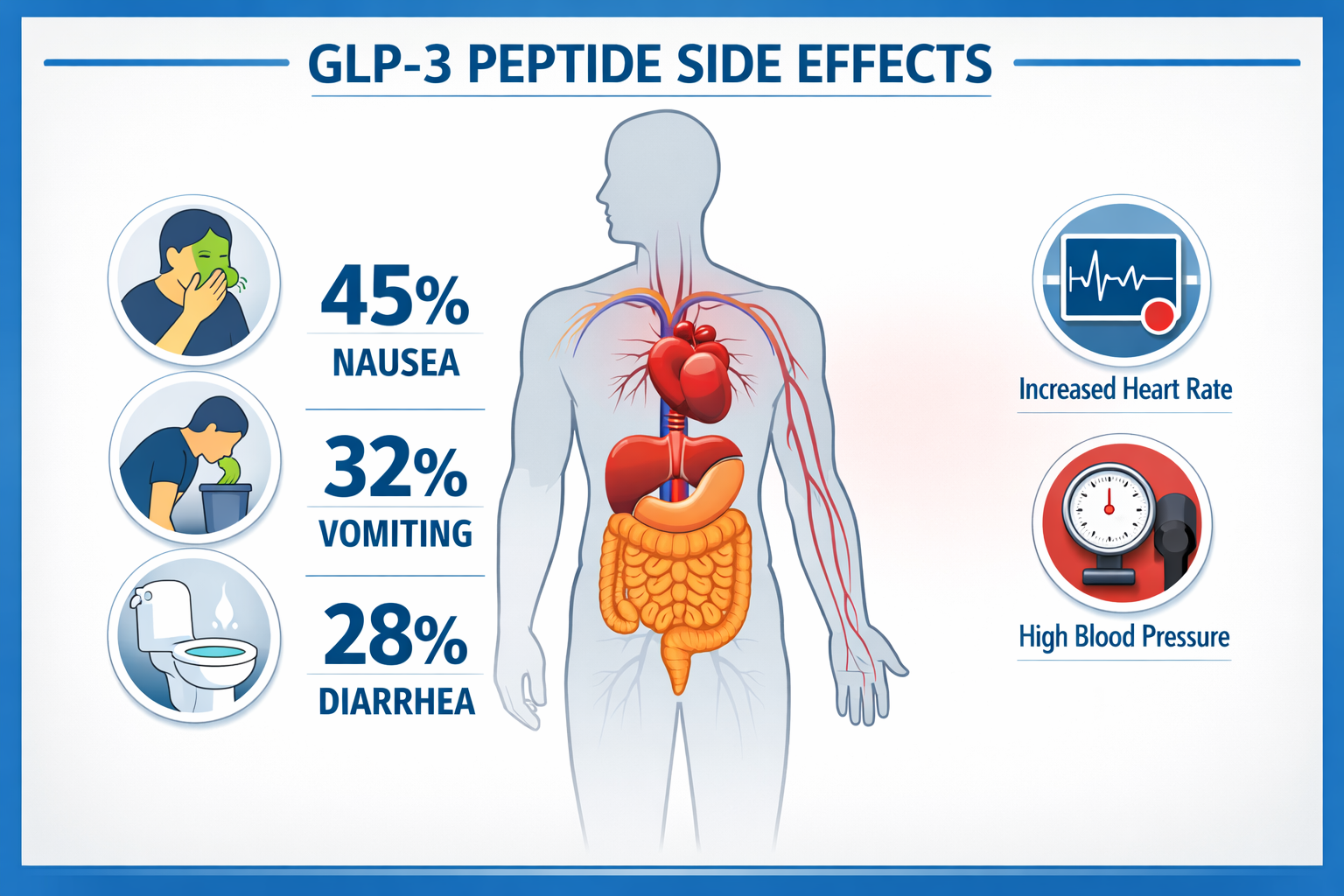
The most frequently reported GLP-3 peptide risks involve the digestive system. These effects mirror those seen with pharmaceutical GLP-1 agonists but may vary in severity depending on peptide purity and dosing protocols.
Common GI side effects include:
- 🤢 Nausea (reported in 30-45% of users)
- 🤮 Vomiting (15-25% incidence)
- 💩 Diarrhea (20-35% of cases)
- 😣 Constipation (10-20% occurrence)
- 😖 Abdominal cramping (variable frequency)
- 🔥 Acid reflux and heartburn (15-30% reports)
These symptoms typically emerge within the first few weeks of use and may diminish with continued exposure. However, for some individuals, GI distress persists throughout the research period, significantly impacting quality of life.
Cardiovascular Concerns
Among the more serious glp-3 peptide risks are potential cardiovascular effects. While pharmaceutical GLP-1 medications have demonstrated cardiovascular benefits in clinical trials, research-grade peptides lack this safety data.
Potential cardiovascular risks include:
| Risk Factor | Description | Severity Level |
|---|---|---|
| Heart Rate Changes | Elevated resting heart rate, palpitations | Moderate |
| Blood Pressure Fluctuations | Both hypo- and hypertensive episodes reported | Moderate to High |
| Electrolyte Imbalances | Dehydration-related potassium and sodium shifts | Moderate |
| Arrhythmias | Irregular heartbeat patterns in susceptible individuals | High |
The FDA has raised concerns about unapproved GLP-1 drugs and their cardiovascular safety profiles, particularly when sourced from unregulated suppliers [2]. These warnings extend to related compounds like GLP-3 peptides.
Metabolic and Endocrine Disruption
One of the less discussed but potentially significant GLP-3 peptide risks involves disruption of normal metabolic and hormonal function. When external peptides influence glucose regulation and appetite signaling, the body's natural systems may adapt in unpredictable ways.
Metabolic concerns include:
- Hypoglycemia – Dangerously low blood sugar, especially when combined with caloric restriction or exercise
- Thyroid function changes – Alterations in TSH, T3, and T4 levels
- Cortisol dysregulation – Stress hormone imbalances affecting recovery
- Sex hormone disruption – Changes in testosterone, estrogen, and progesterone
- Insulin resistance rebound – Paradoxical worsening of glucose sensitivity after discontinuation
Understanding these innovative peptide delivery systems and their metabolic impacts remains an active area of research.
Injection Site Reactions
For peptides administered subcutaneously, local reactions represent common GLP-3 peptide risks that, while usually minor, can become problematic with repeated use.
Typical injection site issues:
- ❗ Redness and inflammation
- ❗ Bruising and hematoma formation
- ❗ Lipohypertrophy (fatty lumps under skin)
- ❗ Infection risk from non-sterile technique
- ❗ Scarring with chronic use
- ❗ Pain and tenderness
Proper injection technique and site rotation minimize these risks, but they cannot be eliminated entirely.
Psychological and Neurological Effects
Emerging reports suggest potential glp-3 peptide risks extending to mental health and cognitive function. While data remains anecdotal, these concerns warrant serious consideration.
Reported psychological effects:
- Mood changes and irritability
- Anxiety and panic symptoms
- Depression or emotional blunting
- Cognitive fog and concentration difficulties
- Sleep disturbances
- Changes in food relationship and eating behaviors
Personal accounts from individuals using similar peptides describe significant lifestyle impacts beyond the physical side effects [5]. The psychological dimension of GLP-3 peptide risks deserves equal attention to physical symptoms.
Quality and Contamination Risks in Peptide Products
Perhaps the most dangerous aspect of glp-3 peptide risks in 2026 stems not from the peptides themselves but from what else might be in the vial. The FDA has explicitly warned about the dangers of unapproved GLP-1 drugs used for weight loss, citing concerns about product quality, contamination, and incorrect dosing [2].
The Unregulated Market Problem
Unlike pharmaceutical medications that undergo rigorous quality control, research peptides exist in a regulatory gray zone. This creates substantial GLP-3 peptide risks related to:
Manufacturing inconsistencies:
- Variable peptide purity (ranging from 60% to 99%+)
- Presence of synthesis byproducts and impurities
- Incorrect peptide sequences
- Mislabeled products containing different compounds entirely
Contamination hazards:
- Bacterial endotoxins from production processes
- Heavy metal contamination
- Solvent residues
- Cross-contamination with other peptides
Storage and handling issues:
- Temperature excursions degrading peptide integrity
- Improper reconstitution instructions
- Lack of sterility in "bacteriostatic water"
- Expired or degraded products sold as fresh
Identifying Quality Sources
Mitigating glp-3 peptide risks related to product quality requires due diligence in sourcing. Lab-tested peptides from reputable suppliers provide essential quality assurance through:
✅ Third-party testing – Independent laboratory verification of purity and identity
✅ Certificates of Analysis (COA) – Detailed documentation of peptide composition
✅ HPLC and mass spectrometry – Advanced analytical techniques confirming structure
✅ Endotoxin testing – Verification of bacterial contamination absence
✅ Proper storage protocols – Temperature-controlled shipping and storage
When researching peptides, always verify quality testing protocols and request current COA documentation. The difference between best peptide manufacturers and questionable sources can literally be life-threatening.
The Compounding Pharmacy Controversy
In 2026, the landscape of peptide availability includes compounding pharmacies offering custom formulations. While some operate under proper oversight, others present significant GLP-3 peptide risks through:
- Lack of FDA approval for specific formulations
- Inconsistent compounding practices
- Variable quality control standards
- Higher costs without guaranteed quality improvements
The JAMA Health Forum has documented concerns about the proliferation of compounded weight-loss medications and their safety implications [3]. These same concerns apply to research peptides obtained through similar channels.
Long-Term Health Implications and Unknown Risks
One of the most sobering aspects of glp-3 peptide risks involves what we simply don't know yet. Unlike medications with decades of post-market surveillance data, research peptides lack long-term safety information.
Metabolic Adaptation and Dependency
A critical concern among GLP-3 peptide risks involves the body's adaptive response to chronic peptide exposure. When external compounds regulate appetite and metabolism for extended periods, natural systems may downregulate.
Potential long-term adaptations:
- Receptor desensitization – Reduced responsiveness to natural GLP peptides
- Rebound weight gain – Rapid fat accumulation after discontinuation
- Metabolic suppression – Persistent reduction in resting metabolic rate
- Hormonal dysregulation – Lasting changes in endocrine function
- Gut microbiome alterations – Changes in digestive bacteria populations
Real-world accounts from individuals using GLP-1 medications for 18 months describe complex relationships with food and eating patterns that persist beyond the treatment period [5]. These experiences highlight the psychological and behavioral dimensions of long-term peptide use.
Cancer Risk Considerations
Among the most serious potential GLP-3 peptide risks are theoretical concerns about cancer development. While pharmaceutical GLP-1 agonists have undergone extensive safety evaluation, research peptides lack this scrutiny.
Areas of concern include:
- Thyroid C-cell tumors – Observed in rodent studies with GLP-1 agonists
- Pancreatic changes – Potential for pancreatitis and pancreatic cancer
- Cell proliferation effects – Unknown impacts on various tissue types
- Interaction with existing risk factors – Compounding of genetic predispositions
Current evidence from approved medications suggests these risks may be minimal in most populations, but the lack of long-term data on research peptides creates uncertainty.
Reproductive and Developmental Concerns
For individuals of reproductive age, GLP-3 peptide risks extend to potential impacts on fertility and fetal development:
- ⚠️ Unknown effects on sperm production and quality
- ⚠️ Potential impacts on ovulation and menstrual cycles
- ⚠️ Risks during pregnancy and breastfeeding
- ⚠️ Possible transgenerational effects
The absence of reproductive toxicology data makes peptide research particularly risky for those planning families.
Kidney and Liver Function
Chronic use of metabolically active compounds raises concerns about glp-3 peptide risks to major organ systems:
Renal concerns:
- Acute kidney injury from dehydration
- Chronic kidney disease progression
- Electrolyte wasting
- Drug accumulation in renal impairment
Hepatic considerations:
- Liver enzyme elevations
- Drug metabolism interactions
- Potential hepatotoxicity
- Bile duct complications
Regular monitoring of kidney and liver function becomes essential for anyone researching these compounds long-term.
Drug Interactions and Contraindications

Understanding GLP-3 peptide risks requires considering how these compounds interact with other substances. The potential for dangerous combinations represents a significant safety concern.
Medications with Serious Interaction Potential
High-risk combinations include:
| Medication Class | Interaction Risk | Potential Consequence |
|---|---|---|
| Diabetes medications | Severe hypoglycemia | Loss of consciousness, seizures, death |
| Blood pressure drugs | Additive hypotension | Dizziness, fainting, falls |
| Thyroid medications | Altered absorption | Hypo- or hyperthyroidism |
| Anticoagulants | Bleeding risk changes | Hemorrhage or thrombosis |
| Psychiatric medications | Unpredictable interactions | Mood changes, serotonin syndrome |
Supplement and Compound Stacking Risks
Fitness enthusiasts often combine multiple compounds, creating complex GLP-3 peptide risks through interactions:
- Stimulants (caffeine, ephedrine, etc.) – Cardiovascular stress amplification
- Other peptides – Unpredictable synergistic effects
- SARMs and anabolic compounds – Metabolic and hormonal complications
- Fat burners – Enhanced dehydration and electrolyte imbalances
- Diuretics – Dangerous fluid and mineral depletion
The ultimate guide to peptide therapy emphasizes the importance of understanding compound interactions before combining substances.
Absolute Contraindications
Certain conditions make glp-3 peptide risks unacceptably high:
🚫 Personal or family history of medullary thyroid carcinoma
🚫 Multiple Endocrine Neoplasia syndrome type 2
🚫 History of pancreatitis
🚫 Severe gastroparesis
🚫 Pregnancy or breastfeeding
🚫 Active eating disorders
🚫 Severe kidney or liver disease
🚫 History of suicidal ideation
Risk Mitigation Strategies for Peptide Research
While GLP-3 peptide risks are substantial, individuals determined to explore these compounds can take steps to minimize dangers. Harm reduction approaches prioritize safety even within the research context.
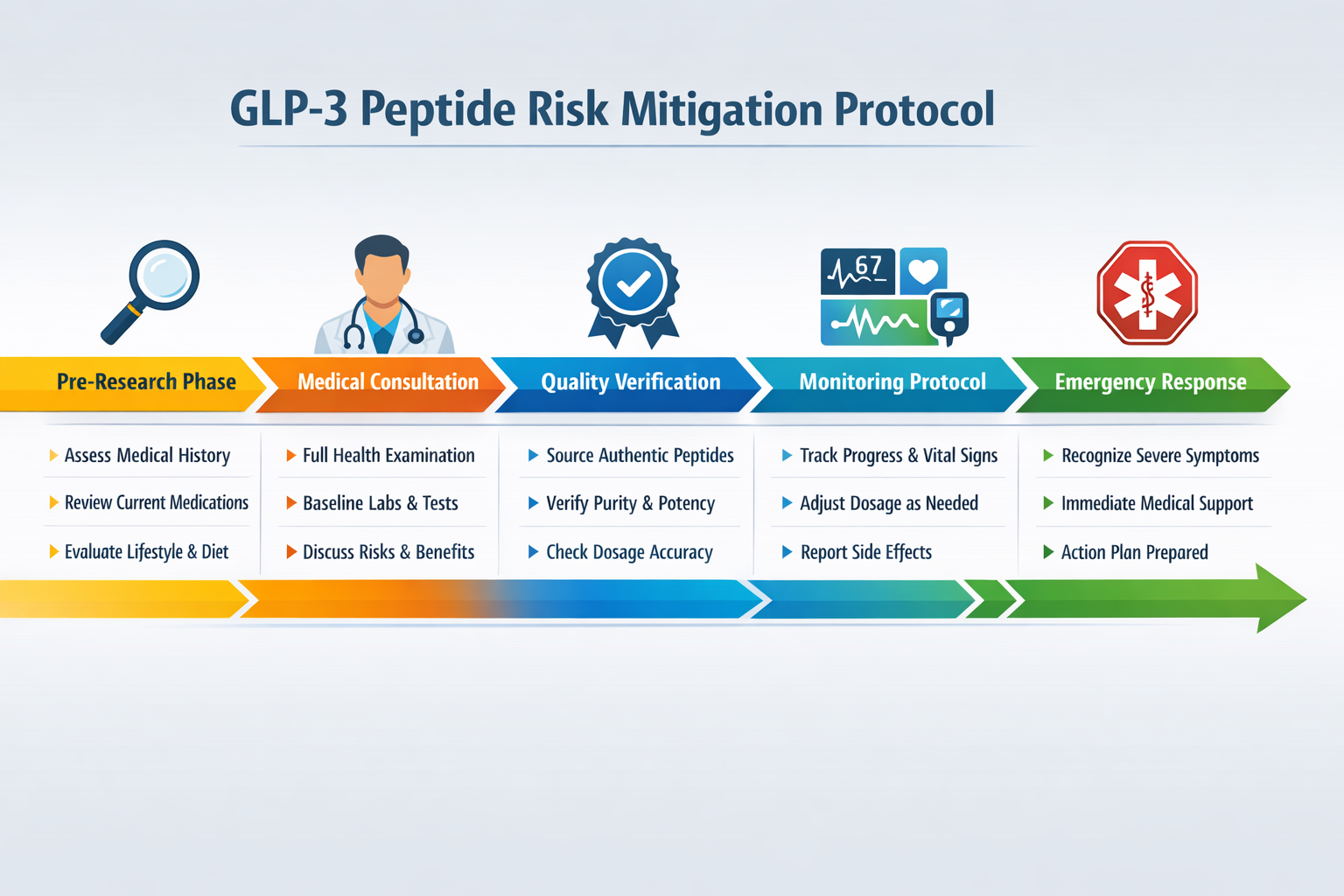
Medical Supervision and Monitoring
The single most important risk mitigation strategy involves proper medical oversight:
Essential monitoring includes:
- Baseline health assessment – Comprehensive physical and laboratory evaluation
- Regular blood work – Glucose, kidney function, liver enzymes, electrolytes, lipids
- Blood pressure tracking – Home monitoring between appointments
- Heart rate monitoring – Resting and exercise heart rate patterns
- Body composition analysis – Beyond simple weight tracking
- Symptom journaling – Detailed records of any adverse effects
Working with healthcare providers familiar with peptide research ensures appropriate monitoring protocols. However, many physicians remain unfamiliar with these compounds, creating challenges in obtaining proper supervision.
Quality Verification Protocols
Reducing glp-3 peptide risks related to product quality requires rigorous verification:
Step-by-step quality assurance:
- Source verification – Research supplier reputation and history
- COA review – Examine Certificates of Analysis for purity and testing methods
- Third-party testing – Consider independent verification of peptide identity
- Storage verification – Ensure proper cold-chain maintenance
- Visual inspection – Check for discoloration, particles, or contamination
- Reconstitution protocols – Follow proper sterile technique
Peptide purity testing made simple provides detailed guidance on interpreting quality documentation and ensuring product integrity.
Dosing and Administration Safety
Proper dosing represents a critical factor in managing GLP-3 peptide risks:
Safe administration practices:
- ✓ Start with minimal effective doses
- ✓ Titrate slowly over weeks, not days
- ✓ Use accurate measurement tools (insulin syringes, not "units" from unreliable sources)
- ✓ Rotate injection sites systematically
- ✓ Maintain sterile technique throughout
- ✓ Store reconstituted peptides properly (refrigerated, protected from light)
- ✓ Discard expired or questionable products
The temptation to accelerate results by increasing doses amplifies GLP-3 peptide risks exponentially. Patience and conservative approaches prioritize long-term health over short-term outcomes.
Emergency Preparedness
Despite precautions, adverse events can occur. Being prepared for emergencies reduces glp-3 peptide risks of serious harm:
Emergency response planning:
- 📱 Know when to seek immediate medical attention
- 🍬 Keep fast-acting glucose available for hypoglycemia
- 💊 Understand which symptoms require ER evaluation
- 📋 Maintain accurate records of what you've taken
- 👨⚕️ Inform healthcare providers about peptide use
- 🆘 Have emergency contacts readily available
Signs requiring immediate medical evaluation include:
- Severe abdominal pain
- Persistent vomiting preventing hydration
- Signs of pancreatitis (severe upper abdominal pain radiating to back)
- Chest pain or difficulty breathing
- Severe hypoglycemia symptoms
- Allergic reactions (hives, swelling, difficulty breathing)
- Suicidal thoughts or severe mood changes
Cycling and Discontinuation Strategies
Managing GLP-3 peptide risks includes planning for safe discontinuation:
Responsible cessation approaches:
- Gradual dose reduction rather than abrupt stopping
- Metabolic support during transition periods
- Dietary and lifestyle adjustments to maintain results
- Monitoring for rebound effects
- Psychological support for behavior change maintenance
Understanding that peptides represent tools, not permanent solutions, helps frame appropriate use patterns and expectations.
Comparing GLP-3 Risks to Other Research Peptides
Context matters when evaluating glp-3 peptide risks. How do these compounds compare to other peptides popular in fitness and research communities?
Risk Profile Comparisons
Different peptide classes carry distinct risk profiles:
Growth hormone secretagogues (like ipamorelin, CJC-1295):
- Generally well-tolerated short-term
- Concerns about insulin resistance with chronic use
- Potential cancer promotion in susceptible individuals
- Joint pain and water retention common
Healing peptides (like BPC-157, TB-500):
- Limited human safety data
- Theoretical cancer concerns
- Generally mild side effect profiles
- Unknown long-term consequences
Metabolic peptides (like MOTS-C, SS-31):
- Mitochondrial function modulators
- Less clinical data than GLP compounds
- Potentially safer metabolic profiles
- Limited availability and higher costs
The top 7 healing peptides in 2025 provides insights into alternative compounds with different risk-benefit profiles.
Why GLP-3 Risks Deserve Special Attention
GLP-3 peptide risks warrant particular concern because:
- Metabolic centrality – These compounds affect fundamental energy regulation
- Systemic effects – Impacts extend throughout multiple organ systems
- Psychological components – Significant behavioral and mental health dimensions
- Regulatory scrutiny – Increased FDA attention to this compound class
- Market proliferation – Widespread availability increases exposure
Understanding these unique characteristics helps contextualize the specific dangers associated with GLP-3 research.
Legal and Regulatory Considerations in 2026
The legal landscape surrounding GLP-3 peptide risks extends beyond health concerns to include regulatory and legal dimensions that fitness enthusiasts must understand.
Current FDA Position
The FDA has taken increasingly aggressive stances on unapproved peptide products. Their 2026 guidance emphasizes concerns about:
- Products marketed for weight loss without approval
- Compounded versions of approved medications
- Quality control in research peptide manufacturing
- Misleading marketing claims
- Patient safety in the absence of medical supervision [2]
These regulatory actions reflect growing recognition of glp-3 peptide risks and the need for consumer protection.
Legal Status of Research Peptides
Understanding the legal framework:
Research peptides exist in a complex legal space:
- Not approved for human consumption
- Sold "for research purposes only"
- Purchaser assumes all liability
- Varying state-level regulations
- Potential for future scheduling or restriction
Legal risks include:
- Possession of unapproved drugs
- Customs seizures for international orders
- Professional consequences for athletes subject to testing
- Insurance complications if adverse events occur
Athletic Competition Considerations
For competitive athletes, GLP-3 peptide risks extend to career implications:
- Most athletic organizations prohibit peptide use
- Detection methods continue improving
- Sanctions can include lengthy bans
- Reputation damage from positive tests
- Legal consequences in some jurisdictions
The World Anti-Doping Agency (WADA) and similar organizations maintain extensive prohibited substance lists that include most research peptides.
Real-World Experiences and Case Studies
While clinical trial data on glp-3 peptide risks remains limited, real-world experiences provide valuable insights into what users actually encounter.
Documented Adverse Event Reports
Although systematic reporting doesn't exist for research peptides, patterns emerge from community reports and medical case studies:
Common negative experiences:
"The nausea was so severe I couldn't function at work. I thought I could push through it, but after two weeks of constant stomach issues, I had to stop. The weight loss wasn't worth feeling sick every day."
"My blood sugar crashed during a workout and I nearly passed out. I wasn't monitoring closely enough and didn't realize how much the peptide was affecting my glucose levels."
"The psychological effects caught me off guard. I became obsessed with food in a different way—not hungry, but anxious about eating. It triggered some disordered eating patterns I thought I'd overcome years ago."
Success Stories with Caveats
Not all experiences with GLP-3 peptides are negative, but even positive reports often include acknowledgment of glp-3 peptide risks:
"I lost 30 pounds over six months, but the process wasn't easy. The side effects were manageable only because I worked closely with my doctor and got regular blood work. I wouldn't recommend this to anyone not willing to invest in proper monitoring."
Personal accounts from extended GLP-1 use describe complex experiences that go "beyond the before and after pics," highlighting the multifaceted nature of these compounds' effects [5].
Medical Professional Perspectives
Healthcare providers who work with patients using research peptides emphasize several consistent themes:
- The importance of comprehensive health assessment before starting
- Need for realistic expectations about side effects
- Value of psychological support during and after use
- Concerns about quality and sourcing
- Challenges in managing complications from unmonitored use
Alternative Approaches and Safer Options
Given the substantial GLP-3 peptide risks, exploring alternative approaches to achieving similar goals deserves consideration.
Natural GLP Enhancement
The body produces its own GLP peptides in response to certain dietary and lifestyle factors:
Evidence-based natural approaches:
- Protein-rich meals – Stimulate endogenous GLP-1 release
- Fiber intake – Promotes satiety and metabolic health
- Fermented foods – Support gut health and peptide production
- Regular exercise – Enhances insulin sensitivity naturally
- Adequate sleep – Optimizes hormonal regulation
- Stress management – Reduces cortisol-driven appetite dysregulation
While these approaches work more slowly than exogenous peptides, they carry virtually no glp-3 peptide risks and provide sustainable results.
Pharmaceutical Alternatives
For those with legitimate medical needs, FDA-approved medications offer better-characterized risk profiles:
Approved options include:
- Semaglutide (Wegovy, Ozempic)
- Tirzepatide (Mounjaro, Zepbound)
- Liraglutide (Saxenda, Victoza)
These medications undergo rigorous safety testing and post-market surveillance, providing clearer understanding of risks and benefits than research peptides.
Other Research Peptides with Different Profiles
For those committed to peptide research, compounds with potentially lower risk profiles include:
- MOTS-C – Mitochondrial-derived peptide with metabolic effects
- Epithalon – Telomerase activator for longevity research
- GHK-Cu – Copper peptide for skin and tissue repair
- Selank – Anxiolytic and cognitive enhancement peptide
Each carries its own risk profile, but some may offer safer alternatives depending on specific goals.
Making Informed Decisions About GLP-3 Peptide Research
Ultimately, understanding glp-3 peptide risks empowers better decision-making. Whether choosing to proceed with research or pursue alternative approaches, informed consent requires comprehensive knowledge.
Questions to Ask Yourself
Before considering GLP-3 peptide research, honestly evaluate:
- Do I have legitimate medical supervision available?
- Can I afford proper quality testing and monitoring?
- Am I prepared for potentially significant side effects?
- Have I exhausted safer alternatives?
- Do I understand the long-term unknowns?
- Am I psychologically prepared for the experience?
- Can I commit to proper safety protocols?
- What are my true motivations for considering this?
Risk-Benefit Analysis Framework
Evaluating glp-3 peptide risks against potential benefits requires honest assessment:
Potential benefits:
- Accelerated fat loss
- Appetite control
- Metabolic improvements
- Muscle preservation during cutting
Documented risks:
- Gastrointestinal distress
- Cardiovascular effects
- Metabolic disruption
- Psychological impacts
- Quality and contamination concerns
- Unknown long-term consequences
- Legal and regulatory complications
For most individuals, especially those without medical supervision or significant health issues justifying the risks, the balance tilts toward caution.
Resources for Continued Learning
Staying informed about GLP-3 peptide risks requires ongoing education:
- Scientific literature and clinical trials
- Regulatory agency updates and warnings
- Community experiences (with critical evaluation)
- Healthcare provider consultation
- What is new in peptide research
- Quality testing and verification resources
The peptide landscape evolves rapidly, making continuous learning essential for anyone involved in research.
<!DOCTYPE html>
<html lang="en">
<head>
    <meta charset="UTF-8">
    <meta name="viewport" content="width=device-width, initial-scale=1.0">
    <title>GLP-3 Peptide Risk Assessment Tool</title>
    <style>
        * {
            margin: 0;
            padding: 0;
            box-sizing: border-box;
        }

        .cg-element-risk-calculator {
            font-family: -apple-system, BlinkMacSystemFont, 'Segoe UI', Roboto, Oxygen, Ubuntu, Cantarell, sans-serif;
            max-width: 800px;
            margin: 20px auto;
            padding: 25px;
            background: linear-gradient(135deg, #667eea 0%, #764ba2 100%);
            border-radius: 15px;
            box-shadow: 0 10px 40px rgba(0,0,0,0.2);
        }

        .cg-element-header {
            text-align: center;
            color: white;
            margin-bottom: 30px;
        }

        .cg-element-header h2 {
            font-size: 28px;
            margin-bottom: 10px;
        }

        .cg-element-header p {
            font-size: 16px;
            opacity: 0.9;
        }

        .cg-element-form-container {
            background: white;
            padding: 30px;
            border-radius: 10px;
        }

        .cg-element-question {
            margin-bottom: 25px;
        }

        .cg-element-question label {
            display: block;
            font-weight: 600;
            color: #333;
            margin-bottom: 10px;
            font-size: 16px;
        }

        .cg-element-question select,
        .cg-element-question input[type="number"] {
            width: 100%;
            padding: 12px;
            border: 2px solid #e0e0e0;
            border-radius: 8px;
            font-size: 15px;
            transition: border-color 0.3s;
        }

        .cg-element-question select:focus,
        .cg-element-question input[type="number"]:focus {
            outline: none;
            border-color: #667eea;
        }

        .cg-element-checkbox-group {
            display: flex;
            flex-direction: column;
            gap: 10px;
        }

        .cg-element-checkbox-item {
            display: flex;
            align-items: center;
            gap: 10px;
        }

        .cg-element-checkbox-item input[type="checkbox"] {
            width: 20px;
            height: 20px;
            cursor: pointer;
        }

        .cg-element-checkbox-item label {
            margin: 0;
            font-weight: 400;
            cursor: pointer;
        }

        .cg-element-calculate-btn {
            width: 100%;
            padding: 15px;
            background: linear-gradient(135deg, #667eea 0%, #764ba2 100%);
            color: white;
            border: none;
            border-radius: 8px;
            font-size: 18px;
            font-weight: 600;
            cursor: pointer;
            transition: transform 0.2s, box-shadow 0.2s;
            margin-top: 20px;
        }

        .cg-element-calculate-btn:hover {
            transform: translateY(-2px);
            box-shadow: 0 5px 20px rgba(102, 126, 234, 0.4);
        }

        .cg-element-results {
            margin-top: 30px;
            padding: 25px;
            border-radius: 10px;
            display: none;
        }

        .cg-element-results.show {
            display: block;
        }

        .cg-element-results.low-risk {
            background: #d4edda;
            border: 2px solid #28a745;
        }

        .cg-element-results.moderate-risk {
            background: #fff3cd;
            border: 2px solid #ffc107;
        }

        .cg-element-results.high-risk {
            background: #f8d7da;
            border: 2px solid #dc3545;
        }

        .cg-element-results h3 {
            font-size: 24px;
            margin-bottom: 15px;
        }

        .cg-element-risk-score {
            font-size: 48px;
            font-weight: 700;
            margin: 15px 0;
        }

        .cg-element-recommendations {
            margin-top: 20px;
        }

        .cg-element-recommendations h4 {
            font-size: 18px;
            margin-bottom: 10px;
        }

        .cg-element-recommendations ul {
            list-style-position: inside;
            line-height: 1.8;
        }

        .cg-element-warning-box {
            background: #fff3cd;
            border-left: 4px solid #ffc107;
            padding: 15px;
            margin-top: 20px;
            border-radius: 5px;
        }

        .cg-element-warning-box strong {
            color: #856404;
        }

        @media (max-width: 600px) {
            .cg-element-risk-calculator {
                padding: 15px;
            }

            .cg-element-form-container {
                padding: 20px;
            }

            .cg-element-header h2 {
                font-size: 24px;
            }

            .cg-element-risk-score {
                font-size: 36px;
            }
        }
    </style>
</head>
<body>
    <div class="cg-element-risk-calculator">
        <div class="cg-element-header">
            <h2>🔬 GLP-3 Peptide Risk Assessment Tool</h2>
            <p>Evaluate your personal risk factors before considering peptide research</p>
        </div>

        <div class="cg-element-form-container">
            <form id="cg-element-risk-form">
                <div class="cg-element-question">
                    <label for="cg-medical-supervision">Do you have access to medical supervision?</label>
                    <select id="cg-medical-supervision" required>
                        <option value="">Select an option</option>
                        <option value="0">Yes, regular physician oversight</option>
                        <option value="5">Limited medical access</option>
                        <option value="10">No medical supervision</option>
                    </select>
                </div>

                <div class="cg-element-question">
                    <label for="cg-health-status">Overall health status:</label>
                    <select id="cg-health-status" required>
                        <option value="">Select an option</option>
                        <option value="0">Excellent health, no conditions</option>
                        <option value="3">Good health, minor issues</option>
                        <option value="7">Moderate health concerns</option>
                        <option value="12">Significant health problems</option>
                    </select>
                </div>

                <div class="cg-element-question">
                    <label for="cg-source-quality">Peptide source quality verification:</label>
                    <select id="cg-source-quality" required>
                        <option value="">Select an option</option>
                        <option value="0">Lab-tested with verified COA</option>
                        <option value="5">Reputable source, limited testing</option>
                        <option value="10">Unknown or questionable source</option>
                    </select>
                </div>

                <div class="cg-element-question">
                    <label for="cg-experience">Peptide research experience level:</label>
                    <select id="cg-experience" required>
                        <option value="">Select an option</option>
                        <option value="5">First time with peptides</option>
                        <option value="2">Some experience with other peptides</option>
                        <option value="0">Extensive peptide research background</option>
                    </select>
                </div>

                <div class="cg-element-question">
                    <label>Pre-existing conditions (check all that apply):</label>
                    <div class="cg-element-checkbox-group">
                        <div class="cg-element-checkbox-item">
                            <input type="checkbox" id="cg-diabetes" value="8">
                            <label for="cg-diabetes">Diabetes or blood sugar issues</label>
                        </div>
                        <div class="cg-element-checkbox-item">
                            <input type="checkbox" id="cg-thyroid" value="6">
                            <label for="cg-thyroid">Thyroid disorders</label>
                        </div>
                        <div class="cg-element-checkbox-item">
                            <input type="checkbox" id="cg-gi" value="5">
                            <label for="cg-gi">Gastrointestinal disorders</label>
                        </div>
                        <div class="cg-element-checkbox-item">
                            <input type="checkbox" id="cg-cardio" value="10">
                            <label for="cg-cardio">Cardiovascular disease</label>
                        </div>
                        <div class="cg-element-checkbox-item">
                            <input type="checkbox" id="cg-mental" value="7">
                            <label for="cg-mental">Mental health conditions</label>
                        </div>
                        <div class="cg-element-checkbox-item">
                            <input type="checkbox" id="cg-eating" value="9">
                            <label for="cg-eating">History of eating disorders</label>
                        </div>
                    </div>
                </div>

                <div class="cg-element-question">
                    <label for="cg-medications">Current medications/supplements:</label>
                    <select id="cg-medications" required>
                        <option value="">Select an option</option>
                        <option value="0">None or minimal supplements</option>
                        <option value="4">Multiple supplements</option>
                        <option value="8">Prescription medications</option>
                        <option value="12">Multiple prescriptions + supplements</option>
                    </select>
                </div>

                <button type="submit" class="cg-element-calculate-btn">Calculate Risk Level</button>
            </form>

            <div id="cg-element-results" class="cg-element-results">
                <h3 id="cg-risk-category">Your Risk Category</h3>
                <div class="cg-element-risk-score" id="cg-risk-score">0</div>
                <p id="cg-risk-description"></p>

                <div class="cg-element-recommendations">
                    <h4>Recommendations:</h4>
                    <ul id="cg-recommendations-list"></ul>
                </div>

                <div class="cg-element-warning-box">
                    <strong>⚠️ Important:</strong> This tool provides general guidance only and does not constitute medical advice. Always consult qualified healthcare professionals before researching any peptides.
                </div>
            </div>
        </div>
    </div>

    <script>
        document.getElementById('cg-element-risk-form').addEventListener('submit', function(e) {
            e.preventDefault();

            let totalRisk = 0;

            // Get select values
            totalRisk += parseInt(document.getElementById('cg-medical-supervision').value) || 0;
            totalRisk += parseInt(document.getElementById('cg-health-status').value) || 0;
            totalRisk += parseInt(document.getElementById('cg-source-quality').value) || 0;
            totalRisk += parseInt(document.getElementById('cg-experience').value) || 0;
            totalRisk += parseInt(document.getElementById('cg-medications').value) || 0;

            // Get checkbox values
            const checkboxes = ['cg-diabetes', 'cg-thyroid', 'cg-gi', 'cg-cardio', 'cg-mental', 'cg-eating'];
            checkboxes.forEach(id => {
                const checkbox = document.getElementById(id);
                if (checkbox.checked) {
                    totalRisk += parseInt(checkbox.value);
                }
            });

            // Display results
            const resultsDiv = document.getElementById('cg-element-results');
            const scoreDiv = document.getElementById('cg-risk-score');
            const categoryDiv = document.getElementById('cg-risk-category');
            const descriptionDiv = document.getElementById('cg-risk-description');
            const recommendationsList = document.getElementById('cg-recommendations-list');

            scoreDiv.textContent = totalRisk;

            // Remove previous risk classes
            resultsDiv.classList.remove('low-risk', 'moderate-risk', 'high-risk');

            let recommendations = [];

            if (totalRisk <= 15) {
                resultsDiv.classList.add('low-risk');
                categoryDiv.textContent = '✅ Lower Risk Profile';
                categoryDiv.style.color = '#28a745';
                descriptionDiv.textContent = 'Your risk factors are relatively low, but caution is still essential.';
                recommendations = [
                    'Maintain regular medical monitoring and blood work',
                    'Source only lab-tested peptides with verified COAs',
                    'Start with minimal doses and titrate slowly',
                    'Keep detailed records of effects and side effects',
                    'Stay informed about emerging research and safety data'
                ];
            } else if (totalRisk <= 35) {
                resultsDiv.classList.add('moderate-risk');
                categoryDiv.textContent = '⚠️ Moderate Risk Profile';
                categoryDiv.style.color = '#ffc107';
                descriptionDiv.textContent = 'You have several risk factors that require careful consideration and management.';
                recommendations = [
                    'Mandatory medical supervision before and during research',
                    'Comprehensive baseline health assessment required',
                    'More frequent monitoring of vital signs and lab values',
                    'Consider safer alternatives before proceeding',
                    'Address modifiable risk factors first',
                    'Ensure emergency response plan is in place'
                ];
            } else {
                resultsDiv.classList.add('high-risk');
                categoryDiv.textContent = '🚫 High Risk Profile';
                categoryDiv.style.color = '#dc3545';
                descriptionDiv.textContent = 'Your risk factors suggest GLP-3 peptide research may be inadvisable at this time.';
                recommendations = [
                    'Strongly consider avoiding GLP-3 peptide research',
                    'Explore FDA-approved alternatives with medical supervision',
                    'Address underlying health conditions first',
                    'Focus on evidence-based lifestyle interventions',
                    'If proceeding despite risks, intensive medical oversight is mandatory',
                    'Ensure comprehensive informed consent understanding'
                ];
            }

            // Populate recommendations
            recommendationsList.innerHTML = '';
            recommendations.forEach(rec => {
                const li = document.createElement('li');
                li.textContent = rec;
                recommendationsList.appendChild(li);
            });

            // Show results
            resultsDiv.classList.add('show');
            resultsDiv.scrollIntoView({ behavior: 'smooth', block: 'nearest' });
        });
    </script>
</body>
</html>
Conclusion: Weighing GLP-3 Peptide Risks Against Your Goals
The landscape of glp-3 peptide risks in 2026 presents a complex picture that demands careful consideration from fitness enthusiasts and peptide researchers. While the allure of rapid fat loss and metabolic optimization remains strong, the documented dangers—from gastrointestinal distress to cardiovascular concerns, from quality contamination to unknown long-term consequences—cannot be dismissed lightly.
The key takeaways about glp-3 peptide risks include:
✅ Medical supervision is non-negotiable for anyone considering peptide research
✅ Quality verification through lab testing and COAs is essential for safety
✅ Individual risk factors dramatically influence the appropriateness of use
✅ Long-term safety data remains limited, creating inherent uncertainty
✅ Alternative approaches may achieve similar goals with lower risk profiles
Actionable Next Steps
For those who have read this comprehensive overview of GLP-3 peptide risks and are considering their options:
If you decide to proceed with research:
- Schedule a comprehensive health evaluation with a knowledgeable physician
- Obtain baseline laboratory values (complete metabolic panel, lipids, HbA1c, thyroid function)
- Source peptides exclusively from lab-tested suppliers with verified COAs
- Start with minimal doses and establish monitoring protocols
- Maintain detailed records of all effects, both positive and negative
- Establish clear discontinuation criteria before starting
If you're reconsidering based on risk information:
- Explore evidence-based nutrition and training optimization
- Consider FDA-approved medications if you have legitimate medical indications
- Research alternative peptides with potentially safer profiles
- Focus on sustainable lifestyle changes that don't carry pharmaceutical risks
- Consult with sports nutritionists and trainers for natural optimization strategies
For continued education:
- Stay updated on what is new in peptide research
- Review innovative peptide delivery systems developments
- Monitor FDA guidance and regulatory changes
- Engage with evidence-based communities focused on harm reduction
- Maintain critical evaluation of anecdotal reports and marketing claims
The Bottom Line
Understanding glp-3 peptide risks empowers informed decision-making. While these compounds may offer certain benefits in research contexts, they are not magic solutions and carry real dangers that vary based on individual circumstances. The fitness industry's tendency toward quick fixes and pharmaceutical shortcuts often minimizes these risks, but responsible researchers must prioritize long-term health over short-term aesthetics.
Whether you choose to explore peptide research or pursue alternative paths, make that choice with full awareness of what you're accepting. Your health, both now and in the future, depends on decisions made with complete information rather than marketing hype or incomplete understanding.
The world of peptides continues evolving rapidly, and staying informed remains an ongoing responsibility. As we move further into 2026 and beyond, new research will undoubtedly emerge—both illuminating benefits and revealing additional risks. Approach this journey with caution, skepticism, and an unwavering commitment to safety above all else.
References
[1] Watch – https://www.youtube.com/watch?v=cM9kNK9llfE
[2] Fdas Concerns Unapproved Glp 1 Drugs Used Weight Loss – https://www.fda.gov/drugs/postmarket-drug-safety-information-patients-and-providers/fdas-concerns-unapproved-glp-1-drugs-used-weight-loss
[3] jamanetwork – https://jamanetwork.com/journals/jama-health-forum/fullarticle/2829222
[4] Watch – https://www.youtube.com/watch?v=K7v6DNHB3y8
[6] Outlook For Obesity In 2026 – https://www.iqvia.com/locations/emea/blogs/2026/01/outlook-for-obesity-in-2026
SEO Meta Title and Description
Meta Title (58 characters):
GLP-3 Peptide Risks: Safety Guide for Fitness Users 2026
Meta Description (158 characters):
Comprehensive guide to GLP-3 peptide risks including side effects, contamination dangers, and safety protocols. Essential reading for fitness enthusiasts.
{“@context”:”https://schema.org”,”@type”:”Article”,”headline”:”glp-3 peptide risks”,”description”:”(158 characters):”,”image”:”https://zsxkvszxbhpwnvzxdydv.supabase.co/storage/v1/object/public/generated-images/kie/ac5ed108-58ca-438f-8817-676cd2c5850a/slot-0-1770073573657.png”,”datePublished”:”2026-02-02T23:01:07.378903+00:00″,”dateModified”:”2026-02-02T23:07:13.887Z”,”author”:{“@type”:”Organization”,”name”:”PTP UPDATED 2.1.26″},”publisher”:{“@type”:”Organization”,”name”:”PTP UPDATED 2.1.26″}}