

Over 70% of adults in developed nations now meet clinical criteria for metabolic dysfunction — and the peptide research community is responding with increasingly sophisticated dual-receptor tools. GLP1-Tirz sits at the center of that response, representing one of the most discussed incretin-based research compounds of the decade.
Key Takeaways 🔑
- GLP1-Tirz targets both the GLP-1 receptor and the GIP receptor simultaneously, making it a dual agonist compound
- Research interest centers on its potential metabolic modulation effects compared to single-receptor GLP-1 agents
- It belongs to a broader incretin research lineage that has evolved through multiple generations
- All GLP1-Tirz compounds discussed here are for research purposes only — not for human use
- Understanding receptor synergy is essential before exploring any related peptide research protocol
What Is GLP1-Tirz and How Does Dual Agonism Work?
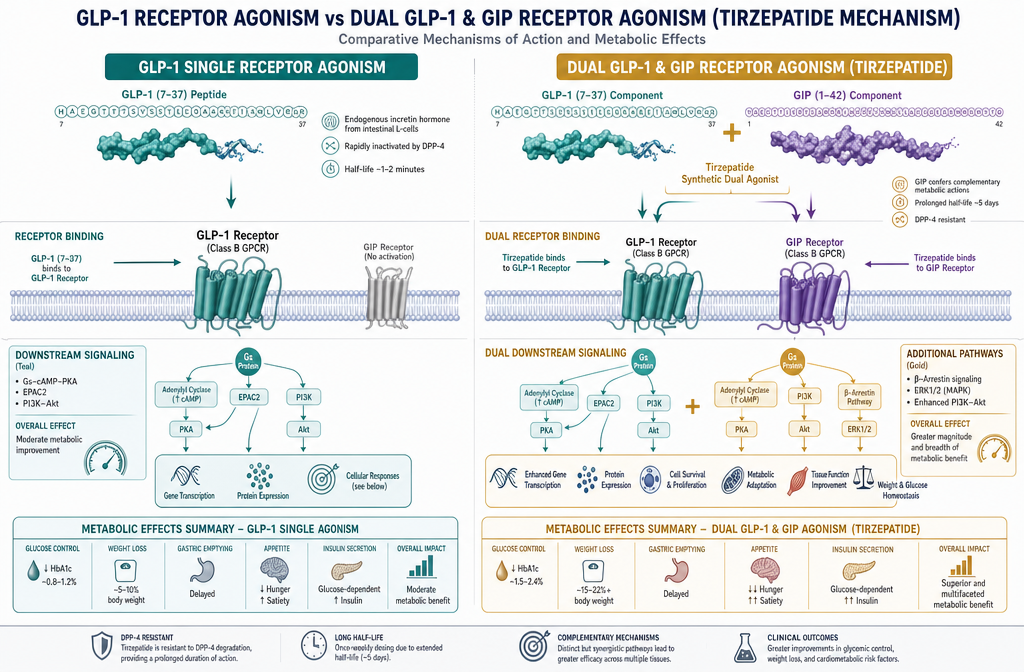
GLP1-Tirz is a shorthand reference to tirzepatide-class compounds that co-activate both the glucagon-like peptide-1 (GLP-1) receptor and the glucose-dependent insulinotropic polypeptide (GIP) receptor. This dual mechanism separates it from earlier single-receptor GLP-1 agents.
To understand why this matters, consider the incretin system. Both GLP-1 and GIP are gut-derived hormones released after eating. They work together in healthy metabolic function. Traditional GLP-1 agonists only activate one side of this partnership. GLP1-Tirz activates both.
💡 Pull Quote: "Dual receptor engagement may offer a more complete picture of incretin biology than single-pathway approaches alone."
For a deeper look at how incretin research themes have developed, explore the GLP-1 incretin research themes overview.
Researchers interested in the mechanistic differences between generations of these compounds will find the GLP-1 generations overview especially useful for context.
GLP1-Tirz in the Context of Metabolic Peptide Research
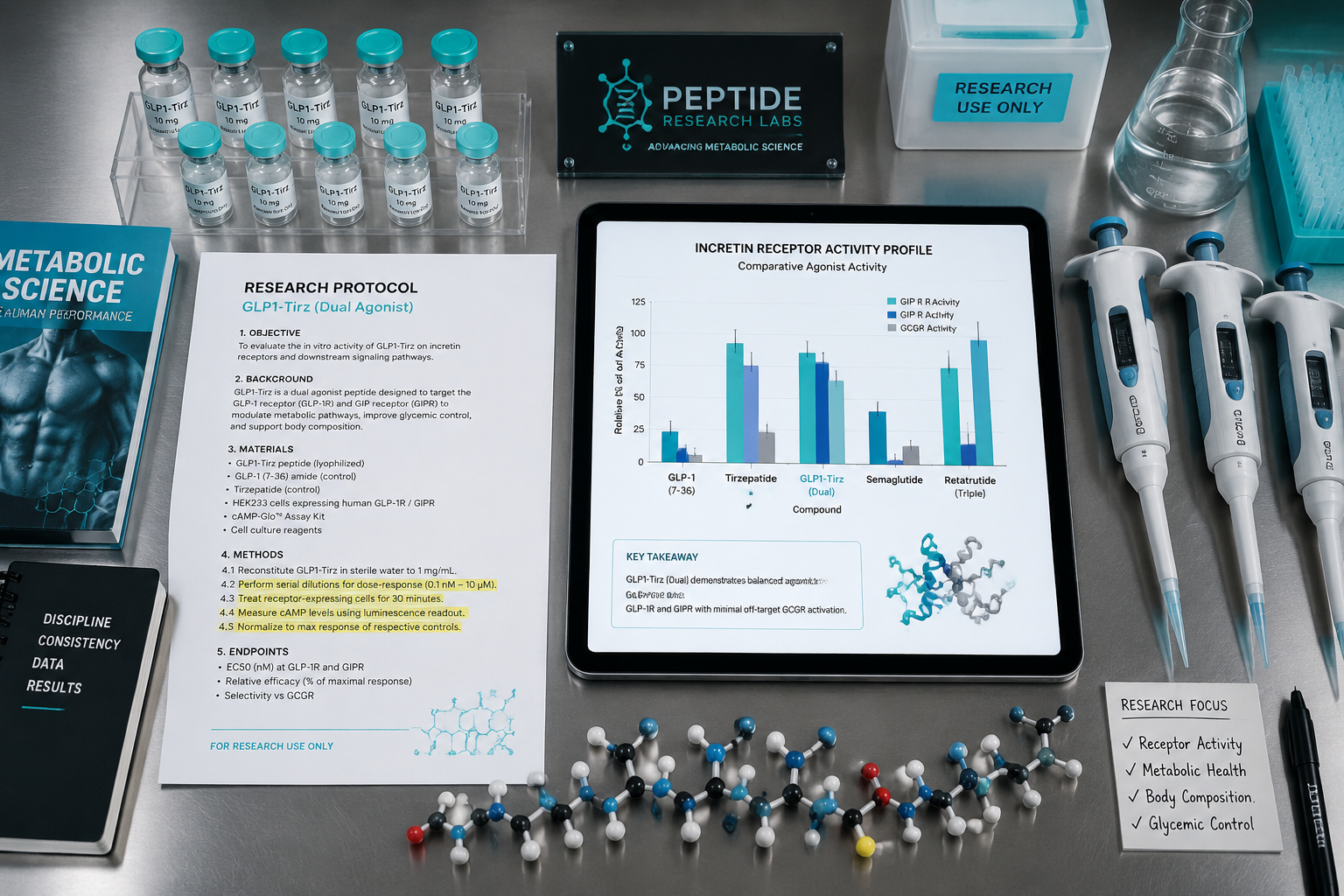
The fitness peptide research community has tracked GLP1-Tirz closely because of its potential relevance to body composition, insulin sensitivity, and energy regulation — all core areas of metabolic research.
Comparing Receptor Targets
| Feature | GLP-1 Agonist | GLP1-Tirz (Dual Agonist) |
|---|---|---|
| GLP-1 Receptor | ✅ Active | ✅ Active |
| GIP Receptor | ❌ Inactive | ✅ Active |
| Receptor Synergy | Single pathway | Dual pathway |
| Research Complexity | Moderate | Higher |
This dual engagement is why the GLP-1 and dual receptor agonism research breakdown is one of the most referenced resources for researchers building study frameworks around this compound class.
Related Synergy Research
Researchers exploring adjacent compounds should also review cagrilintide synergy with GLP-1, which examines how amylin-based compounds may complement incretin receptor activity in multi-pathway research models.
For those building broader metabolic research lines, the metabolic modulation research overview provides a strong structural foundation.
Practical Research Considerations
Before incorporating GLP1-Tirz into any research protocol, several factors deserve attention:
- 📋 Purity verification — always confirm assay documentation from the supplier
- 🧪 Dosing frameworks — refer to published preclinical literature for concentration ranges
- 🔗 Compound stacking — understand how GLP1-Tirz interacts with GH-axis peptides; see the GH axis product line overview for context
- ⚠️ Research-only status — all compounds discussed are strictly for laboratory research, not human consumption
The generations of GLP-1 differences resource is particularly helpful for researchers who want to understand how GLP1-Tirz fits within the broader evolutionary arc of incretin-based peptide science.
[wpgs id="glp1-tirz"]
[product_slider category="glp-1" limit="6"]
Conclusion: Next Steps for GLP1-Tirz Research
GLP1-Tirz represents a meaningful advancement in incretin-based peptide research for 2026. Its dual-receptor mechanism offers researchers a more complete metabolic model to study compared to earlier single-agonist compounds.
Actionable next steps:
- Review the GLP-1 incretin research themes to build foundational knowledge
- Cross-reference dual-receptor data with published preclinical studies
- Source only verified, assay-tested compounds for any research application
- Document all protocols carefully and consult current literature regularly
⚠️ All products referenced are for research purposes only and are not intended for human use.
Tags: GLP1-Tirz, dual receptor agonism, GLP-1 peptide research, tirzepatide research compound, incretin peptide, GIP receptor agonist, metabolic peptide research, fitness peptides 2026, incretin dual agonist, peptide research protocols, GLP-1 generations, metabolic modulation peptides
References
- Frías, J. P., et al. (2021). Tirzepatide versus semaglutide once weekly in patients with type 2 diabetes. New England Journal of Medicine, 385, 503–515.
- Nauck, M. A., & D'Alessio, D. A. (2022). Tirzepatide, a dual GIP/GLP-1 receptor co-agonist for the treatment of type 2 diabetes with unmatched effectiveness. Cell Metabolism, 34(4), 503–508.
- Willard, F. S., et al. (2020). Tirzepatide is an imbalanced and biased dual GIP and GLP-1 receptor agonist. JCI Insight, 5(17), e140532.