

Growth hormone secretion naturally declines by roughly 14% per decade after age 30 — a biological shift that has driven significant scientific interest in peptides capable of restoring more youthful GH pulsatility. Among those peptides, ipamorelin has attracted consistent research attention for its selective and targeted mechanism. Understanding ipamorelin for growth hormone stimulation means looking closely at how it works, what distinguishes it from related compounds, and how researchers approach it today.
Key Takeaways
- Ipamorelin is a selective growth hormone secretagogue that mimics ghrelin to stimulate GH release from the pituitary.
- It produces clean, pulsatile GH release with minimal effect on cortisol or prolactin at standard research doses.
- Combining ipamorelin with a GHRH analog like CJC-1295 is a widely studied approach for amplified GH axis signaling.
- Peptide purity and third-party testing are critical factors when sourcing ipamorelin for research purposes.
- Ipamorelin differs meaningfully from other secretagogues such as tesa and sermorelin in mechanism and selectivity.
How Ipamorelin Stimulates the Growth Hormone Axis
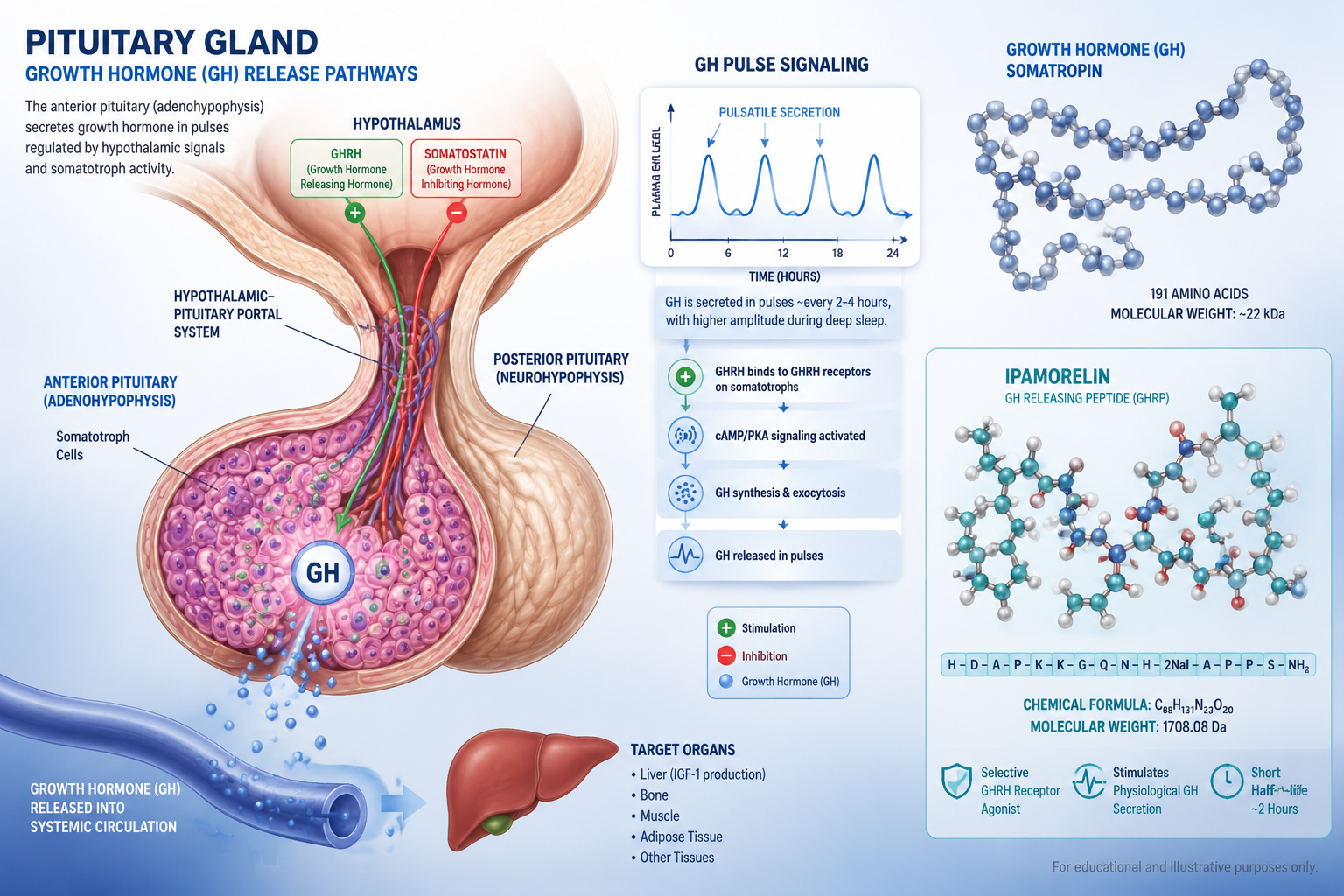
Ipamorelin is a pentapeptide growth hormone secretagogue (GHS) that binds to the ghrelin receptor (GHSR-1a) in the pituitary gland and hypothalamus. This binding triggers a pulsatile release of endogenous growth hormone — closely mimicking the body's natural secretion pattern.
What sets ipamorelin apart from earlier secretagogues is its selectivity profile. Unlike GHRP-6 or GHRP-2, ipamorelin demonstrates minimal stimulation of cortisol, prolactin, or ACTH at research-relevant doses. This cleaner hormonal fingerprint makes it a preferred subject in studies examining the GH axis without the confounding variable of stress hormone elevation.
Key mechanisms at a glance:
| Feature | Ipamorelin | GHRP-6 |
|---|---|---|
| GH release | Strong, pulsatile | Strong |
| Cortisol elevation | Minimal | Moderate |
| Prolactin elevation | Minimal | Moderate |
| Appetite stimulation | Low | High |
| Selectivity | High | Low |
For researchers exploring the GH axis in depth, the CJC-1295 and ipamorelin research overview provides useful context on how these two peptides interact synergistically.
Combining Ipamorelin with GHRH Analogs
A well-documented research strategy pairs ipamorelin with a growth hormone-releasing hormone (GHRH) analog such as CJC-1295. The rationale: ipamorelin acts on the ghrelin receptor pathway, while CJC-1295 acts on the GHRH receptor. Together, they engage two distinct GH-stimulating mechanisms simultaneously, producing a more robust and sustained GH pulse than either compound alone.
This combination is explored in detail through resources like the CJC-1295 no-DAC research themes guide and the sermorelin, ipamorelin, and CJC-1295 blend overview.
Ipamorelin for Growth Hormone Stimulation: Research Context and Sourcing Considerations
Comparing Ipamorelin to Related Peptides
Researchers frequently evaluate ipamorelin alongside other secretagogues. The ipamorelin vs. tesa comparison highlights key differences in mechanism, half-life, and research applications. Tesamorelin acts directly on GHRH receptors and carries an FDA-approved indication, while ipamorelin operates through the ghrelin receptor pathway with a broader selectivity advantage.
Similarly, the tesa vs. ipamorelin breakdown is useful for understanding which compound may be more appropriate for a given research protocol.
Sourcing and Purity Standards
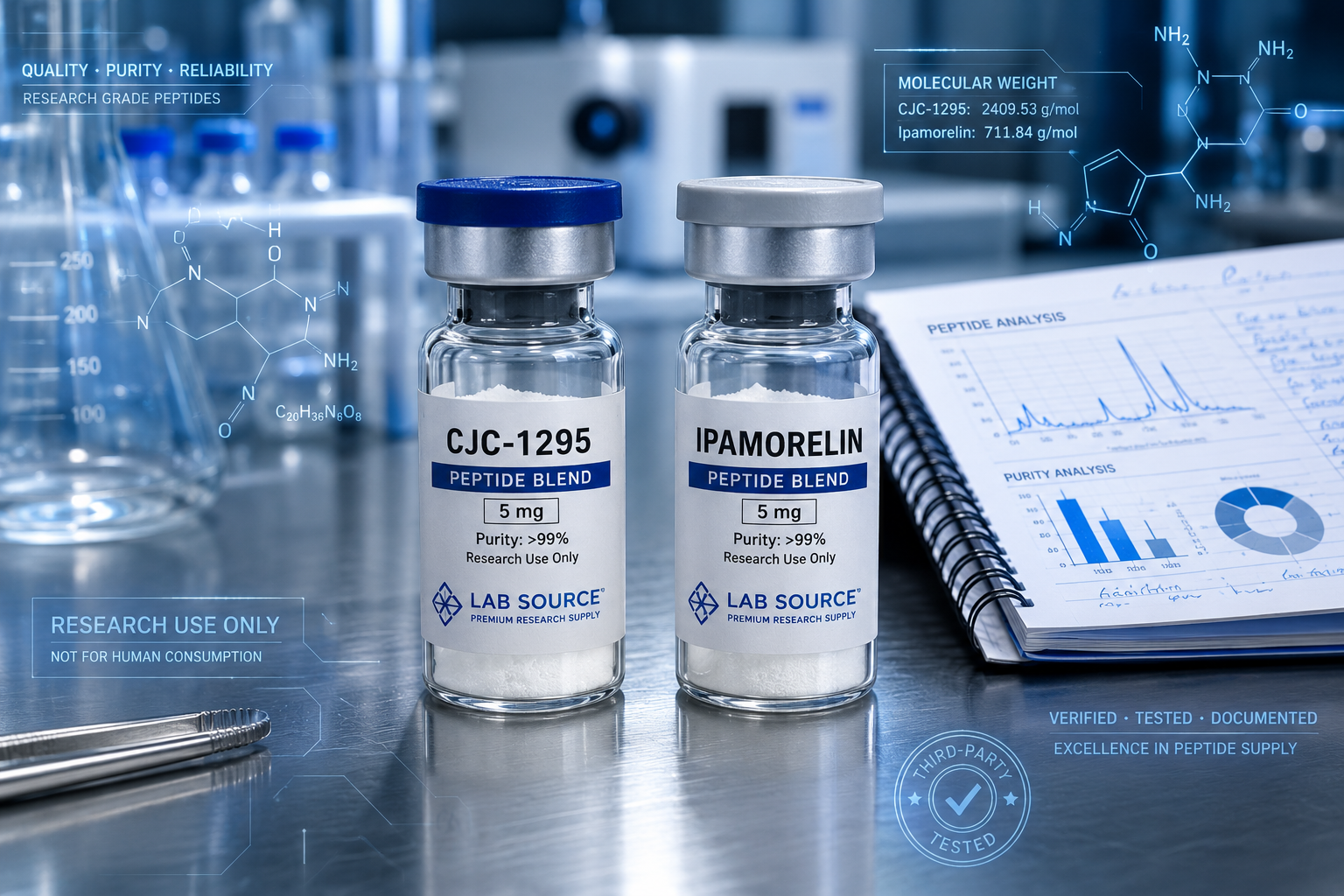
For any research involving ipamorelin for growth hormone stimulation, peptide purity is non-negotiable. Contaminants or degraded peptide chains can introduce significant variables into experimental outcomes. The CJC-1295 ipamorelin assay planning and sourcing checklist outlines what researchers should verify before acquiring peptides, including third-party certificate of analysis (COA) requirements, HPLC purity thresholds, and storage protocols.
Critical sourcing checkpoints:
- Minimum 98% purity confirmed by HPLC
- Mass spectrometry verification of molecular identity
- Sterility testing documentation
- Cold-chain shipping and storage compliance
Researchers working with multi-peptide blends can also reference the sermorelin, ipamorelin, and CJC-1295 dosage guide for protocol structuring considerations.
Conclusion
Ipamorelin for growth hormone stimulation represents one of the most selective and well-characterized tools available in peptide research today. Its targeted action on the ghrelin receptor, minimal off-target hormonal effects, and compatibility with GHRH analogs make it a foundational subject in GH axis studies.
Actionable next steps for researchers:
- Review third-party COA documentation before sourcing any ipamorelin product.
- Consider dual-pathway protocols pairing ipamorelin with a GHRH analog for amplified GH axis research.
- Compare ipamorelin against related secretagogues to select the most appropriate compound for the specific research question.
- Consult the full peptides for sale research catalog to evaluate available options with verified purity standards.
Rigorous sourcing and protocol design remain the foundation of credible GH axis research in 2026.
Tags: ipamorelin, growth hormone stimulation, ipamorelin research, GH secretagogue, CJC-1295 ipamorelin, peptide research, GHRH analog, ghrelin receptor, ipamorelin vs tesa, peptide sourcing, growth hormone peptides, GH axis research