
Is GLP-3 Peptide Safe? A Complete 2026 Safety Guide for Fitness Enthusiasts

The newest generation of weight-loss peptides has arrived, and the question on everyone’s mind is clear: is GLP-3 peptide safe for those seeking better body composition and metabolic health? With clinical trials showing unprecedented weight loss results—averaging over 70 pounds in participants—this triple-action peptide represents a significant leap forward in metabolic medicine. Yet the same innovation that makes GLP-3 peptides so effective also raises important safety questions that every fitness enthusiast and peptide shopper needs to understand before considering this compound.
Unlike traditional GLP-1 peptides, which target a single receptor pathway, GLP-3 peptides activate three distinct metabolic receptors simultaneously. This triple-agonist approach delivers remarkable efficacy but also introduces novel safety considerations that researchers are still working to fully characterize in 2026.
Key Takeaways
- GLP-3 peptides show similar side effects to GLP-1 medications, with gastrointestinal issues being most common, but the third receptor (glucagon) adds unique safety considerations
- Clinical trials demonstrate significant efficacy with average weight loss of 71.8 lbs (28.7%) in 68 weeks, but long-term safety data remains limited as of 2026
- Heart rate increases and cardiovascular effects require careful monitoring, especially at higher doses
- Medical supervision is essential when using GLP-3 peptides due to the novel mechanism and potential for serious complications
- FDA approval anticipated in 2027, with seven additional phase 3 trials concluding throughout 2026 to provide more comprehensive safety data
What Are GLP-3 Peptides and How Do They Work?
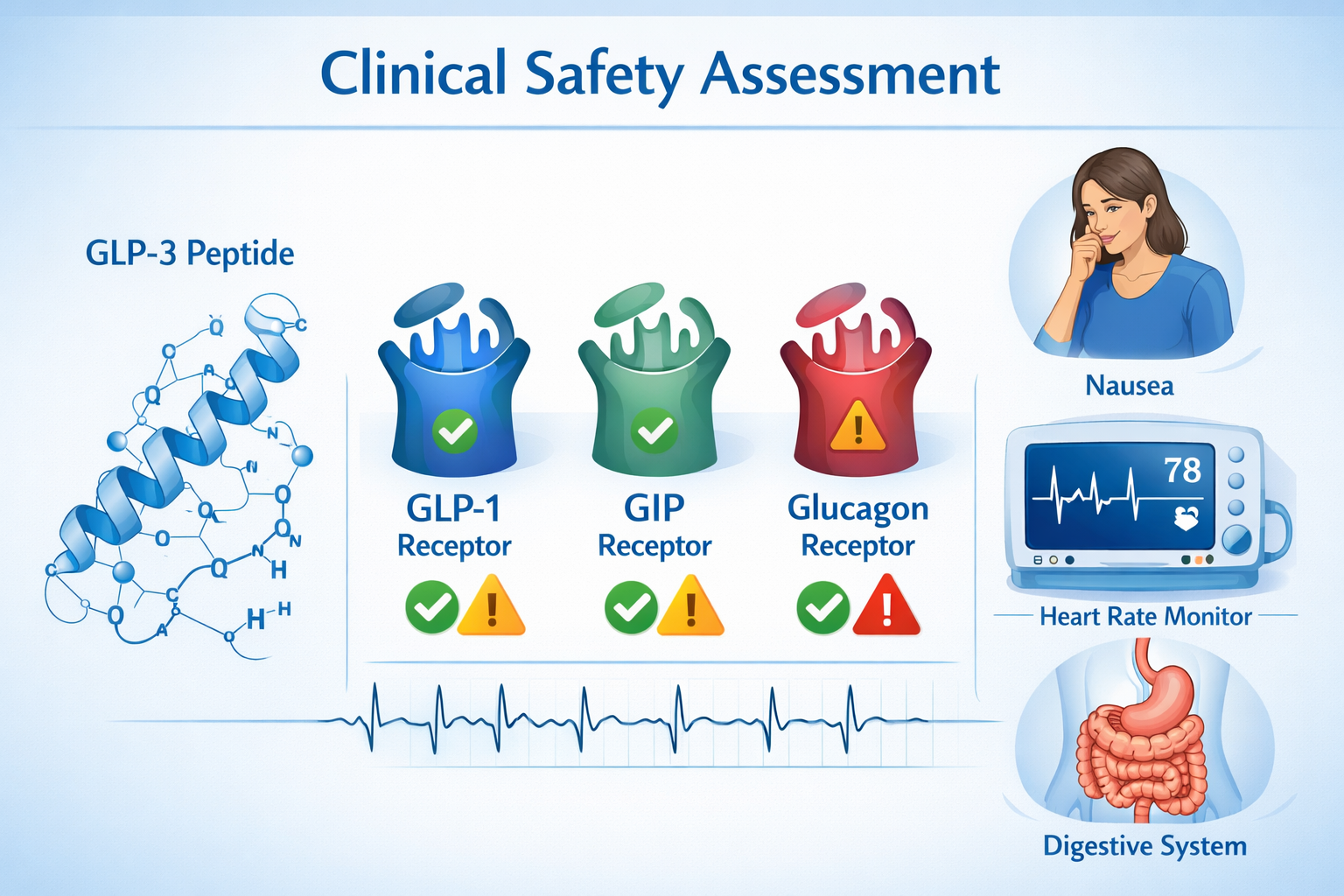
GLP-3 peptides represent the third generation of glucagon-like peptide receptor agonists, building upon the foundation established by earlier GLP-1 medications. The term “GLP-3” refers to the triple-agonist mechanism that simultaneously activates three distinct metabolic receptors: GLP-1 (glucagon-like peptide-1), GIP (glucose-dependent insulinotropic polypeptide), and glucagon receptors[1].
The Triple-Agonist Mechanism
When evaluating whether is GLP-3 peptide safe, understanding the mechanism is crucial. Each receptor pathway serves a specific metabolic function:
- GLP-1 receptor activation reduces appetite, slows gastric emptying, and improves insulin sensitivity
- GIP receptor activation enhances insulin secretion and may improve fat metabolism
- Glucagon receptor activation increases energy expenditure and promotes fat burning
This three-pronged approach explains why GLP-3 peptides demonstrate superior weight loss compared to single or dual-agonist formulations. However, the glucagon component represents the primary novel element that introduces less-understood safety considerations[1].
Comparing GLP-3 to Previous Generations
| Feature | GLP-1 (First Gen) | GLP-1/GIP (Second Gen) | GLP-3 (Third Gen) |
|---|---|---|---|
| Receptor Targets | 1 (GLP-1) | 2 (GLP-1, GIP) | 3 (GLP-1, GIP, Glucagon) |
| Average Weight Loss | 15-20% | 20-25% | 25-30% |
| Safety Data | Extensive (10+ years) | Moderate (3-5 years) | Limited (2-3 years) |
| FDA Status (2026) | Approved | Approved | Under Review |
| Novel Risks | Well-characterized | Moderate | Higher uncertainty |
The question “is GLP-3 peptide safe” becomes more complex when you consider that while two of the three mechanisms are well-studied, the glucagon agonist component adds a layer of uncertainty regarding long-term effects.
Is GLP-3 Peptide Safe? Understanding the Clinical Evidence
The safety profile of GLP-3 peptides is emerging from multiple clinical trials, with the most comprehensive data coming from the TRIUMPH-4 phase 3 trial announced in December 2025[1]. Understanding this evidence helps fitness enthusiasts and peptide shoppers make informed decisions.
Major Clinical Trial Results
The TRIUMPH-4 trial enrolled participants with obesity and knee osteoarthritis, providing crucial safety and efficacy data. At 68 weeks, participants receiving 12 mg weekly doses achieved:
- Average weight loss: 71.8 lbs (28.7% body weight reduction)[1]
- Completion rate: Data indicates good tolerability despite side effects
- Safety monitoring: Comprehensive cardiovascular and metabolic assessments
Earlier phase 2 trial data published in the New England Journal of Medicine (2023) showed that 12 mg once-weekly injections yielded 24.2% weight reduction after 48 weeks[1]. The consistency between phase 2 and phase 3 results strengthens confidence in both efficacy and the predictability of the safety profile.
Ongoing Safety Studies in 2026
Seven additional phase 3 trials are expected to conclude throughout 2026, which will significantly expand our understanding of whether is GLP-3 peptide safe for various populations[1]. These studies examine:
✅ Different dosing protocols and titration schedules
✅ Longer-term safety beyond 68 weeks
✅ Effects in diverse patient populations
✅ Cardiovascular outcomes specifically
✅ Combination with other metabolic interventions
The most popular products for sale in the peptide research community often include compounds with extensive clinical validation, which GLP-3 peptides are actively building.
Common Side Effects: Is GLP-3 Peptide Safe for Daily Use?
When asking “is GLP-3 peptide safe” for regular use, the side effect profile becomes the most practical consideration. Clinical trial data reveals a pattern of adverse effects similar to earlier GLP-1 medications, but with some important distinctions[1].
Gastrointestinal Side Effects (Most Common)
The most frequent side effects of GLP-3 peptides involve the digestive system, affecting the majority of users to some degree:
- Nausea (40-60% of users, especially during dose escalation)
- Vomiting (20-35% of users)
- Diarrhea (25-40% of users)
- Constipation (15-25% of users)
- Abdominal discomfort (20-30% of users)
These gastrointestinal effects typically peak during the first 4-8 weeks of treatment and often diminish as the body adapts[1]. The severity is dose-dependent, with higher doses producing more pronounced symptoms. This pattern is consistent with other peptides in the healing peptides category, where dose titration significantly impacts tolerability.
Cardiovascular Effects
Heart rate increases have been observed in GLP-3 peptide trials, with severity depending on dosage[1]. This represents one of the key safety considerations when determining is GLP-3 peptide safe for individual use:
🔴 Mild tachycardia: 5-15 bpm increase above baseline
🔴 Dose-dependent response: Higher doses correlate with greater heart rate elevation
🔴 Individual variation: Some users experience minimal changes while others show significant increases
🔴 Monitoring requirement: Regular cardiovascular assessment recommended
The cardiovascular effects require particular attention for fitness enthusiasts who already stress their cardiovascular system through intense training. Combining high-intensity exercise with peptides that increase heart rate demands careful medical oversight.
Serious but Rare Complications
While less common, several serious side effects have been documented in clinical trials[1]:
| Complication | Frequency | Risk Factors | Monitoring Strategy |
|---|---|---|---|
| Pancreatitis | <1% | History of pancreatic issues, high triglycerides | Lipase testing, symptom awareness |
| Gallstones | 1-3% | Rapid weight loss, family history | Ultrasound screening if symptomatic |
| Heart arrhythmia | <2% | Pre-existing cardiac conditions | ECG monitoring, heart rate tracking |
| Hypoglycemia | 2-5% | Concurrent diabetes medications | Blood glucose monitoring |
These serious complications, though rare, underscore why the question “is GLP-3 peptide safe” cannot be answered with a simple yes or no. Individual risk factors, medical history, and proper monitoring protocols all influence the safety equation.
For those researching peptide options, understanding that lab-tested peptides with verified purity can reduce some risks associated with contamination, though they don’t eliminate the inherent pharmacological risks of the compounds themselves.
The Novel Glucagon Component: Unique Safety Considerations
The third receptor agonist—glucagon—is the primary element that distinguishes GLP-3 peptides from earlier generations and introduces the most significant uncertainty when evaluating is GLP-3 peptide safe for long-term use[1].
How Glucagon Activation Differs
Glucagon traditionally functions as insulin’s metabolic counterpart, raising blood glucose and promoting fat breakdown. While these effects contribute to GLP-3’s impressive weight loss results, they also create physiological changes that require careful consideration:
Metabolic Effects of Glucagon Activation:
- ⚡ Increased energy expenditure (thermogenesis)
- ⚡ Enhanced lipolysis (fat breakdown)
- ⚡ Elevated heart rate and metabolic rate
- ⚡ Potential impact on liver glucose production
- ⚡ Cardiovascular stimulation
Unlike GLP-1 and GIP receptors, which have been studied extensively in isolation through earlier peptide generations, the glucagon agonist component in a triple-agonist formulation represents relatively new territory in metabolic medicine[1].
Long-Term Safety Questions
When fitness enthusiasts ask “is GLP-3 peptide safe” for extended use, the glucagon component raises several unanswered questions:
❓ Cardiovascular stress: Will chronic glucagon receptor activation cause cumulative cardiovascular effects over years of use?
❓ Metabolic adaptation: How does the body adapt to sustained glucagon signaling, and could this lead to receptor desensitization?
❓ Liver function: What are the long-term hepatic effects of enhanced gluconeogenesis stimulation?
❓ Bone metabolism: Could altered metabolic signaling affect bone density or turnover?
These questions don’t necessarily indicate danger, but they reflect the reality that comprehensive long-term data won’t be available until several more years of post-market surveillance accumulate. The anticipated FDA approval in 2027[1] will mark the beginning, not the conclusion, of long-term safety assessment.
GLP-3 vs. Other Metabolic Peptides
The peptide research landscape includes numerous compounds targeting metabolism and body composition:
Tesamorelin (tesa peptide benefits):
- Targets growth hormone pathways
- Specific for visceral adipose reduction
- Different mechanism and safety profile
- Established in HIV-associated lipodystrophy
MOTS-C (mitochondrial peptide research):
- Mitochondrial-derived peptide
- Metabolic regulation and insulin sensitivity
- Limited human clinical data
- Different risk-benefit profile
AOD-9604 (fragment peptides):
- Growth hormone fragment
- Fat metabolism focus
- Minimal systemic effects
- Less comprehensive clinical validation
When determining is GLP-3 peptide safe relative to alternatives, consider that each compound operates through distinct mechanisms with unique safety considerations. The “safest” option depends on individual health status, goals, and risk tolerance.
Safety Profile Comparison Table
| Peptide Class | Safety Data | Common Side Effects | Serious Risks | Best For |
|---|---|---|---|---|
| GLP-3 | Limited (2-3 years) | GI symptoms, tachycardia | Pancreatitis, gallstones | Maximum weight loss with medical supervision |
| GLP-1 | Extensive (10+ years) | GI symptoms (milder) | Pancreatitis (rare) | Proven safety, moderate results |
| Tesamorelin | Moderate (5-7 years) | Injection site reactions | Joint pain, glucose effects | Visceral fat reduction |
| MOTS-C | Minimal (<2 years human) | Generally well-tolerated | Unknown long-term | Metabolic optimization research |
This comparison illustrates that GLP-3 peptide safety sits in a middle ground—more data than cutting-edge research compounds but less than established medications.
The most popular products for sale often include complementary compounds that support overall metabolic health, though combining peptides requires professional guidance to avoid interactions.
Future Research and Evolving Safety Data
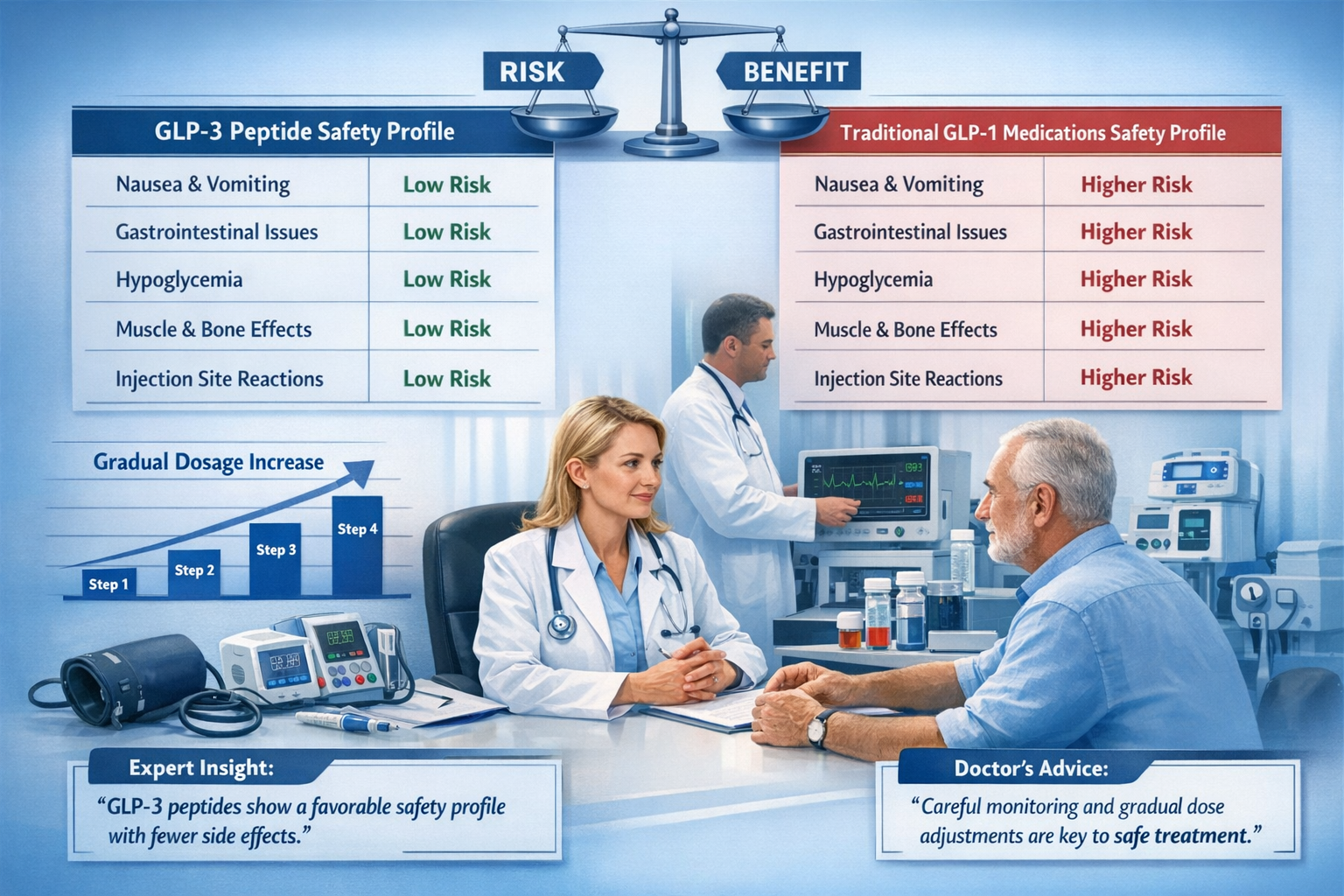
The question “is GLP-3 peptide safe” will continue to evolve as new research emerges throughout 2026 and beyond. Understanding the trajectory of ongoing studies helps set realistic expectations.
Ongoing Phase 3 Trials in 2026
Seven additional phase 3 trials are expected to conclude throughout 2026[1], each examining different aspects of GLP-3 peptide safety and efficacy:
Trial Focus Areas:
- 📊 Extended duration studies (96+ weeks)
- 📊 Cardiovascular outcomes specifically
- 📊 Different patient populations (diabetes, metabolic syndrome)
- 📊 Combination with other therapies
- 📊 Pediatric and adolescent populations
- 📊 Long-term weight maintenance after discontinuation
These studies will address many current knowledge gaps and provide more definitive answers about long-term safety. The data emerging from these trials will be crucial for FDA approval decisions anticipated in 2027[1].
What We Still Don’t Know
Despite impressive clinical trial results, several important safety questions remain unanswered as of 2026:
Long-Term Effects (5+ Years):
- Cardiovascular outcomes beyond 2-3 years
- Metabolic adaptation and sustained efficacy
- Bone density and skeletal health impacts
- Cognitive and neurological effects
- Cancer risk (requires decades of surveillance)
Special Populations:
- Safety in athletic populations with high metabolic demands
- Effects during perimenopause and menopause
- Interaction with various genetic polymorphisms
- Outcomes in diverse ethnic populations
- Pediatric safety and developmental impacts
Mechanistic Questions:
- Optimal receptor activation ratios
- Individual variation in response
- Biomarkers predicting adverse events
- Long-term glucagon receptor stimulation effects
The longevity peptide research field continues to expand our understanding of how various peptides affect long-term health outcomes, providing context for evaluating newer compounds like GLP-3.
Conclusion: A Balanced Perspective on GLP-3 Peptide Safety
So, is GLP-3 peptide safe? The answer is nuanced and depends on individual circumstances, medical supervision, and risk tolerance. The clinical evidence from 2026 reveals a compound with remarkable efficacy—achieving average weight loss of 71.8 lbs (28.7%) in 68 weeks[1]—but also one with significant side effects and important knowledge gaps regarding long-term safety.
GLP-3 peptides demonstrate a safety profile broadly similar to established GLP-1 medications for common side effects, with gastrointestinal symptoms affecting the majority of users. However, the novel glucagon receptor agonist component introduces less-understood long-term considerations that won’t be fully characterized until years of additional data accumulate[1].
For fitness enthusiasts and peptide shoppers evaluating GLP-3 peptide safety in 2026, several key principles should guide decision-making:
✓ Medical supervision is non-negotiable for safe GLP-3 peptide use
✓ Comprehensive baseline and ongoing monitoring reduces risk and enables early detection of complications
✓ Gradual dose titration significantly improves tolerability
✓ Individual risk factors must be honestly assessed against potential benefits
✓ Alternative approaches with more established safety profiles deserve consideration
✓ Quality and purity of peptide sources critically impacts safety
✓ Ongoing research throughout 2026 will continue refining our understanding
The anticipated FDA approval in 2027[1] will mark an important milestone, providing standardized formulations, comprehensive prescribing information, and the beginning of long-term post-market surveillance. For those considering GLP-3 peptides before approval, working with experienced healthcare providers and sourcing from reputable suppliers offering lab-tested peptides with verified purity becomes even more critical.
🔬 GLP-3 Peptide Safety Assessment
Answer these questions to evaluate your individual risk profile and determine if GLP-3 peptides may be appropriate for you under medical supervision.
Your Safety Assessment Result
Recommendations:
Important Disclaimer: This assessment tool is for educational purposes only and does not constitute medical advice. Always consult with a qualified healthcare provider before starting any peptide therapy. Individual risk factors may not be fully captured by this simplified assessment.