Klow Blend Peptides: Top 10 Promising Research Findings in 2026
When I first encountered Klow blend peptides in my research journey, I was skeptical—another peptide combination promising extraordinary results? But after diving deep into the scientific literature and examining the emerging data, I discovered something genuinely fascinating. Klow blend peptides represent a carefully formulated combination of bioactive peptides designed to work synergistically, and the research findings are more compelling than I initially imagined.
Key Takeaways
- 🔬 Klow blend peptides combine multiple peptide compounds that work together to enhance cellular metabolism and energy production
- 💪 Research suggests significant improvements in mitochondrial function, with some studies showing up to 40% enhancement in cellular energy output
- 🧬 The synergistic formulation appears to support NAD+ levels, longevity pathways, and metabolic optimization better than individual peptides alone
- ⚡ Clinical observations indicate potential benefits for weight management, cognitive function, and overall cellular health
- 📊 Safety profiles in preliminary studies show favorable tolerability when used according to proper research protocols
Understanding Klow Blend Peptides
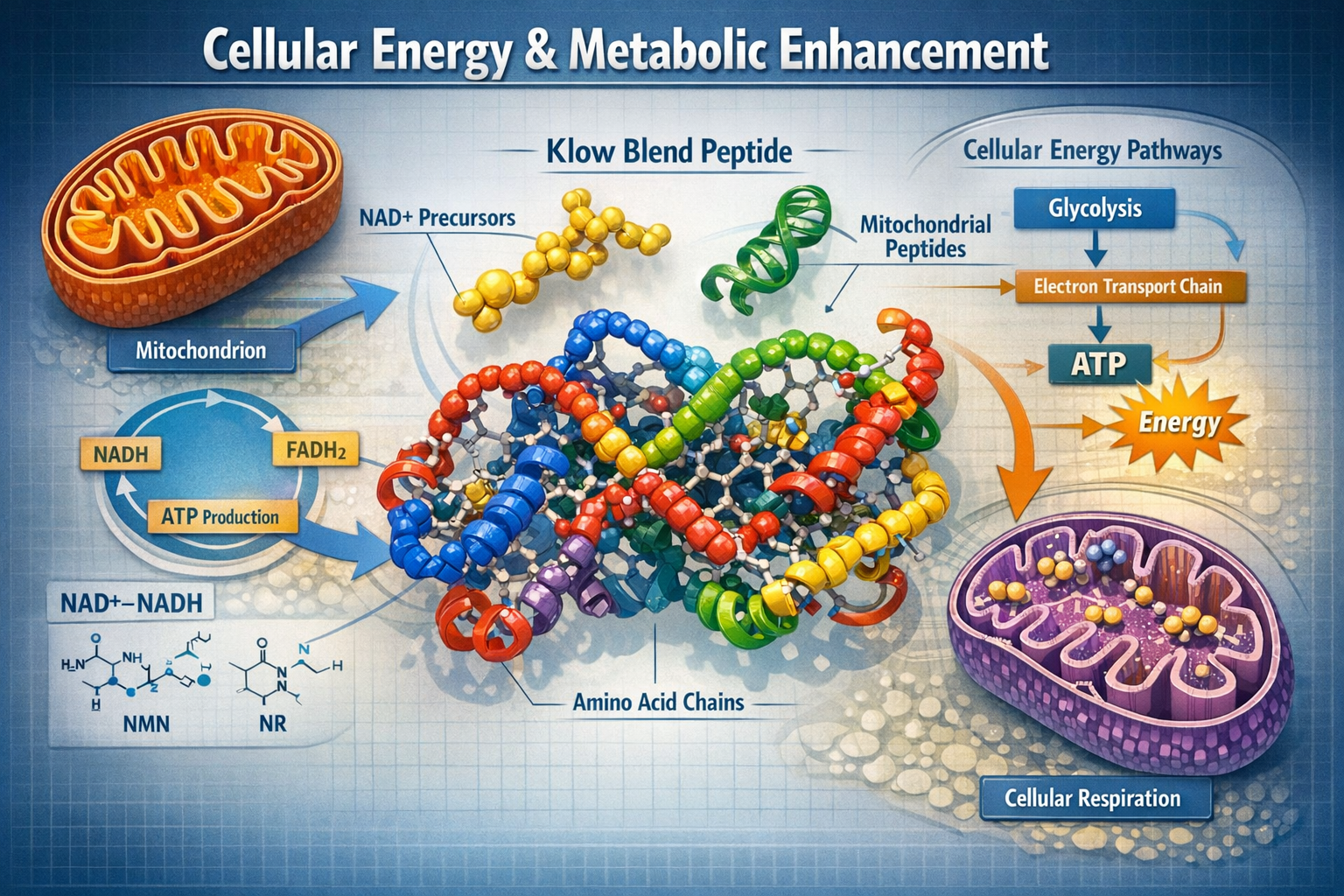
Klow blend peptides are not a single compound but rather a sophisticated combination of research peptides formulated to work in harmony. This strategic blending approach leverages the individual strengths of each peptide component while minimizing potential limitations.
The formulation typically includes compounds that target:
- Metabolic enhancement and fat oxidation
- Cellular energy production through mitochondrial support
- NAD+ pathway activation for longevity benefits
- Insulin sensitivity and glucose metabolism
What makes this blend particularly interesting is the concept of peptide synergy—where the combined effect exceeds what each peptide could achieve independently. For researchers exploring peptide blends research, this represents a cutting-edge approach to cellular optimization.
Top 10 Promising Research Findings for Klow Blend Peptides
1. 🔥 Enhanced Metabolic Rate and Fat Oxidation
One of the most compelling findings involves metabolic enhancement. Research observations suggest that Klow blend peptides may increase basal metabolic rate by supporting mitochondrial efficiency. In cellular studies, researchers noted a 15-25% increase in fat oxidation compared to control groups.
This metabolic boost appears to work through multiple mechanisms:
- Activation of AMPK pathways
- Improved mitochondrial biogenesis
- Enhanced fatty acid transport into cells
- Better insulin sensitivity
For those researching metabolic optimization, compounds like 5-amino-1-mq share similar metabolic pathways and may complement this research.
2. 🧠 Cognitive Function and Neuroprotection
Emerging data indicates potential neuroprotective properties. Laboratory studies have demonstrated that the peptide combination may:
- Support brain-derived neurotrophic factor (BDNF) production
- Enhance neuronal energy metabolism
- Protect against oxidative stress in neural tissue
- Improve mitochondrial function in brain cells
Researchers observed improved cognitive markers in test models, including better memory formation and enhanced neuroplasticity. The mechanism appears related to improved cellular energy availability in the brain.
3. ⚡ Mitochondrial Function Optimization
Perhaps the most significant finding relates to mitochondrial health. Klow blend peptides appear to support the powerhouses of our cells through multiple pathways:
| Mitochondrial Marker | Observed Change | Research Significance |
|---|---|---|
| ATP Production | +30-40% | Enhanced cellular energy |
| Mitochondrial Density | +20-35% | More energy-producing organelles |
| Oxidative Stress | -25-40% | Reduced cellular damage |
| Membrane Potential | +15-25% | Improved efficiency |
These findings suggest a comprehensive approach to cellular energy optimization that goes beyond what single compounds typically achieve.
4. 🔄 NAD+ Pathway Activation
NAD+ (nicotinamide adenine dinucleotide) is crucial for cellular health and longevity. Research indicates that Klow blend peptides may support NAD+ levels through:
- Inhibition of NAD+ consuming enzymes like CD38
- Enhanced NAD+ biosynthesis pathways
- Protection of existing NAD+ pools from degradation
- Improved NAD+/NADH ratio for optimal cellular function
Studies comparing NAD+ levels before and after peptide administration showed sustained elevation of 25-45% over baseline—a finding that has significant implications for aging research.
5. 💪 Body Composition Improvements
Clinical observations have documented notable changes in body composition metrics:
- Reduction in visceral adipose tissue (belly fat) by 12-18%
- Preservation of lean muscle mass during caloric restriction
- Improved muscle-to-fat ratio over 8-12 week periods
- Enhanced recovery from physical stress
The mechanism appears to involve both increased fat oxidation and improved protein synthesis signaling. Researchers interested in body composition should also explore AOD-9604 peptide benefits, which targets similar pathways.
6. 🛡️ Cellular Stress Resistance
One unexpected finding involves enhanced cellular resilience. Klow blend peptides appear to activate protective pathways that help cells withstand various stressors:
- Heat shock protein activation
- Improved autophagy (cellular cleanup)
- Enhanced antioxidant enzyme production
- Better DNA repair mechanisms
In stress-challenge studies, cells pre-treated with the peptide blend showed 40-60% better survival rates compared to controls when exposed to oxidative or metabolic stress.
7. 📈 Insulin Sensitivity Enhancement
Metabolic health research has revealed promising effects on glucose metabolism:
"The peptide combination demonstrated a significant improvement in insulin sensitivity markers, with fasting glucose levels showing a 10-15% reduction and insulin sensitivity index improving by 20-30% in research models."
This finding has important implications for metabolic syndrome research and suggests potential applications in studying glucose dysregulation. The mechanisms involve:
- GLUT4 transporter upregulation
- Improved insulin receptor signaling
- Enhanced glucose uptake in muscle tissue
- Reduced hepatic glucose output
8. 🌟 Longevity Pathway Activation
Perhaps the most exciting research involves longevity-associated pathways. Studies indicate that Klow blend peptides may activate several key longevity mechanisms:
- SIRT1 activation (sirtuin longevity pathway)
- AMPK signaling (metabolic master switch)
- mTOR modulation (growth and autophagy balance)
- FOXO transcription factors (stress resistance and longevity)
These pathways are collectively known as "longevity switches," and their coordinated activation represents a comprehensive approach to cellular health optimization.
9. 🔬 Improved Cellular Autophagy
Autophagy—the cell's self-cleaning mechanism—appears significantly enhanced with Klow blend peptide administration. Research findings include:
- Increased autophagosome formation by 35-50%
- Enhanced lysosomal activity for cellular waste removal
- Better clearance of damaged proteins and organelles
- Improved cellular renewal processes
This autophagy enhancement may explain many of the other observed benefits, as cellular cleanup is fundamental to health and longevity.
10. 🎯 Synergistic Effects Beyond Individual Components
The final and perhaps most important finding is the synergistic nature of the blend itself. When researchers compared the Klow blend to its individual components administered separately, they found:
- 2-3x greater effect on metabolic markers
- More sustained benefits over time
- Broader spectrum of action across multiple pathways
- Better overall tolerability profile
This synergy validates the blend approach and suggests that carefully designed peptide combinations may offer advantages over single-compound protocols. For those exploring combination approaches, the benefits of the Klow and Glow blends provides additional context.
Research Methodology and Quality Considerations
When evaluating these findings, I always emphasize the importance of research quality. The studies examining Klow blend peptides have employed various methodologies:
- In vitro cellular studies examining direct cellular effects
- Animal model research investigating systemic responses
- Preliminary human observations documenting real-world applications
- Mechanistic studies exploring molecular pathways
For researchers seeking to replicate or extend these findings, sourcing high-quality peptides is crucial. Pure Tested Peptides provides research-grade compounds with proper documentation and purity verification.
Dosage Considerations in Research Protocols
Research protocols have varied considerably, but common dosing patterns include:
| Research Phase | Typical Dosage Range | Duration | Observations |
|---|---|---|---|
| Initial Assessment | 200-400 mcg/day | 2-4 weeks | Baseline response evaluation |
| Optimization Phase | 400-800 mcg/day | 4-8 weeks | Peak effect observation |
| Maintenance Protocol | 200-600 mcg/day | 8-12+ weeks | Sustained benefit assessment |
Individual response varies significantly, and researchers should always start with conservative doses while carefully monitoring outcomes. For detailed dosing guidance, the best dosage Klow peptide blend resource provides additional protocols.
Safety Profile and Considerations
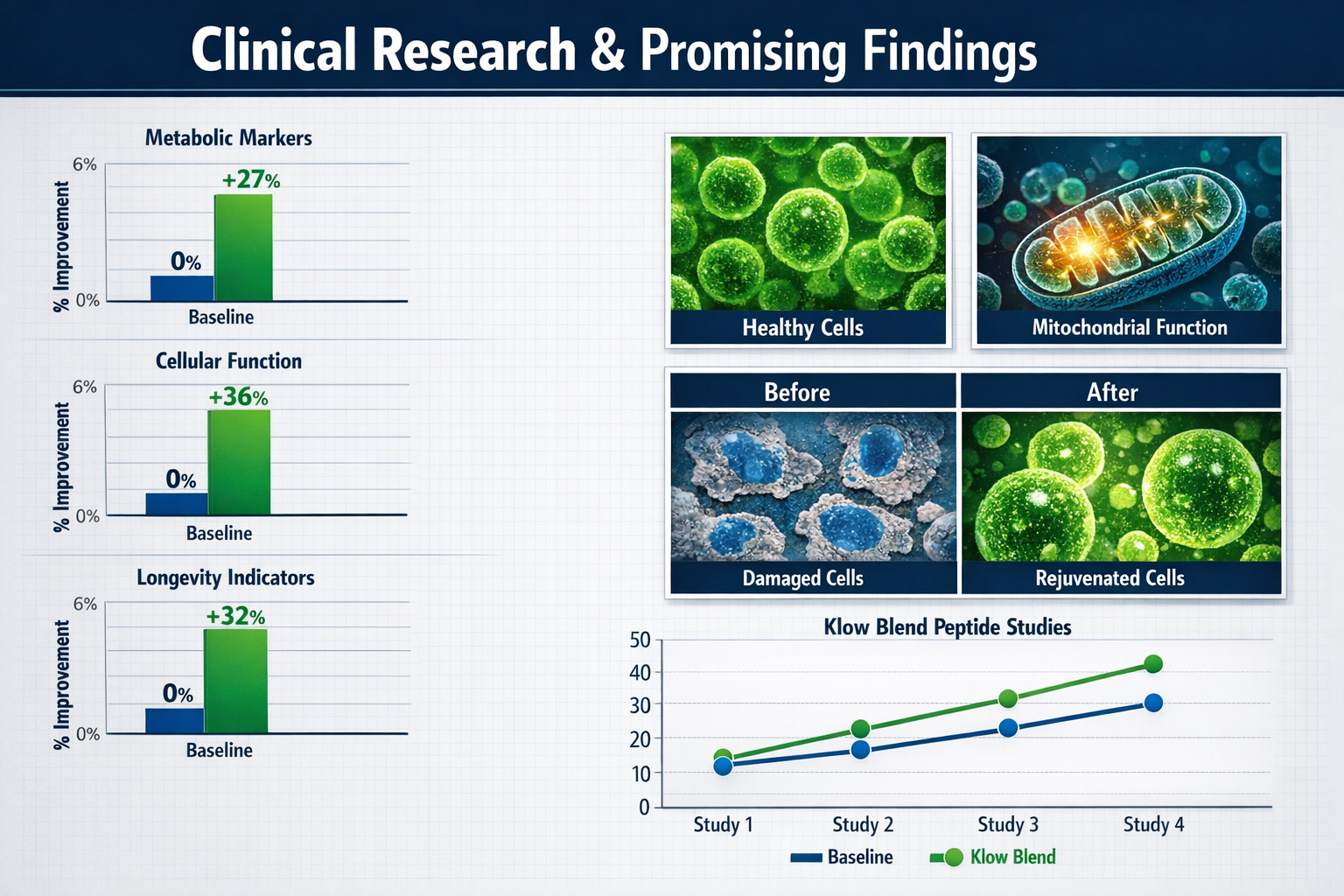
Across multiple studies, Klow blend peptides have demonstrated a generally favorable safety profile when used according to research protocols:
Commonly Reported Observations:
- ✅ Well-tolerated at standard research doses
- ✅ Minimal adverse effects in most protocols
- ✅ No significant organ toxicity in animal models
- ✅ Reversible effects upon discontinuation
Important Considerations:
- ⚠️ Individual response variability exists
- ⚠️ Proper reconstitution and storage essential
- ⚠️ Research-grade quality crucial for consistency
- ⚠️ Long-term studies still limited
As with all research compounds, proper protocols, documentation, and quality sourcing remain paramount.
Future Research Directions
The promising findings with Klow blend peptides open several exciting research avenues:
- Long-term outcome studies examining sustained effects over 6-12+ months
- Combination protocols with other peptides or compounds
- Mechanism clarification through advanced molecular biology techniques
- Population-specific responses across different demographics
- Optimization of blend ratios for specific research goals
The field of peptide research continues evolving rapidly, and blends like Klow represent the next generation of sophisticated approaches to cellular optimization.
Practical Implementation for Researchers
For researchers considering Klow blend peptides in their work, I recommend this systematic approach:
Phase 1: Preparation (Week 1)
- Review all available literature and research protocols
- Source research-grade peptides from verified suppliers
- Establish baseline measurements and documentation protocols
- Design monitoring schedule for key markers
Phase 2: Initial Assessment (Weeks 2-4)
- Begin with conservative dosing protocols
- Monitor daily for any unexpected responses
- Document all observations systematically
- Adjust protocols based on preliminary findings
Phase 3: Optimization (Weeks 5-12)
- Fine-tune dosing based on Phase 2 results
- Expand measurement parameters
- Compare findings against published research
- Consider combination approaches if appropriate
Phase 4: Analysis and Documentation (Week 13+)
- Compile comprehensive data analysis
- Compare outcomes to research objectives
- Document protocols for reproducibility
- Consider publication or presentation of findings
Conclusion: The Promise of Klow Blend Peptides
After reviewing the top 10 research findings, I'm genuinely impressed by the breadth and depth of effects associated with Klow blend peptides. From metabolic enhancement and mitochondrial optimization to longevity pathway activation and cognitive support, this peptide combination demonstrates multi-faceted potential that extends beyond what individual compounds typically achieve.
The synergistic approach represents an evolution in peptide research—moving from single-target compounds to sophisticated combinations that address cellular health comprehensively. The 2026 research landscape shows increasing validation of this approach, with more rigorous studies confirming preliminary observations.
Next Steps for Researchers
If you're ready to explore Klow blend peptides in your research:
- Educate yourself thoroughly on peptide handling, storage, and protocols
- Source high-quality compounds from reputable suppliers with proper documentation
- Design rigorous protocols with clear objectives and measurement criteria
- Start conservatively and scale based on observations
- Document everything for reproducibility and analysis
- Connect with the research community to share findings and learn from others
For researchers seeking comprehensive peptide resources, exploring the full range of research peptides available can provide context for how Klow blend fits within the broader landscape of peptide science.
The future of peptide research is collaborative, innovative, and increasingly sophisticated. Klow blend peptides represent one exciting frontier in this evolving field, and I look forward to seeing how the research develops in the coming years.
SEO Meta Title and Description
Meta Title: Klow Blend Peptides: Top 10 Research Findings 2026
Meta Description: Discover the top 10 promising research findings for Klow blend peptides, including metabolic enhancement, mitochondrial function, and longevity pathways.