
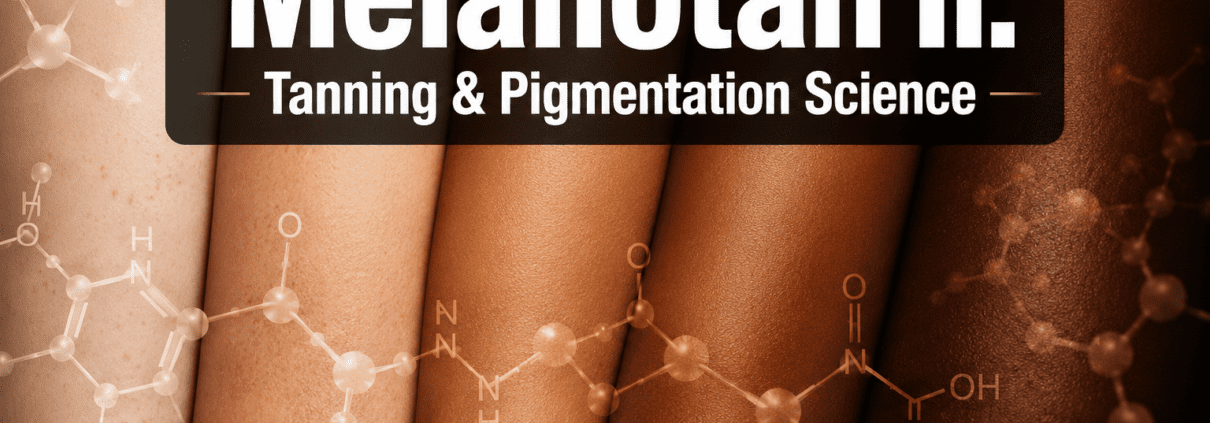
Fewer than 1 in 10 people who use unregulated tanning peptides report having researched the underlying mechanism before their first use — a striking gap given how much the science has evolved. Melanotan II for tanning and pigmentation has attracted growing attention in both research circles and wellness communities, yet misinformation remains widespread. This article breaks down the biochemistry, the current research landscape, and the key considerations anyone exploring this topic should understand.
Key Takeaways
- Melanotan II (MT-II) is a synthetic analog of alpha-melanocyte-stimulating hormone (a-MSH) that activates melanocortin receptors to stimulate melanin production.
- It is distinct from natural tanning because it triggers pigmentation without requiring UV exposure as the primary driver.
- Research into MT-II spans pigmentation, libido, appetite, and other melanocortin-related pathways.
- MT-II is not approved for cosmetic or therapeutic use in most jurisdictions and is studied strictly as a research compound.
- Purity and third-party testing are critical factors when evaluating any peptide source.
How Melanotan II for Tanning and Pigmentation Works
The Melanocortin System
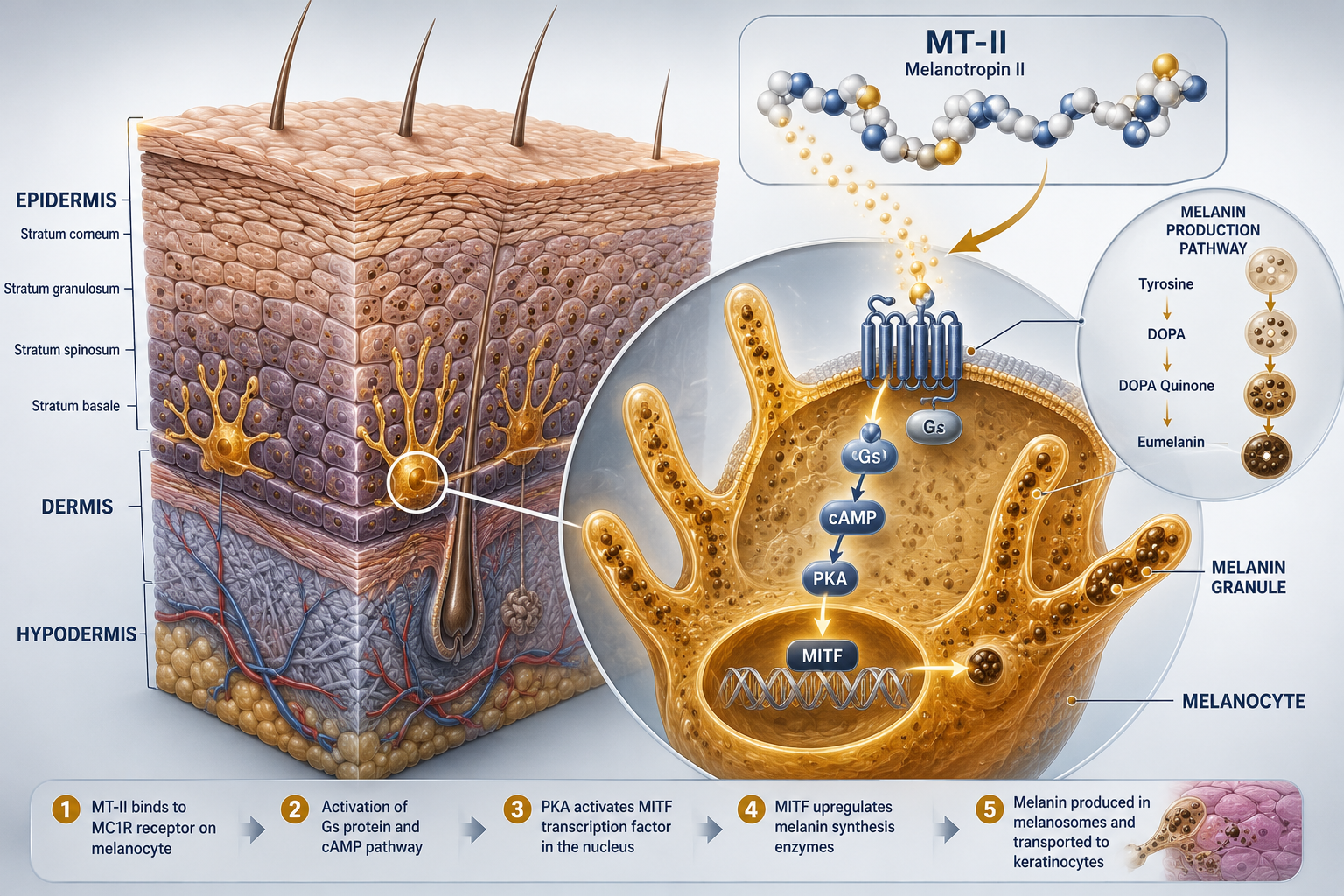
Melanotan II is a cyclic heptapeptide analog of a-MSH, a naturally occurring hormone that binds to melanocortin receptors — primarily MC1R — on melanocyte cells in the skin. When MC1R is activated, it triggers a cascade that increases eumelanin production, the pigment responsible for brown and black skin tones.
Unlike UV-driven tanning, which causes DNA damage first and then triggers a protective melanin response, MT-II activates the same receptor pathway more directly. This distinction is central to why researchers find it scientifically interesting.
"MT-II engages the melanocortin receptor pathway in a way that bypasses the UV-damage signal, making it a useful tool for studying pigmentation biology."
Receptor Selectivity and Beyond Pigmentation
MT-II is notably non-selective across the melanocortin receptor family. It binds not only MC1R but also MC3R, MC4R, and MC5R. This broad activity explains why research into MT-II extends well beyond skin pigmentation:
| Receptor | Primary Research Focus |
|---|---|
| MC1R | Skin pigmentation, melanin synthesis |
| MC3R | Energy balance, inflammation |
| MC4R | Appetite regulation, sexual function |
| MC5R | Exocrine gland function |
This multi-receptor profile is also why MT-II is often compared to related compounds. For example, PT-141 (bremelanotide) was derived directly from MT-II research and targets MC4R for libido-related studies. Those exploring broader melanocortin research can also review PT-141 peptide research options as a related reference point.
Research Considerations and Safety Profile for Melanotan II for Tanning and Pigmentation
What Current Research Indicates
Studies on MT-II have noted several consistent observations:
- Rapid pigmentation onset — visible changes in skin tone have been reported in research subjects within days to weeks.
- Appetite suppression — linked to MC4R activity, this effect has been documented across multiple preclinical studies.
- Nausea and facial flushing — among the most commonly reported short-term responses in research settings.
- Spontaneous erections — a well-documented MC4R-mediated effect that led directly to the development of PT-141.
Researchers interested in how peptides interact with body composition pathways may also find value in reviewing adipotide peptide research for comparative context on metabolic peptide mechanisms.
Regulatory and Safety Status
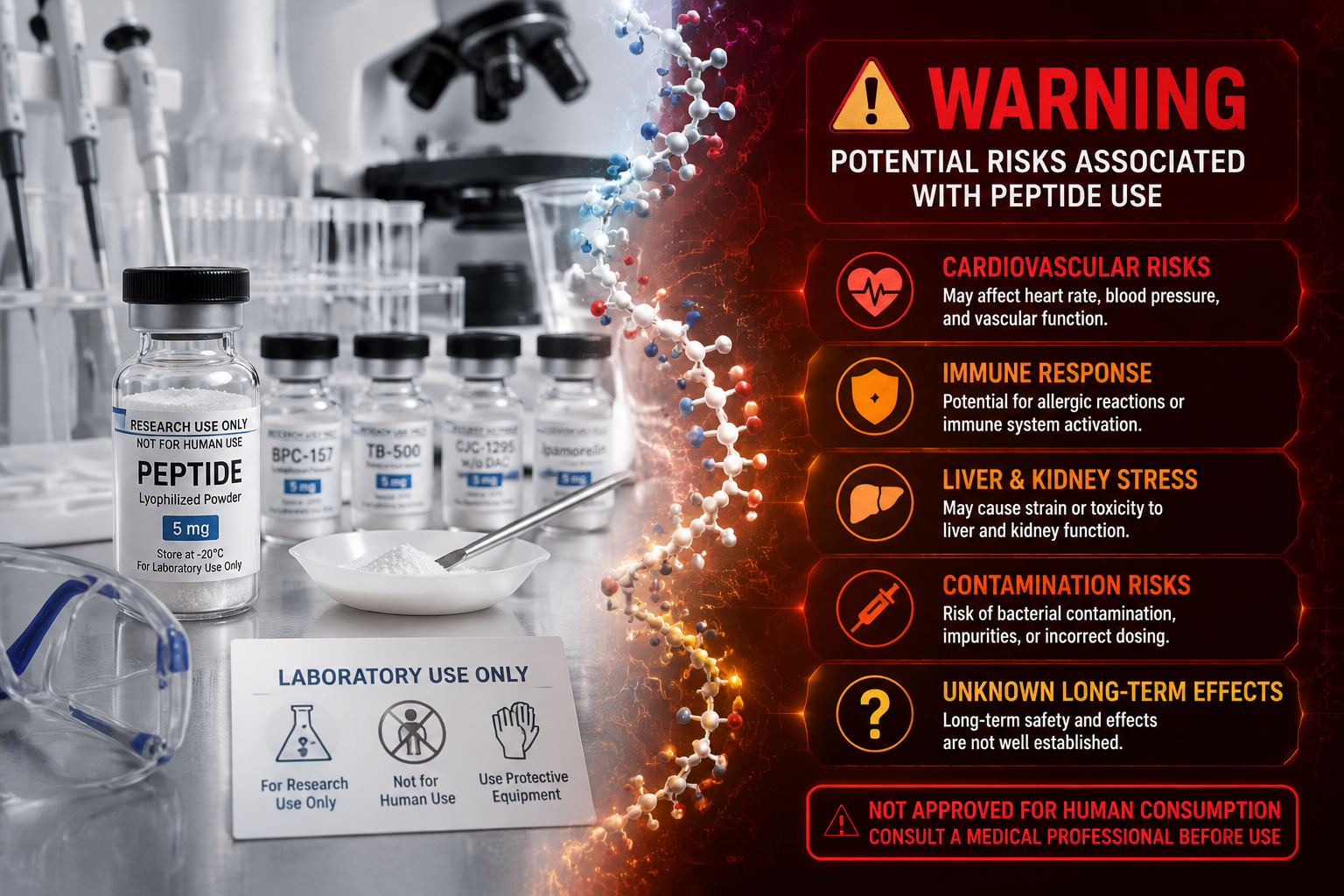
MT-II is not approved by the FDA, EMA, or equivalent regulatory bodies for any cosmetic or therapeutic indication. It is classified as a research compound in most countries. Unregulated use carries documented risks, and the absence of standardized dosing protocols in non-clinical settings amplifies those concerns.
For researchers and institutions sourcing peptides, quality testing protocols and verified certificates of analysis are non-negotiable standards for any reputable supplier.
Those exploring the broader peptide research landscape can use the PTP catalog navigation by theme to identify compounds relevant to pigmentation, aging support, and metabolic research.
Conclusion
Melanotan II for tanning and pigmentation sits at a genuinely fascinating intersection of dermatology, endocrinology, and peptide pharmacology. The science behind MC1R activation and eumelanin synthesis is well-established, but the compound's non-selective receptor profile means its research implications extend far beyond skin tone. For anyone approaching this topic seriously in 2026, the actionable priorities are clear: prioritize verified, third-party-tested sources, understand the regulatory status in your jurisdiction, and treat MT-II strictly within a structured research framework. Exploring related compounds through a curated peptide research catalog can also provide valuable comparative context as the field continues to evolve.
Tags: Melanotan II, tanning peptides, melanocortin receptors, skin pigmentation, MT-II research, MC1R activation, peptide science, eumelanin production, research peptides, alpha-MSH analog, peptide safety, pigmentation biology