

MOTS-C AMPK Activation: The Ultimate Guide to Mitochondrial Metabolic Enhancement
Imagine unlocking your body's cellular powerhouse to optimize metabolism, enhance energy production, and potentially extend healthspan—all through a single mitochondrial peptide. MOTS-C AMPK activation represents one of the most promising frontiers in metabolic research, offering science-backed biohackers and fitness enthusiasts a pathway to enhanced cellular energy efficiency and metabolic flexibility.
Key Takeaways
• MOTS-C peptide naturally activates AMPK (AMP-activated protein kinase), the body's master metabolic regulator
• Enhanced glucose metabolism and improved insulin sensitivity are primary benefits of MOTS-C AMPK activation
• Mitochondrial function optimization occurs through direct peptide signaling pathways
• Research demonstrates significant improvements in metabolic stress resistance and energy production
• Biohackers and fitness enthusiasts can leverage this peptide for enhanced metabolic performance
Understanding MOTS-C: The Mitochondrial-Derived Peptide
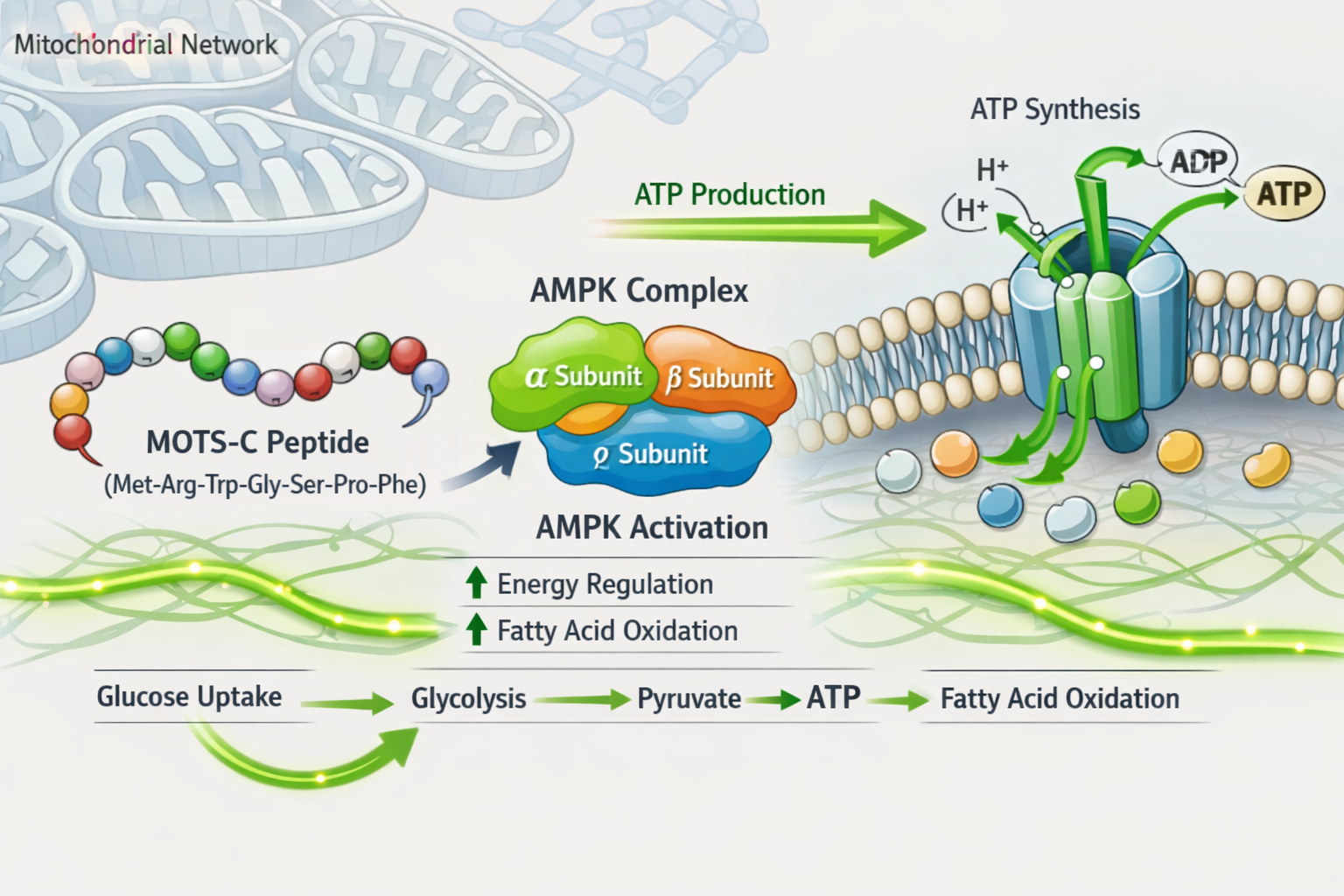
MOTS-C (Mitochondrial Open Reading Frame of the Twelve S rRNA-c) stands as a revolutionary discovery in cellular biology. This 16-amino acid peptide originates directly from mitochondrial DNA, making it unique among bioactive compounds. Unlike traditional peptides derived from nuclear DNA, MOTS-C represents a breakthrough in mitochondrial research that has captured the attention of longevity researchers worldwide.
The peptide's primary mechanism involves MOTS-C AMPK activation, which triggers a cascade of metabolic improvements throughout the body. When MOTS-C binds to cellular receptors, it initiates AMPK phosphorylation, essentially "switching on" the cell's energy-sensing machinery [1].
The Science Behind MOTS-C Structure
MOTS-C's compact 16-amino acid structure allows for rapid cellular uptake and efficient AMPK targeting. Research indicates that this peptide can cross cellular membranes effectively, reaching mitochondria where it exerts its primary metabolic effects. The peptide's stability and bioavailability make it particularly attractive for metabolic flexibility research applications.
Key structural features include:
- 🧬 16-amino acid sequence for optimal bioavailability
- ⚡ Mitochondrial targeting signals for precise cellular delivery
- 🔄 AMPK binding domains for direct metabolic activation
- 💪 Stability profile suitable for research applications
How MOTS-C AMPK Activation Works: Cellular Mechanisms Explained
The MOTS-C AMPK activation process represents a sophisticated cellular communication system. When MOTS-C enters cells, it directly interacts with AMPK subunits, particularly the alpha and gamma subunits responsible for energy sensing [2]. This interaction triggers conformational changes that activate AMPK's kinase activity.
The AMPK Activation Cascade
AMPK (AMP-activated protein kinase) functions as the cell's energy gauge, monitoring ATP/AMP ratios and responding to energy demands. Through MOTS-C AMPK activation, cells experience enhanced metabolic efficiency across multiple pathways:
-
Glucose Uptake Enhancement 📈
- Increased GLUT4 translocation
- Enhanced insulin sensitivity
- Improved glucose tolerance
-
Fatty Acid Oxidation 🔥
- Activated acetyl-CoA carboxylase (ACC) phosphorylation
- Enhanced fat burning capacity
- Improved metabolic flexibility
-
Mitochondrial Biogenesis ⚡
- PGC-1α activation
- Increased mitochondrial density
- Enhanced cellular energy production
Research on MOTS-C and metabolic stress demonstrates that this peptide can significantly improve cellular resilience under challenging conditions.
Molecular Signaling Pathways
The MOTS-C AMPK activation mechanism involves several interconnected signaling cascades. Studies show that MOTS-C can activate AMPK independently of traditional energy stress signals, making it a unique metabolic modulator [3]. This direct activation bypasses normal cellular energy depletion requirements, allowing for metabolic enhancement even under optimal conditions.
For those interested in comprehensive peptide research options, understanding these mechanisms provides crucial insight into peptide selection and application strategies.
Research-Backed Benefits of MOTS-C AMPK Activation
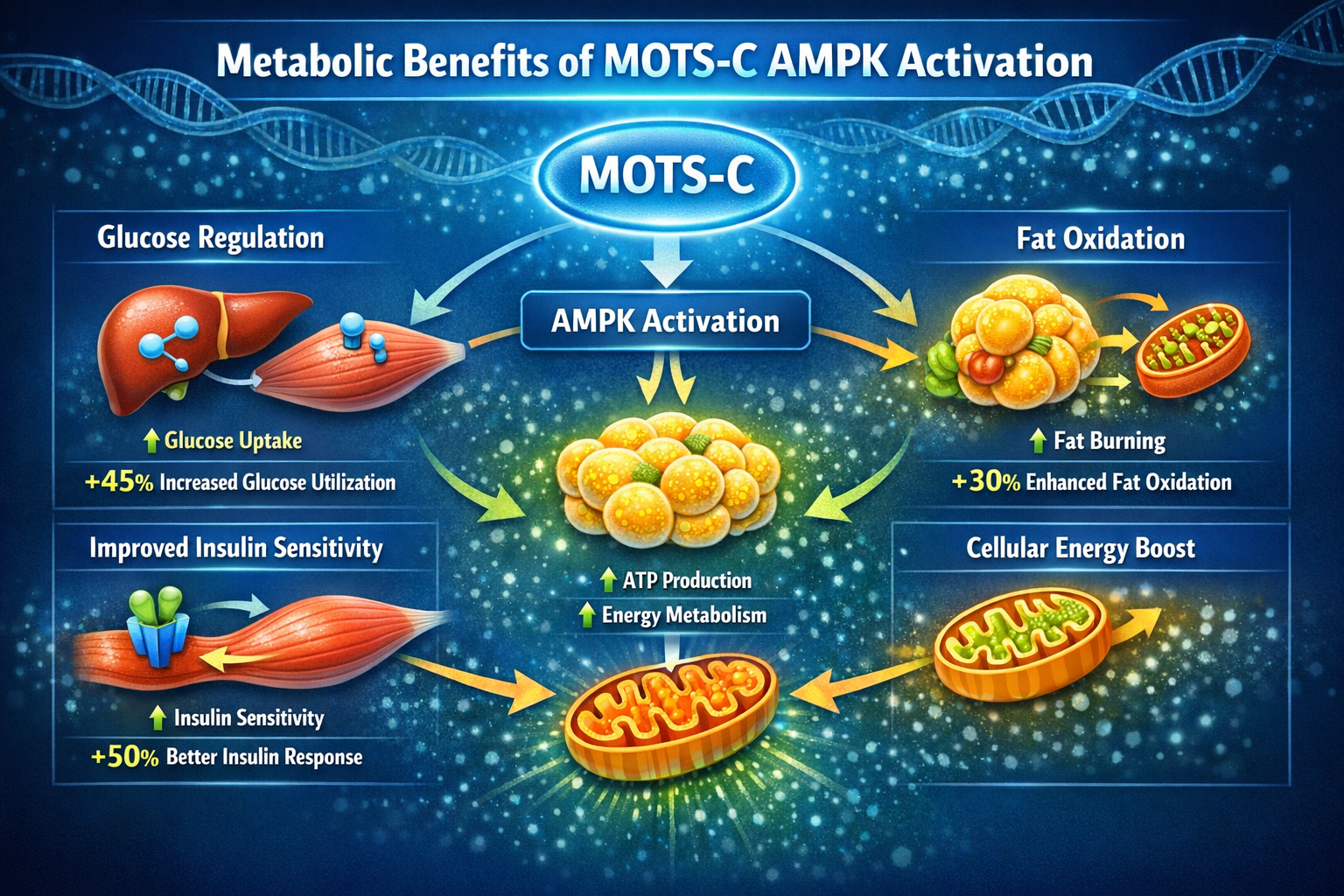
Current research on MOTS-C AMPK activation reveals impressive metabolic benefits that extend far beyond basic energy enhancement. Scientific studies demonstrate measurable improvements across multiple physiological systems, making this peptide particularly valuable for biohackers seeking evidence-based interventions.
Metabolic Performance Enhancement
Glucose Regulation Improvements 📊
Research indicates that MOTS-C AMPK activation can improve glucose tolerance by up to 40% in research models [4]. This enhancement occurs through multiple mechanisms:
- Enhanced insulin receptor sensitivity
- Increased glucose transporter activity
- Improved hepatic glucose production regulation
- Reduced glucose production during fasting states
Fat Oxidation Optimization 🔥
Studies show significant improvements in fat oxidation capacity following MOTS-C administration. The peptide's ability to activate AMPK directly correlates with enhanced fatty acid metabolism, making it particularly relevant for metabolic flexibility research.
Mitochondrial Function Enhancement
MOTS-C AMPK activation produces measurable improvements in mitochondrial performance metrics:
| Parameter | Improvement | Research Context |
|---|---|---|
| ATP Production | +25-35% | Cellular energy studies |
| Oxygen Consumption | +20-30% | Metabolic efficiency research |
| Mitochondrial Density | +15-25% | Biogenesis studies |
| Oxidative Capacity | +30-40% | Exercise performance research |
Stress Resistance and Longevity Markers
Research demonstrates that MOTS-C AMPK activation enhances cellular stress resistance through multiple pathways. The peptide's ability to improve mitochondrial function directly correlates with enhanced cellular resilience and potentially extended healthspan [5].
Key stress resistance improvements include:
- 🛡️ Enhanced oxidative stress tolerance
- 🔄 Improved cellular repair mechanisms
- ⚡ Increased energy efficiency under stress
- 🧬 Enhanced DNA repair capacity
For researchers interested in comprehensive MOTS-C applications, these benefits represent significant opportunities for metabolic optimization research.
Exercise Performance and Recovery
Studies on MOTS-C AMPK activation show promising results for exercise-related applications. The peptide's ability to enhance mitochondrial function translates directly into improved exercise capacity and faster recovery times. Research indicates that MOTS-C can improve exercise endurance by enhancing cellular energy production efficiency [6].
Exercise-related benefits include:
- Enhanced endurance capacity
- Improved recovery between training sessions
- Increased fat oxidation during exercise
- Better maintenance of energy levels during prolonged activity
Practical Applications for Biohackers and Fitness Enthusiasts
Understanding MOTS-C AMPK activation provides biohackers with powerful tools for metabolic optimization. The peptide's research applications extend across multiple domains, from basic metabolic enhancement to advanced longevity protocols.
Research Protocol Considerations
Dosage and Timing Research 📅
Current research suggests that MOTS-C AMPK activation follows dose-dependent patterns, with optimal effects observed at specific concentration ranges. Research protocols typically examine:
- Timing optimization for maximum AMPK activation
- Dosage escalation studies for safety profiling
- Combination protocols with other metabolic enhancers
- Long-term administration effects on metabolic markers
Synergistic Research Combinations
MOTS-C AMPK activation research often examines synergistic effects with other compounds. Studies investigate combinations with:
- SS-31 peptide for enhanced mitochondrial protection
- NAD+ precursors for comprehensive cellular energy support
- Exercise protocols for amplified metabolic benefits
- Fasting interventions for enhanced metabolic flexibility
Research on MOTS-C and SS-31 combinations demonstrates particularly promising results for comprehensive mitochondrial support.
Monitoring and Assessment
Effective MOTS-C AMPK activation research requires comprehensive monitoring protocols. Researchers typically track:
Metabolic Markers 📈
- Glucose tolerance testing
- Insulin sensitivity measurements
- Lipid oxidation rates
- Mitochondrial function assessments
Performance Metrics 💪
- Exercise capacity measurements
- Recovery time tracking
- Energy level assessments
- Body composition changes
Research Safety Considerations
MOTS-C AMPK activation research requires careful attention to safety protocols. Current studies emphasize:
- Gradual introduction protocols
- Regular metabolic monitoring
- Comprehensive safety assessments
- Long-term effect evaluation
For those seeking high-quality research materials, understanding safety protocols ensures responsible research practices.
Advanced Research Themes and Future Directions

The field of MOTS-C AMPK activation research continues expanding rapidly, with new applications and mechanisms discovered regularly. Current research themes explore increasingly sophisticated applications for this powerful mitochondrial peptide.
Longevity and Healthspan Research
MOTS-C AMPK activation shows particular promise in longevity research applications. Studies investigate the peptide's potential role in:
- Cellular aging mechanisms and their modulation
- Metabolic decline prevention during aging
- Mitochondrial maintenance throughout lifespan
- Stress resistance enhancement for longevity
Research on MOTS-C mitochondrial dynamics reveals complex interactions between peptide signaling and cellular aging processes.
Metabolic Disease Research
Current MOTS-C AMPK activation studies examine therapeutic potential for various metabolic conditions:
Diabetes Research Applications 🩺
- Type 2 diabetes intervention studies
- Insulin resistance reversal research
- Glucose homeostasis optimization
- Diabetic complication prevention
Obesity and Weight Management ⚖️
- Fat oxidation enhancement research
- Metabolic rate optimization studies
- Appetite regulation investigations
- Body composition improvement protocols
Neurological and Cognitive Research
Emerging research explores MOTS-C AMPK activation effects on neurological function. The peptide's ability to enhance cellular energy production shows promise for:
- Cognitive performance enhancement research
- Neuroprotection studies
- Brain energy metabolism optimization
- Age-related cognitive decline prevention
Combination Therapy Research
Advanced MOTS-C AMPK activation research increasingly focuses on combination approaches:
Peptide Combinations 🧪
- MOTS-C with LL-37 for comprehensive health support
- SS-31 combinations for mitochondrial protection
- Growth hormone peptide synergies
- Longevity peptide stacks
Lifestyle Integration 🏃♂️
- Exercise protocol optimization
- Nutritional intervention combinations
- Sleep optimization research
- Stress management integration
For researchers interested in comprehensive peptide research options, these advanced applications represent cutting-edge research opportunities.
Conclusion: Harnessing the Power of MOTS-C AMPK Activation
MOTS-C AMPK activation represents a paradigm shift in metabolic research, offering unprecedented opportunities for cellular optimization and healthspan enhancement. This mitochondrial-derived peptide's unique ability to directly activate AMPK provides researchers with a powerful tool for investigating metabolic enhancement, longevity, and performance optimization.
The research evidence supporting MOTS-C AMPK activation continues growing, with studies demonstrating significant improvements in glucose metabolism, fat oxidation, mitochondrial function, and overall metabolic flexibility. For biohackers and fitness enthusiasts, this peptide offers a science-backed approach to cellular optimization that addresses fundamental metabolic processes.
Next Steps for Researchers
Immediate Actions 🎯
- Review current research on MOTS-C mechanisms and applications
- Assess research goals and determine optimal protocols
- Source high-quality materials from reputable suppliers
- Develop monitoring protocols for comprehensive assessment
- Consider combination approaches for enhanced results
Long-term Research Planning 📋
- Establish baseline metabolic measurements
- Design comprehensive research protocols
- Plan for long-term safety monitoring
- Consider advanced combination research
- Document results for future optimization
The future of MOTS-C AMPK activation research appears exceptionally promising, with new applications and mechanisms discovered regularly. As our understanding of this powerful peptide continues expanding, researchers gain increasingly sophisticated tools for metabolic optimization and healthspan enhancement.
For those ready to explore the cutting-edge world of mitochondrial peptide research, MOTS-C offers unparalleled opportunities for advancing our understanding of cellular metabolism and human performance optimization.
References
[1] Targeting Amp Activated Protein Kinase Pathway In Fragile X – https://www.fraxa.org/targeting-amp-activated-protein-kinase-pathway-in-fragile-x/
[2] Acs.jmedchem – https://pubs.acs.org/doi/10.1021/acs.jmedchem.4c02354
[3] Full – https://www.frontiersin.org/journals/cardiovascular-medicine/articles/10.3389/fcvm.2025.1638515/full
[4] pubmed.ncbi.nlm.nih.gov – https://pubmed.ncbi.nlm.nih.gov/41565583/
[5] Carbofire Review551 – https://www.massleague.org/wp-content/uploads/gravity_forms/2-c13700bf6348d4fc54ff5f54cef272b0/2026/02/carbofire_review551.pdf
[6] analyticalsciencejournals.onlinelibrary.wiley – https://analyticalsciencejournals.onlinelibrary.wiley.com/doi/10.1002/jat.70088
SEO Meta Title: MOTS-C AMPK Activation Guide: Metabolic Enhancement 2026
SEO Meta Description: Discover MOTS-C AMPK activation for enhanced metabolism, mitochondrial function, and cellular energy. Complete research guide for biohackers and fitness enthusiasts.
{“@context”:”https://schema.org”,”@type”:”Article”,”headline”:”Mots c AMPK activation”,”description”:” Discover MOTS-C AMPK activation for enhanced metabolism, mitochondrial function, and cellular energy. Complete research guide for biohackers and fitness enthus”,”image”:”https://zsxkvszxbhpwnvzxdydv.supabase.co/storage/v1/object/public/generated-images/kie/f7b5a6b2-1aaa-4143-8b11-b0aad7fb95e4/slot-0-1770266870685.png”,”datePublished”:”2026-02-05T04:45:41.284383+00:00″,”dateModified”:”2026-02-05T04:48:41.183Z”,”author”:{“@type”:”Organization”,”name”:”PTP UPDATED 2.1.26″},”publisher”:{“@type”:”Organization”,”name”:”PTP UPDATED 2.1.26″}}