

Researchers at UTMB published findings in Science Translational Medicine showing a nasal spray treatment cleared toxic tau protein buildup and improved cognitive function in aged mouse models — a result that has intensified scientific interest in peptide nasal spray delivery as a serious research frontier. This single finding captures why intranasal peptide administration has moved from niche curiosity to one of the most discussed topics in biomedical research circles in 2026.
Key Takeaways 🧠
- Peptide nasal spray bypasses the blood-brain barrier through olfactory nerve pathways
- Intranasal delivery avoids first-pass liver metabolism, potentially improving bioavailability
- Established peptides like desmopressin and nafarelin have long histories of nasal delivery
- Emerging research links nasal peptide delivery to neurological and anti-aging applications
- Purity and sourcing quality remain critical factors in any peptide research context
How Peptide Nasal Spray Delivery Works
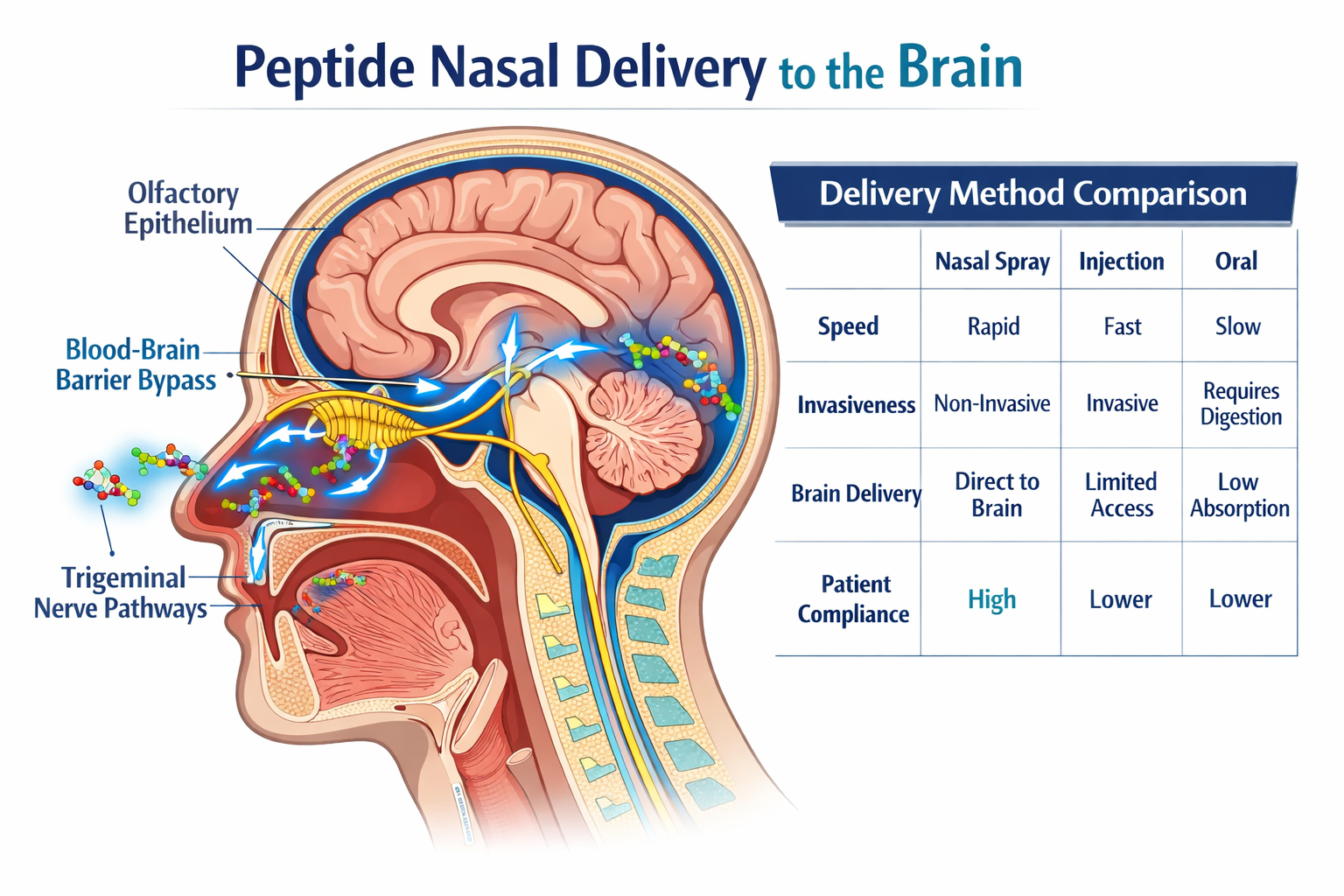
The nasal cavity offers a uniquely direct route into the body. Anatomical gaps in the olfactory epithelium allow intranasally administered compounds to travel along trigeminal and olfactory nerve pathways, reaching the central nervous system without crossing the blood-brain barrier through conventional routes.
This mechanism gives peptide nasal spray delivery a distinct advantage over oral administration. Oral peptides face enzymatic breakdown in the gut and first-pass metabolism in the liver. Intranasal delivery sidesteps both obstacles, allowing peptides to enter systemic circulation more directly.
💡 Key insight: Nasal delivery can achieve bioavailability comparable to injections while being far less invasive — effects are often noticed faster than with oral treatments.
Researchers studying innovative peptide delivery systems continue to refine formulations that optimize absorption through nasal tissue while maintaining peptide stability.
7 Research Areas Where Peptide Nasal Spray Is Making Waves
1. 🧬 Neurodegeneration Research
UTMB's Alzheimer's work used antibody TTCM2 to selectively target toxic tau aggregates. The TRIM21 protein facilitated clearing of these intracellular aggregates, improving cognitive outcomes in animal models. Separately, FIU researchers developed an experimental peptide nasal spray showing potential to slow Parkinson's progression.
2. 💉 Established Hormone Peptides
Desmopressin — a synthetic vasopressin analog — is among the most established peptides delivered intranasally. Nafarelin is another well-documented option. Peptide choice depends on stability and specific research goals.
3. 🌿 Anti-Aging Applications
Copper peptide GHK-Cu has entered commercial nasal spray formats, with research suggesting roles in collagen and elastin support. Explore GHK-Cu peptide research for sourcing context.
4. 🔬 Peptide Blends
Combining peptides may produce synergistic effects. Peptide blend research is an active area examining how stacked formulations behave in intranasal formats.
5. 🛡️ Immune Modulation
Peptides like LL-37 are studied for immune pathway involvement. Research on LL-37 and MOTS-c synergy highlights how combination approaches may amplify research outcomes.
6. 🧪 BPC-157 Delivery Formats
BPC-157 is among the most researched peptides across delivery formats. BPC-157 nasal spray evidence outlines current findings on intranasal versus capsule administration.
7. ✅ Safety and Monitoring
Peptide nasal sprays are considered safe within research and clinical contexts when administered under proper oversight. Purity testing is non-negotiable — review peptide purity testing fundamentals before sourcing any compound.
[products_slider]
Comparing Delivery Methods
| Method | Liver Metabolism | Speed of Effect | Invasiveness |
|---|---|---|---|
| Nasal Spray | Bypassed | Fast | Low |
| Injection | Bypassed | Very Fast | High |
| Oral | High | Slower | None |
Conclusion: What Researchers Should Do Next
Peptide nasal spray technology sits at a compelling intersection of neuroscience, endocrinology, and longevity research in 2026. The delivery mechanism is well-supported, established peptides have decades of clinical use, and emerging research is expanding the application landscape rapidly.
Actionable next steps for researchers:
- Review the latest findings on specific peptides of interest using verified sources
- Prioritize purity-tested peptide sourcing to ensure research integrity
- Explore all available peptides to identify candidates suited to intranasal delivery formats
- Consult qualified healthcare providers before any clinical application
The science is advancing — staying current with new developments in peptide research is essential for anyone working in this space.
Tags: peptide nasal spray, intranasal peptide delivery, BPC-157 nasal spray, GHK-Cu peptide, peptide research 2026, nasal peptide bioavailability, blood-brain barrier bypass, peptide delivery methods, desmopressin nasal spray, anti-aging peptides, neurodegeneration research, peptide purity testing