

By age 40, the human body produces roughly 1% less collagen every year — and that single biological fact has driven an entire field of longevity science toward one compelling class of molecules: peptides. As researchers continue to map the cellular mechanisms behind aging, peptides for anti-aging and longevity have emerged as one of the most studied categories in modern longevity research.
Key Takeaways
- Peptides are short chains of amino acids that act as biological signals, influencing processes from collagen synthesis to mitochondrial function.
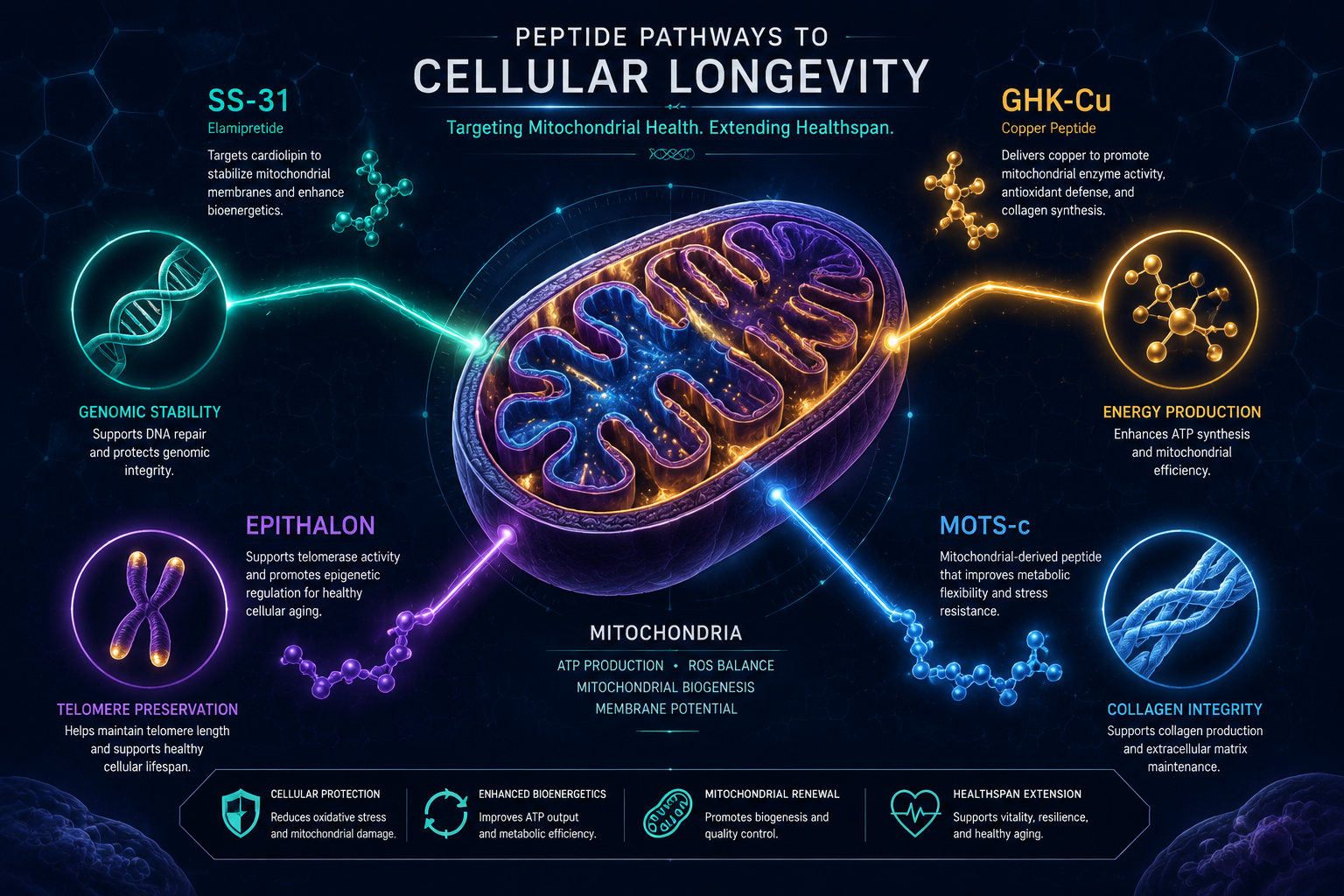
- Several peptides, including GHK-Cu, Epithalon, and SS-31, are actively studied for their roles in cellular repair and longevity pathways.
- Mitochondrial health is a central theme in peptide longevity research, with compounds like MOTS-c showing particular interest.
- Peptide research is still evolving; most findings come from preclinical and early-stage studies.
- Sourcing purity-tested peptides is critical for any research application.
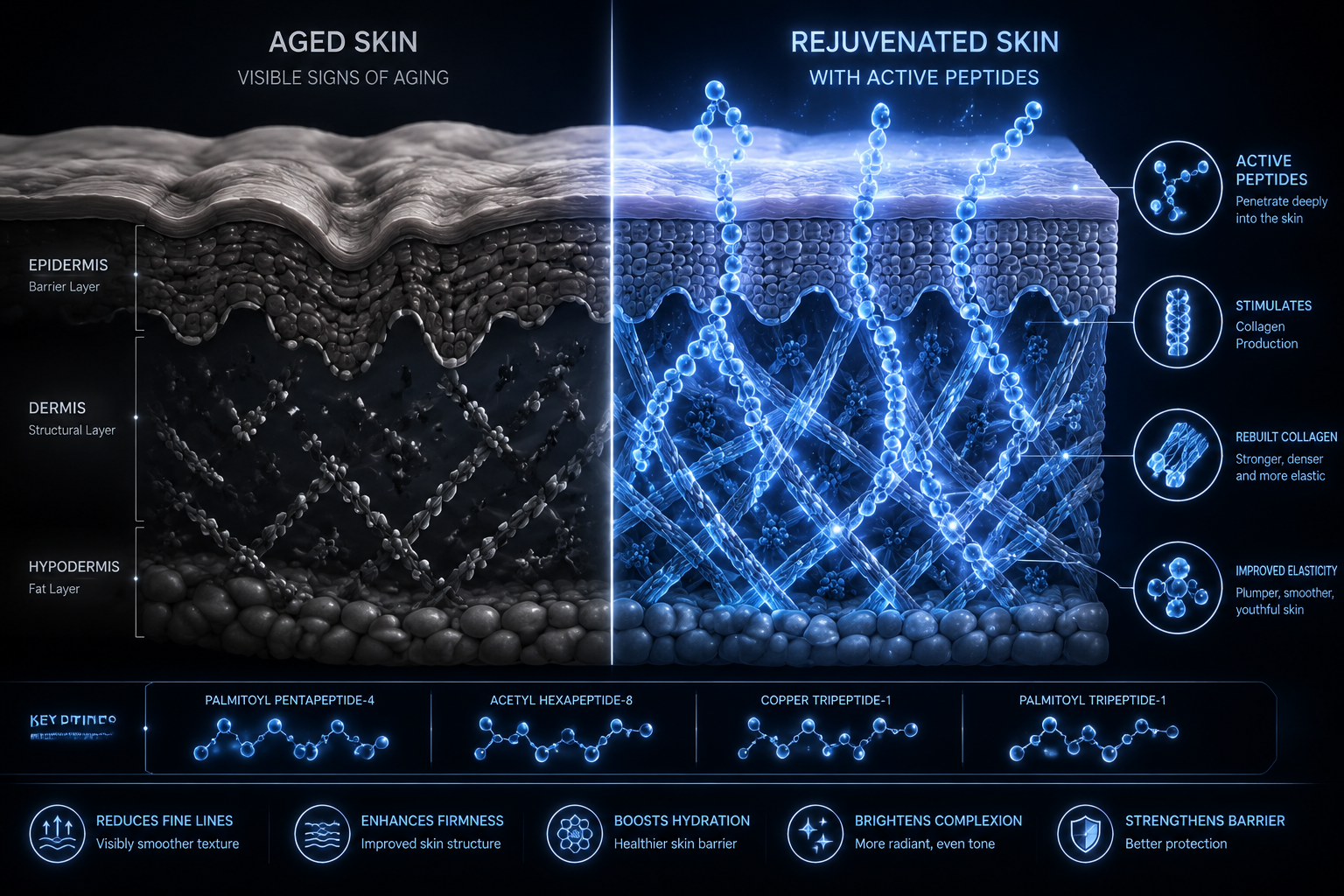
How Peptides Work in Anti-Aging and Longevity Research
Peptides are short chains of amino acids — the same building blocks that form proteins. What makes them scientifically interesting is their role as biological messengers. When specific peptides bind to cellular receptors, they can trigger repair processes, regulate gene expression, and modulate inflammation.
Aging, at its core, is a story of declining cellular communication. Collagen production slows. Mitochondria become less efficient. Telomeres shorten. Peptides are studied because they may help restore some of those signals.
Key Peptides Studied for Longevity
| Peptide | Primary Research Focus |
|---|---|
| GHK-Cu | Skin repair, collagen synthesis, gene regulation |
| Epithalon | Telomere support, pineal gland function |
| SS-31 | Mitochondrial protection, oxidative stress |
| MOTS-c | Metabolic regulation, mitochondrial signaling |
| BPC-157 | Tissue repair, cellular recovery |
GHK-Cu (copper peptide) has attracted significant attention for its role in skin biology and broader tissue repair. Explore the GHK-Cu longevity research themes for a deeper look at what current studies suggest.
Epithalon, a tetrapeptide, is studied for its potential influence on telomere length — a key biomarker associated with biological aging. Detailed findings are covered in Epithalon longevity signals research.
SS-31 targets the inner mitochondrial membrane, where energy production and oxidative stress intersect. For researchers focused on cellular energy, the mitochondrial longevity focus page provides useful context.
"The most promising anti-aging compounds are not those that mask symptoms — they are those that address the upstream biology of cellular decline."
Peptides for Anti-Aging and Longevity: Emerging Research Directions in 2026
The field is moving quickly. Several newer areas of peptide longevity research are gaining traction.
Mitochondrial Peptides
MOTS-c, encoded within mitochondrial DNA, is studied for its role in metabolic regulation and stress response. Learn more about MOTS-c as a mitochondrial peptide and how it fits into broader longevity frameworks.
Peptide Synergies and Blends
Researchers are increasingly exploring how peptide combinations may produce complementary effects. The Glow Blend longevity research themes page outlines one such multi-peptide approach being examined in current studies.
NAD+ and Peptide Interactions
NAD+ plays a central role in cellular energy metabolism. Reviewing NAD+ energetics and longevity research themes alongside peptide research provides a more complete picture of how these pathways may interact.
What Researchers Should Keep in Mind
- Most peptide longevity data comes from preclinical models — human trials remain limited.
- Peptide stability, delivery method, and purity all affect research outcomes significantly.
- Regulatory status varies by region and application.
Conclusion
Peptides for anti-aging and longevity represent one of the most active and promising areas of biological research in 2026. From mitochondrial protection with SS-31 to telomere-related work with Epithalon, the science is building a compelling case for peptides as tools for understanding — and potentially influencing — the aging process at a cellular level.
For those engaged in longevity research, the practical next steps are clear: prioritize purity-tested compounds, stay current with emerging preclinical data, and explore the growing body of longevity peptide research to guide informed decisions. The biology of aging is complex, but peptide science is steadily narrowing the knowledge gap.
Tags: peptides for anti-aging, longevity peptides, GHK-Cu peptide, Epithalon research, SS-31 peptide, MOTS-c mitochondrial peptide, anti-aging science, peptide longevity research, cellular aging, mitochondrial health, collagen peptides, BPC-157