

Over 537 million adults worldwide live with diabetes, yet the search for more targeted, mechanism-specific tools continues at a rapid pace. Peptides for diabetes and blood sugar control have moved from early laboratory curiosity to one of the most actively studied areas in metabolic research. Understanding how specific peptide compounds interact with insulin pathways, pancreatic function, and glucose metabolism is essential for anyone following the frontier of metabolic science.
Key Takeaways
- Peptides are short chains of amino acids that can interact with specific receptors involved in glucose regulation and insulin signaling.
- GLP-1 receptor agonist peptides are among the most researched compounds in blood sugar management science.
- MOTS-c is a mitochondria-derived peptide with emerging relevance to insulin sensitivity and metabolic function.
- Peptide research in this area spans multiple compound classes, each targeting different mechanisms of glucose homeostasis.
- Source quality and purity standards matter significantly when evaluating peptides for research purposes.
How Peptides Interact With Blood Sugar Pathways
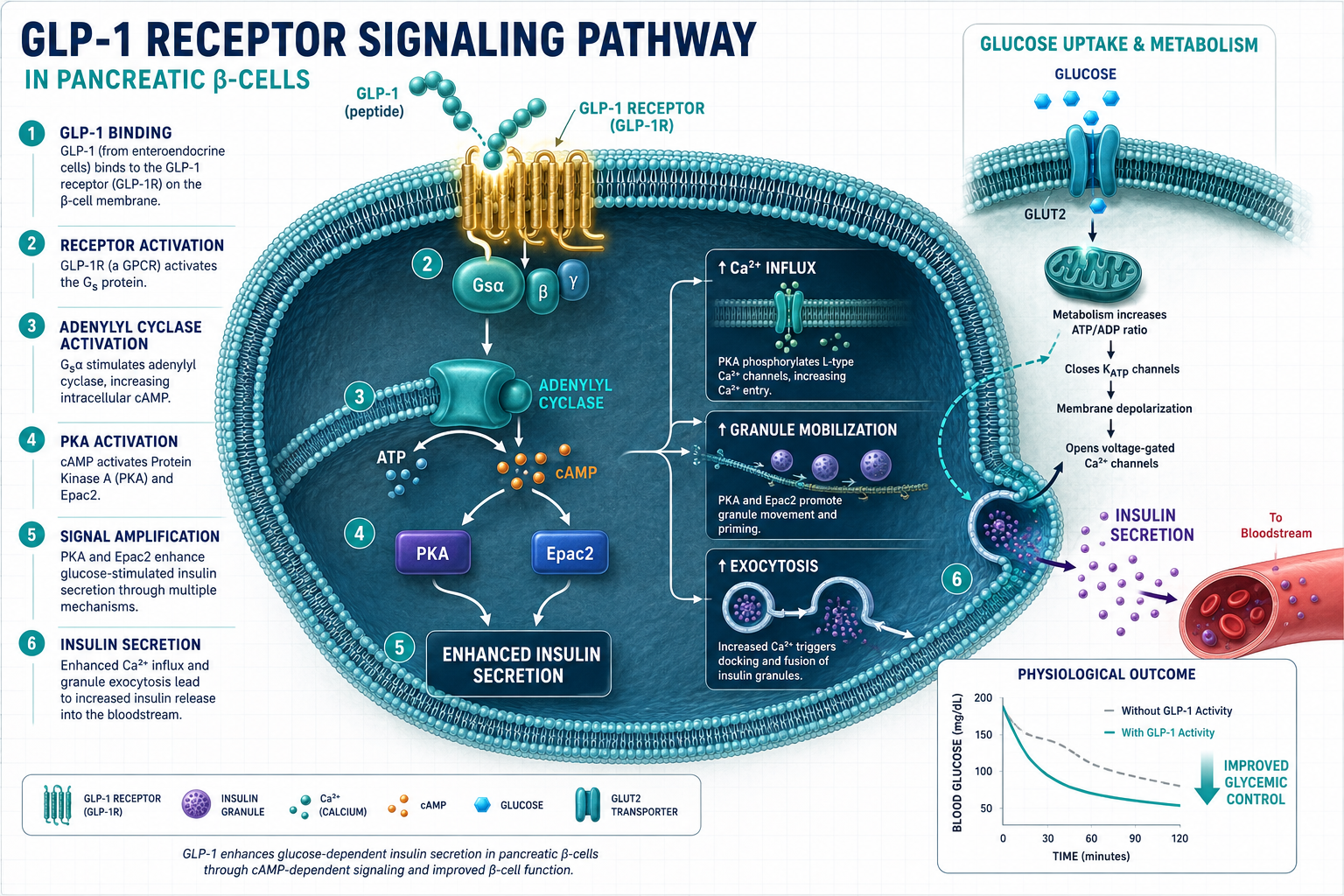
Peptides work by binding to specific receptors on cells, triggering downstream biological responses. In the context of blood sugar regulation, several receptor systems are relevant.
Key mechanisms under research include:
- Stimulation of insulin secretion from pancreatic beta cells
- Reduction of glucagon release, which lowers hepatic glucose output
- Slowing gastric emptying to moderate post-meal glucose spikes
- Improving peripheral insulin sensitivity at the cellular level
The GLP-1 peptide research category represents one of the most documented areas in this field. GLP-1 (glucagon-like peptide-1) is a naturally occurring incretin hormone, and synthetic analogs have been extensively studied for their glucose-lowering properties.
"Peptide-based approaches to metabolic research are notable for their receptor specificity — a quality that distinguishes them from many broader pharmacological strategies."
For researchers exploring incretin biology, the GLP-1 generations overview provides useful context on how this class has evolved across research generations.
Peptides for Diabetes and Blood Sugar Control: Key Compounds in Research
Several peptide compounds have attracted significant attention for their roles in metabolic and glycemic regulation.
GLP-1 Analogs
GLP-1 analogs mimic the action of the body's natural incretin hormone. Research models have examined their capacity to enhance glucose-dependent insulin secretion while suppressing glucagon. The GLP-1 incretin research themes page outlines the major investigative directions in this space.
MOTS-c
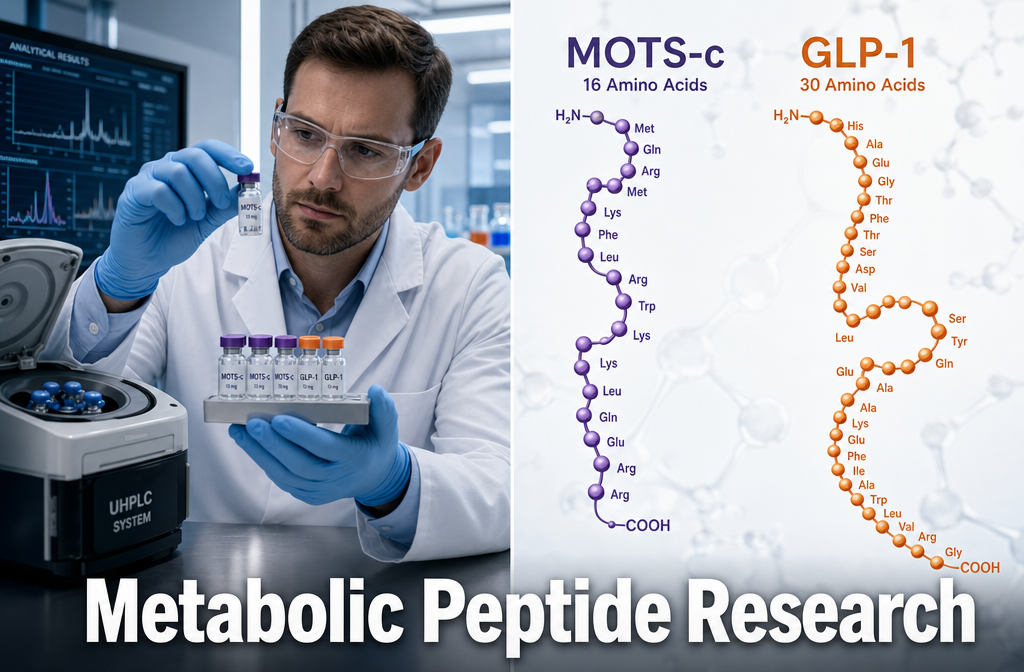
MOTS-c is a peptide encoded within mitochondrial DNA. Studies in preclinical models suggest it may enhance insulin sensitivity and support glucose uptake in skeletal muscle. Researchers can explore MOTS-c and its mitochondrial mechanisms in greater depth through dedicated research literature.
Cagrilintide
Cagrilintide is an amylin analog being studied alongside GLP-1 compounds. Research on cagrilintide synergy with GLP-1 suggests potential additive effects on satiety signaling and glucose management in combined models.
Tesamorelin
Tesamorelin is a growth hormone-releasing hormone analog. While primarily studied for body composition, its influence on metabolic markers including insulin resistance has been noted. See the tesa peptide overview for research context.
AOD-9604
AOD-9604 is a fragment of human growth hormone studied for its fat metabolism and potential metabolic effects. Researchers can review AOD-9604 research documentation for current investigative models.
Peptides for Diabetes and Blood Sugar Control: Research Standards Matter
The integrity of any peptide research depends heavily on compound purity and verified sourcing. Contaminated or mislabeled peptides produce unreliable data and compromise experimental outcomes.
When evaluating peptide sources for research, consider:
| Factor | Why It Matters |
|---|---|
| Third-party testing | Confirms purity and identity |
| Certificate of Analysis | Documents compound specifications |
| Manufacturer transparency | Supports reproducibility |
| Proper storage protocols | Preserves compound stability |
Researchers sourcing compounds for metabolic studies should prioritize lab-tested peptides with documented quality controls. Exploring metabolic modulation research lines can also help frame compound selection within a broader experimental context.
Conclusion
Peptides for diabetes and blood sugar control represent a dynamic and expanding area of metabolic research. Compounds such as GLP-1 analogs, MOTS-c, and cagrilintide each target distinct mechanisms within glucose homeostasis, offering researchers multiple investigative angles.
Actionable next steps for researchers:
- Review the specific receptor mechanisms relevant to your research model before selecting a compound.
- Prioritize verified, third-party tested peptide sources to ensure data integrity.
- Cross-reference current incretin and mitochondrial peptide literature to stay current with 2026 findings.
- Consult compound-specific documentation before designing experimental protocols.
The science of peptide-based metabolic research continues to advance rapidly — staying informed on compound mechanisms and sourcing standards is the foundation of credible investigation.
Tags: peptides for diabetes, blood sugar control, GLP-1 peptide, MOTS-c, metabolic peptides, insulin sensitivity, cagrilintide, tesa, incretin research, glucose regulation, peptide research, metabolic modulation