

Nearly 85% of men and 50% of women will experience noticeable hair thinning at some point in their lives — yet most people still rely on treatments developed decades ago. Peptides for hair loss treatment represent a newer class of research compounds that scientists are actively studying for their potential to support follicle health at the cellular level. As peptide science advances, understanding how these molecules work and which ones show the most promise is increasingly relevant.
Key Takeaways
- Peptides are short chains of amino acids that may signal hair follicles to enter or extend the growth phase.
- GHK-Cu (copper peptide) is among the most studied peptides in hair loss research.
- Peptides work through different mechanisms, including growth factor signaling and scalp circulation support.
- Purity and sourcing quality are critical factors when evaluating peptides for research purposes.
- Peptides for hair loss treatment are still under active investigation and should not replace medical advice.
How Peptides May Support Hair Follicle Health
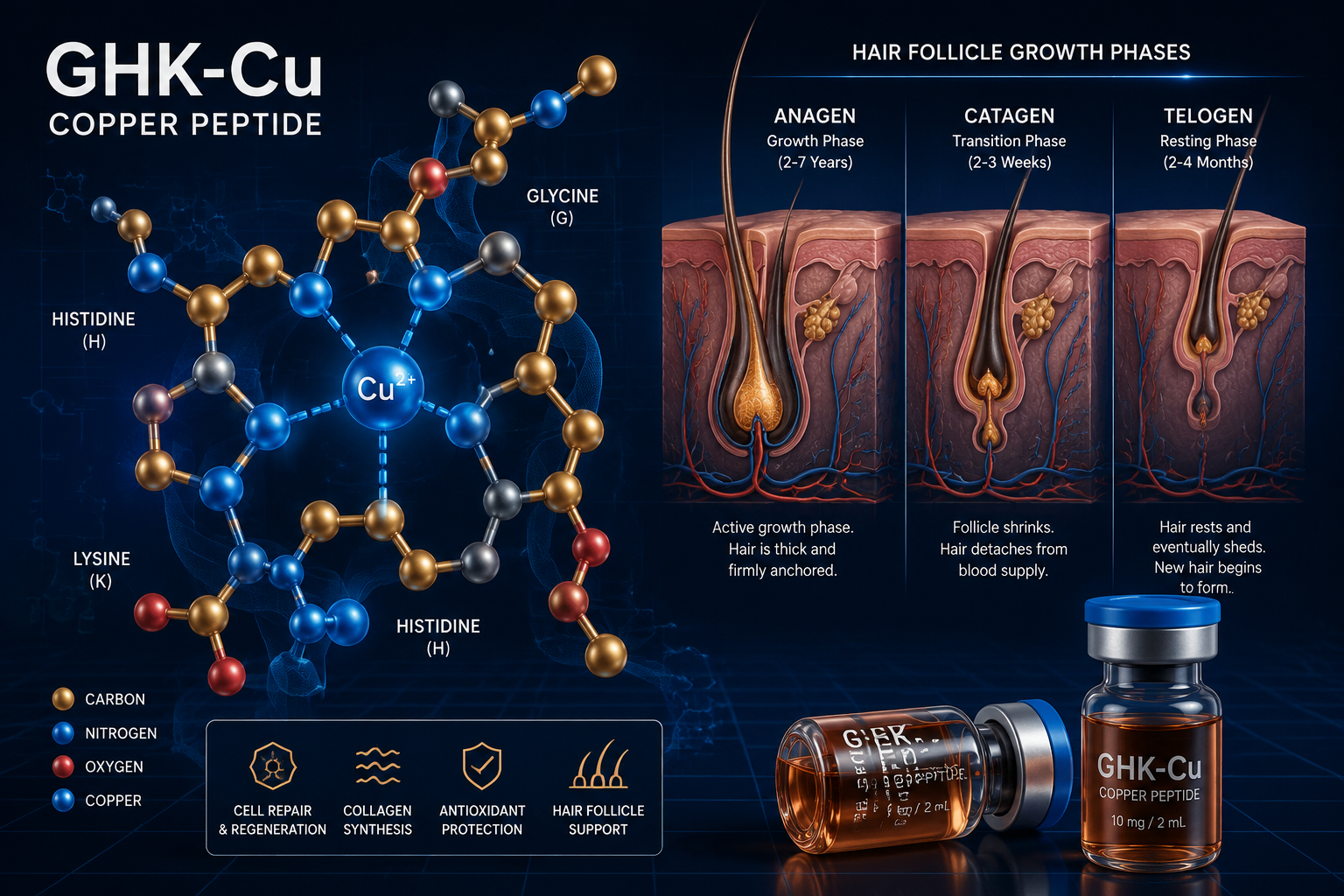
Hair follicles cycle through growth (anagen), regression (catagen), and rest (telogen) phases. When follicles spend too little time in anagen, hair thins and sheds faster than it regrows. Peptides are short-chain amino acids — typically 2 to 50 residues — that act as biological messengers. Certain peptides appear to interact with receptors in the scalp to influence this cycle.
Key mechanisms being studied include:
- Stimulating keratinocyte and dermal papilla cell activity
- Supporting local blood flow to the scalp
- Modulating growth factors such as VEGF and IGF-1
- Reducing oxidative stress around the follicle
These mechanisms make peptides for hair loss treatment a compelling area of ongoing research.
GHK-Cu: The Most Studied Hair Peptide
GHK-Cu, or copper tripeptide-1, is a naturally occurring peptide found in human plasma. It has attracted significant research attention due to its role in tissue remodeling and its potential to stimulate follicle activity. Studies suggest it may enlarge follicle size and extend the anagen phase.
For researchers interested in this compound, the GHK-Cu peptide sourcing and research guide provides detailed background on procurement and documentation considerations. Topical application has also been explored, as covered in resources on topical GHK-Cu research applications.
"Peptide research in dermatology is moving from theoretical to applied — the follicle is proving to be a highly responsive target."
PTD-DBM and Emerging Peptide Candidates
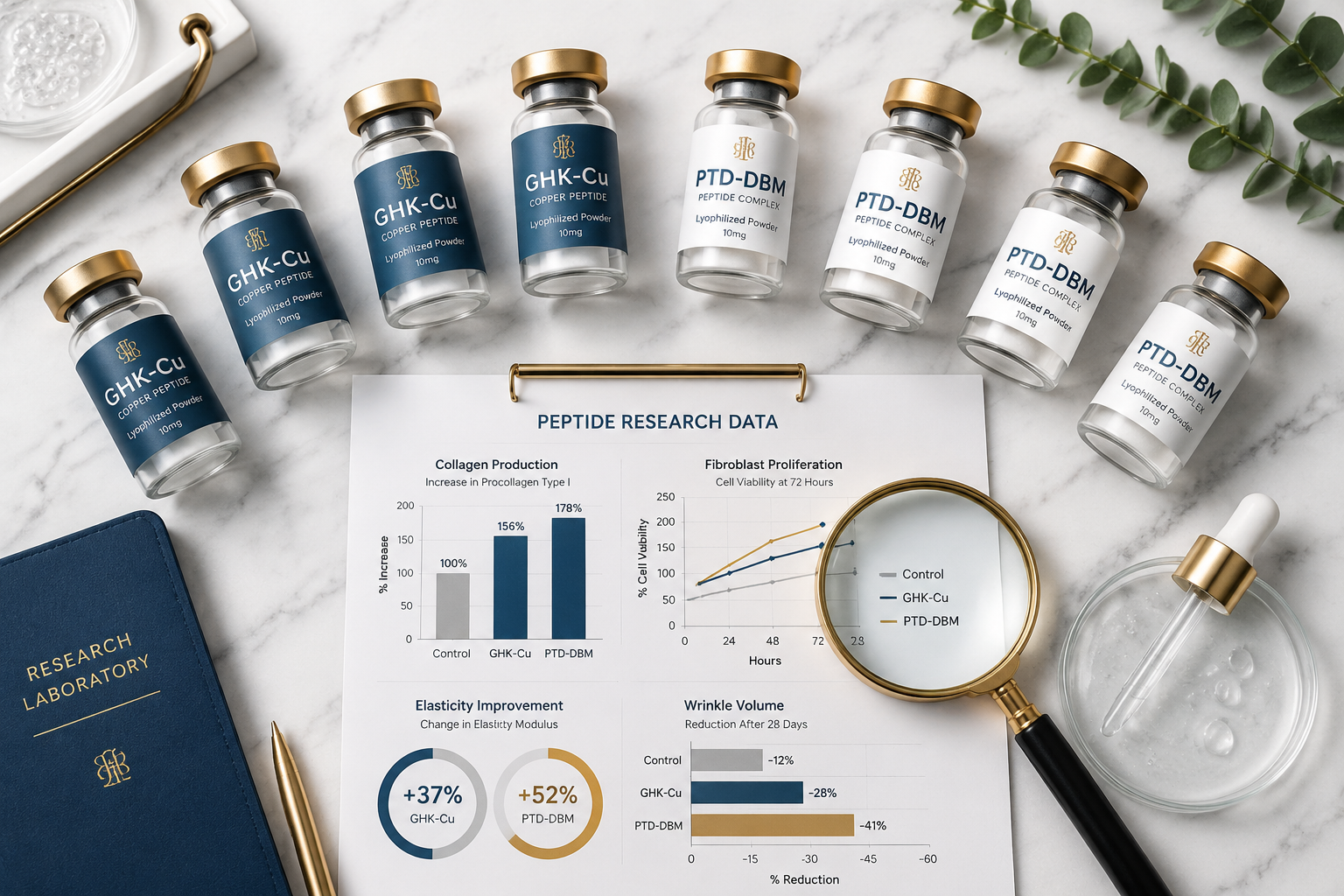
Beyond GHK-Cu, researchers are examining peptides like PTD-DBM, which targets the Wnt/beta-catenin signaling pathway — a known regulator of follicle development. Other candidates include biomimetic peptides that replicate growth factor activity without the stability challenges of full proteins.
Evaluating Peptides for Hair Loss Treatment: Quality and Research Standards
The effectiveness of any peptide research depends heavily on compound purity. Impure or degraded peptides produce unreliable results and compromise research integrity. This is why sourcing from verified, tested suppliers is non-negotiable for serious researchers.
| Factor | Why It Matters |
|---|---|
| Purity percentage | Determines signal-to-noise in research outcomes |
| Third-party testing | Confirms identity and absence of contaminants |
| Storage conditions | Peptides degrade rapidly without proper cold-chain handling |
| Supplier transparency | Enables reproducibility of results |
Researchers can review peptide purity testing fundamentals to understand how to evaluate certificates of analysis. For broader context on compound selection, the peptide supplier comparison guide offers useful frameworks.
Those exploring the full landscape of available research compounds can browse all peptides available for research or review the complete guide to peptide therapy uses for broader context.
Conclusion
Peptides for hair loss treatment occupy a genuinely exciting space in current biochemical research. GHK-Cu leads the field in documented study volume, while newer candidates targeting Wnt signaling and growth factor pathways are expanding the toolkit available to researchers.
Actionable next steps for researchers in 2026:
- Prioritize third-party tested peptides from transparent suppliers.
- Review the existing literature on GHK-Cu and PTD-DBM before designing protocols.
- Document all variables carefully to ensure reproducible outcomes.
- Consult qualified professionals before any application beyond laboratory research.
The science is advancing. Staying informed and sourcing responsibly are the two most important steps any researcher can take right now.
Tags: peptides for hair loss treatment, GHK-Cu peptide, hair follicle research, copper peptide, peptide therapy, hair growth peptides, peptide sourcing, scalp health research, biomimetic peptides, anagen phase, peptide purity, hair loss science