
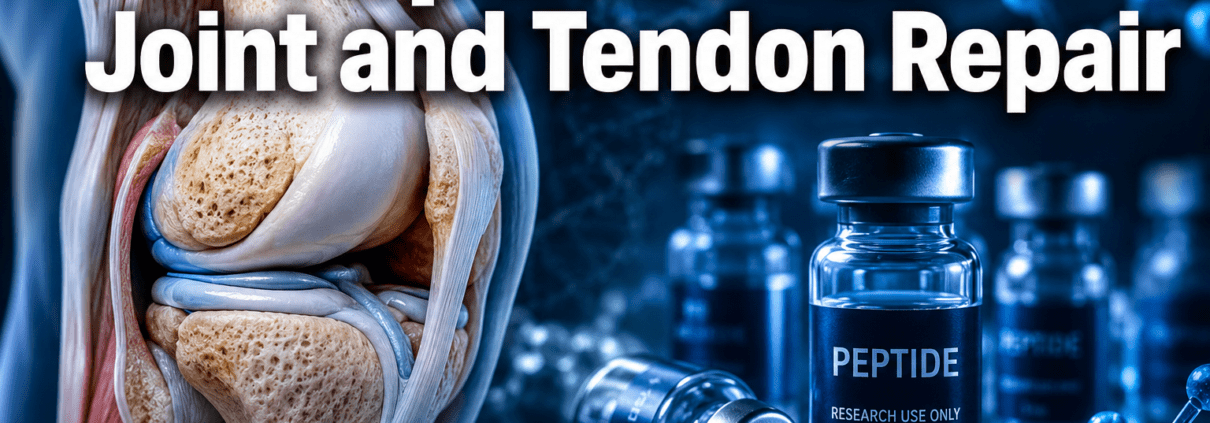
Musculoskeletal injuries account for roughly 1.71 billion cases of chronic pain worldwide, yet conventional treatments — rest, anti-inflammatories, and surgery — often fall short for connective tissue damage. That gap has pushed researchers toward peptides for joint and tendon repair as a targeted, biology-driven approach to accelerating tissue recovery.
Key Takeaways
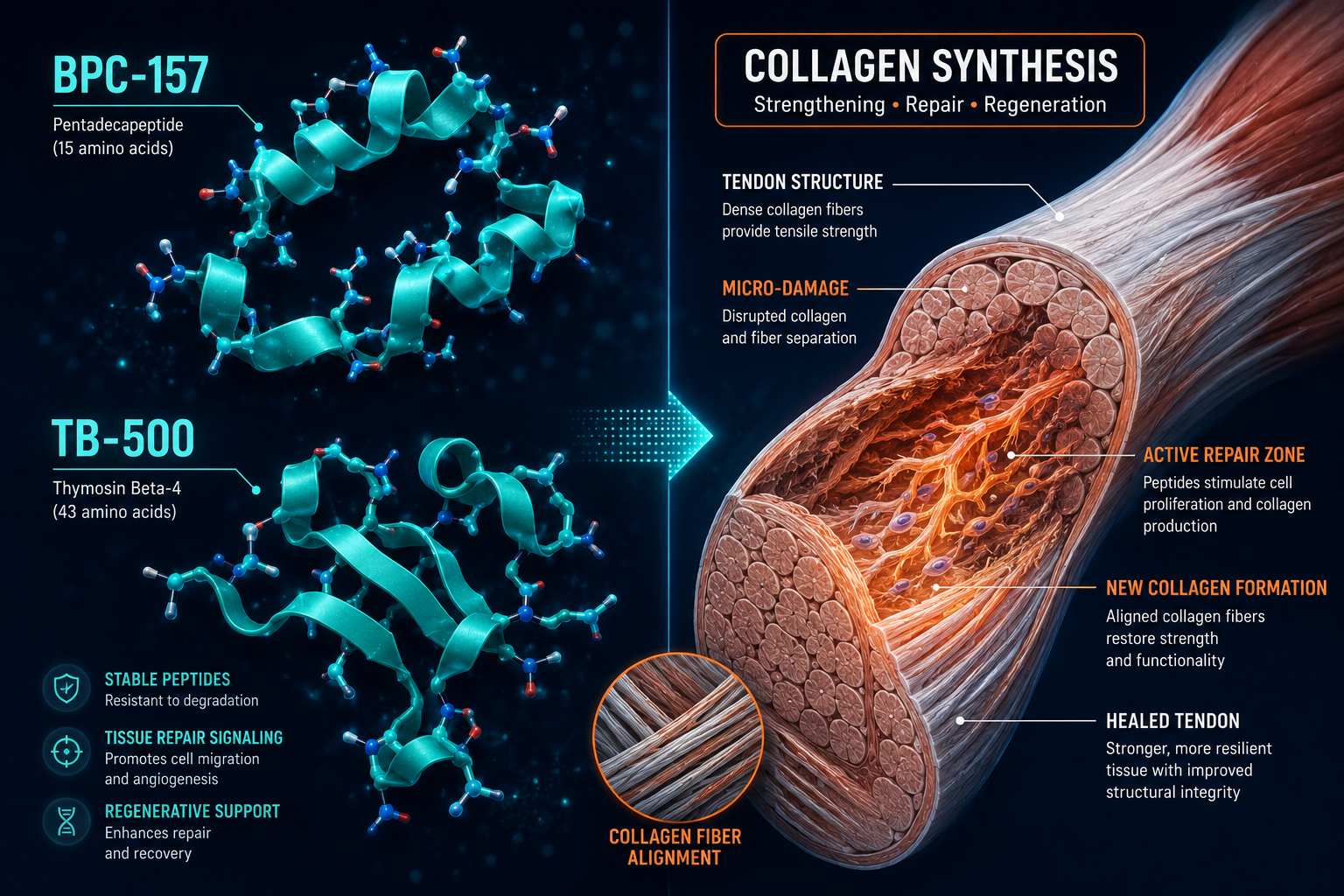
- Specific peptides, particularly BPC-157 and TB-500, have shown strong preclinical evidence for stimulating collagen synthesis and tendon healing.
- Peptides work by signaling the body's own repair pathways rather than simply masking pain.
- GHK-Cu and other matrix-supportive peptides may complement joint recovery by influencing extracellular matrix remodeling.
- Peptide blends are increasingly studied for synergistic effects on musculoskeletal tissue.
- Purity and sourcing quality are critical variables in any research context involving these compounds.
How Peptides Support Connective Tissue Recovery
Tendons and joint cartilage are notoriously slow to heal. They have limited blood supply and low cellular turnover compared to muscle tissue. Peptides address this challenge by acting as biological messengers — short chains of amino acids that bind to specific receptors and trigger targeted cellular responses.
Key mechanisms include:
- Collagen upregulation — stimulating fibroblasts to produce structural proteins
- Angiogenesis — promoting new blood vessel formation to improve nutrient delivery
- Inflammation modulation — reducing chronic inflammatory signaling without suppressing acute healing
BPC-157 and TB-500: The Core Research Pair
BPC-157 (Body Protection Compound-157) is a synthetic pentadecapeptide derived from a gastric protein. Preclinical studies have consistently shown its ability to accelerate tendon-to-bone healing and support ligament repair. For a deeper look at how this compound influences vascular growth in connective tissue, see this detailed overview of BPC-157 angiogenesis and tendon research.
TB-500 (Thymosin Beta-4) works differently — it promotes actin regulation, cell migration, and tissue remodeling. When combined, BPC-157 and TB-500 are often studied together for their complementary effects. Researchers interested in this pairing can explore the BPC-157 and TB-500 combination research page.
"Peptides do not override the body's healing process — they amplify it by speaking the same biochemical language as native repair signals."
GHK-Cu and Extracellular Matrix Support
GHK-Cu (copper peptide) plays a distinct role in joint-adjacent tissue. It influences extracellular matrix remodeling by regulating matrix metalloproteinases (MMPs) — enzymes responsible for breaking down and rebuilding collagen scaffolds. This makes it particularly relevant for cartilage-adjacent repair. More on this mechanism is covered in the GHK-Cu extracellular matrix research overview.
Peptides for Joint and Tendon Repair: Comparing Key Compounds
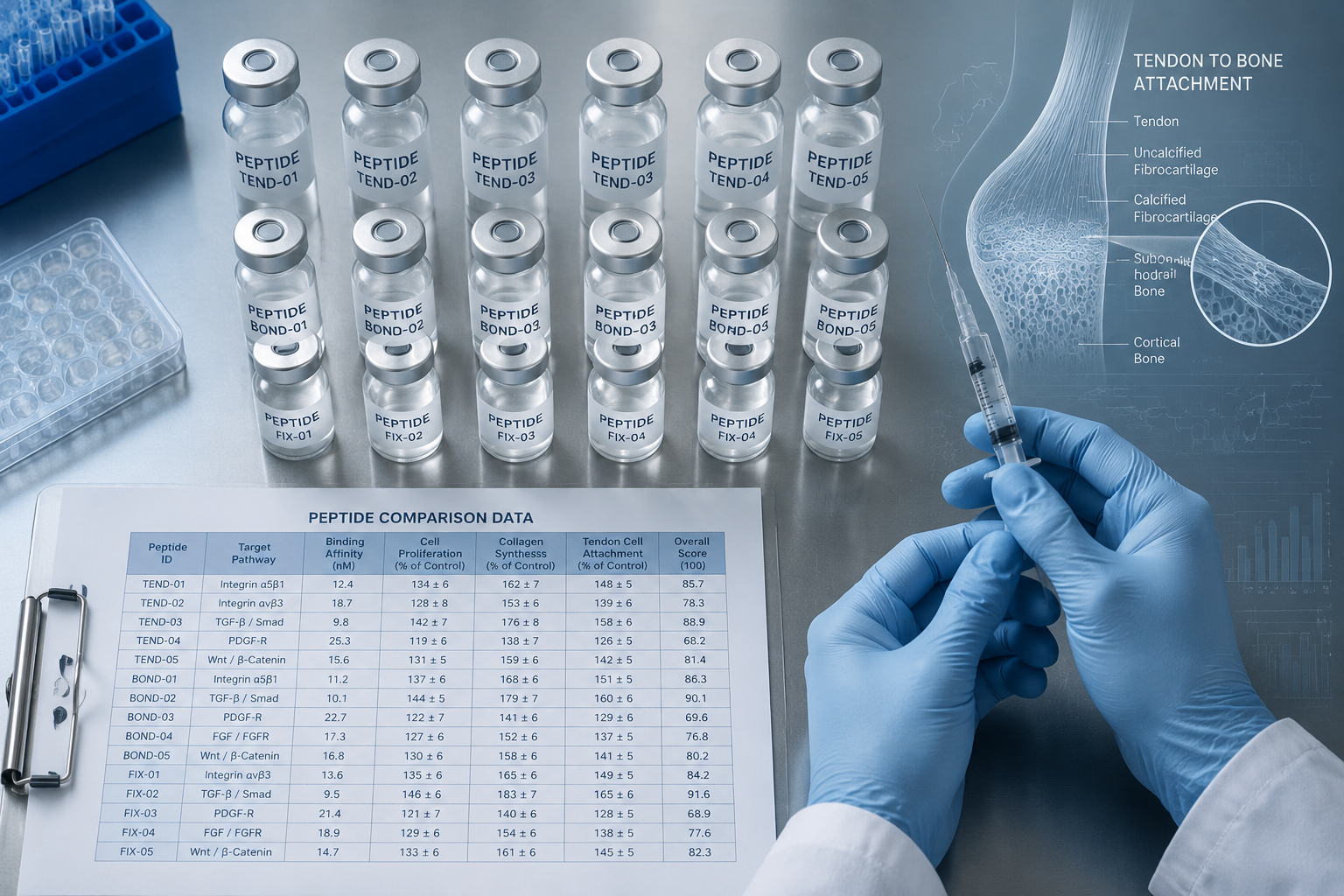
| Peptide | Primary Mechanism | Tissue Target |
|---|---|---|
| BPC-157 | Angiogenesis, collagen synthesis | Tendons, ligaments |
| TB-500 | Actin regulation, cell migration | Tendons, muscle |
| GHK-Cu | MMP regulation, ECM remodeling | Cartilage, connective tissue |
| CJC-1295 | Growth hormone release | Systemic tissue repair |
Researchers are also examining peptide blends that combine multiple compounds for broader musculoskeletal support. Exploring peptide blends for research provides useful context on how synergistic formulations are being studied.
For those wanting a broader view of the recovery peptide landscape, the top healing peptides overview covers additional compounds relevant to tissue repair.
A Note on Purity and Research Standards
The quality of peptides used in research directly affects result reliability. Impure compounds introduce confounding variables. Reviewing peptide purity testing fundamentals is an essential step for any serious researcher working with these compounds.
Conclusion
Peptides for joint and tendon repair represent one of the most actively studied areas in musculoskeletal research in 2026. BPC-157, TB-500, and GHK-Cu each target distinct but complementary repair pathways, making them compelling subjects for connective tissue studies. Researchers should prioritize verified, lab-tested sources and consider how peptide combinations may offer broader tissue support than single compounds alone. The next practical step is reviewing current preclinical data, sourcing from transparent suppliers, and consulting appropriate research protocols before proceeding with any experimental work.
Tags: peptides for joint and tendon repair, BPC-157, TB-500, GHK-Cu, tendon healing peptides, collagen synthesis, connective tissue repair, peptide blends, musculoskeletal recovery, healing peptides, angiogenesis peptides, research peptides