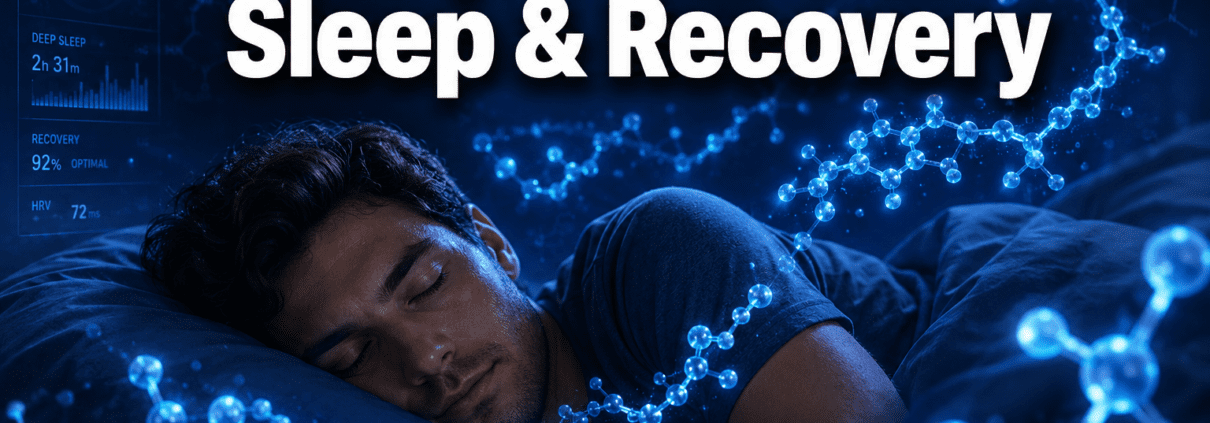
Nearly one in three adults reports getting less than the recommended amount of sleep on a regular basis — and the downstream effects on physical recovery, cognitive function, and long-term health are well documented. As interest in targeted biological interventions grows, peptides for sleep improvement and recovery have emerged as a serious area of research, drawing attention from scientists studying everything from cellular repair to hormonal signaling.
This article explores what the current science suggests about sleep-related peptides, how they may support recovery, and what researchers are examining most closely today.
Key Takeaways
- Certain peptides interact directly with sleep-regulating systems in the body, including growth hormone pathways and circadian signaling.
- Peptides such as DSIP, Epithalon, and GHK-Cu are among the most studied in the context of sleep and recovery research.
- Recovery during sleep is not passive — it is an active biological process that peptides may help optimize at the cellular level.
- Peptide purity and sourcing quality are critical factors in any research context.
- This field is still evolving; all applications remain within the domain of research and are not clinical recommendations.
How Peptides Interact With Sleep and Recovery Biology
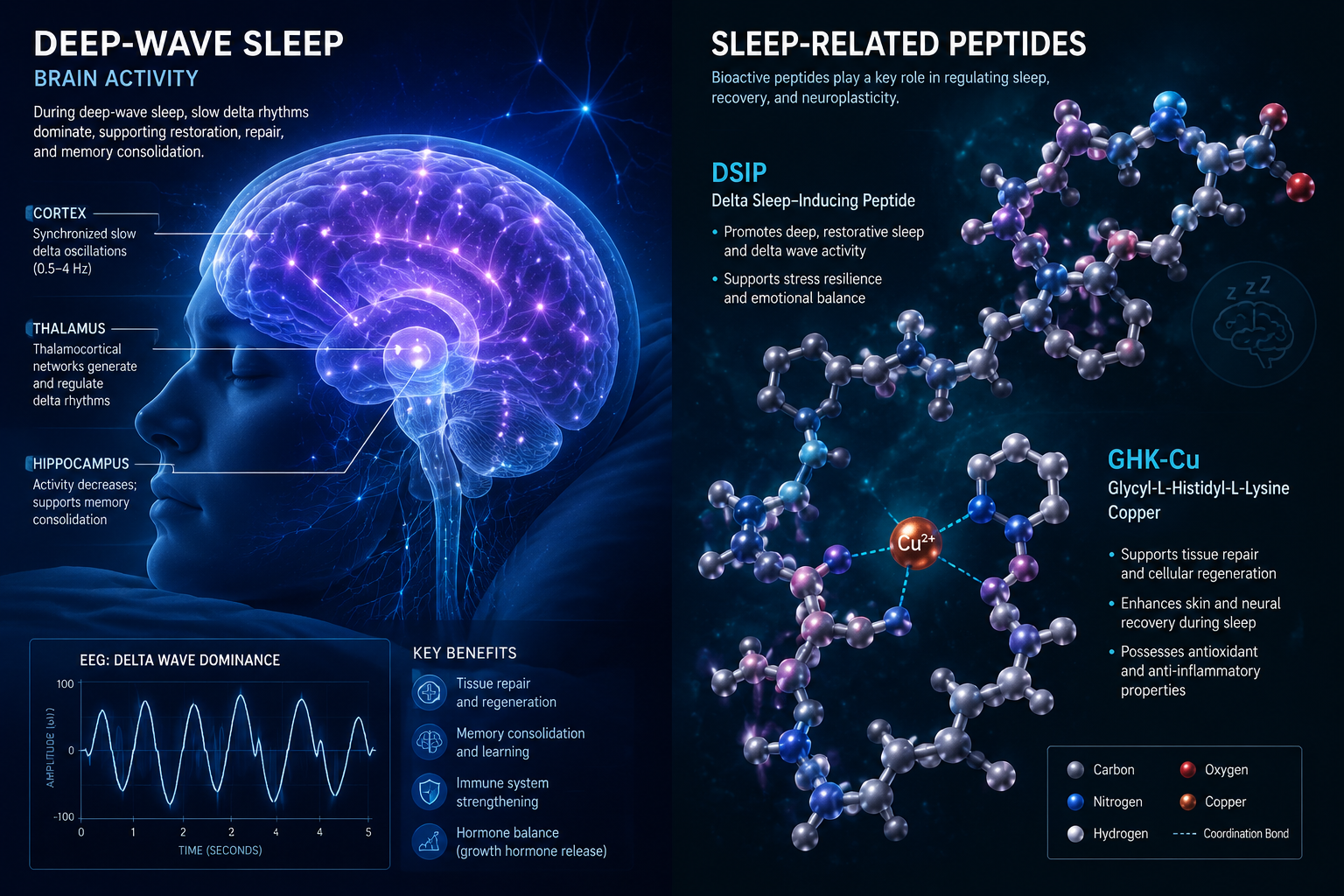
Sleep is the body's primary window for cellular repair, hormonal regulation, and tissue regeneration. During deep slow-wave sleep, growth hormone secretion peaks — and this is precisely where peptides for sleep improvement and recovery become scientifically interesting.
Several peptide classes have been identified as potential modulators of sleep architecture:
Delta Sleep-Inducing Peptide (DSIP)
DSIP is one of the earliest peptides studied in relation to sleep. Research suggests it may influence slow-wave sleep patterns and reduce stress-related hormonal disruption. Its small size allows it to cross the blood-brain barrier, making it a subject of ongoing neurological study.
Epithalon
Epithalon (also spelled Epitalon) is a tetrapeptide associated with the pineal gland and melatonin regulation. Research models suggest it may help normalize circadian rhythm disruptions. It is also studied for its potential role in longevity peptide research, given its effects on telomere-related biology.
GHK-Cu
GHK-Cu (copper tripeptide) is primarily known for tissue repair but also appears in research examining systemic recovery. Its role in cellular signaling makes it relevant to post-sleep recovery processes. More details are available in the GHK-Cu peptide research overview.
Growth Hormone-Releasing Peptides (GHRPs)
Peptides like Ipamorelin and CJC-1295 stimulate growth hormone release, which is tightly linked to sleep-dependent recovery. Research on the CJC-1295 and Ipamorelin GH axis suggests these compounds may amplify the natural nighttime GH pulse, supporting muscle repair and metabolic recovery.
"Recovery is not simply the absence of activity — it is an active, peptide-driven biological process occurring primarily during sleep."
Peptides for Sleep Improvement and Recovery: Key Research Targets
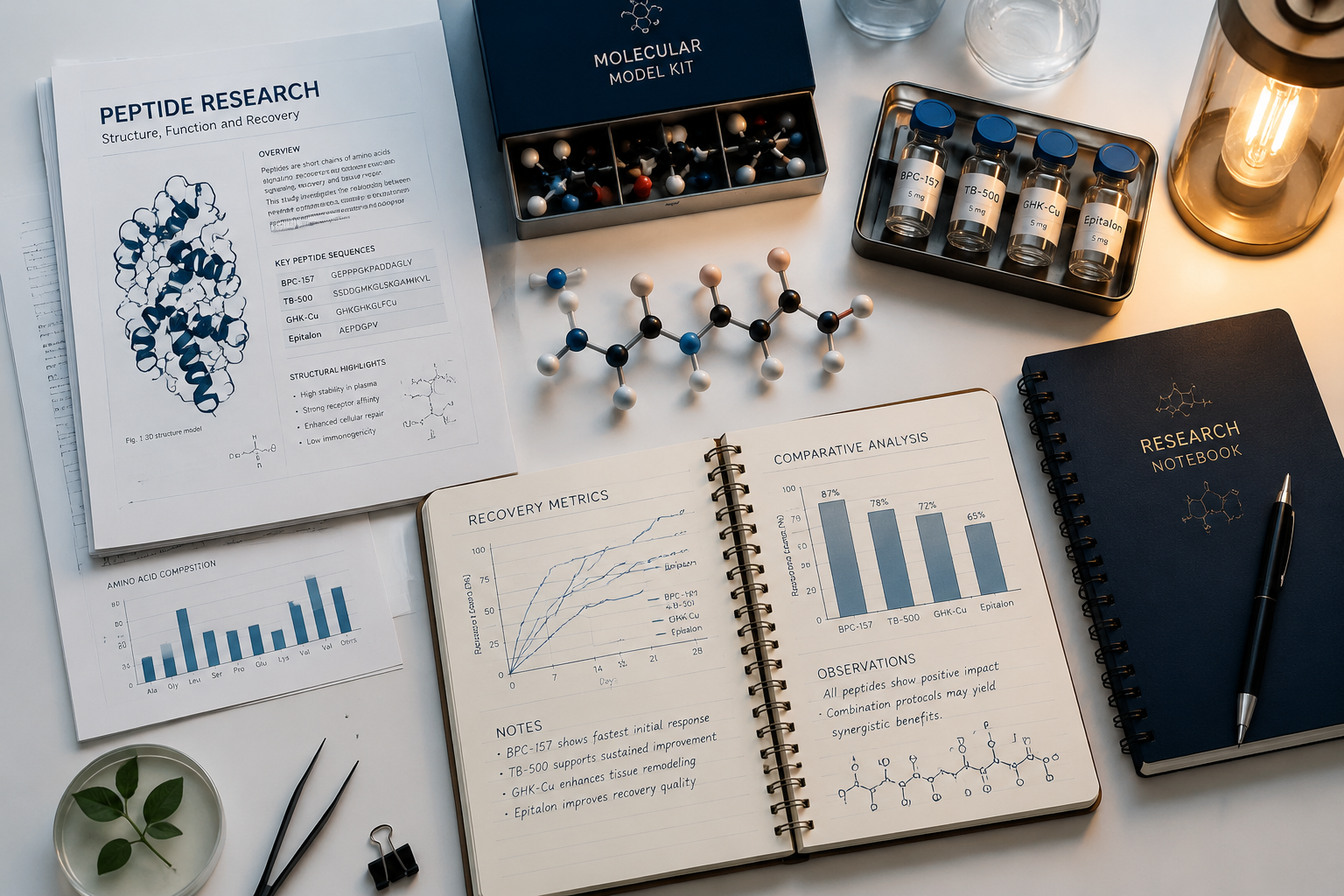
Current research is examining several overlapping mechanisms through which peptides may support sleep and recovery:
| Peptide | Primary Research Focus | Recovery Relevance |
|---|---|---|
| DSIP | Sleep architecture, stress hormones | Neurological recovery |
| Epithalon | Circadian rhythm, melatonin | Anti-aging, sleep quality |
| GHK-Cu | Tissue repair, cellular signaling | Systemic recovery |
| Ipamorelin / CJC-1295 | GH secretion | Muscle and metabolic repair |
| BPC-157 | Tissue healing, gut-brain axis | Physical recovery |
BPC-157 has attracted particular attention for its broad recovery and healing properties, with researchers noting its potential role in tissue biology that overlaps with sleep-dependent repair windows.
For a broader perspective on recovery-focused compounds, the recovery tissue biology overview provides useful foundational context.
Sourcing quality matters enormously in this field. Researchers are advised to review peptide purity testing standards before selecting any compound for study.
Conclusion
The science linking peptides for sleep improvement and recovery to measurable biological outcomes is growing steadily. Compounds like DSIP, Epithalon, GHK-Cu, and GH-axis peptides each represent distinct but complementary research pathways.
Actionable next steps for researchers:
- Review the molecular profiles of the peptides most relevant to your area of study.
- Prioritize verified, third-party tested sources to ensure compound integrity.
- Cross-reference findings with established healing and recovery peptide research to identify synergistic targets.
- Consult current literature and stay updated as this field continues to evolve rapidly in 2026.
Tags: peptides for sleep, sleep recovery peptides, DSIP peptide, Epithalon research, GHK-Cu recovery, growth hormone peptides, BPC-157 healing, peptide research 2026, sleep biology, recovery peptides, Ipamorelin sleep, peptide purity