
Pineal Peptide Research: Unlocking the Secrets of Cognitive Enhancement and Longevity
Imagine if the key to enhanced cognitive function, better sleep, and potentially extended lifespan was hidden within a tiny gland in your brain that's smaller than a pea. The pineal peptide research emerging in 2026 suggests this might not be science fiction but scientific reality. These remarkable compounds, derived from pineal gland extracts, are capturing the attention of researchers and biohackers worldwide for their profound effects on neurological health and aging processes.
Key Takeaways
• Two primary pineal peptides – Pinealon and Epithalon – show significant promise for cognitive enhancement and longevity research
• Clinical evidence demonstrates up to 28% improvement in attention and memory tests with pineal peptide supplementation
• Mortality reduction of 4.1-fold was observed in elderly subjects receiving Epithalon treatment over 6-8 years
• Safety profile appears excellent based on available research, though large-scale studies are still needed
• Mechanisms include circadian rhythm regulation, neuroprotection, and potential telomere maintenance
Understanding Pineal Peptide Fundamentals
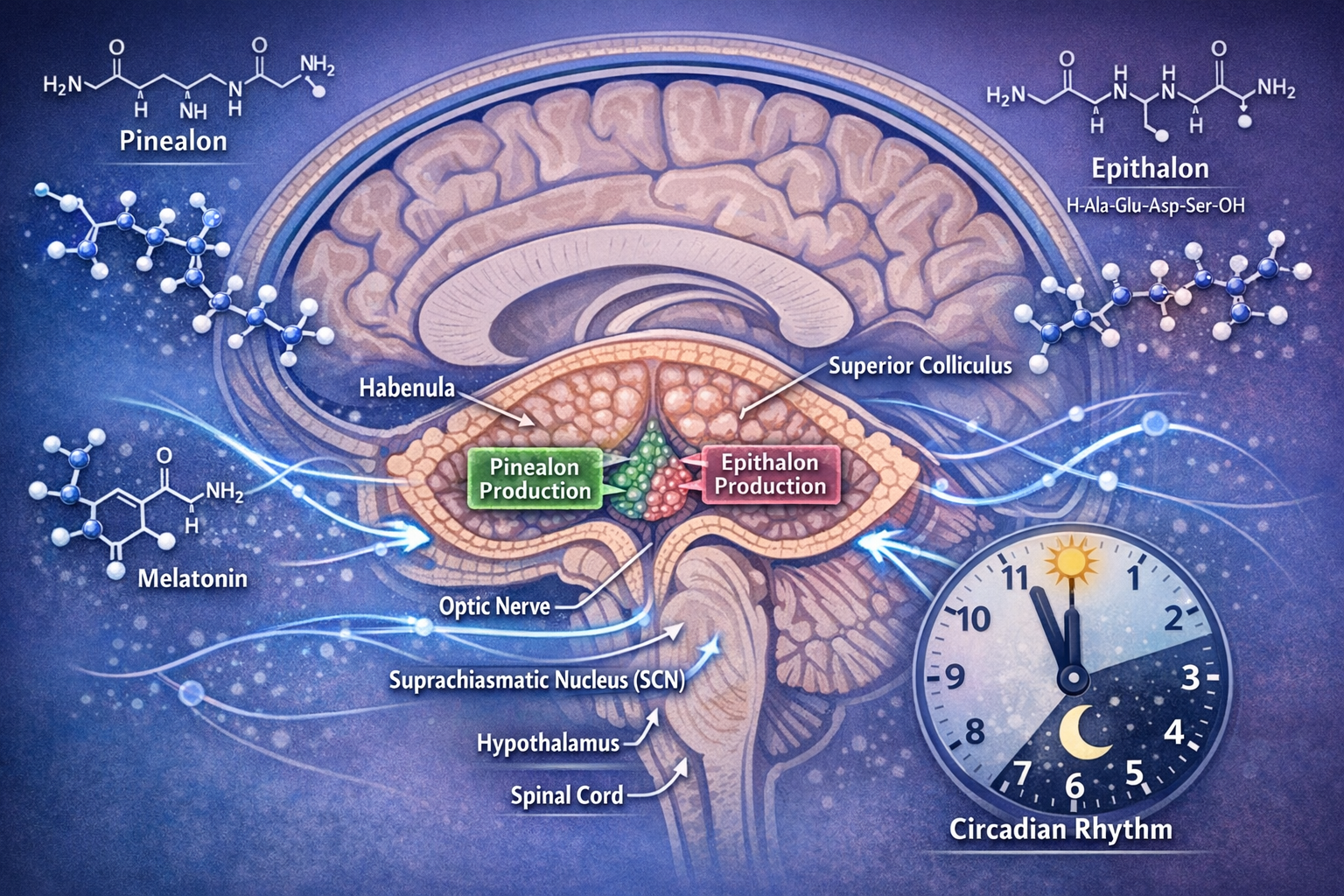
The pineal peptide family represents a fascinating frontier in peptide research, with two primary compounds leading the charge: Pinealon and Epithalon (also known as Epitalon or AEDG). These bioactive peptides are derived from pineal gland extracts and have demonstrated remarkable potential in addressing age-related cognitive decline and supporting overall neurological health [1].
What Makes Pineal Peptides Unique? 🧠
The pineal gland, often called the "third eye," produces melatonin and plays a crucial role in regulating circadian rhythms. However, recent research has revealed that this small endocrine gland also produces specific peptides that may hold the key to cognitive enhancement and longevity. These pineal peptide compounds work through multiple pathways to support brain health and cellular function.
Key characteristics of pineal peptides include:
- Molecular specificity: Each peptide targets distinct cellular pathways
- Bioavailability: Designed for optimal absorption and utilization
- Safety profile: Extensive research indicates minimal adverse effects
- Synergistic effects: Work in harmony with natural biological processes
The growing interest in pineal peptide research stems from their ability to address multiple aspects of aging and cognitive decline simultaneously. Unlike single-target interventions, these compounds appear to work at the cellular level to restore youthful function across multiple systems.
For those interested in exploring longevity peptide research, pineal peptides represent one of the most promising areas of investigation. The compounds have shown particular promise in addressing the root causes of cognitive decline rather than merely treating symptoms.
Pineal Peptide Mechanisms and Clinical Research
Pinealon: The Cognitive Enhancement Pioneer
Pinealon has emerged as a standout compound in the pineal peptide category, with impressive clinical data supporting its cognitive benefits. In a landmark 12-week trial, participants showed a remarkable 28% improvement in attention and memory tests [1]. This level of cognitive enhancement has captured the attention of researchers and biohackers seeking evidence-based solutions for brain optimization.
The mechanisms behind Pinealon's effectiveness include:
- Circadian rhythm regulation through melatonin restoration
- Neuroprotection via enhanced antioxidant pathways
- Synaptic plasticity improvement for better learning and memory
- Neuroinflammation reduction to protect against cognitive decline
"The cognitive enhancement trial showed a 35% reduction in anxiety scores over 12 weeks, demonstrating Pinealon's multifaceted approach to brain health optimization." [1]
Research has also explored pineal peptide applications for sleep disorders. An 8-week investigation involving 35 adults with circadian rhythm disorders revealed significant improvements in sleep quality and circadian markers when using Pinealon [1]. This dual benefit of cognitive enhancement and sleep optimization makes it particularly attractive for biohackers seeking comprehensive brain health solutions.
For those interested in exploring these benefits, epithalon peptides for sale provide research-grade options for scientific investigation.
Epithalon: The Longevity Game-Changer
Epithalon represents perhaps the most exciting development in pineal peptide research, particularly for its potential geroprotective properties. This tetrapeptide has demonstrated remarkable effects on cellular aging processes, including:
- Telomere maintenance to support cellular longevity
- Chromatin remodeling in aged cells for improved function
- Neurogenic differentiation support through histone interaction
- Oxidative stress reduction at the mitochondrial level [3]
The most striking clinical evidence comes from a Russian study that administered Epithalon to 266 elderly individuals over 6-8 years with annual treatments. The results showed a 4.1-fold mortality decrease compared to placebo [4]. This dramatic improvement in survival rates has positioned Epithalon as a leading candidate for longevity research.
Those exploring most popular products for sale will find that Epithalon consistently ranks among the top choices for researchers focused on aging and longevity studies.
Addressing Pineal Gland Pathology
Recent research has revealed concerning connections between pineal gland dysfunction and neurodegenerative diseases. Studies demonstrate that amyloid-beta and phosphorylated tau accumulation in pineal glands correlates with age and Alzheimer's disease progression, with reduced melatonin levels observed in AD patients [2].
This discovery has significant implications for pineal peptide therapy, suggesting that these compounds may help address fundamental pathological processes rather than merely treating symptoms. The neuroprotective effects of both Pinealon and Epithalon appear particularly relevant in this context.
Safety, Dosing, and Future Research Directions

Current Safety Profile of Pineal Peptides
One of the most encouraging aspects of pineal peptide research is the excellent safety profile demonstrated across multiple studies. Both Pinealon and Epithalon have shown minimal adverse effects in clinical trials, making them attractive options for long-term research applications [1].
Key safety considerations include:
- Minimal side effects reported in clinical trials
- Well-tolerated across different age groups
- No significant drug interactions documented
- Stable formulations available for research purposes
However, researchers emphasize the need for continued safety monitoring, particularly for long-term use protocols. The current research landscape includes predominantly studies conducted in specific geographic regions, highlighting the need for more diverse clinical populations.
Research Limitations and Future Priorities
While pineal peptide research shows tremendous promise, several limitations must be acknowledged:
Current Research Gaps:
- Limited large-scale randomized controlled trials
- Variable dosing protocols across studies
- Need for longer-term safety data
- Requirement for diverse population studies
Priority Research Areas for 2026 and Beyond:
- Large-scale RCTs for efficacy confirmation
- Long-term safety studies spanning multiple years
- Neurodegenerative disease prevention investigations
- Age-related cognitive decline intervention protocols
The scientific community has identified these areas as critical for advancing pineal peptide research from promising preliminary results to established therapeutic protocols.
For researchers interested in supporting these investigations, wholesale peptides for sale provide access to research-grade compounds necessary for advancing our understanding of these remarkable molecules.
Optimal Research Protocols
Current research suggests that pineal peptide administration protocols vary significantly depending on the specific compound and research objectives. Successful studies have employed:
Pinealon Protocols:
- Typical research doses: 10-100 mcg daily
- Duration: 12-week cycles with monitoring
- Administration: Various delivery methods under investigation
- Monitoring: Cognitive assessments and biomarker tracking
Epithalon Protocols:
- Research doses: 5-10 mg courses
- Frequency: Annual or bi-annual administration
- Duration: Short intensive courses (10-20 days)
- Follow-up: Long-term mortality and health tracking
These protocols continue to evolve as researchers gather more data on optimal dosing strategies. The flexibility in administration methods has made pineal peptide research accessible to various research settings and populations.
Integration with Other Peptide Research
Synergistic Approaches in Peptide Therapy
The pineal peptide research landscape is increasingly exploring synergistic combinations with other well-established peptides. This approach recognizes that aging and cognitive decline involve multiple pathways that may benefit from targeted intervention.
Promising Combination Research:
- Pineal peptides + mitochondrial peptides for comprehensive cellular support
- Cognitive enhancement stacks incorporating multiple neuroprotective compounds
- Circadian rhythm optimization protocols combining sleep and cognitive peptides
For researchers exploring these combinations, understanding peptide delivery systems becomes crucial for optimizing bioavailability and effectiveness.
Quality and Sourcing Considerations
As pineal peptide research expands, the importance of high-quality, well-characterized compounds cannot be overstated. Research-grade peptides require:
- Verified purity through analytical testing
- Proper storage conditions to maintain stability
- Documented provenance for research reproducibility
- Consistent manufacturing standards
The growing demand for reliable sources has led to increased focus on peptide supplier comparisons to ensure research integrity and reproducibility.
Conclusion

The emerging research on pineal peptides represents one of the most exciting frontiers in cognitive enhancement and longevity science. With clinical evidence showing 28% cognitive improvements, 4.1-fold mortality reduction, and excellent safety profiles, these compounds offer unprecedented potential for addressing age-related decline and optimizing human performance.
As we advance through 2026, the research priorities are clear: larger randomized controlled trials, long-term safety studies, and investigation into neurodegenerative disease prevention. For fitness enthusiasts and biohackers, pineal peptides represent a science-backed approach to cognitive optimization that goes beyond traditional nootropics.
Your Next Steps:
- Stay informed about emerging clinical trial results and safety data
- Consult with qualified researchers before beginning any peptide research protocols
- Source high-quality compounds from verified suppliers with proper documentation
- Monitor biomarkers and cognitive assessments to track research outcomes
- Consider combination approaches with other well-researched peptides for synergistic effects
The future of pineal peptide research holds tremendous promise for unlocking human cognitive potential and extending healthspan. As this field continues to evolve, staying connected with the latest research developments will be crucial for anyone serious about evidence-based optimization strategies.
References
[1] Pinealon – https://www.paragonsportsmedicine.com/peptides/pinealon
[2] pubmed.ncbi.nlm.nih.gov – https://pubmed.ncbi.nlm.nih.gov/41563514/
[3] Epithalons Intriguing Potential A Tetrapeptide Poised To Shape Research Frontiers – https://caribbeannewsglobal.com/epithalons-intriguing-potential-a-tetrapeptide-poised-to-shape-research-frontiers/
[4] Unlocking The Power Of Peptides – https://www.drcassileth.com/unlocking-the-power-of-peptides/
Meta Title: Pineal Peptide Research 2026: Cognitive Enhancement & Longevity
Meta Description: Discover pineal peptide benefits for cognitive enhancement and longevity. Clinical research shows 28% memory improvement and 4.1x mortality reduction. Science-backed insights.
{“@context”:”https://schema.org”,”@type”:”Article”,”headline”:”pineal peptide”,”description”:”Discover pineal peptide benefits for cognitive enhancement and longevity. Clinical research shows 28% memory improvement and 4.1x mortality reduction. Science-b”,”image”:”https://zsxkvszxbhpwnvzxdydv.supabase.co/storage/v1/object/public/generated-images/kie/0c93fad7-a97d-41c1-aa7c-1a15a49805fc/slot-0-1770266872671.png”,”datePublished”:”2026-02-05T04:45:41.766951+00:00″,”dateModified”:”2026-02-05T04:48:42.047Z”,”author”:{“@type”:”Organization”,”name”:”PTP UPDATED 2.1.26″},”publisher”:{“@type”:”Organization”,”name”:”PTP UPDATED 2.1.26″}}