

Nearly 43% of women and 31% of men report experiencing some form of sexual dysfunction during their lifetime, yet the conversation around targeted solutions remains limited. PT-141 (Bremelanotide) for sexual health and libido has emerged as one of the more studied peptide compounds in this space, drawing interest from researchers and clinicians alike for its unique mechanism of action.
Unlike many conventional approaches that work through the vascular system, PT-141 operates directly within the central nervous system — a distinction that sets it apart in the peptide research landscape.
Key Takeaways
- PT-141 (Bremelanotide) is a synthetic peptide that activates melanocortin receptors in the brain to support sexual arousal signaling.
- It was originally derived from Melanotan II and has been studied in both male and female subjects.
- The compound works centrally, not peripherally, meaning it targets the brain rather than blood flow.
- Research interest has grown significantly, particularly around its potential for hypoactive sexual desire.
- Purity and sourcing quality are critical factors when evaluating PT-141 for research purposes.
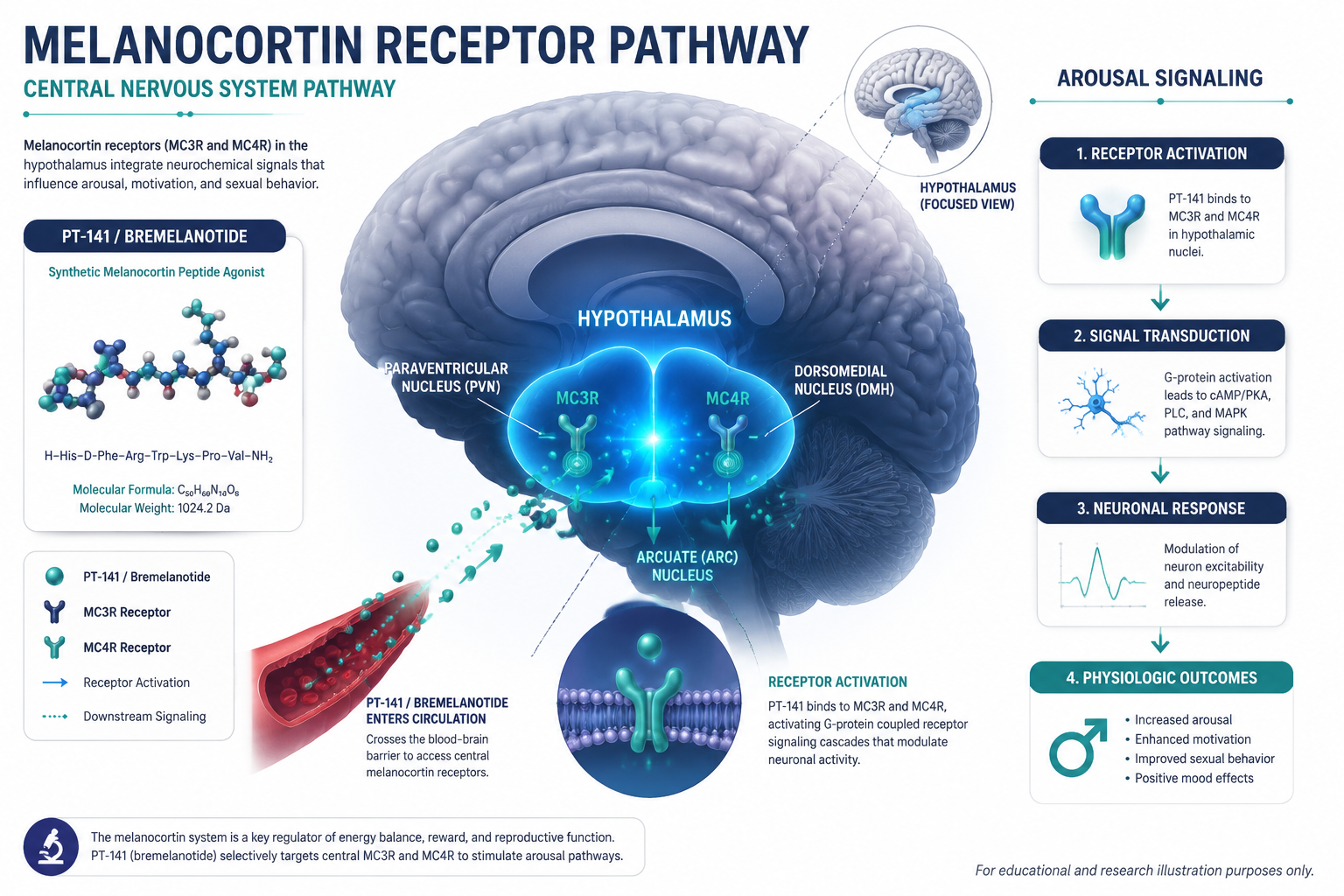
How PT-141 (Bremelanotide) Works for Sexual Health and Libido
The Melanocortin Pathway
PT-141, also known as Bremelanotide, is a cyclic heptapeptide derived from Melanotan II. Its primary mechanism involves binding to melanocortin receptors — specifically MC3R and MC4R — located in the hypothalamus. This activation triggers downstream signaling associated with sexual arousal and desire.
This central nervous system approach is notably different from phosphodiesterase inhibitors, which target blood flow. Because PT-141 works at the neurological level, researchers have explored its relevance for both male and female sexual health outcomes.
"PT-141 targets arousal at the source — the brain's own signaling network — rather than addressing only the physical mechanics of sexual response."
Key Research Findings
Studies have examined PT-141 across several dimensions:
| Research Area | Observed Focus |
|---|---|
| Female hypoactive sexual desire | Arousal and desire signaling |
| Male erectile function | Central arousal pathway activation |
| Neurological safety profile | Receptor selectivity and tolerability |
| Administration methods | Subcutaneous and intranasal delivery |
Researchers have noted that the compound's effects appear relatively rapid in onset, with some studies observing responses within 45 to 60 minutes of administration. For those interested in exploring related peptide mechanisms, the PT-141 central arousal research overview provides additional context on receptor-level activity.
Those exploring broader peptide research may also find value in reviewing Gonadorelin and GnRH pulsatility research, which examines related hormonal signaling pathways that intersect with reproductive and sexual health.
Sourcing and Research Considerations for PT-141

Purity Standards Matter
When evaluating PT-141 (Bremelanotide) for sexual health and libido research, compound purity is non-negotiable. Researchers should prioritize suppliers that provide third-party verified Certificates of Analysis. Reviewing a supplier's COA documentation is a critical first step before any research application.
Impure compounds introduce confounding variables that undermine research integrity. A purity threshold of 98% or higher is generally considered the minimum standard for reliable peptide research.
Related Peptides Worth Exploring
PT-141 does not exist in isolation. Researchers studying sexual health and neuroendocrine function often examine it alongside other compounds. Some relevant areas include:
- Hormonal axis support — peptides like those explored in Ipamorelin research that influence growth hormone pulsatility
- Cellular protection — compounds such as Humanin for cellular protection that support mitochondrial and systemic resilience
- Immune and tissue health — explored through resources like the comprehensive peptide catalog
For researchers building a broader understanding of peptide science, the PT-141 product research page offers detailed compound specifications and sourcing information.
Conclusion
PT-141 (Bremelanotide) for sexual health and libido represents a compelling area of ongoing peptide research, particularly for its central nervous system mechanism. Researchers in 2026 continue to explore its receptor-level activity, delivery methods, and potential applications across both male and female sexual health contexts.
Actionable next steps for researchers:
- Review third-party COA documentation before sourcing any PT-141 compound.
- Study the melanocortin receptor pathway to better contextualize research findings.
- Explore related neuroendocrine peptides to build a comprehensive research framework.
- Consult the latest peptide research updates to stay current with emerging findings.
Tags: PT-141, Bremelanotide, sexual health peptides, libido research, melanocortin receptors, peptide research, bremelanotide mechanism, hypoactive sexual desire, MC4R activation, peptide purity, central arousal pathway, research peptides