
Unlocking Metabolic Potential: A Deep Dive into the Retatrutide MOTS-c Stack in 2026
The landscape of metabolic research is continuously evolving, bringing forth novel compounds with unprecedented potential. Among the most discussed advancements in recent years is retatrutide, a groundbreaking triple agonist peptide, and the intriguing mitochondrial-derived peptide, MOTS-c. Individually, these compounds have shown significant promise in laboratory and preclinical settings for addressing complex metabolic challenges. However, the concept of a "retatrutide mots c stack" has captured the attention of researchers and biohacking communities, raising questions about its synergistic potential for weight loss, metabolic optimization, and overall physiological enhancement. This comprehensive article delves into the current understanding of the retatrutide mots c stack, exploring the mechanisms of each component, the theoretical basis for their combined use, and the critical considerations for researchers in 2026.
Key Takeaways
- Retatrutide is a potent triple agonist (GIP, GLP-1, glucagon) in Phase 3 clinical trials for obesity and type 2 diabetes, showing superior weight loss results in studies.
- MOTS-c is a mitochondrial-derived peptide known for improving insulin sensitivity, enhancing exercise capacity, and promoting metabolic homeostasis in preclinical research.
- The theoretical retatrutide mots c stack aims to combine retatrutide's robust metabolic and appetite-suppressing effects with MOTS-c's mitochondrial and exercise performance benefits for enhanced outcomes.
- Despite growing interest, the retatrutide mots c stack lacks formal clinical trial data and regulatory approval for combined use, necessitating caution in research applications.
- Researchers must prioritize safety, purity, and adherence to ethical guidelines when exploring novel peptide combinations in a controlled laboratory setting.
Retatrutide: A Triple Agonist Revolution in Metabolic Research
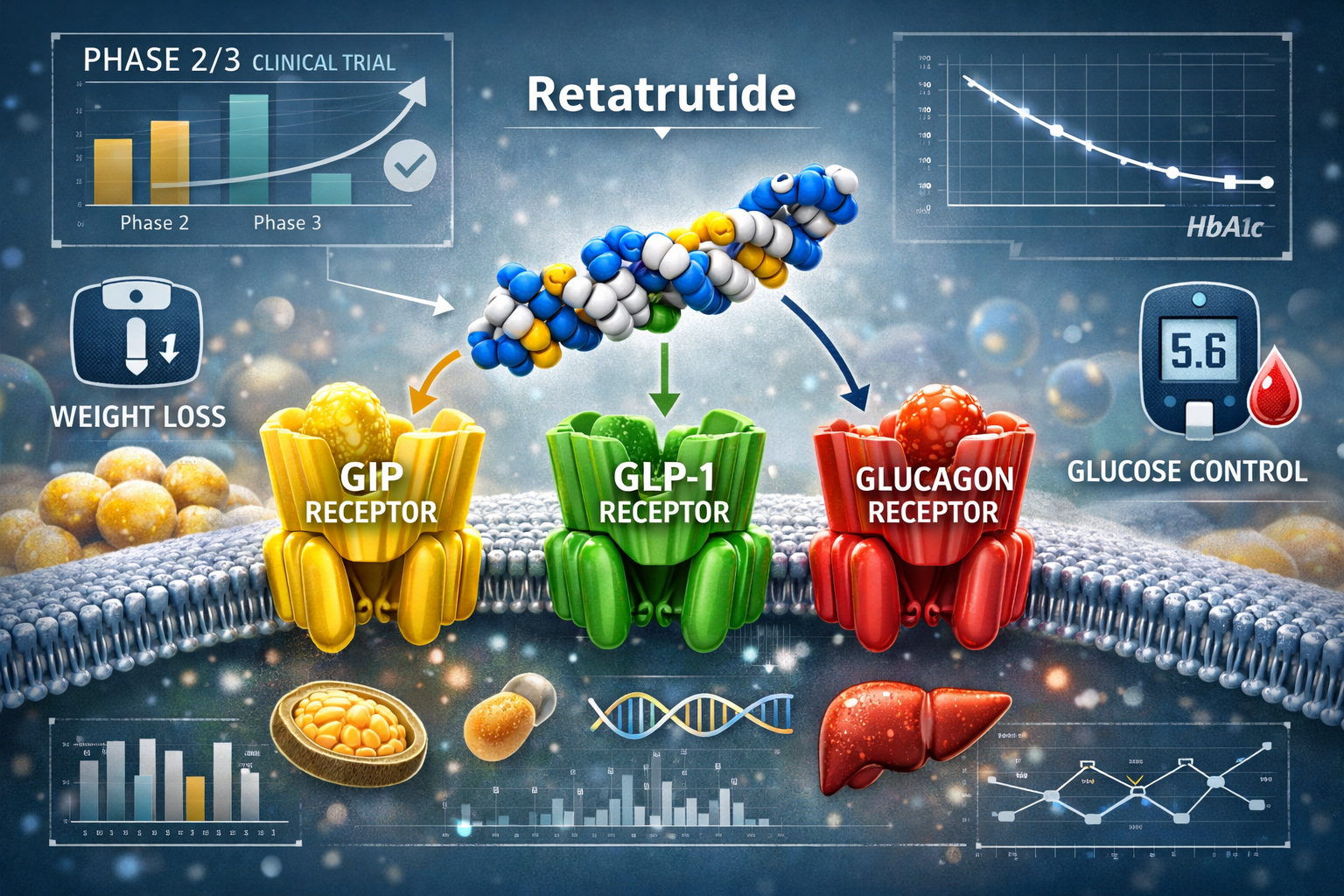
Retatrutide, developed by Eli Lilly, represents a significant leap forward in the treatment of obesity and type 2 diabetes. Unlike earlier generations of GLP-1 receptor agonists or even dual agonists like tirzepatide, retatrutide is a triple agonist peptide. This means it simultaneously activates three crucial hormone receptors: glucose-dependent insulinotropic polypeptide (GIP), glucagon-like peptide-1 (GLP-1), and glucagon receptors. This multi-pronged approach offers a more comprehensive modulation of metabolic pathways, leading to profound effects on glucose regulation, appetite suppression, and energy expenditure.
In Phase 2 clinical trials, retatrutide demonstrated remarkable efficacy in weight loss, achieving an average reduction of approximately 24% of body weight at its highest dose (12 mg) over 48 weeks. This figure significantly surpasses the weight loss observed with placebo and even dual agonists, positioning retatrutide as one of the most effective anti-obesity medications currently in development. Its mechanism involves not only reducing appetite and increasing satiety but also potentially enhancing energy expenditure through glucagon receptor activation, making it a powerful tool in the fight against metabolic dysfunction. As of 2026, retatrutide is still in Phase 3 clinical trials, with Eli Lilly continuing to study its wide-ranging effects on obesity and related conditions, eagerly anticipating potential FDA approval in the future.
The primary mechanism of action for retatrutide is its ability to mimic natural incretin hormones, which are released after eating and play a vital role in glucose homeostasis. By activating GIP and GLP-1 receptors, retatrutide stimulates insulin secretion in a glucose-dependent manner, suppresses glucagon release, slows gastric emptying, and reduces food intake. The added activation of the glucagon receptor is thought to contribute to increased energy expenditure, further enhancing its weight-reducing effects. These complex interactions highlight why researchers are so keenly interested in this compound.
Common side effects observed in clinical trials, similar to other GLP-1 receptor agonists, primarily involve gastrointestinal symptoms such as nausea, diarrhea, vomiting, and constipation. Most of these adverse events were reported as mild to moderate in severity, suggesting a generally manageable safety profile within supervised clinical settings. However, any novel peptide or combination, such as the retatrutide mots c stack, demands rigorous scrutiny regarding potential cumulative side effects and interactions. Understanding the individual compound profiles is the first step in assessing the viability of any stacking approach.
The Role of MOTS-c in Metabolic Health
MOTS-c, or Mitochondrial Open Reading Frame of the 12S rRNA-c, is a fascinating mitochondrial-derived peptide composed of 16 amino acids. Unlike many other peptides, MOTS-c is encoded within the mitochondrial genome rather than the nuclear genome, underscoring its unique biological origin and functions. Research into MOTS-c has illuminated its significant potential in improving metabolic health, particularly regarding insulin sensitivity and exercise capacity.
Preclinical studies have consistently shown that MOTS-c plays a crucial role in maintaining metabolic homeostasis. It is believed to improve glucose metabolism and increase insulin sensitivity primarily through the activation of AMP-activated protein kinase (AMPK), a master regulator of cellular energy. By activating AMPK, MOTS-c can promote glucose uptake in muscle cells, enhance fatty acid oxidation, and reduce lipid accumulation in various tissues. This makes it a compelling candidate for research into conditions such as insulin resistance, type 2 diabetes, and age-related metabolic decline. For researchers interested in exploring similar avenues, 5-amino-1mq is another peptide of interest in metabolic research.
Beyond glucose metabolism, MOTS-c has also been linked to enhanced exercise capacity and overall physical performance in research models. This effect is thought to stem from its influence on mitochondrial biogenesis and function, essentially helping cells produce energy more efficiently. As individuals age, mitochondrial function often declines, contributing to various metabolic and age-related issues. MOTS-c's potential to counteract these declines makes it a subject of intense research interest in the anti-aging and longevity fields. Researchers exploring these areas might also look into 5-amino-1mq peptides for sale to understand broader metabolic interventions.
While human clinical data for MOTS-c remains limited as of 2026, the preclinical findings are robust and encouraging. In research settings, MOTS-c is typically administered via subcutaneous injection, with dosing protocols varying widely in the literature, often ranging from 5-15 mg administered 2-3 times per week. It is critical for researchers to understand that these protocols are experimental and not standardized clinical guidelines. The ongoing exploration of mitochondrial-derived peptides like MOTS-c signifies an emerging area of metabolic research with vast potential.
The Theoretical Basis for the Retatrutide MOTS-c Stack
The concept of combining peptides, often referred to as a "stack," is not new in research and biohacking communities. The theoretical rationale behind the retatrutide mots c stack hinges on the idea of achieving synergistic effects that might surpass the benefits of either compound used alone. Researchers propose that retatrutide's powerful appetite suppression and broad metabolic impact through incretin pathways could be complemented by MOTS-c's unique contributions to mitochondrial function, insulin sensitivity, and exercise performance. This could lead to a more comprehensive and perhaps optimized approach to body composition improvement and metabolic health.
Imagine a research scenario where retatrutide effectively curbs caloric intake and modulates central metabolic processes, leading to significant fat loss. Simultaneously, MOTS-c works at a cellular level, improving the efficiency of energy production, enhancing the ability of muscles to utilize glucose, and potentially increasing the capacity for physical activity. This dual action could, in theory, accelerate fat loss, preserve lean muscle mass, and improve overall metabolic resilience. The potential for such a comprehensive approach makes the mots c retatrutide stack a compelling subject for advanced laboratory studies. Researchers might also be interested in other synergistic combinations, such as the synergy of LL37 and MOTS-c.
For instance, consider a study focused on improving insulin resistance. Retatrutide directly impacts glucose homeostasis through its triple agonist action. When combined with MOTS-c, which has been shown to activate AMPK and improve insulin sensitivity at the cellular level, the combined effect could be more potent than either peptide alone. This creates a fascinating hypothesis for researchers: can you stack mots c with retatrutide to achieve superior metabolic outcomes, particularly in models of metabolic dysfunction? The promise of this combined approach is what drives current interest in the retatrutide mots c stack.
The precise mechanisms by which retatrutide and MOTS-c might interact are still largely theoretical and require extensive investigation. It is hypothesized that MOTS-c could mitigate some of the metabolic adaptations that occur during significant weight loss, such as potential reductions in resting metabolic rate, by enhancing mitochondrial efficiency. This could provide a sustained metabolic advantage, making the retatrutide mots c stack a particularly interesting area for long-term metabolic research. When considering novel compounds for research, understanding their individual properties, as seen with 5 amino 1 mq, is paramount.
Navigating the Challenges and Risks of Peptide Stacking
While the theoretical benefits of the retatrutide mots c stack are intriguing, it is crucial to approach such combinations with a clear understanding of the challenges and risks involved. The primary concern is the lack of formal clinical trial data for combined use. Neither retatrutide nor MOTS-c are currently FDA-approved for general use, and their combined effects, safety profile, and optimal dosing protocols have not been established through rigorous human trials. This means that any exploration of the mots c and retatrutide stack in research settings must be conducted with extreme caution and under strict ethical guidelines.
One significant challenge lies in predicting potential unknown drug interactions. Peptides can have complex physiological effects, and combining two or more could lead to unforeseen synergistic or antagonistic interactions. There's a risk of cumulative side effects, where the adverse reactions of each peptide might intensify when used together. For example, if both peptides independently cause gastrointestinal upset, their combination could exacerbate these symptoms. Researchers exploring advanced peptide applications need reliable sources, such as Pure Tested Peptides, for quality control.
The absence of standardized dosing protocols for a retatrutide mots c stack is another major hurdle. While individual research doses for MOTS-c exist, and retatrutide is progressing through clinical trials with established dose ranges, combining them introduces a new variable. Determining safe and effective ratios and administration schedules for the stack would require extensive preclinical investigation before any human application could even be considered. This highlights the critical need for meticulous experimental design when exploring combinations like nmn + 5 amino 1-mq or similar metabolic stacks.
Moreover, the regulatory landscape for research peptides is complex. Compounds like MOTS-c are often obtained from non-pharmaceutical sources for research purposes. This raises significant concerns about quality control, purity verification, and consistency. When considering the can you stack mots c with retatrutide question, researchers must prioritize obtaining high-purity, laboratory-grade compounds from reputable suppliers to ensure the validity and safety of their studies. This attention to detail extends to understanding the specifics of 5 amino 1 mq dosage.
Ethical and Safety Considerations in Research
For any researcher considering the retatrutide mots c stack, ethical considerations and safety protocols must be paramount. The use of research peptides outside of clinical trials necessitates a robust framework of oversight. Without proper medical supervision and regulatory approval for combined use, the risks associated with such experimentation are significantly elevated. This is especially true for powerful compounds like retatrutide, which is still undergoing rigorous clinical development.
The potential for off-target effects and long-term consequences of a mots c peptide stack remains largely unknown. While both peptides show promise individually, their combined impact on various organ systems, hormonal balance, and cellular pathways requires thorough investigation. Researchers must design studies that carefully monitor a wide range of physiological markers to detect any unexpected adverse outcomes. For example, when considering 5-amino-1 mq dosing, understanding the full physiological impact is crucial.
Purity and source verification are non-negotiable. Researchers must ensure that any peptides acquired for studies are of the highest quality, free from contaminants, and accurately labeled. This often means working with suppliers who provide detailed Certificates of Analysis (CoAs) and engage in third-party testing. Without such assurances, research findings can be compromised, and safety risks heightened. Reliable sources for research-grade peptides are essential for responsible investigation.
Furthermore, it is critical to emphasize that the information presented here is for research and informational purposes only and should not be interpreted as medical advice or a recommendation for personal use. Peptides discussed, including those in the retatrutide mots c stack, are research chemicals and not approved for human consumption. Any studies involving these compounds must adhere to stringent laboratory protocols and be conducted by qualified professionals in controlled environments.
Future Directions for the Retatrutide MOTS-c Stack

The scientific community’s interest in advanced metabolic interventions, especially combinations like the retatrutide mots c stack, is only growing. Future research will undoubtedly focus on elucidating the exact mechanisms of interaction between these two powerful peptides. This will involve detailed in vitro and in vivo studies to map out molecular pathways, assess cellular responses, and identify any synergistic or antagonistic effects at a fundamental level. Understanding these interactions is key to validating the theoretical benefits of such a stack.
One promising area of future research involves animal models designed to mimic human metabolic conditions, such as diet-induced obesity or insulin resistance. Such studies could provide valuable data on the efficacy of the mots c stack in improving body composition, glucose control, and overall metabolic health in a living system. Researchers would carefully monitor weight loss, changes in body fat and lean mass, glucose tolerance, insulin sensitivity, and markers of mitochondrial function. This kind of systematic research is what transforms theoretical possibilities into evidence-based insights. Further research on related peptides can be found at 5 amino 1 mq.
Another crucial aspect will be the investigation of long-term safety and potential side effects of the retatrutide mots c stack. Any novel combination requires comprehensive toxicology studies to identify potential organ damage, unexpected immune responses, or other adverse effects that might not be apparent in short-term observations. This is a critical step before any consideration of human trials for such a stack could ever be contemplated. The ethical implications of peptide research are paramount, and ensuring safety in all stages is vital.
The ongoing development of retatrutide itself will also heavily influence future research into its combinations. As it progresses through Phase 3 clinical trials and potentially gains regulatory approval for specific indications, more detailed information about its long-term safety and efficacy in humans will become available. This data will serve as a foundational baseline for any future research into its combination with other peptides like MOTS-c. The peptide research community is always looking for high-quality resources, and a site like Pure Tested Peptides serves as a valuable hub for information and products.
The Broader Landscape of Peptide Research in 2026
Beyond the specific retatrutide mots c stack, the year 2026 continues to see an explosion of interest and innovation in peptide research. Mitochondrial-derived peptides like MOTS-c represent just one facet of this burgeoning field, with ongoing studies exploring their roles in aging, neuroprotection, and various chronic diseases. The elegance of peptides as highly specific signaling molecules makes them attractive targets for developing new therapeutic strategies. The continued exploration of peptides, including the versatile 5 amino 1 mq peptide, holds immense promise for addressing complex health challenges.
The development of new peptide synthesis techniques and delivery methods is also accelerating, making peptides more accessible and stable for research applications. This includes advancements in oral peptide formulations, sustained-release technologies, and targeted delivery systems, which could significantly impact the future viability and practicality of peptide stacks. The drive towards enhancing peptide stability and bioavailability is a major theme in current research.
The scientific community is also becoming increasingly sophisticated in its understanding of the complex interplay between different biological pathways. This holistic view is essential when considering multi-component interventions like a mots c stack or a retatrutide mots c stack. The goal is to move beyond single-target therapies to more comprehensive approaches that address the multifaceted nature of metabolic disorders and age-related conditions. This includes careful consideration of individual differences in response, often referred to as personalized peptide research. For those seeking comprehensive insights into various peptides, visiting a resource like www.puretestedpeptides.com is recommended.
Finally, the regulatory environment for research peptides is continuously evolving. As more research compounds move closer to clinical application, there will likely be increased scrutiny and a greater demand for robust preclinical data and safety assurances. Researchers must remain informed about these changes and uphold the highest standards of scientific rigor and ethical conduct in all their investigations. The future of the retatrutide mots c stack, and peptide research in general, depends on responsible and meticulous scientific inquiry. The discussions on platforms like 5 amino 1 mq Reddit often highlight the public's keen interest in these advancements.
Conclusion
The exploration of a "retatrutide mots c stack" represents a fascinating frontier in metabolic research for 2026. Individually, retatrutide stands as a powerful triple agonist with demonstrated efficacy in weight loss and metabolic regulation, currently in advanced clinical trials. MOTS-c, a unique mitochondrial-derived peptide, offers compelling preclinical evidence for improving insulin sensitivity and exercise capacity. The theoretical synergy of combining these two compounds for enhanced body composition and metabolic health is genuinely compelling, suggesting a potential for more comprehensive and profound physiological benefits than either peptide alone.
However, it is crucial to reiterate that the retatrutide mots c stack remains firmly within the realm of theoretical and early-stage research. There is no formal clinical trial data supporting its combined use, nor has it received regulatory approval. Researchers investigating this stack must prioritize rigorous scientific methodology, ethical considerations, and an unwavering commitment to safety. This includes sourcing high-purity research-grade peptides, designing comprehensive preclinical studies to understand interactions and potential side effects, and adhering to all applicable research guidelines.
The future of metabolic interventions is likely to involve increasingly sophisticated multi-target approaches. While the retatrutide mots c stack holds significant theoretical promise, its true potential and safety profile can only be unveiled through meticulous, responsible, and well-controlled laboratory research. For those involved in advanced peptide research, a steadfast dedication to scientific integrity will be the key to unlocking the next generation of metabolic advancements.
Actionable Next Steps for Researchers:
- Prioritize Purity and Quality: Always procure research peptides from reputable suppliers who provide detailed Certificates of Analysis to ensure purity and identity.
- Consult Existing Literature: Thoroughly review all available preclinical data on both retatrutide and MOTS-c individually before designing combination studies.
- Design Robust Preclinical Studies: Develop detailed experimental protocols to evaluate potential interactions, efficacy, and safety of the retatrutide mots c stack in controlled laboratory models.
- Adhere to Ethical Guidelines: Ensure all research is conducted in strict accordance with ethical guidelines and regulatory standards for novel research compounds.
- Monitor for Unexpected Effects: Implement comprehensive monitoring protocols to detect any unforeseen side effects or physiological changes during the course of your research.