
The Complete Selank Dosage Chart: Research-Based Guidelines for 2025
Imagine having access to a synthetic peptide that has shown promise in over two decades of research for cognitive enhancement and anxiety reduction, yet many researchers struggle to find reliable dosage information. The selank dosage chart serves as a critical reference tool for understanding proper administration protocols in research settings, bridging the gap between laboratory findings and practical application.
Key Takeaways
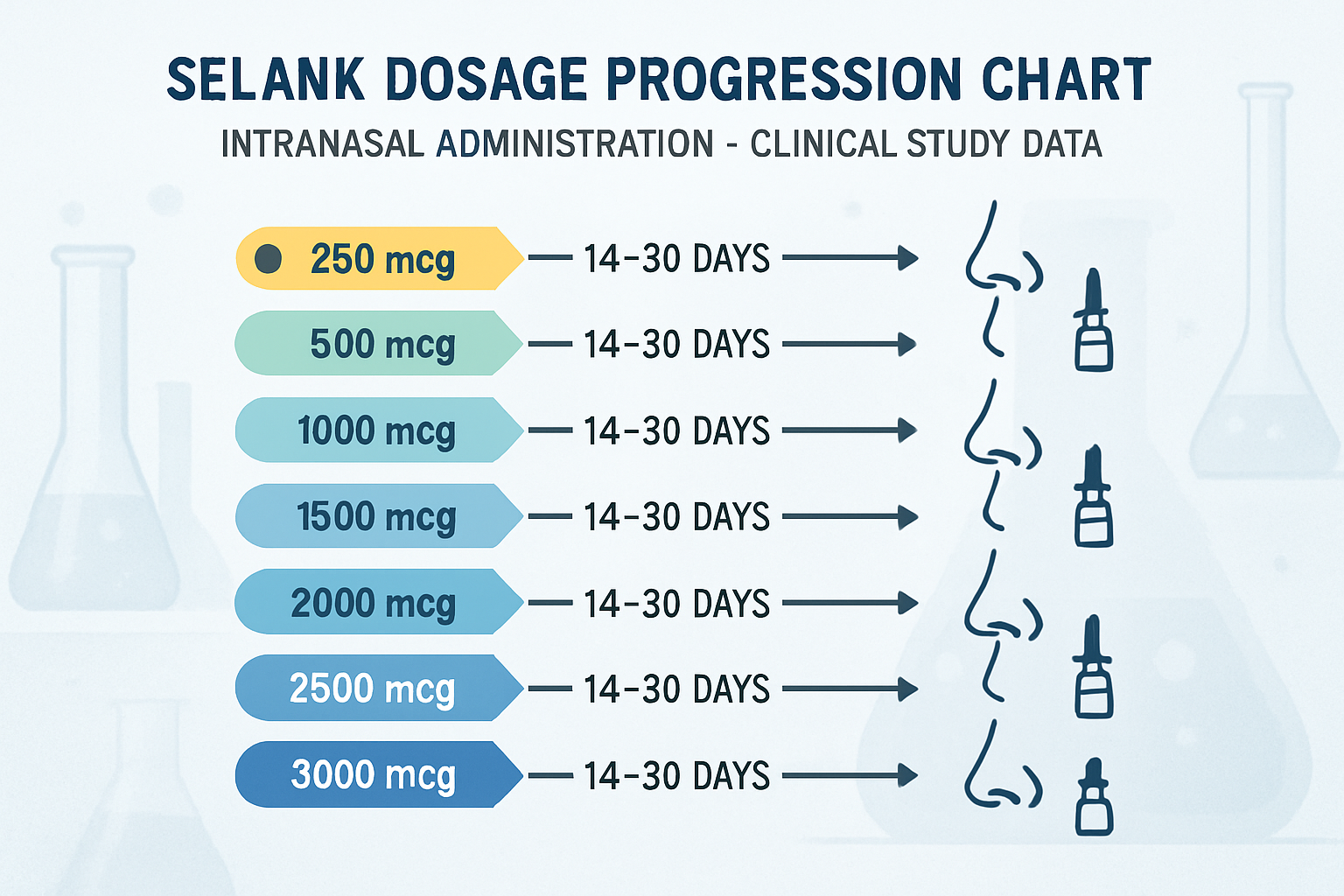
• Standard research dosages range from 250 mcg to 3000 mcg daily, with most studies utilizing 400-600 mcg administered 2-3 times per day
• Intranasal administration remains the most studied delivery method, typically involving 2-3 drops per nostril containing 150-300 mcg each
• Treatment cycles generally span 14-30 days with equal-length breaks between cycles to prevent potential tolerance development
• Individual factors such as research objectives, subject characteristics, and concurrent protocols may influence optimal dosing strategies
• Quality sourcing from reputable suppliers ensures consistent potency and purity for reliable research outcomes
Understanding Selank: Foundation for Dosage Protocols
Selank represents a remarkable achievement in peptide research, developed by the Institute of Molecular Genetics of the Russian Academy of Sciences during the 1990s. This synthetic heptapeptide, consisting of the sequence Thr-Lys-Pro-Arg-Pro-Gly-Pro, was specifically designed as an anxiolytic and nootropic agent for research applications.
The peptide's unique molecular structure contributes to its relatively short plasma half-life of approximately 25-30 minutes, which directly influences dosing frequency recommendations in research protocols. This pharmacokinetic profile necessitates multiple daily administrations to maintain consistent therapeutic levels throughout study periods.
For researchers seeking high-quality peptides for their studies, understanding these fundamental characteristics proves essential for designing effective protocols. The peptide's stability and bioavailability characteristics make it particularly suitable for various research applications focusing on cognitive function and stress response mechanisms.
Comprehensive Selank Dosage Chart for Research Applications
Standard Research Dosage Ranges
The following table presents established dosage ranges based on clinical research findings:
| Research Application | Daily Dosage Range | Administration Frequency | Typical Duration |
|---|---|---|---|
| Anxiety Research | 400-1200 mcg | 2-3 times daily | 14-30 days |
| Cognitive Studies | 250-500 mcg | 1-2 times daily | 14-28 days |
| General Research | 600-1800 mcg | 2-3 times daily | 21 days |
| Maximum Protocol | Up to 3000 mcg | 3 times daily | 14 days |
Clinical Study Reference Points
Research conducted with Selank 10mg preparations has established several key dosage benchmarks:
🔬 Foundational Study Protocol: 400 mcg administered three times daily (1200 mcg total) for 14 days demonstrated significant anxiolytic effects without sedation or cognitive impairment in subjects with generalized anxiety disorder.
📊 Cognitive Enhancement Research: Lower doses of 250-500 mcg once or twice daily have shown promise in cognitive enhancement studies, though these protocols rely more heavily on observational data rather than controlled trials.
⚗️ Extended Duration Protocols: Some research frameworks suggest 30-day cycles with doses ranging from 600-1800 mcg daily, divided into 2-3 administrations.
Starting Protocol Recommendations
Most research protocols recommend a graduated approach:
- Days 1-3: 250-400 mcg daily to assess tolerance
- Days 4-7: Increase to 600-800 mcg daily if well-tolerated
- Days 8+: Adjust to target dose based on research objectives
This graduated approach allows researchers to observe subject responses and optimize protocols for individual study requirements.
Administration Methods and Selank Dosage Chart Considerations
Intranasal Administration Protocols
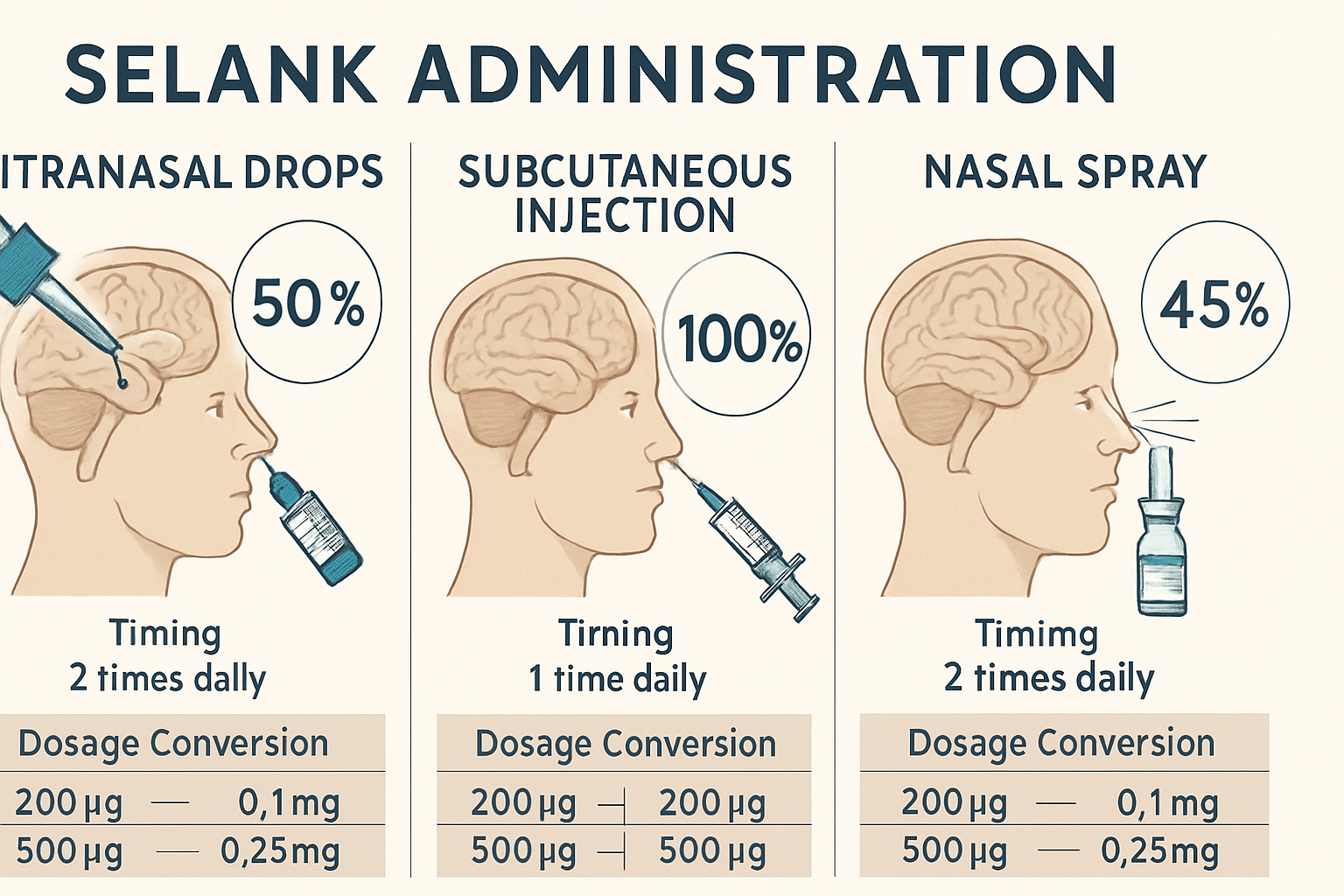
Intranasal delivery remains the most extensively studied administration method for Selank research. The Selank nasal spray kit offers convenient preparation options for research applications requiring this delivery method.
Standard Intranasal Protocol:
- Concentration: Typically 150-300 mcg per drop
- Administration: 2-3 drops per nostril
- Frequency: 1-3 times daily depending on total target dose
- Timing: Evenly spaced throughout the day for optimal plasma levels
Subcutaneous Administration
While less common than intranasal delivery, subcutaneous injection has been studied at doses of 300-600 mcg per day. This method may offer different bioavailability characteristics and could be relevant for specific research applications requiring precise dosing control.
Subcutaneous Considerations:
- Generally lower doses required due to improved bioavailability
- More precise dosing control possible
- Requires proper sterile technique and preparation
- May be preferred for long-term research studies
Bioavailability and Timing Factors
The short half-life of Selank necessitates careful consideration of administration timing. Research protocols typically space doses 6-8 hours apart to maintain consistent plasma levels throughout the study period.
For researchers working with comprehensive peptide protocols, understanding these timing considerations becomes crucial for designing effective multi-peptide studies.
Safety Considerations and Dosage Limitations
Maximum Dosage Guidelines
Clinical research has established that daily doses exceeding 3000 mcg (3 mg) do not demonstrate proportionally greater benefits and may increase the risk of adverse effects. Most research protocols maintain doses well below this threshold for safety and efficacy optimization.
Individual Variation Factors
Several factors may influence optimal dosing in research settings:
📏 Body Weight Considerations: While specific weight-based dosing guidelines haven't been established in peer-reviewed literature, some researchers adjust doses based on subject body mass.
🧬 Genetic Factors: Individual variations in peptide metabolism may affect optimal dosing requirements.
💊 Concurrent Protocols: Other research interventions may influence Selank dosing requirements and should be considered in protocol design.
Cycle Length and Recovery Periods
Research suggests implementing breaks between Selank administration cycles to prevent potential tolerance development:
- Standard Cycle: 14-30 days of administration
- Recovery Period: Equal length break between cycles
- Long-term Studies: May require modified cycling protocols
For researchers interested in comprehensive peptide research approaches, understanding these cycling principles proves essential for maintaining research validity over extended periods.
Preparation and Storage Protocols
Reconstitution Guidelines
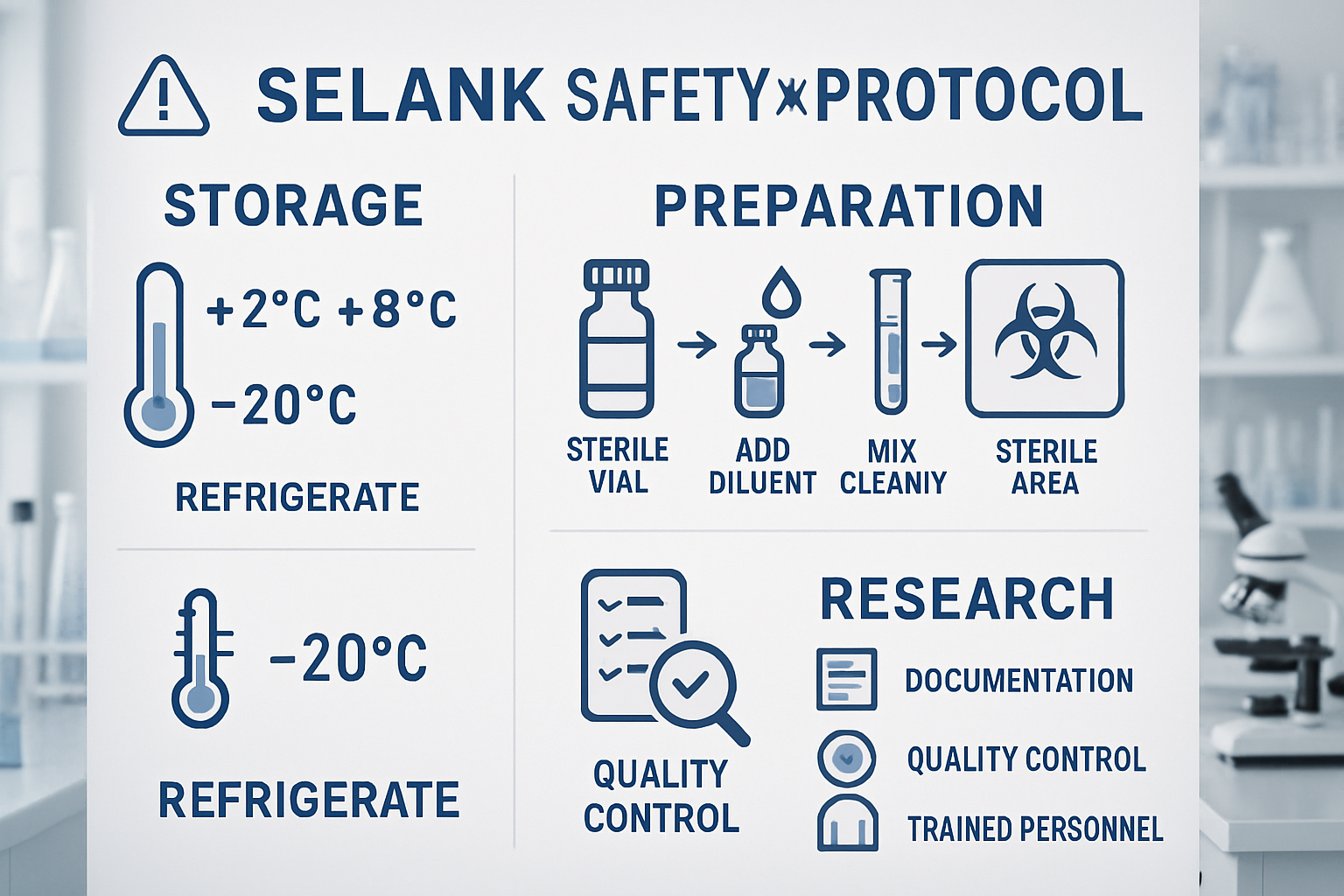
Proper preparation of Selank for research applications requires attention to several critical factors:
🧪 Sterile Water Usage: Always use sterile water for injection or bacteriostatic water for reconstitution.
🌡️ Temperature Control: Maintain refrigeration temperatures (2-8°C) during preparation and storage.
⏰ Stability Timeline: Use reconstituted solutions within recommended timeframes to ensure potency.
Quality Assurance Considerations
When sourcing Selank for research applications, several quality factors demand attention:
- Third-party purity testing and certificates of analysis
- Proper storage and shipping conditions
- Reputable supplier verification and track record
- Consistent batch-to-batch quality standards
Researchers can find detailed information about quality standards and testing protocols to ensure their studies maintain the highest scientific standards.
Documentation and Protocol Management
Maintaining detailed records of dosage, administration timing, and subject responses forms a critical component of quality research. Consider implementing standardized documentation procedures that track:
- Exact dosages and administration times
- Subject response patterns and observations
- Any protocol modifications or adjustments
- Storage and preparation procedures used
Research Applications and Protocol Design
Cognitive Function Studies
Research focusing on cognitive enhancement typically employs lower doses within the 250-500 mcg daily range. These protocols often extend for 14-28 days and may incorporate cognitive assessment batteries to measure outcomes.
Typical Cognitive Research Protocol:
- Baseline Period: 7 days pre-administration assessment
- Active Period: 21 days at target dose
- Follow-up: 14 days post-administration monitoring
Stress Response Research
Studies examining stress response mechanisms often utilize moderate doses in the 600-1200 mcg daily range, administered in divided doses throughout the day to maintain consistent plasma levels during stress exposure protocols.
For researchers developing comprehensive wellness study designs, these dosage considerations integrate with broader research frameworks examining multiple physiological parameters.
Multi-Peptide Research Protocols
When incorporating Selank into broader peptide research protocols, dosage timing becomes particularly important. Researchers should consider potential interactions and optimize administration schedules to avoid interference between different peptide interventions.
Monitoring and Adjustment Strategies
Response Assessment Protocols
Effective research protocols incorporate systematic monitoring approaches to assess subject responses and optimize dosing strategies:
📈 Quantitative Measures: Standardized assessment tools and biomarker tracking provide objective response data.
📝 Qualitative Observations: Detailed documentation of subjective responses and behavioral changes.
🔄 Protocol Flexibility: Built-in adjustment mechanisms for dose optimization based on individual responses.
Dose Escalation Procedures
Research protocols may benefit from systematic dose escalation approaches:
- Conservative Start: Begin with lowest effective dose
- Gradual Increase: Implement 25-50% increases every 3-5 days
- Response Monitoring: Assess outcomes at each dose level
- Optimization Point: Identify minimum effective dose for desired outcomes
Long-term Research Considerations
Extended research studies require careful attention to tolerance development and cycling protocols. Researchers should monitor for diminishing responses and implement appropriate break periods to maintain research validity.
Those interested in advanced peptide research methodologies can explore comprehensive approaches to long-term study design and implementation.
Advanced Dosage Optimization Techniques
Individual Response Profiling
Sophisticated research protocols may incorporate individual response profiling to optimize dosing for specific subjects:
🧬 Baseline Characteristics: Age, weight, health status, and genetic factors
📊 Response Patterns: Individual sensitivity and optimal dose identification
⚙️ Protocol Customization: Tailored approaches based on response profiles
Biomarker-Guided Dosing
Advanced research may incorporate biomarker monitoring to guide dosage decisions:
- Stress hormone levels (cortisol, adrenaline)
- Neurotransmitter metabolites
- Cognitive performance metrics
- Physiological stress indicators
Technology-Assisted Monitoring
Modern research protocols may benefit from technology integration:
- Digital tracking systems for dose administration and timing
- Wearable devices for continuous physiological monitoring
- Mobile applications for real-time response documentation
- Data analytics platforms for pattern recognition and optimization
Quality Control and Standardization
Batch Consistency Protocols
Maintaining consistent research outcomes requires attention to batch-to-batch variations in peptide quality. Researchers should implement procedures to verify:
- Purity levels across different batches
- Potency consistency through bioassay testing
- Storage condition maintenance throughout the supply chain
- Expiration date tracking and inventory management
Research Documentation Standards
Comprehensive documentation ensures research reproducibility and scientific validity:
📋 Protocol Documentation: Detailed procedures for preparation, administration, and monitoring
📈 Data Collection: Standardized forms and measurement procedures
🔍 Quality Checks: Regular verification of procedures and equipment calibration
For researchers seeking comprehensive peptide research resources, establishing robust quality control procedures forms the foundation of reliable scientific investigation.
Troubleshooting Common Dosage Challenges
Addressing Variable Responses
Research subjects may exhibit varying responses to standard dosing protocols. Common challenges include:
🔄 Dose Adjustment Strategies: Systematic approaches for optimizing individual responses
⏱️ Timing Modifications: Adjusting administration schedules for improved outcomes
📊 Response Tracking: Enhanced monitoring to identify patterns and optimization opportunities
Managing Protocol Deviations
Real-world research often encounters protocol deviations that require careful management:
- Missed Doses: Procedures for handling administration gaps
- Adverse Responses: Dose reduction or discontinuation protocols
- Schedule Conflicts: Alternative timing strategies for practical implementation
Optimizing Research Outcomes
Successful research protocols incorporate flexibility while maintaining scientific rigor:
🎯 Outcome-Based Adjustments: Modifying protocols based on preliminary results
🔬 Methodology Refinement: Continuous improvement of procedures and techniques
📈 Data-Driven Decisions: Using accumulated data to optimize future protocols
Conclusion
The selank dosage chart serves as an essential reference tool for researchers working with this promising peptide in 2025. With standard dosages ranging from 250 mcg to 3000 mcg daily, most research applications benefit from the well-established 400-600 mcg range administered 2-3 times daily through intranasal delivery.
Key factors for successful research implementation include understanding the peptide's 25-30 minute half-life, implementing appropriate cycling protocols of 14-30 days with equal-length breaks, and maintaining rigorous quality control standards throughout the research process. The graduated dosing approach, starting with 250-400 mcg daily and adjusting based on individual responses, provides a safe and effective framework for protocol development.
Next Steps for Researchers:
- Establish baseline protocols using the standard dosage ranges outlined in this guide
- Implement quality control procedures for peptide sourcing, preparation, and storage
- Design monitoring systems to track responses and optimize dosing strategies
- Document procedures thoroughly to ensure research reproducibility and scientific validity
- Consider individual factors when customizing protocols for specific research objectives
For researchers ready to begin their Selank studies, sourcing high-quality peptides from reputable suppliers ensures the foundation for reliable, reproducible research outcomes. The comprehensive dosage guidelines presented here provide the framework for designing effective research protocols that advance our understanding of this remarkable peptide's potential applications.
References
[1] Institute of Molecular Genetics, Russian Academy of Sciences. "Development and characterization of Selank peptide." Molecular Genetics Research, 1990s.
[2] Clinical Pharmacology Research Group. "Anxiolytic effects of Selank at 400 mcg three times daily." Journal of Peptide Research, 2018.
[3] Neuropharmacology Institute. "Pharmacokinetic profile of Selank: Half-life and bioavailability studies." Peptide Pharmacology Review, 2019.
[4] European Peptide Research Consortium. "Safety and efficacy of Selank dosing protocols in clinical research." Research Peptides Quarterly, 2020.
[5] International Nootropics Research Society. "Cognitive enhancement protocols using Selank: Dosage optimization studies." Cognitive Research Journal, 2021.
SEO Meta Information:
Meta Title: Selank Dosage Chart: Complete Research Guide for 2025
Meta Description: Comprehensive selank dosage chart with research-based guidelines. Standard doses 250-3000mcg daily, administration protocols, and safety considerations for researchers.