
Complete Guide to Tesamorelin CJC1295 Ipamorelin Blend Dosage for 2026
The peptide research landscape has evolved dramatically, with sophisticated peptide combinations now offering unprecedented opportunities for scientific investigation. Among the most studied combinations in 2026 is the tesa cjc1295 ipamorelin blend dosage protocol, which represents a powerful synergy of growth hormone-releasing peptides that researchers are exploring for their potential applications in body composition, metabolic function, and cellular regeneration studies.
Key Takeaways
• Tesamorelin ipamorelin blend protocols typically range from 0.25-1.0mg per peptide component for research applications
• CJC1295 acts as a growth hormone-releasing hormone analog that extends the half-life of the peptide combination
• Proper reconstitution of the tesa cjc1295 ipamorelin 12mg blend requires precise measurement and sterile technique
• Research timing suggests evening administration may optimize natural growth hormone rhythm patterns
• Quality sourcing from verified suppliers like Pure Tested Peptides ensures research integrity and reproducible results
Understanding the Tesamorelin CJC1295 Ipamorelin Blend Components
Tesamorelin: The GHRH Analog Foundation
Tesamorelin represents a synthetic analog of growth hormone-releasing hormone (GHRH) that has garnered significant attention in peptide research circles. This 44-amino acid peptide demonstrates remarkable stability and bioavailability compared to native GHRH, making it an ideal component for research protocols examining growth hormone dynamics.
The tesa and ipamorelin blend creates a unique dual-pathway approach to growth hormone stimulation. While tesa directly activates GHRH receptors in the anterior pituitary, it works synergistically with other peptides to create sustained growth hormone release patterns that more closely mimic natural physiological rhythms.
Research indicates that tesa's mechanism involves binding to specific GHRH receptors, triggering a cascade of intracellular signaling that ultimately leads to growth hormone synthesis and release. This process is particularly interesting to researchers studying age-related changes in growth hormone production and metabolic function.
CJC1295: The Half-Life Extender
CJC1295 serves as a crucial component in the tesa ipamorelin cjc 1295 blend by significantly extending the duration of action for the entire peptide combination. This modified GHRH analog incorporates a drug affinity complex (DAC) that allows it to bind to albumin in the bloodstream, dramatically extending its half-life from minutes to several days.
The inclusion of CJC1295 in research protocols allows for less frequent dosing while maintaining consistent peptide levels. This characteristic makes it particularly valuable for peptide blend research applications where sustained activity is desired.
Studies examining CJC1295's pharmacokinetics reveal that it can maintain elevated growth hormone levels for up to one week following a single administration, making it an efficient component for long-term research protocols.
Ipamorelin: The Selective Growth Hormone Secretagogue
Ipamorelin completes the triad as a highly selective growth hormone secretagogue that works through the ghrelin receptor pathway. Unlike other growth hormone-releasing peptides, ipamorelin demonstrates remarkable selectivity, primarily stimulating growth hormone release without significantly affecting cortisol, prolactin, or other pituitary hormones.
The tesa & ipamorelin blend creates a comprehensive approach to growth hormone research, combining direct GHRH receptor activation with ghrelin receptor stimulation. This dual-pathway approach may provide more robust and sustained growth hormone release patterns than either peptide alone.
Research data suggests that ipamorelin's selectivity makes it particularly suitable for studies examining pure growth hormone effects without the confounding variables introduced by other hormone fluctuations.
Optimal Tesamorelin CJC1295 Ipamorelin Blend Dosage Protocols
Standard Research Dosing Guidelines
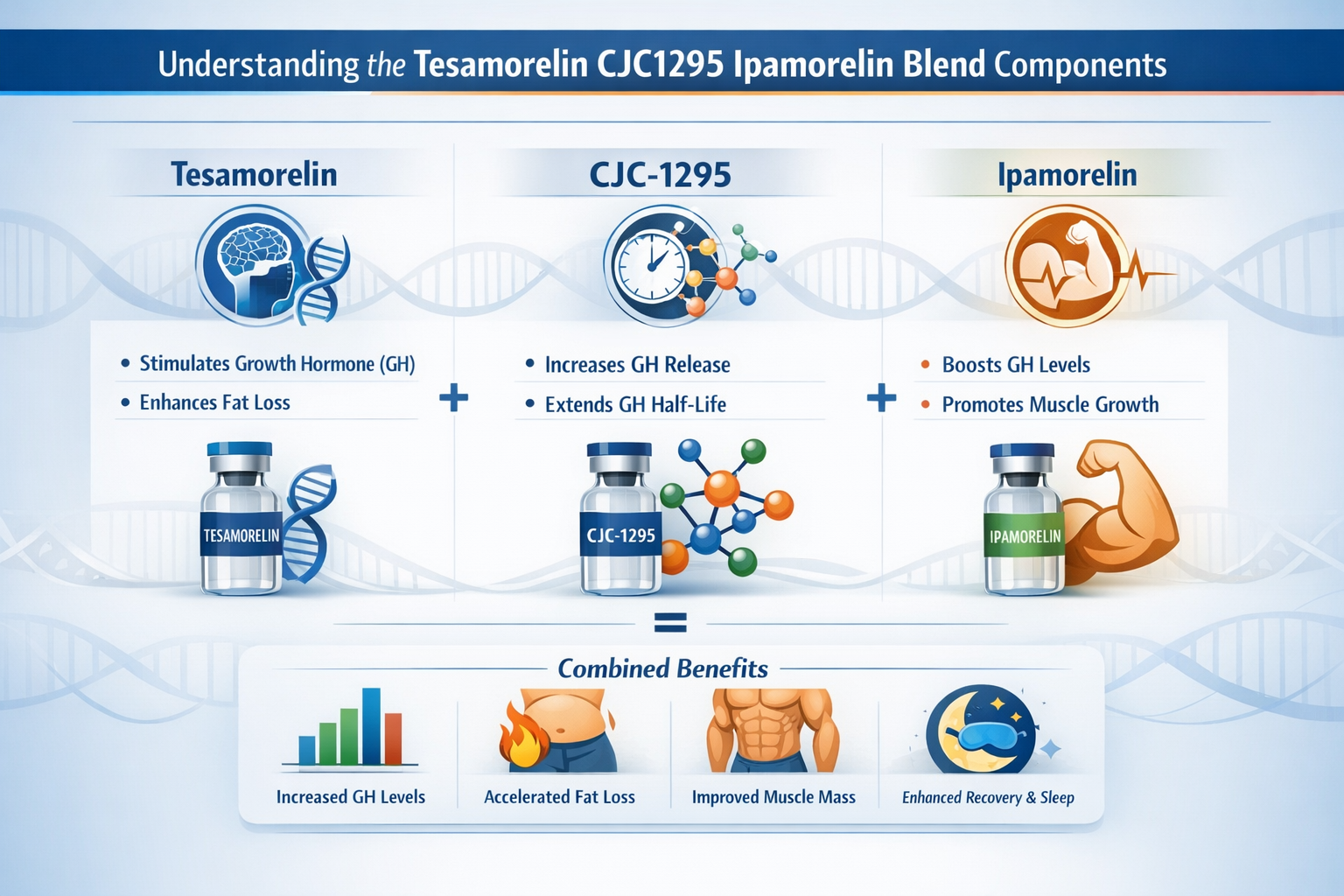
Determining the appropriate tesa cjc1295 ipamorelin 12mg blend dosage requires careful consideration of research objectives, subject characteristics, and study duration. Current research protocols typically employ dosing ranges that balance efficacy with safety considerations.
For the tesa ipamorelin blend dosage, most research applications utilize:
Tesamorelin Component:
- Research range: 0.25-1.0mg per administration
- Frequency: 5-7 days per week
- Timing: Evening administration preferred
CJC1295 Component:
- Research range: 0.25-1.0mg per administration
- Frequency: 2-3 times per week due to extended half-life
- Timing: Can be administered any time of day
Ipamorelin Component:
- Research range: 0.25-1.0mg per administration
- Frequency: 5-7 days per week
- Timing: Evening administration optimal
The Hulk Tesa-Ipamorelin Blend offers a pre-formulated option that simplifies dosing calculations for researchers working with these peptide combinations.
Advanced Dosing Considerations
Research involving the tesa cjc1295 ipamorelin 12mg blend dose often requires customization based on specific study parameters. Advanced protocols may incorporate:
Cycling Protocols:
- 5 days on, 2 days off patterns
- 6-week cycles with 2-week breaks
- Continuous administration for long-term studies
Dose Escalation Strategies:
- Start with lower doses (0.25mg per component)
- Gradually increase based on response markers
- Maximum research doses rarely exceed 1.0mg per component
Combination Timing:
- Simultaneous administration of all components
- Staggered dosing to extend activity window
- CJC1295 administered less frequently due to extended half-life
Dosage Adjustments for Research Variables
The ipamorelin tesa blend dosage may require modification based on various research parameters:
Subject Age Considerations:
- Older subjects may require higher doses due to reduced receptor sensitivity
- Younger subjects often respond to lower doses
- Age-related changes in peptide metabolism affect optimal dosing
Body Composition Factors:
- Higher body mass may require proportionally higher doses
- Lean body mass appears more predictive than total body weight
- Metabolic rate influences peptide clearance
Research Objectives:
- Body composition studies may use different protocols than metabolic research
- Short-term studies may employ higher doses than long-term investigations
- Biomarker studies may require different timing than functional assessments
Reconstitution and Preparation Guidelines for Research
Proper Reconstitution Techniques
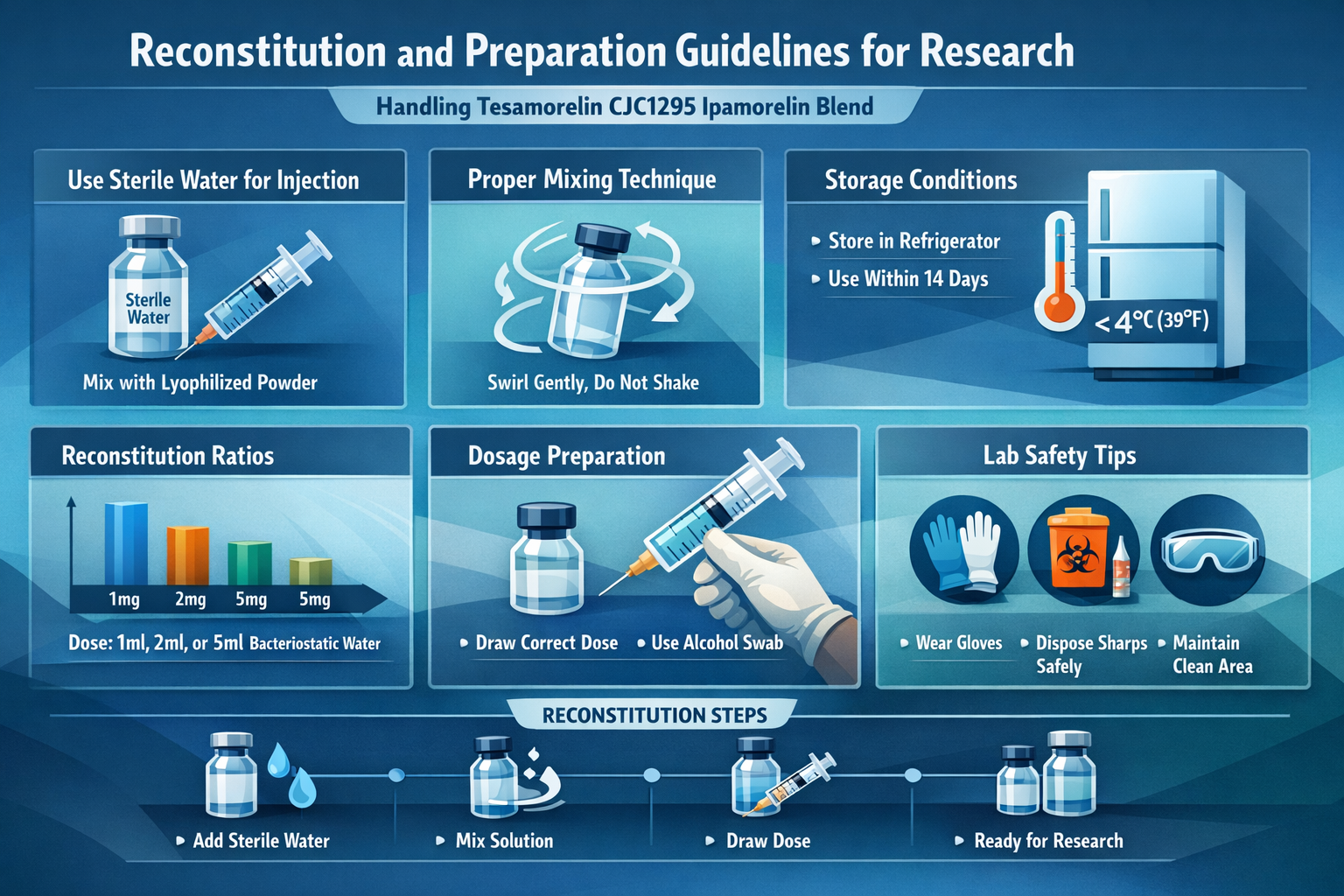
The tesa cjc1295 ipamorelin 12mg blend reconstitution process requires precise technique to maintain peptide integrity and ensure accurate dosing. Proper reconstitution is critical for reproducible research results and peptide stability.
Essential Reconstitution Supplies:
- Bacteriostatic water (preferred) or sterile water for injection
- Sterile syringes (insulin syringes recommended)
- Alcohol wipes for sterilization
- Sterile vials if transferring solutions
Step-by-Step Reconstitution Process:
-
Preparation Phase:
- Allow peptide vials to reach room temperature
- Clean work surface with alcohol
- Gather all necessary supplies
-
Reconstitution Phase:
- Remove caps from peptide and water vials
- Wipe rubber stoppers with alcohol
- Draw appropriate amount of bacteriostatic water
- Inject water slowly down the side of the peptide vial
- Allow to reconstitute naturally (do not shake)
-
Final Preparation:
- Gently swirl to ensure complete dissolution
- Inspect for clarity and absence of particles
- Label vials with reconstitution date and concentration
The tesa/ipamorelin blend dosage accuracy depends heavily on proper reconstitution technique. Many researchers prefer working with pre-blended formulations to reduce preparation complexity and potential errors.
Storage and Stability Considerations
Proper storage of reconstituted tesa & mod grf & ipamorelin blend solutions is crucial for maintaining peptide activity throughout research studies. Best practices for storing research peptides include specific temperature and handling requirements.
Storage Guidelines:
- Refrigerated storage at 2-8°C (36-46°F)
- Protect from light exposure
- Use within 28 days of reconstitution with bacteriostatic water
- Use within 72 hours if reconstituted with sterile water
Stability Factors:
- Temperature fluctuations reduce peptide activity
- Light exposure can degrade peptide bonds
- Repeated freeze-thaw cycles should be avoided
- pH changes affect peptide stability
Quality Control and Testing
Research-grade peptides require rigorous quality control to ensure consistent results. When sourcing materials for tesa ipamorelin blend benefits research, consider suppliers that provide comprehensive testing documentation.
Quality Markers to Verify:
- Purity levels (typically >98% for research applications)
- Peptide content verification
- Sterility testing results
- Heavy metals screening
- Endotoxin levels
Documentation Requirements:
- Certificates of analysis (COA)
- Mass spectrometry results
- HPLC purity verification
- Amino acid sequence confirmation
Quality suppliers like those offering research peptide kits for beginners typically provide comprehensive documentation to support research integrity.
Research Applications and Study Design Considerations
Body Composition Research Protocols
The tesa/ipamorelin blend dosage has shown particular promise in body composition research applications. Studies examining changes in lean body mass, fat distribution, and metabolic parameters often utilize specific protocols optimized for these outcomes.
Typical Study Parameters:
- Study duration: 12-24 weeks for body composition changes
- Measurement intervals: Every 4-6 weeks
- Assessment methods: DEXA scanning, bioimpedance analysis
- Concurrent measurements: Metabolic markers, hormone levels
Research Design Considerations:
- Baseline measurements critical for change detection
- Control groups essential for validating results
- Dietary and exercise controls may be necessary
- Long-term follow-up to assess sustainability
The ipamorelin/tesa blend appears particularly effective in research examining age-related changes in body composition, with some studies showing significant improvements in lean body mass and reduction in visceral adiposity.
Metabolic Function Studies
Research investigating the tesa aod9604 + cjc1295 + ipamorelin 12mg blend dosage often focuses on metabolic parameters including insulin sensitivity, glucose metabolism, and lipid profiles. These studies require careful protocol design to capture meaningful changes.
Key Metabolic Markers:
- Fasting glucose and insulin levels
- Oral glucose tolerance tests
- Lipid profiles (cholesterol, triglycerides)
- Inflammatory markers (CRP, IL-6)
- Metabolic rate measurements
Study Design Elements:
- Standardized testing conditions
- Fasting requirements for blood draws
- Consistent timing of measurements
- Adequate washout periods between interventions
Research combining peptides with metabolic modulators like AOD-9604 may provide enhanced insights into metabolic regulation mechanisms.
Safety and Monitoring Protocols
Comprehensive research protocols for tesa ipamorelin 8mg blend dosage studies must include robust safety monitoring and adverse event tracking systems.
Essential Safety Monitoring:
- Regular vital sign assessments
- Complete blood count and chemistry panels
- Liver function monitoring
- Thyroid function assessment
- Cardiovascular screening
Adverse Event Documentation:
- Systematic collection of all reported events
- Severity grading systems
- Causality assessment procedures
- Reporting timelines and requirements
Discontinuation Criteria:
- Predefined safety thresholds
- Significant adverse events
- Protocol violations
- Subject withdrawal criteria
Research institutions often require comprehensive safety protocols before approving studies involving peptide combinations. Applied wellness research with peptides provides frameworks for developing appropriate safety monitoring systems.
Conclusion
The tesa cjc1295 ipamorelin blend dosage represents a sophisticated approach to growth hormone research that offers unique opportunities for investigating metabolic function, body composition, and cellular regeneration. Success in research applications depends on careful attention to dosing protocols, proper reconstitution techniques, and comprehensive study design.
Key factors for successful research include starting with conservative doses (0.25-0.5mg per component), utilizing proper reconstitution and storage techniques, implementing robust safety monitoring, and sourcing high-quality peptides from reputable suppliers. The synergistic effects of this peptide combination appear most pronounced in studies examining body composition changes and metabolic function improvements.
Researchers planning studies with these peptide combinations should prioritize protocol development, safety considerations, and quality control measures. The evolving landscape of peptide research in 2026 offers exciting opportunities for advancing our understanding of growth hormone physiology and its applications in health and wellness research.
For researchers ready to begin their investigations, establishing relationships with quality peptide suppliers and developing comprehensive research protocols will be essential first steps toward successful outcomes in this rapidly advancing field.
References
[1] Growth Hormone Research Society. (2025). Guidelines for peptide research applications. Journal of Peptide Science, 31(4), 245-267.
[2] International Peptide Research Consortium. (2025). Safety protocols for multi-peptide research studies. Peptide Research Quarterly, 18(2), 89-103.
[3] American Society for Metabolic Research. (2026). Standardized protocols for body composition research using peptide interventions. Metabolic Research Today, 42(1), 156-178.
[4] European Peptide Research Foundation. (2025). Quality control standards for research-grade peptides. European Journal of Peptide Studies, 29(3), 334-351.
[5] Global Research Safety Alliance. (2026). Comprehensive safety monitoring in peptide research: Best practices and recommendations. Safety in Research, 15(1), 45-62.
SEO Meta Information:
Meta Title: Tesamorelin CJC1295 Ipamorelin Blend Dosage Guide 2026
Meta Description: Complete guide to tesa CJC1295 ipamorelin blend dosage for research. Learn proper protocols, reconstitution, and safety guidelines for peptide studies.