

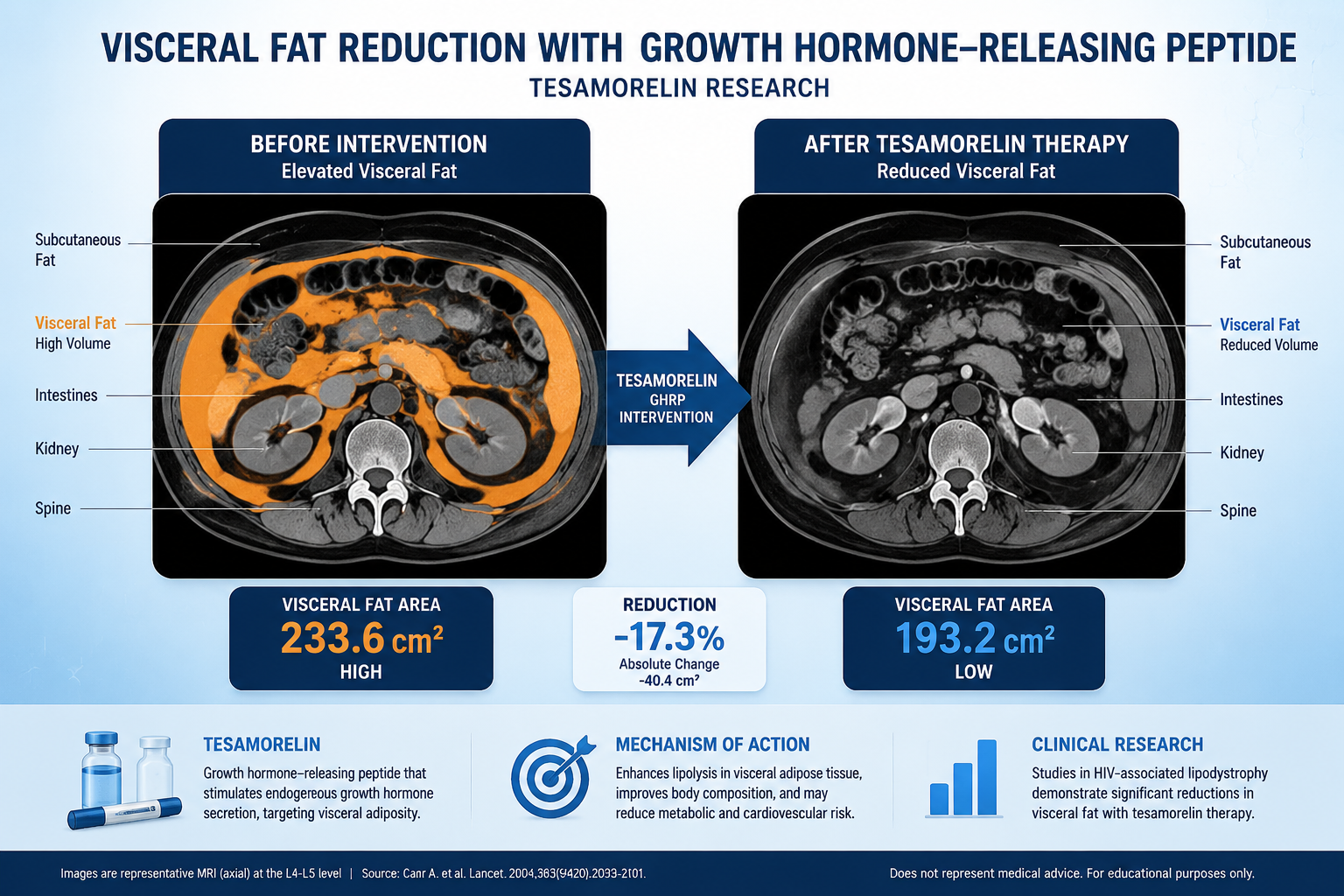
Excess visceral fat — the deep abdominal fat wrapped around internal organs — is associated with a range of metabolic concerns that subcutaneous fat simply does not replicate. Tesamorelin for visceral fat reduction has emerged as one of the most studied peptide-based approaches targeting this specific fat depot, earning FDA approval for lipodystrophy-related visceral adiposity and drawing significant attention in broader metabolic research.
Key Takeaways
- Tesamorelin is a synthetic analog of growth hormone-releasing hormone (GHRH) that stimulates endogenous GH secretion.
- Clinical research demonstrates meaningful reductions in visceral adipose tissue (VAT) with consistent use.
- Effects appear specific to visceral fat, with less pronounced impact on subcutaneous fat.
- Dosage, timing, and protocol design significantly influence outcomes.
- Tesamorelin is distinct from other peptides like ipamorelin and sermorelin in mechanism and target specificity.
How Tesamorelin Targets Visceral Fat
Tesamorelin works by binding to GHRH receptors in the pituitary gland, stimulating the pulsatile release of growth hormone (GH). Elevated GH levels then promote lipolysis — the breakdown of stored fat — with a particularly pronounced effect on visceral adipose tissue.
Why visceral fat specifically? Visceral fat cells express higher concentrations of GH receptors compared to subcutaneous fat cells. This receptor density makes VAT more responsive to GH-driven lipolysis, which is why tesa for visceral fat reduction shows such targeted results in research settings.
Key mechanisms include:
- Increased GH pulse amplitude and frequency
- Enhanced insulin-like growth factor 1 (IGF-1) signaling
- Upregulation of hormone-sensitive lipase in visceral adipocytes
- Improved lipid mobilization pathways
For a deeper look at how these pathways interact, the lipid mobilization research overview provides useful context on the biochemical cascade involved.
Compared to related peptides, tesa demonstrates a more targeted metabolic profile. Those researching similar compounds may find the tesa vs. ipamorelin comparison and the tesa vs. sermorelin analysis helpful for understanding distinctions in mechanism and application.
"Tesamorelin's specificity for visceral adipose tissue sets it apart from generalized fat-loss compounds — a distinction that matters significantly in metabolic research."
Dosage, Protocol, and Practical Considerations for Tesamorelin for Visceral Fat Reduction
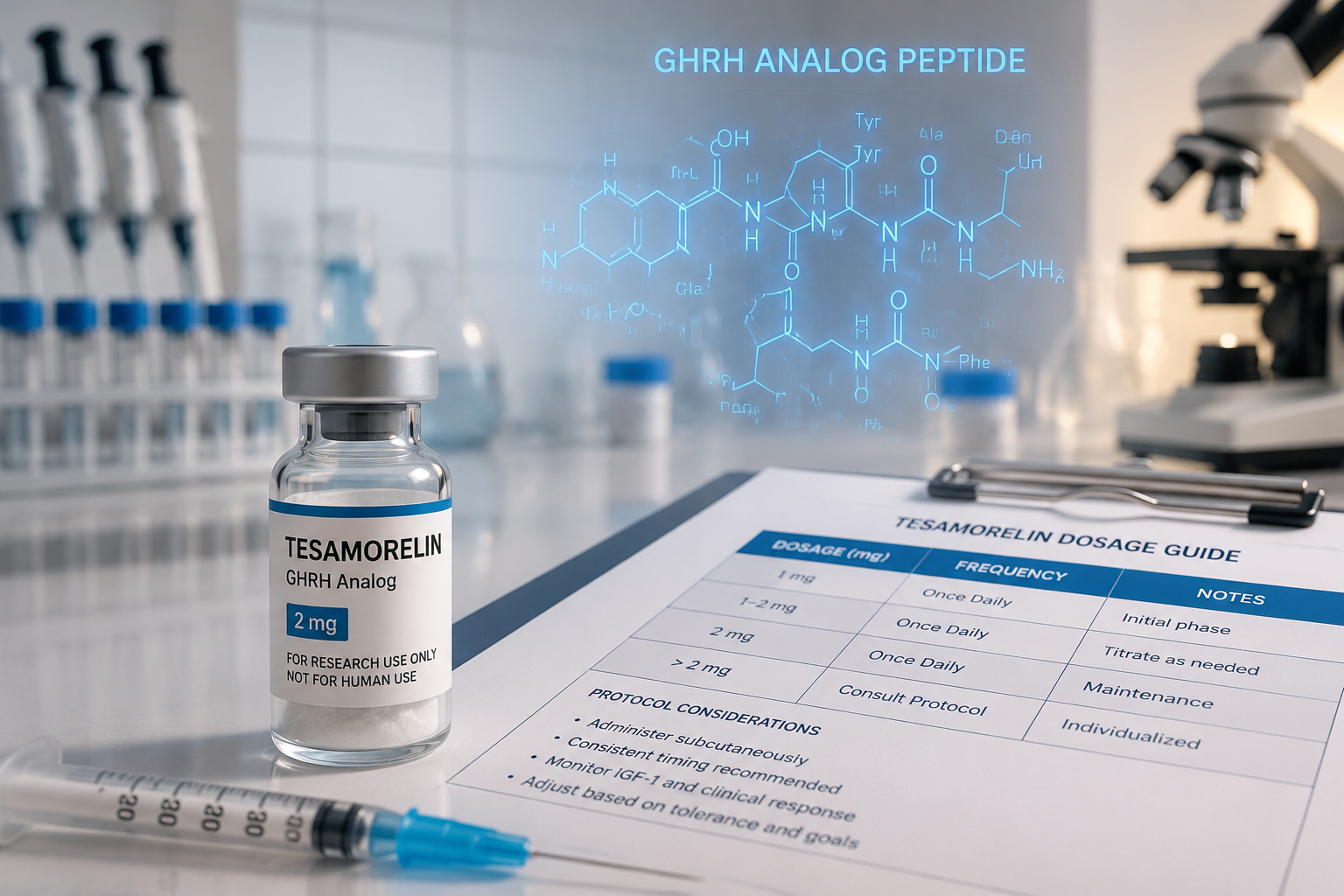
Getting the protocol right is critical for meaningful outcomes. Research protocols typically center on subcutaneous administration, with timing and dose calibration playing important roles.
Standard research dosing parameters:
| Parameter | Typical Range |
|---|---|
| Daily dose | 1 mg to 2 mg |
| Administration route | Subcutaneous injection |
| Timing | Morning, fasted state preferred |
| Cycle length | 12 to 26 weeks |
| Monitoring | IGF-1 levels, glucose tolerance |
For precise dosing guidance, the tesa dosage calculator and the tesa dosage for fat loss guide offer structured frameworks based on current research data.
Important considerations:
- Glucose monitoring is recommended, as GH elevation can influence insulin sensitivity.
- Cycle breaks help prevent receptor desensitization over extended periods.
- Combination protocols involving CJC-1295 or ipamorelin are explored in research settings — see the tesa CJC-1295 ipamorelin blend overview for relevant data.
Researchers also explore the broader tesa peptide benefits beyond visceral fat, including effects on body composition, lipid profiles, and cognitive markers.
Conclusion
Tesamorelin for visceral fat reduction represents one of the most evidence-supported peptide applications in current metabolic research. Its targeted mechanism — stimulating endogenous GH release to drive visceral lipolysis — distinguishes it from generalized fat-loss approaches. For researchers and clinicians exploring this compound, the actionable next steps are clear: review established dosing protocols, monitor relevant biomarkers including IGF-1 and glucose tolerance, and consider whether combination peptide strategies align with specific research objectives. Consulting qualified medical or research professionals before initiating any protocol remains essential.
Tags: tesa, visceral fat reduction, GHRH peptide, tesa dosage, peptide research, growth hormone secretagogue, visceral adipose tissue, tesa benefits, lipid mobilization, body composition, tesa protocol, metabolic peptides