

Obesity now affects more than 1 billion people worldwide, yet the science of appetite regulation has advanced faster in the last decade than in the previous century combined. At the center of this shift are weight loss peptides (GLP-1 and related peptides) — small protein-like molecules that interact with the body's own metabolic signaling systems. Understanding how they work, and what distinguishes one from another, is increasingly relevant for researchers and health-focused individuals alike.
Key Takeaways
- GLP-1 (glucagon-like peptide-1) is a naturally occurring gut hormone that regulates appetite, insulin release, and gastric emptying.
- Weight loss peptides (GLP-1 and related peptides) include several classes: GLP-1 analogs, dual agonists, and newer metabolic modulators.
- These peptides work through receptor-based signaling, not direct fat burning — mechanism matters.
- Purity and sourcing are critical factors when evaluating peptides for research purposes.
- Related peptides such as Tesamorelin and Tesofensine target overlapping but distinct metabolic pathways.
How Weight Loss Peptides (GLP-1 and Related Peptides) Work
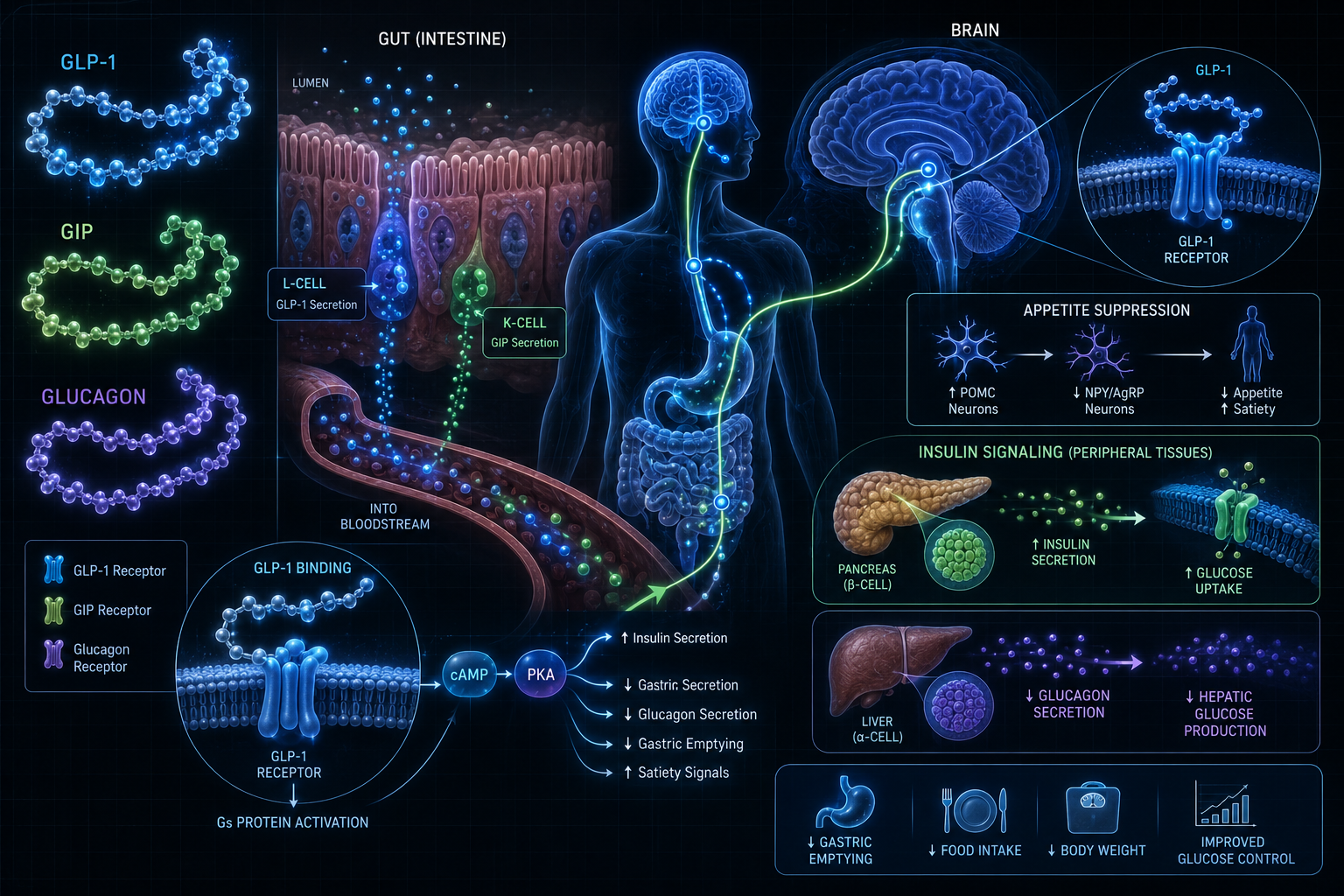
GLP-1 is released from L-cells in the small intestine after eating. It signals the pancreas to release insulin, slows gastric emptying, and — critically — acts on the hypothalamus to reduce appetite. These combined effects make GLP-1 one of the most studied targets in metabolic research.
Key mechanisms include:
| Mechanism | Effect |
|---|---|
| GLP-1 receptor activation | Reduces appetite, slows digestion |
| Insulin secretion stimulation | Lowers post-meal blood glucose |
| Glucagon suppression | Reduces liver glucose output |
| Central nervous system signaling | Promotes satiety |
Beyond GLP-1 itself, researchers are actively studying dual and triple agonists — peptides that activate GLP-1 receptors alongside GIP (glucose-dependent insulinotropic polypeptide) or glucagon receptors simultaneously. This multi-receptor approach appears to produce more pronounced metabolic effects in preclinical models.
For a deeper look at incretin-based research themes, the GLP-1 incretin research overview provides a useful starting point.
Related Peptides in Metabolic Research
Weight loss peptides (GLP-1 and related peptides) do not operate in isolation. Several other peptide classes are studied alongside GLP-1 for their roles in body composition and metabolic regulation.
Tesamorelin is a growth hormone-releasing hormone (GHRH) analog studied specifically for its effects on visceral adipose tissue. Research on Tesamorelin peptide benefits highlights its distinct mechanism compared to GLP-1 — it works through the growth hormone axis rather than incretin pathways.
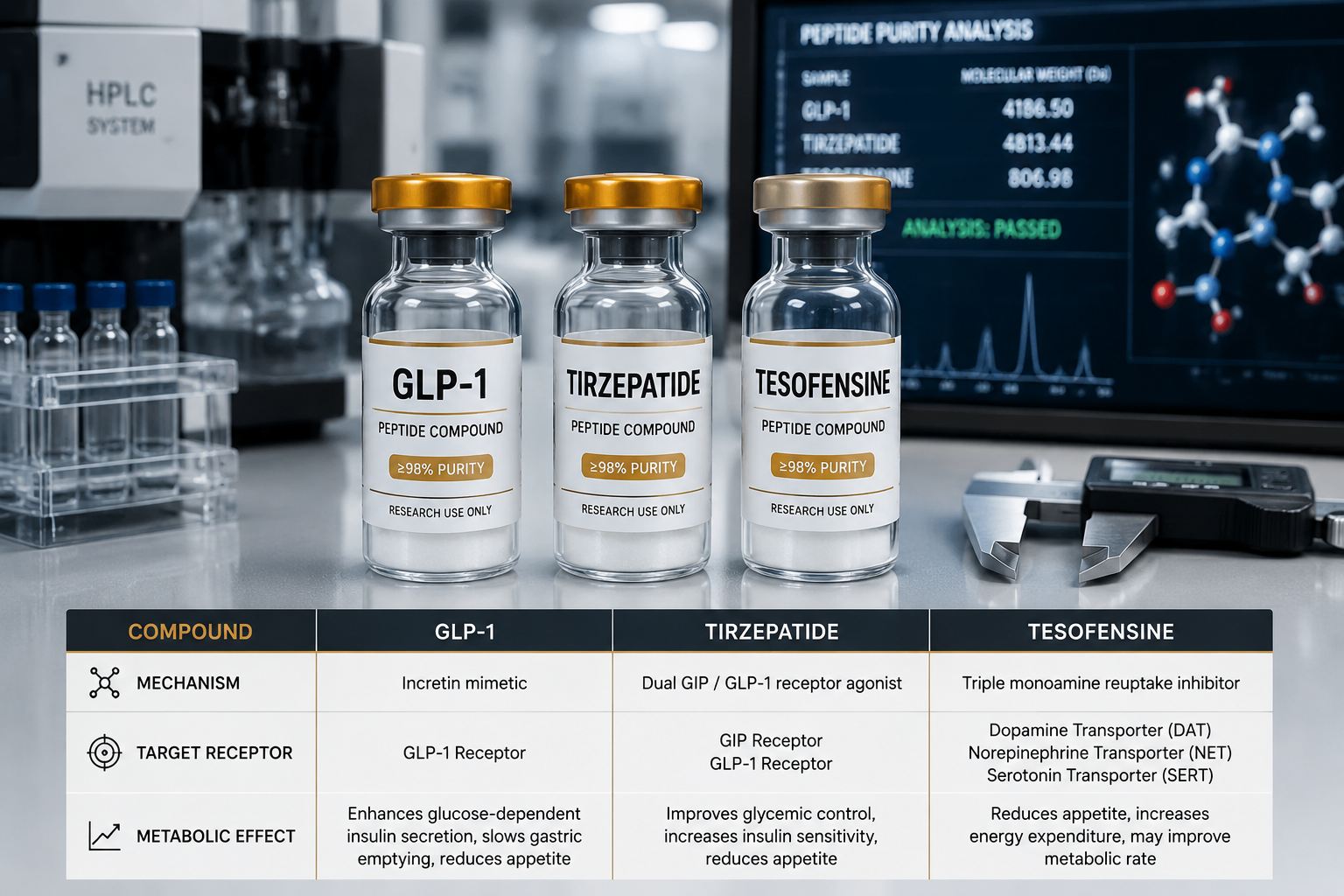
Tesofensine, a triple monoamine reuptake inhibitor, is another compound attracting research interest for appetite suppression. The Tesofensine peptide overview outlines how its central nervous system mechanism differs from peripheral GLP-1 action.
Adipotide represents yet another approach — targeting the vasculature of adipose tissue rather than appetite centers. Researchers exploring this area can review the Adipotide peptide research page for current documentation.
SLU-PP-332 is an emerging compound studied for exercise-mimicking effects on metabolic rate, covered in detail in the SLU-PP-332 metabolic modulation research overview.
"The future of metabolic peptide research lies not in single-target compounds, but in understanding how multiple receptor systems interact to regulate energy balance."
Sourcing and Purity: Non-Negotiable Factors
For any research involving weight loss peptides (GLP-1 and related peptides), compound purity directly affects the reliability of results. Impurities can alter receptor binding, skew data, and introduce confounding variables.
Researchers should prioritize suppliers who provide third-party verified lab-tested peptides with documented purity certificates. Understanding how to interpret those certificates is equally important — the peptide purity testing guide breaks down HPLC and mass spectrometry results in accessible terms.
Conclusion
Weight loss peptides (GLP-1 and related peptides) represent one of the most active frontiers in metabolic science as of 2026. From foundational GLP-1 receptor agonism to multi-target approaches and growth hormone-axis modulators, the landscape is broad and rapidly evolving.
Actionable next steps for researchers:
- Review the specific receptor mechanisms of each peptide class before designing protocols.
- Compare related compounds such as Tesamorelin and Tesofensine to identify the most relevant target for your research question.
- Verify supplier purity documentation rigorously — third-party testing is the baseline standard.
- Explore innovative peptide delivery systems to understand how administration route affects bioavailability.
Staying current with the research and sourcing from verified suppliers are the two most important factors for producing meaningful results in this field.
Tags: weight loss peptides, GLP-1 peptides, GLP-1 receptor agonist, metabolic peptides, Tesamorelin research, Tesofensine overview, Adipotide peptide, incretin research, peptide purity, appetite suppression peptides, peptide sourcing, body composition research