What is the Strongest Peptide for Weight Loss? 💊
If you’re exploring peptide therapy in 2026, you’ve likely asked yourself: what is the strongest peptide for weight loss? With the explosion of peptide research and availability, finding the most effective option can feel overwhelming. The truth is, several peptides show remarkable promise for fat loss, but their “strength” depends on your specific goals, health profile, and how your body responds. Let me guide you through the science-backed options that are transforming weight management today.
Key Takeaways
- Semaglutide and Tirzepatide currently lead as the most potent peptides for significant weight loss (15-22% body weight reduction)
- AOD-9604 targets fat metabolism specifically without affecting blood sugar, making it ideal for targeted fat loss
- 5-Amino-1MQ works by blocking NNMT enzyme activity to boost metabolism and energy expenditure
- Peptide effectiveness varies based on individual metabolism, dosage protocols, and lifestyle factors
- Always source peptides from reputable suppliers and consult healthcare professionals before starting any protocol
Quick Answer: What is the Strongest Peptide for Weight Loss?
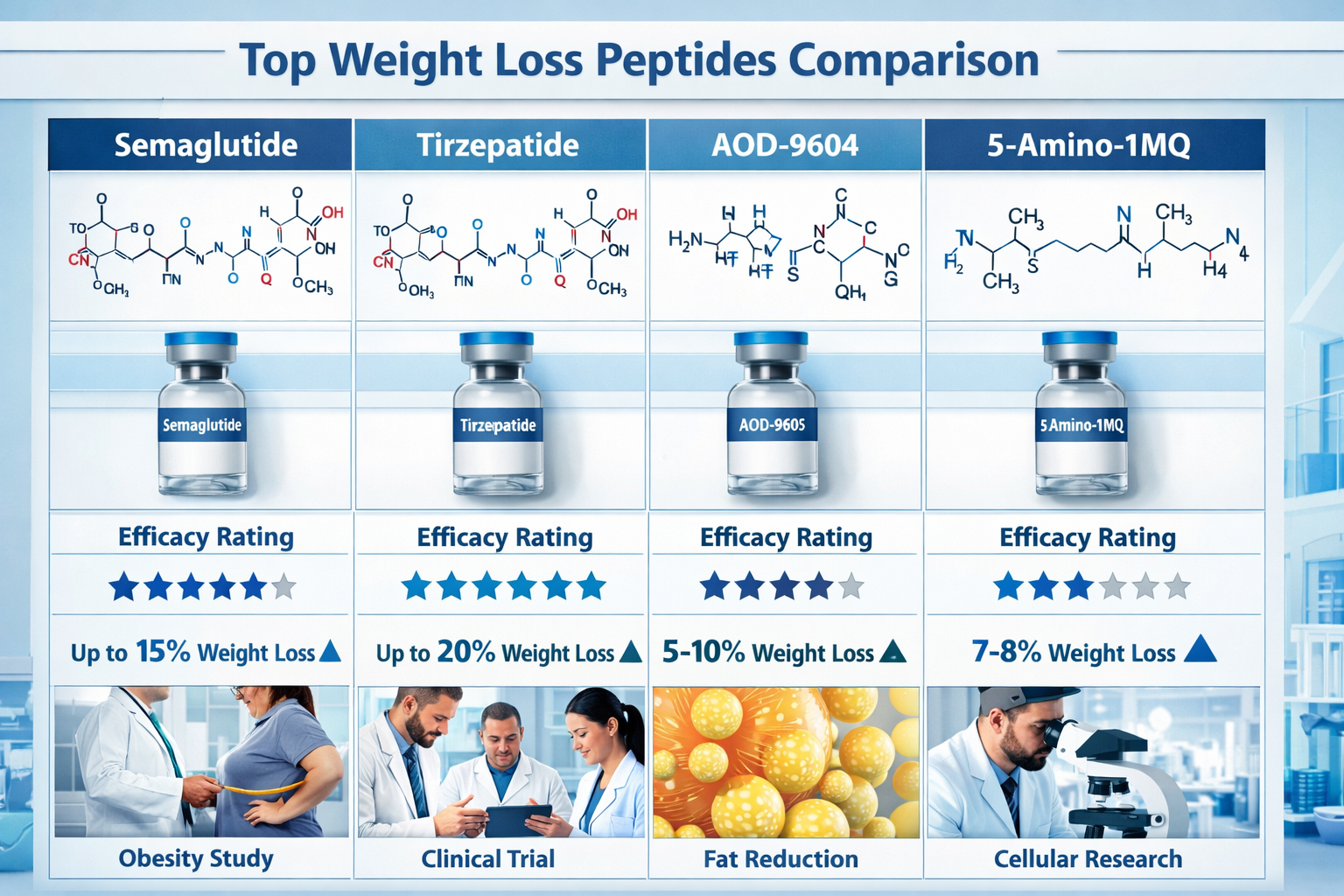
The strongest peptides for weight loss in 2026 are Semaglutide and Tirzepatide, with clinical studies showing 15-22% body weight reduction. However, AOD-9604 and 5-Amino-1MQ offer compelling alternatives for targeted fat metabolism without appetite suppression. AOD-9604 mimics growth hormone’s fat-burning properties, while 5-Amino-1MQ enhances cellular energy production. The “strongest” choice depends on your goals: GLP-1 agonists for maximum weight loss, AOD-9604 for localized fat reduction, or 5-Amino-1MQ for metabolic enhancement. Quality matters—always purchase from trusted sources like Pure Tested Peptides to ensure purity and effectiveness. Consult healthcare providers before beginning any peptide protocol to determine the safest, most effective option for your unique physiology.
Understanding Peptides and Weight Loss Mechanisms 🔬
Peptides are short chains of amino acids that act as signaling molecules in your body. When it comes to weight loss, different peptides work through distinct mechanisms:
How Weight Loss Peptides Work:
- GLP-1 Agonists (Semaglutide, Tirzepatide): Slow gastric emptying, reduce appetite, improve insulin sensitivity
- Growth Hormone Fragments (AOD-9604): Stimulate lipolysis (fat breakdown) without affecting blood sugar
- Metabolic Enhancers (5-Amino-1MQ): Block enzymes that slow metabolism, increase energy expenditure
- Appetite Regulators: Influence hunger hormones like ghrelin and leptin
The key to understanding what is the strongest peptide for weight loss lies in recognizing that “strength” isn’t just about pounds lost—it’s about safety, sustainability, and how well the mechanism aligns with your body’s needs.
Top Contenders: The Strongest Peptides for Weight Loss
1. Semaglutide (GLP-1 Agonist) 🏆
Semaglutide has dominated headlines for good reason. Clinical trials show average weight loss of 15-17% of total body weight over 68 weeks.
Pros:
- FDA-approved for weight management
- Powerful appetite suppression
- Improves cardiovascular markers
- Well-studied safety profile
Cons:
- Potential nausea and GI side effects
- Requires ongoing use
- Can be expensive
2. Tirzepatide (Dual GIP/GLP-1 Agonist) 🥇
Often considered the current champion, Tirzepatide activates both GIP and GLP-1 receptors, producing weight loss up to 22% of body weight in clinical studies.
Pros:
- Highest weight loss percentage in trials
- Dual mechanism of action
- Excellent glycemic control
- FDA-approved
Cons:
- Similar GI side effects as Semaglutide
- Premium pricing
- Long-term data still emerging
3. AOD-9604 (Modified Growth Hormone Fragment) 💪
For those seeking targeted fat loss without appetite suppression, AOD-9604 offers a unique approach. This peptide specifically stimulates lipolysis while avoiding the blood sugar effects of full growth hormone.
Pros:
- Targets fat metabolism directly
- No impact on insulin or blood sugar
- Promotes lean muscle preservation
- Minimal side effects
- Available through research suppliers like Pure Tested Peptides
Cons:
- Less dramatic total weight loss than GLP-1 agonists
- Requires proper dosing protocols
- More research needed for long-term effects
4. 5-Amino-1MQ (NNMT Inhibitor) ⚡
This emerging peptide works by blocking the NNMT enzyme, which regulates cellular metabolism. By inhibiting NNMT, 5-Amino-1MQ increases NAD+ levels and boosts metabolic rate.
Pros:
- Enhances cellular energy production
- May improve insulin sensitivity
- Supports metabolic flexibility
- No appetite suppression (maintains normal eating)
- Growing research support
Cons:
- Newer to the market
- Individual response varies
- Requires consistent use
- Best results with lifestyle modifications
You can explore 5-Amino-1MQ dosage guidelines to understand optimal protocols.
Comparison Table: Strongest Weight Loss Peptides
| Peptide | Mechanism | Average Weight Loss | Timeline | Side Effects | Best For |
|---|---|---|---|---|---|
| Semaglutide | GLP-1 agonist | 15-17% | 16-68 weeks | Nausea, GI issues | Significant weight loss, appetite control |
| Tirzepatide | GIP/GLP-1 agonist | 18-22% | 72 weeks | Nausea, GI issues | Maximum weight loss |
| AOD-9604 | GH fragment | 5-10% | 12-24 weeks | Minimal | Targeted fat loss, body composition |
| 5-Amino-1MQ | NNMT inhibitor | 3-8% | 8-16 weeks | Minimal | Metabolic enhancement, energy |
What Makes a Peptide “Strong” for Weight Loss? 💡
When evaluating what is the strongest peptide for weight loss, consider these factors:
Efficacy Metrics
- Total body weight percentage lost
- Fat mass reduction vs. muscle preservation
- Metabolic improvements (insulin sensitivity, lipid profiles)
- Sustainability of results after discontinuation
Safety Profile
- Side effect frequency and severity
- Long-term health implications
- Drug interactions
- Contraindications
Individual Response
- Genetic factors affecting peptide receptors
- Baseline metabolic rate
- Lifestyle factors (diet, exercise, sleep)
- Adherence to protocol
Practical Considerations
- Cost and accessibility
- Administration method (injection, oral, subcutaneous)
- Dosing frequency
- Monitoring requirements
“The strongest peptide isn’t necessarily the one with the highest weight loss numbers—it’s the one that works safely and sustainably for YOUR body.”