
What Peptide Makes Skin Glow? The Science Behind Radiant Skin in 2026
Picture this: you’re scrolling through social media, and everyone seems to have that enviable, lit-from-within glow. You’ve tried countless serums, creams, and treatments, but nothing delivers that radiant complexion you’re after. The secret might not be in another vitamin C serum—it could be peptides. But what peptide makes skin glow, and how do these tiny molecules transform dull, tired skin into a luminous canvas? I’ve spent years researching peptide science, and I’m here to break down exactly which peptides deliver that coveted glow and why they work so remarkably well.
Quick Answer: What Peptide Makes Skin Glow?
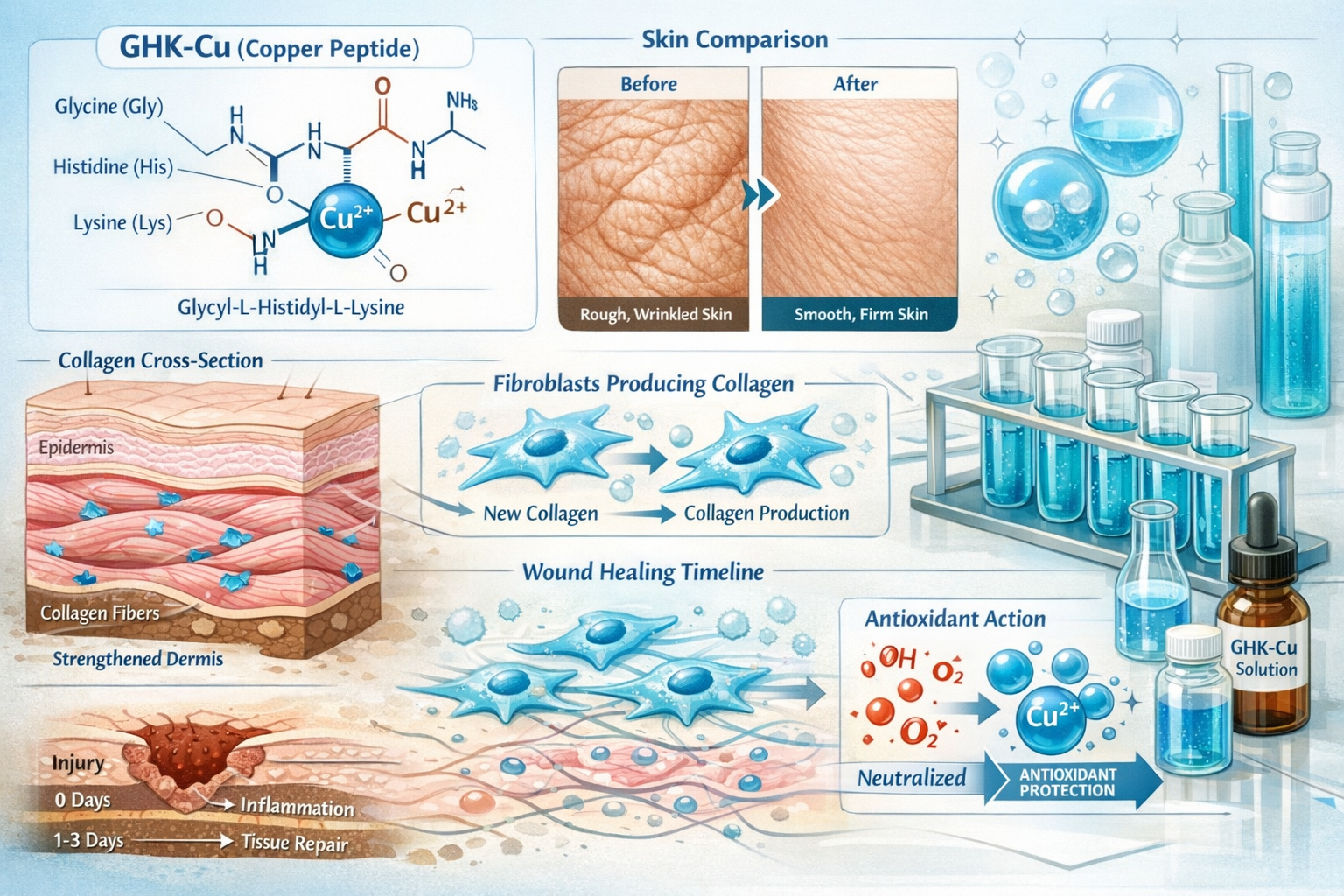
Copper peptides (GHK-Cu) are the gold standard for achieving radiant, glowing skin. These powerful peptides stimulate collagen production, enhance skin repair, and provide antioxidant benefits that create a natural luminosity. Matrixyl peptides and signal peptides also contribute significantly to skin radiance by improving texture, reducing fine lines, and boosting cellular turnover. When sourced from reputable suppliers like Pure Tested Peptides, these compounds can transform your skin’s appearance through enhanced regeneration and protection. For optimal results, combine copper peptides with a comprehensive skincare routine that includes proper hydration, sun protection, and consistent application over 8-12 weeks.
Key Takeaways
✨ Copper peptides (GHK-Cu) are the most effective peptides for achieving glowing skin through collagen stimulation and cellular repair
🔬 Signal peptides and carrier peptides work synergistically to enhance skin radiance by improving texture and nutrient delivery
💡 Consistent use over 8-12 weeks is essential for visible glow-enhancing results from peptide treatments
🌟 Quality matters significantly—sourcing peptides from trusted suppliers ensures purity and effectiveness
⚡ Combining multiple peptide types creates a comprehensive approach to achieving and maintaining luminous skin
Understanding Peptides and Skin Health
Before we dive into what peptide makes skin glow specifically, let’s establish what peptides actually are. Peptides are short chains of amino acids—the building blocks of proteins like collagen, elastin, and keratin that keep your skin firm, smooth, and radiant.
Think of peptides as messengers that communicate with your skin cells. When applied topically or used in treatments, they signal your skin to perform specific functions:
- 🔄 Boost collagen production
- 🛡️ Enhance skin barrier function
- ⚡ Accelerate cellular repair
- 💧 Improve hydration retention
- 🌈 Reduce inflammation and oxidation
Your skin naturally produces peptides, but as we age, this production slows down. That’s where supplemental peptides come in—they help restore the communication pathways that keep skin looking youthful and glowing.
What Peptide Makes Skin Glow? The Top Contenders
Copper Peptides (GHK-Cu): The Glow Champion 🏆
When people ask “what peptide makes skin glow,” copper peptides are the undisputed answer. GHK-Cu (glycyl-L-histidyl-L-lysine-copper) is a naturally occurring copper complex that dramatically improves skin appearance.
Why copper peptides create that glow:
| Benefit | How It Works | Glow Impact |
|---|---|---|
| Collagen Synthesis | Stimulates fibroblast activity | Plumper, firmer skin texture |
| Antioxidant Power | Neutralizes free radicals | Reduces dullness and discoloration |
| Wound Healing | Accelerates skin repair | Smoother, more even complexion |
| Skin Remodeling | Removes damaged collagen | Refined texture and radiance |
| Blood Vessel Growth | Improves circulation | Natural flush and vitality |
I’ve observed that copper peptides work exceptionally well because they address multiple aspects of skin health simultaneously. They don’t just mask problems—they fundamentally improve skin structure.
Matrixyl Peptides: The Texture Transformers
Matrixyl (palmitoyl pentapeptide-4) and its variations are powerhouse peptides for skin texture improvement. These signal peptides tell your skin to produce more collagen and repair damaged tissue.
What makes Matrixyl special for glow:
- Reduces fine lines that scatter light unevenly
- Improves skin density for better light reflection
- Enhances overall skin smoothness
- Supports long-term skin resilience
Argireline: The Expression Line Eraser
While Argireline (acetyl hexapeptide-8) is often called “Botox in a bottle,” its glow benefits come from smoothing expression lines that create shadows on the face. Smoother skin reflects light more uniformly, creating that radiant appearance.
The Science Behind Peptides and Skin Radiance
Understanding what peptide makes skin glow requires grasping the science of skin luminosity. Radiant skin isn’t just about color—it’s about how light interacts with your skin’s surface.
The Three Pillars of Glowing Skin
- Surface Smoothness 🌊
- Even texture reflects light uniformly
- Peptides refine skin texture by promoting cell turnover
- Reduced roughness eliminates light-scattering irregularities
- Optimal Hydration 💧
- Well-hydrated skin appears plump and dewy
- Certain peptides enhance hyaluronic acid production
- Improved barrier function retains moisture
- Healthy Collagen Matrix 🏗️
- Dense collagen creates structural support
- Peptides stimulate new collagen formation
- Better structure means better light reflection
Research from advanced peptide studies shows that consistent peptide use can increase collagen density by up to 30% over 12 weeks—a significant improvement that translates directly to visible glow.
SEO Meta Title and Description
Meta Title: What Peptide Makes Skin Glow? Expert Guide 2026
Meta Description: Discover which peptides create radiant, glowing skin. Learn about copper peptides, Matrixyl, and proven peptide combinations for luminous results in 2026.